Hospital portering in 1960 was the job that held the building together and it was done by the lowest-paid staff in it, in the parts of the hospital nobody else went into, with no training, no equipment and no record of anything they were exposed to.
The hazards were not subtle: manual lifting of patients, unsecured oxygen cylinders, unsegregated clinical waste loaded by hand into a furnace, mercury spills cleaned up with a dustpan, and asbestos in every service tunnel. Here are sixteen things about that job.
1. Patients were lifted by hand, by two men, with no equipment
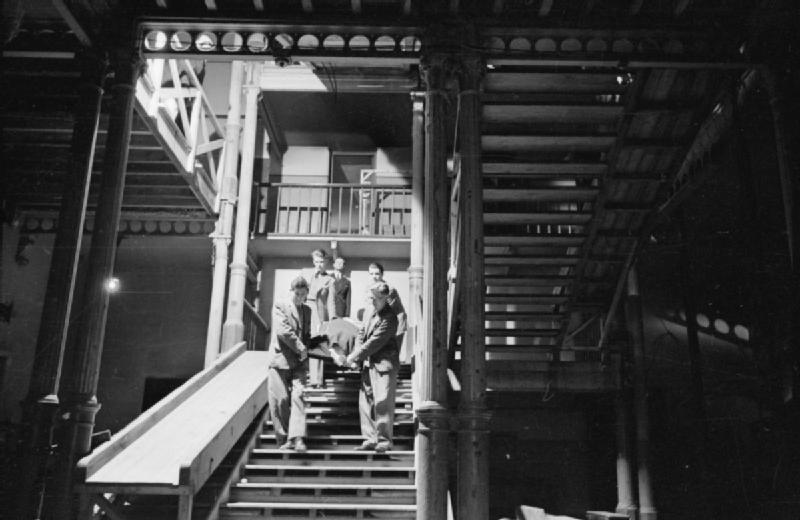
Moving a patient who could not move themselves was a manual job. Two porters lifted, or a porter and a nurse, using a drag lift under the arms or a blanket, from bed to trolley, trolley to table, chair to bed, dozens of times a shift.
That technique has been specifically eliminated. Modern practice requires mechanical aids — hoists, slide sheets, transfer boards, standing aids — and prohibits the lifts that were standard, because the loads involved exceed what any safe manual handling guidance permits and because the drag lift under the arms injures the patient’s shoulders as well as the lifter’s back.
The change was driven by two separate findings arriving together: that the staff injury rate was unsustainable, and that the handling itself was harming patients. It is one of the clearest cases in healthcare of a practice that was bad for everybody involved.
Like our content? Follow us for more.
2. Back injury was treated as part of the job
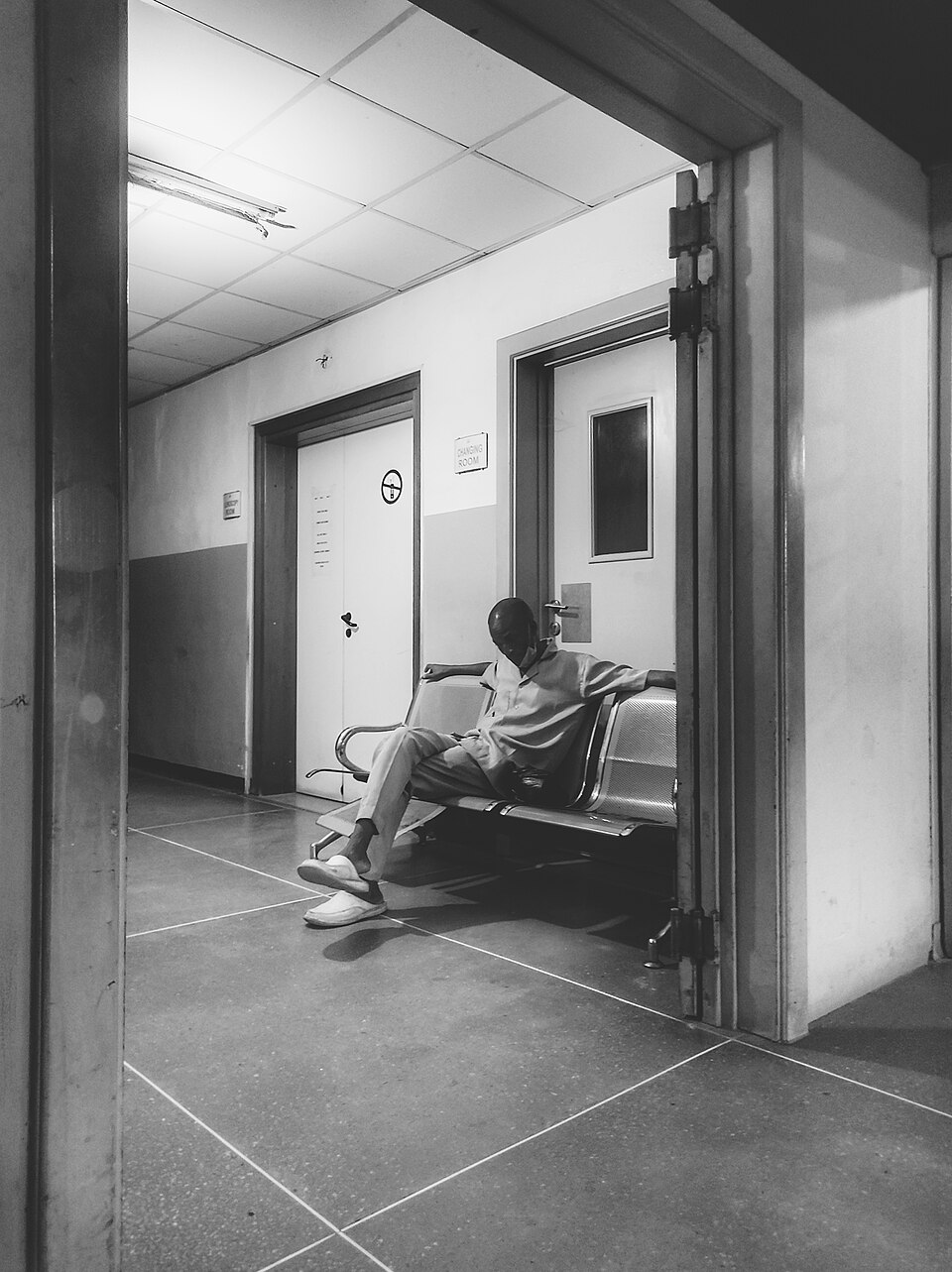
Porters, nurses and auxiliaries accumulated back injuries as an occupational expectation, and the response was to carry on, to work through it, or in the worst cases to leave the service. There was no assessment, no training and no recording.
Manual handling is now a defined area of health and safety law with risk assessment, training, equipment provision and incident recording, and healthcare has been one of its main drivers because the sector generated so much of the injury. The modern hierarchy is to avoid the handling, then to mechanise it, then to train for what is left.
This is the item with the largest cumulative human cost in the file. A generation of hospital staff was disabled by lifting, and it was recorded as nothing.
3. Oxygen cylinders were walked across the floor on their bases
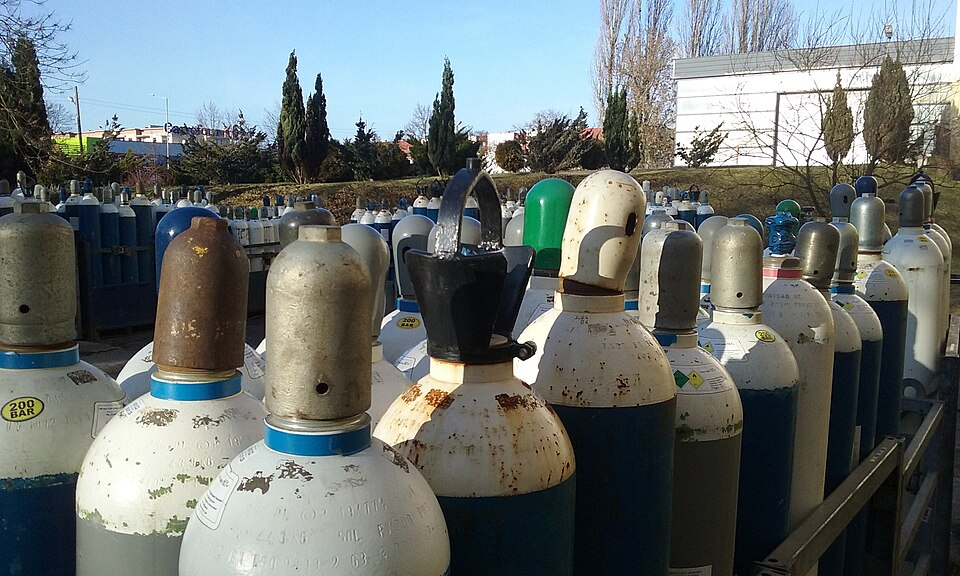
Full oxygen cylinders are heavy and awkward, and the method was to tip one and walk it on its base across the ward, or to carry it, or to lean it in a corner near a bed.
Compressed gas handling is now specific and prescriptive: cylinders are moved on trolleys, secured upright at all times, never carried by the valve, stored in designated ventilated areas away from ignition sources and away from oil and grease, and valves are protected in transit. Oxygen is an oxidiser, which means it does not burn but makes everything else burn far more readily.
The combination that mattered on a 1960 ward was an unsecured cylinder, a patient smoking in bed and an oxygen-enriched atmosphere around the bedhead, and that is the specific scenario modern hospital fire policy is built against.
4. Nobody wore gloves and nobody washed between tasks
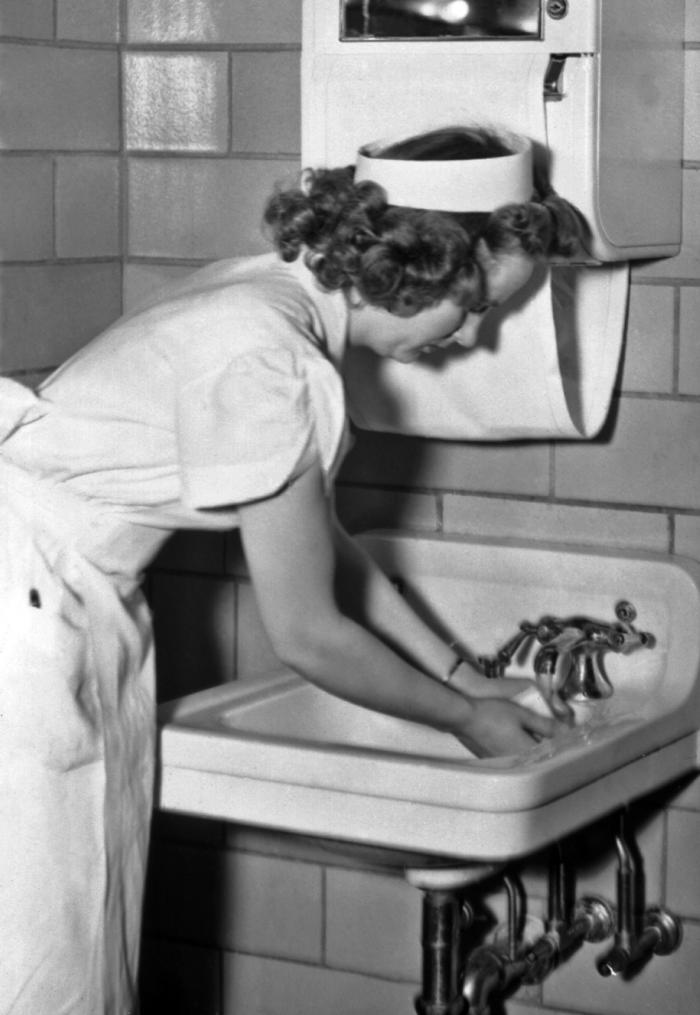
A porter went from a soiled linen trolley to a patient transfer to a specimen delivery to the canteen, and hand hygiene was a sink at the end of a corridor used when there was time.
Hand hygiene is now the single most emphasised control in healthcare, with alcohol gel at every bed space, defined moments at which hands must be cleaned, audit of compliance and training for every member of staff including porters and contractors. Gloves are provided for defined tasks and are explicitly not a substitute for hand hygiene.
The reason this took so long to change is that the evidence was there in the nineteenth century and the practice was not. It is the most studied intervention in hospital infection control and the hardest to sustain.
5. Soiled linen was carried in the arms
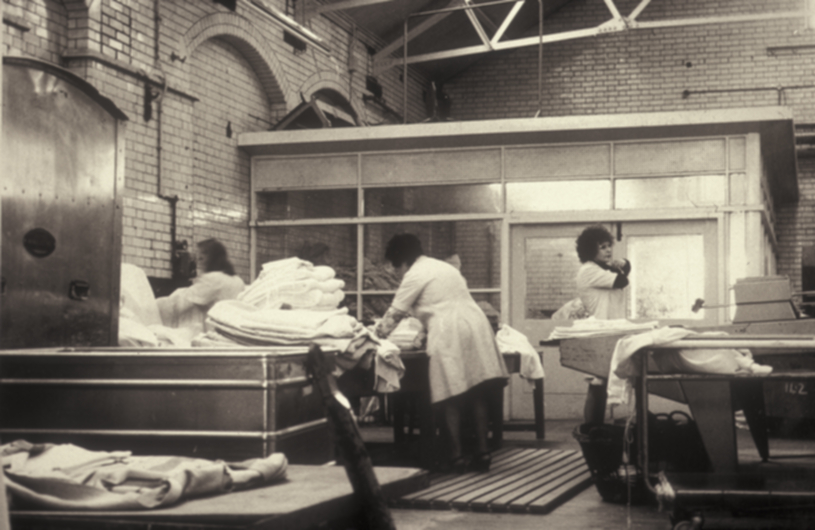
Used bedding and clothing was stripped, bundled and carried down a corridor or dropped into a chute, loose, against the porter’s own clothing, and the chutes themselves vented into the building.
Current practice bags linen at the point of use, segregates infectious loads into distinguishable bags, uses closed carts rather than carrying, and treats linen chutes as a controlled installation because of the aerosol they generate. Laundry handling is a defined part of infection prevention policy.
The chute is the detail that modern hospital engineers find most alarming: a vertical shaft connecting every floor, into which contaminated material is dropped, producing a plume of air that goes wherever the building’s pressure gradients take it.
6. Clinical waste went into the hospital incinerator, and the porter ran it
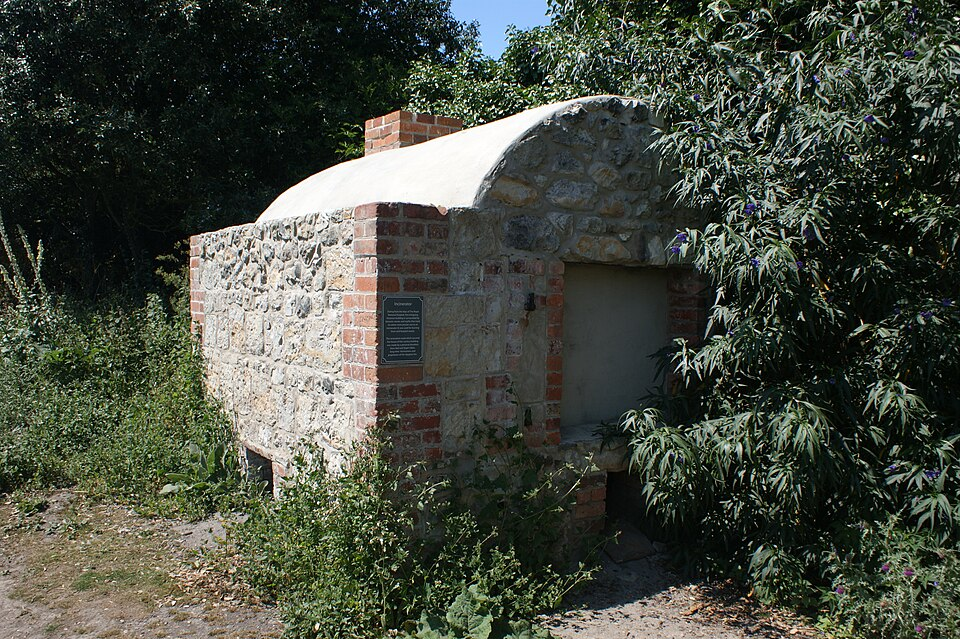
Hospitals burned their own waste in on-site incinerators, loaded by hand by porters, taking everything: dressings, sharps, packaging, theatre waste and anatomical material.
Clinical waste is now segregated at source into defined streams by colour-coded container, with sharps in rigid bins, specific routes for anatomical and pharmaceutical waste, documented transfer to licensed contractors and emissions-controlled high-temperature treatment. On-site incineration of mixed waste has largely ended.
The porter loading that furnace was handling unsegregated clinical waste including sharps by hand, in a hot room, with no protective equipment and no training, which is the single most hazardous task in this file.
7. Specimens travelled in open trays
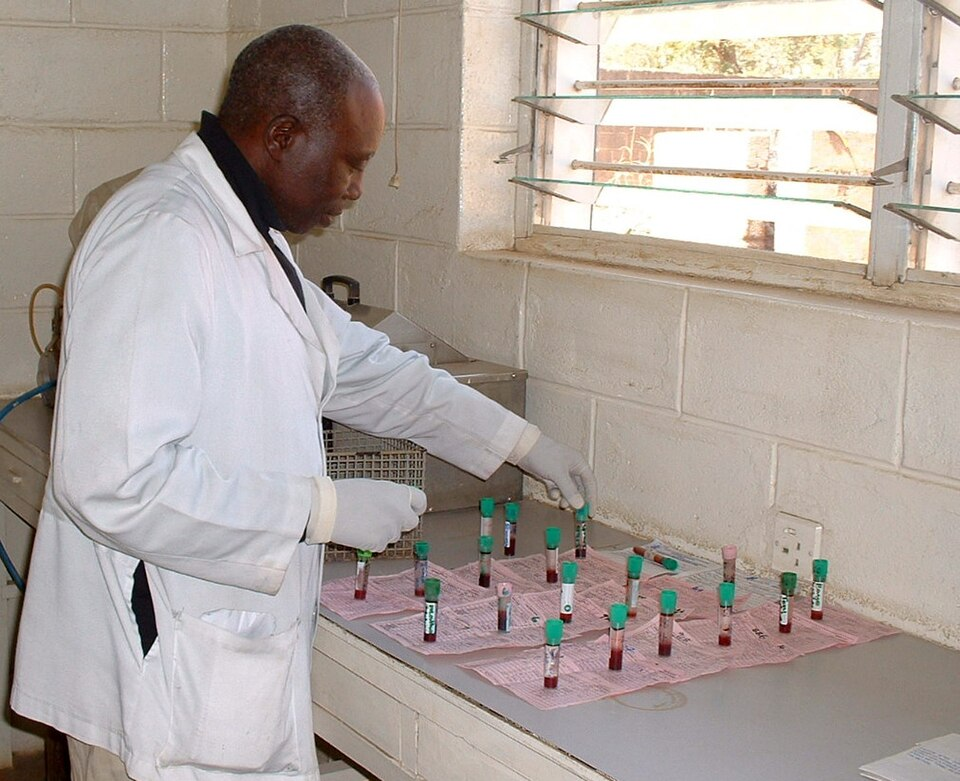
Blood, urine, histology samples and cultures were carried from ward to laboratory by hand, in open kidney dishes, trays and buckets, up stairs and through public corridors.
Specimen transport is now specified: primary container, secondary leak-proof container, absorbent material, labelling, a rigid transport box, and for certain categories a formal packaging standard. Pneumatic tube systems and dedicated portering routes replaced the open tray.
The reason for the specification is spillage rather than theory. An open dish carried up a staircase by somebody being called about something else will eventually be dropped, and the contents are a biological hazard in a public space.
8. Mercury was spilled regularly and the porters cleaned it up

Clinical thermometers and sphygmomanometers contained mercury and both broke. The spill was swept up, pushed together with card, picked up with tape or a dustpan, and in some accounts vacuumed.
Mercury is almost entirely gone from hospitals, replaced by digital and aneroid instruments, and where legacy spills occur the response is a specific procedure: ventilate, exclude people, do not vacuum and do not sweep, use a dedicated spill kit and treat the recovered material as hazardous waste. Vacuuming disperses mercury vapour throughout a room.
The do-not-vacuum point is the one worth carrying out of this file, because it applies to any old thermometer in any house as much as to a ward.
9. Asbestos was everywhere in the parts of the hospital porters worked in
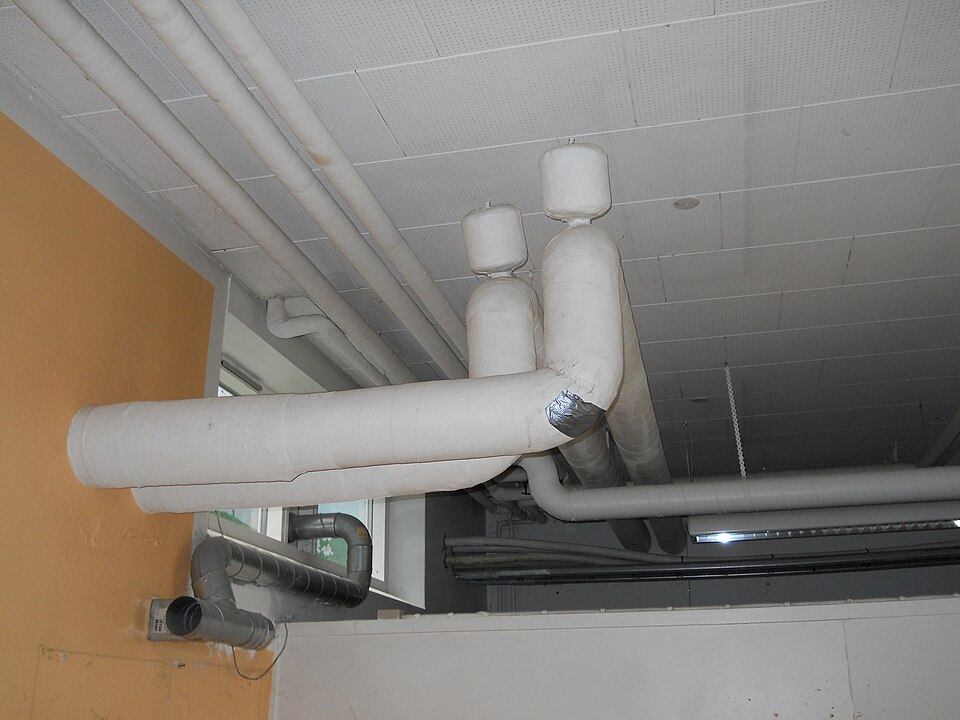
Porters spent their shifts in the places the public never saw: boiler houses, plant rooms, service tunnels, lift motor rooms and ducts, all of which in a hospital of that age were lagged, insulated and panelled with asbestos-containing materials.
The current position presumes asbestos in buildings of that period, requires it to be identified, recorded in a register and managed in place where it is in good condition, and requires licensed contractors for any work disturbing it. Healthcare estates were among the heaviest users of the material.
The relevant point is that the exposure fell on the staff who used the building’s back passages daily rather than on clinical staff, and it went unrecorded because nobody was monitoring a porter.
10. The porter moved the X-ray equipment and knew nothing about it
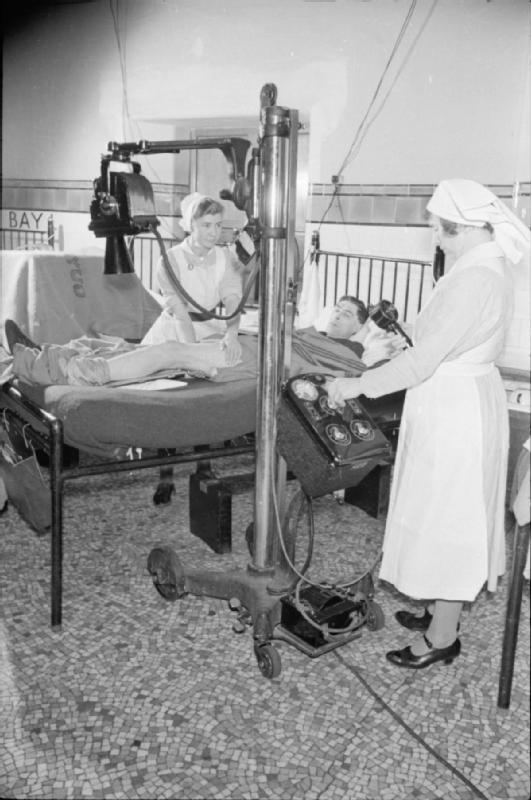
Mobile X-ray sets were pushed from ward to ward by porters, positioned, and in some hospitals the porter stayed in the room during the exposure because there was nowhere obvious to go.
Radiation protection in a hospital is now a formal regime: designated controlled areas, local rules, dose monitoring for classified workers, a radiation protection supervisor, and specific requirements that nobody is in a room during an exposure without need and without protection. Porters are not classified workers precisely because they are kept out.
The 1960 arrangement exposed ancillary staff incidentally and without measurement, which is the same pattern as the shoe-fitting fluoroscope and the dental surgery of the same period.
11. Part of the job was the mortuary, with no training and no support
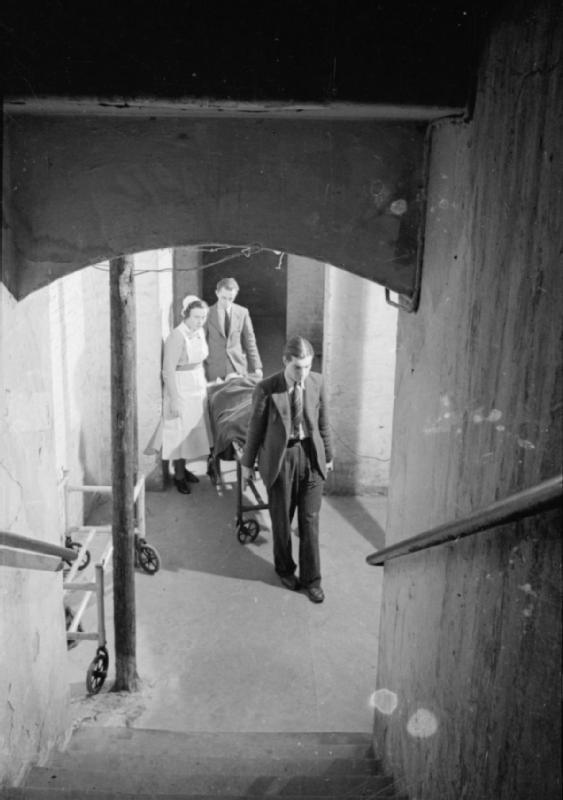
Porters moved those who had died, from ward to mortuary, at any hour, often alone, and were frequently the people who dealt with families in a corridor at the worst moment of their lives.
It is handled differently now in every respect: the task is defined, the equipment is appropriate, staff are trained for it, and the emotional load is recognised with debriefing, occupational health provision and access to support, because the cumulative effect of that work on the people doing it is now understood as a workplace issue.
Nothing about the work itself is described here. The point is that it was done by the youngest and lowest-paid staff in the building, unprepared, and that nobody asked them about it afterwards.
12. Shifts were long, split, and in some hospitals you lived in
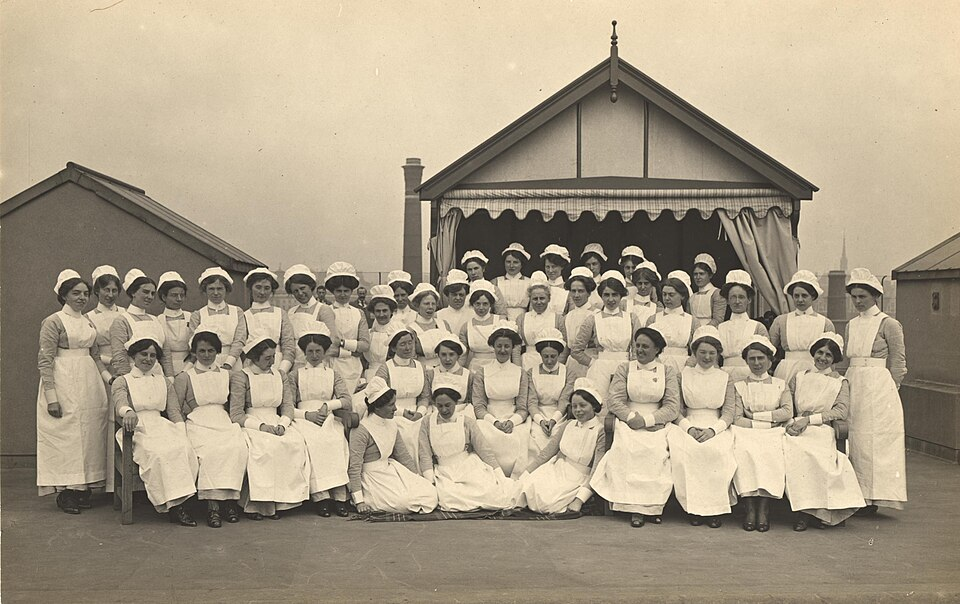
Portering was organised around the hospital’s needs: split shifts covering two peaks with an unpaid gap in the middle, nights, weekends, and in many institutions accommodation on site that made a porter permanently available.
Working time regulation, rest break requirements, fatigue risk management and the end of resident ancillary staff have changed all of it. The modern concern is specifically fatigue as a safety matter rather than as a welfare one, because tired staff moving patients and equipment make errors.
Living in is the detail that defines the old arrangement. A porter in hospital accommodation was never off duty in any meaningful sense, which suited the institution and was understood as part of the deal.
13. Smoking happened everywhere, including on wards
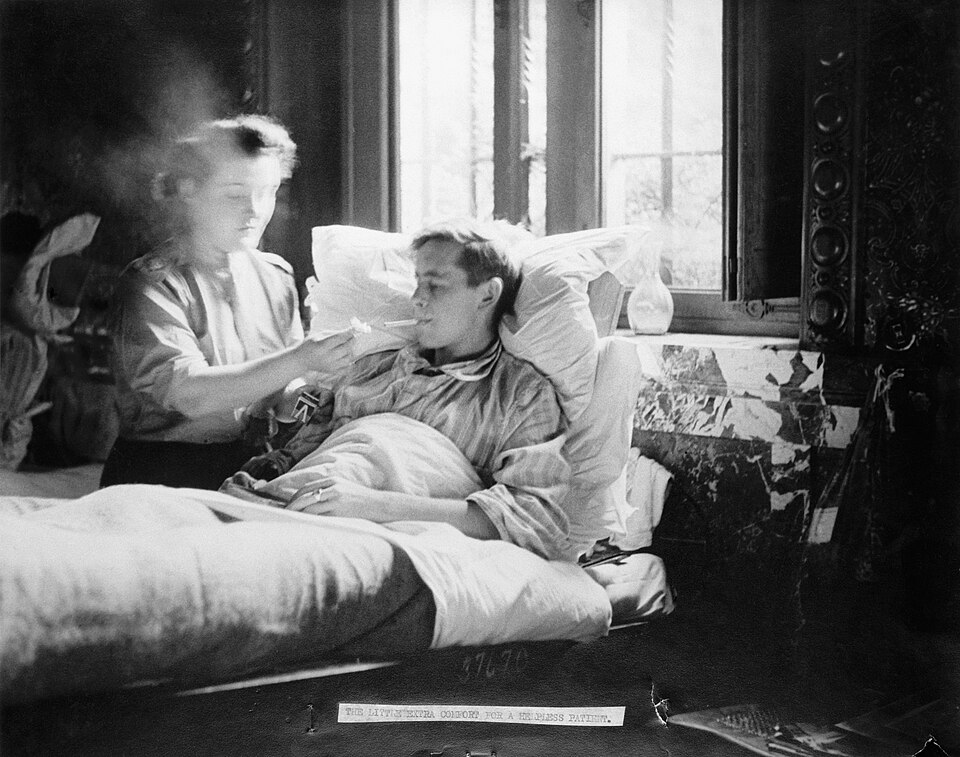
Staff smoked in corridors, in porters’ rooms, in plant rooms and in ward offices; patients smoked in day rooms and in bed; and ashtrays were standard ward equipment.
Hospital premises are now smoke-free in most jurisdictions, and the reasons are a combination of fire risk — particularly around oxygen — secondhand smoke exposure for patients and staff, and the obvious inconsistency of a health institution facilitating it.
The oxygen point is the one that made the change urgent rather than merely sensible, and it is why hospital fire policy and smoking policy were addressed together.
14. The porter knew the building better than anybody
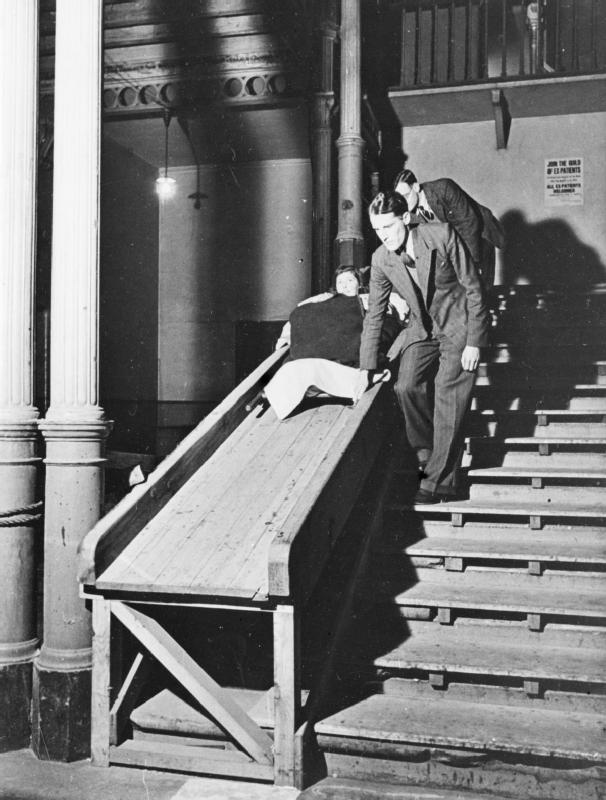
Porters held the hospital’s working geography: which lift reached which floor, which tunnel was quickest, where the spare equipment was, which door was unlocked, who to ask. None of it was written down and the institution ran on it.
Modern estates management has asset registers, computerised maintenance systems, wayfinding and logistics software, and much of the knowledge is now in a database. What is not in a database is the judgement about how to get a patient from one place to another at three in the morning when the obvious route is blocked.
Every account of hospital life from this period says the same thing: if you wanted something found, moved or fixed, you asked a porter. That has thinned out and the people still doing the job will tell you it has not disappeared.
15. Nothing was recorded and nobody was monitored
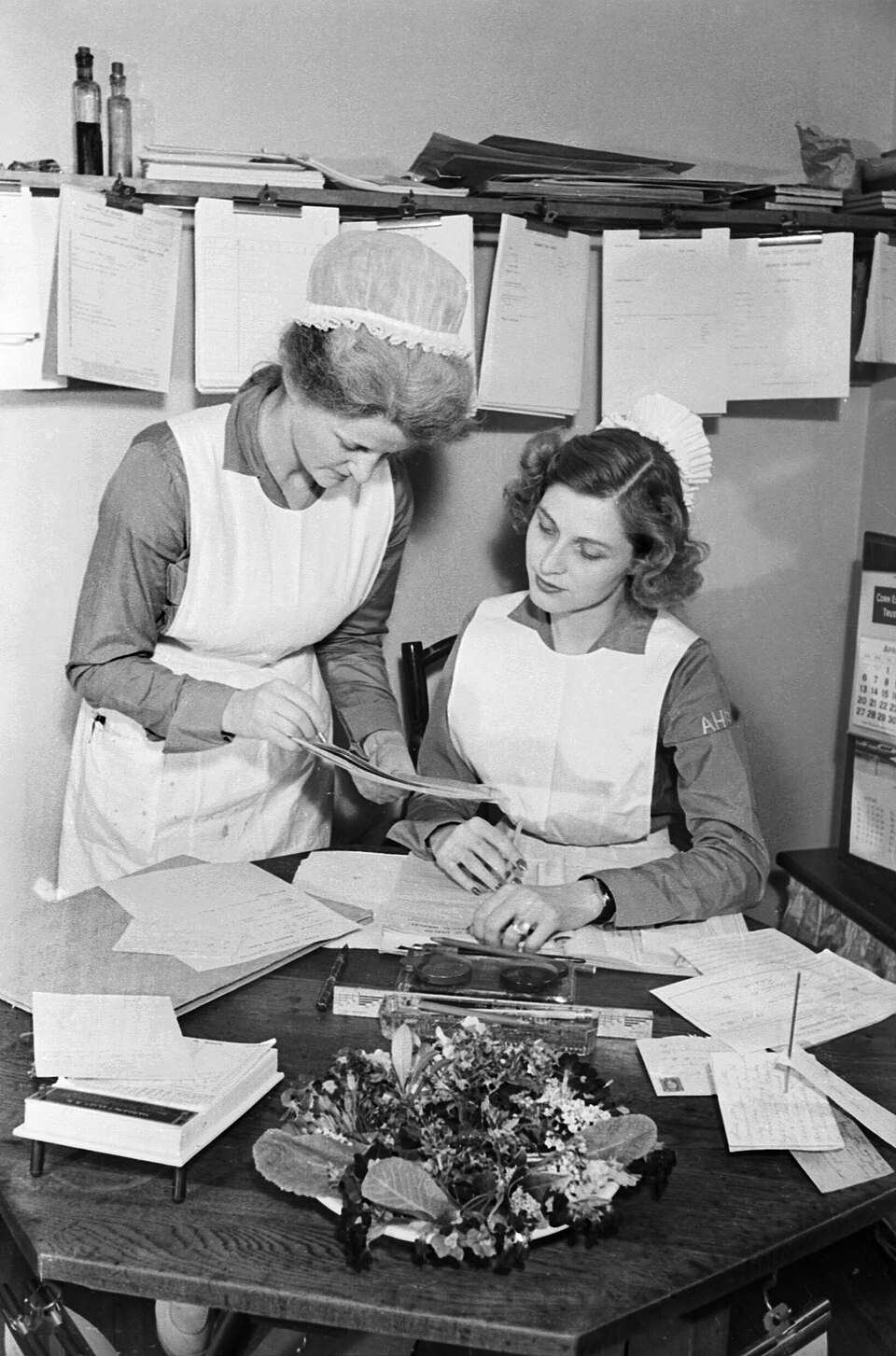
There was no manual handling assessment, no dose monitoring, no exposure record, no incident reporting worth the name and no occupational health service for ancillary staff. A thirty-year portering career left no documentation of anything.
Healthcare now has incident reporting systems, occupational health provision, immunisation programmes for staff, exposure records for defined hazards and health surveillance where it applies. The porters of the 1960s are the reason a good deal of it exists and are not covered by any of it retrospectively.
That is the structural point running through every item here. The hazards fell on the lowest-paid and least-represented staff in the building, in the parts of it nobody saw, and the absence of records is why their occupational history is almost impossible to reconstruct.
16. And what the job was, underneath all of it
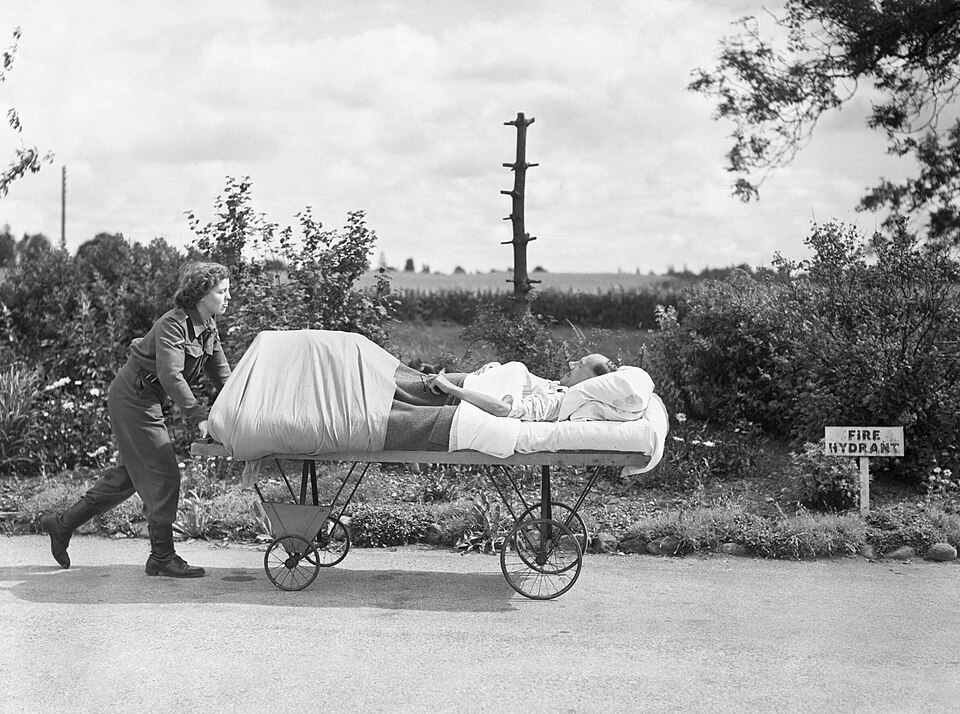
A hospital is a logistics problem with medicine attached, and the porters were the logistics. Patients, equipment, specimens, notes, supplies, linen, waste and messages all moved because somebody moved them, usually at speed, usually while being asked for something else.
The role has not disappeared and in many systems it has professionalised: training, defined competencies, equipment, and in some hospitals a logistics function with tracking and scheduling. The good hospitals know exactly how much depends on it and the ones in trouble are usually the ones that cut it first.
The honest summary is that almost every hazard in this file was borne by people with no voice in the institution, that the manual lifting did the most damage and the incinerator was the most acutely dangerous, and that the job itself was and remains the thing holding a hospital together.
Where the risk actually fell
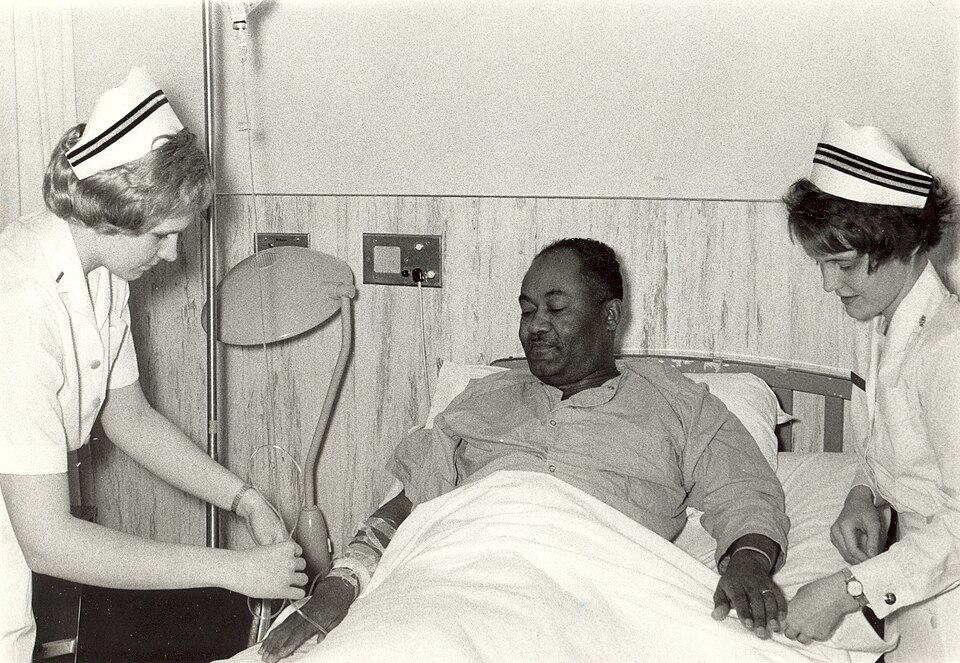
The pattern in this file is not that hospitals were careless about safety. It is that the safety thinking of the period was directed at patients and at clinical staff, and the ancillary workforce was outside it. Porters were in the boiler house, the service tunnel, the incinerator room and the mortuary, none of which anybody was assessing, and they moved between those places and the bedside repeatedly through a shift.
Three items did the most harm. Manual patient lifting disabled a generation of hospital staff and was recorded as nothing, which is why manual handling is now a defined area of law with healthcare as its main driver. Loading unsegregated clinical waste including sharps into an on-site incinerator by hand is the most acutely hazardous task described here and has been eliminated entirely by segregation at source and licensed off-site treatment. And asbestos exposure fell specifically on the staff who used the building’s back passages daily, unmonitored.
The two that transfer directly to a modern reader are smaller. Oxygen is an oxidiser rather than a fuel, which is why cylinder handling and smoking policy are the same subject. And a mercury spill is not swept or vacuumed, because vacuuming disperses the vapour through the room — which applies to an old thermometer in a house exactly as it did to a ward.
There is one item here with a domestic application. If an old mercury thermometer or barometer breaks in your house, do not vacuum it and do not sweep it: ventilate the room, keep people out, and contact your local hazardous waste service, because a vacuum cleaner turns a contained spill into a room full of vapour.
The rest is worth reading as a record of who carried the cost. Every control in a modern hospital that covers lifting, waste, gases, specimens and the building fabric exists because the people doing this job absorbed the consequences of there being none.
Like our content? Follow us for more.