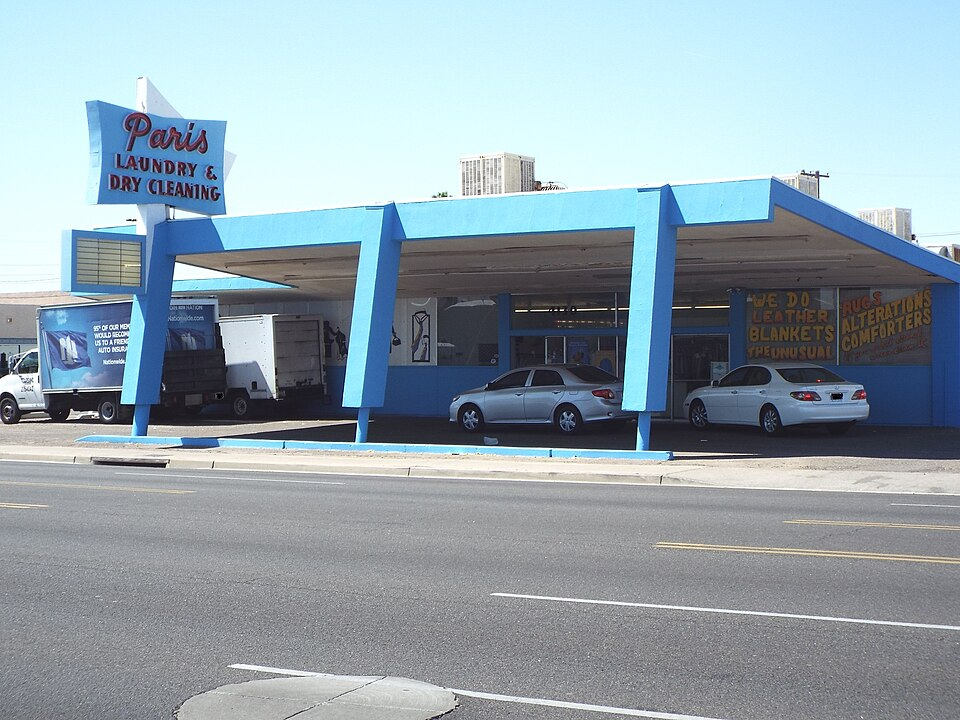
The dry cleaner and dyer of 1960 was a small business doing skilled work with chemistry that nobody in the shop fully understood, in one unventilated room, usually with a family living upstairs.
The consequences ran in two directions. The people in the shop absorbed solvent through their skin and their lungs for a working lifetime. And the routine disposal of sludge and spent dye baths put contamination into the ground under what are now thousands of ordinary commercial premises, which is still being dealt with. Here are sixteen things about that trade.
1. The original dry cleaning solvent was petrol, and the fire record shows it
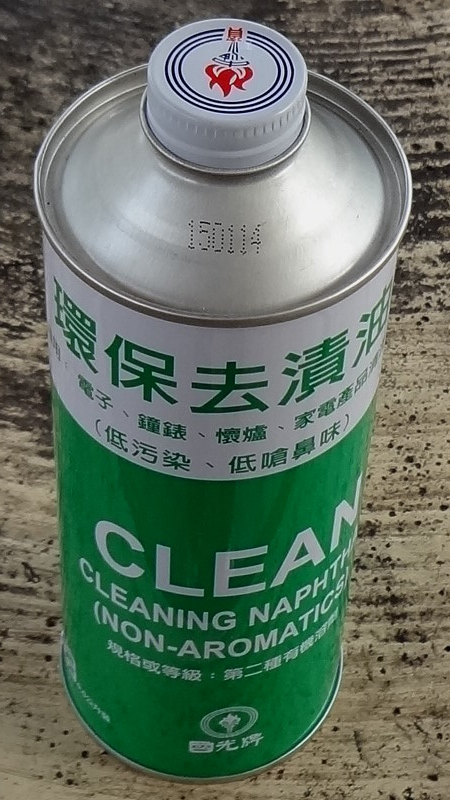
Before chlorinated solvents, cleaning was done in petroleum spirits: naphtha, benzine, white gasoline. The garments came out clean and the plants burned down with a regularity that insurers eventually refused to carry.
Petroleum solvents have not disappeared — modern hydrocarbon systems use high-flashpoint fluids in sealed, inerted machines with vapour control and fire suppression — but the open-tank, low-flashpoint practice is gone entirely, and the fire codes written in response are why dry cleaning plants have specific requirements for separation, ventilation and extinguishing systems.
The trade’s own name for the petroleum era was straightforward enough: the shops were widely known to be a fire risk and were often placed at the edge of a town for that reason.
Like our content? Follow us for more.
2. The replacement solvent was chosen because it would not burn
Carbon tetrachloride arrived as the answer to the fire problem. It is an excellent solvent and it will not ignite, and on that basis it was adopted across the trade and sold to households as well.
It is now banned or severely restricted for nearly every use in nearly every country, for two separate reasons: it is seriously toxic on inhalation and through the skin, and it breaks down on contact with hot surfaces into something considerably worse than the original vapour. The decomposition product is not named here and no reader needs it.
The pattern repeats through this file. Each solvent was adopted to fix the previous one’s defining problem and brought a different problem that took longer to notice.
3. Perchloroethylene arrived, and so did the transfer machine
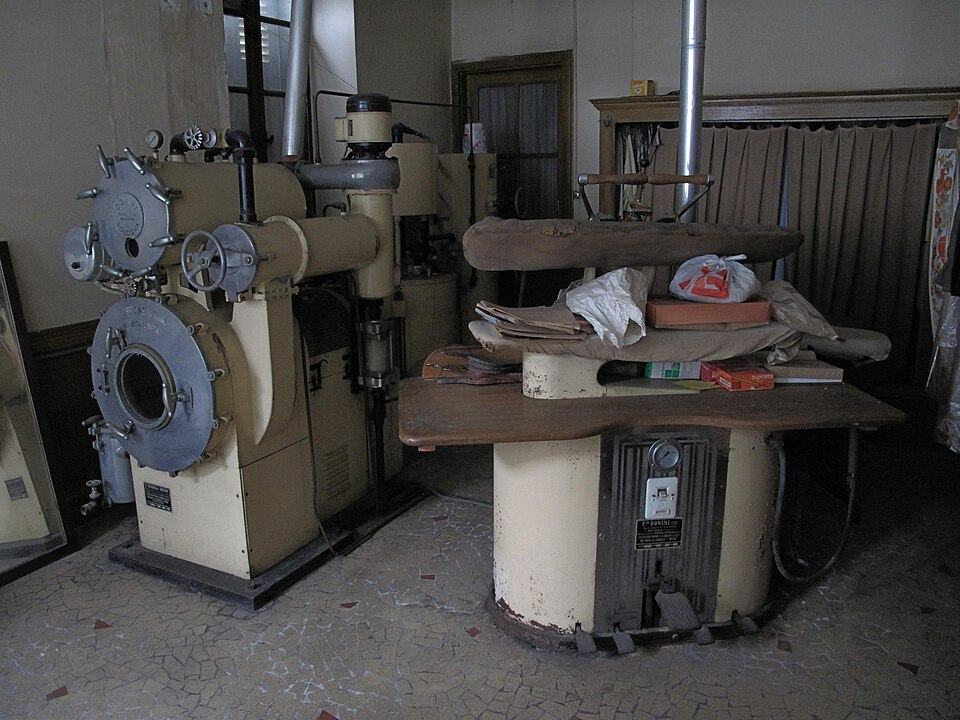
Perchloroethylene — perc — became the industry standard, and for decades it was used in a transfer system: the garments were cleaned in one machine, then lifted out wet with solvent and carried by hand across the floor to a separate dryer.
Transfer machines have been eliminated in favour of dry-to-dry closed-loop machines, in which the garments are cleaned and dried in the same sealed drum and the solvent is recovered by refrigerated condensation rather than vented. The transfer step was the single largest source of worker exposure and of solvent loss in the building.
A worker carrying an armful of solvent-wet garments across an unventilated room, several times an hour, for a working lifetime, is the exposure that the modern machine was designed to remove.
4. The dryers vented straight into the open air
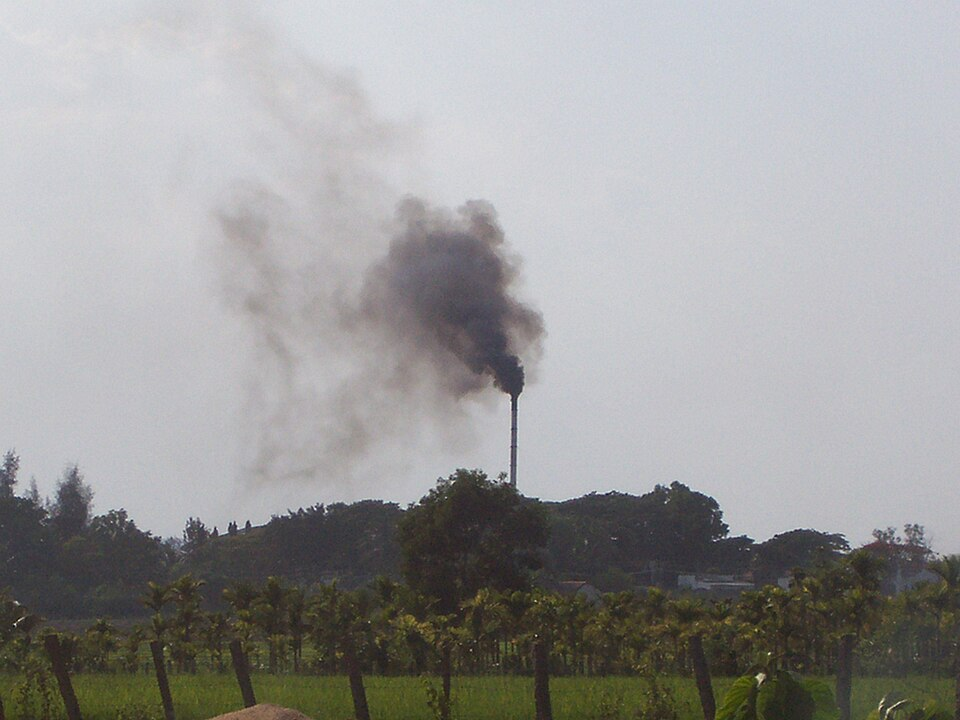
Early plants made no attempt to recover solvent. The dryer exhausted to a vent in the wall or the roof, and the solvent went into the neighbourhood as vapour, which is why you could identify a dry cleaner from the end of the street.
Modern machines are closed-loop with refrigerated condensers and carbon adsorption, recovering solvent back into the working tank, and emissions are regulated with monitoring requirements. Loss per load has fallen by something close to two orders of magnitude, which is as much an economic change as an environmental one — the solvent is expensive.
The smell was treated as evidence of a plant doing good business. It was in fact a measurement of money leaving the building through the roof.
5. Spent solvent was distilled, and the residue was a problem nobody solved
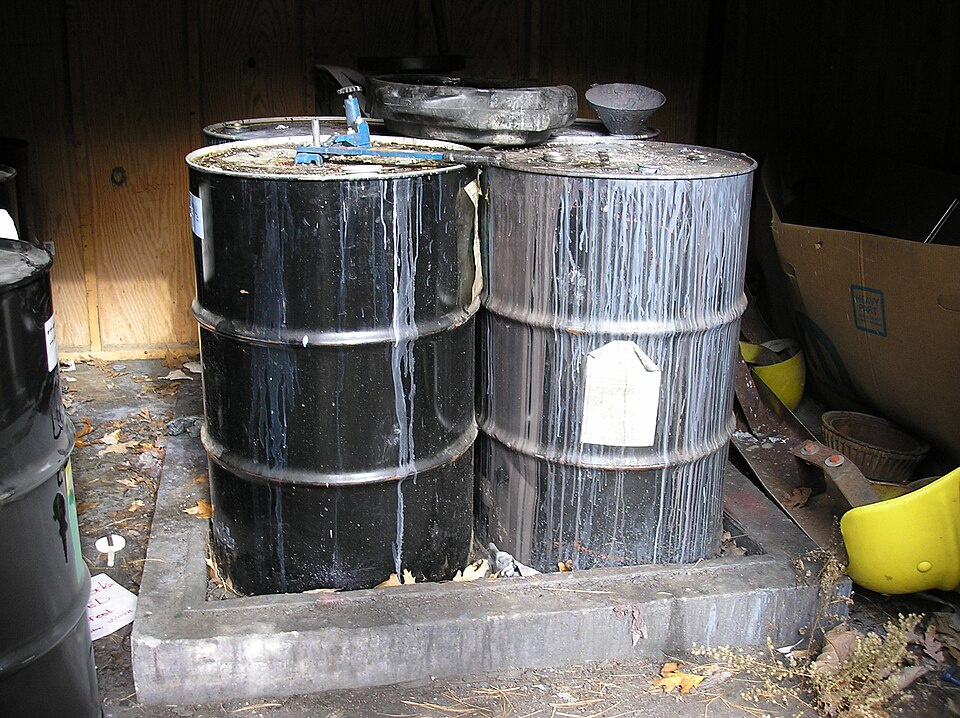
Solvent was reclaimed in a still, leaving behind a sludge of dirt, lint, dyes, oils and concentrated solvent known in the trade as still bottoms or muck. Every plant produced it continuously.
Still residue is now a defined hazardous waste with manifested transfer to licensed treatment, and the quantities are recorded. The requirement exists because the residue is the most concentrated hazardous material the premises produces and the historic disposal practice was whatever was convenient.
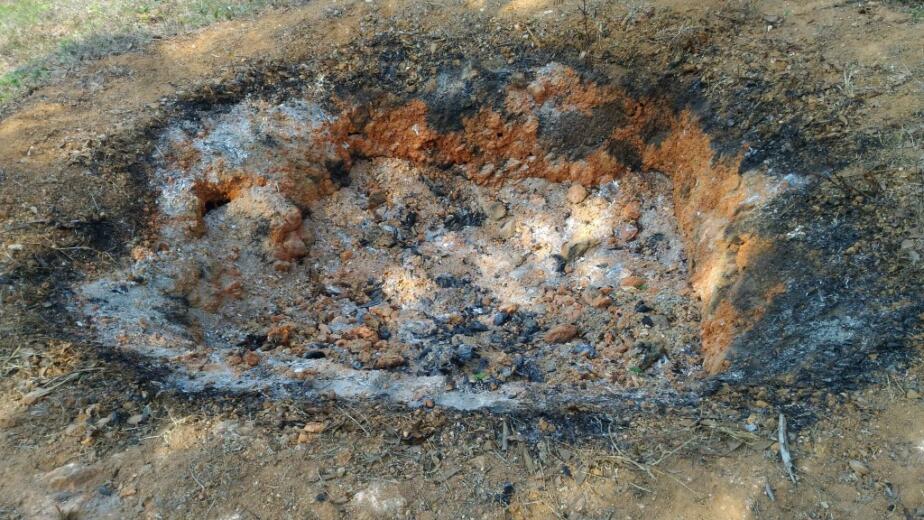
Whatever was convenient meant the bin behind the shop, a pit in the yard, the storm drain or the sanitary sewer, and that is the specific mechanism behind the next item.
6. Thousands of former dry cleaning sites are now contaminated ground
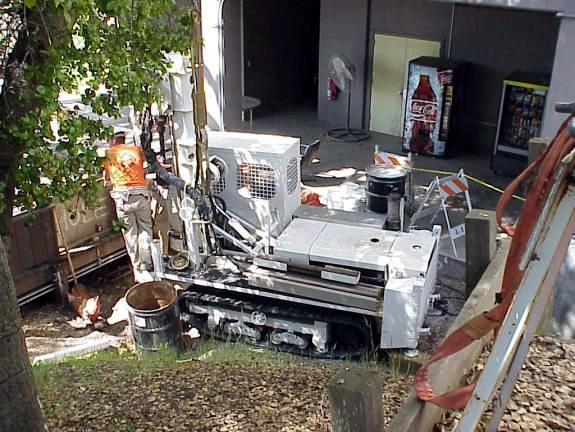
Decades of spills, leaking tanks, sewer discharge and sludge disposal put chlorinated solvent into the soil under an enormous number of ordinary commercial premises — usually a small shop in a parade or a strip mall, with people living above and around it.
This is now one of the most common categories of contaminated land anywhere in the industrialised world. Perc is denser than water and migrates downward through soil into groundwater, where it persists for decades and can enter buildings as vapour through the slab. Remediation is slow and expensive and in many cases ongoing after fifty years.
The reason this file emphasises the sludge and the drain rather than the machine is that the ground contamination came mainly from routine disposal rather than from dramatic accidents.
7. The spotting board carried a chemistry set
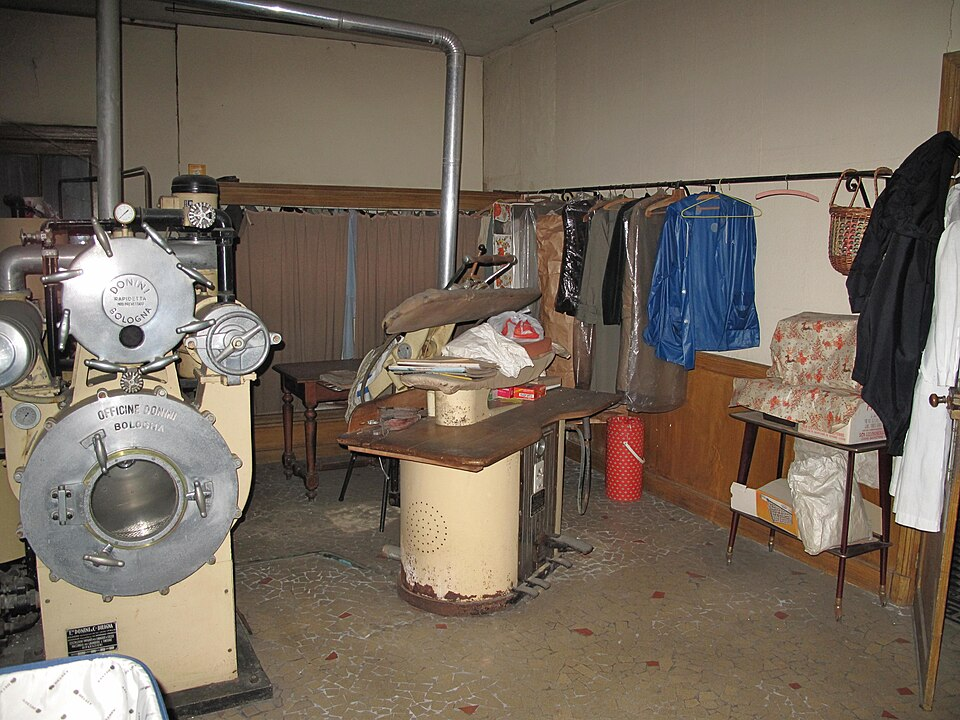
Stain removal was and remains a separate craft done by hand at a steam-and-vacuum board, with a rack of specific agents: amyl acetate, acetic acid, ammonia, hydrogen peroxide, oxalic acid, sodium hypochlorite, enzyme digesters and proprietary mixtures with no stated contents.
The agents are still used, but under control of information rules requiring disclosure of contents and hazards, with ventilation at the board, eye protection, gloves, and explicit instruction never to combine certain pairs. The combination rules are the serious part of modern spotting training.
One rule from that rack belongs in any house. Never mix a chlorine bleach with an ammonia product or with an acid. The reaction produces gas, it happens immediately, and domestic bathrooms are where it most often happens.
8. Rust removers in the trade contained hydrofluoric acid
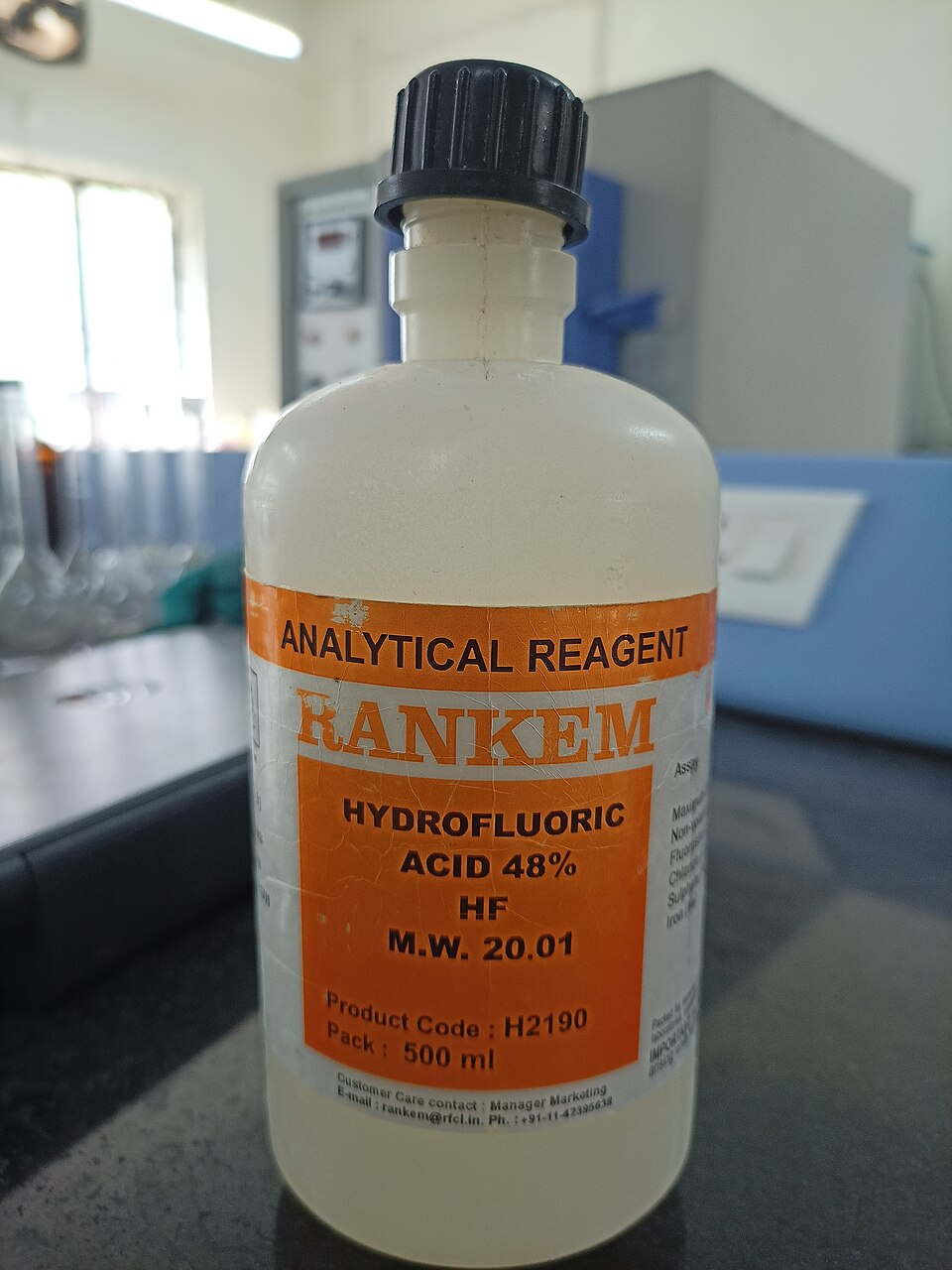
Rust and iron stains on fabric were taken out with a rust remover, and a number of the trade products of the period were based on hydrofluoric acid or its salts, handled at a spotting board with bare hands and no particular ceremony.
Where such products remain in professional use they are controlled, labelled, stored separately, used with specific gloves and eye protection, and accompanied by a defined first aid response including a calcium gluconate requirement. Many trades have substituted them out entirely because the hazard is not manageable in a small shop.
The relevant fact, stated once and not elaborated: hydrofluoric acid injuries are not like other acid injuries, they can be deceptive at the time of contact, and the first aid is specific. Anybody who finds an unlabelled rust remover in an old shop or garage should treat it as something for a hazardous waste service rather than something to try.
9. The shop also dyed garments, in open vats
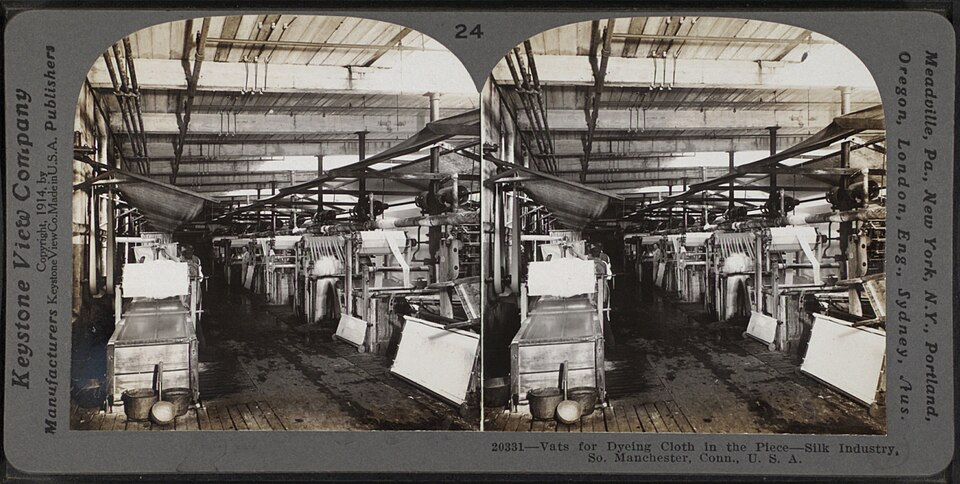
A cleaner was commonly a cleaner and dyer. Faded coats, curtains and dresses were re-dyed in open heated vats, stirred by hand, with powdered dye weighed out by eye in a back room.
Commercial garment dyeing has largely moved to specialist operations with enclosed equipment, measured dosing, extraction over the vessel and controlled effluent. The craft survives but the back-room vat does not, mainly because of the dust and the effluent rather than any failure of the result.
Powdered dye handled dry in an unventilated room is a respiratory exposure of the kind now controlled by substitution, enclosure and extraction in that order, and it was the ordinary condition of a dyeing room.
10. Some of the dyes in use were later withdrawn as carcinogenic
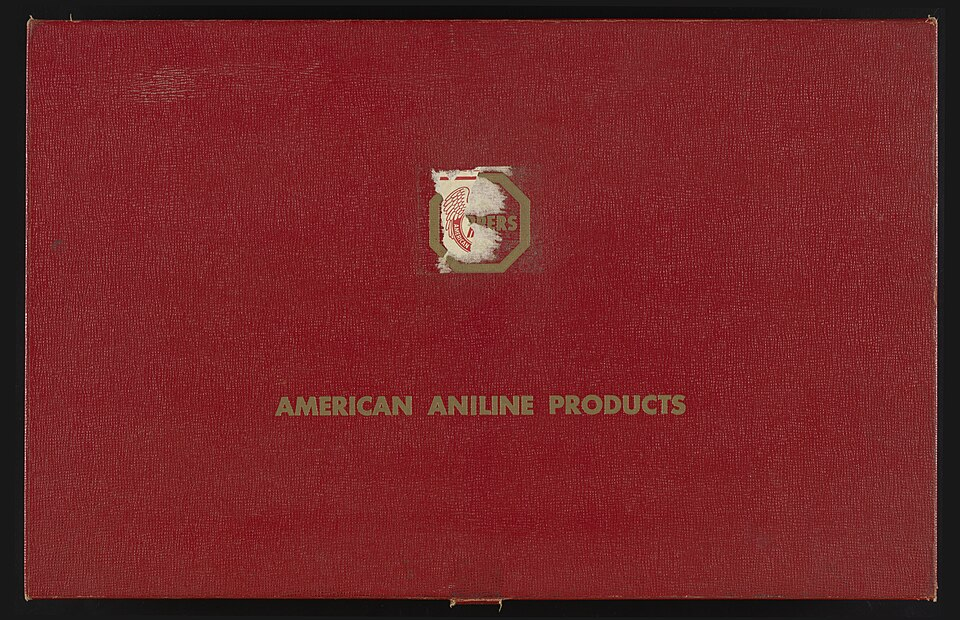
The direct dyes of the period included a family built on benzidine, which were cheap, fast and excellent on cotton, and were used in large quantities in both manufacture and trade dyeing.
Benzidine-based dyes have been withdrawn from use in essentially all regulated markets after the link to bladder cancer in dye workers was established, and benzidine itself is a controlled substance. Modern dyes for the same applications are different chemistry and the withdrawal is one of the clearer occupational health interventions of the twentieth century.
The exposure fell on dye workers and on trade dyers handling powder, which is why the item belongs in a file about a small shop and not only in a file about a factory.
11. Metal mordants were part of the dyeing process
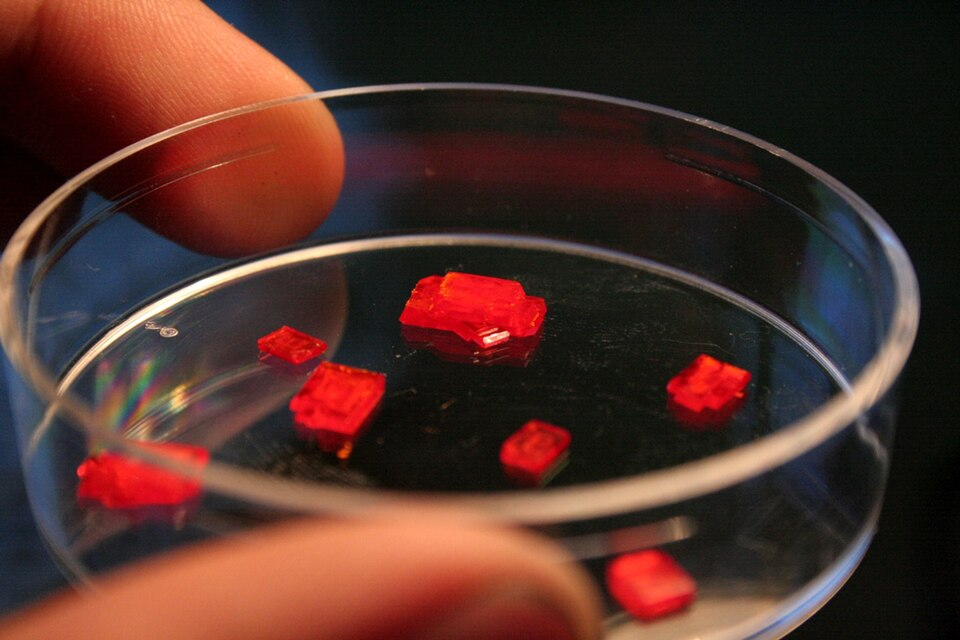
Fixing colour meant mordants, and the trade used chromium, copper and tin compounds, stored as powders or crystals in the same back room as everything else and discharged with the spent dye bath into the drain.
Chromium compounds in particular are now tightly controlled, with hexavalent chromium treated as a serious occupational carcinogen, and trade effluent discharge is consented, monitored and in many cases pre-treated. The dye bath going down an unconsented drain is not a lawful operation anywhere now.
This is the second contamination pathway from the same premises, running parallel to the solvent, and in old industrial towns the two are frequently found together under the same floor.
12. Workers had their hands in solvent all day and it showed
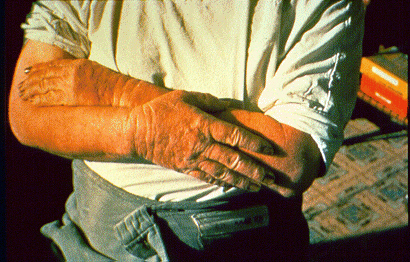
Loading, unloading, spotting and pressing meant repeated skin contact with solvent and with spotting agents, and the trade’s characteristic complaint was cracked, split, inflamed hands that never fully recovered.
Chlorinated solvents are now understood to strip skin lipids on contact as well as being absorbed through the skin, so modern practice requires appropriate gloves for each agent — not one glove for everything, since the right material depends on the chemical — along with barrier creams, washing facilities and health surveillance for skin in some jurisdictions.
Occupational skin disease remains the most common occupational disease in many countries and it was close to universal in this trade.
13. There was no ventilation worth the name
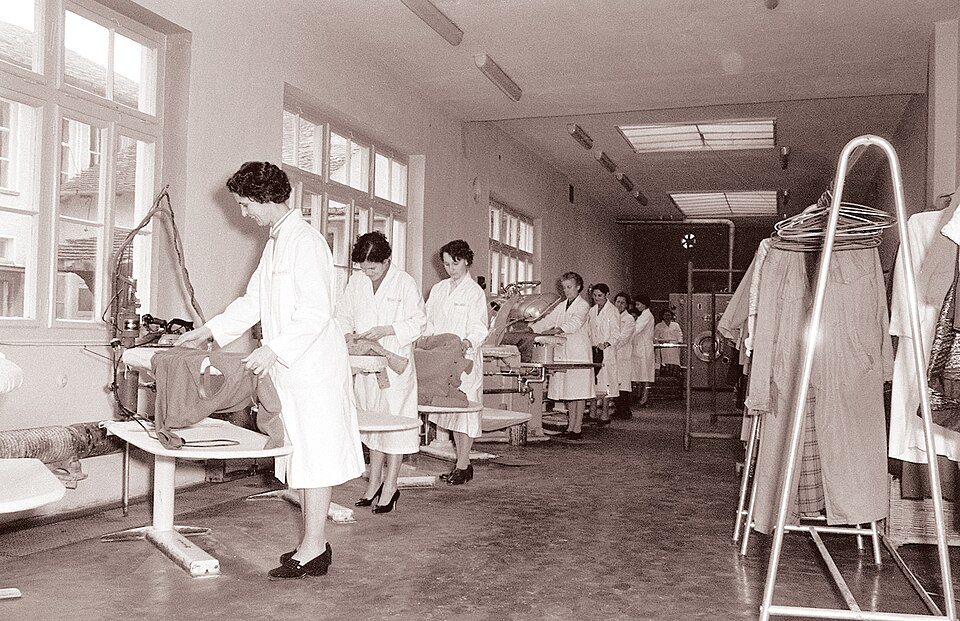
A small plant of the period had a solvent machine, a still, a spotting board, several steam presses and a boiler, in one room, with a door to the street and perhaps a window.
Current requirements are specific: local exhaust at the point of release, general ventilation calculated for the room, exposure monitoring against a limit, machine interlocks, vapour alarms in some installations, and in many jurisdictions a prohibition on perc machines in buildings with dwellings above. The dwellings rule is the one that closed the most shops.
That last provision is worth noting because of what it implies about the earlier arrangement. The classic shop had a family living over it.
14. Steam presses burned people continuously
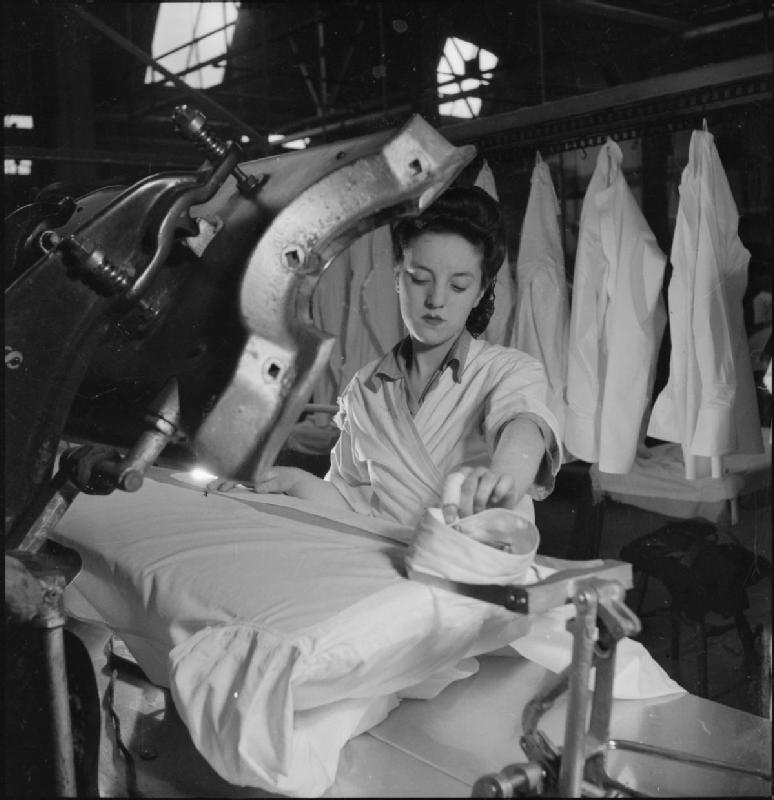
Finishing was done on steam presses — a heated buck, a heated head, foot pedals, hot steam injected through the garment — and the trade’s other characteristic injury was burns to the hands and forearms.
Presses now have two-hand controls or interlocks, guarding, defined maintenance, insulated surfaces where practical and training as a formal requirement. Steam systems are inspected as pressure systems. The remaining injuries are a fraction of what they were and are treated as reportable events rather than as part of the day.
Steam burns differ from dry heat burns because steam carries far more energy and condenses on contact, which is why the injuries from a press were disproportionate to the apparent contact.
15. Dry cleaning fluid was sold to households in bottles

The same solvents, carbon tetrachloride among them, were sold over the counter for domestic spot cleaning, in glass bottles, with instructions that amounted to rubbing it on with a cloth in the kitchen.
Those products are gone from retail in regulated markets and their modern equivalents are different chemistry with hazard labelling, child-resistant closures and ventilation instructions. The domestic sale is the part of this history that most directly affected people who never set foot in a plant.
If an old bottle of cleaning fluid turns up in a garage or a cupboard, the correct action is to leave it closed and take it to a household hazardous waste collection, not to use it and not to pour it away.
16. And what the trade did better than anybody does now
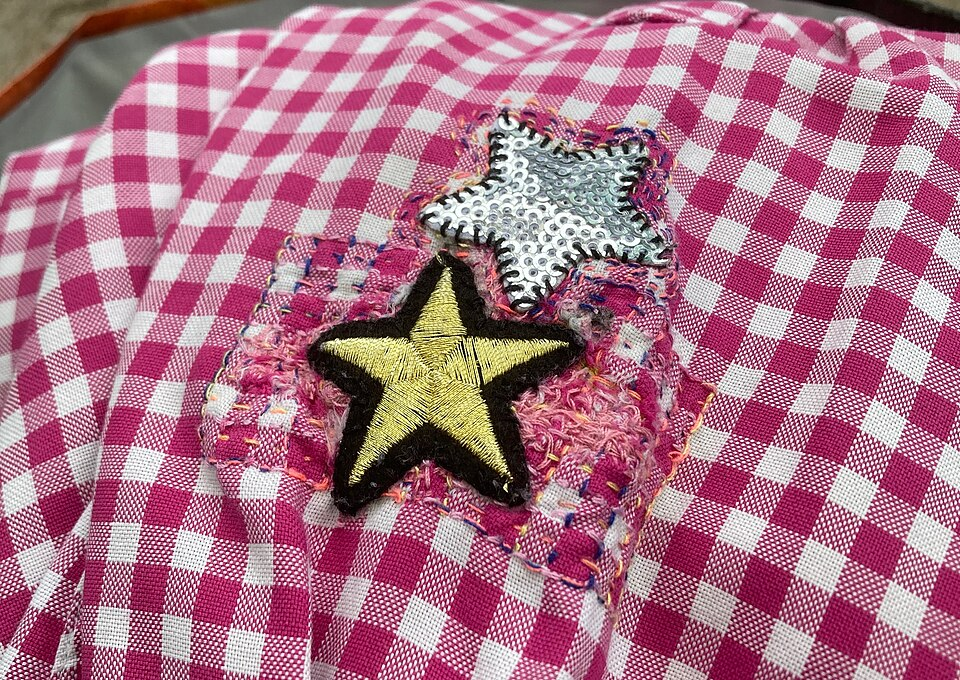
A cleaner and dyer was a repair service. They rewove a cigarette burn so it could not be found, turned a collar, replaced a lining, re-dyed a faded coat, altered a jacket to fit somebody else and made a garment last another ten years.
Those skills have thinned out dramatically, and where they survive they are specialist and expensive. The modern plant is better at everything to do with the solvent and worse at everything to do with the garment, which is a direct consequence of clothing becoming cheap enough to replace rather than mend.
The honest summary of this file: the chemistry was dangerous to the people working with it and left contamination under thousands of ordinary high streets, the two changes that mattered most were the closed-loop machine and the hazardous waste manifest, and the craft of making clothes last was real and has largely been lost.
The pattern worth seeing
Three solvents in sequence, each adopted to fix the last one’s worst feature. Petroleum spirits cleaned well and burned the shop down. Carbon tetrachloride would not burn and turned out to be seriously toxic and to decompose on hot surfaces into something worse. Perchloroethylene was better on both counts and became the groundwater problem. That sequence is the history of the trade and it is also a general lesson about substitution: the replacement is evaluated against the known hazard and brings an unknown one.
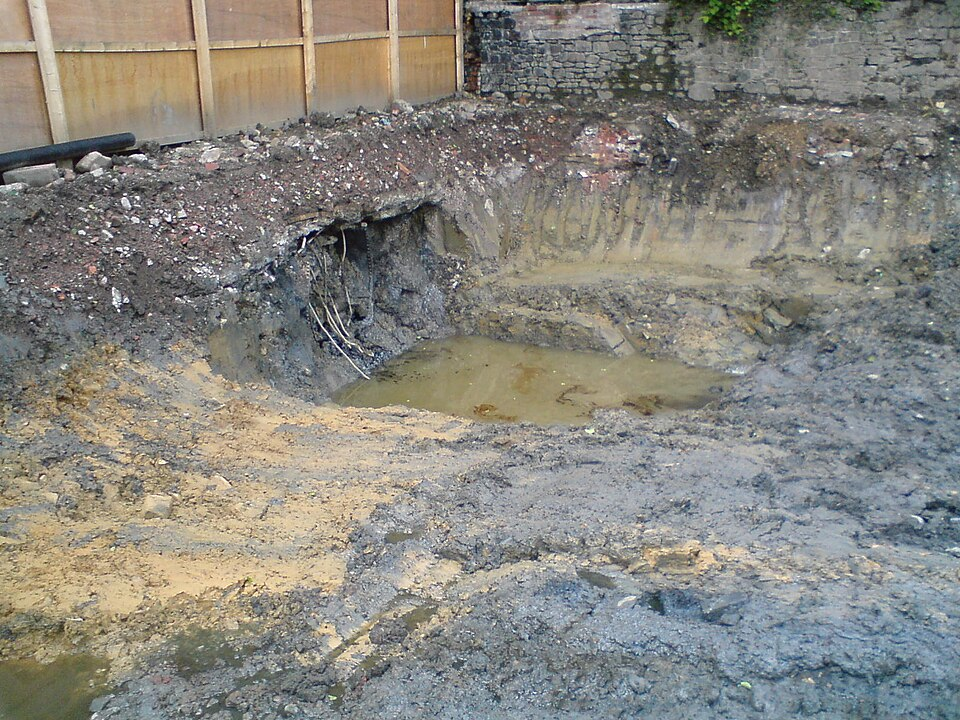
The contamination came from the boring parts rather than the dramatic ones. Not fires or spectacular spills, but still bottoms in the bin behind the shop, solvent down the drain, spent dye baths with chromium in them into an unconsented sewer, week after week for forty years. Perc is denser than water, moves downward into groundwater, persists for decades and can come back up into buildings as vapour through the slab, which is why these sites are still being remediated.
Two controls did nearly all the work. The closed-loop dry-to-dry machine removed the transfer step and the vented dryer at once, cutting both worker exposure and solvent loss by something close to two orders of magnitude. And the hazardous waste manifest made the sludge somebody’s documented responsibility instead of somebody’s convenience.
Two things from this file apply directly in a house. Never mix a chlorine bleach with an ammonia product or with an acid, because the reaction produces gas immediately and the bathroom is where it usually happens. And if an old bottle of cleaning fluid, rust remover or dye turns up in a garage, leave it closed and take it to a household hazardous waste collection rather than using it or pouring it away.
If you own or are buying a building that was a dry cleaner, that history is worth knowing about and worth asking a surveyor about, because it is one of the most common forms of land contamination there is.
And if you can find somebody who still does invisible mending or reweaving, they are doing work that was ordinary in 1960 and is close to rare now.
Like our content? Follow us for more.