

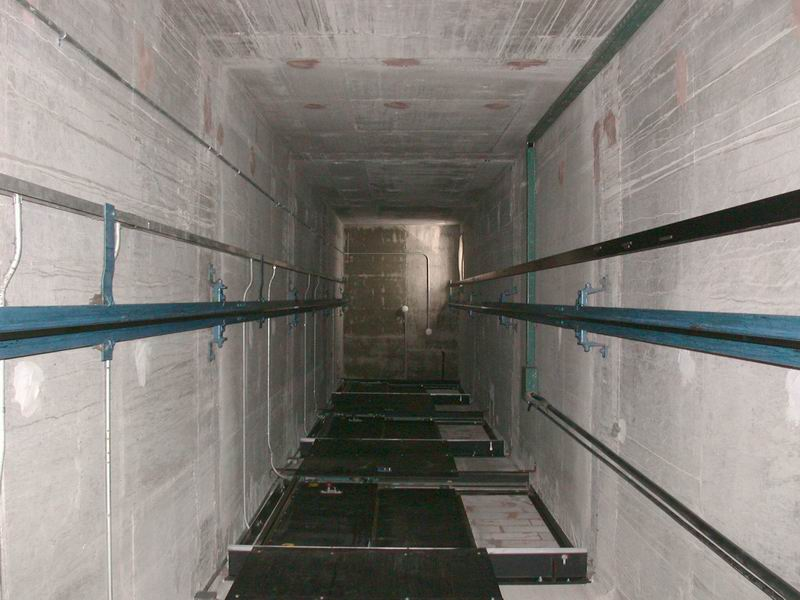
Almost nobody has seen the inside of a lift shaft, which is the point of it. A lift is designed so that the only part a passenger ever experiences is a box with two doors, and everything that makes it work is in the shaft beside the box, in the pit underneath and in a motor room above.
The people who did see it were the engineers who maintained it, and in 1960 the way they got around a building’s shaft was to stand on the roof of the lift car and ride it. That practice has not been abolished — it is still how some work is done — but everything about how it is permitted has changed, and the list of what was absent in 1960 is longer than the list of what was present.
What the job actually was
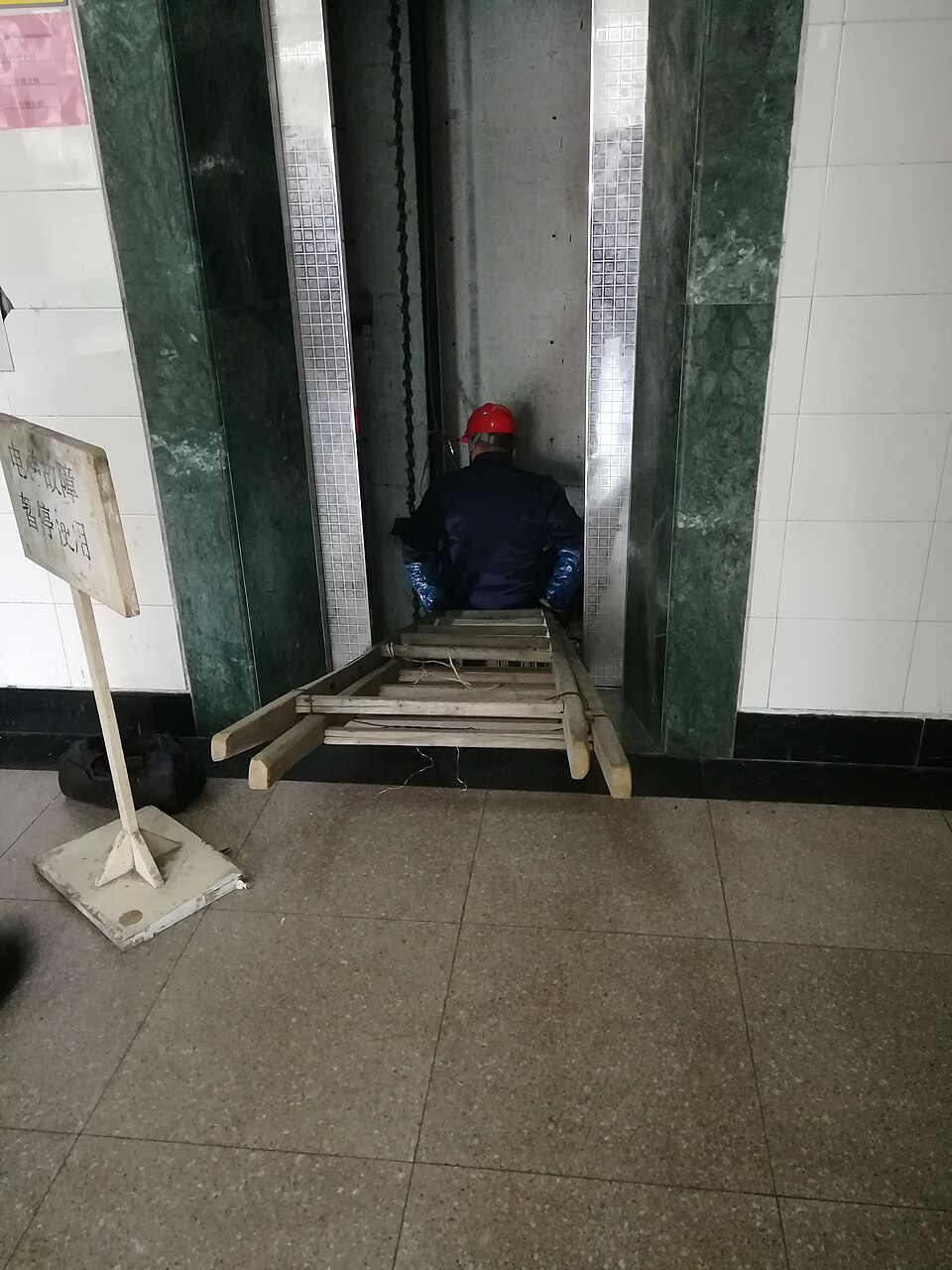
A lift needs regular attention in a way that most building plant does not, because it is a machine carrying people hundreds of times a day. The engineer’s round covered the machine room, the shaft, the car and the landings: checking and adjusting the brake, the governor, the door operator and the levelling, lubricating the guide rails and the machine, cleaning the pit, and testing the safety gear.
Most of that is still the job. What has changed is how the engineer reaches it, what is isolated while they work, and what happens if something moves when it should not.
The trade was and is a small one with a long apprenticeship, because the work combines mechanical fitting, electrical control and a specific body of knowledge about a machine type that is governed by its own standards rather than by general engineering practice. An engineer learned a manufacturer’s equipment and then learned the next one.
It was also a solitary job. An engineer worked a round of buildings alone, in plant rooms and shafts that nobody else entered, with no means of calling for help except finding a telephone.
Like our content? Follow us for more.
Riding the car top
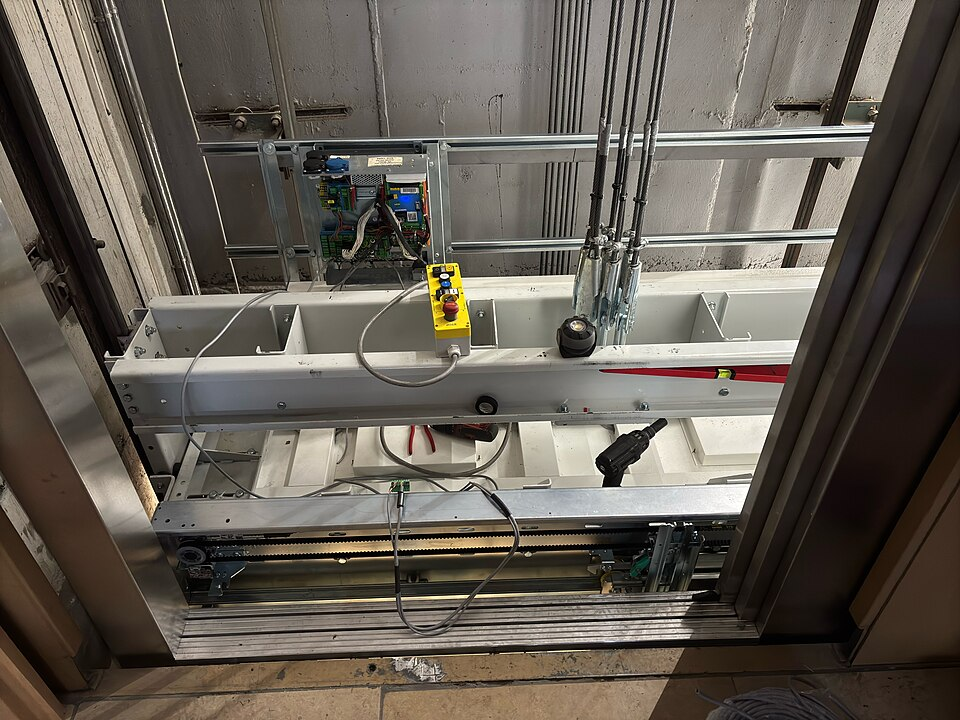
To work in a shaft you have to move through it, and the practical way to do that is to stand on top of the car and drive it slowly from a control on the roof. In 1960 that meant opening a landing door with a key, stepping across the gap into the shaft onto the car roof, and operating the lift from there.
What was absent is the whole of the modern arrangement. There was frequently no top-of-car control station as a designed feature, no inspection speed limit, no emergency stop within reach, no handrail or toe board around the car roof, no permanent lighting in the shaft, no fall arrest attachment point, and no refuge space guaranteed at the top of the shaft between the car roof and the headroom.
The modern standards address every one of those explicitly, and the headroom refuge space is the one that matters most: a shaft must now provide a defined clear space above the car roof so that a person standing there cannot be crushed if the car travels to its upper limit. That requirement exists because the alternative is relying on nothing going wrong.
Current practice also requires the inspection control to override normal operation absolutely, to run at a reduced speed, to need continuous hand pressure so that releasing it stops the car, and to be accompanied by an emergency stop. An engineer on a car top is now in control of the machine in a way that a 1960 engineer simply was not.
The pit, which is worse than the shaft
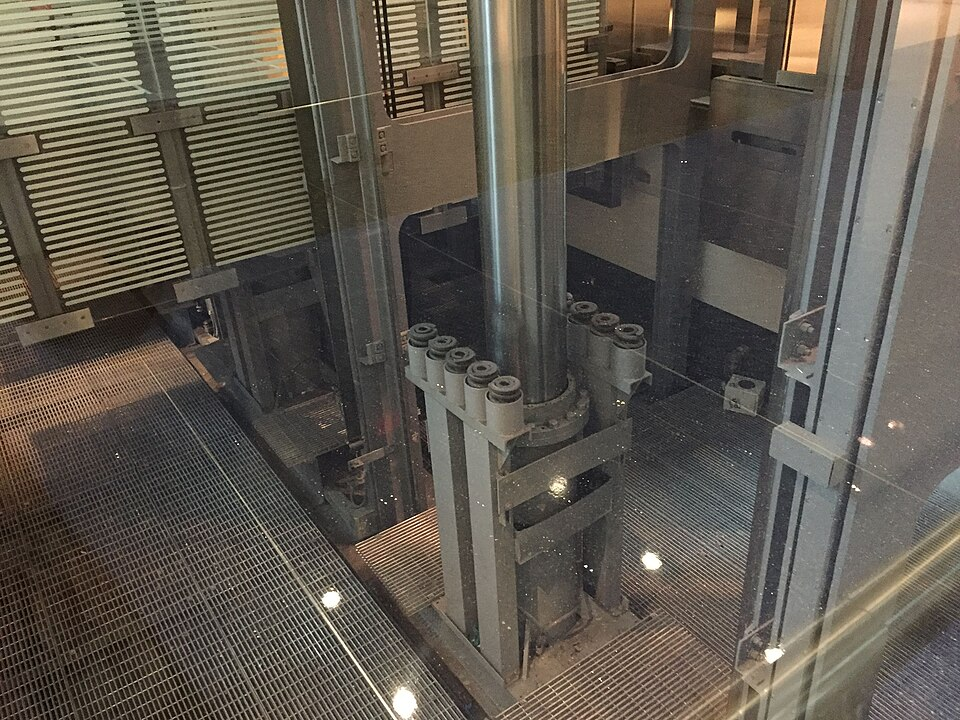
The pit is the space below the lowest landing, and the engineer goes into it to clean, to adjust the buffers and the tensioning gear, and to deal with water. It is a confined space at the bottom of a hole with a counterweight running past it and a car above.
In 1960 you got in by opening the bottom landing door and climbing down. The modern requirements include a pit ladder, a pit stop switch that an engineer can operate on entering so that the lift cannot move while they are in there, lighting, and in deep pits a refuge space below the car for the same reason as the one above it.
Water in a pit is the other half of the subject and it is a real maintenance problem in older buildings, because a lift pit is usually the lowest point in the structure. Standing water in a pit with electrical equipment in it is a hazard the modern standards deal with through drainage requirements and by raising equipment.
The pit is also where the counterweight comes down, which is the single most important thing for anybody to understand about a lift shaft: there are two moving masses in there, not one, and they move in opposite directions.
Door interlocks, and the fact that they were defeated routinely
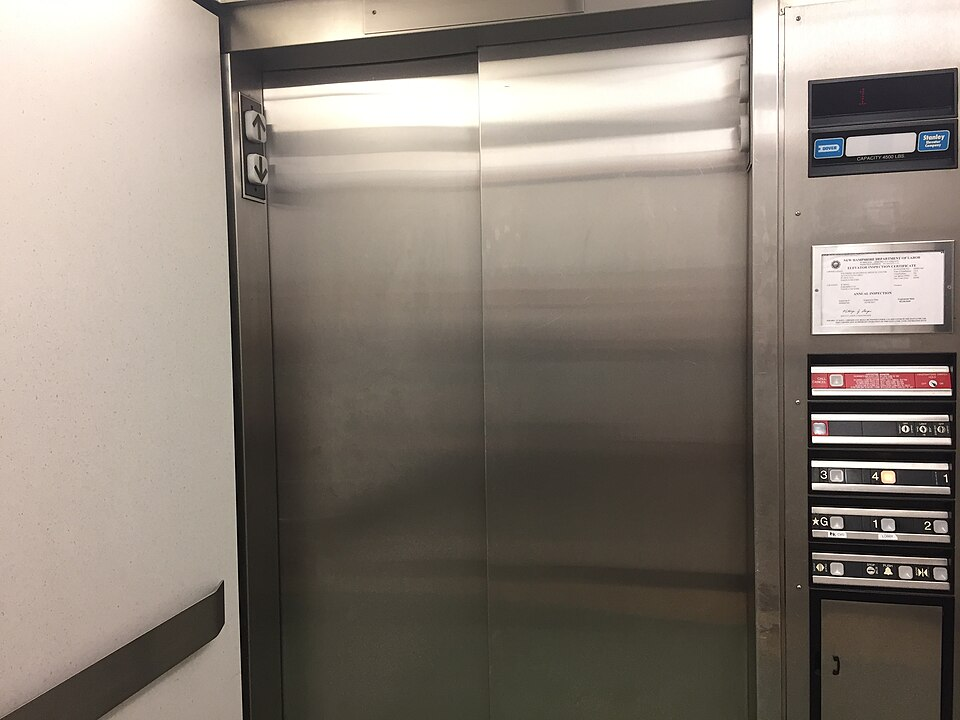
A lift’s doors are its principal safety system. The interlock arrangement means a landing door cannot be opened unless the car is there, and the lift cannot move unless every door is closed and locked. Everything else in a lift is a backup to that.
The practice in 1960, and for decades afterwards, was that engineers defeated interlocks with a tool or a jumper wire in order to work, because the alternative was that nothing could be adjusted while the machine could be made to move. It was the normal working method and it is the reason the modern inspection controls exist.
The standards now provide a legitimate route: a designed inspection mode which takes the lift out of normal service, gives the engineer control, keeps the protections that matter and removes the need to improvise. Bypassing an interlock with anything other than the designed and documented means is now treated in the trade as the most serious thing an engineer can do.
The reason this subject matters beyond the trade is that an interlock defeated and left defeated is a hazard to the public rather than to the engineer. A landing door that opens onto an empty shaft is the failure mode behind a very large proportion of lift incidents involving passengers, and it is why modern maintenance regimes are documented and audited rather than left to the individual.
The machine room, and what was in it
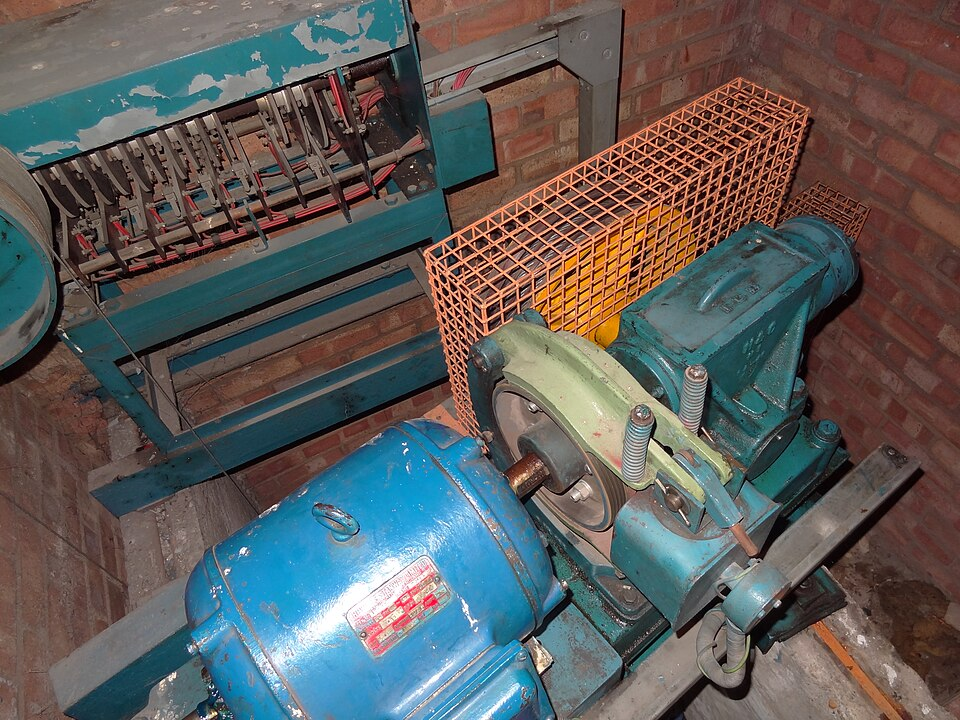
A traction lift’s machine room sits above the shaft and holds the motor, the gearbox, the brake, the traction sheave, the governor and in 1960 a wall of contactors and relays that constituted the control system. It is a hot room full of moving machinery, and in 1960 it was frequently unguarded.
The gearbox used oil and it leaked, the rails needed oiling, and a 1960 machine room floor was an oily floor in a room where an engineer worked around an unguarded rotating sheave with a wire rope running over it. Guarding of rotating parts, drip containment and floor condition are all now specified.
The control gear is the part that has changed beyond recognition. Relay logic has been replaced by electronic controllers, and with them came diagnostics, fault logging and remote monitoring, so that a modern lift reports what is wrong with it before an engineer arrives, and in many installations before anybody in the building has noticed.
Machine rooms in older buildings also commonly contained asbestos, in brake linings, in insulation around the motor and in building fabric, and the current position is the one that applies everywhere: presumed present in plant of that age, identified and recorded, managed in place, and disturbed only by licensed contractors.
Entrapment is the real subject
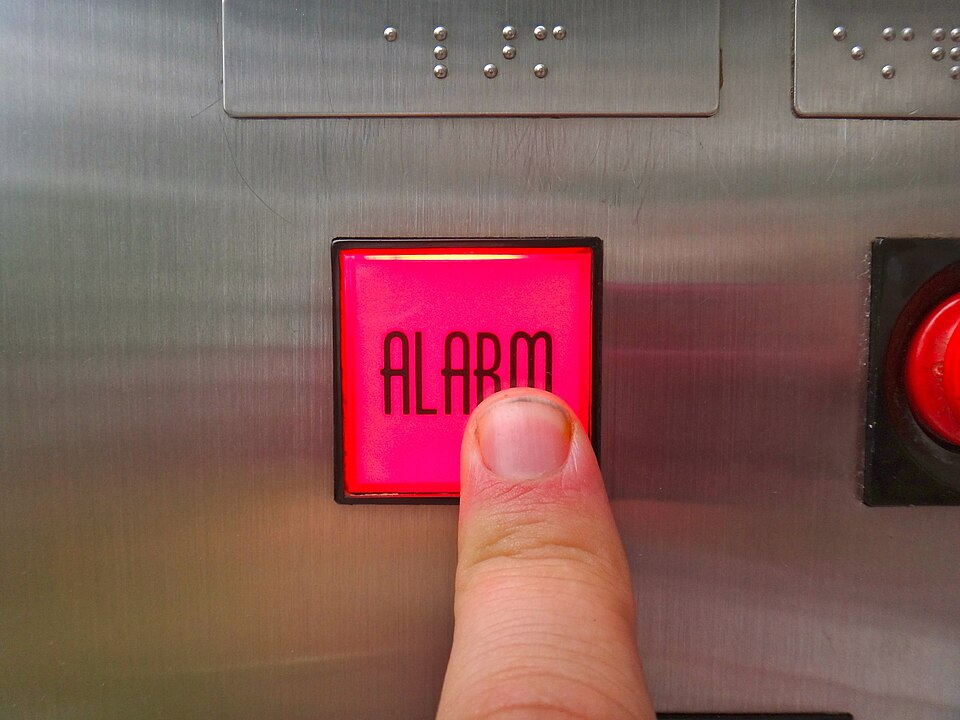
Ask the public what goes wrong with lifts and the answer is falling. Ask an engineer and the answer is entrapment, because that is what actually happens: the lift stops between floors with people inside, and the question is how quickly somebody competent reaches them.
In 1960 the answer depended on a bell, somebody hearing it, and somebody telephoning an engineer who might be two buildings away with no means of being contacted. In a building that was closed for the weekend, the answer could be a very long time.
The modern requirements are specific: a two-way voice communication system from the car to a service that is permanently attended, an alarm that works on standby power, lighting in the car on standby power, and a documented release procedure with trained people available. Remote monitoring in many installations raises the alarm automatically.
The release itself remains a procedure for trained people only, for the same reason the interlocks exist. Passengers attempting to leave a stalled car through the doors or the roof hatch is the circumstance in which lift incidents become serious, which is why every modern notice in a lift says to wait and call.
What the job is now
It is still a small trade with a long apprenticeship, still involves standing on a car roof and going into a pit, and is still largely solitary — but it is done with designed inspection controls, isolation switches, refuge spaces, lighting, documented procedures and a mobile telephone.
What changed is not the engineer’s courage but the machine’s design. Every provision described above as modern exists because somebody worked out how a lift could injure the person maintaining it and then required the lift to make that impossible, rather than requiring the person to be careful.
The honest summary: riding a car top with no refuge space, no emergency stop and no inspection speed is the practice that would be unthinkable now, defeating a door interlock as a working method is the one that endangered the public rather than the engineer, and the thing worth knowing as a passenger is the opposite of the instinct — if a lift stops between floors, the correct action is to press the alarm and wait, because the people who get hurt in lifts are overwhelmingly the ones who try to get out.
Like our content? Follow us for more.
