
Doorstep credit in 1960 ran on one man’s knowledge of a street. He decided who was good for the money, sold the goods, collected the weekly payment in cash, and kept the only written record of what was owed in a book in his coat.
It gave households that no bank would consider access to credit in small amounts without paperwork, and it had almost none of the protections that now exist. Here are sixteen things about it.
1. Credit was granted at the door by a man who knew the street

There was no application, no form and no check against any central record. A collector decided whether a household was good for the money on the basis of what he knew about them, which he knew because he called every week.
Consumer credit is now a regulated activity. A lender must be authorised, must assess creditworthiness and affordability before lending, and must do so on evidence rather than impression, with the assessment recorded.
The old method was not stupid. Local knowledge is genuinely predictive of whether somebody will pay, and the modern complaint about credit scoring is precisely that it has no idea who anybody is. What local knowledge could not do was price risk, document anything or be appealed against.
Like our content? Follow us for more.
2. The cost was never expressed as a rate

A customer was told the weekly payment and the number of weeks. Nobody multiplied it out, nobody compared it with the cash price, and nobody quoted an annual percentage.
Disclosure of the annual percentage rate, the total amount payable and the total charge for credit, in a standard form, before the agreement is made, is now a legal requirement in essentially every developed market. The whole point is comparability.
This is the single largest change in consumer credit. Not the price, which can still be high, but the obligation to state the price in a form that lets somebody compare it with something else.
3. Goods were sold at a credit price, so there was no interest to disclose

The way round any disclosure was structural: the collector sold goods at a price that already included the cost of credit, so there was nominally no interest at all, just a higher price paid weekly.
Regulation now looks at substance rather than form. A sale on deferred payment at a higher price is credit, the charge for credit is the difference, and it has to be disclosed as such. The structure that used to avoid the question is now the definition.
This pattern recurs in financial regulation generally. Rules written about one form get restructured around, and the rules get rewritten to follow the economics instead.
4. The agreement, if it existed, was in his book
The record of what was owed was a column in the collector’s book, written in pencil, marked each week. The customer often had a card and often did not, and the two did not always agree.
The customer must now receive a copy of the agreement, statements at defined intervals, notice before certain actions and information about arrears in a prescribed form. The lender’s record is not the only record.
The asymmetry was the problem rather than dishonesty. A dispute between a household and a man with the only written record has one possible outcome, whatever either party intended.
5. Payments were weekly, in cash, at the door

Collection was in person on a fixed day, in cash, with the amount small enough to feel manageable and the frequency high enough that the debt was a permanent feature of the week.
Weekly home-collected credit still exists as a regulated product in some markets and has shrunk dramatically, displaced by cards, online lending and point-of-sale instalment products, all of which take payment automatically rather than in person.
Something was lost as well as gained. A collector at the door could see that a household was struggling and in practice often took less, which an automated direct debit cannot do and does not do.
6. The collector was the salesman as well

The same man who collected the payments sold the next item, and his income depended on both. A household that had nearly finished paying was the best prospect on the round for something new.
That conflict is now addressed directly. Rules on incentives, on the separation of advice from sales, on not encouraging further borrowing to those in difficulty, and on refinancing existing debt are all pointed at this specific structure.
Rolling a nearly-cleared debt into a new and larger one is the mechanism that keeps a household permanently in credit, and it is the practice modern rules on repeat borrowing exist to interrupt.
7. Nobody asked whether the household could afford it
Affordability was not a concept. The question was whether the money would be paid, which is a different question, and a household that paid by going without other things was a good customer rather than a problem.
Affordability assessment is now a legal duty distinct from creditworthiness: not merely whether the debt will be repaid but whether repaying it will cause the borrower significant hardship. Lending that is repaid at the cost of essentials is now a regulatory failure.
That distinction is the most important idea in modern consumer credit regulation and it did not exist in any form in 1960.
8. The debt belonged to the household, not to a signatory

In practice the obligation attached to the address and to the family, with payments made by whoever was in when the collector called, including by people who had never agreed to anything.
Liability now follows the agreement. The person who signed is the borrower, joint liability requires joint agreement, and pursuing somebody for another person’s debt is prohibited and is a recognised category of complaint.
The practical version of this still matters. Nobody is liable for a relative’s or a partner’s debt merely by living with them or by having paid some of it, and that is worth knowing in both directions.
9. Children answered the door and handed over the money

It was entirely ordinary for the weekly payment to be left with a child, handed over by a child, and recorded in the book with nobody adult present on either side of the transaction.
Rules on the conduct of collection now cover who may be dealt with, prohibit discussing a debt with third parties, require identification, and treat pressure applied to anybody other than the borrower as misconduct. Dealing with a child about a debt would be a serious breach.
This is one of the items that reads most strangely now and it was unremarkable then, which is a reasonable measure of how much the expectations around debt collection have changed.
10. Arrears were managed by knocking again

A missed payment meant another call, then an evening call, then a call when the household was known to be in. There was no process, no notice, no formal demand and no limit on contact.
Contact is now regulated: frequency, timing, method, what may be said, what may be left with neighbours, and a prohibition on behaviour that amounts to harassment. Formal steps require notice in prescribed form and defined intervals.
The absence of a process cut both ways. A household in genuine difficulty had no route to a forbearance arrangement either, because there was nothing to appeal to and nobody to ask.
11. Repossession happened without a court
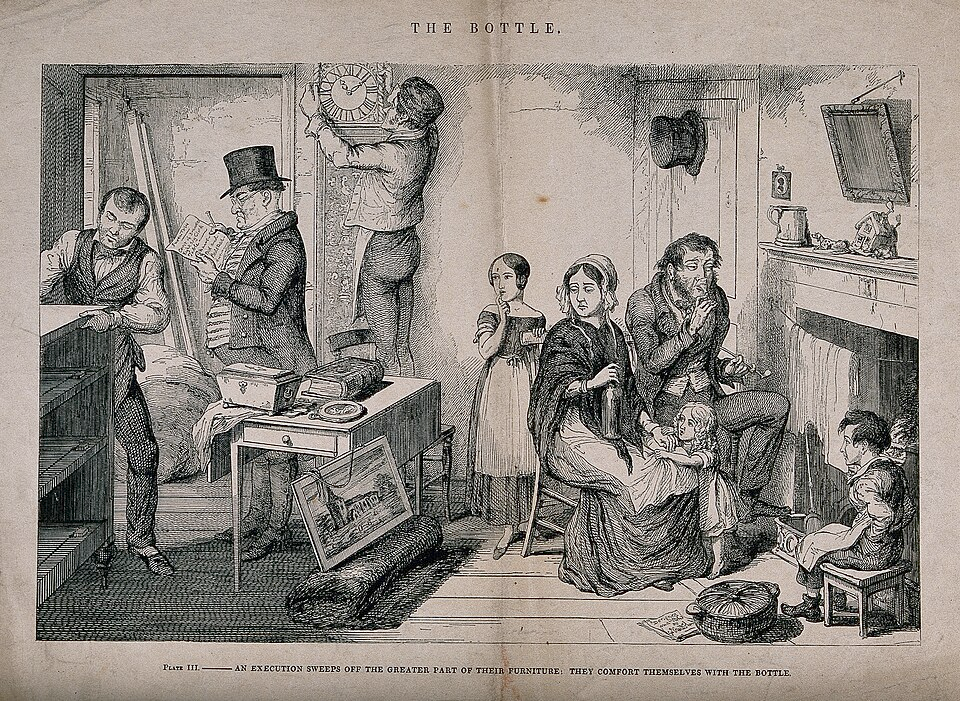
Goods on credit were taken back when payments stopped, by arrangement, by persuasion or by simply collecting them, and whether that was lawful depended on terms nobody had read.
Repossession of goods under a regulated agreement now generally requires a court order once a proportion of the total has been paid, with specific notice requirements, and taking goods without authority is unlawful. The protections are tied to how much has already been paid.
The proportion-paid principle is the part worth knowing. A consumer who has paid a substantial share of an agreement has protections that somebody at the start of one does not.
12. The club book put a neighbour in the middle
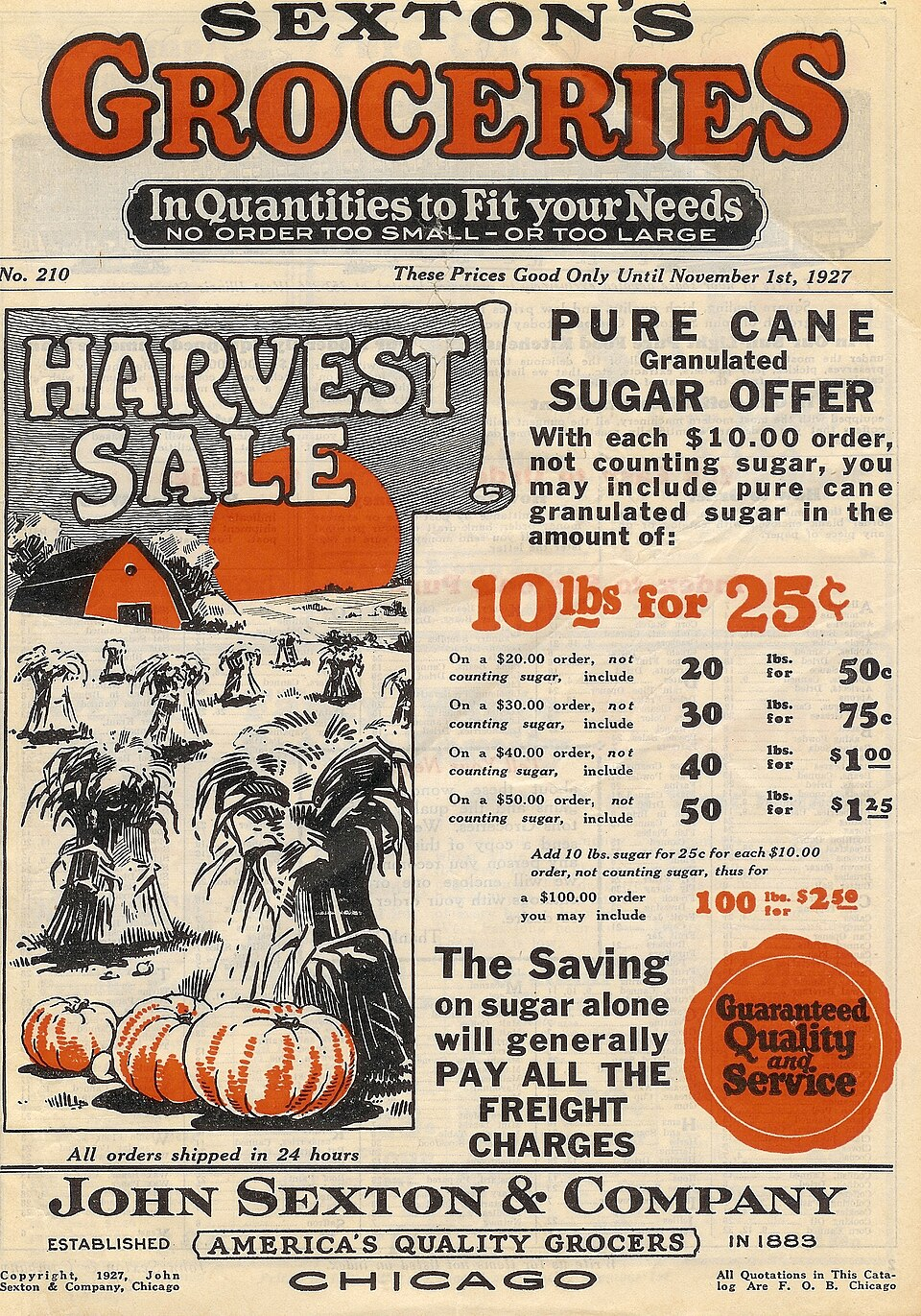
Mail-order clubs ran on an organiser — usually a woman on the street — who took orders, collected payments, earned commission, and was answerable to the company for the money whether her neighbours paid or not.
That structure has essentially disappeared. Where agency arrangements exist they are regulated, and the practice of making an individual personally liable for neighbours’ debts in exchange for commission does not survive modern rules.
The social cost was the point. An organiser chasing her own neighbours for money she personally owed is a dispute the company never had to be part of.
13. There was no complaint route and no ombudsman

A customer who felt wrongly treated had the collector, the collector’s manager and nothing else. There was no regulator with a view, no free independent adjudication and no publicised rules to measure conduct against.
Most developed markets now have a statutory or industry ombudsman for financial services, free to the consumer, with the power to make binding awards, sitting behind a regulator that publishes conduct rules.
The free part matters. An adjudication route that costs money is no use for a dispute about a small weekly sum, which is most of the disputes this trade generated.
14. Interest on arrears compounded quietly

Charges for missed payments, collection visits and administration were added to the balance in the book, which meant a household could owe more after a year of paying than it had borrowed, without anybody doing anything dishonest.
Caps on default charges, rules against charges that exceed the cost of the default, and in several markets an absolute cap on the total cost of high-cost short-term credit, exist specifically to prevent a balance from growing while being paid.
The total cost cap is the strongest intervention in this area anywhere and it was introduced because the mechanism described in that first paragraph proved extremely durable.
15. The whole thing ran on shame

The enforcement mechanism was social. A household that did not pay was known not to pay, by a man who called on everybody else in the street, and that was understood by both sides as the real security behind the debt.
Modern rules prohibit disclosing a debt to third parties, discussing it with neighbours, or any conduct whose purpose is to embarrass a borrower into paying, and that prohibition is one of the most actively enforced parts of debt collection regulation.
It is also the part of this history that people who lived through it mention first, and not with affection.
16. And what the collector actually provided

Access to credit for households that no bank would consider, in small amounts, without paperwork, from somebody who could be reasoned with, and who in hard weeks took what was there and came back. That was a real service and the people who used it generally said so.
What replaced it is cheaper, documented, comparable, capped and appealable, and is also automated, impersonal and much less forgiving of a bad week. The modern equivalents include regulated products designed for exactly this market and a free debt advice sector that did not exist at all.
The honest summary: the absence of a stated rate was the largest single defect, selling and collecting by the same person is the structure modern rules on repeat borrowing are aimed at, affordability as distinct from repayment is the idea that did not exist, nobody is liable for a household member’s debt merely by living with them, and the social enforcement is the part the people who remember it describe worst. Anybody dealing with problem debt now should be talking to a free debt advice service rather than to a lender first, and I can help you find the one for your country if that is useful.
The three ideas that did not exist
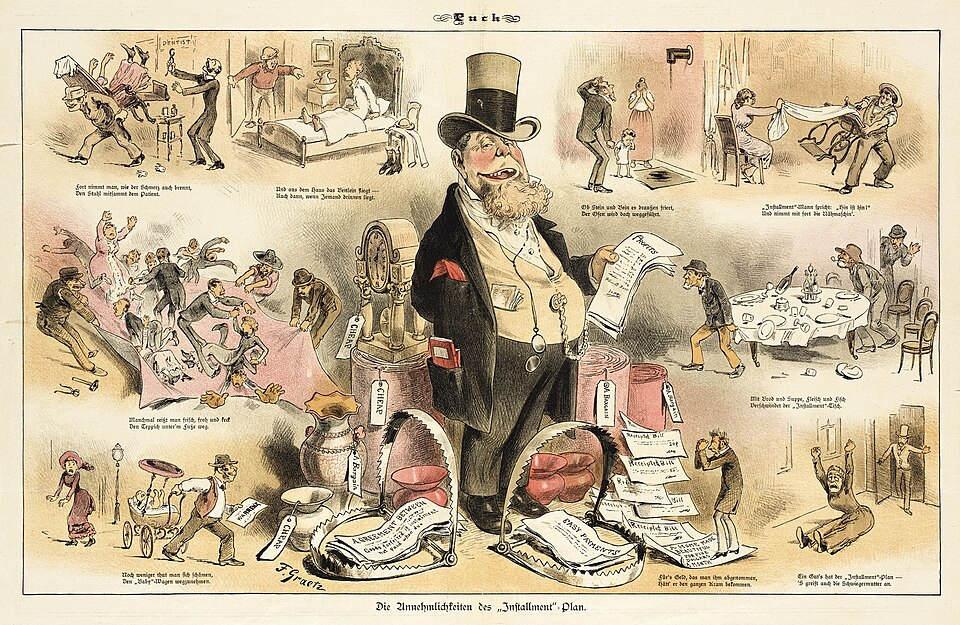
The first is a stated price. A customer knew the weekly payment and the number of weeks and nothing else, and the structure made that easy to sustain: goods were sold at a credit price that already contained the cost, so there was nominally no interest at all. Disclosure of the annual rate, the total amount payable and the total charge for credit in a standard form before the agreement is now the foundation of consumer credit law everywhere, and it exists for comparability rather than to control the price itself.
The second is affordability as a separate question from repayment. In 1960 the only question was whether the money would come, and a household that paid by going without other things was a good customer. Modern regulation treats that as a failure: the duty is to assess not merely whether a debt will be repaid but whether repaying it will cause significant hardship.
The third is independent adjudication. There was the collector, his manager, and nothing. Most developed markets now have an ombudsman that is free to the consumer and can make binding awards, which matters precisely because the sums in dispute were small.
Underneath all three sat the real security: social enforcement. A household that did not pay was known not to pay by the man who called on the whole street, and both sides understood that. Disclosing a debt to third parties or any conduct intended to embarrass a borrower into paying is now among the most actively enforced prohibitions in collection regulation.
Two things in this file are worth knowing as facts about the present rather than the past.
Nobody is liable for another person’s debt merely by living with them, by being related to them, or by having paid some of it at the door. Liability follows the agreement, joint liability requires joint agreement, and being pursued for somebody else’s debt is a recognised category of complaint.
And where a substantial proportion of a regulated agreement has already been paid, goods generally cannot be repossessed without a court order. The protections scale with how much has been paid, which is the opposite of most people’s assumption.
If problem debt is a live question rather than a historical one, a free debt advice service is the right first call rather than the lender, and I am happy to help you find the one that covers your country.
Like our content? Follow us for more.