A basket maker in 1960 sat on the floor, or on a plank a few inches above it, with a board across his knees and a tub of water beside him. He worked with both hands and both feet, using a foot to hold the work down while he pulled a rod tight, and he did it for eight or nine hours.
The posture is the first thing anybody notices and the thing the trade is remembered for. The second is that almost everything he made was for industry rather than for decoration, and that within fifteen years nearly all of it would be made of plastic instead.
The material, which is a crop
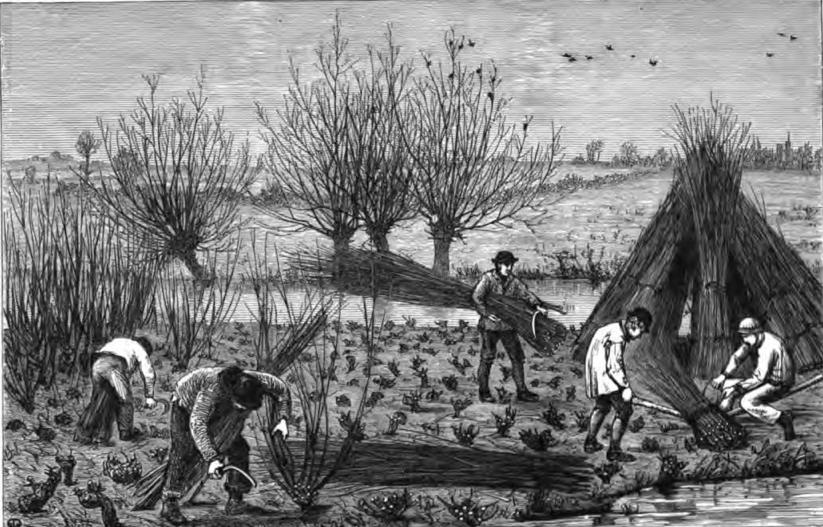
Basket willow is grown, not gathered. It is planted as cuttings in beds on wet ground, cut back hard every year, and harvested in winter when the leaf is off and the rods are dormant.
One year’s growth gives a straight unbranched rod, and that annual cutting is what produces the long even material a basket needs. A willow left to grow becomes a tree and is useless for the purpose.
The cut rods are graded by length, which is done by standing bundles on end in a pit and drawing off the tallest first. Grading is the unglamorous skill that determines whether a basket comes out even.
The varieties matter. Different willows give rods of different flexibility, colour and taper, and a grower kept several beds because a basket maker ordered by name.
It is a genuinely sustainable crop in the plain sense: it is cut annually, it coppices indefinitely, it grows on land too wet for much else, and the product is compostable at the end of its life.
Like our content? Follow us for more.
Brown, buff and white
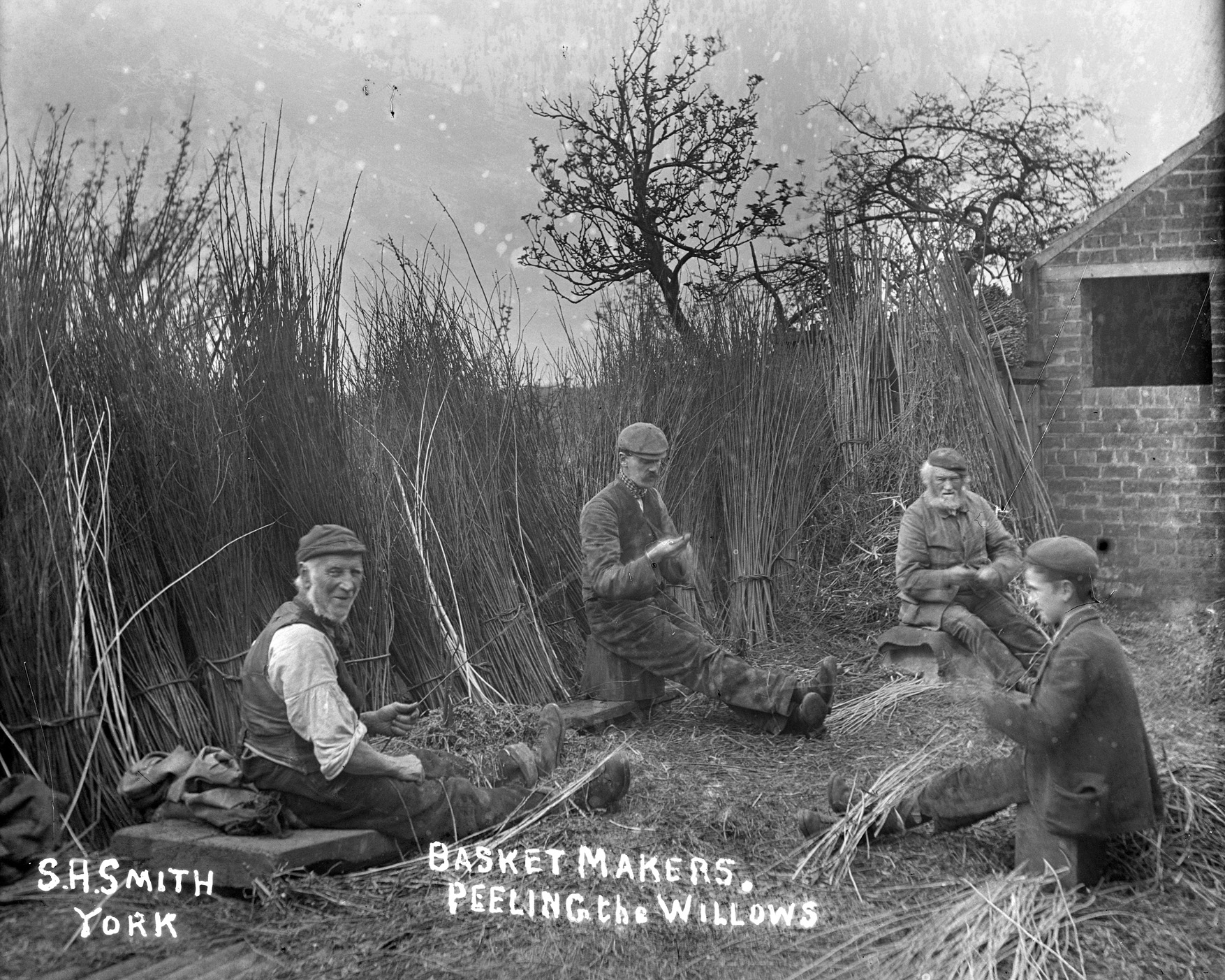
Three preparations, and the difference is visible across a room.
Brown willow is used with the bark on. It is the strongest and coarsest, and it was the material of heavy industrial and agricultural baskets.
White willow is stripped of its bark. To do it, the rods are stood in shallow water through the winter so that in spring the sap rises and the bark lifts; they are then drawn through a brake, a sprung metal fork that peels them. The result is pale and fine.
Buff willow is boiled with its bark on for several hours and then stripped. The tannins in the bark stain the wood, which is where the warm reddish-brown of a traditional hamper comes from — it is not a dye and it is not a varnish, it is the bark’s own colour cooked into the rod.
All three must be soaked before use and then mellowed, wrapped damp, for a day or so. Brown willow may need a week in the tank; buff needs hours. Work a rod too dry and it snaps; work it too wet and the basket loosens as it dries.
How a basket is actually built
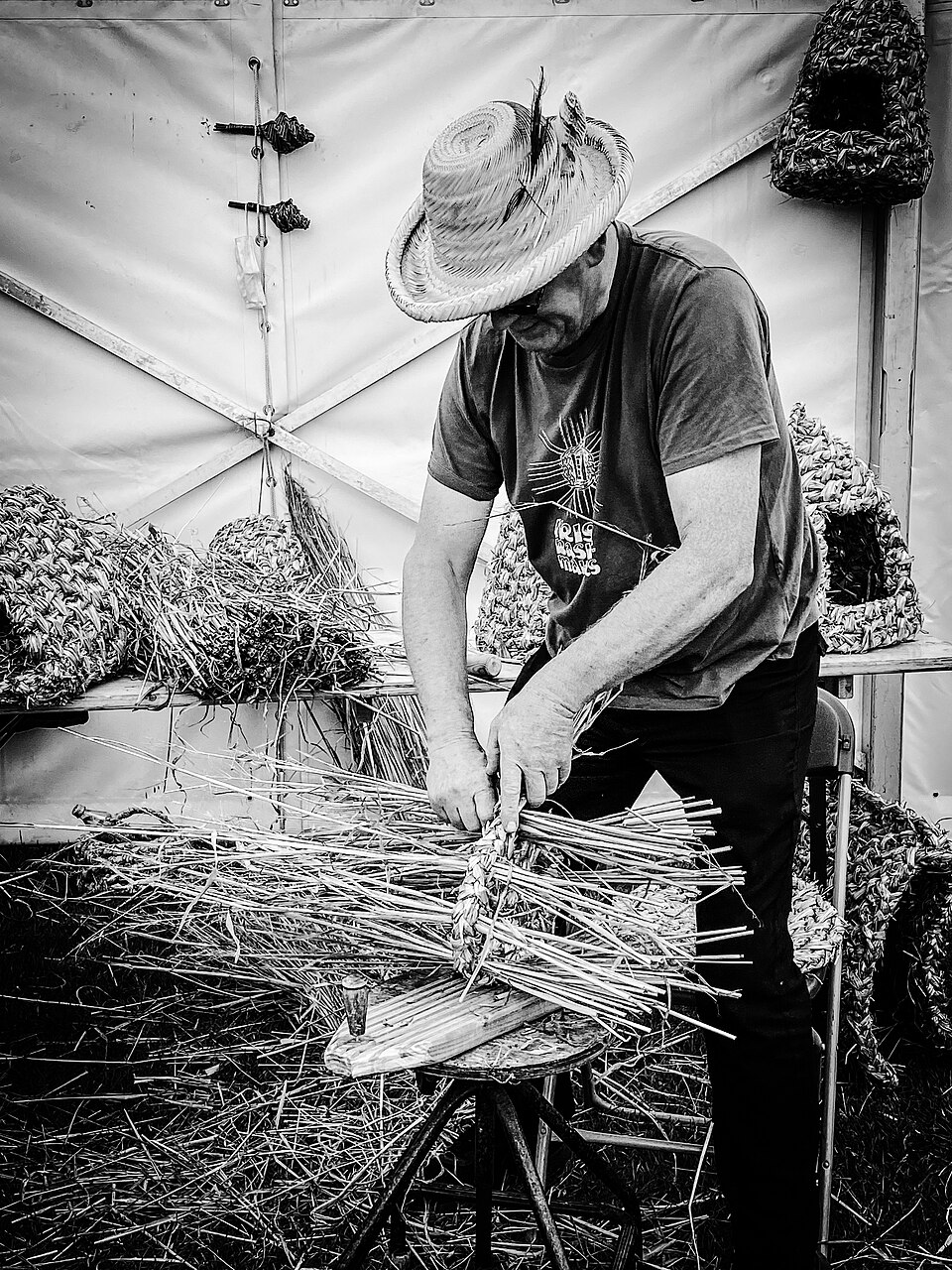
From the bottom up, with no frame, no mould and no fastening of any kind. The structure holds together by tension and friction alone.
The base starts as a slath: short thick rods crossed at right angles and bound. The base is woven out from there, then the side stakes are inserted alongside the base sticks and bent upward in a stroke called the upsett, which is the moment the basket becomes three-dimensional and the point at which its final shape is determined.
The sides are then woven in a number of distinct strokes, each doing a different job. Randing is one rod at a time in and out, which fills quickly. Slewing uses several rods together. Waling is a stronger stroke worked with three or more rods that binds the stakes and stiffens the wall, and it is placed at the points where strength is needed.
The top is closed with a border, in which the stakes themselves are bent down and woven into each other, and then handles, lids and feet are added.
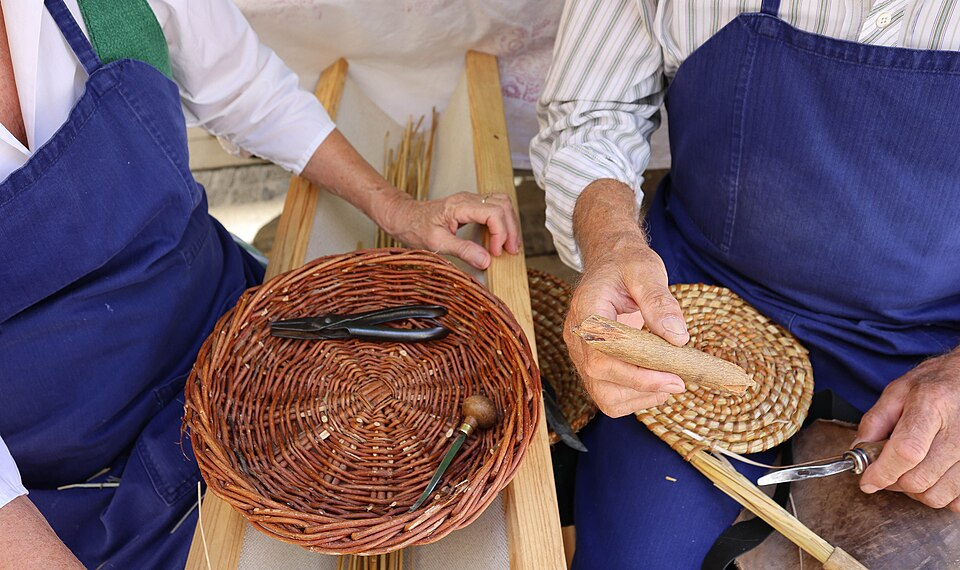
The tools are few: a sharp knife, a bodkin for making space, a cleave for splitting rods into skeins, a shave, and a heavy iron for beating the weave down tight.
What it was all for
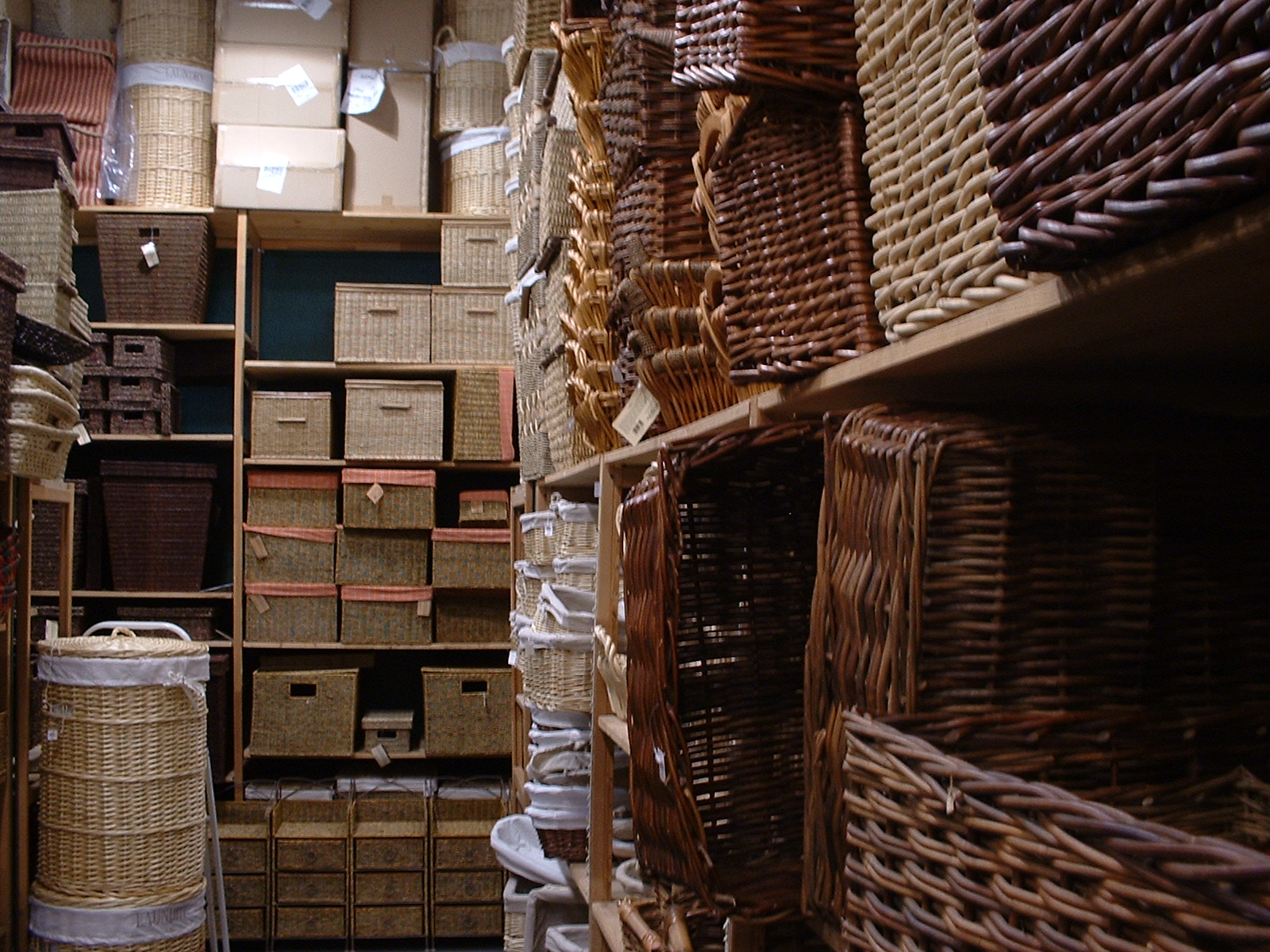
Transport and containment, in enormous quantities. In 1960 a willow basket was the normal container for a great many things that now arrive in plastic or cardboard.
Bakeries delivered in wicker. Laundries collected in wicker hampers. The post office moved mail in wicker baskets. Breweries, dairies and fishmongers used them. Pigeon racing depended on purpose-made baskets. Fishermen used creels and traps. Hospitals used wicker trolleys and linen hampers.
There was also a steady trade in specialist work: chair seating, baby carriages, bottle carriers, furniture, and the frames of certain agricultural implements.
The common factor is that all of it was returnable. A basket went out full, came back empty and went out again, for years, and when it broke it was repaired. The economics of the trade rested on that cycle.
When packaging became single-use, the market did not shrink gradually. It went.
The workshops for blind workers
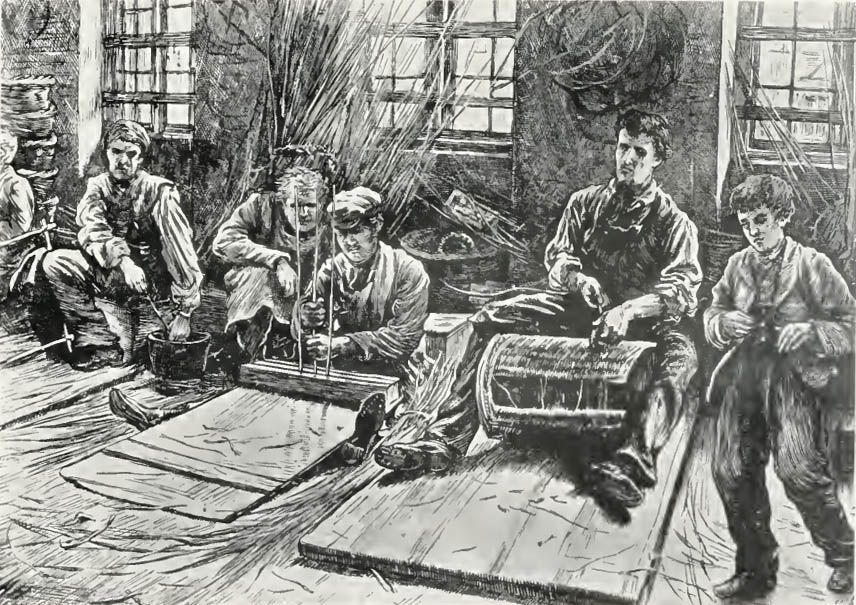
Basketry was one of the trades systematically taught to blind people from the nineteenth century onward, and workshops employing blind basket makers were a substantial part of the industry in many countries.
The reason is practical rather than sentimental. Basket making is almost entirely a tactile operation: the weave is judged by feel, the tension is felt rather than seen, and a skilled maker does not look at the work much anyway.
These were real jobs producing real goods sold commercially, and the workers were skilled tradespeople. That is worth stating plainly, because the arrangement is sometimes described as though it were occupational therapy, which it was not.
The workshops declined with the rest of the trade, for the same reason, and the loss of that employment was a real consequence of plastic packaging that is rarely included in the story.
Some of those institutions still exist in altered form, and a few still teach the craft.
Plastic, cardboard, and how fast it happened
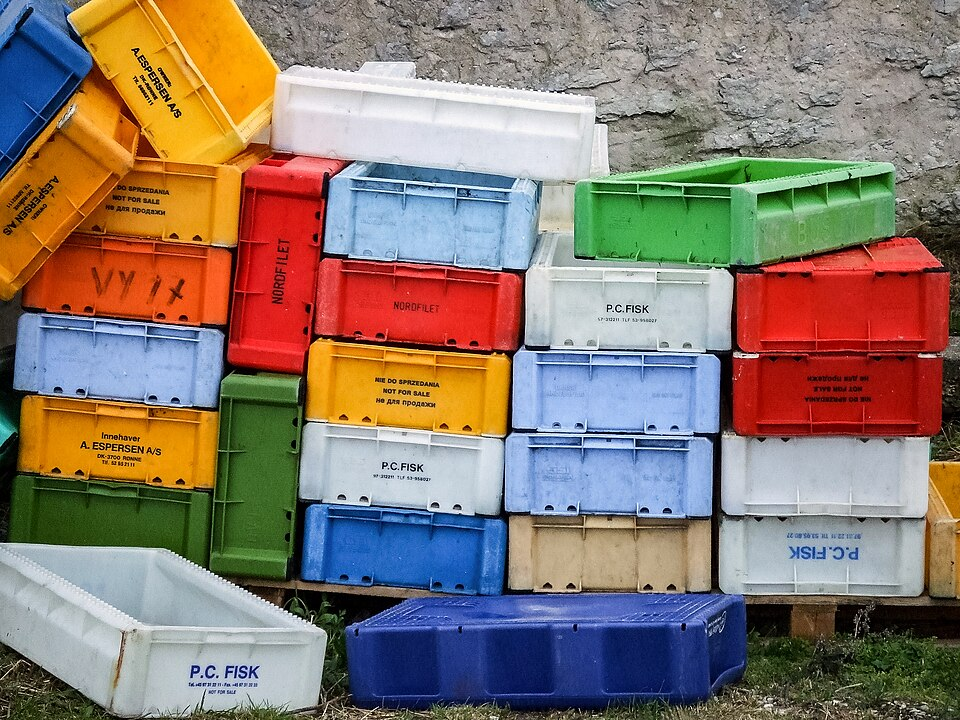
The displacement ran roughly from the mid 1950s to the early 1970s and it was close to total in the industrial market.
Corrugated cardboard took the one-way packaging trade because it is cheap enough to throw away, which removed the need for a returnable container at all. Moulded plastic took the returnable trade because a plastic crate stacks, washes, does not absorb anything and costs a fraction of a hand-woven basket.
The post office, the bakeries and the dairies all converted within a few years of each other. An industry supplying them had nothing to pivot to.
The willow growers went with it. Acreage of basket willow collapsed, beds were drained and ploughed, and the varieties held in those beds were in several cases lost.
What survived was the decorative and domestic end, log baskets and shopping baskets and garden work, plus a few genuinely irreplaceable uses.
The uses nothing has replaced
There are a handful, and the best one is hot air balloons. Balloon baskets are still made of wicker, in volume, by hand, because a woven willow structure absorbs the energy of a landing by deforming and then springing back, and does it repeatedly without cracking or fatiguing.
An aluminium or composite basket of the same weight either transmits the shock to the occupants or takes permanent damage. Willow does neither, and it is also light, cheap to repair and does not conduct electricity, which matters near power lines.
The other survivals are specialist: certain traditional fishing gear, artisan food packaging where appearance is part of the product, living willow structures in landscaping, and woven coffins, which became a real market as burial practice changed.
There is also a small conservation trade, because historic buildings and vehicles contain woven components that have to be remade rather than substituted.
The honest summary: basket willow is an annual crop cut in winter, graded by length, and prepared as brown with the bark on, white stripped after standing in water through the winter, or buff boiled with the bark on so the tannins stain the rod, all of it soaked and mellowed before use; a basket is built from a crossed base called a slath, turned up at the upsett and woven in distinct strokes — randing, slewing and waling — then closed with a border, held together by tension and friction with no fastening, mould or frame; the 1960 market was industrial and returnable, serving bakeries, laundries, the post office, breweries, dairies, fisheries, hospitals and pigeon racing, and it collapsed when cardboard made one-way packaging cheap and plastic took the returnable trade; basketry was a skilled trade systematically taught to blind workers in commercial workshops; and the one industrial use nothing has replaced is the hot air balloon basket, because woven willow absorbs landing energy by deforming and springing back, repeatedly, which rigid materials of the same weight do not.
Like our content? Follow us for more.