Sieve and riddle making supplied foundries, potteries, farms, mines, bakeries and kitchens from one small workshop, and left almost no record of itself. Here are twelve things one did in 1960.
1. A sieve and a riddle are different tools and the trade made both
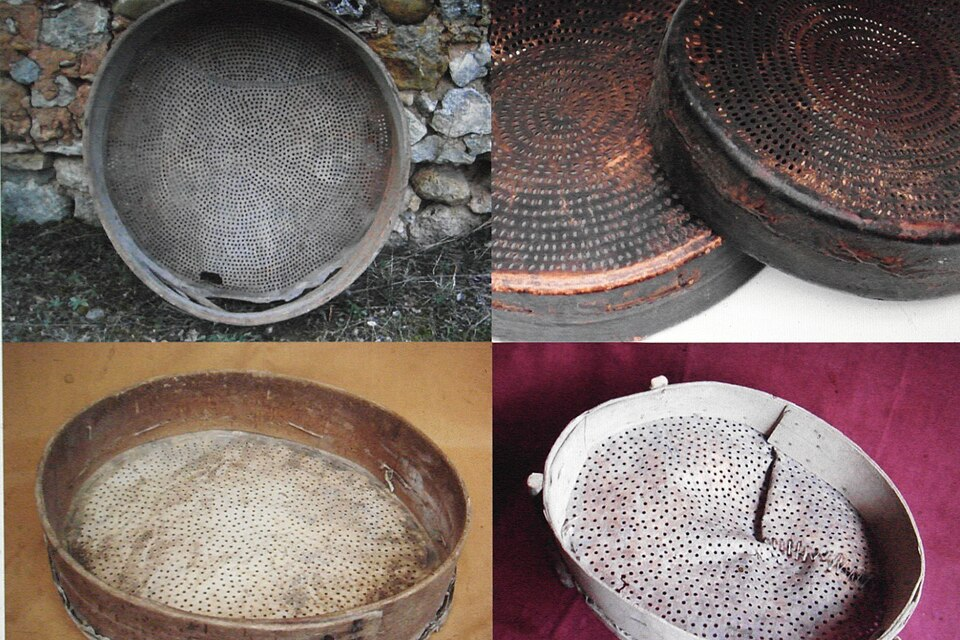
A sieve has a fine mesh and separates small particles from smaller ones; a riddle is coarse, usually with a stout mesh or a punched plate, and separates lumps from loose material.
They are used for completely different jobs — a sieve grades a powder, a riddle takes stones out of soil or cinders out of ash — and they are built differently as a result, the riddle heavier in every component because it is thrown about.
One trade made both, because the construction is the same in principle: a circular rim of bent wood or metal with a screening material tensioned across the bottom and secured round the edge. Modern equivalents are moulded plastic for garden and kitchen use and engineered screening media for industry, and the distinction between the two tools survives in the names even where nobody makes either by hand. Modern equivalents are moulded plastic for garden and kitchen use and engineered screening media for industry, and the distinction between the two tools survives in the names even where nobody makes either by hand. Garden centres still sell something called a riddle and laboratories still buy something called a sieve, and the two are as different now as they ever were, for exactly the same reasons.
Like our content? Follow us for more.
2. The rim was steam-bent wood and that was the slow part
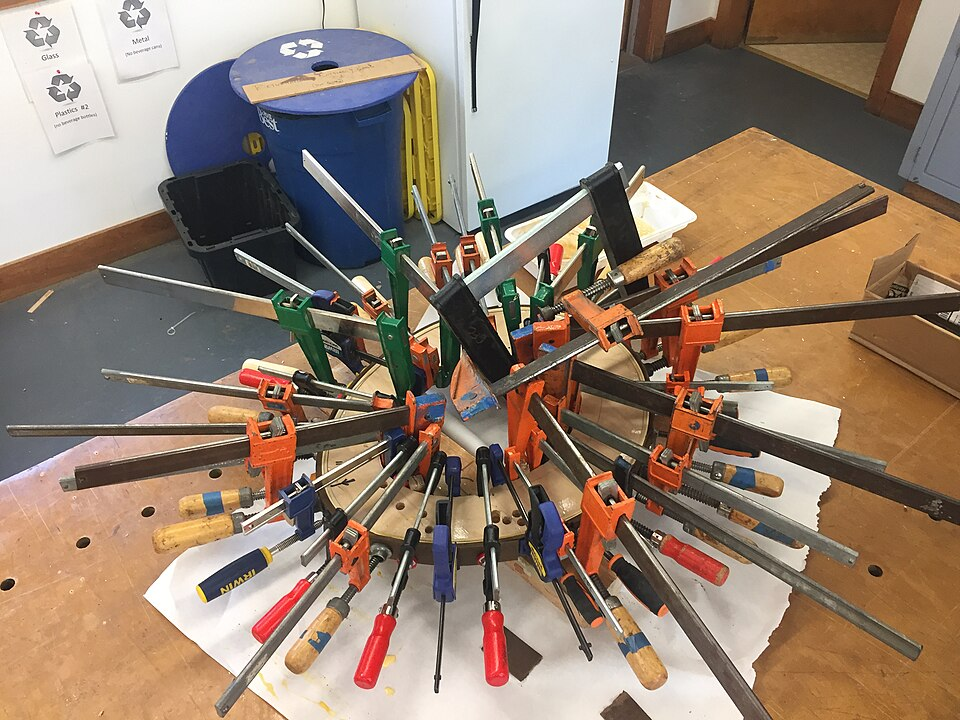
A traditional rim was made from a thin strip of ash, beech or birch, steamed or boiled until it would bend, wrapped round a former into a hoop, overlapped and fastened, then dried and seasoned until it held the shape on its own.
That is a woodworking operation with a waiting period in the middle of it, and the rims were therefore made in batches well ahead of the sieves they would become.
A badly made rim is not round, will not tension the mesh evenly and will loosen in service, so the hoop was the quality-determining component rather than the mesh everybody looks at. Pressed steel, spun aluminium and injection-moulded plastic rims replaced it, each produced in seconds to an identical dimension, and the steam-bending skill moved to furniture and boatbuilding where it is still needed. Pressed steel, spun aluminium and injection-moulded plastic rims replaced it, each produced in seconds to an identical dimension, and the steam-bending skill moved to furniture and boatbuilding where it is still needed. The seasoning period went with it, which is the part that mattered commercially: a works that had to hold months of stock in hoops was replaced by one that makes rims as fast as it can fit meshes to them.
3. The screening material decided what the tool was for

Across the range the trade used woven wire of many gauges and apertures, punched sheet metal, perforated plate, horsehair, woven cane, gut, silk and later synthetic cloth, each chosen for the material being screened.
Silk and horsehair were used where metal would contaminate or where a very fine and gentle separation was wanted, which is why they survived in flour, pharmacy and laboratory work long after wire was available.
The maker therefore held stock of many different meshes and knew which customers wanted which, and much of the business was supplying a known aperture repeatedly rather than making anything new. Industrial screening media are now specified by aperture, wire diameter, material and open area to published standards, with certified test sieves verified by measurement, and the matching of mesh to job is done from a datasheet. Industrial screening media are now specified by aperture, wire diameter, material and open area to published standards, with certified test sieves verified by measurement, and the matching of mesh to job is done from a datasheet. What the maker carried in his head about which customer wanted what is now a product code, which is more reliable and considerably less interesting.
4. Tensioning the mesh was the skill nobody sees
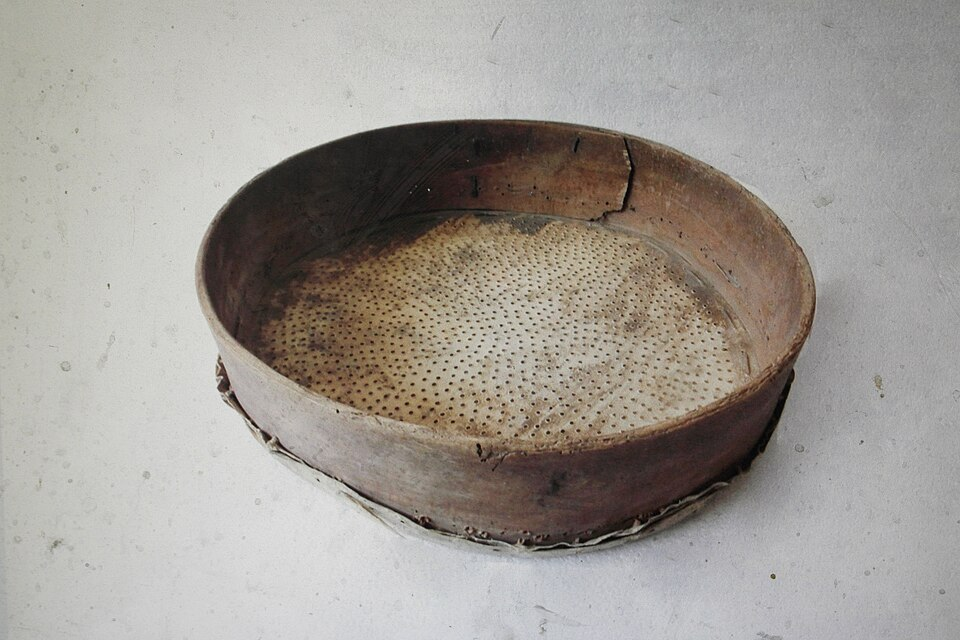
A screen only works if it is evenly tight: a slack area does not separate properly, sags under load and wears through, and an over-tight area distorts the apertures and tears at the edge.
Tensioning was done by hand, working round the rim, pulling and fastening progressively so that the tension came up evenly, and it was judged by feel and by the note the mesh made when tapped.
That is a genuinely difficult thing to do consistently, and it is the reason a hand-made sieve from a good maker was recognisably better than a cheap one. Mechanical tensioning frames and bonded or clamped screen assemblies now apply measured and repeatable tension, and tension is a specified value on an industrial screen rather than a craftsman’s judgement. Mechanical tensioning frames and bonded or clamped screen assemblies now apply measured and repeatable tension, and tension is a specified value on an industrial screen rather than a craftsman’s judgement. Tapping a screen to hear whether it is right is still done on a plant, by maintenance men who learned it from somebody, which is the last surviving trace of how the tool was made.
5. The customers were astonishingly varied
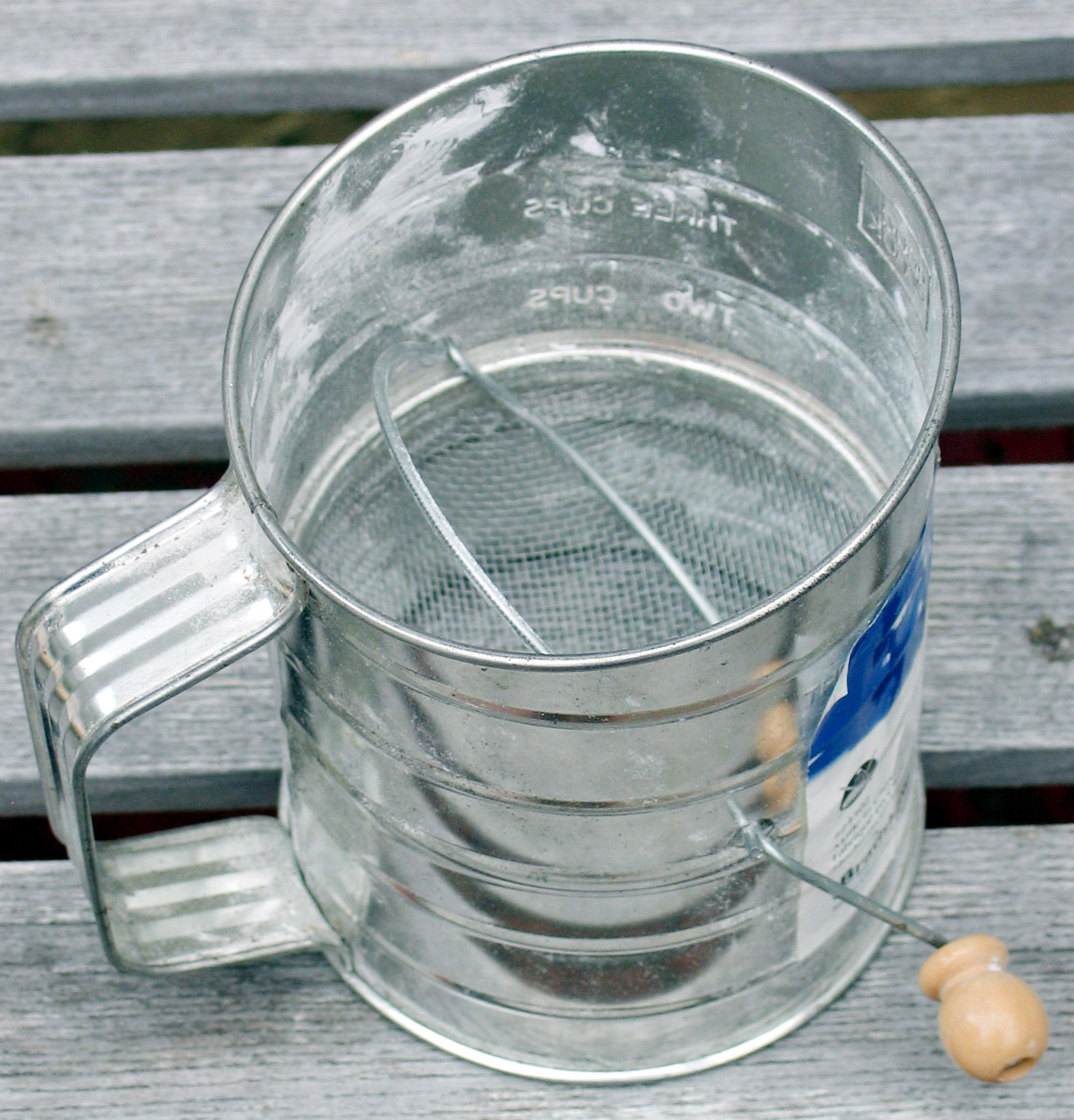
One small works supplied agriculture, horticulture, mining, quarrying, foundries, potteries, chemical works, mills, bakeries, breweries, builders, gardeners and domestic kitchens, each wanting a different size, mesh and construction.
That breadth is why the trade survived as long as it did: no single industry’s decline could kill it, and a maker who lost one market usually had others.
It also meant the order book was enormous in variety and small in each line, which is the hardest kind of manufacturing to mechanise. That same variety is now served by catalogue: a handful of specialist screening manufacturers supply every one of those industries from a standard range, with special sizes made to order at a price. That same variety is now served by catalogue: a handful of specialist screening manufacturers supply every one of those industries from a standard range, with special sizes made to order at a price. The breadth that once protected a small works is now what makes a large one viable, since a standard range only pays if enough different industries buy from it.
6. Foundries and potteries were particularly steady customers
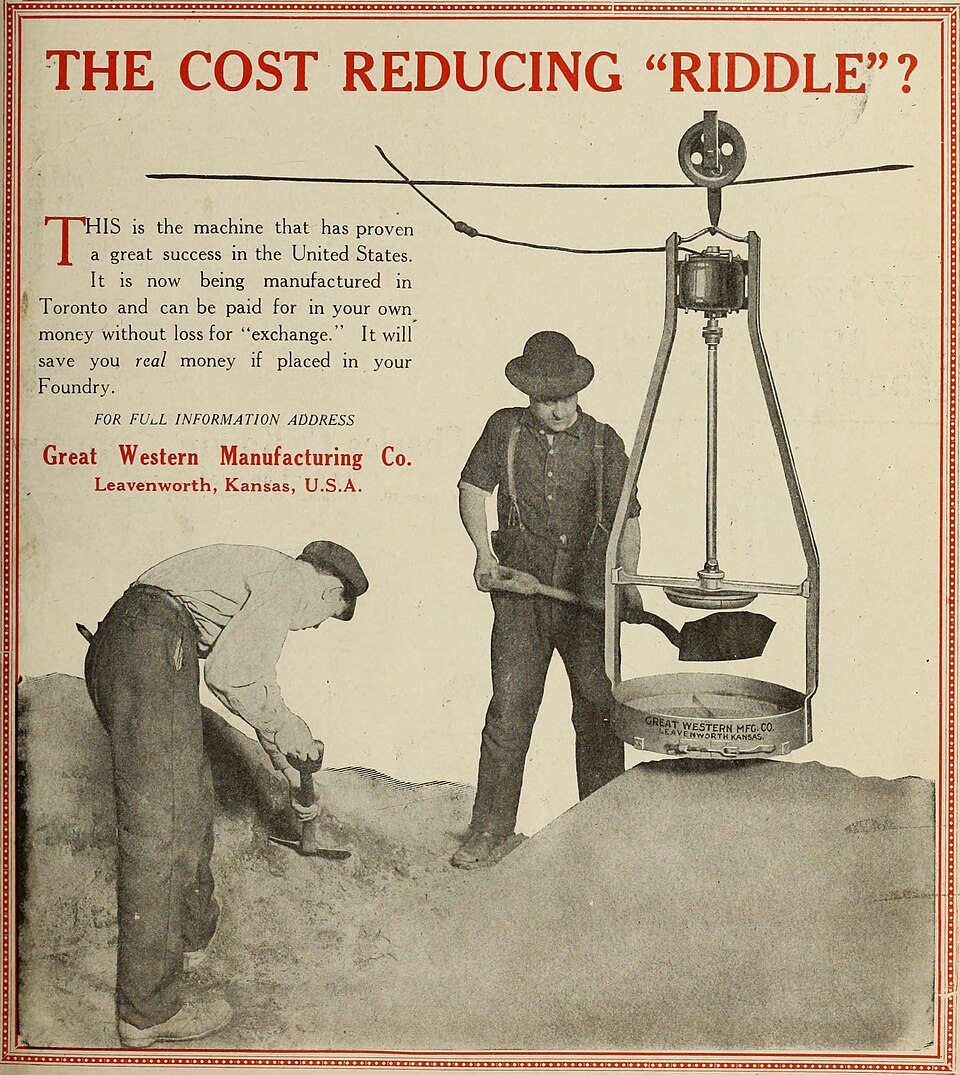
Moulding sand has to be screened to remove lumps and tramp material before it is used, spent sand is screened for reuse, and grog and fireclay are graded by screening before they go into a mix.
That is continuous, heavy-duty work that destroys screens, so a foundry or a pottery was a repeat customer for riddles and coarse screens on a regular cycle.
It also meant the maker had to know what each material did to a screen, because abrasive grades wear wire out while sticky ones blind the apertures. Industrial vibrating and rotary screens now do that work continuously with replaceable screen panels, specified wear life and automated feed, and sand reclamation is a designed plant rather than a man with a riddle. Industrial vibrating and rotary screens now do that work continuously with replaceable screen panels, specified wear life and automated feed, and sand reclamation is a designed plant rather than a man with a riddle. Blinding and wear are still the two failure modes, and they are now managed by choosing a panel material and a screen motion for the specific material rather than by a supplier knowing his customers.
7. Hand riddling was a universal job and a hard one
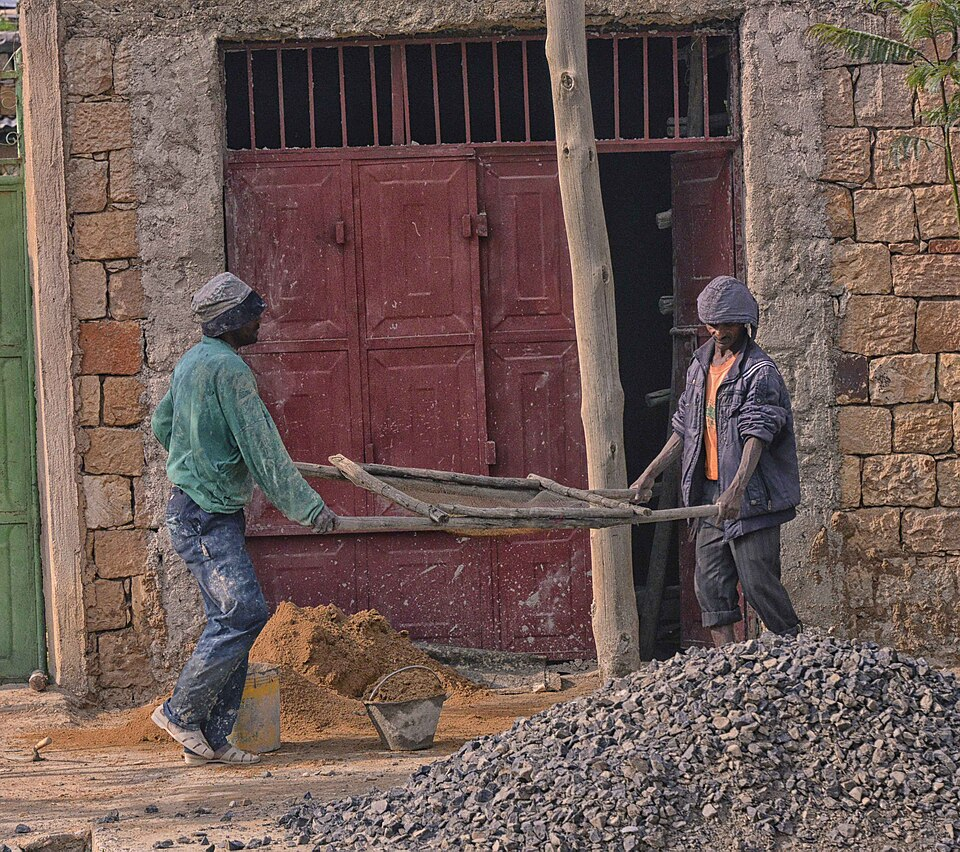
Before mechanical screening was general, somebody screened by hand: soil, gravel, sand, coal, ash, cinders, grain, lime, and almost anything else that arrived in a mixed state.
It is a repetitive, dusty, awkward job done with the arms and the back, usually outdoors, and it was performed in enormous quantities by people who were not paid much to do it.
That is also why riddles were sold in such numbers and why the trade’s volume looks surprising for a tool nobody thinks about. Mechanical screening is now universal at any scale above a garden, and dust control, mechanical handling and manual handling assessment are legal requirements rather than good intentions.
8. The dust was the condition of the work and of the workshop

Making the tools generated wood dust from rim preparation and metal dust from wire and punched plate, and using them generated whatever dust the screened material produced, which in sand, grog, lime, cement and mineral work includes crystalline silica.
Both sides of that were part of the trade’s world, since makers also demonstrated and repaired on customers’ premises.
Wood dust, metal dust and respirable crystalline silica are now separately regulated occupational exposures with limits, mandatory local exhaust ventilation, enclosure and water suppression where practicable, respiratory protection and health surveillance. This file names no disease, no exposure figure and no condition, and anybody working with these materials is governed by current regulation and competent advice.
9. Repair was most of the business in the later years
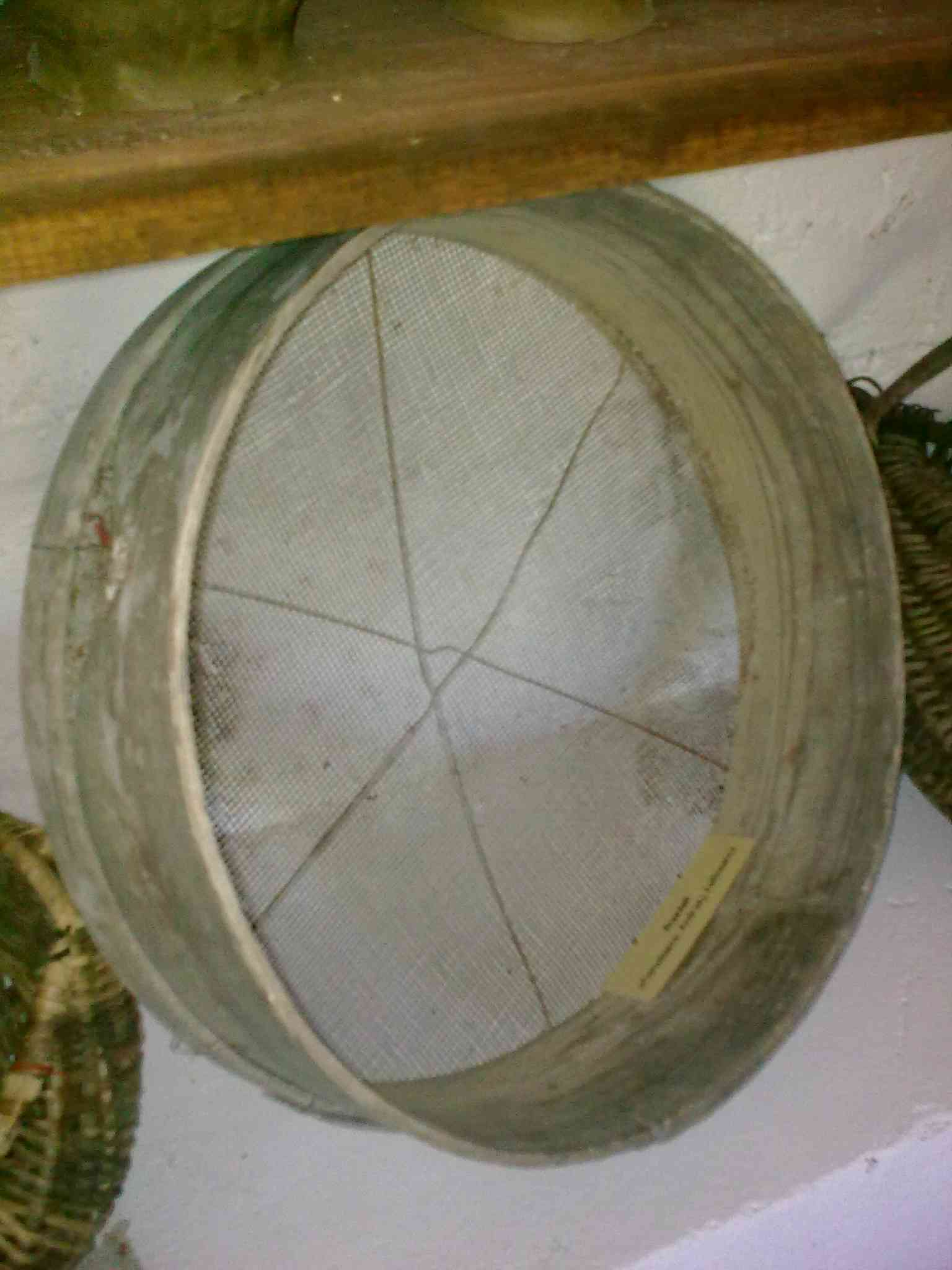
A sieve or riddle wears out at the mesh long before the rim fails, so re-meshing was a standard service and a cheap one, and a good rim could be re-covered several times.
That gave makers a steady repair income and a continuing relationship with industrial customers, and it is why surviving examples often carry a mesh much newer than their rim.
It also means an old sieve is frequently not original below the rim, which matters to anybody trying to date one. Replaceable screen panels on modern equipment are the same idea industrialised: the frame is the durable asset and the screening surface is the consumable, which is exactly how the trade always treated it.
10. Standard sizes existed long before standards did
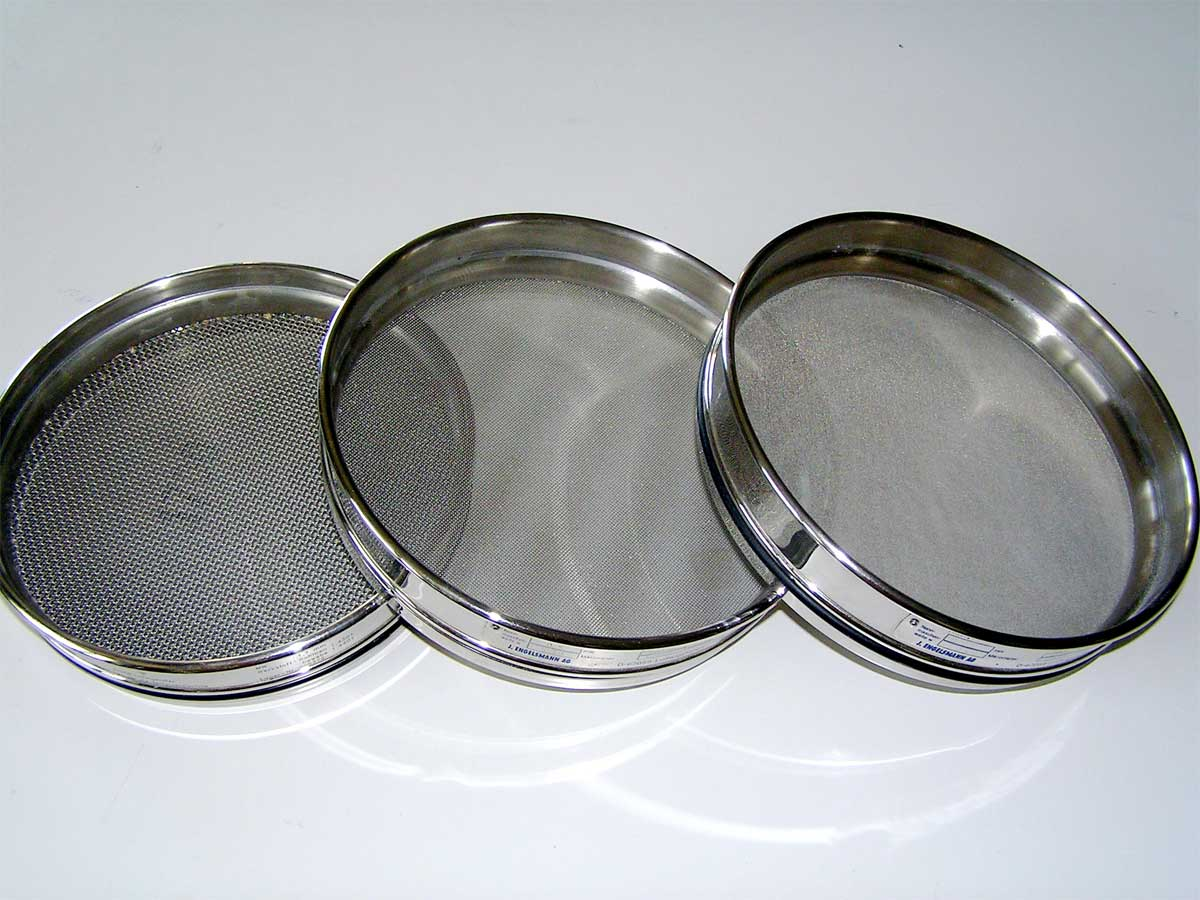
Sieves and riddles settled into customary diameters, depths and mesh counts because customers wanted replacements that fitted the stands, shakers and frames they already had.
So the trade operated to a de facto standard set by use, which varied by industry and by region and which everybody in a given trade simply knew.
When formal standards arrived for test sieves — defining aperture sizes, frame dimensions, tolerances and verification — they codified and tightened something that had already existed informally. A certified test sieve today is a measured instrument with a certificate and a recalibration interval, which is a very long way from a known diameter that fitted the shaker in the corner.
11. The trade was small, local and largely undocumented
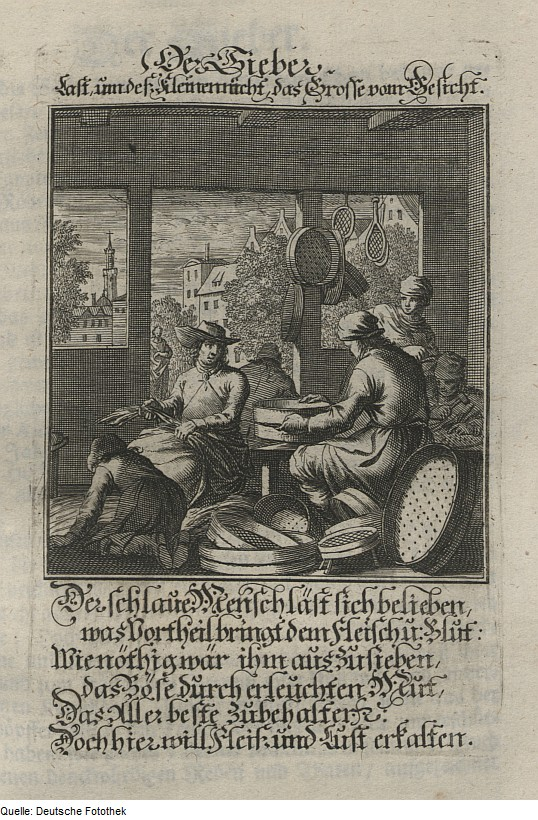
Sieve and riddle making was carried on by small firms and family businesses, often employing a handful of people, frequently alongside basket making, cooperage or general wirework.
Because the product was cheap, unglamorous and consumable, it attracted almost no attention: there are few photographs, little trade literature and very little in museums beyond the tools themselves.
What documentation exists tends to be in the records of the customers — a foundry’s purchase ledger, a farm’s accounts — rather than in the makers’ own. Industrial screening is now a documented engineering sector with standards, datasheets and test certificates, which is the complete reversal of a trade that left almost no paper at all.
12. Mechanical screening ended it from both directions at once
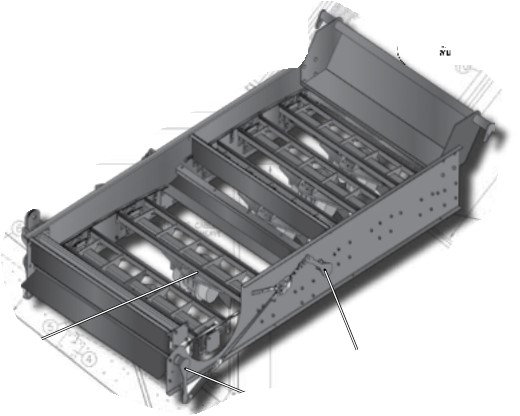
Vibrating screens, rotary screens and trommels took the industrial work, while cheap moulded plastic took the garden and kitchen work, and the hand-made wooden-rimmed sieve had no remaining market between them.
That happened over a few decades and left a handful of makers producing for conservation, for specialist trades and for people who wanted the real thing, which is roughly where it stands now.
The skills did not vanish so much as relocate: steam bending into furniture and boats, mesh tensioning into industrial screen manufacture, and mesh selection into engineering specification. The honest summary: a sieve grades fine material and a riddle takes lumps out of coarse material, and one trade made both because the construction is the same — a bent wooden rim with a screening material tensioned across it; the steam-bent hoop rather than the mesh was the quality-determining component; the screening material ran from woven wire and punched plate to horsehair, cane, gut and silk, each matched to a job; even tensioning, judged by feel and by the note the mesh made, was the skill that separated a good maker from a cheap one; the customers ran from foundries and potteries to kitchens, which is why no single industry’s decline could kill the trade; and vibrating screens took the industrial work while moulded plastic took the domestic work, leaving nothing in between.
Killed from both ends and nothing left in between
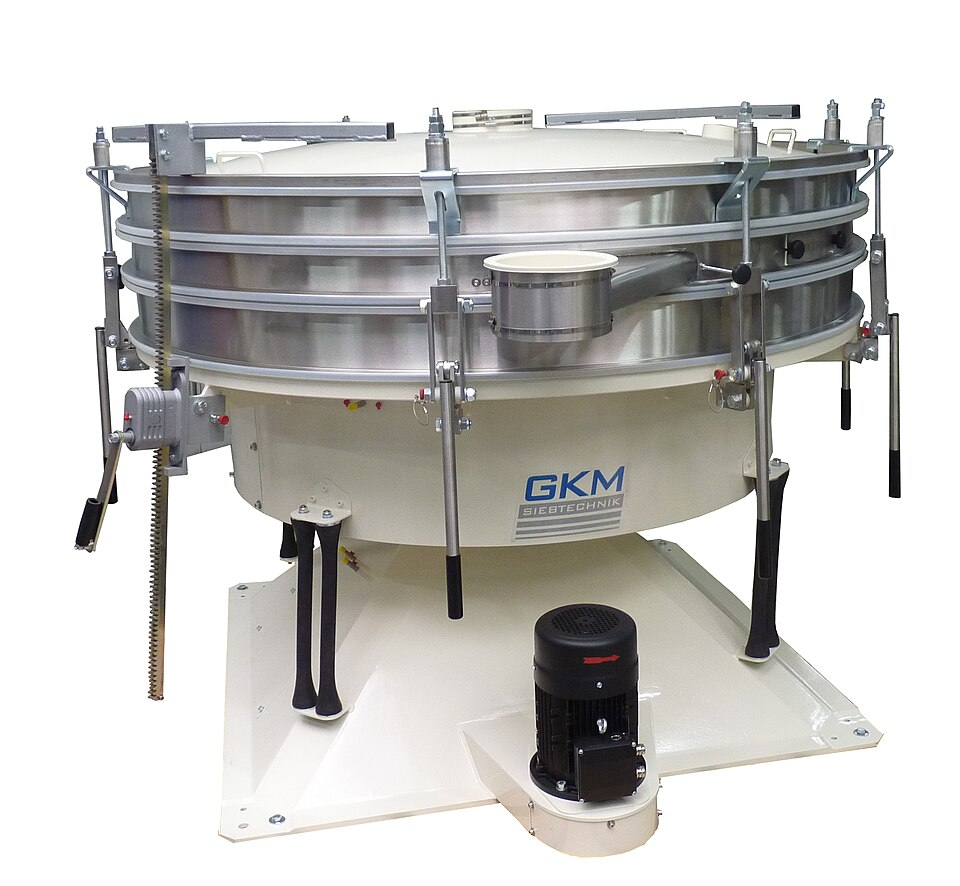
Vibrating screens, rotary screens and trommels took the industrial work, and cheap moulded plastic took the garden and the kitchen, which left the hand-made wooden-rimmed sieve with no market at all between the two. It happened over a few decades and left a handful of makers working for conservation and specialist trades, which is roughly where it stands today. The skills themselves relocated rather than disappeared: steam bending went into furniture and boatbuilding, mesh tensioning into industrial screen manufacture, and the matching of mesh to material into engineering specification from a datasheet.
The quality was never in the mesh. It was in the steam-bent hoop, which has to be truly round to tension a screen evenly, and in the tensioning itself, which was judged by the note the mesh made when it was tapped.
Like our content? Follow us for more.