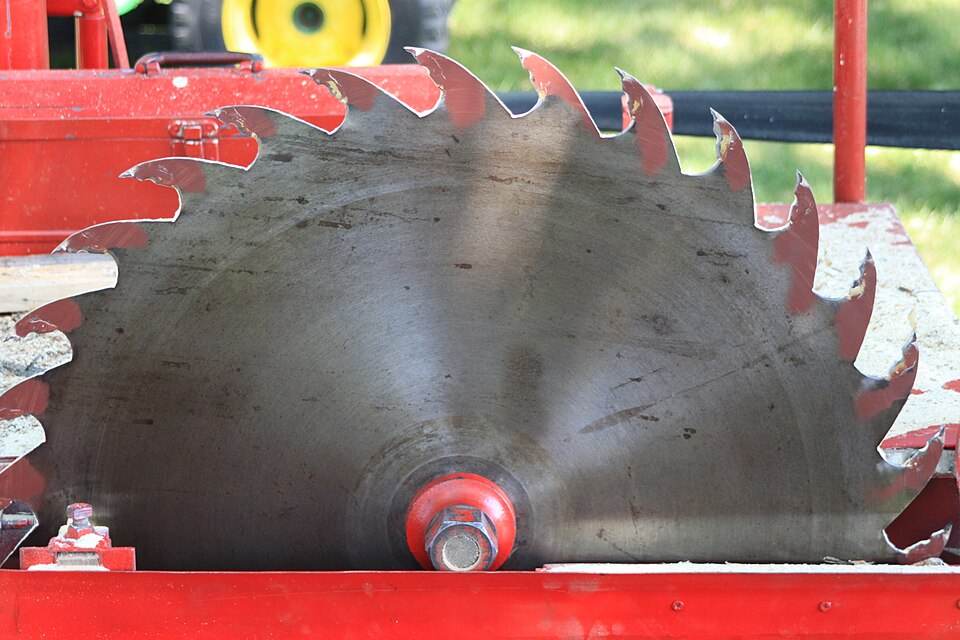
A large circular saw blade is not flat. It is deliberately made slightly dished, with the centre stretched by hammering so that when the blade spins up and heats at the rim, the expansion pulls it taut and it runs true. A blade that is flat when cold will wander as soon as it is working.
Putting that stretch into a blade is called tensioning, and the man who did it was a saw doctor. He was not a sharpener. Sharpening is the small part of the job; the rest is making a thin steel disc behave like a rigid tool while it is turning fast and getting hot unevenly.
In 1960 he did it with a hammer, an anvil, a straight edge and his ears, and a good one could tell from the sound of a mill which blade was in trouble before the sawyer complained.
The test instrument was a straight edge and a light
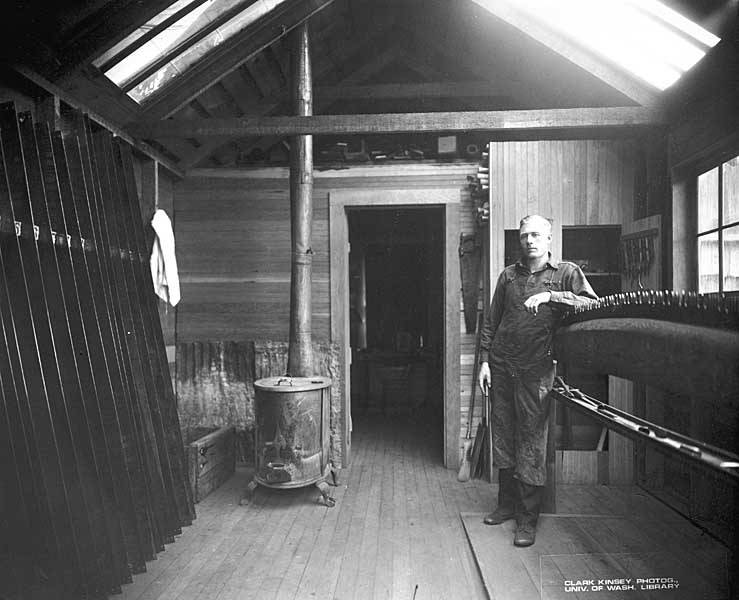
Tension was checked by laying a curved straight edge, called a tension gauge, across the blade and looking at the gap between the two.
What the saw doctor wanted was an even gap of the right amount at the right radius, and he judged it by eye against the light, turning the blade a little at a time and working round it.
A blade with uneven tension runs out of true in a way that is entirely predictable to somebody who understands it and looks like gremlins to everybody else. It is the commonest cause of a saw that will not cut straight and the last thing anybody suspects. Sawyers blamed the timber, the guides, the feed and each other long before anybody suggested the blade was the wrong shape when it was standing still.
Modern practice uses the same gauges alongside instrumented tension measurement and automated levelling, and large blades are frequently tensioned by roller rather than by hammer. The physics has not changed at all.
Like our content? Follow us for more.
Hammering a blade is the opposite of hitting it
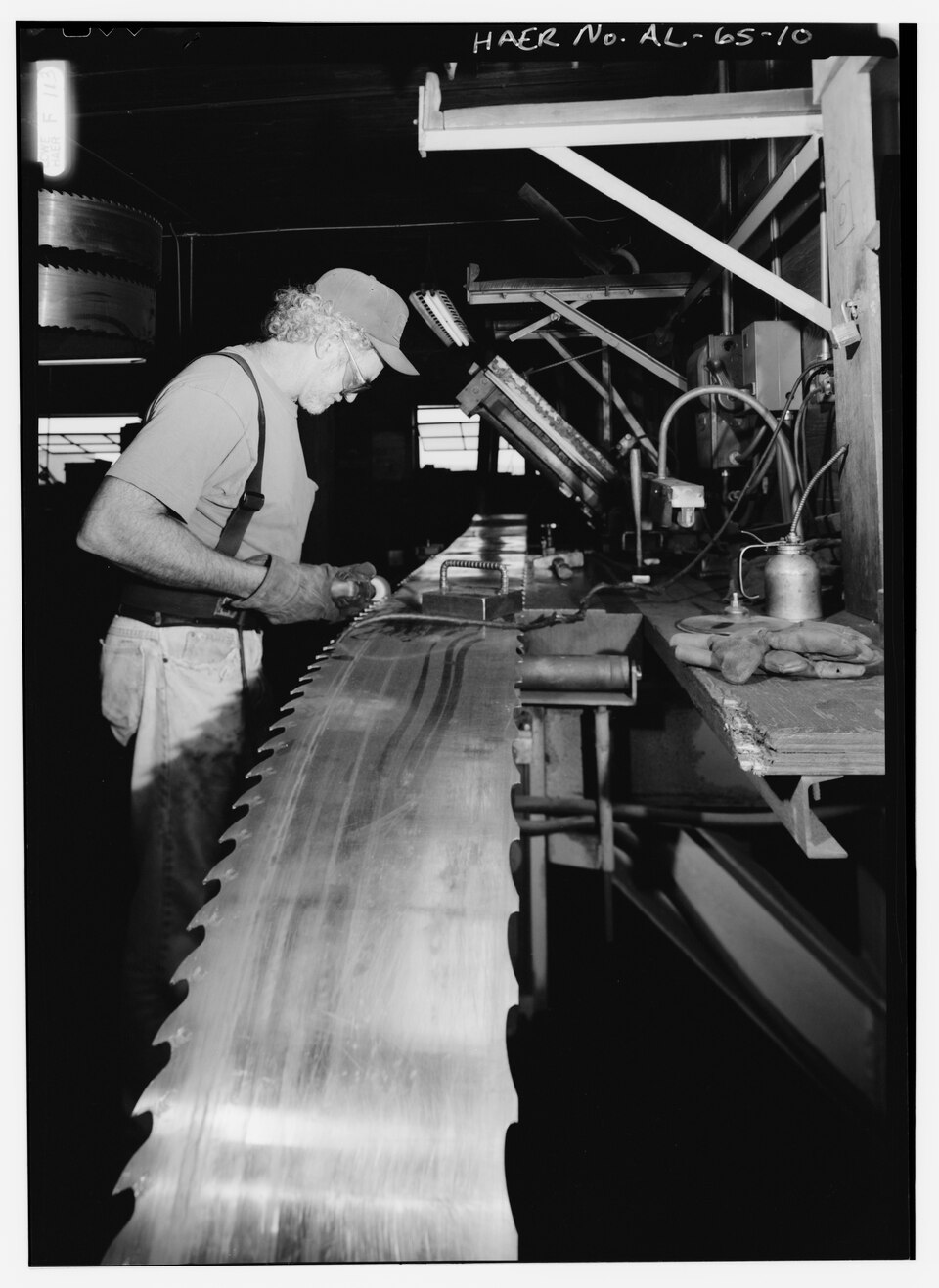
Tensioning is done by striking the blade on an anvil in a pattern that stretches the metal in particular zones, with a hammer whose face is shaped for the purpose.
It is slow, cumulative and reversible in the sense that over-stretching one area is corrected by working the areas around it, which means the operation is a negotiation rather than a procedure.
The saw doctor read the blade continuously as he went: lifting it, sighting along it, flexing it, listening to the ring when he tapped it. A blade with the right tension rings differently from one without.
Roller tensioning applies the same stretch by rolling the blade between wheels under controlled pressure, which is faster, far more repeatable and teachable in weeks rather than years. It is one of the clearest examples in industry of a sensory skill replaced by a measured one with no loss of quality. Saw doctors who made that transition tend to say the roller does a better job than they did and took considerably less out of their shoulders.
Why American sawmilling made the trade what it was
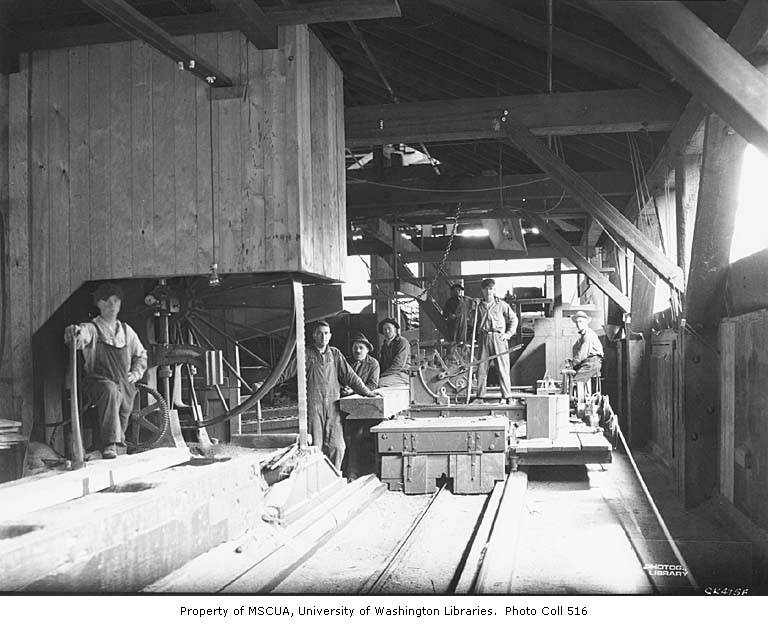
American mills ran bigger blades, faster, through larger logs, for longer hours, than almost anywhere, and a blade in that service is working at the edge of what the steel will do.
That made the saw doctor a central rather than a peripheral figure. A mill losing an hour to a bad blade loses a great deal of production, so the man who kept the blades right was paid accordingly and had considerable authority about when a saw came off.
American practice also drove the move to the wide bandsaw for primary breakdown, because a thin band wastes far less timber than a thick circular blade, and that created a second specialism: bands have to be levelled, tensioned, benched and have their back edge trued, and they break.
So in a large American mill by 1960 the saw doctor’s shop was a department with its own machines, and the job had divided into circular and band specialists who did not necessarily do each other’s work. A wide band is also a far more alarming object to handle than a circular blade, being a long loop of thin steel under tension, and the handling arrangements were correspondingly informal.
Kerf is money and the whole trade is about it
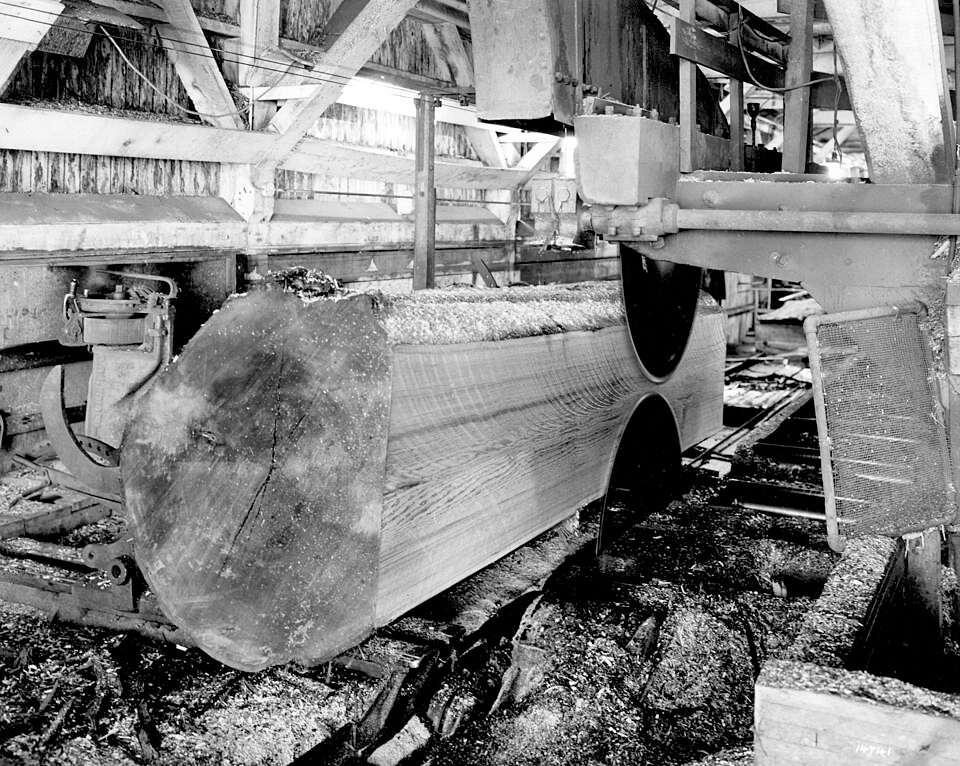
The kerf is the width of the slot the saw cuts, and every bit of it is timber turned into sawdust rather than into product. Across a mill’s annual output that is an enormous quantity.
A thinner blade means less kerf and more yield, and also a blade with less stiffness that is harder to keep running true, which is precisely the problem the saw doctor existed to solve.
So the trade was not about sharpening. It was about letting the mill run the thinnest blade that would still cut straight, and every improvement in tensioning and guiding translated directly into timber recovered.
That is still the argument. Modern thin-kerf bands, guided and tensioned under measurement, exist for exactly the reason the 1960 saw doctor was valuable, and the yield calculation is the one every sawmill still runs.
Teeth were shaped for the work and swaged rather than only sharpened
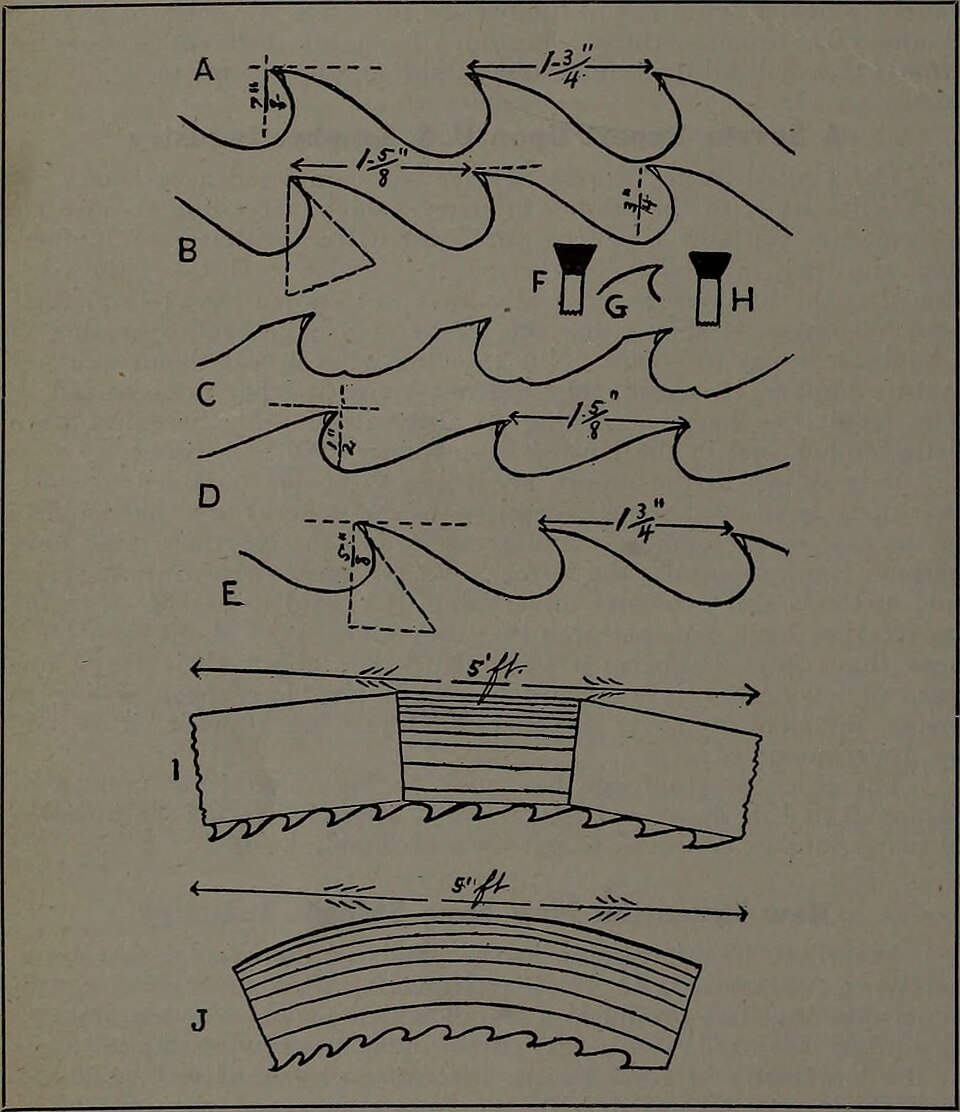
A saw tooth has to be wider than the blade body or the blade will bind in its own cut, and there are two ways to achieve that: bending alternate teeth outwards, which is setting, or spreading the tip of each tooth sideways, which is swaging.
Swaging gives a wider, more durable tip and suits heavy work; setting is simpler and suits finer blades. Which you used depended on the blade, the timber and the mill.
Tooth geometry itself — the hook, the gullet, the clearance — was varied for the species being cut and for whether the timber was frozen, wet or dry, and a mill cutting different logs through the year changed its teeth with them.
Tipped teeth changed all of it. Carbide and later stellite tips last far longer, hold their geometry and are replaced rather than reshaped, so the daily work of setting and swaging has largely gone while the geometry decisions have become more precise.
The sound of a mill was diagnostic information
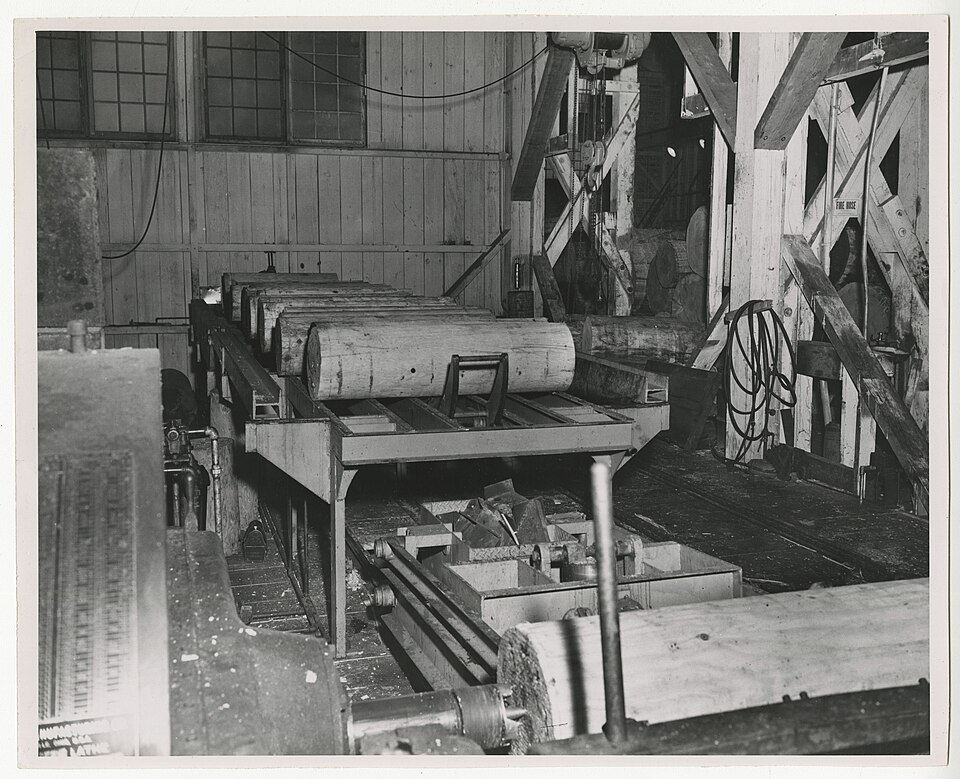
A saw doctor working in a mill was listening all day without consciously doing it, and the trade’s accounts are full of men identifying a problem from a change in pitch somewhere behind them.
A blade heating unevenly, a guide running dry, a bearing starting to go and a tooth losing its edge all change the sound, and they change it before they change the product.
That was genuinely useful and it was also the only continuous monitoring available, which is why it mattered so much.
Vibration and temperature monitoring now do the same job continuously, impartially and in writing. The ears have not stopped working and they are no longer load-bearing.
The hazards were the ones you would expect and were handled badly
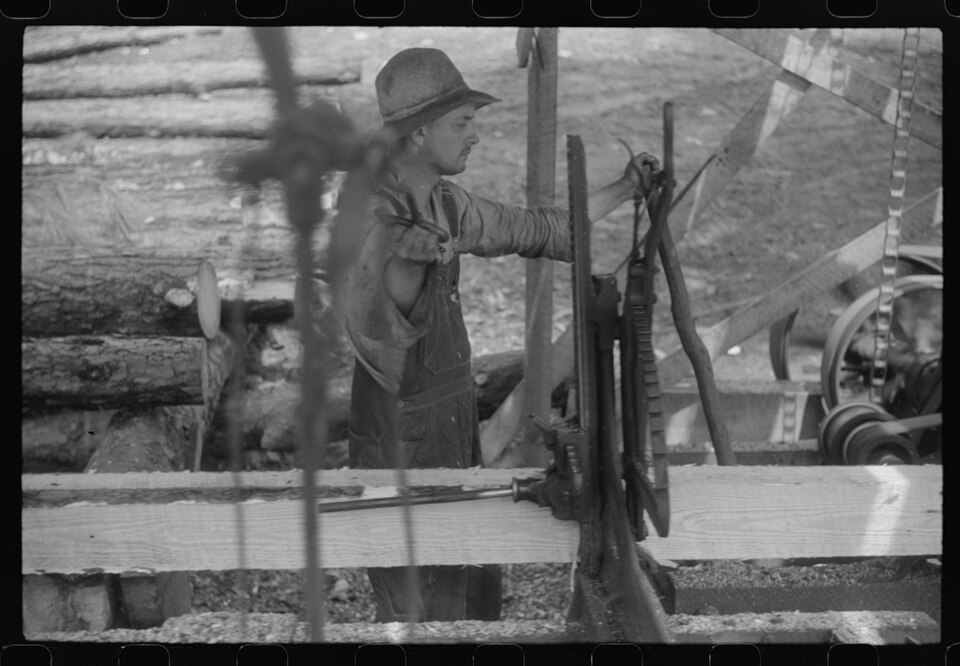
A sawmill in 1960 was extremely loud, full of dust, and built around large blades running at speed with minimal guarding, and the saw doctor handled those blades by hand constantly.
Noise was not treated as an exposure, wood dust was not treated as a hazard and hearing protection was not provided. The blades themselves were moved, carried, hung and worked on without any of the handling arrangements that would now be required.
All three are now regulated. Noise at work has assessed limits, mandatory protection and hearing surveillance; wood dust is a controlled exposure with extraction and respiratory protection, and hardwood dust is treated with particular seriousness; and machine guarding and safe handling of blades are specified rather than left to practice.
Nothing described in this file should be attempted and anybody working with saws professionally should be following current regulation and manufacturer guidance rather than anything here. The file gives no tooth geometry, no tensioning pattern and no procedure of any kind.
What the trade is now
A recognised, qualified and reasonably well-paid specialism, substantially changed in method and unchanged in purpose. Large mills still employ saw doctors; the work is now benching, tipping, grinding on computer-controlled machines, roller tensioning and measurement.
The craft end survives in smaller mills, in the maintenance of older machinery and among the people who look after the wide bandsaws that heritage and specialist mills still run.
What has gone is the degree to which an entire mill’s output depended on one man’s ear and one man’s hammer, which the men who did it describe with a mixture of pride and relief.
The honest summary: a large circular blade is deliberately dished, with the centre stretched by hammering so that rim expansion at working speed pulls it taut and it runs true, and a blade flat when cold will wander as soon as it is working; tension was checked with a curved tension gauge laid across the blade and read against the light; hammering stretches particular zones cumulatively and reversibly, with the blade read by sighting, flexing and listening to its ring; the kerf is timber turned into sawdust, so the trade existed to let a mill run the thinnest blade that would still cut straight; teeth are made wider than the blade body by setting or by swaging, with geometry varied for species and for frozen, wet or dry timber; and roller tensioning, carbide and stellite tips, and instrumented measurement replaced the sensory skill with a measured one.
Like our content? Follow us for more.