A blast furnace does not stop. It is lit once, runs continuously for years, and is shut down only to be rebuilt, because the lining is consumed slowly by the process and the whole structure is designed around a working life measured in a campaign rather than in shifts.
That single fact organises everything about the job. There is no start of the day and no end of it, only a handover; the furnace is in some condition when you arrive and must be in a better or at least an understood condition when you leave; and nobody has the option of switching it off to think.
The keeper was the man responsible for the bottom of it: the hearth where the iron collects, the tapholes through which it leaves, and the judgement about when and how to open them.
The furnace is a column that has to be built, not just filled
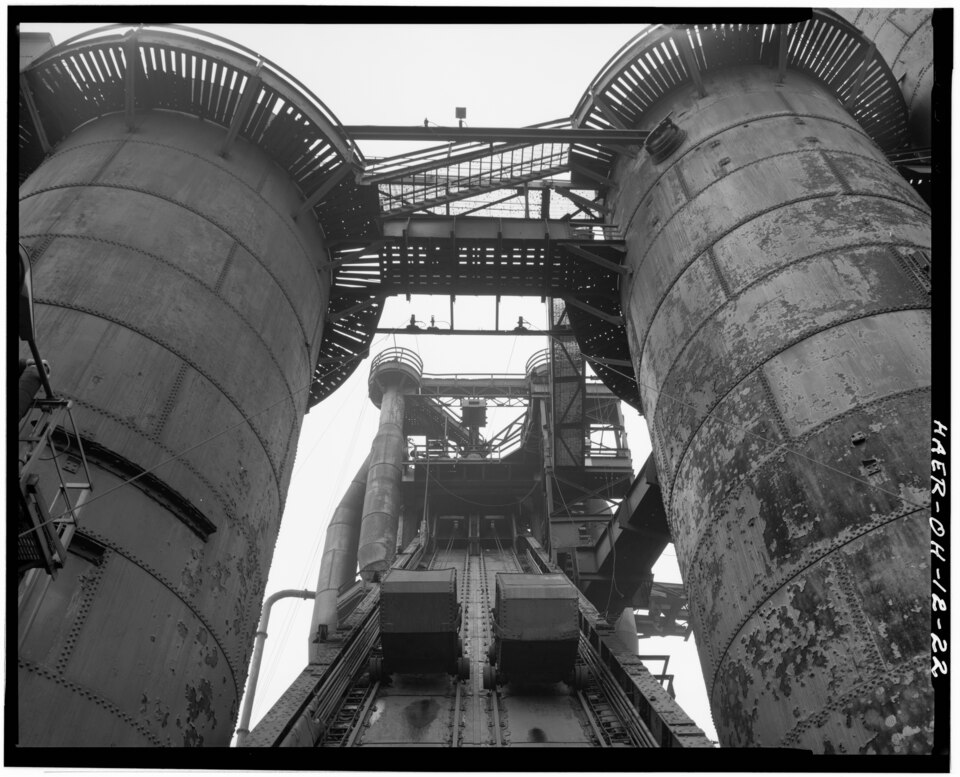
A blast furnace is charged from the top with alternating layers of iron ore, coke and limestone, and the arrangement of those layers is not incidental.
The column has to be permeable enough for the blast to rise through it, strong enough not to collapse into a mass, and distributed so the gas flows evenly across the whole width rather than finding a channel up one side.
Get it wrong and the furnace works badly in ways that take hours to appear and days to correct: uneven gas flow, cold spots, erratic iron. Get it right and it runs steadily for weeks.
Charging is now controlled from a computer with measured burden distribution, probes in the stack and continuous analysis of the top gas. In 1960 it was a practised routine adjusted by men reading what the furnace was doing from its behaviour. The vocabulary of the trade reflects that. Keepers talked about a furnace being well or unwell, working high or working low, and those were precise technical descriptions rather than figures of speech.
Like our content? Follow us for more.
The blast is hot on purpose and the stoves are half the plant
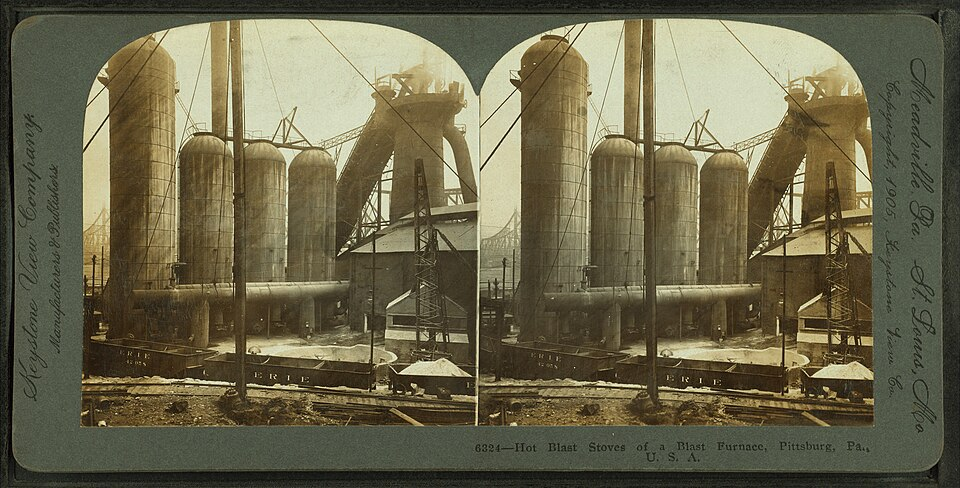
The air blown into the bottom of a furnace is preheated, which is the single most important efficiency measure in the whole process, and it is preheated using the furnace’s own waste gas.
That is done in stoves: large brick-filled chambers that are heated by burning the top gas, then switched over so the incoming blast passes through the hot brickwork and picks up the heat. They work alternately, and switching them over on time is a continuous operational duty.
So a substantial part of an ironworks exists to make the air hot, and a keeper’s furnace performance depended on equipment he did not control.
The principle is unchanged and the execution is transformed: modern stoves run at higher temperatures under automatic control, with the blast temperature measured, logged and held within a band rather than judged. It is a genuinely elegant arrangement and it is worth noticing how old the idea is: the furnace heats its own incoming air with the heat it would otherwise throw away, which is the same regenerative principle that turns up across the whole of heavy industry.
Why the American industry made the keeper’s job distinctive
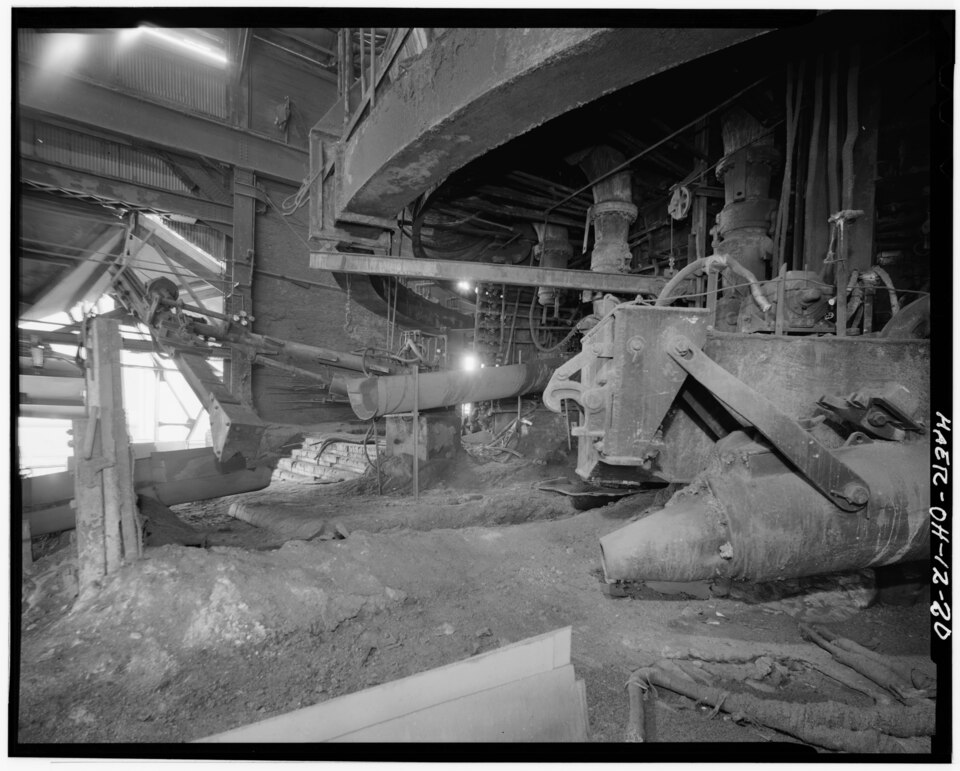
American blast furnaces were larger, were driven harder and reached higher outputs earlier than most, and the American industry standardised around big units in a way that changed what the men around them did.
A larger furnace is more stable and less forgiving at the same time: it takes longer to respond to anything, so an error is harder to notice and much more expensive once it has developed.
American practice also led on mechanising the cast house. Mud guns for stopping the taphole, drilling machines for opening it and runners arranged for mechanical handling replaced a great deal of what had been done with hand tools and bodily effort.
So by 1960 the American keeper was operating equipment at a furnace rather than working at one with tools, which is a different job with the same responsibility. The scale difference also changed the staffing. A large unit needs fewer men per ton than a small one, which is why the industry consolidated around big furnaces and why the number of keepers fell faster than output did.
Iron and slag separate themselves and both have to leave
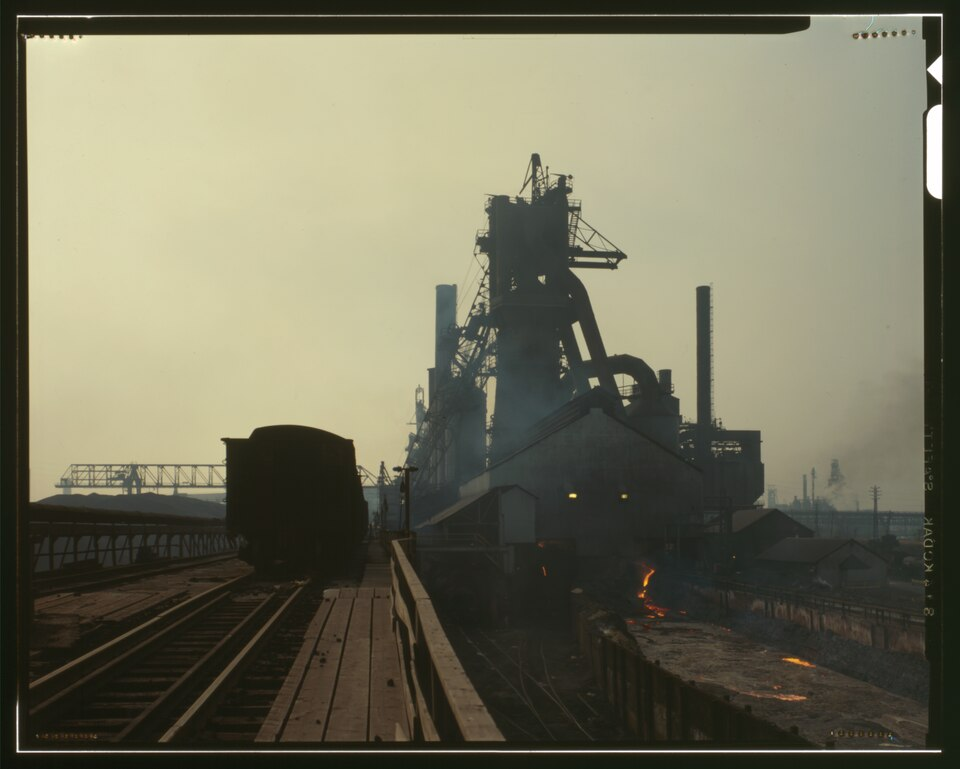
The products of the furnace collect in the hearth in two layers, because molten slag is less dense than molten iron and floats on it.
That is convenient and it means both have to be removed, through different openings at different levels, on a cycle. The iron goes to the steelworks or to casting; the slag goes to be processed into aggregate, cement feedstock and other products, which is why a modern ironworks sells its slag rather than tipping it.
The keeper’s judgement was about the cycle: when the hearth was ready, which taphole, how long to run, and when to stop it.
That timing is now driven by measurement of hearth level and by production scheduling, with the sequence planned rather than read. The physical separation by density is exactly as it was. Slag has become a commercially useful product rather than a nuisance, which is one of the quieter and better changes in heavy industry and one nobody outside it ever hears about.
The colour of the iron was the instrument
A keeper could look at iron running from a taphole and form a view about its temperature and its composition, because both show in the colour, the way it flows and the behaviour of the surface.
That was genuinely informative and it was also the fastest information available, since a laboratory analysis of a sample took time the furnace did not have.
It was never the only check. Samples were taken and analysed, and the furnace’s performance was tracked on paper, but the immediate judgement in front of the taphole was a trained eye.
Continuous instrumentation changed that completely. Temperature is measured directly, composition is analysed rapidly and the furnace is modelled in software, so the colour of the iron is now a confirmation of something already known rather than the first indication of it. Keepers who worked through that change generally describe the instruments as telling them what they already knew, and then, occasionally and importantly, telling them something they did not.
Carbon monoxide was the hazard that defined the whole site
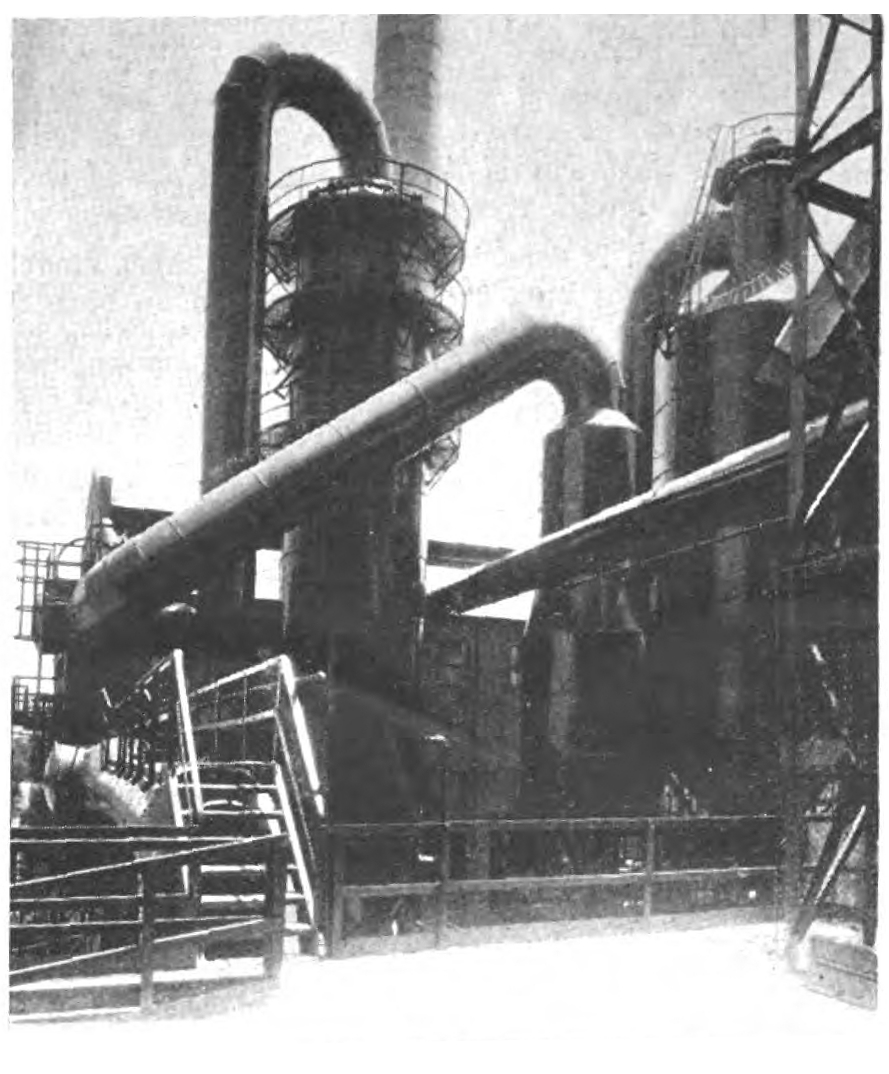
The gas coming off a blast furnace is rich in carbon monoxide. It is a fuel, which is why it is captured and burnt in the stoves and elsewhere, and it is the reason an ironworks is an environment organised around gas safety.
In 1960 that organisation was procedural and depended on knowledge, discipline and local rules about where people went and when. Detection was limited, and the understanding of how gas behaves around a large plant was based heavily on experience of that particular plant.
It is now a comprehensively regulated matter: permit-to-work systems, fixed and personal gas detection, controlled entry, rescue arrangements, training and health surveillance, all of it mandatory and auditable.
This file names no concentration, describes no symptom, gives no procedure and offers no guidance. Anybody working in such an environment is governed by current regulation and their employer’s safety case, and that is the only correct source.
The cast house was hot work and was treated as normal
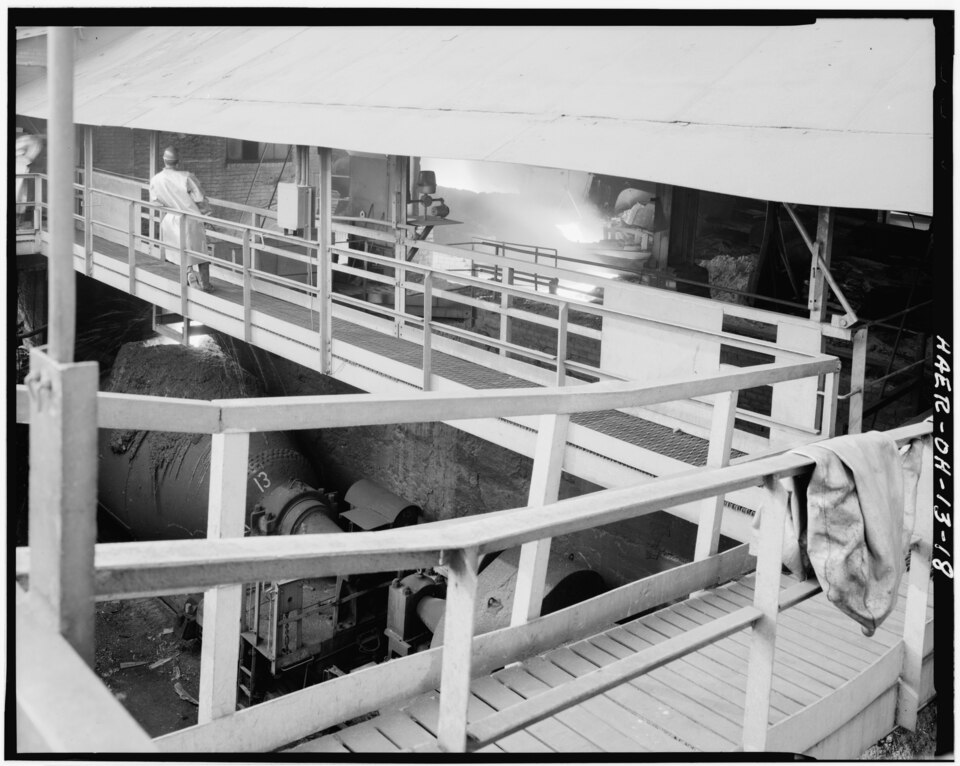
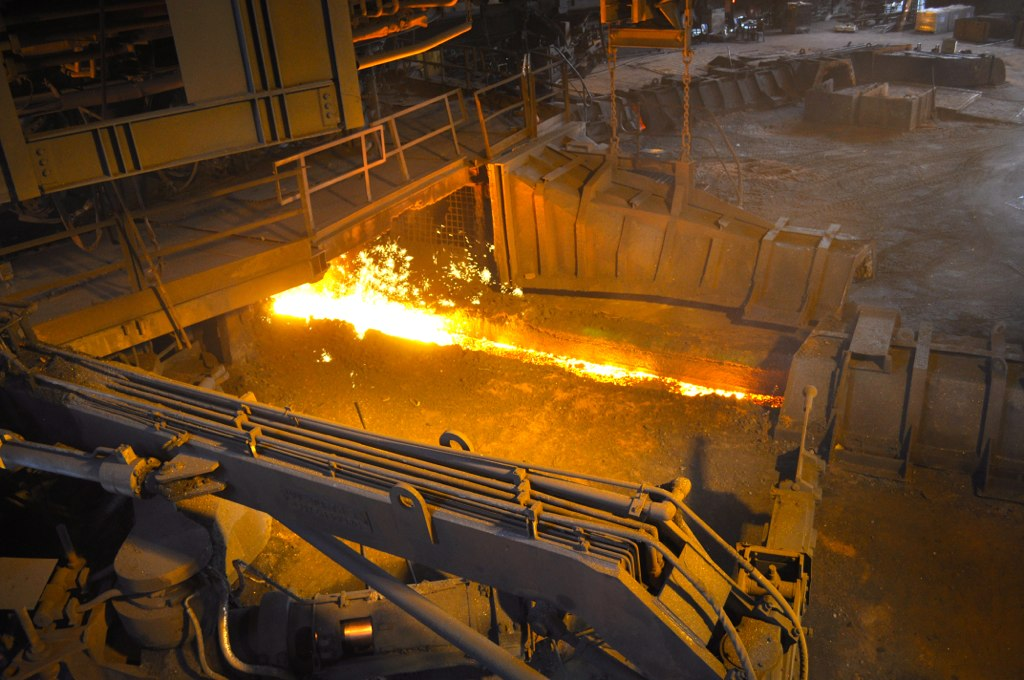
The area around the tapholes is extremely hot, bright enough to need eye protection, and contains molten material being moved along channels in the floor.
Men in 1960 worked in it in heavy clothing, with protection that was partial by any modern standard, in heat that limited how long anybody could stay in a particular place. The pattern of the work was shaped by that: short periods of intense activity, then withdrawal.
Everything about that has changed. Modern cast houses are mechanised, remotely operated where possible, with specified protective equipment, heat-exposure management, fume extraction and defined exclusion zones around molten material.
The file describes no operation, no clothing specification and no exposure limit, for the same reason as above: it is a subject for a safety case rather than for an article.
Relining was the only end a furnace had
A furnace’s campaign ends when the lining is worn to the point where it must be replaced, which in 1960 was a shorter interval than it is now. The furnace was blown down, cooled, dismantled internally and rebuilt in refractory brick.
That was a major project employing a different set of trades entirely, and it was the only moment at which anybody saw the inside of the thing they had spent years operating.
Better refractories, better cooling, water-cooled staves and far better control of what the furnace is actually doing have extended campaigns enormously, so that a modern furnace may run for well over a decade between relines.
The honest summary: a blast furnace runs continuously for years and is stopped only to be rebuilt, so the job is a handover rather than a shift; it is charged from the top in alternating layers of ore, coke and limestone, and the arrangement of those layers decides whether the gas rises evenly or channels up one side; the blast is preheated in stoves using the furnace’s own waste gas, which is the single largest efficiency measure in the process; iron and slag separate in the hearth by density and are tapped through different openings on a cycle; the keeper read temperature and composition from the colour and flow of iron at the taphole because laboratory analysis was slower than the furnace; the top gas is rich in carbon monoxide, which is why it is captured and burnt and why the whole site is organised around gas safety; and a campaign ends with a reline, which was the only occasion anybody saw inside.
Like our content? Follow us for more.