From the Camerlengo formally calling out the Pope’s baptismal name three times to confirm death, to the breaking of the Fisherman’s Ring, to the locked-in cardinals and the white smoke, the Vatican’s papal succession rituals are among the most precisely choreographed processes in the world. The death of Pope Francis in April 2025 and the election of Pope Leo XIV in May 2025 brought these rituals into international view. Here’s what actually happens.
For nearly 2,000 years, the Catholic Church has refined the rituals that follow the death of a pope. The processes have evolved through dozens of revisions — most recently the Universi Dominici Gregis apostolic constitution promulgated by Pope John Paul II in 1996, with amendments by Pope Benedict XVI in 2007 and 2013. But the core elements have remained remarkably consistent for centuries: the Camerlengo confirms death, the Fisherman’s Ring is destroyed, the cardinals gather in seclusion, votes are cast and burned, white smoke signals success, and a new pope appears on the central balcony of St. Peter’s Basilica.
The death of Pope Francis on April 21, 2025, and the election of Cardinal Robert Prevost as Pope Leo XIV on May 8, 2025 (the first American pope in history), brought these rituals into international view. The Oscar-winning 2024 film Conclave had already increased public familiarity with the process. But the specific details that the film simplified or modified for dramatic purposes are worth understanding accurately, because the actual rituals are dramatic on their own.
Here are the 9 specific rituals that follow a papal death, in the order they occur — what each one means, why each one matters, and how Pope Francis’s death and Pope Leo XIV’s election played out within the established framework.
1. The Camerlengo confirms death
When a Pope dies, the first person formally notified is the Camerlengo (Italian for “chamberlain”) — a cardinal appointed by the Pope himself who oversees the papal household. The current Camerlengo is Cardinal Kevin Joseph Farrell, an Irish-born American who previously served as Bishop of Dallas. Farrell was appointed Camerlengo by Pope Francis in 2019.
The Camerlengo’s first task is to formally establish that the Pope is dead. According to traditional ritual, the Camerlengo calls out the Pope’s baptismal name three times in front of other high-ranking clerics. (For Pope Francis, this would have been “Jorge” — his baptismal name was Jorge Mario Bergoglio.) When there is no response, death is formally confirmed.
There is a popular myth that the Camerlengo confirms death by tapping the Pope’s forehead with a small ceremonial silver hammer. According to Notre Dame theology professor Ulrich Lehner, “The hammer episode is an old tale which is not mentioned in any official text.” In modern practice, doctors are present and make the medical determination of death, with the Camerlengo overseeing the ceremonial aspects.
For Pope Francis’s death, the death confirmation rite was performed by Cardinal Farrell in the Chapel of the Domus Sanctae Marthae (the guesthouse where Pope Francis chose to live throughout his papacy, declining the traditional Apostolic Palace apartments).
2. The Fisherman’s Ring is broken
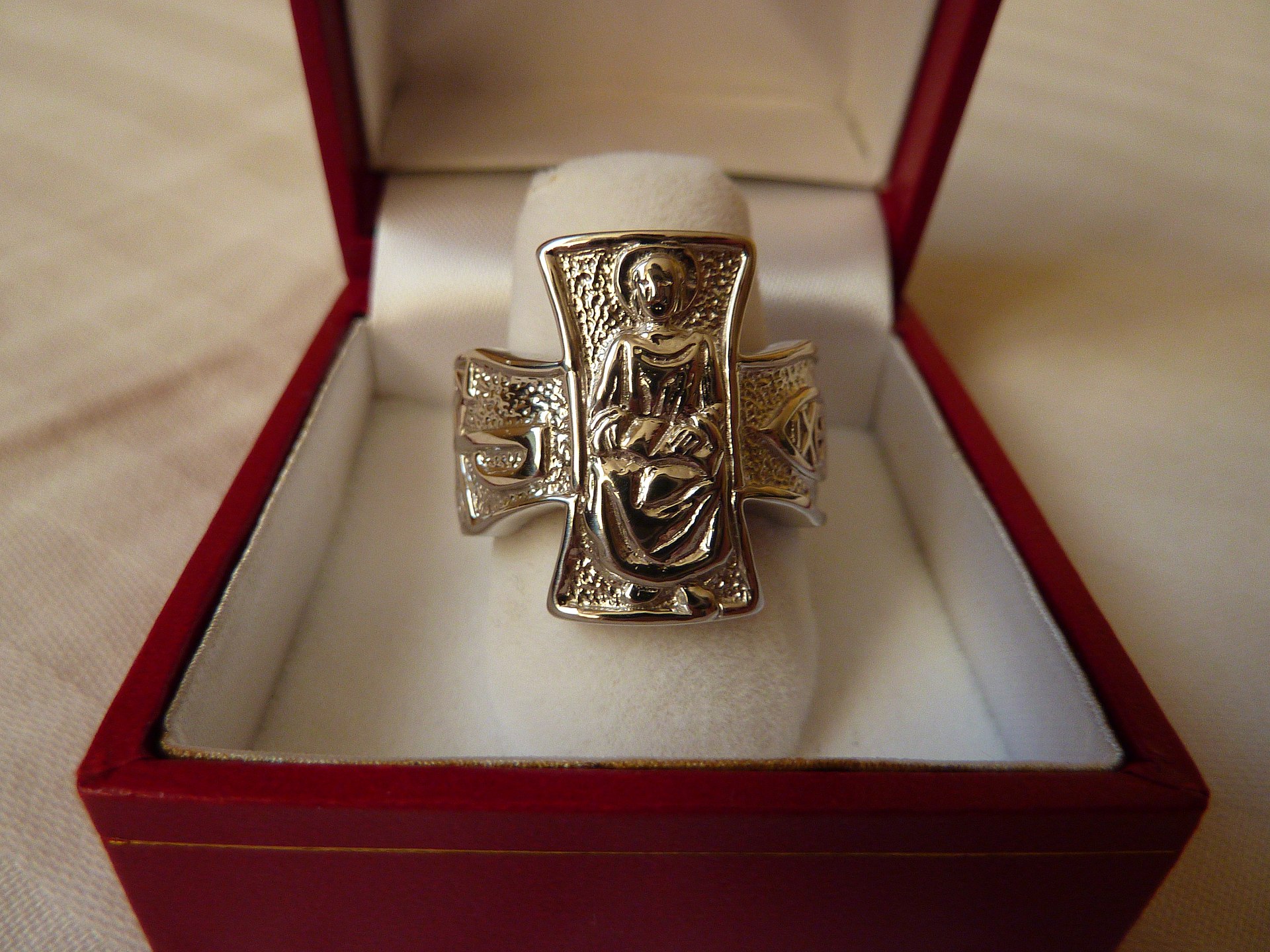
After death is confirmed, the Camerlengo takes possession of the Fisherman’s Ring (Latin: Anulus Piscatoris) — the official ring worn by the Pope, depicting St. Peter casting a fishing net. Historically, the ring was used to seal official documents alongside a pendant called a bulla (the source of the word “papal bull” for official church documents).
The ring was traditionally destroyed after a Pope’s death — both as symbolic ending of papal authority and as practical prevention against forgery. In modern practice, the ring is symbolically defaced (cancellation marks engraved across the seal) rather than physically destroyed. The act marks the official end of the deceased Pope’s authority. A new ring will be struck for his successor, bearing the new Pope’s name.
The Camerlengo also seals the papal apartments. Pope Francis’s residence at the Domus Sanctae Marthae was sealed; the Apostolic Palace papal apartments (which Francis had not used) were a separate matter.
3. The Sede Vacante period begins
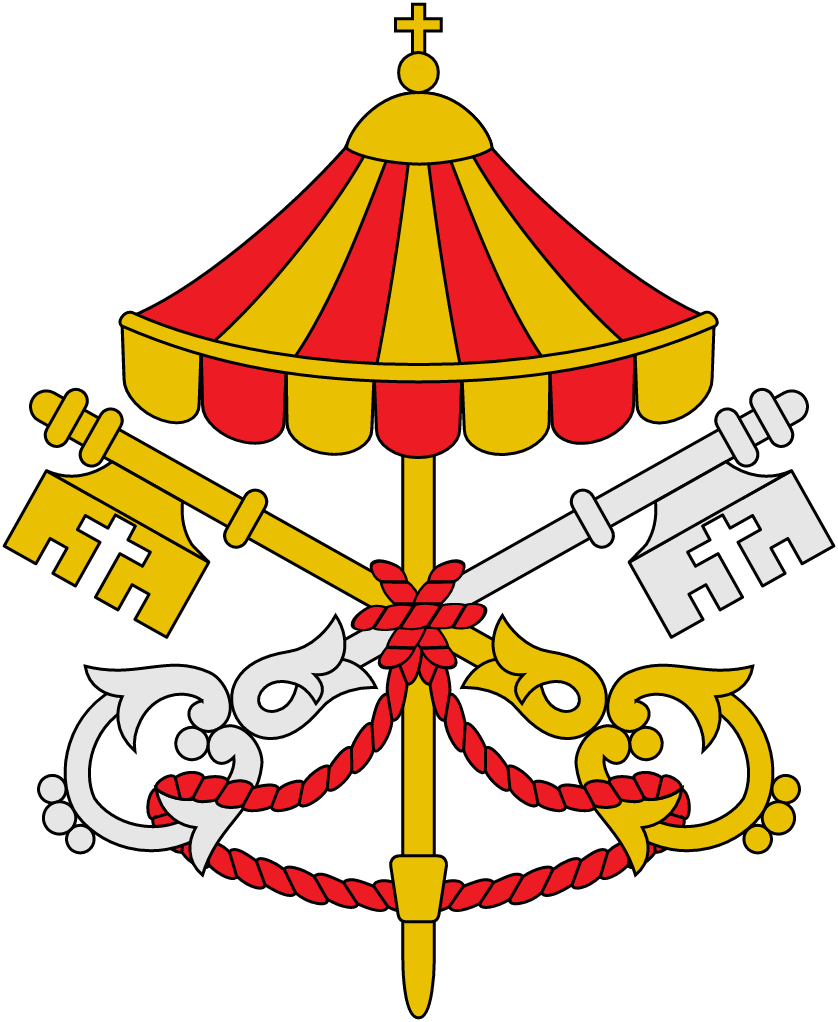
The period between a Pope’s death and the election of his successor is called Sede Vacante (Latin for “vacant seat”) — the seat of St. Peter is empty. This period typically lasts 15-20 days, though it can be extended.
During Sede Vacante, the Catholic Church operates under modified governance. The Camerlengo handles administrative and financial duties. The College of Cardinals collectively assumes responsibility for major decisions. Most Vatican Curia officials lose their offices when a Pope dies — only a few positions continue, including the Camerlengo, the Major Penitentiary (currently Cardinal Angelo De Donatis), the Almoner of His Holiness (Cardinal Konrad Krajewski), and a few others handling essential functions.
The longest Sede Vacante in history occurred from 1268-1271 — 2 years and 9 months — when cardinals failed to elect a successor to Clement IV. The local magistrate eventually locked the cardinals in the episcopal palace at Viterbo, removed the roof, and allowed them only bread and water until they selected the next pope. The eventual election of Gregory X led to procedural reforms requiring the seclusion (cum clave, “with a key”) that gives the conclave its name.
4. The body is prepared and displayed for public viewing
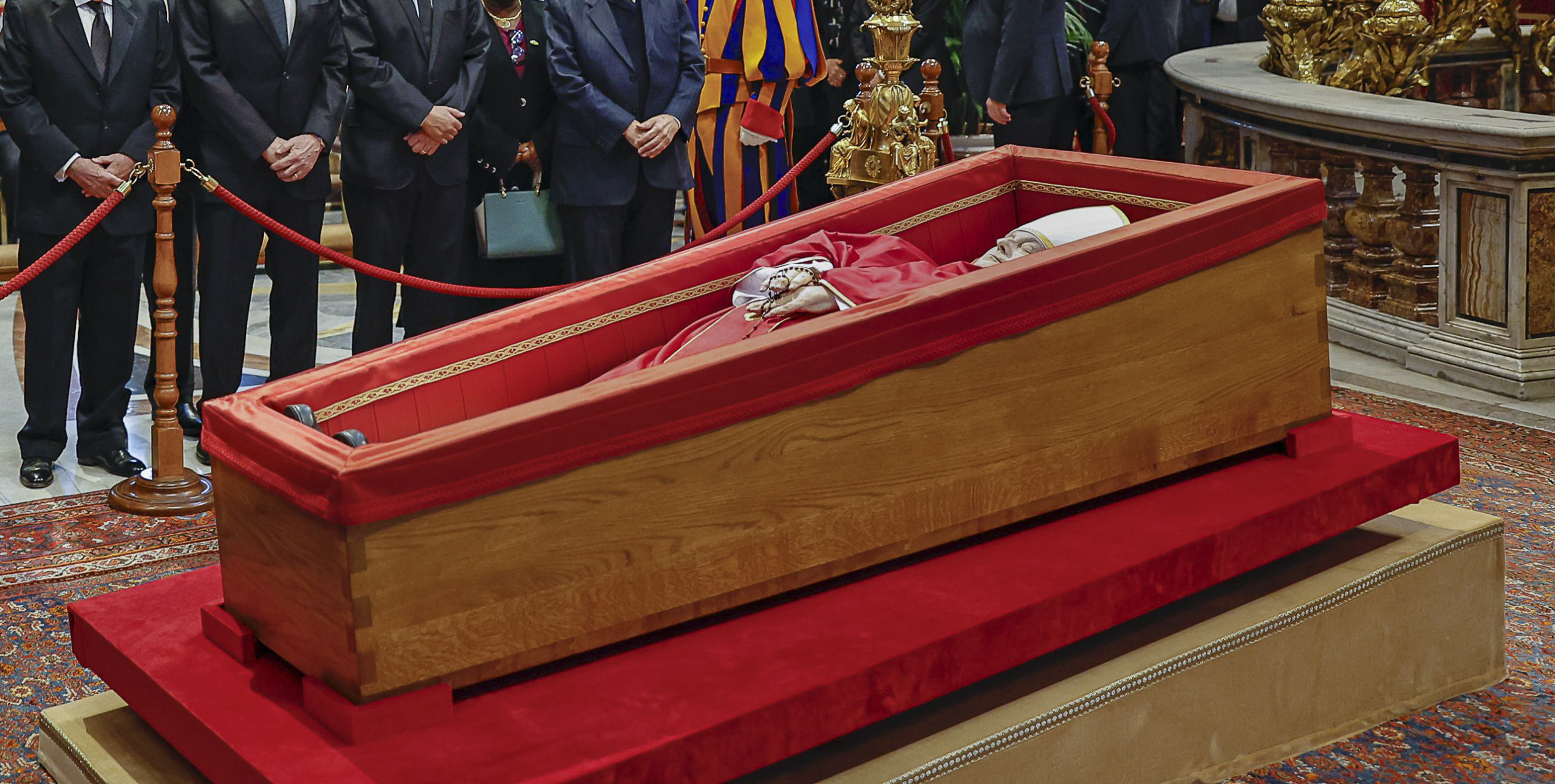
Within hours of death confirmation, the Pope’s body is placed in a coffin. Pope Francis simplified the historical funeral process in November 2024. Traditionally, the Pope was buried in three nested coffins — cypress (the inner coffin), zinc (the middle, sealed coffin), and elm (the outer, decorated coffin). Pope Francis requested burial in a single wooden coffin lined with zinc, eliminating the more elaborate triple-coffin tradition.
The body is then transferred to St. Peter’s Basilica for public viewing, typically within 1-3 days of death. Pope Francis’s body was transferred to St. Peter’s on April 23, 2025. Hundreds of thousands of Catholics typically file past the body during the viewing period.
5. The funeral takes place 4-6 days after death
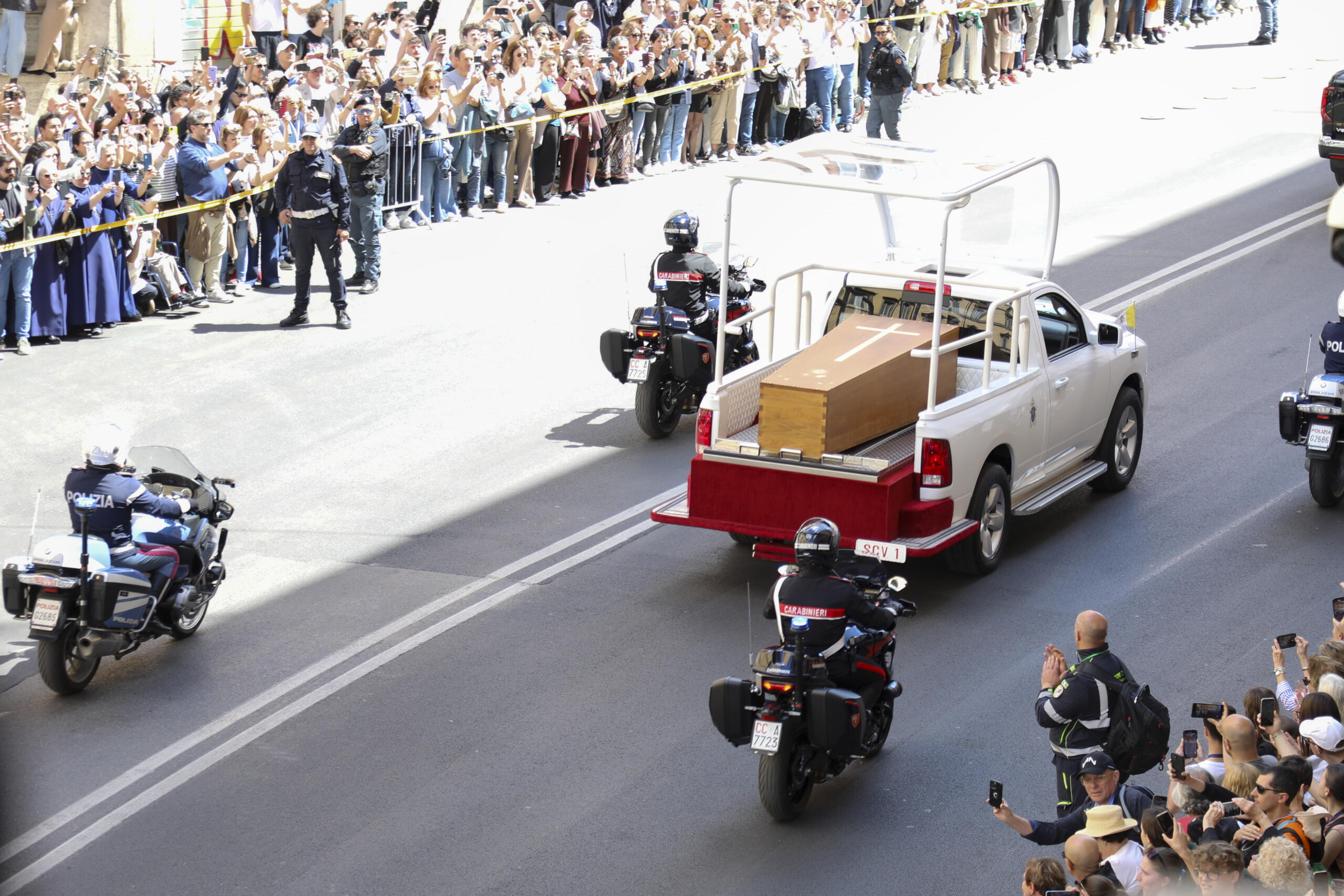
According to Vatican tradition, the papal funeral takes place between the fourth and sixth day after death. The funeral occurs in St. Peter’s Square, with the Pope’s coffin placed before the high altar of St. Peter’s Basilica.
Pope Francis’s funeral occurred on April 26, 2025 — five days after his death. Hundreds of world leaders, religious figures, and dignitaries attended. The funeral followed Francis’s simplified rites that emphasized his role as “a mere bishop” rather than the more elaborate traditional papal liturgy.
In accordance with his wishes, Pope Francis was buried at the Basilica of Santa Maria Maggiore (St. Mary Major) — outside the Vatican walls. This made Francis the first pope in over 100 years to be buried outside the Vatican grottos under St. Peter’s Basilica. Francis had requested burial near his favorite icon of the Virgin Mary, the Salus Populi Romani.
6. The novendiali — nine days of mourning
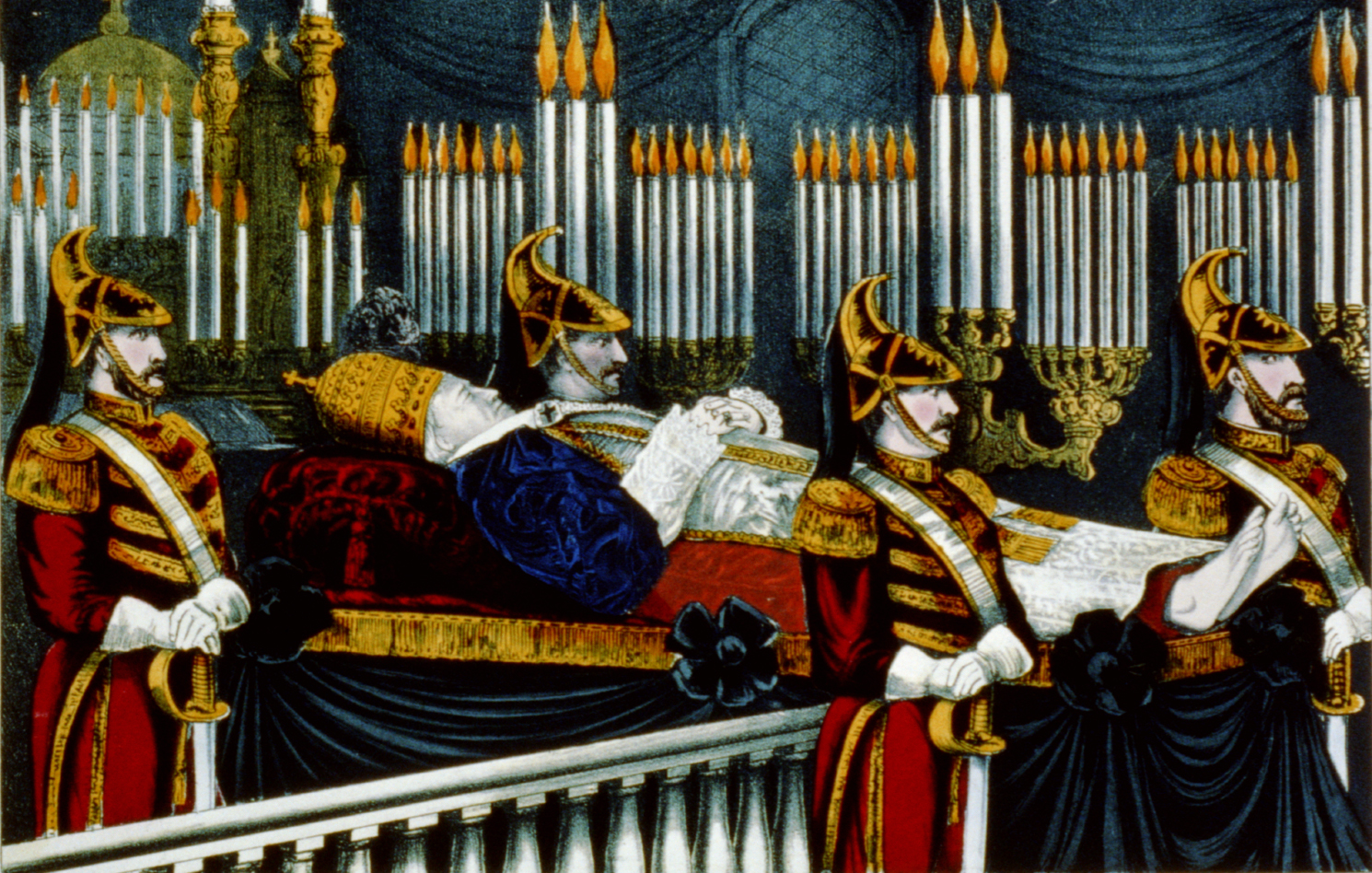
After the funeral, a nine-day mourning period called the novendiali (Latin for “nine days”) begins. During this period, daily Masses are celebrated for the deceased Pope. The cardinals from around the world arrive in Rome and convene in preparatory meetings called “general congregations” where Church business is discussed and the upcoming conclave is prepared.
The general congregations serve as an unofficial discussion period during which informal candidates (called papabili — “pope-able”) emerge. In the 2013 general congregations preceding the conclave that elected Pope Francis, then-Cardinal Jorge Mario Bergoglio gave an off-the-cuff speech about the Church needing to reach the “existential peripheries” — a speech that helped his eventual election. Similar dynamics occur in every modern conclave preparation.
Cardinals over age 80 cannot vote in the conclave but participate in general congregations. They can technically be elected pope themselves, though this hasn’t happened in modern times.
7. The conclave begins 15-20 days after death
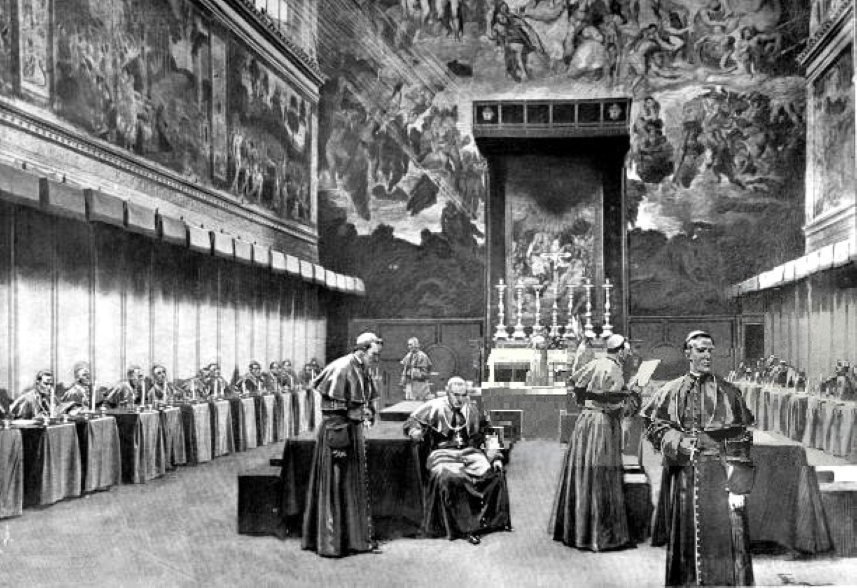
Within 15-20 days of the Pope’s death (the timing flexibly determined by the cardinals), the conclave begins. The conclave to elect Pope Francis’s successor began on May 7, 2025 — 16 days after Francis’s death.
Only cardinals under age 80 are eligible to vote. The current rules notionally limit electors to 120, though popes have routinely exceeded this ceiling. Of the 252 cardinals in the College of Cardinals at the time of Francis’s death, 135 were eligible to vote. Ultimately 133 cardinal-electors participated in the May 2025 conclave — making it the first time in history that more than 120 cardinals voted in a conclave. It was also the most diverse papal election in history, with cardinals from more than 70 countries participating.
The cardinals reside at the Casa Santa Marta during the conclave (the same guesthouse where Pope Francis had lived). They are bused each day to the Sistine Chapel for voting. The cardinals are sworn to absolute secrecy under threat of automatic excommunication. Before the conclave begins, the Sistine Chapel is “swept” for hidden surveillance devices. The cardinals cannot communicate with anyone outside the conclave by any means.
8. The voting process — and the smoke
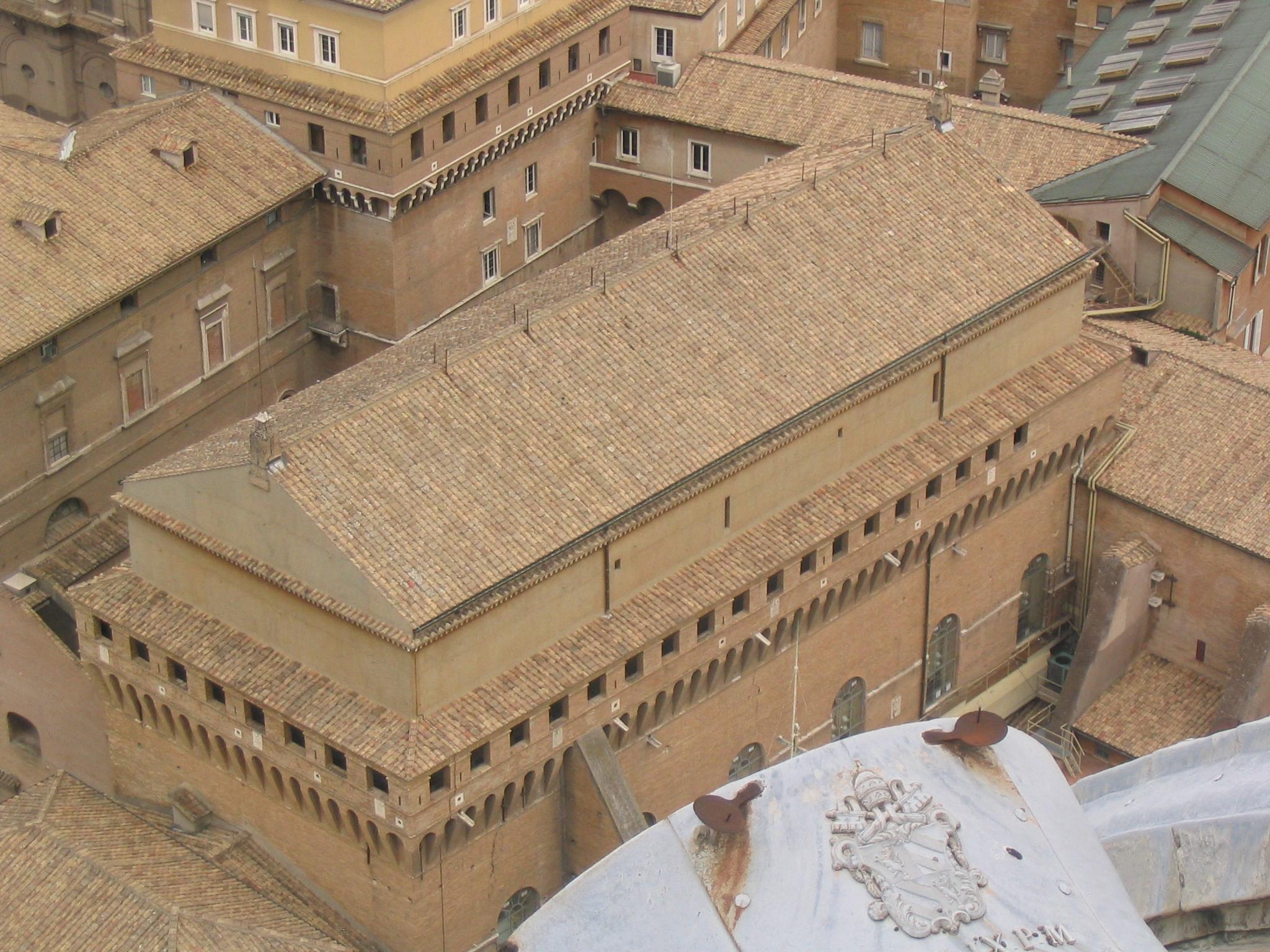
Voting in the conclave follows specific procedures. Cardinals vote by secret ballot. Each ballot is filled out, then folded and carried by each cardinal to a chalice on the altar in front of Michelangelo’s Last Judgment. Three designated cardinals (called scrutineers) check each ballot, read each name aloud, and count the votes.
A two-thirds majority is required to elect a new pope. If no candidate receives the necessary majority, the ballots are pierced with a needle and thread (knotted to keep them in order), then placed on a tray. Up to four votes can be held per day — typically two in the morning, two in the afternoon.
After each round of voting, the ballots are burned in a small stove inside the Sistine Chapel. Chemical additives create either:
- Black smoke (fumata nera) — chemicals indicating no successful election
- White smoke (fumata bianca) — chemicals indicating a new pope has been elected
The smoke rises through a chimney visible from St. Peter’s Square. Crowds gather in the square to watch the chimney during voting periods.
The recent five conclaves (1963, August 1978, October 1978, 2005, 2013) all lasted between two and three days. The May 2025 conclave concluded after just one day of voting — Cardinal Robert Prevost was elected on May 8, 2025, the second day of the conclave.
9. “Habemus Papam” — and the new pope appears
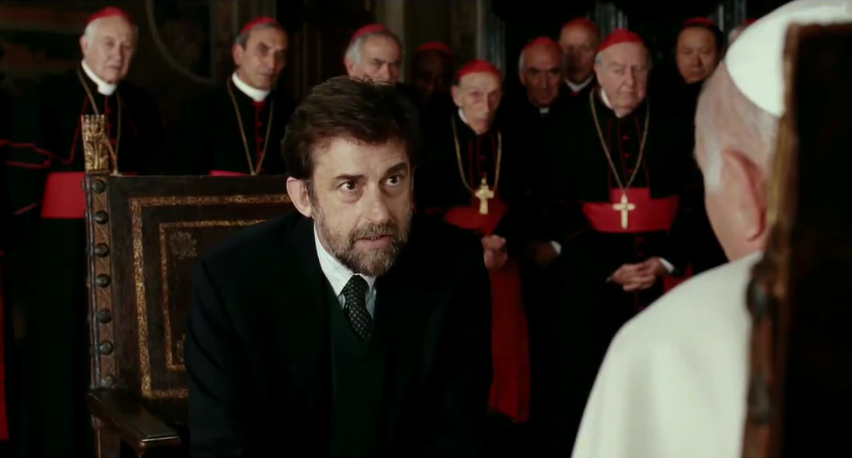
Once a candidate receives the required two-thirds majority, the conclave shifts immediately to formal acceptance. The most senior cardinal asks the elected candidate the formal question (in Latin): “Acceptasne electionem de te canonice factam in Summum Pontificem?” (“Do you accept your canonical election as Supreme Pontiff?”)
If the candidate accepts, the cardinal asks what name he will take. The selection of a papal name is one of the new Pope’s first official acts. Names typically honor specific saints or previous popes whose mission the new Pope wishes to continue. The last pope to keep his baptismal name was Marcellus II in 1555 — every pope since has chosen a regnal name.
The newly elected Pope is then taken to the Room of Tears (so named because of the strong emotions new popes typically experience there), where he is dressed in papal vestments for the first time.
The senior cardinal-deacon (currently Cardinal Dominique Mamberti) then appears on the central balcony of St. Peter’s Basilica overlooking St. Peter’s Square. He announces in Latin: “Annuntio vobis gaudium magnum: Habemus Papam” (“I announce to you a great joy: We have a Pope”). He then reveals the name of the elected cardinal and the name he has chosen as Pope.
Cardinal Robert Prevost was elected on May 8, 2025, taking the name Pope Leo XIV. He is the first American pope in history. The choice of the name Leo signaled continuity with previous popes named Leo, particularly Leo XIII (1878-1903), who is associated with social Catholic teaching and the encyclical Rerum Novarum (which addressed the rights of workers).
What these rituals actually represent
The papal succession rituals represent something specific in Western institutional history: a continuously-evolving but consistently-recognizable process that has guided leadership transitions in one of the world’s longest-continuous institutions for nearly 2,000 years. The rituals balance several competing requirements:
Stability through transition. The process ensures the Catholic Church (with approximately 1.4 billion members) has predictable leadership continuity. The Camerlengo and a few other officials maintain administrative continuity. The conclave operates within strict timeline bounds. The new Pope is announced with maximum visibility to enable rapid recognition of authority.
Independence from outside influence. The seclusion, secrecy, and strict rules around communication during the conclave protect the cardinals from external pressure. The 1296 reform requiring “cum clave” seclusion came after the disastrous 1268-1271 vacancy when political interference produced a years-long deadlock. Modern protections (security sweeps for surveillance devices, prohibitions on external communication, automatic excommunication for revealing conclave deliberations) extend this principle into the digital age.
Visible authority transition. The white smoke, the Habemus Papam announcement, and the appearance on the central balcony of St. Peter’s Basilica all serve to make the leadership transition unmistakably visible to the global Catholic community. The visibility is essential — papal authority depends on universal recognition that the new Pope is, in fact, the Pope.
Religious significance throughout. Every step of the process is framed within Catholic theology — the Camerlengo’s prayers, the cardinals’ Mass before voting, the swearing of oaths on the Gospels, the traditional Latin language used for many ceremonial elements. The rituals are not merely procedural but explicitly liturgical.
Accommodation of change within continuity. The 1996 Universi Dominici Gregis reforms, the 2007 and 2013 amendments by Benedict XVI, and Francis’s 2024 simplifications of funeral rites all demonstrate that the Church can modify specific procedures while maintaining the recognizable framework of papal succession. The system has been adapted dozens of times across centuries while maintaining essential continuity.
How to actually visit the Vatican
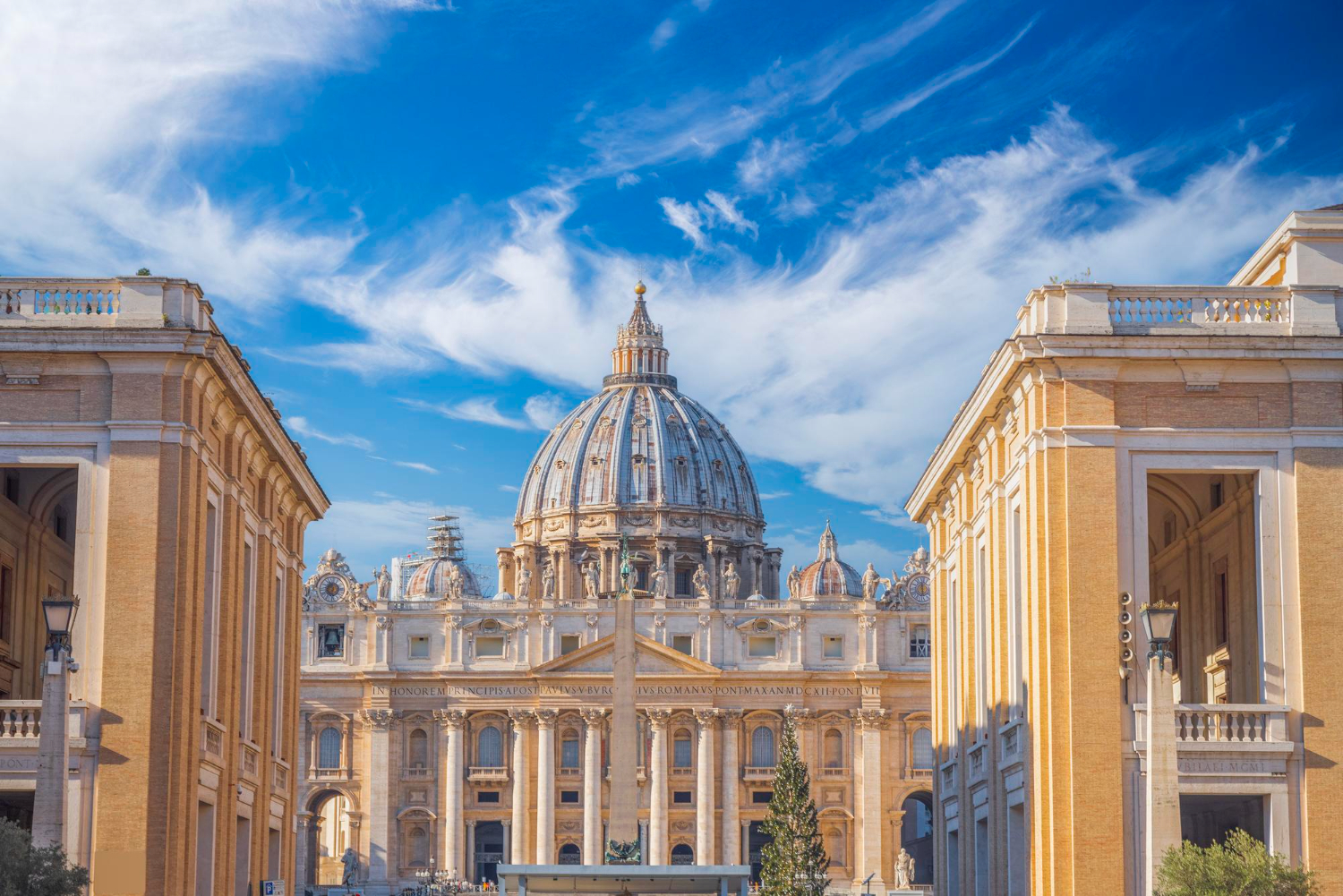
For travelers interested in seeing the spaces where papal succession occurs, the Vatican is accessible to visitors with appropriate planning:
St. Peter’s Basilica. Free entry, though security lines can be lengthy (typically 30-90 minutes during peak season). The basilica houses the tombs of many previous popes in the grottos beneath. Modest dress required (covered shoulders and knees). Open year-round.
St. Peter’s Square. Always accessible. The most photographed square in Rome. Best viewed from the colonnade at sunrise or sunset for dramatic light.
Sistine Chapel. Accessible only as part of the Vatican Museums tour. Tickets typically €17-25 for Vatican Museums admission; advance reservation strongly recommended (€5 booking fee). The Sistine Chapel is at the end of the museums tour. No photography permitted inside the chapel.
The Vatican Necropolis (Scavi tour). This restricted tour visits the area beneath St. Peter’s Basilica where archaeological evidence of St. Peter’s tomb has been preserved. Tickets approximately €13. Advance reservation required (typically months in advance). One of the most meaningful Vatican experiences for serious Catholics or history enthusiasts.
Castel Gandolfo. The traditional papal summer residence (about 25 km from Rome) is now open to the public. Pope Francis chose not to use Castel Gandolfo as a summer residence, instead opening the gardens and apartments to public visits.
Papal audiences. Pope Leo XIV holds public audiences on most Wednesdays in St. Peter’s Square (or in the Paul VI Audience Hall during winter or rain). Free tickets must be requested in advance. Visitors do not receive personal blessings but can see the Pope speak.
The Vatican Apostolic Library. Limited access — primarily for scholars. The library houses one of the world’s most important historical document collections.
For travelers who want to understand the specific rituals described in this article, visiting the Vatican during a non-conclave period allows access to all the spaces where the rituals occur. The Sistine Chapel where cardinals vote, the central balcony where new popes appear, the Domus Sanctae Marthae where modern conclaves are housed (visible from various Vatican vantage points) — all become more meaningful when visitors understand the specific rituals that occur in each space.
The Catholic Church’s papal succession rituals are not merely religious ceremony — they’re one of the most precisely choreographed institutional processes in the world, refined over nearly 2,000 years to balance stability, independence, religious significance, and visible authority transition. Understanding what actually happens during the death of one pope and the election of his successor offers insight into how one of the world’s longest-continuous institutions has managed leadership transitions across two millennia of dramatic historical change. The rituals will continue, with periodic refinements, for as long as the Catholic Church endures.