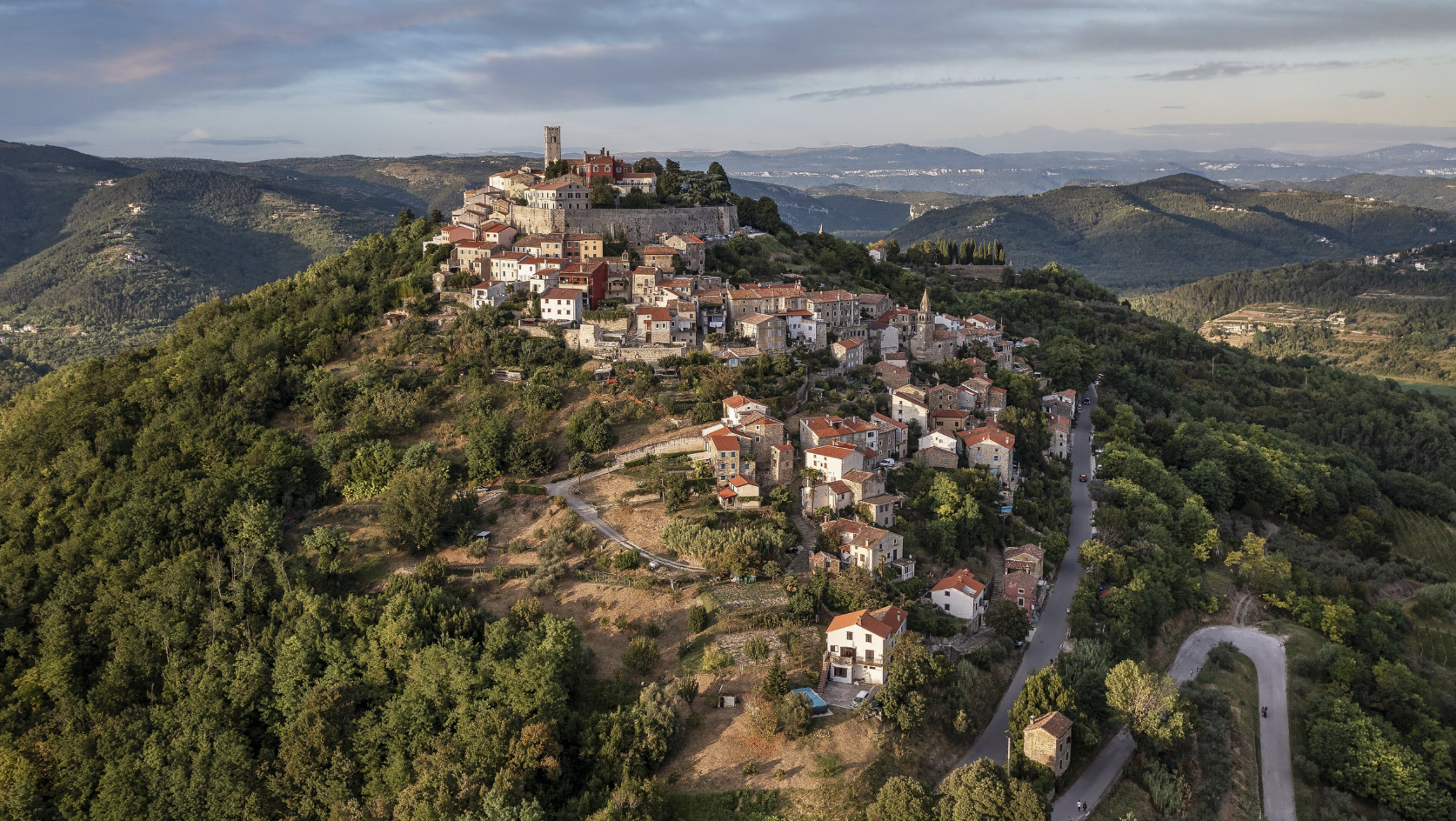
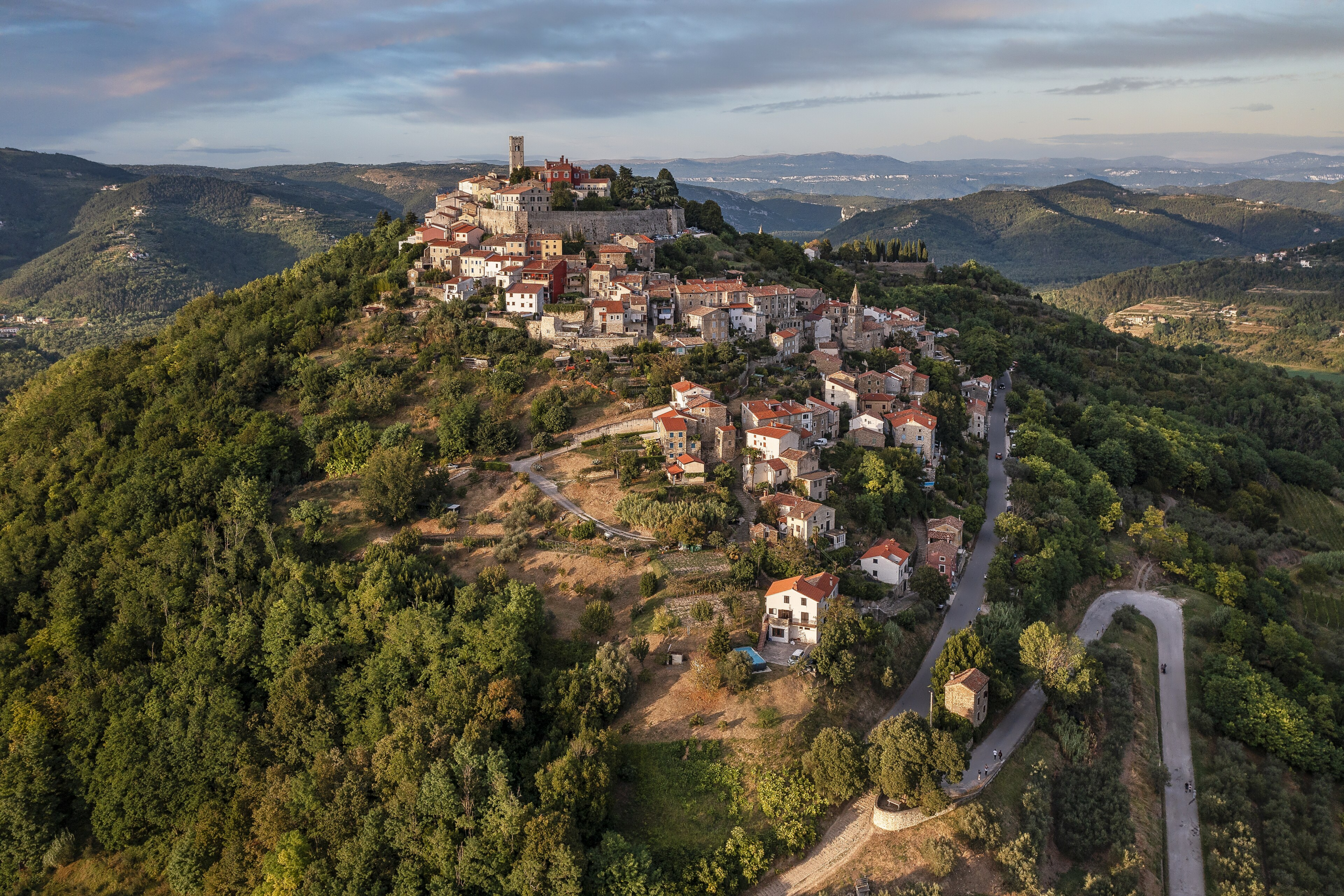
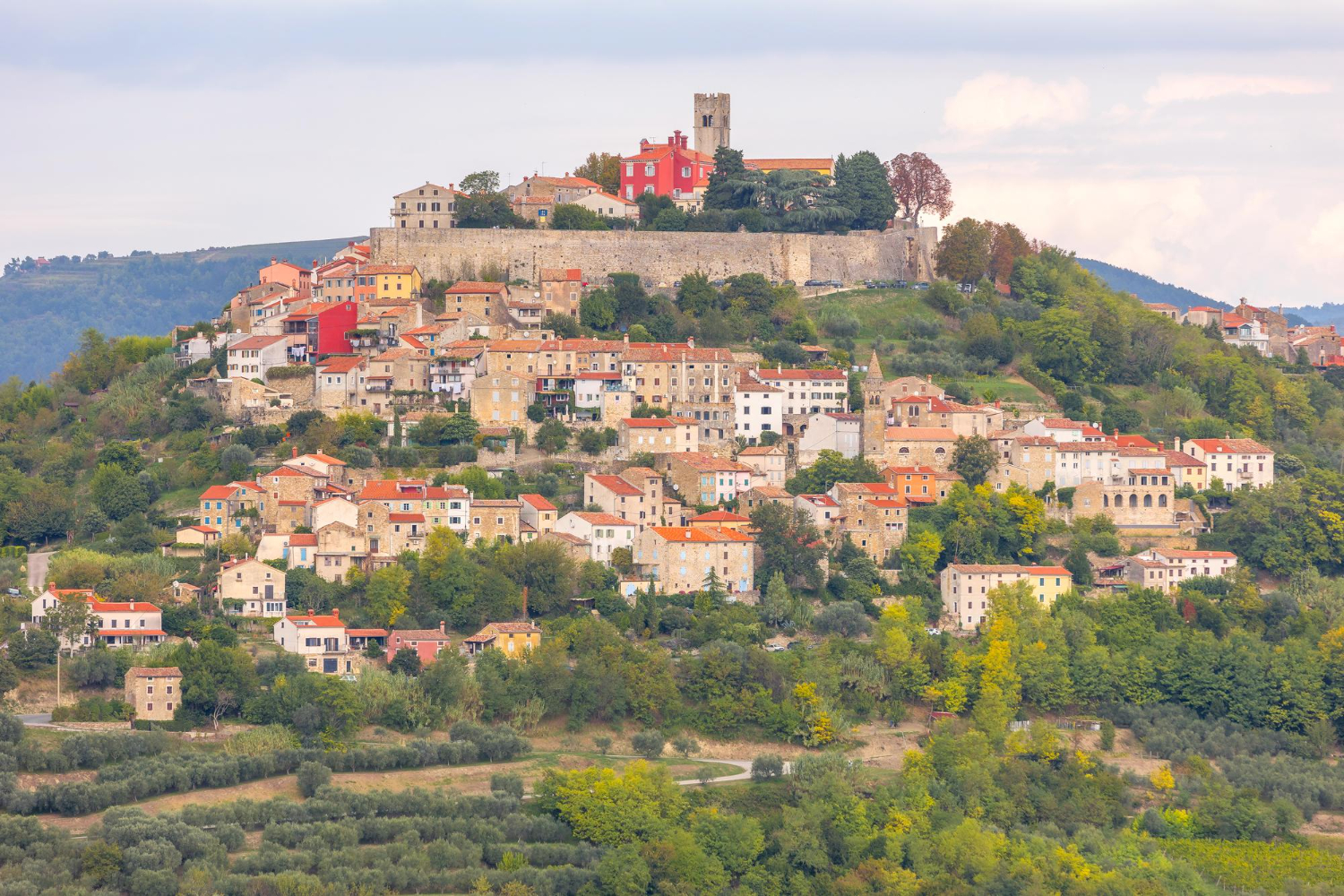
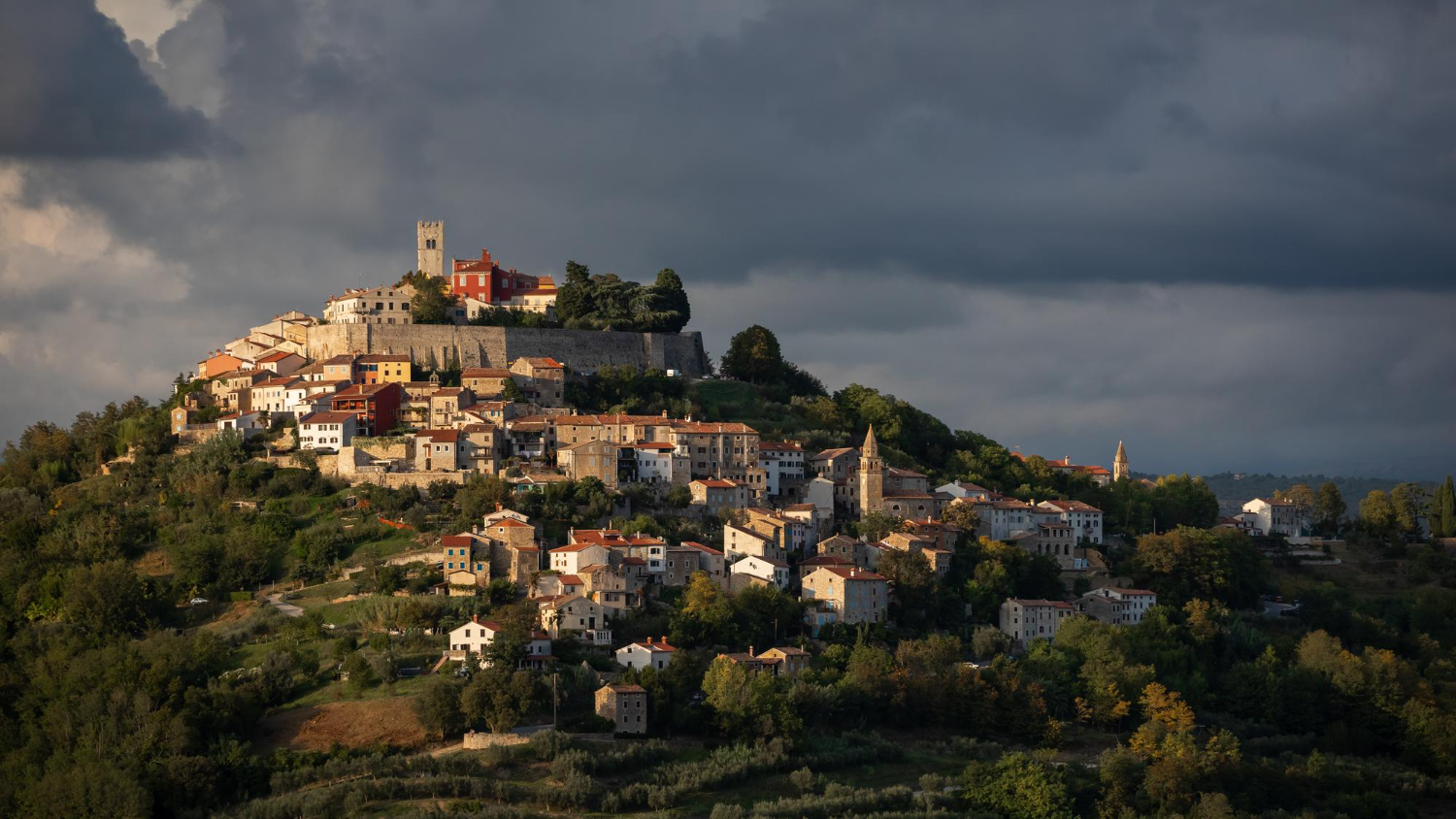
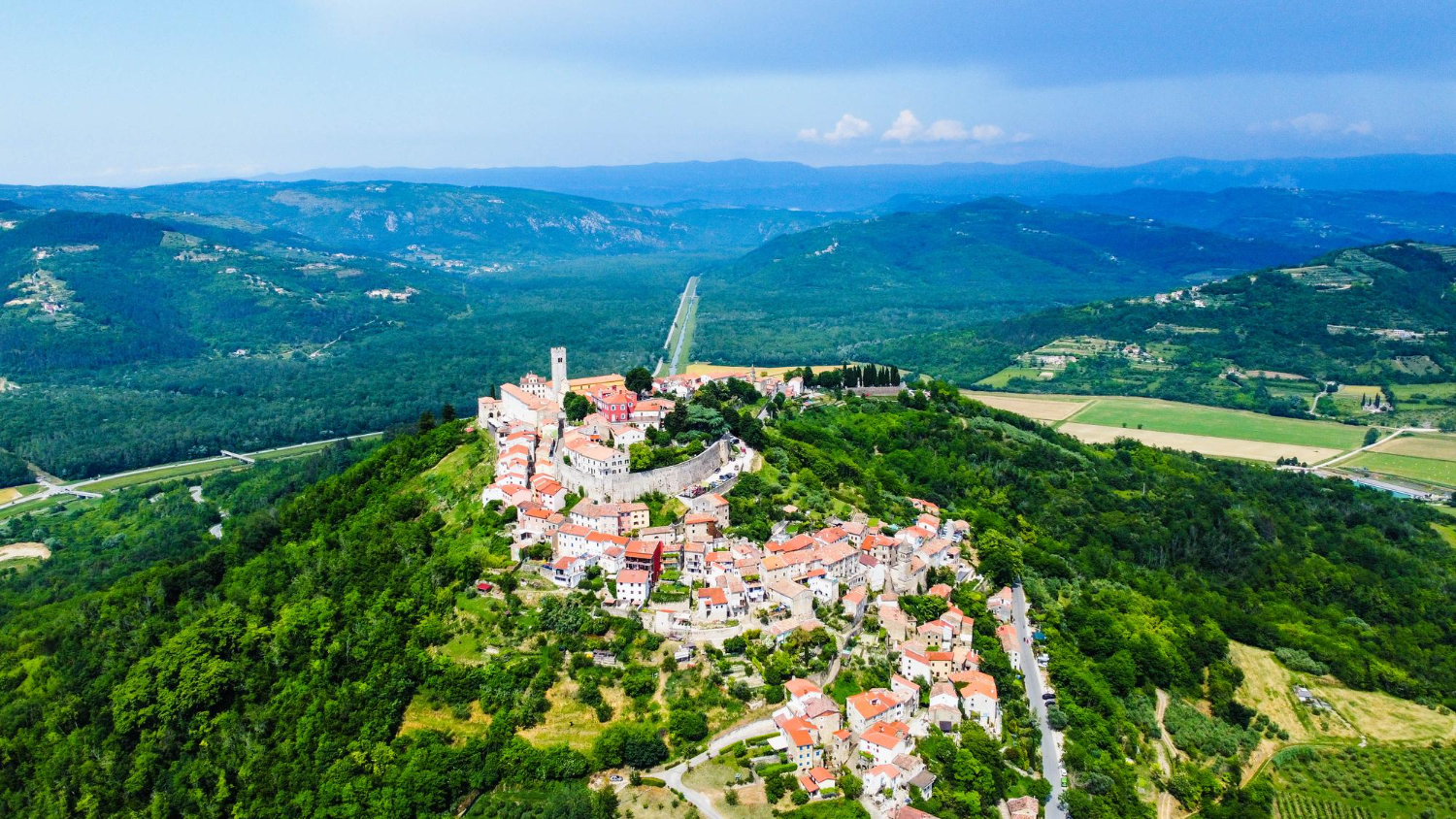
Motovun sits on a conical hill in Croatia’s Istria peninsula — substantial medieval town built atop a 277-meter peak overlooking the Mirna River valley. The cumulative town features 1,052-stair main staircase (longest in Istria), substantial double set of medieval defensive walls, well-preserved 13th-century architecture, and substantial truffle-rich forests below. Population: approximately 500 residents within the historic walls. Motovun is birthplace of racing driver Mario Andretti (1940). The town has appeared on Croatian 10 kuna banknotes from 1993-2004. Plus the famous Motovun forest below produces some of the world’s most prized white truffles.
1. A Hilltop Town in Istria
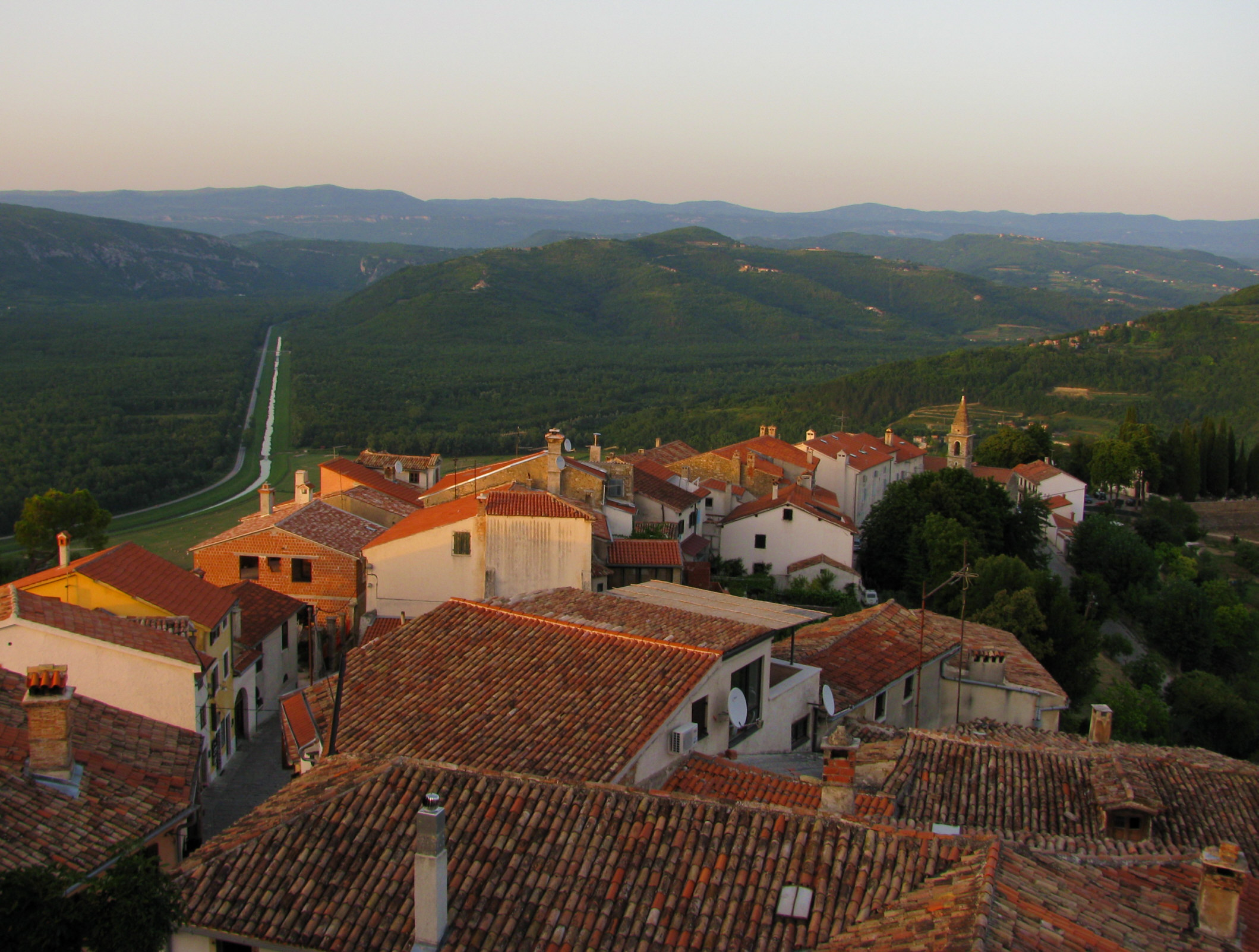
Motovun sits in central Istria, the heart-shaped peninsula in northwestern Croatia. The town is approximately 14 km south of Pazin, perched on a conical hill rising 277 meters above sea level. The cumulative Mirna River valley below produces substantial agricultural and forest landscapes. The cumulative location places Motovun within easy reach of various Istrian coastal destinations while maintaining substantial isolated inland character.
2. The Ancient Foundation
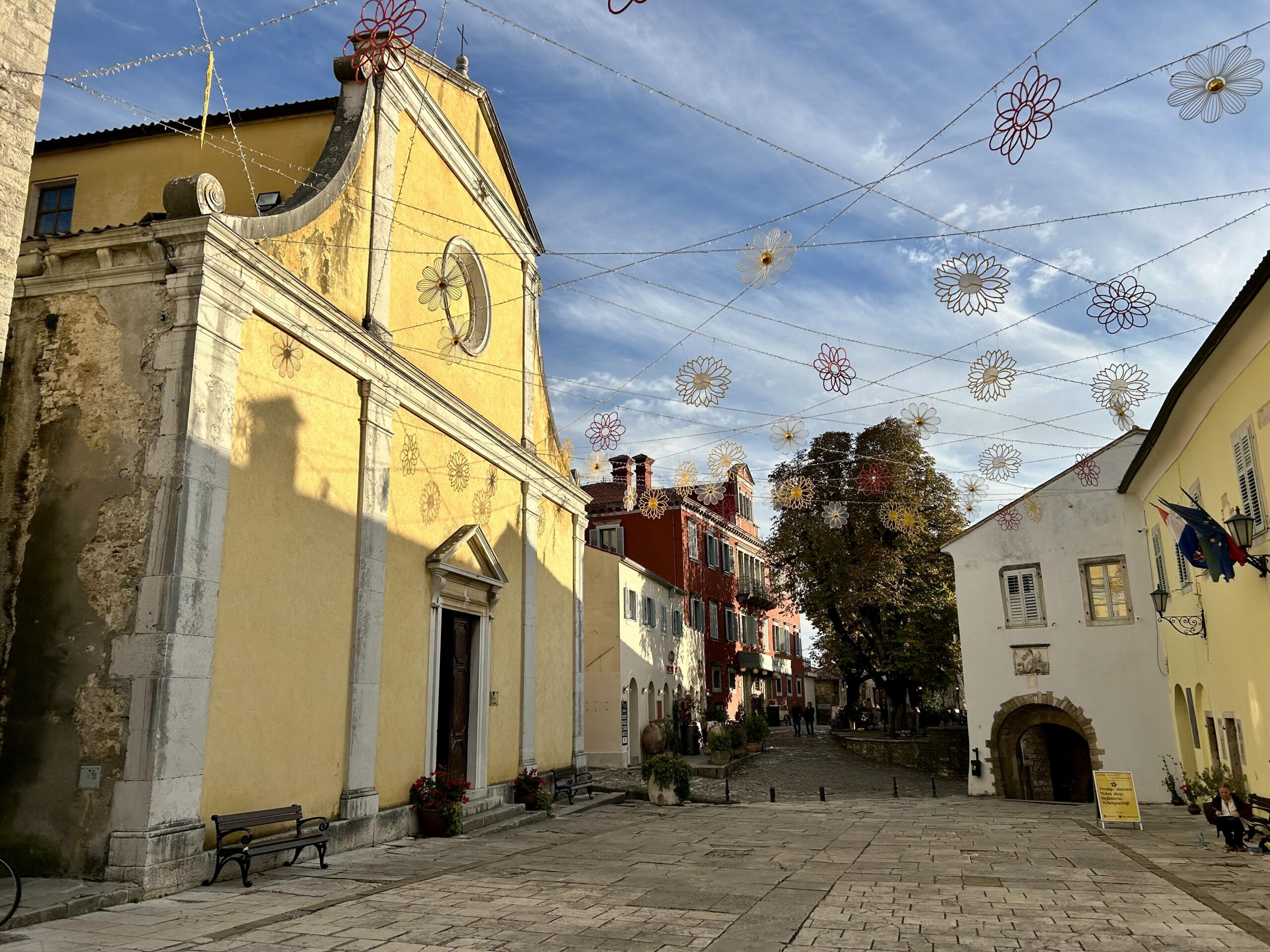
Motovun developed on the site of prehistoric Castellieri hillfort. Both Celtic tribes (Sekusi) and Illyrians constructed substantial fortifications at the cumulative location, capitalizing on the hill’s substantial defensive advantages. The town’s name derives from Celtic “Montona.” Roman influences followed with the cumulative area becoming part of the Poreč ager. First written record: 804 CE in the Placitum of Rižana as “Montouna.”
3. The Venetian Period
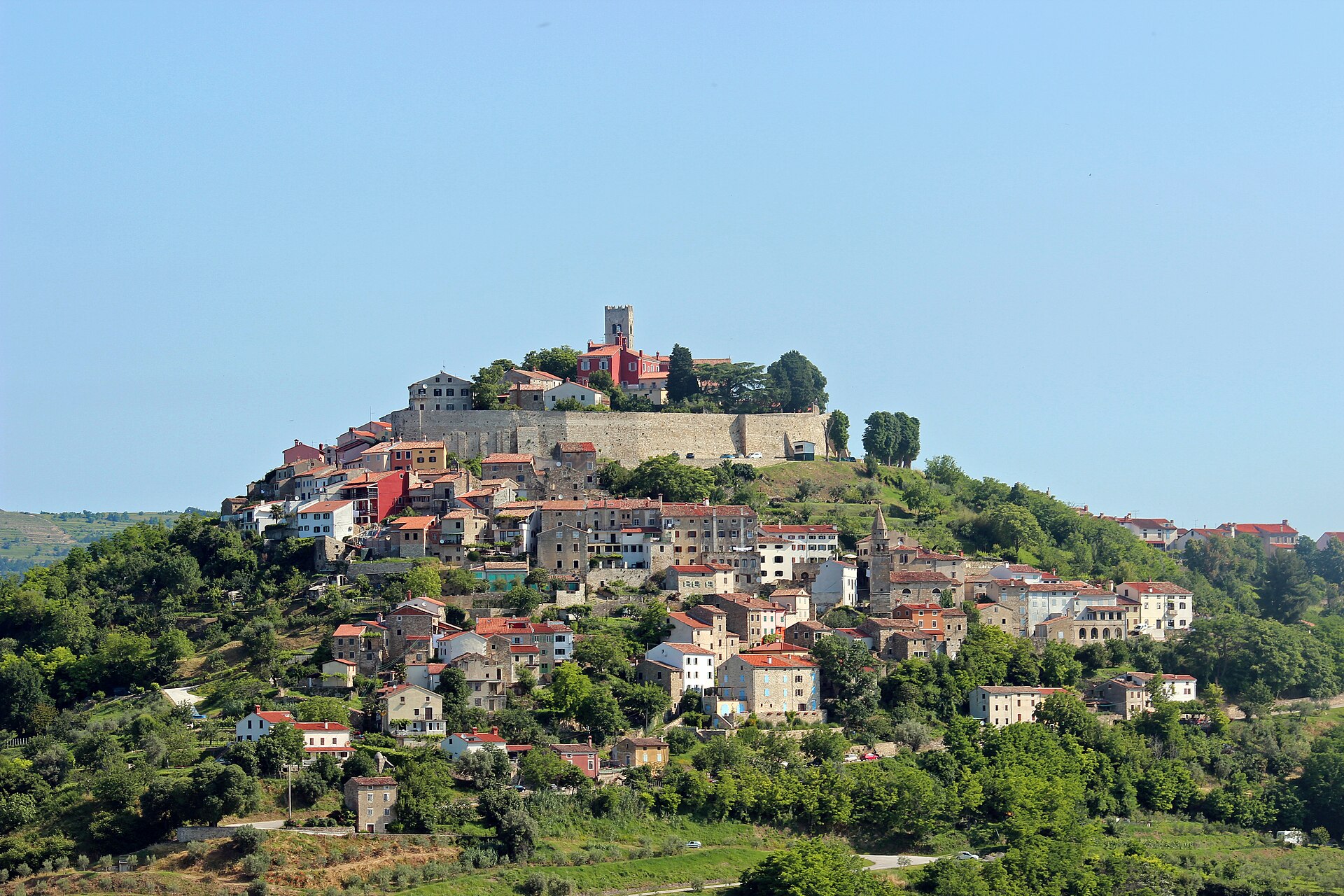
Motovun came under continuous Venetian rule from 1278 to 1797 — substantial 519-year period that essentially defined the town’s architectural character. The cumulative Venetian influence appears throughout the town: lion of St. Mark carved above various doorways, substantial Venetian Gothic architecture, various coats of arms from Venetian ruling families. The cumulative architectural style represents substantial example of Venetian colonial design preserved in inland Istrian location.
4. The Double Defensive Walls
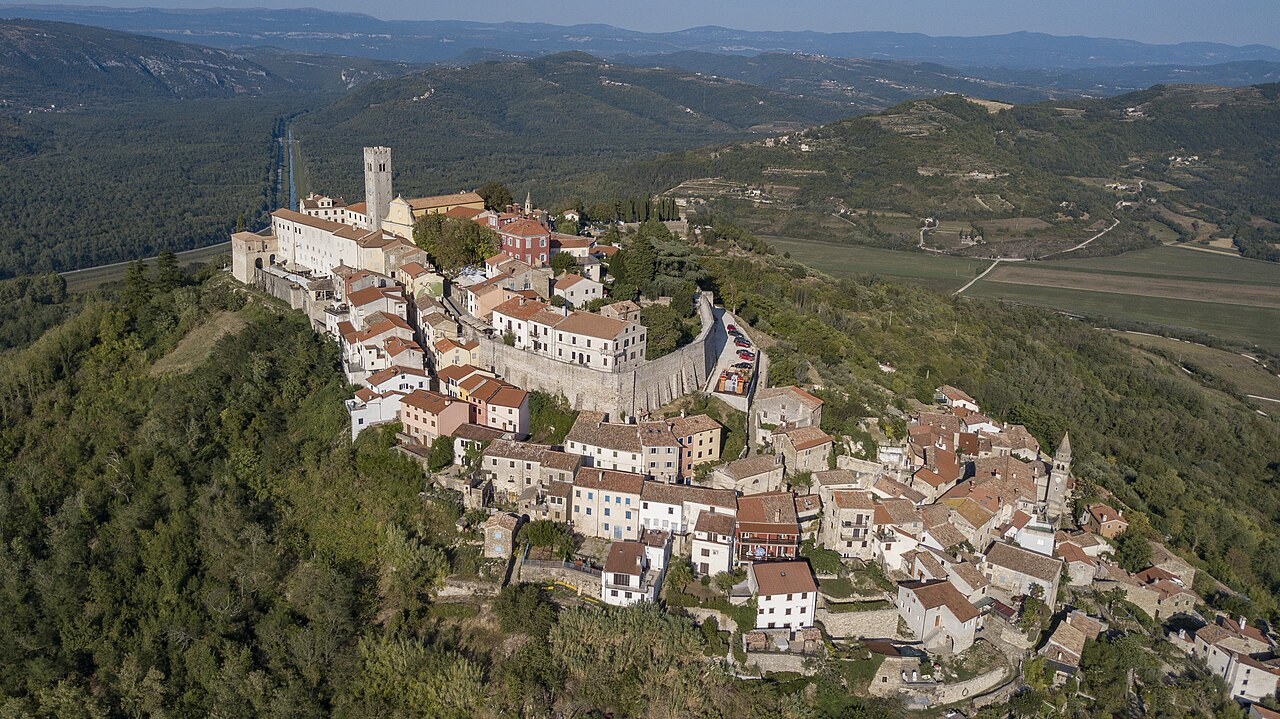
Motovun features two distinct rings of fortress walls — substantially unusual architectural element in Istria. The cumulative walls were constructed between the 14th and 17th centuries combining Romanesque, Gothic, and Renaissance elements. The cumulative inner walls represent substantial 13th-14th century construction with peaked-arch niches on inner side. Various square towers provide additional defensive positions throughout cumulative fortification system.
5. The 1,052-Stair Climb
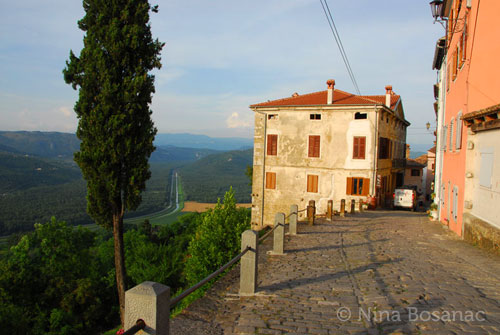
The main access to Motovun involves the substantial Borgo staircase — 1,052 stone stairs from valley floor to town top, representing the longest staircase in all of Istria. The cumulative climb takes approximately 20-30 minutes for typical visitors. Various Gothic gates and architectural features punctuate the cumulative ascent. The cumulative effort substantially exceeds typical European hilltop town access but provides substantial accomplishment satisfaction for visitors who complete the climb.
6. The Andretti Birthplace
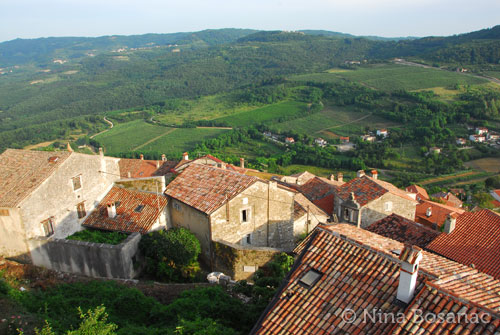
Motovun is birthplace of legendary American racing driver Mario Andretti (born 1940) and his twin brother Aldo. The Andretti brothers reportedly raced hand-crafted wooden cars through the cumulative steep streets during childhood. After WWII when Istria became part of Yugoslavia, the Andretti family emigrated, living in refugee camps near Lucca from 1948 to 1955 before resettling in Nazareth, Pennsylvania. Mario went on to substantial Formula 1 and IndyCar championships.
7. The Truffle Capital
The cumulative Motovun forest covering approximately 10 km² in the Mirna River valley below the town produces some of the world’s most prized white truffles (Tuber magnatum pico) plus various black truffles. The cumulative truffles substantially appear in essentially all Motovun restaurants — shaved over pasta (traditional Istrian fuži or pljukanci), eggs, steak, and various other dishes. Various local restaurants including Konoba Mondo and Zigante Restaurant (in nearby Livade) provide substantial truffle dining experiences.
8. The Communal Palace
The substantial Communal Palace in Motovun is the best-preserved Romanesque public building in Croatia. The cumulative structure was built largely in 1248 to serve as town hall plus defensive role. The original Romanesque mullioned windows with two lights can still be seen on the facade. Today the cumulative palace houses local government offices, Pet kula art gallery, Bauer cinema, Antico medieval printing house, and tourist information center.
9. The 17th-Century Church
The substantial Parish Church of St. Stephen sits at Motovun’s highest point. Built 1580-1614 based on sketches probably designed by famous Venetian architect Andrea Palladio (1508-1580). The cumulative church houses notable artworks including marble statues of St. Stephen and St. Laurence by Francesco Bonazzo plus 17th-century Last Supper painting over altar by unknown Venetian artist. Various 14th-15th century water cisterns sit beneath the cumulative church square.
10. The Romanesque Bell Tower
Motovun’s iconic skyline features the substantial Romanesque-Gothic bell tower with a distinctive toothed parapet (jagged crown). The cumulative tower dates from 13th-14th centuries. The cumulative bell tower can be climbed for approximately €2 entry fee, providing substantial panoramic views across the entire Mirna valley and surrounding Istrian countryside. Various photographers consider the bell tower views among Croatia’s most distinctive landscape photography opportunities.
11. The Film Festival Legacy
From 1999 through 2022, Motovun hosted the substantial Motovun Film Festival — international event focused on independent and avant-garde films from US and Europe. The cumulative festival brought substantial global attention to the town for over two decades. In 2023, the festival relocated to Gorski Kotar under the new name “Cinehill,” but the cumulative cultural impact on Motovun substantially continues through tourism and various cultural associations.
12. What Motovun Represents
Motovun demonstrates how substantial medieval architectural preservation combined with substantial culinary heritage and dramatic hilltop landscape can produce destination character that mainstream international tourism rarely encounters. The cumulative town has substantially preserved its character despite various political transitions across approximately 800 years of documented history. For travelers interested in authentic Istrian experience beyond mainstream Croatian coastal tourism, Motovun provides substantial inland alternative with cumulative cultural depth.