

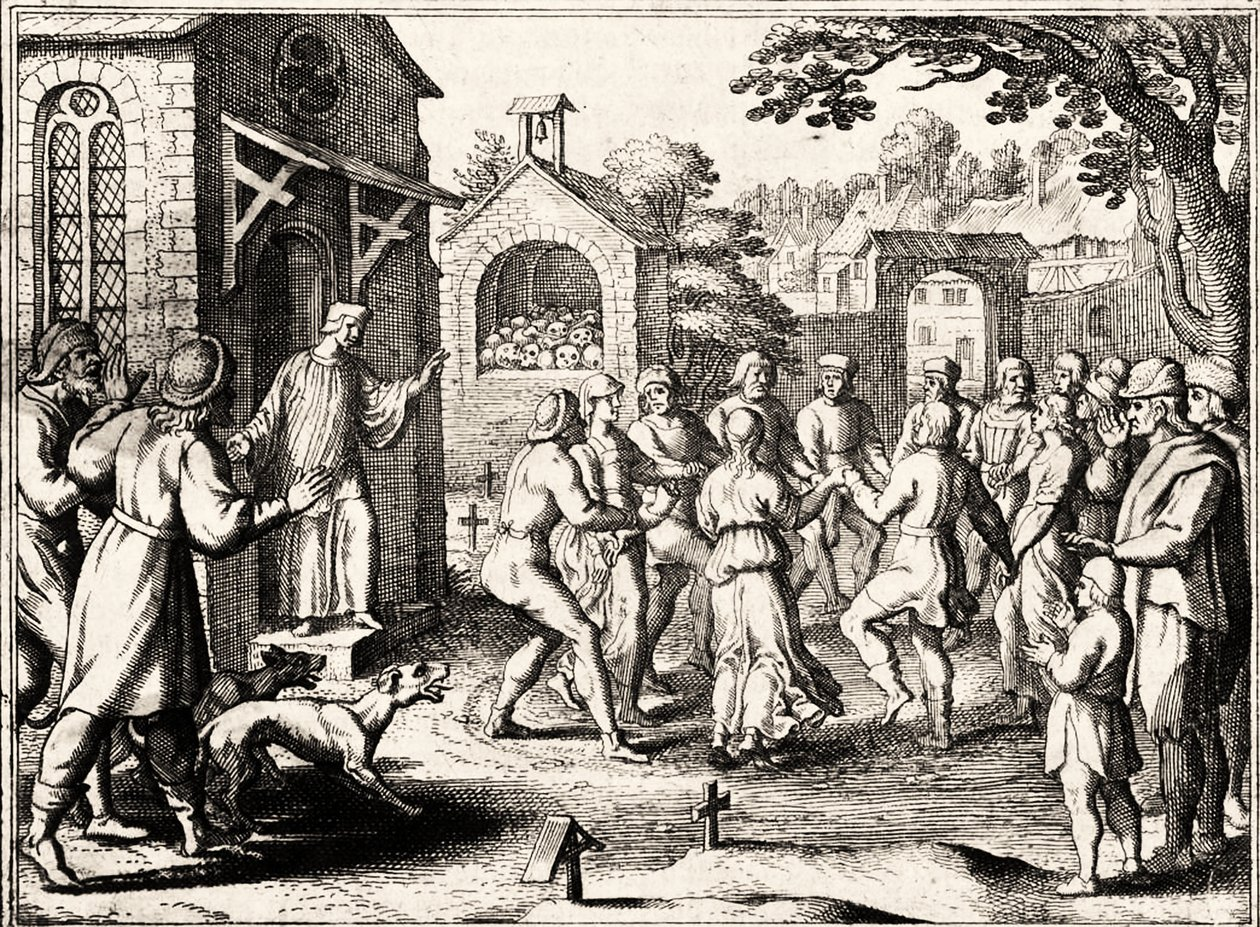
It is one of the most bizarre documented events in European history, and its strangeness holds up under scrutiny because it is unusually well recorded — noted in multiple chronicles of the time, discussed by physicians, and referenced in civic documents. In the summer of 1518, in the city of Strasbourg, then part of the Holy Roman Empire and now in France, hundreds of people were seized by an uncontrollable compulsion to dance. They danced for days and weeks, apparently against their will, past the point of exhaustion and injury, and a number of them reportedly danced themselves to death.
This was not a celebration, a ritual, or a performance. Contemporary accounts describe the dancers as being in real distress — moving with vacant, tormented expressions, some screaming, some pleading for help, all unable to stop. The dancing plague of 1518 is real history, and five centuries later it remains one of the most puzzling mass phenomena ever recorded, with no single explanation that satisfies everyone. Here is what happened, and what the leading theories suggest was behind it.
It Started With One Woman
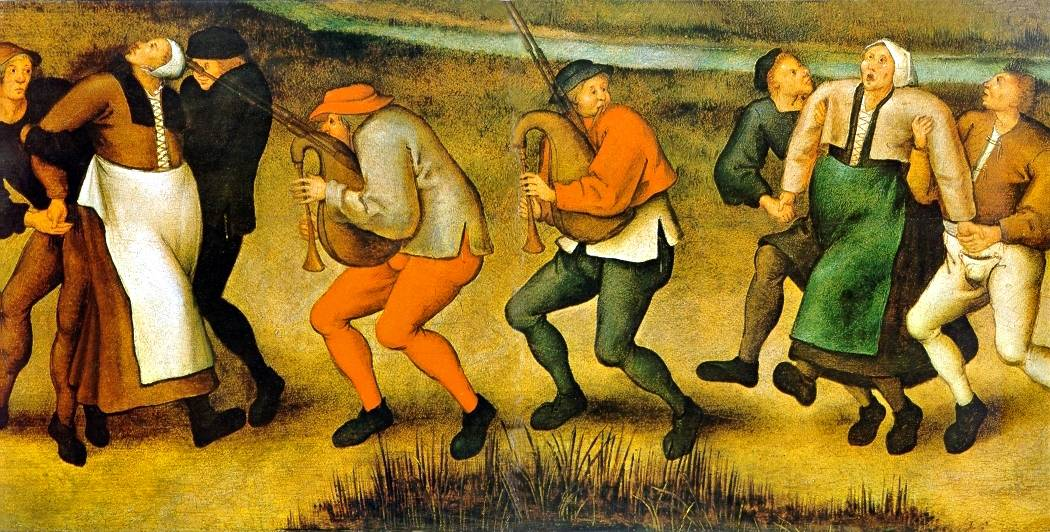
By the accounts, it began in mid-July 1518 with a single person. A woman recorded as Frau Troffea stepped out into a narrow street in Strasbourg and started to dance. There was no music and no obvious reason. She simply danced, and she did not stop.
She kept going all day until she collapsed from exhaustion, and then, after a brief rest, she rose and began again. Her husband is said to have begged her to stop; she could not. She continued for days, dancing on feet that reportedly became swollen and bloody, and rather than being treated as ill, she became a spectacle — and then a contagion. Within a few days, others in the city began to join her, seized by the same compulsion. By the end of the first week, more than thirty people were dancing. Within a month, the number had reportedly swelled to around 400.
The spread is one of the most unsettling features of the whole episode. This was not people choosing to join a dance; it was something that appeared to take hold of them, spreading through the population of Strasbourg the way a contagious illness would, pulling in more and more citizens who found themselves compelled to move and unable to stop.
Like our content? Follow us for more.
The Cure That Made It Worse
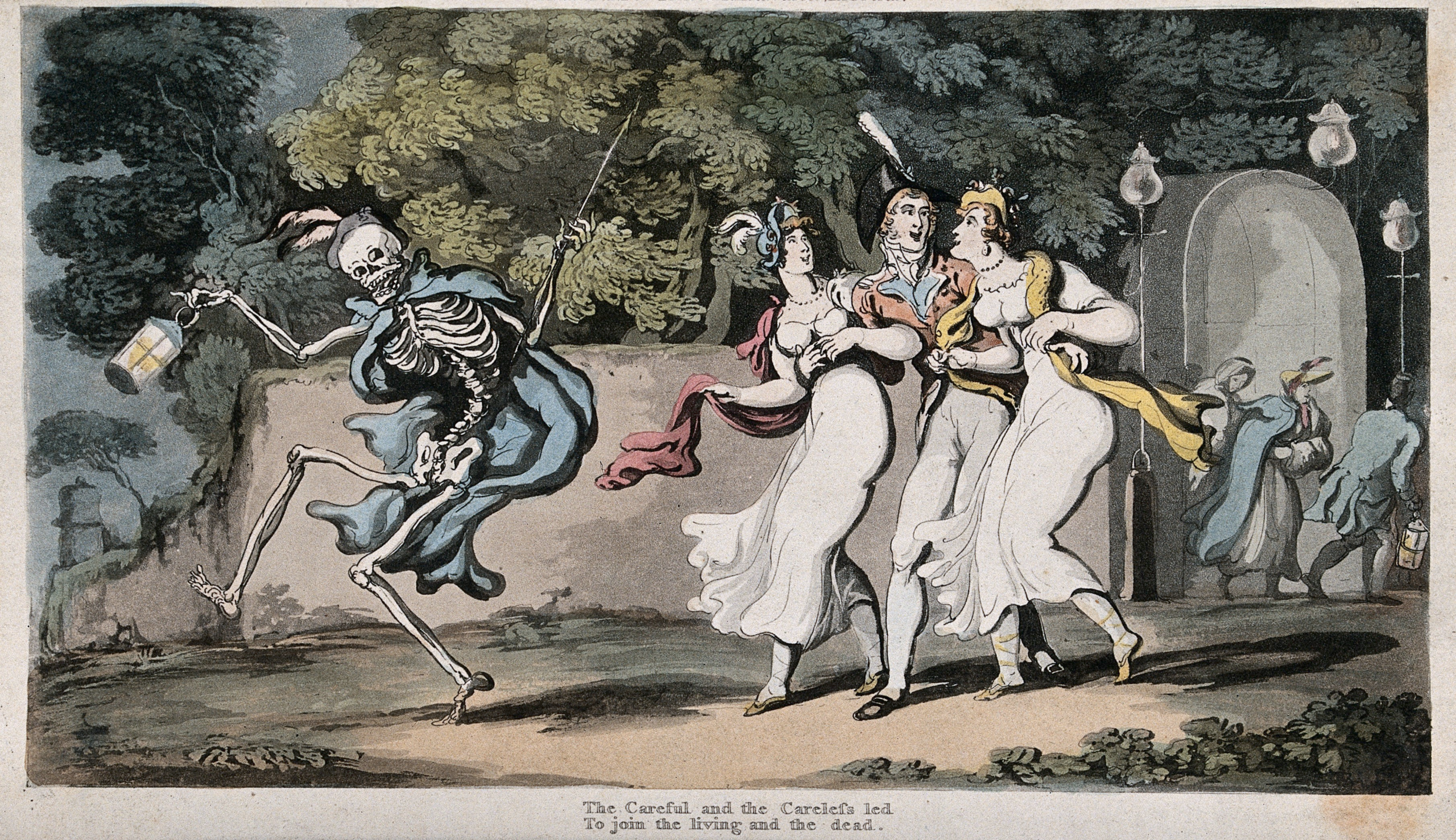
The response of the city authorities is the detail that most reliably astonishes people, because it was precisely, catastrophically wrong. The physicians of the day, working from the medical theories of the era, concluded that the dancing was caused by “hot blood” — an excess of heat in the body that needed to be worked off. The prescribed remedy, therefore, was more dancing. The idea was that if the afflicted danced the fever out of their system, they would recover.
So the authorities actively facilitated the dancing. By the accounts, they cleared spaces for it, and even built a wooden stage and brought in musicians and professional dancers to keep the afflicted moving, on the theory that sustained dancing would cure them. The result was entirely predictable in hindsight: encouraging exhausted people to dance harder, and turning the marketplace into a dance floor with live music, drew still more citizens into the frenzy and drove the already-afflicted closer to collapse. It is one of history’s clearest examples of a treatment actively worsening the disease it was meant to cure.
The Deaths
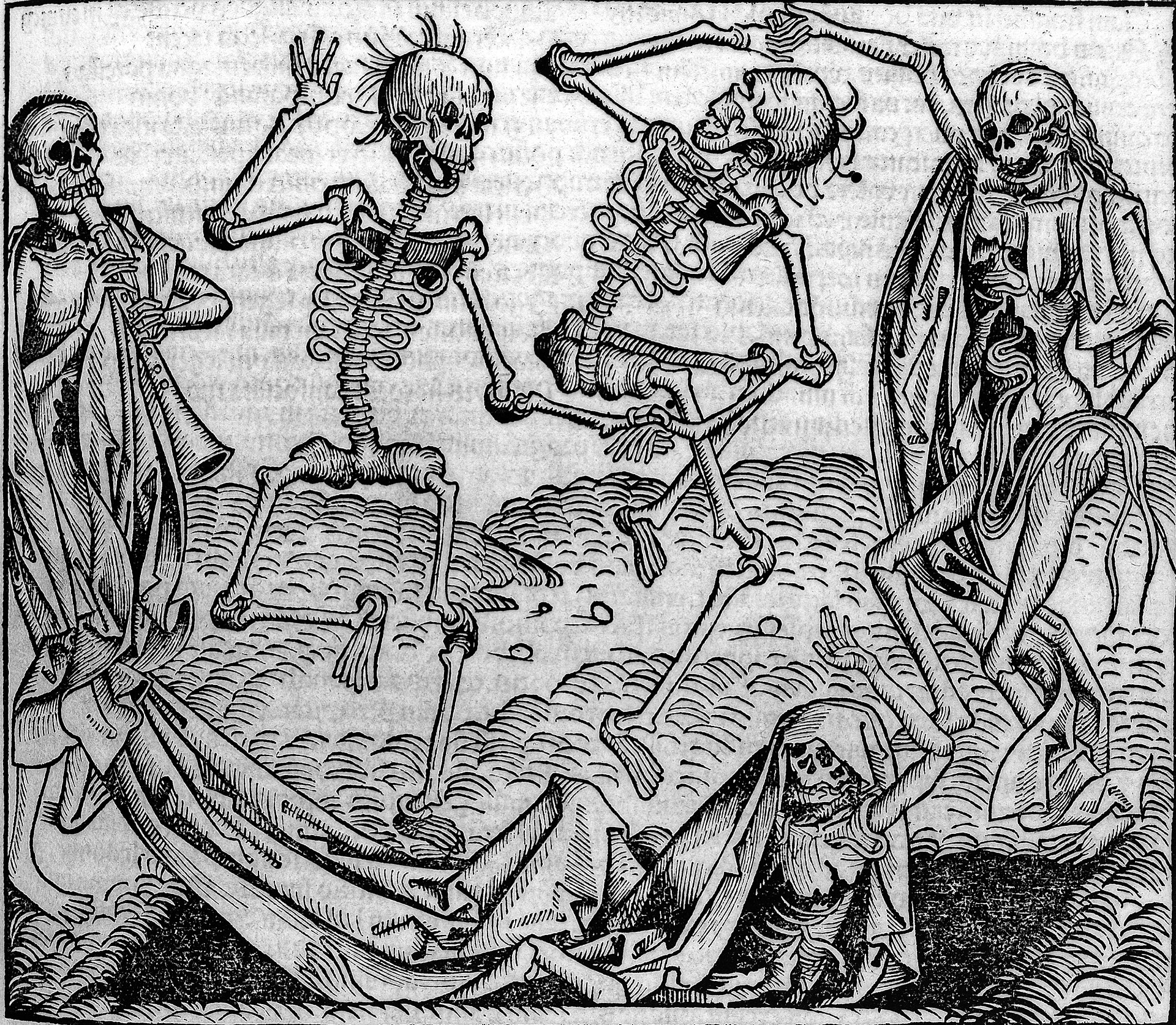
How many people died is truly uncertain, and it’s important to be careful here, because the sources disagree and some of the most dramatic figures may be exaggerated. Contemporary and near-contemporary accounts describe dancers succumbing to heart attacks, strokes, and sheer exhaustion. One chronicle suggested that at the peak, as many as fifteen people were dying each day, which, if accurate, would put the total death toll into the dozens or possibly the low hundreds over the weeks the plague lasted.
Modern historians treat these death figures with caution. The claim that people danced themselves to death in large numbers is repeated widely, but the documentation is inconsistent, and some scholars think the mortality was lower than the most alarming accounts suggest. What seems clear is that the phenomenon was physically punishing in the extreme — people dancing for days on injured feet in summer heat would certainly have suffered serious harm — and that at least some deaths occurred. The exact toll is one of the many things about 1518 that cannot now be pinned down.
How It Ended
The dancing plague lasted roughly from mid-July into late August or early September of 1518, and then it faded, apparently about as mysteriously as it had begun. The most commonly cited account holds that the authorities eventually changed tack, abandoning the “dance it out” approach, and that the afflicted were taken to a shrine associated with Saint Vitus — a saint connected in the popular imagination of the time with dancing afflictions — where they underwent religious rites intended to lift the curse, and were, by the accounts, gradually cured.
Whether the shrine visits actually ended it, or whether the phenomenon simply burned itself out as such episodes tend to, is impossible to say. What’s clear is that by early autumn the frenzy had subsided and Strasbourg returned to normal, leaving behind a set of chronicle entries so strange that people have been trying to explain them ever since.
The Theories
There is no settled explanation, but the leading candidates fall into a few groups, and each has support and problems.
The most widely favored modern explanation is mass psychogenic illness — sometimes called mass hysteria. In this view, the dancing was a collective stress response, a psychological contagion that spread through a population under extreme duress. And Strasbourg in 1518 was under real duress: the region had been suffering famine, disease, and grinding hardship, and the population was primed for a collective breakdown. Crucially, the belief system of the time included a real fear of exactly this kind of affliction — Saint Vitus was thought capable of inflicting a compulsion to dance as a curse — so a population that already believed such a thing was possible could, under enough stress, manifest it. The dancing, on this reading, was a culturally shaped expression of collective psychological trauma.
A second theory points to ergot poisoning. Ergot is a toxic fungus that grows on damp rye, and consuming it can cause convulsions, hallucinations, and other severe neurological effects; it grew in exactly the conditions Strasbourg had experienced. The problem with this explanation is that ergot poisoning typically constricts blood flow and can cause gangrene and painful spasms, which doesn’t fit the sustained, coordinated activity of dancing for days — it’s hard to dance for a week on ergot-poisoned limbs. Most historians who have looked closely regard ergot as an unlikely primary cause, though it remains a popular suggestion.
Other explanations have been offered over the years — religious ecstasy, organized heretical dancing, and various combinations — but none accounts for the evidence better than the mass-psychogenic explanation, which is where the weight of current scholarly opinion sits, while acknowledging that certainty is impossible at this distance.
Not the Only One
A detail that makes the 1518 event even stranger is that it was not unique. Dancing manias were recorded in Europe on and off across several centuries, with other significant outbreaks documented in the region well before 1518. The phenomenon had a name and a place in the medieval imagination precisely because it had happened before. This recurrence is itself part of the evidence for the mass-psychogenic reading: a specific, culturally recognized form of collective breakdown that could recur when populations under stress shared the belief that it could happen to them.
That framing connects the dancing plague to a broader and still-relevant category of events. Episodes of mass psychogenic illness — collective outbreaks of symptoms with no physical cause, spreading through a group by psychological contagion — have been documented into modern times, in schools, workplaces, and communities. The specific expression changes with the culture; the underlying human phenomenon does not appear to have gone anywhere. 1518 is the most spectacular and famous example, but it is not an isolated freak.
The Mystery That Won’t Resolve
The dancing plague endures because it sits at an uncomfortable intersection of the well-documented and the inexplicable. We know it happened. We have the chronicles, the civic records, the physicians’ notes. We know roughly how many people, roughly how long, and roughly how it was handled. What we cannot do, with certainty, is explain it — and that combination of solid evidence and irreducible mystery is exactly what keeps a five-hundred-year-old event alive in the imagination.
The most likely answer, that a population pushed past its breaking point by famine and hardship expressed its collective trauma through a culturally available form of breakdown, is oddly humane and more than a little unsettling. It suggests that the dancers were not mad or poisoned but overwhelmed — ordinary people whose minds and bodies responded to unbearable pressure in a way that spread from one to the next until hundreds were caught in it. On a hot July day in 1518, a woman began to dance and could not stop, and the city danced with her, and some of them never stopped at all. Five centuries on, that remains one of the strangest true things that has ever happened.
Like our content? Follow us for more.

