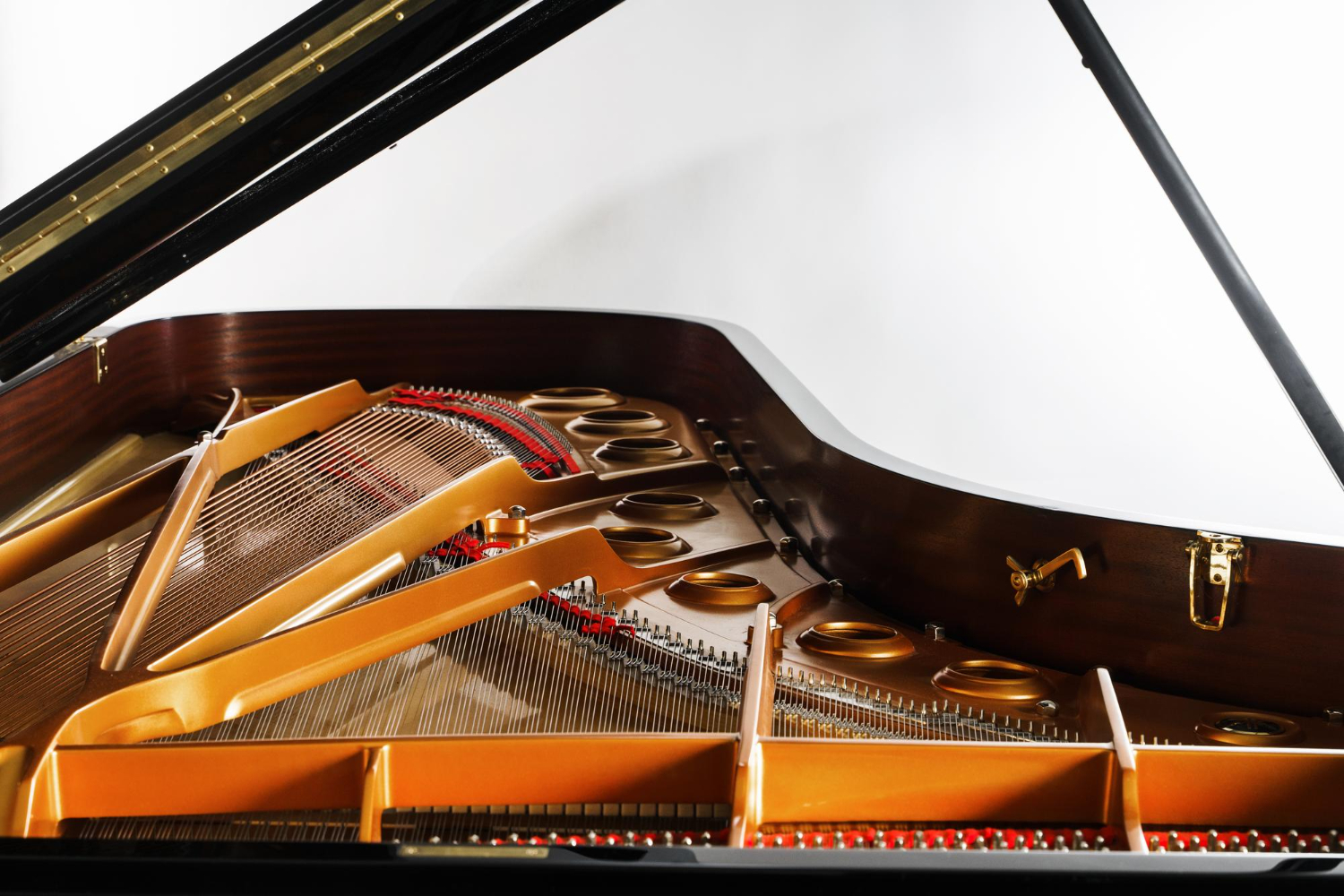
There is a problem in the design of any keyboard instrument that strikes rather than plucks, and solving it took a long time.
The problem is that a string only sounds if it is free to vibrate. Anything touching it damps it — which means the object that hits it must leave immediately and not come back.
That is straightforward if the player is holding a hammer directly. It is extremely difficult if the hammer is at the end of a linkage operated by a key several feet away, because a rigid linkage means the hammer goes where the key goes and stays where the key stays.
The mechanism that solves it is among the more ingenious pieces of mechanical design in any domestic object, it contains a surprising number of moving parts per note, and almost nobody who plays one has looked inside.
The Release

The core of the design is a deliberate disconnection.
Pressing the key drives a linkage that accelerates the hammer toward the string. Just before contact, the component pushing the hammer slips out from underneath it, and the hammer completes the last part of its travel unpowered.
That means the hammer arrives with whatever speed it had at the moment of release, strikes, and rebounds freely — with no connection to the key, which can still be held down.
The speed at release determines the volume, and that speed is determined by how fast the key was pressed. That is the entire mechanism by which a player controls loudness, and it is why the instrument’s full name refers to being able to play both softly and loudly.
Nothing about the key’s position affects the sound after release. The note has already been determined by the moment the hammer leaves, which is why a piano cannot be made louder by pressing harder once the key is down.
Like our content? Follow us for more.
Catching It Again
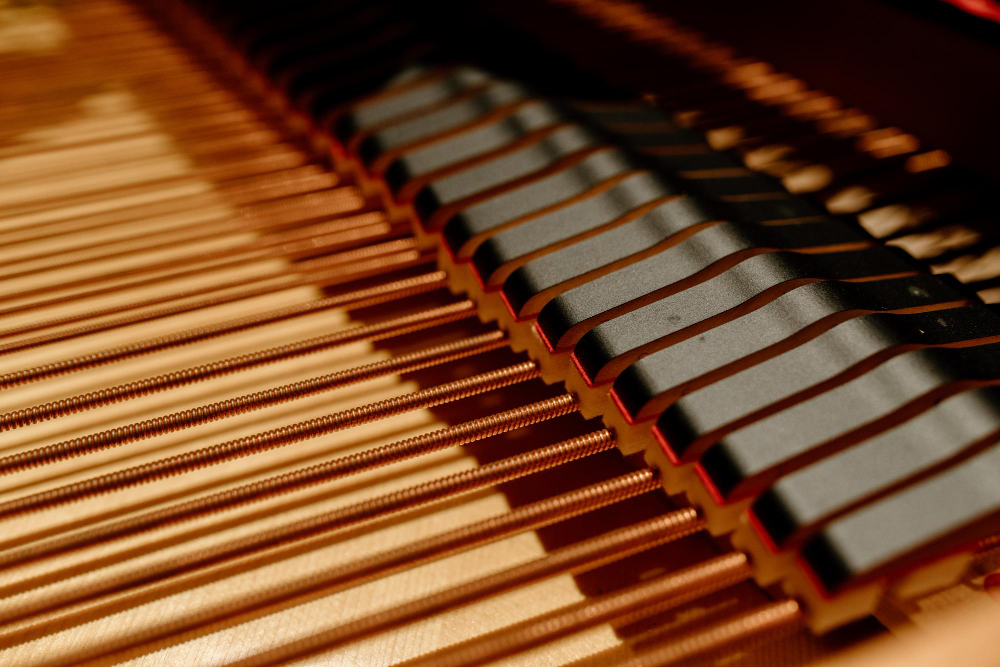
A separate problem arises immediately after the strike and requires its own solution.
A hammer that rebounds freely from a string will bounce back toward it, potentially striking a second time, which produces an unwanted repeat.
The mechanism therefore catches the hammer on its return, holding it a short distance below the string while the key remains depressed.
That position matters. Holding it close to the string means a much shorter travel is required to strike again, which is what allows rapid repetition of a note.
Releasing the key fully returns everything to rest and allows the next full stroke.
The arrangement that permits the hammer to be caught in the intermediate position and then thrown again without the key returning all the way is a specific refinement, and it substantially increased how fast a note could be repeated.
There is a refinement worth adding. The highest notes have no dampers at all, because very short strings stop vibrating almost immediately on their own and a damper would add cost and complication for no benefit.
That is why the top of the instrument sustains slightly even without the pedal, which is a deliberate omission rather than an oversight.
The Damper

The third component addresses when a note stops.
A string that is struck will ring until the energy dissipates, which takes a considerable time and would produce an accumulating blur as more notes were played.
So each string carries a damper resting against it, which is lifted away as the key is pressed and drops back when the key is released.
That means the key controls both the start and the end of the note, and holding it down sustains the sound purely by keeping the damper off.
The pedal most people know lifts all the dampers simultaneously, which is why it sustains everything and why it also makes the instrument sound fuller — the undamped strings vibrate in sympathy with whatever is being played, adding sound from strings nobody has touched.
There is a detail about the hammers themselves worth including. They are wooden cores covered in compressed felt, and the hardness of that felt substantially determines the tone – harder producing a brighter sound and softer a mellower one.
Felt compacts with use where the strings strike it, which brightens the tone over years, and it can be adjusted by pricking the surface to soften it again.
Why the Strings Are Arranged Like That
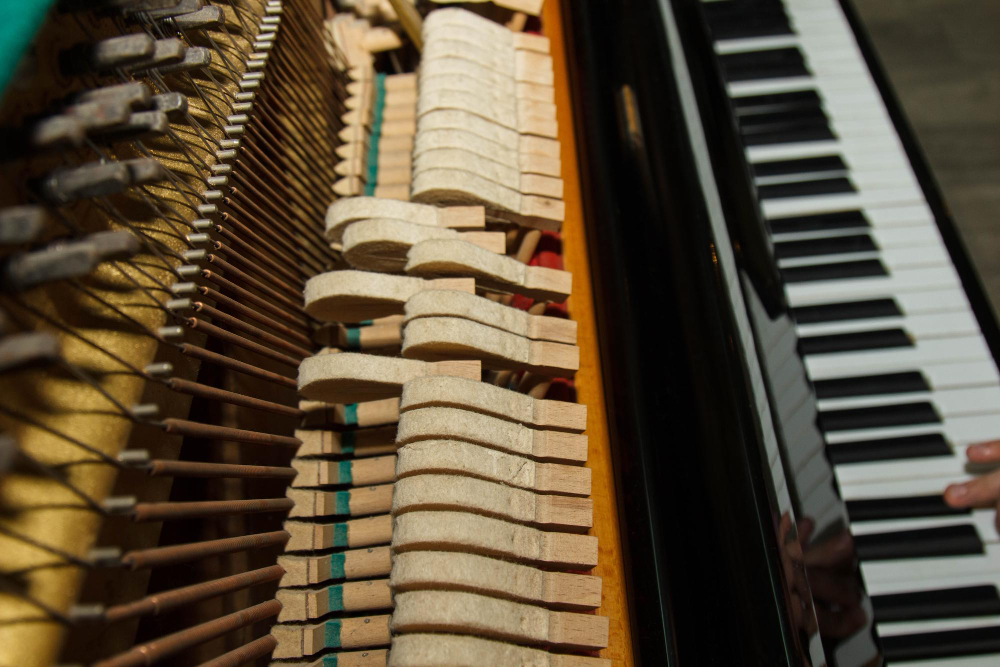
The layout is determined by acoustics and produces the shape of the instrument.
Pitch depends on the length, tension and mass of a string, and producing low notes requires long heavy strings under high tension.
A string long enough for the lowest notes at a reasonable tension would make an impractically long instrument, so those strings are shortened and made heavier instead by winding wire around a core.
Higher notes use shorter, thinner strings, and above a certain pitch each note has two or three strings tuned together rather than one, because a single thin string produces too little sound to balance the heavy low strings.
The strings are also arranged in two overlapping layers crossing diagonally, which allows longer strings in a shorter case and places the bass strings over the most responsive part of the soundboard.
That crossing is why a piano is the shape it is, and it was a substantial change when introduced.
The Frame Problem
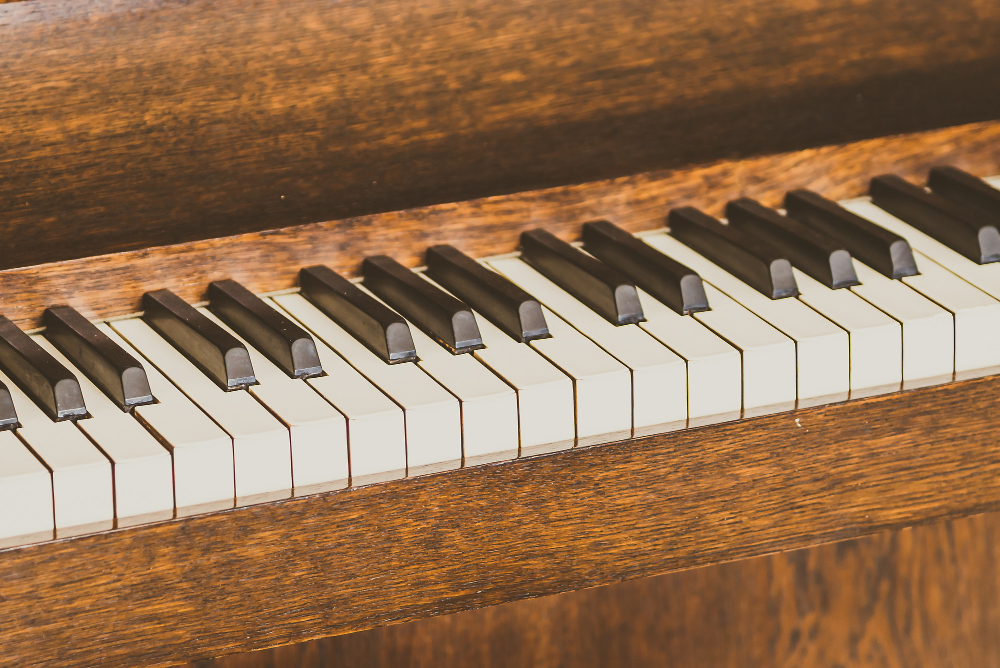
The structural requirement is the one that determined when the modern instrument became possible.
The combined tension of the strings in a full-size piano is enormous — comparable to the weight of a substantial vehicle, pulling constantly on the frame.
Wooden frames could not hold that, which limited string tension and therefore volume and tone, and instruments went out of tune constantly as the wood moved.
A cast iron frame solved it, permitting far higher tension, which produced a louder instrument with a longer sustain and better tuning stability.
That single change is what separates the modern instrument from its predecessors more than any refinement of the action, and it is entirely invisible beneath the strings.
Why It Goes Out of Tune

The stability problem is worth explaining because it accounts for the maintenance the instrument requires.
Strings under tension stretch slightly over time, which lowers their pitch, and the stretching is fastest when they are new — which is why a new instrument requires frequent attention and settles down afterwards.
The frame and the soundboard respond to humidity. Wood absorbs moisture and expands, which changes the tension on the strings, and releases it and contracts in dry conditions — so pitch moves with the seasons regardless of whether anything has been played.
Temperature has a smaller effect in the same direction, and the two together mean an instrument in an unstable environment moves continuously.
The soundboard is the critical component. It is deliberately curved under pressure from the strings, and that curvature is what transmits vibration efficiently — but it means the board is under permanent load and slowly flattens over decades, reducing the instrument’s response.
That flattening is not repairable in any straightforward way, which is why age affects a piano differently from most instruments. The action can be rebuilt, the strings replaced and the case restored, and the soundboard is the part that determines whether the instrument is worth doing any of it to.
Which explains a market that otherwise looks strange. An old instrument may be structurally sound, beautifully made, entirely functional and worth very little, because the component that cannot be replaced has done what it always does.
What the Design Represents
The instrument is worth considering as engineering rather than only as music.
Each note requires a mechanism of many separate parts, and a full instrument contains thousands of components that must all operate consistently, steadily, at speed, and identically to their neighbours.
Those components must respond to an enormous range of input force and translate it proportionally into hammer speed, which is the property the entire design exists to deliver.
And the whole thing must remain in adjustment under the tension of a structure pulling against itself with several tonnes of force.
It is one of the more mechanically demanding objects to be produced in quantity for domestic use, it was largely worked out before the industrial era was complete, and the basic arrangement has not fundamentally changed since — because the problem it solves has not changed either.
Which is a reasonable thing to know while standing next to one. The thing between the key and the sound is not a linkage. It is a catapult with a catch on it, repeated eighty-eight times.
And it has to behave identically every time, at any speed, under any force, for decades – which is a specification that would be demanding for a single mechanism and is being met, simultaneously, by every one of them.
Like our content? Follow us for more.