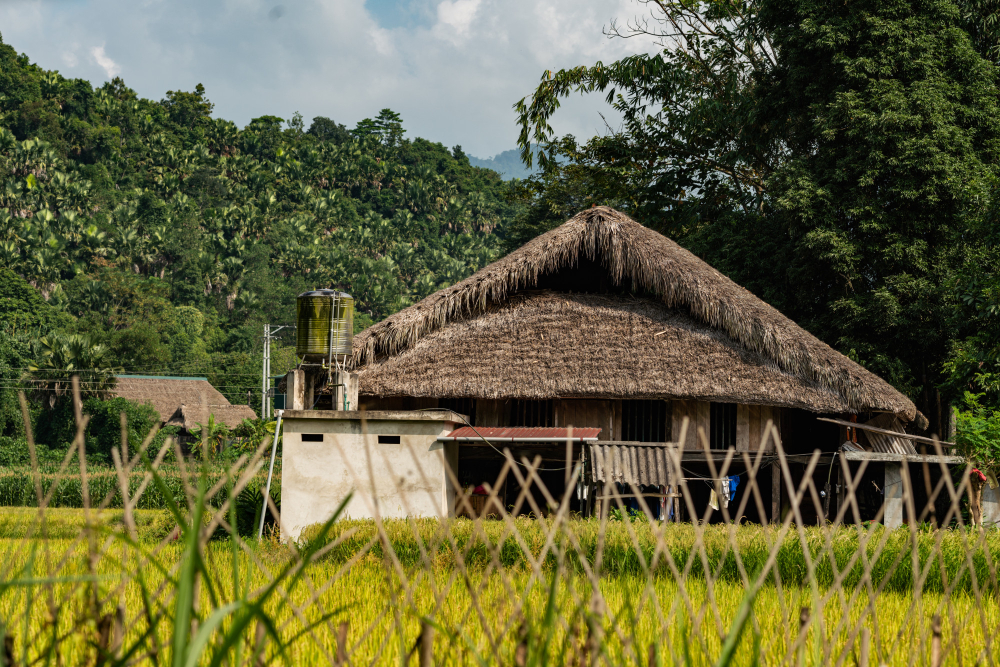
There is a category of traditional building technique that looks primitive and turns out to be doing something subtle, and thatch is the clearest example available.
The appearance suggests a thick layer of dried vegetation piled on a roof, keeping rain out by being thick — a sort of absorbent blanket.
That is almost exactly wrong. Thatch does not absorb water and does not rely on thickness to block it. Water is shed from the surface, having penetrated only a few centimetres into a covering many times deeper than that, and the mechanism is the angle at which the stems are laid.
Understanding it explains the pitch, the depth, the lifespan, why the roof can be walked on, and why every detail of the craft is about water leaving rather than being stopped.
How the Water Actually Moves
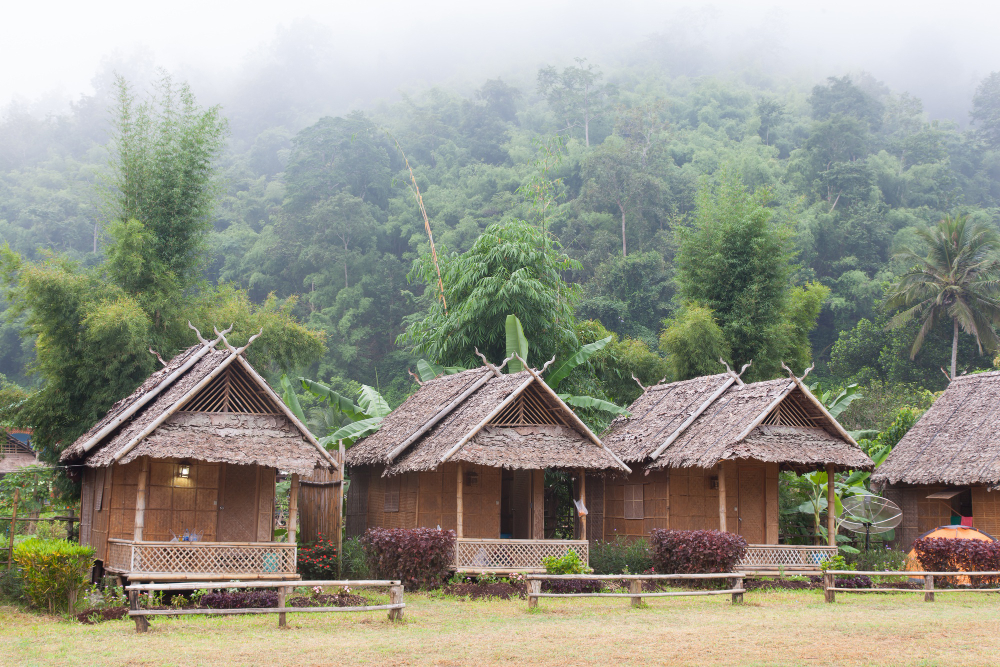
The mechanism is the surface of the individual stems and it is worth being precise.
The material is laid in courses with the stems running down the slope, packed extremely densely and all pointing the same way.
Water landing on the surface adheres to a stem and runs along it downward, because that is the path of least resistance and because the stem surface sheds rather than absorbs.
At the end of that stem it transfers to the one below and continues, passing from stem to stem down the slope, and reaches the eaves without ever having travelled far into the thickness.
The critical requirement is that the stems are steep enough for water to run along them rather than soaking in or dripping through, and dense enough that the transfer happens reliably.
So the roof is a set of parallel channels rather than a barrier, and the depth exists for other reasons entirely.
Like our content? Follow us for more.
Why It Has to Be So Steep
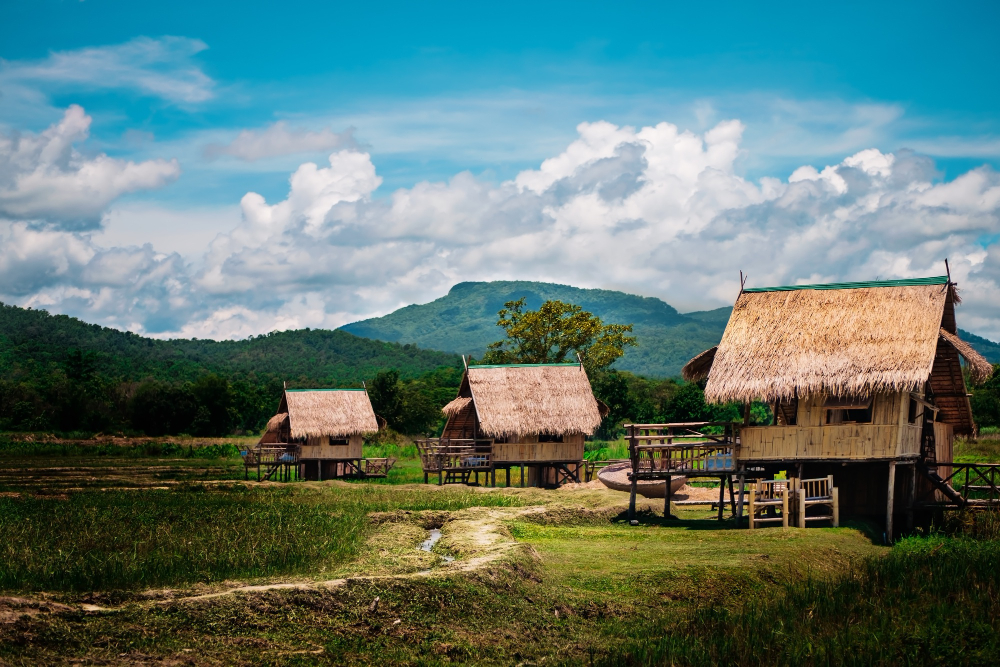
The pitch is the single most important variable and it is not negotiable.
A shallow roof gives water time to sit on a stem, penetrate between stems and travel inward — so below a certain angle the mechanism stops working and the roof leaks regardless of how much material is on it.
That angle is steep by the standards of most roofing, which is why thatched buildings have such a distinctive profile and why the shape is structural rather than aesthetic.
It also means the roof is largely self-cleaning at that pitch, since debris and water run off rather than accumulating, and accumulation is what holds moisture against the surface.
And it explains why thatch fails first at any point where the pitch is reduced — around a dormer, at a valley between two slopes, where a chimney interrupts the run — because those are the places water slows down.
Which is why thatchers spend a disproportionate amount of effort on exactly those junctions, and why a well-made roof has as few of them as possible.
What the Thickness Is For

Since water penetrates only a short distance, the depth serves other purposes.
It provides insulation, and a great deal of it. A thick layer of dry stems with air trapped throughout is an extremely effective insulator, substantially better than most conventional roofing.
It provides the material that will be worn away. Weather, sunlight and biological action erode the exposed ends of the stems continuously, and the roof works until that erosion has consumed most of the depth — so the thickness is a lifespan.
That is why an old thatched roof can be repaired by adding a new layer over the old rather than stripping it, and why some roofs contain material of several different ages stacked up, with the bottom layers occasionally being very old indeed.
And it provides structure. The mass and the fixing of the material contribute to holding the whole covering together against wind.
So the depth is insulation, lifespan and structure, and only incidentally has anything to do with keeping water out.
How It Is Held Down

The fixing is a substantial part of the craft and is mostly invisible.
Each course is secured to the timbers beneath, traditionally with flexible rods laid across the stems and held by staples or by twisted ties driven into the structure.
Those fixings are then covered by the next course, so the finished surface shows no fixings at all and every one of them is buried in the material.
That has a consequence for repair. Work at the surface is straightforward; anything requiring access to the fixings means removing material, which is why patching is done in a particular way and why certain repairs are far more involved than they look.
The exposed top of the roof is a special case. The ridge is the most vulnerable point, is fixed differently, is frequently a different material and needs replacing several times over the life of the main covering — which is why it is frequently the most decorated part and why its condition indicates how recently anybody has been up there.
There is a weight point worth noting. A thatched covering is substantially heavier than it appears, particularly when wet, which means the roof structure beneath was built for that load.
Replacing thatch with a different covering therefore changes what the timbers are carrying, in either direction.
What the Material Determines
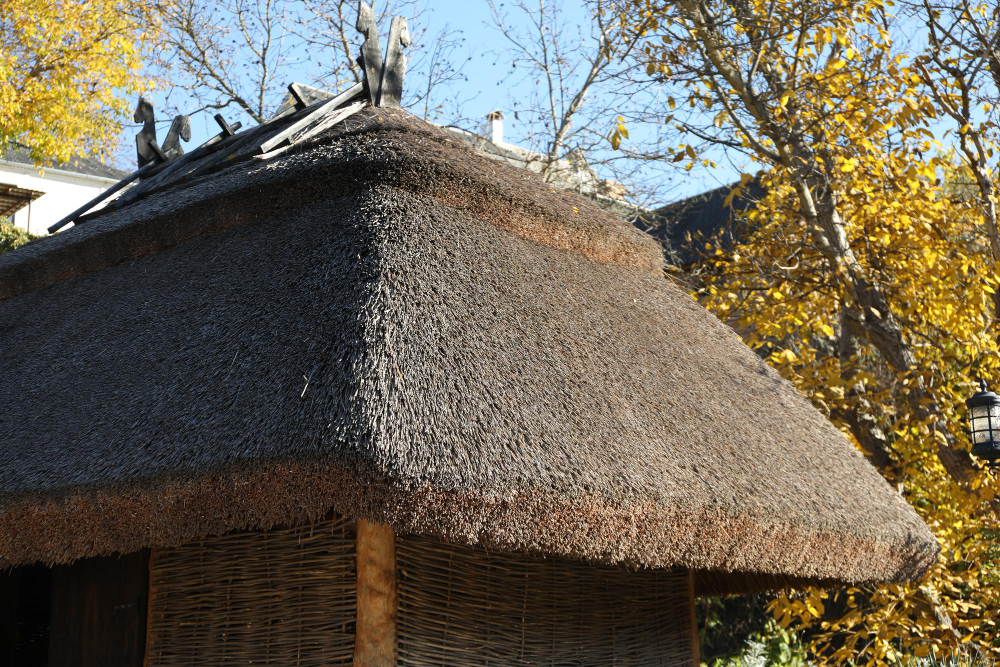
Different plants produce roofs with different properties, and the choice was traditionally local.
Longer, harder, more durable stems produce a roof lasting substantially longer, are heavier and are harder to work with.
Shorter, softer material is easier to lay, is available in more places, and wears faster.
The diameter matters, since finer material packs more densely and sheds better while providing less structure.
And the straightness matters enormously, because the mechanism depends on the stems lying parallel and the water transferring cleanly — which is why the material is prepared, combed and sorted before anything is laid.
That preparation is why thatching material is a crop with its own cultivation, harvesting and processing, rather than a by-product of something else.
Why It Lasts as Long as It Does
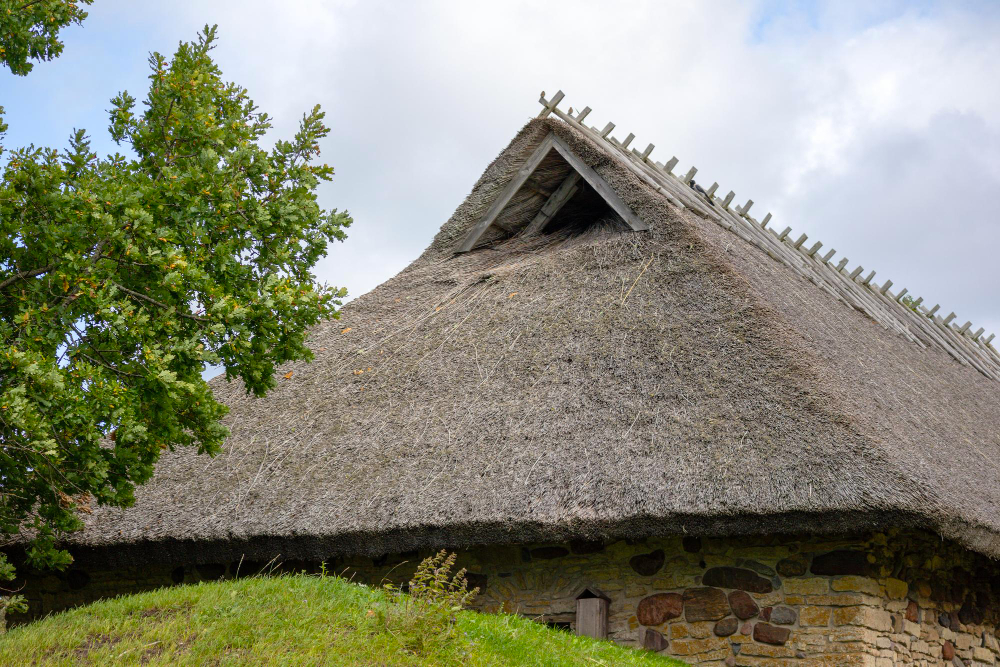
The lifespan question is the one owners care about and the variables are specific.
Exposure dominates. A roof facing prevailing weather erodes substantially faster than one sheltered, which means the two slopes of the same building can differ enormously in condition and may be renewed at different times.
Pitch matters for the same reason as everything else. A steeper slope sheds faster, stays drier and lasts longer, and a few degrees makes a measurable difference over decades.
Shade is damaging rather than protective. Overhanging trees keep the surface damp, drop material onto it and prevent the drying that keeps biological growth in check, which is why thatched buildings are cleared around.
Ventilation beneath matters, since moisture from inside the building rising into the underside of the covering has to escape, and a roof sealed below stays damp from within.
And the quality of the original work dominates all of it. Material laid at the correct angle, packed to the right density and fixed properly can last several times as long as the same material laid badly, which is why the craft commands what it does.
That range is why any figure for how long such a roof lasts is close to meaningless without knowing the material, the pitch, the aspect and who did the work.
Why It Persisted and Why It Did Not
The commercial position is worth stating plainly.
Thatch requires a skilled worker, a considerable quantity of prepared material, a steep roof and periodic renewal, and it was displaced wherever manufactured roofing became available and affordable.
Manufactured coverings last longer per unit of attention, require less pitch, are cheaper to install and do not need a specialist.
What thatch retains is insulation, which is truly excellent, and a visual character that cannot be reproduced — and in most places it now exists because of the second rather than the first.
That is the usual endpoint for a displaced technique. It persists where it is protected, where the appearance matters, or where the skills happen to have survived, and it is maintained at a cost that would not be justified on performance alone.
Which is a reasonable thing to know standing under one. The roof above is doing something more sophisticated than it looks, it is losing a few millimetres a year, and somebody will have to come back and put more on top — and the reason it works at all is that water prefers to run down a stem rather than between two of them.
Which is a fair summary of most traditional building technique. It looks like the obvious thing to do with whatever was available, and it turns out to depend on a mechanism nobody involved could have described – arrived at by several centuries of finding out what failed.
Like our content? Follow us for more.