There is a stretch of northern Chile where the question is not what lives there but whether anything does. The Atacama is the driest non-polar desert on earth, and within it there is a core region where the aridity is of a different order from the rest: surfaces that have been dry for millions of years, weather stations with no measurable rainfall across decades of record, and soil that behaves less like soil than like the inside of a sealed jar.
That is why a succession of American-led teams have spent thirty years going there with instruments designed for another planet. The Atacama’s hyperarid core is the closest terrestrial analogue to Mars that anybody has found, and the work done there has produced one of the stranger results in biology: a place on this planet where the standard methods for detecting life return nothing.
Why it is so dry
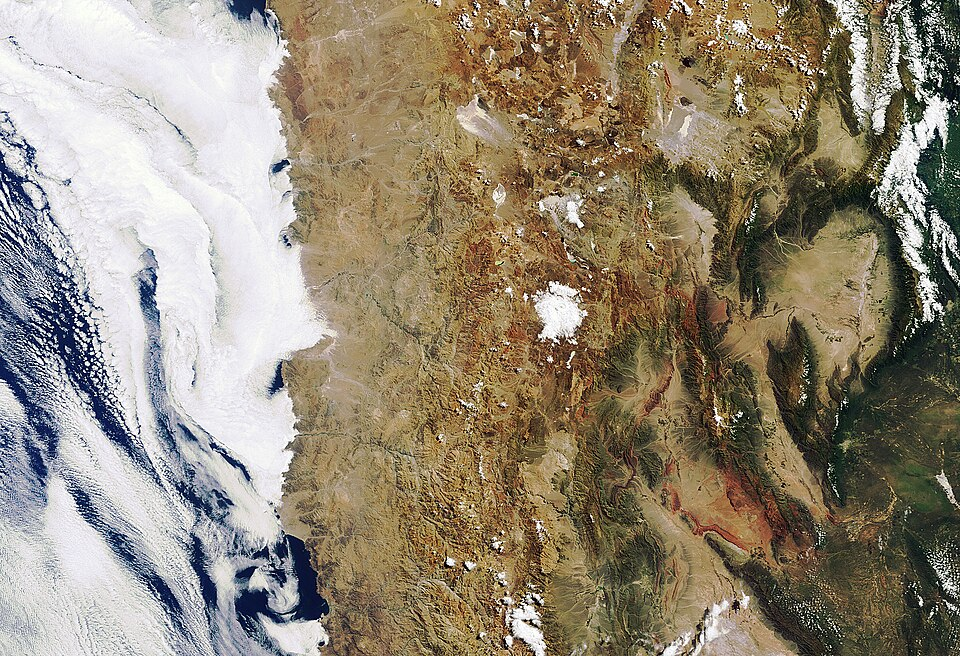
The mechanism is a stack of three barriers and it is unusually clean. The Andes to the east block moisture arriving from the Amazon basin, a rain shadow on a continental scale. The cold Humboldt Current running north along the Pacific coast chills the air above it, which suppresses evaporation and stabilises the atmosphere so that the moisture present does not rise and condense into rain. And the subtropical high-pressure belt sits over the region, producing descending air, which is the opposite of what rainfall requires.
Remove any one of the three and the desert is merely dry. Together they produce a place where the long-term average in the core is a very small number of millimetres a year, where some stations have recorded no rain at all for the length of their record, and where the geological evidence indicates the condition has persisted, with interruptions, for a very long time. The Atacama is not dry because of where it is. It is dry because of three independent things that happen to coincide there.
Like our content? Follow us for more.
The nitrate proves it
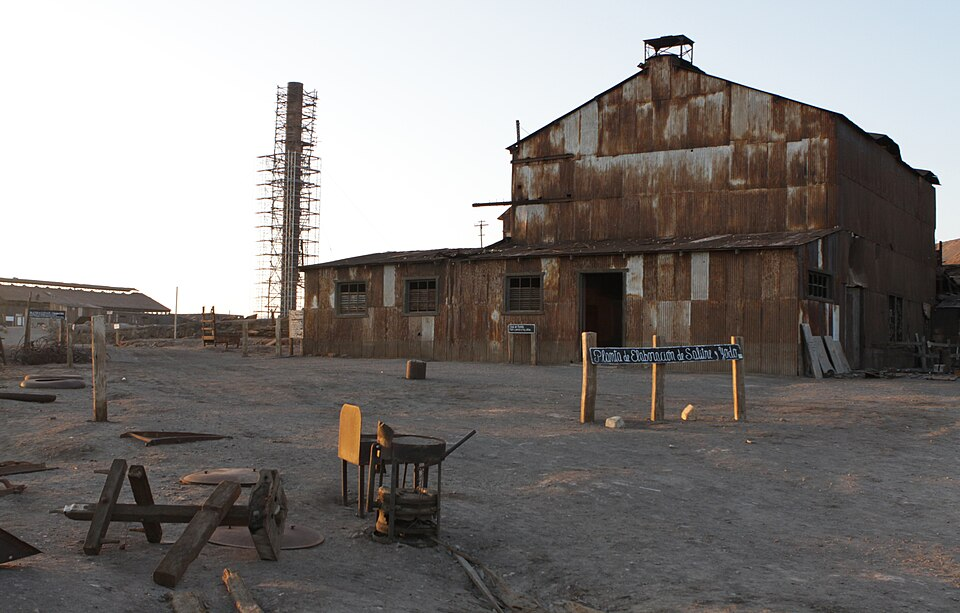
The most tangible evidence of the aridity is economic. The Atacama holds the world’s only large natural deposits of sodium nitrate, in a cemented surface layer the Chileans call caliche, and the reason is simply that nitrate is highly soluble. Anywhere it rains, nitrate washes away. Here it accumulated and stayed.
Those deposits made the region strategically important for a century. They were the principal source of nitrogen for fertiliser and for explosives before synthetic ammonia production was industrialised early in the twentieth century, they were mined on an enormous scale, and the abandoned works and company towns are still standing in the desert because nothing erodes them. A landscape that preserves a sodium nitrate crust also preserves a wooden building, a boot, a newspaper and a set of tyre tracks, which is one of the reasons the place is so disorienting to visit.
Running the Mars experiments on Earth
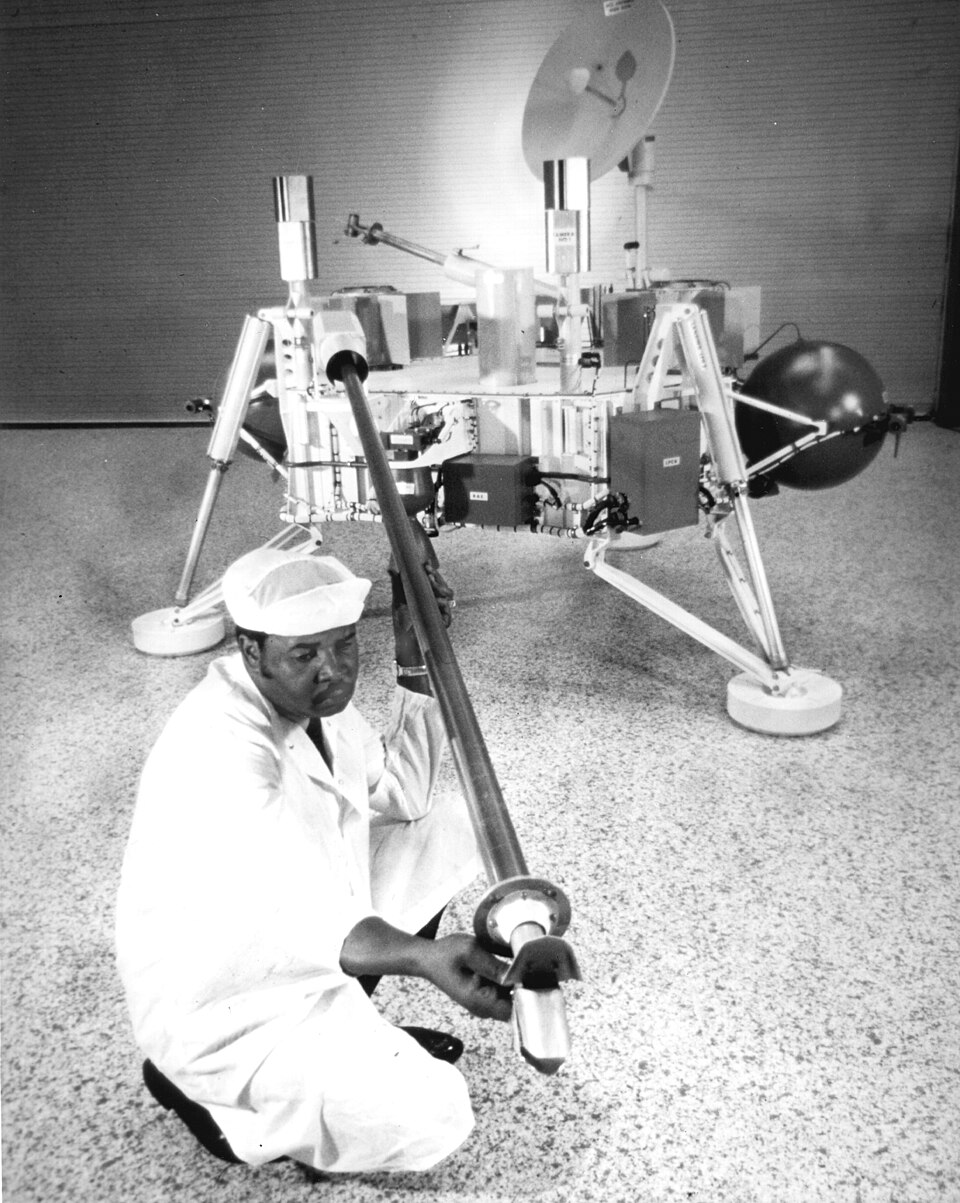
The Viking landers carried out biological experiments on Martian soil in 1976 and returned results that were, and to a degree remain, difficult to interpret: chemical activity that could indicate metabolism, alongside no detectable organic molecules. Working out what that combination meant required knowing what the same instruments would do with terrestrial soil containing very little life.
That is the experiment a team ran in the Atacama in the early 2000s, publishing in 2003. They took soil from a transect running into the hyperarid core and subjected it to the relevant analyses. In the samples from the driest part, near a locality called Yungay, organic carbon was at or below the detection limit and attempts to culture bacteria from the soil returned nothing. The soil also showed a capacity to decompose organic material on contact, which is one of the behaviours Viking had seen. The conclusion the team drew was that they had located something like the dry limit for microbial life on this planet, and that the Martian results were explicable without biology.
Then it rained, and the result got more complicated
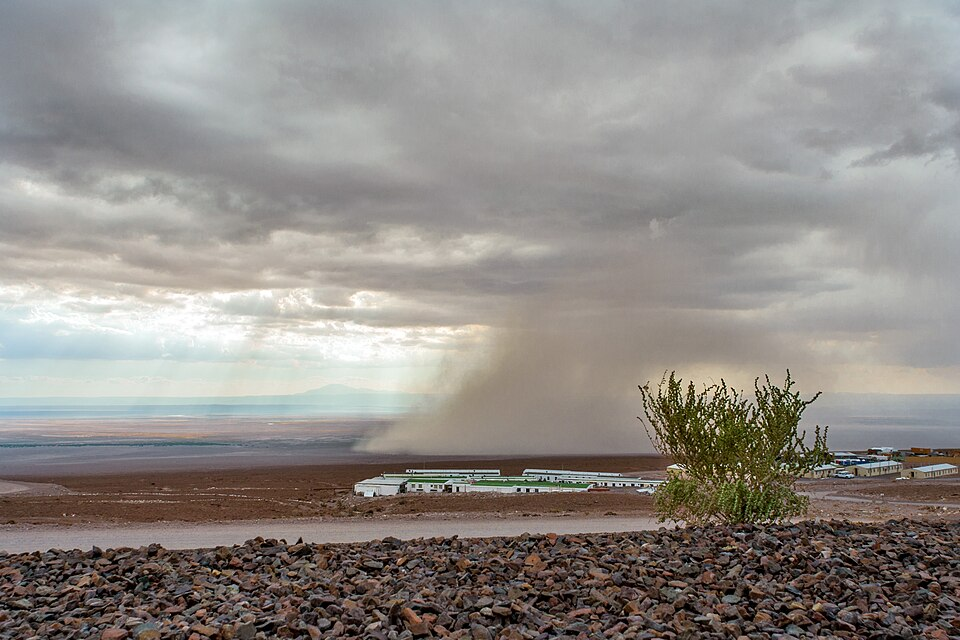
Science rarely leaves a clean negative alone. Subsequent work using methods that do not depend on culturing — looking directly for genetic material and for specific biochemical signatures — found that microbial communities are present in the hyperarid core after all, living in the subsurface, inside salt crusts and under translucent stones, at very low abundance and in a state best described as dormant.
The rain events of the mid-2010s then provided an unplanned experiment. Unusual rainfall reached parts of the core, and in the areas that had been driest the consequence was not a bloom but a die-off: the resident communities, adapted over a very long period to extreme dryness, were substantially killed by the arrival of water. That is a genuinely surprising result and it changed the framing of the whole question. The Atacama’s core is not a sterile place that life has failed to reach. It is a place where life persists in a configuration so specialised that its own water is lethal to it.
The mechanism, as far as it is understood, is osmotic. An organism adapted to survive in a salt crust at near-zero water activity has its internal chemistry balanced against those conditions, and a sudden abundance of fresh water ruptures cells that have spent thousands of generations arranged around its absence. The thing that would rescue almost any other community on earth is, for this one, the disturbance it has no adaptation for.
What it is used for now
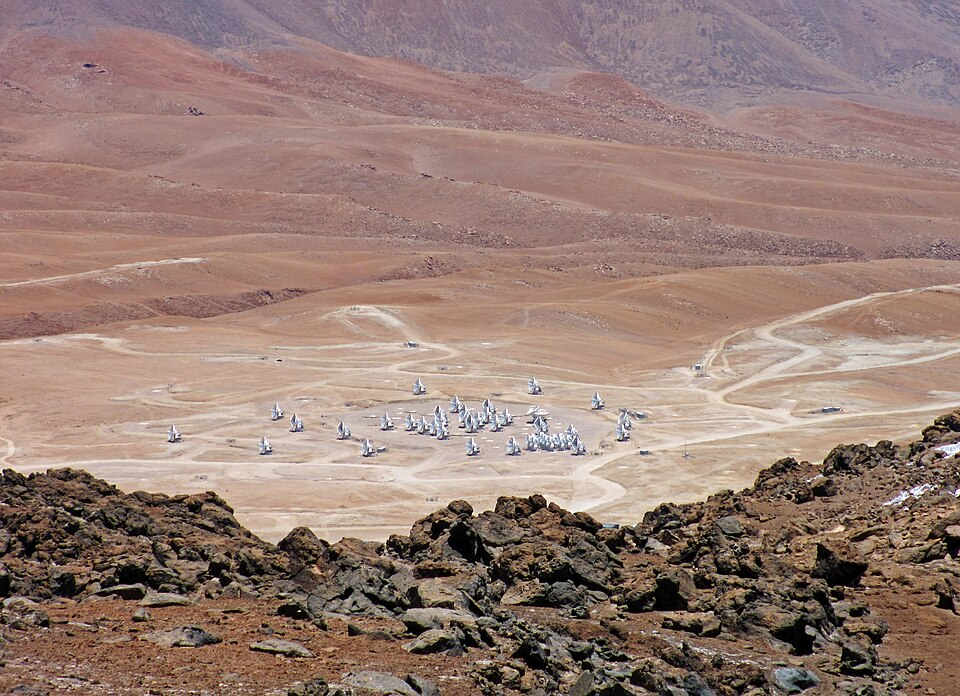
The desert has become a standing test facility. Instruments and rovers destined for Mars are taken to the Atacama and operated in the field, because it is the only accessible place where a life-detection instrument can be tested against a target that might genuinely return nothing. Drilling systems, sample handling, autonomous navigation across loose gravel, and the whole problem of distinguishing a negative result from an instrument failure are all exercised there.
The same qualities support a different kind of science above ground. Cloudless skies, exceptionally dry air and high altitude make the Atacama the best observatory site on the planet, and the major international facilities built there are the reason a substantial fraction of the world’s astronomical data now comes from one Chilean province. It is an unusual region in that both its most important scientific uses depend on exactly the same thing: an almost complete absence of water in the air and in the ground.
Going there
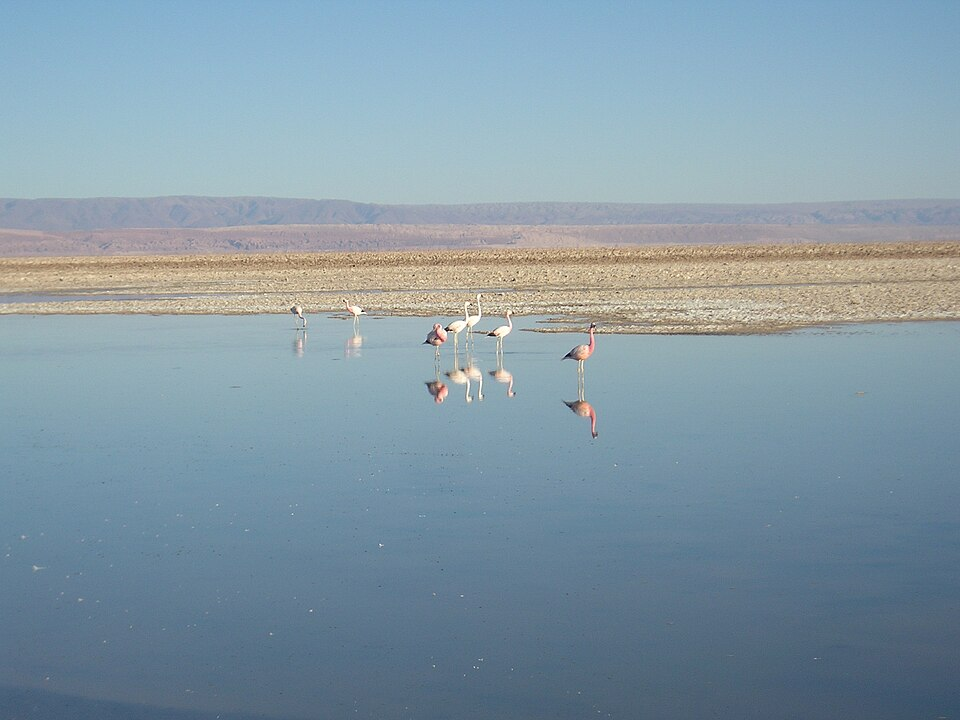
The Atacama is accessible, which surprises people. It is reached from Antofagasta or Calama, the tourist centre is San Pedro de Atacama, and the ordinary visitor itinerary takes in the salt flats, the geysers, the altiplano lagoons and the high-altitude lakes with flamingos on them. None of that is the hyperarid core, and the contrast is the thing worth understanding before going.
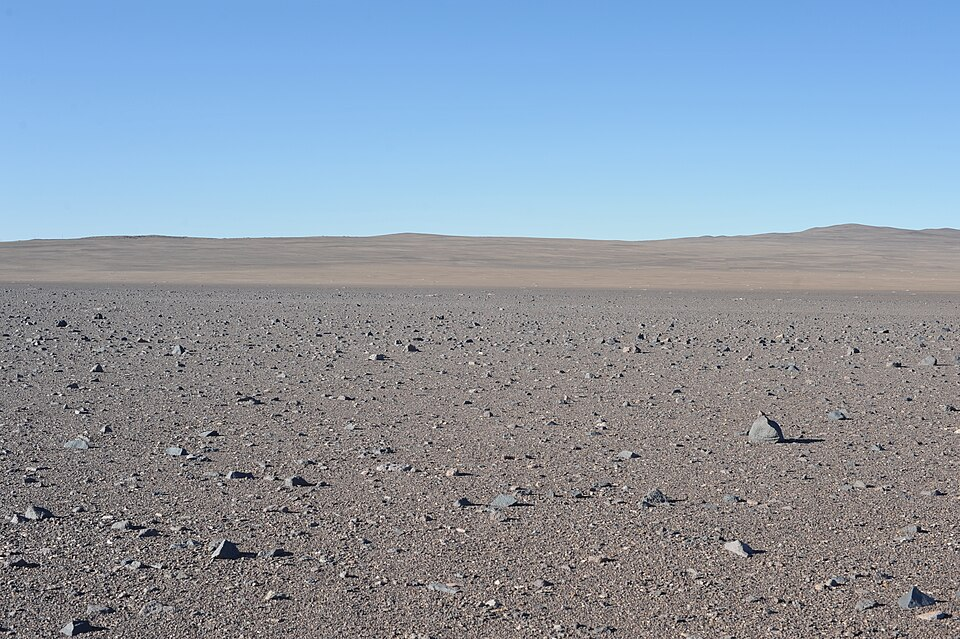
The parts a visitor sees are dry and spectacular and biologically alive: there is vegetation, there are animals, there is water at the surface in places. The core is a different proposition — flat, grey-brown, featureless gravel with nothing on it at all, several hours away, with no services and no reason for a tour to go there. People who have stood in it describe the silence as the thing that registers, because there is no vegetation to move in the wind and nothing living to make a sound.
Why a negative result mattered
The value of the Atacama work is a point about method rather than about Chile. For most of the history of biology, the way to find out whether something lives in a sample was to try to grow it, and if nothing grew, nothing was there. The Atacama is the place where that assumption was tested to destruction: the culturing approach returned a genuine zero, and the molecular approach subsequently found a community that had been present the whole time.
That is the finding with consequences beyond this desert, and it is directly relevant to the question the work was originally aimed at. If a terrestrial soil can contain life that a culture-based instrument cannot see, then a negative result from a lander on another planet establishes considerably less than it appears to. The desert’s contribution was not to tell anybody whether Mars has life. It was to make clear how hard it is to prove that anywhere does not.
That is also why the work has kept going rather than concluding. Each new generation of instrument is taken back to the same transect and run against the same soils, because the Atacama now functions as a calibration standard: a known, documented, extremely difficult sample where the answer is understood well enough to judge whether a new method is telling the truth. There are not many places on the planet that serve that purpose, and this one does it because of what it does not contain.
Like our content? Follow us for more.