

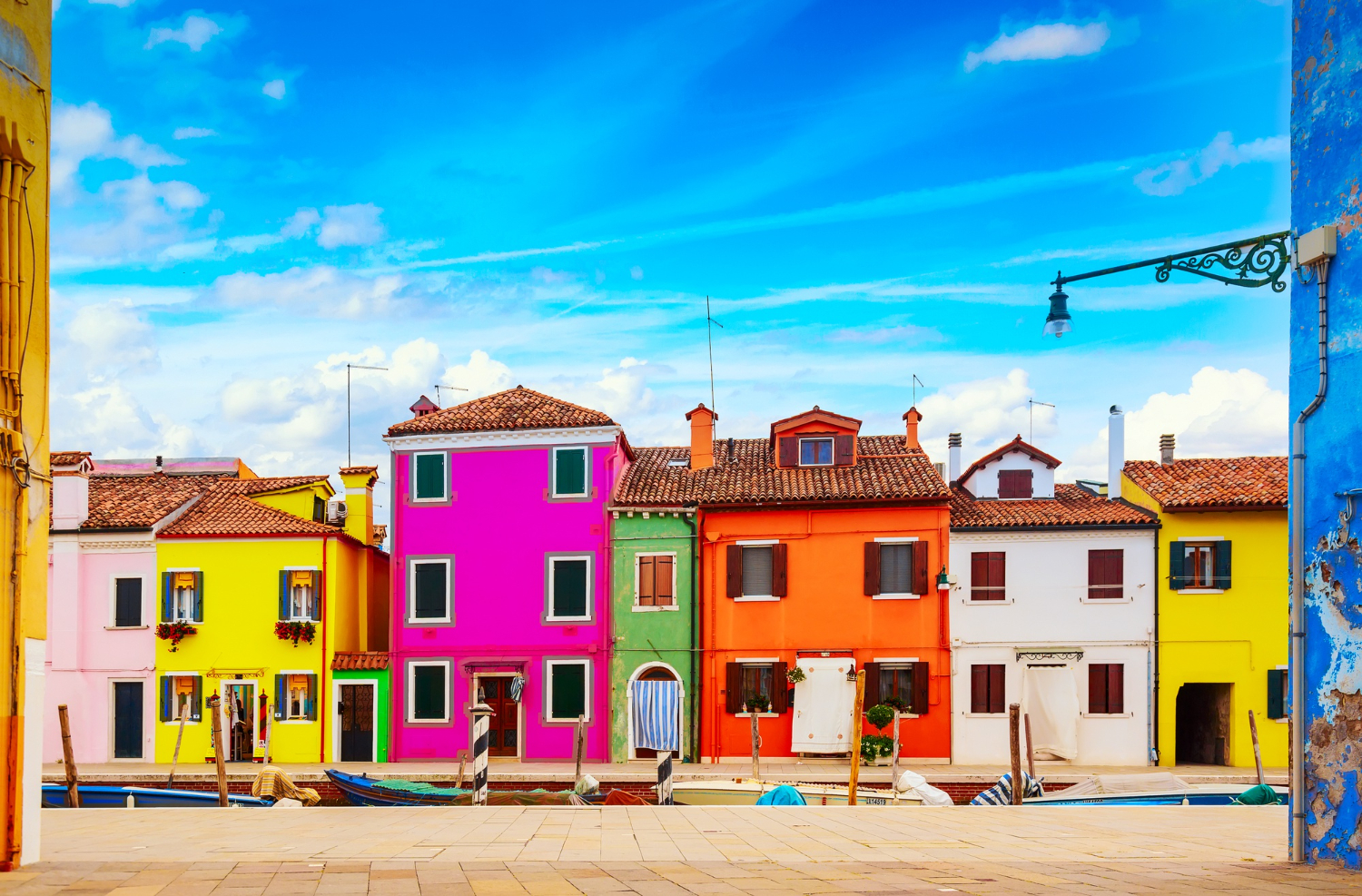
Europe is full of historic stone villages in muted browns and greys, which is exactly why the splashes of pure colour stand out so vividly. Scattered across the continent are villages where every house is painted a different bright shade, turning ordinary streets into rainbow-hued wonderlands that look almost unreal in photos. The colours often have practical origins, helping fishermen pick out their homes through sea fog or covering up soot from old stoves, but the effect is pure magic. These are some of Europe’s most colourful and authentic villages, the stories behind their vivid facades, and what makes each one worth seeking out. Most are small and can get crowded, so an early or shoulder-season visit is wise.
Burano, Italy
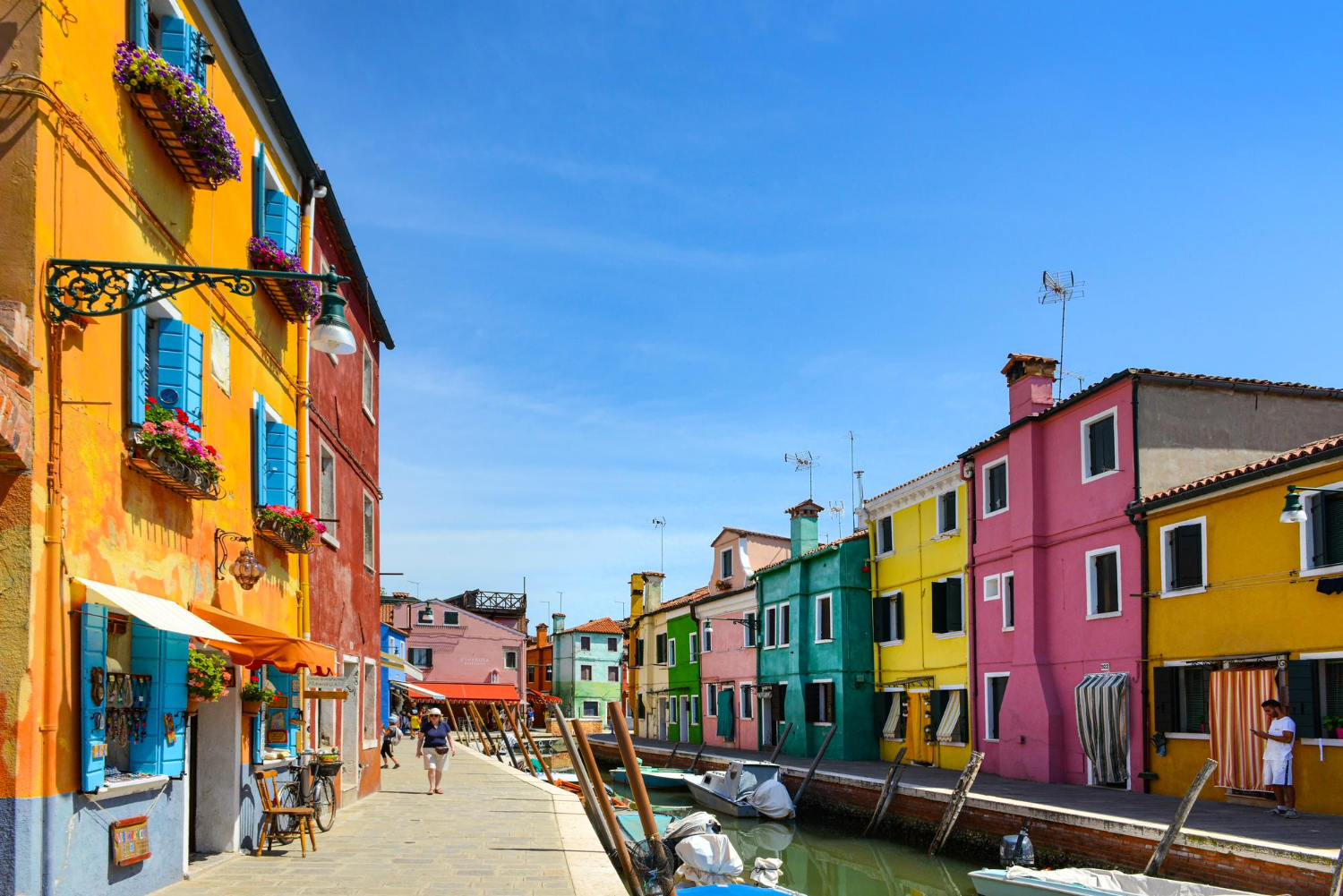
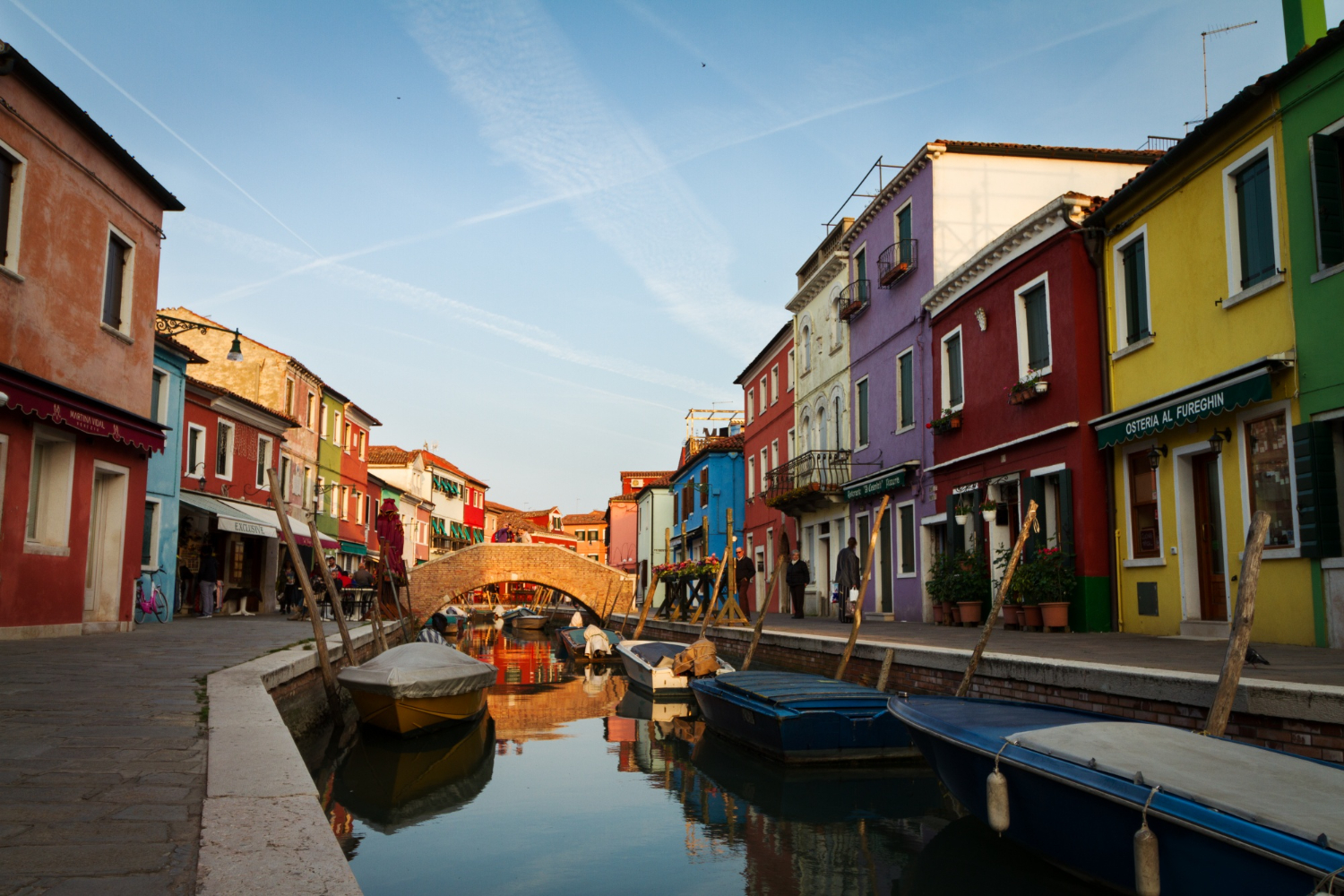
A short boat ride from Venice, the lagoon island of Burano is perhaps the most famous colourful village on Earth. Its houses are painted in vivid blues, pinks, greens, and yellows, and the colours aren’t random: the hues were awarded by government decree, and islanders first began painting their homes brightly so that fishermen could spot them through the thick lagoon fog when returning from sea. Today residents still must request permission to paint, keeping the palette gloriously intact. Beyond the photogenic streets, Burano is famous for its centuries-old tradition of handmade lace, lovingly crafted by local women. It’s a small island best explored slowly on foot, and it makes an easy, unforgettable day trip from Venice.
Like our content? Follow us for more.
Cinque Terre, Italy
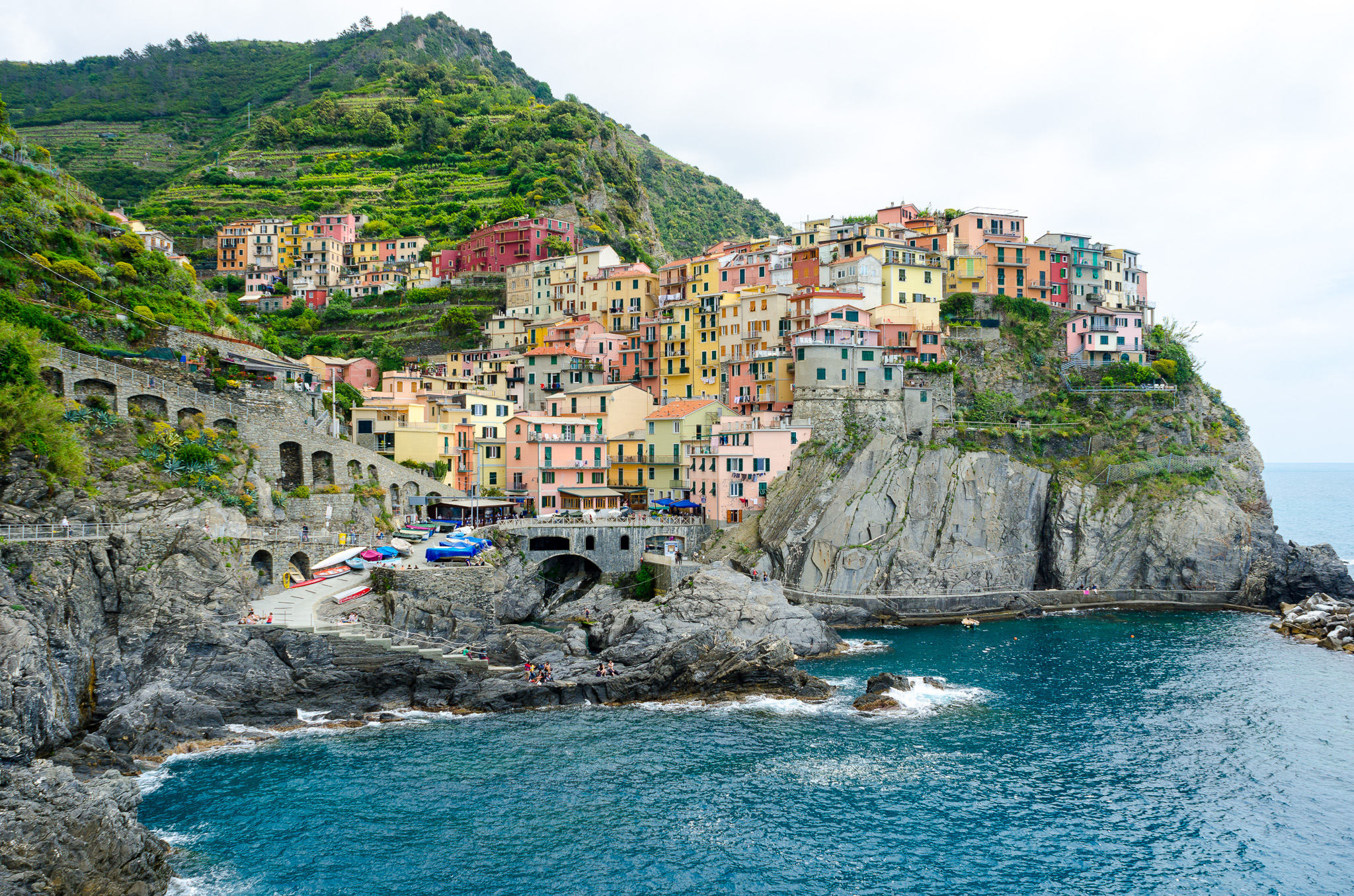
Strung along the rugged Italian Riviera, Cinque Terre is a string of five villages, Monterosso, Vernazza, Corniglia, Manarola, and Riomaggiore, famous for their colourful houses teetering on cliffs above the sea. As in Burano, the bright facades reportedly began so fishermen could spot their homes from their boats far offshore. The villages are largely car-free, connected by trains, boats, and scenic hiking trails that wind along the dramatic coastline. Manarola, with its stacked pastel houses glowing at sunset, is the postcard image of the region. A UNESCO-protected area, Cinque Terre gets very busy in summer, so visiting in spring or autumn, or staying overnight, rewards you with the same beauty minus the heaviest crowds.
Colmar, France
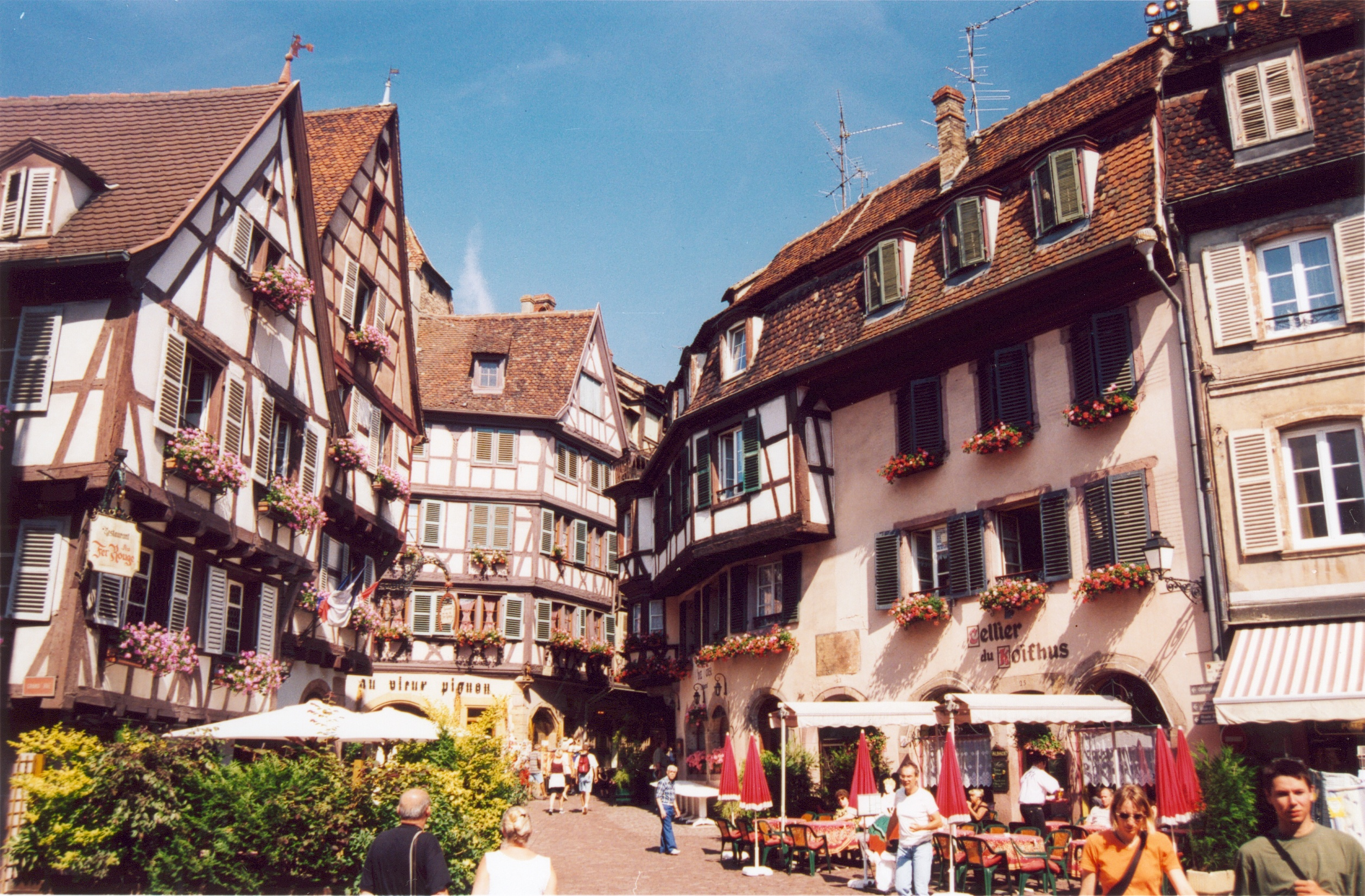
In the Alsace region near the German border, Colmar looks like it stepped straight out of a fairy tale. Often nicknamed “Little Venice” for the canals running through its old quarter, the village is famous for its colourful half-timbered houses in soft pastels and bold hues, draped with flowers and reflected in the water below. Flower-decked boats drift along the canals, adding to the storybook atmosphere, and the village is widely said to have helped inspire the setting of a beloved animated film. Cobblestone lanes wind past medieval and Renaissance buildings, and the whole town glows during the festive season. Colmar is one of the most romantic and photogenic villages anywhere in France.
Reine, Norway
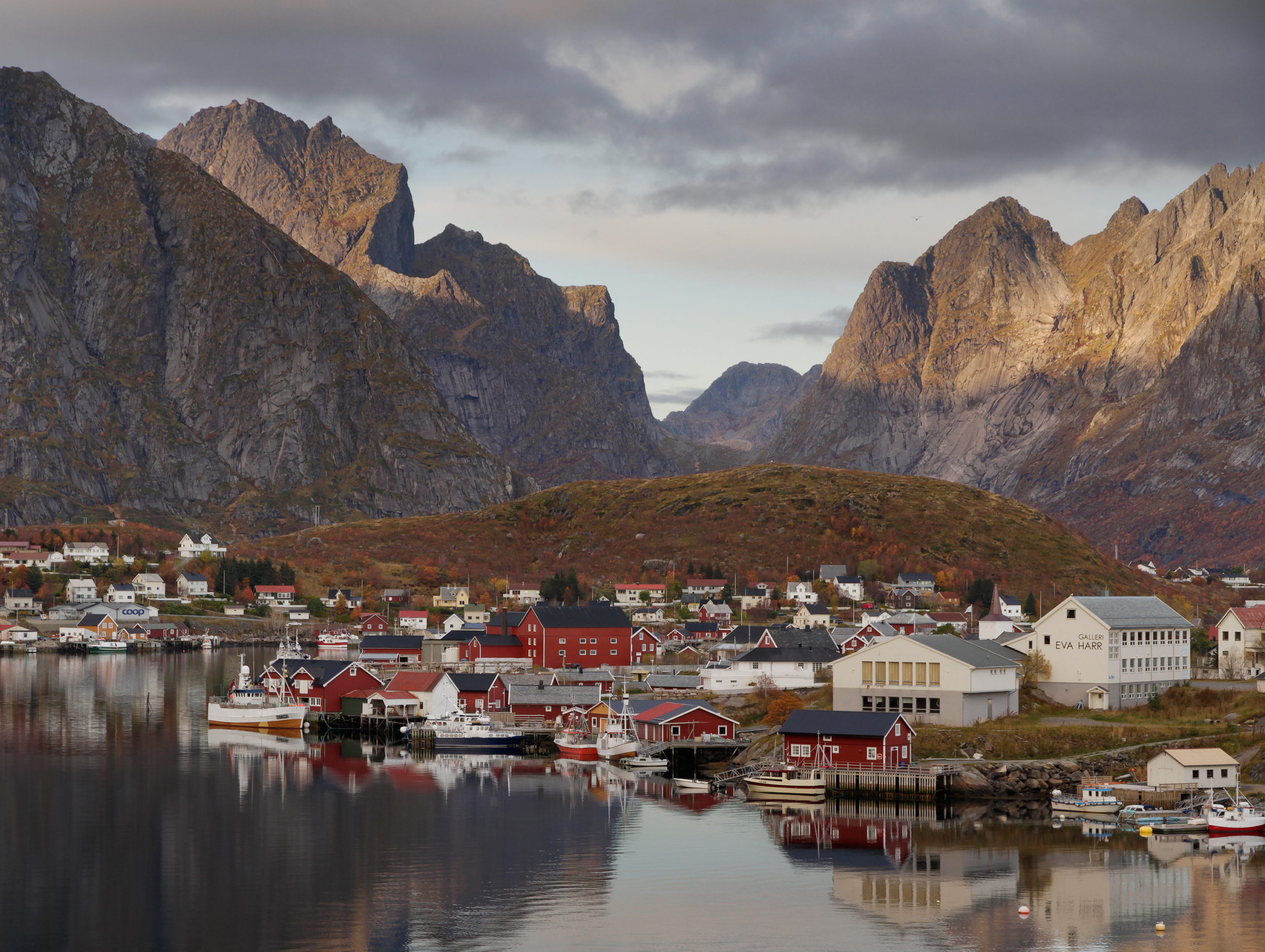
For colour in a wildly different setting, head far above the Arctic Circle to Reine, a tiny fishing village in Norway’s Lofoten Islands. Here, bright red traditional fishermen’s cabins, known as rorbuer, stand along the edge of deep blue fjords, framed by jagged mountain peaks that rise straight from the sea. The contrast of the red cabins against the dramatic Arctic landscape has made Reine one of the most photographed villages in Scandinavia. In summer the midnight sun bathes everything in golden light around the clock, while winter can bring the magical glow of the northern lights overhead. Remote and spectacular, Reine proves that a colourful village doesn’t need a Mediterranean setting to take your breath away.
Collonges-la-Rouge, France
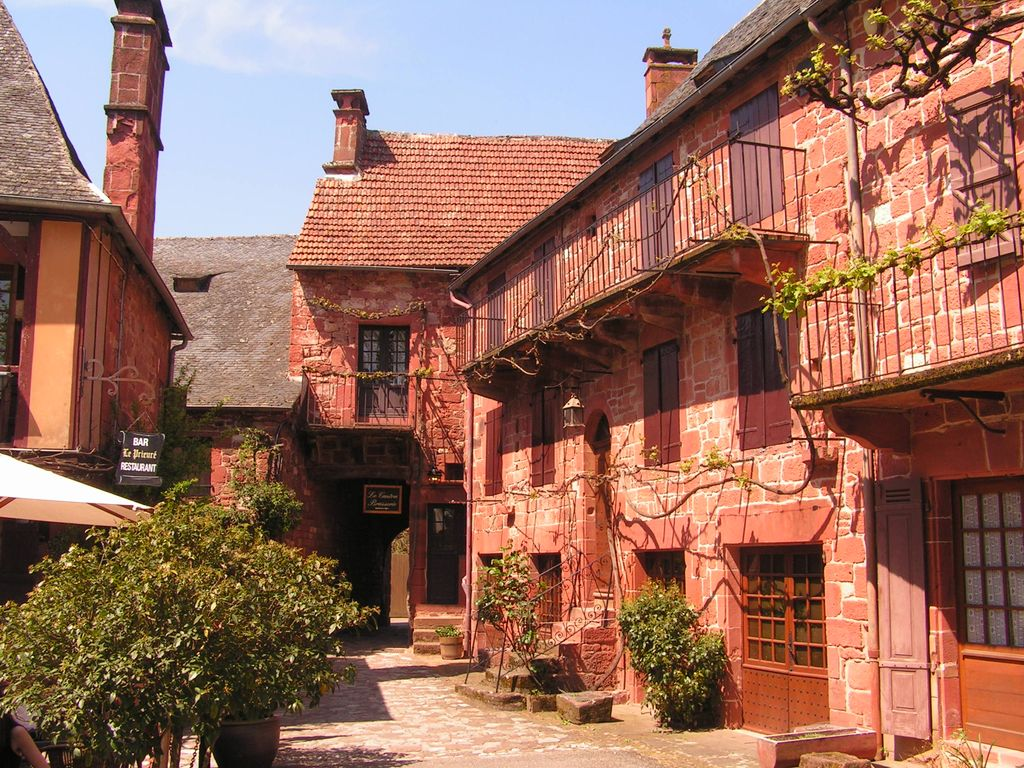
Tucked into the Dordogne Valley in central France, Collonges-la-Rouge is unique for being almost entirely red. Every building in the village is constructed from a distinctive red sandstone, giving the whole settlement a warm, rosy glow that earned it its name, “the red Collonges.” Idyllic, quintessentially French, and steeped in medieval charm, it’s the kind of place travelers fall for at first sight, with turrets, vine-covered walls, and quiet cobbled lanes. It was actually the founding member of an association of France’s most beautiful villages. Far less crowded than the famous Italian and French hotspots, Collonges-la-Rouge offers a more peaceful, authentic encounter with one of Europe’s most unusual and uniformly colourful villages.
Zalipie, Poland
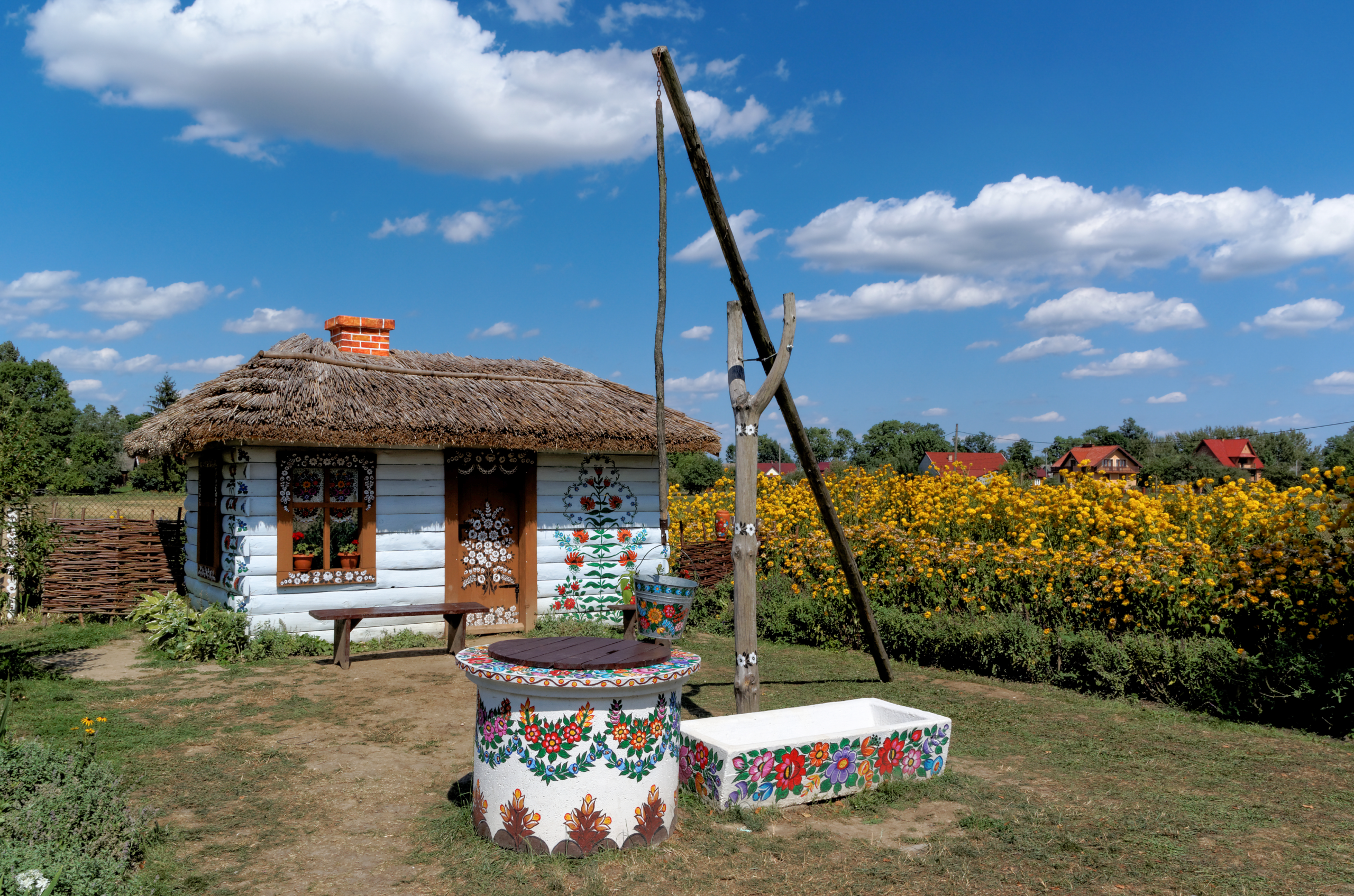
Perhaps the most charming colourful village you’ve never heard of, Zalipie in Poland is covered, quite literally, in painted flowers. For more than a century, residents have decorated everything in sight with intricate floral folk-art: house exteriors and interiors, barns, bridges, fences, and even chicken coops are adorned with hand-painted blooms. Legend holds that the tradition began with women painting flowers on their cottage walls to cover up soot marks left by wood-burning stoves, and it has since become a beloved cultural custom celebrated with an annual competition. The result is a village unlike any other in Europe, where folk artistry turns an ordinary rural community into a living, blossoming gallery. It’s authentic, uncrowded, and utterly unique.
Costa Nova, Portugal
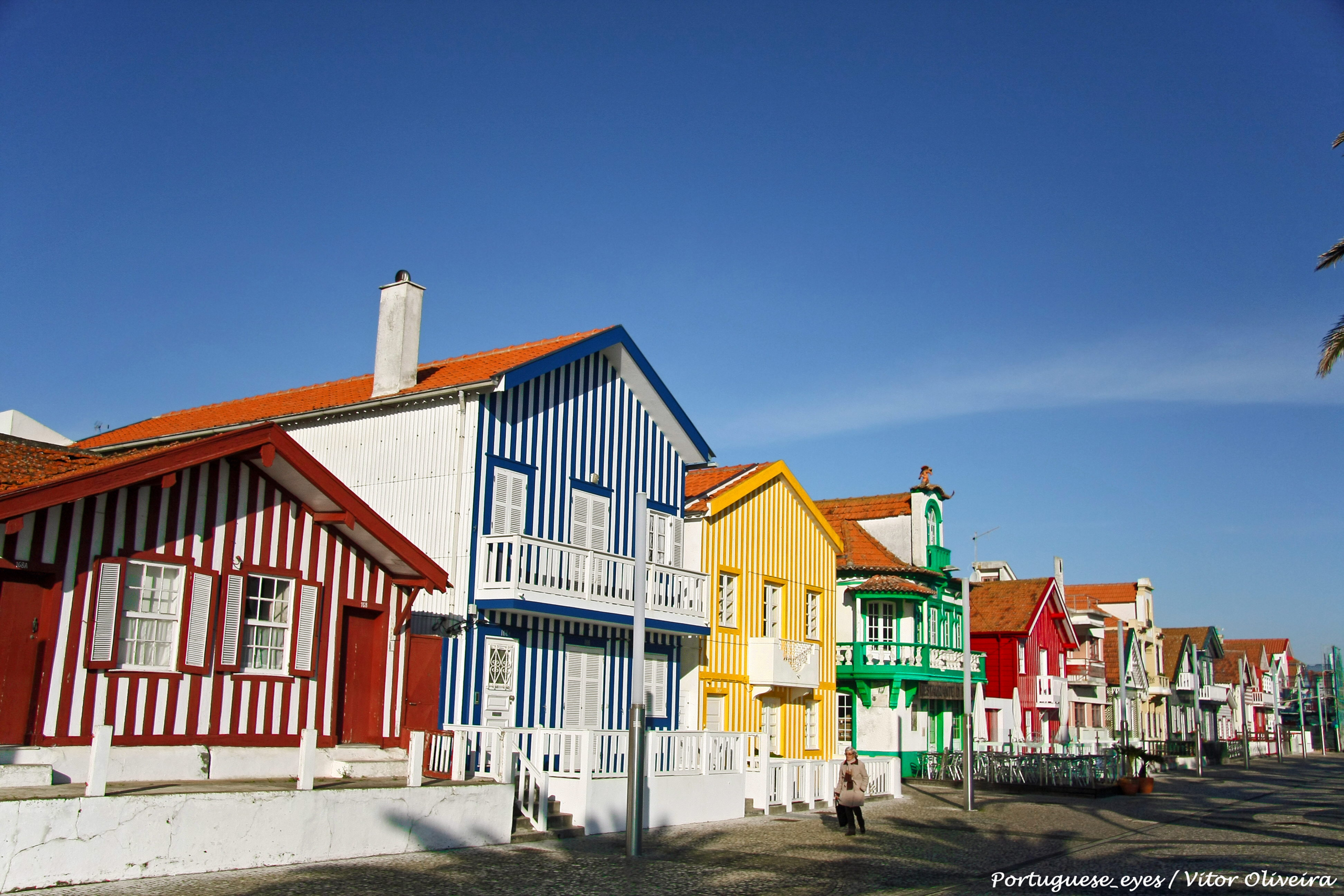
On Portugal’s Atlantic coast near Aveiro, Costa Nova is famous for its palheiros, traditional houses painted in bold vertical stripes of red, blue, green, and yellow against crisp white. Originally built as fishermen’s storehouses, the candy-striped homes line the waterfront and create one of the most cheerful seaside scenes in Europe. The stripes are thought to have helped fishermen identify their huts in poor visibility, the same practical origin behind so many colourful villages. Today Costa Nova is a relaxed beach destination, pairing its photogenic streets with wide Atlantic sands and fresh seafood. Combined with a visit to the canals of nearby Aveiro, often called the “Venice of Portugal,” it makes for a delightfully colourful coastal escape.
Villajoyosa, Spain
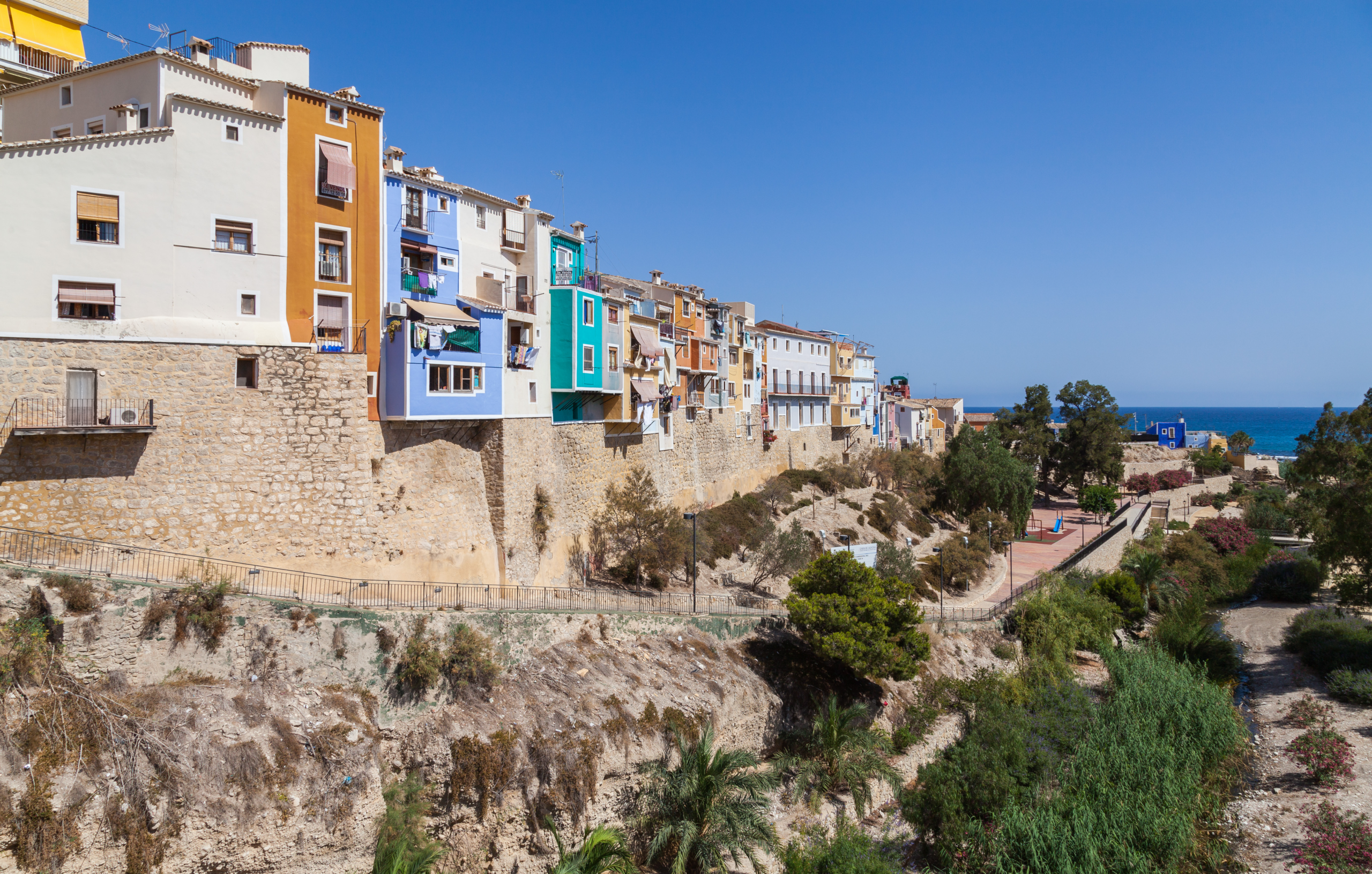
On Spain’s Costa Blanca, tucked between Alicante and Benidorm, Villajoyosa is a coastal town whose seafront is lined with brilliantly painted houses in every shade imaginable. Like the others, the tradition has practical roots: the bright facades are said to have helped sailors and fishermen spot the town and even their own homes from out at sea. Backed by a gorgeous palm-fringed beach, Villajoyosa has been singled out as one of Europe’s most beautiful lesser-known destinations, surprisingly overlooked given its vivid charm. It’s also known for its long-standing chocolate-making heritage. For travelers seeking the colourful-village experience without the crowds of Burano or Cinque Terre, this sunny Spanish gem is a rewarding find.
Why These Villages Are So Colourful — and How to Visit
The recurring theme across Europe’s colourful villages is that the colour usually started as something practical, helping fishermen find their homes through fog or from the sea, or covering up soot and wear, before becoming a treasured tradition protected by custom or even law. That authenticity is part of their appeal: these aren’t theme parks but living communities. It also means visitors should tread thoughtfully, since the most famous ones, like Burano and Cinque Terre, can be overwhelmed by day-trippers. Going early, visiting in the shoulder seasons, and considering the lesser-known gems like Zalipie, Collonges-la-Rouge, or Villajoyosa rewards you with the same storybook colour and a more genuine, peaceful experience of village life.
Like our content? Follow us for more.
