Household pest control in 1962 was a confident business. There was a product for everything, the products worked, and the general attitude was that more was better. A hand-operated sprayer stood under the sink, a canister of powder sat in the cupboard, a strip hung above the kitchen window all summer, and nobody read the label past the part that said what it killed.
Most of that chemistry is gone. Not reformulated or restricted to professional use, but withdrawn from the American market altogether, and in several cases withdrawn worldwide under international agreement. This is an account of what the cupboard held and what happened to it, and it is deliberately not an account of how any of it was used.
The compound that defined the era
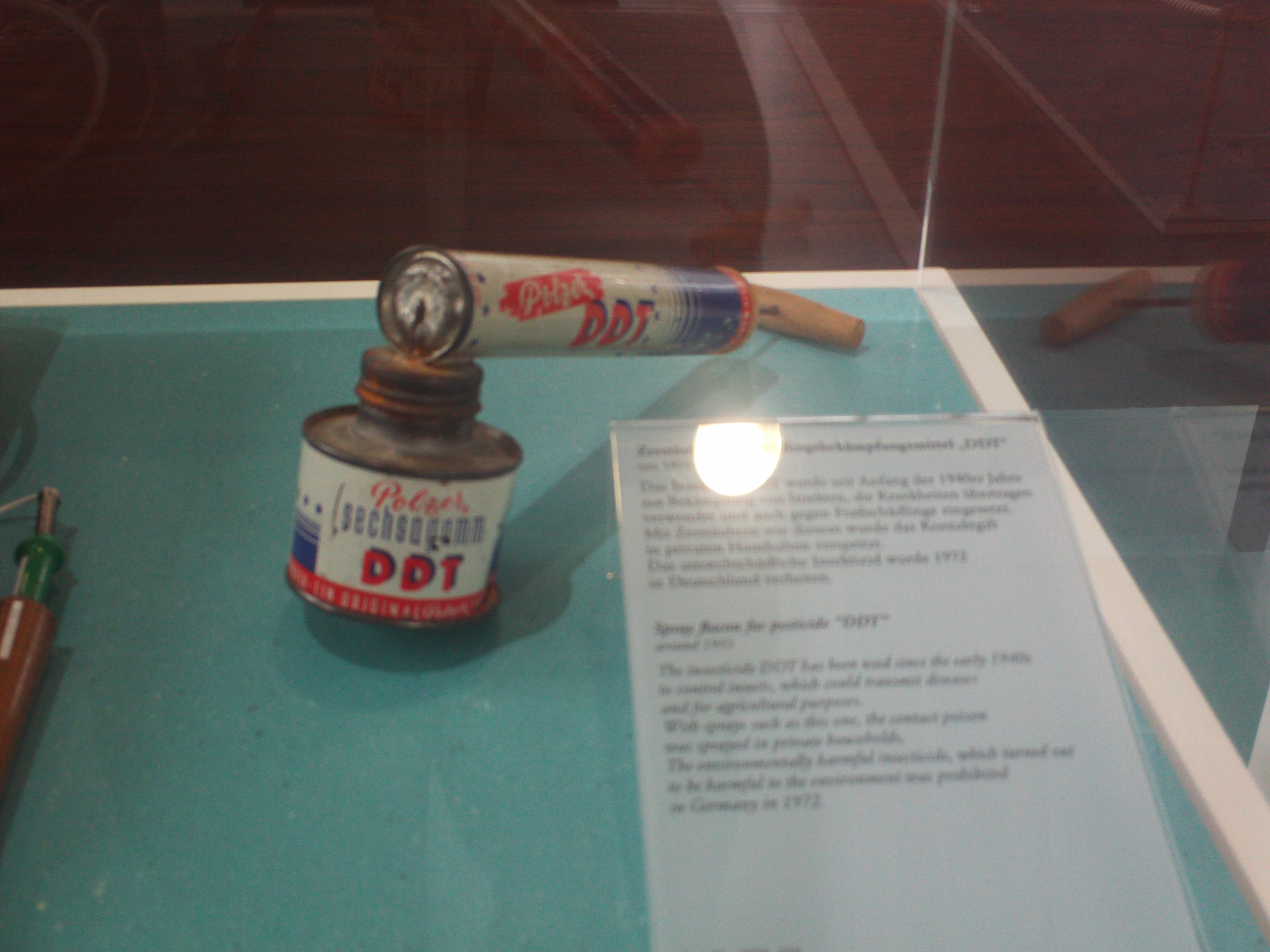
DDT is the one everybody knows, and its domestic history is often forgotten in favour of its agricultural one. It was not only sprayed on crops; it was sold for household use in powders, in aerosols, in paints and in wallpaper marketed specifically for children’s rooms, on the reasoning that a surface which killed insects on contact for months was a benefit in a nursery.
What ended it was persistence rather than acute toxicity. The compound does not break down quickly, it accumulates in fatty tissue, it concentrates as it moves up a food chain, and the effects on bird populations — eggshell thinning in particular — were the evidence that carried the argument. The United States cancelled nearly all remaining uses in 1972, and it is now one of the compounds controlled under the international convention on persistent organic pollutants, with a narrow exception retained for disease vector control in some countries.
The 1962 household had no framework for thinking about persistence. The question people asked of an insecticide was whether it killed the insect and whether it harmed the person using it today, and a compound that scored well on both looked like a straightforward success. By those two tests DDT was one of the great public health achievements of the century, and in the specific context of typhus and malaria control it genuinely was.
Like our content? Follow us for more.
Chlordane, and the chemistry under the house
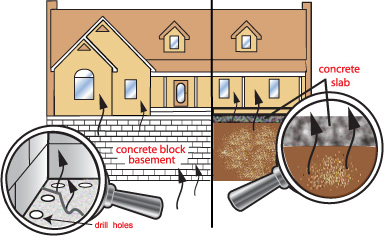
Chlordane was the standard American termite treatment, applied into soil around and under foundations in large quantities, and it was also sold for lawn and household use. It was effective and extremely long-lasting, which was precisely the selling point for a structural treatment expected to protect a house for decades.
It was also persistent in soil, mobile enough to turn up in indoor air in treated houses long after application, and associated with effects that led the Environmental Protection Agency to end its agricultural uses in 1983 and to cancel the termiticide registration in 1988. Related compounds in the same chemical family — aldrin, dieldrin, heptachlor — followed similar trajectories, and several appear alongside DDT on the persistent organic pollutants list.
The legacy is physical. Houses treated before the late 1980s may still have residues in the soil beneath them, which is a matter for testing and professional advice rather than for alarm, and the modern approach to termites relies on bait systems, physical barriers and shorter-lived chemistry applied in much smaller quantities.
Lindane, which was also used on children
Lindane belongs in a separate paragraph because of where it ended up. It was a general insecticide of the period, used in agriculture, in household products and in treatments for timber, and it was also formulated as a shampoo and lotion for head lice and scabies, which means it was applied directly to the scalps of children.
Its agricultural uses in the United States were cancelled in 2006, it is listed under the persistent organic pollutants convention, and the medical formulations have been progressively withdrawn or restricted to second-line use with explicit warnings, with some American states prohibiting them entirely. Safer treatments have been standard for a long time and anything concerning an actual case belongs with a pharmacist or doctor rather than with a history article.
The reason this one is worth naming is that it shows how the categories blurred. The same compound was a crop spray, a timber preservative and a children’s medicine, and the household of 1962 encountered it in all three without any sense that they were related.
The strip above the window, and the pump under the sink
The hanging strip was a slow-release insecticidal block, and the common active ingredient in the American product was dichlorvos, a compound in the organophosphate family. The design principle was continuous release of vapour into an enclosed room, which is why they were hung in kitchens and above food preparation areas, and which is also why they became a regulatory problem. Residential use of dichlorvos strips was eventually withdrawn in the United States after a long review, and the surviving products in that format use different chemistry with restrictions on where they may be hung.
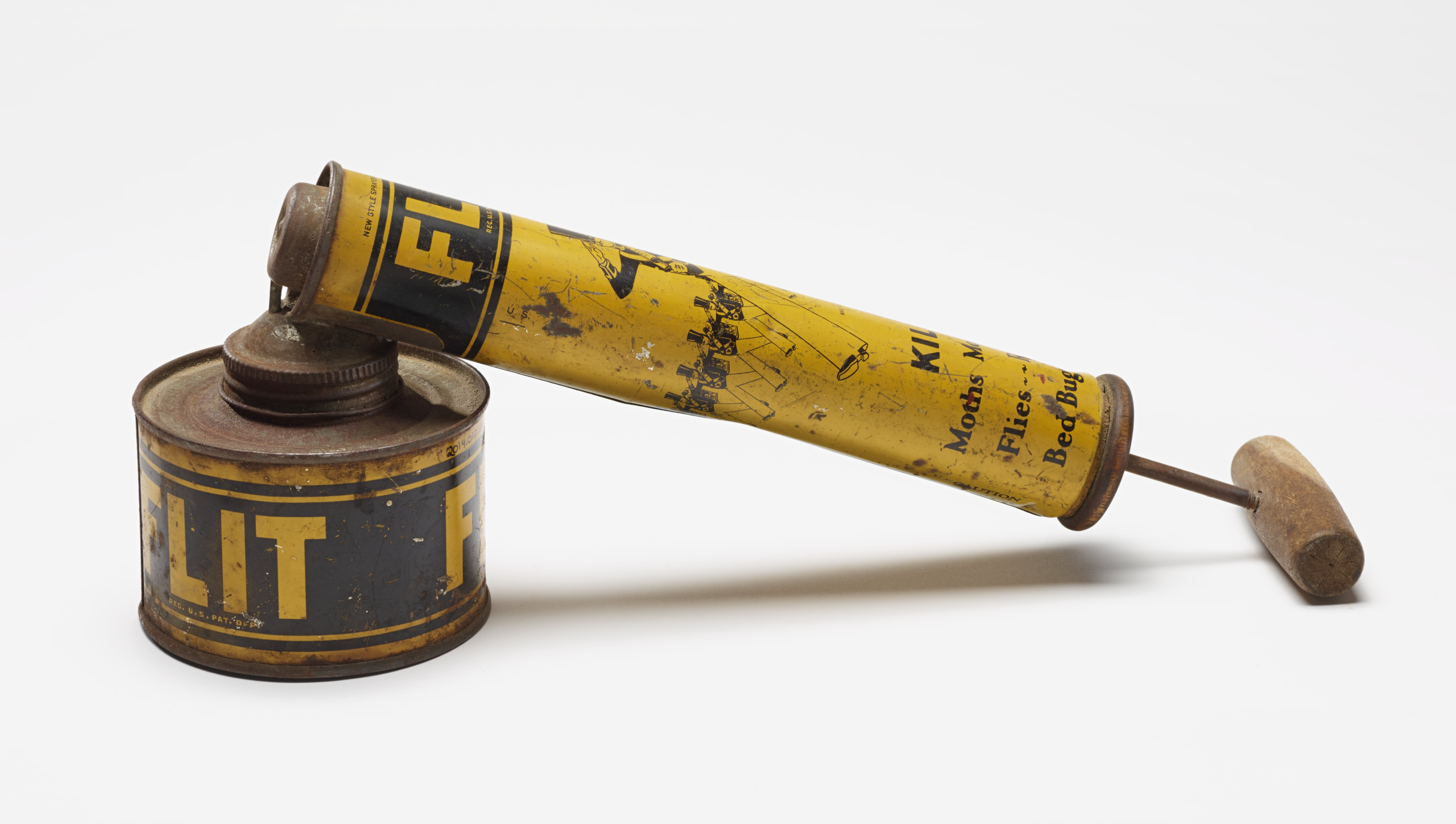
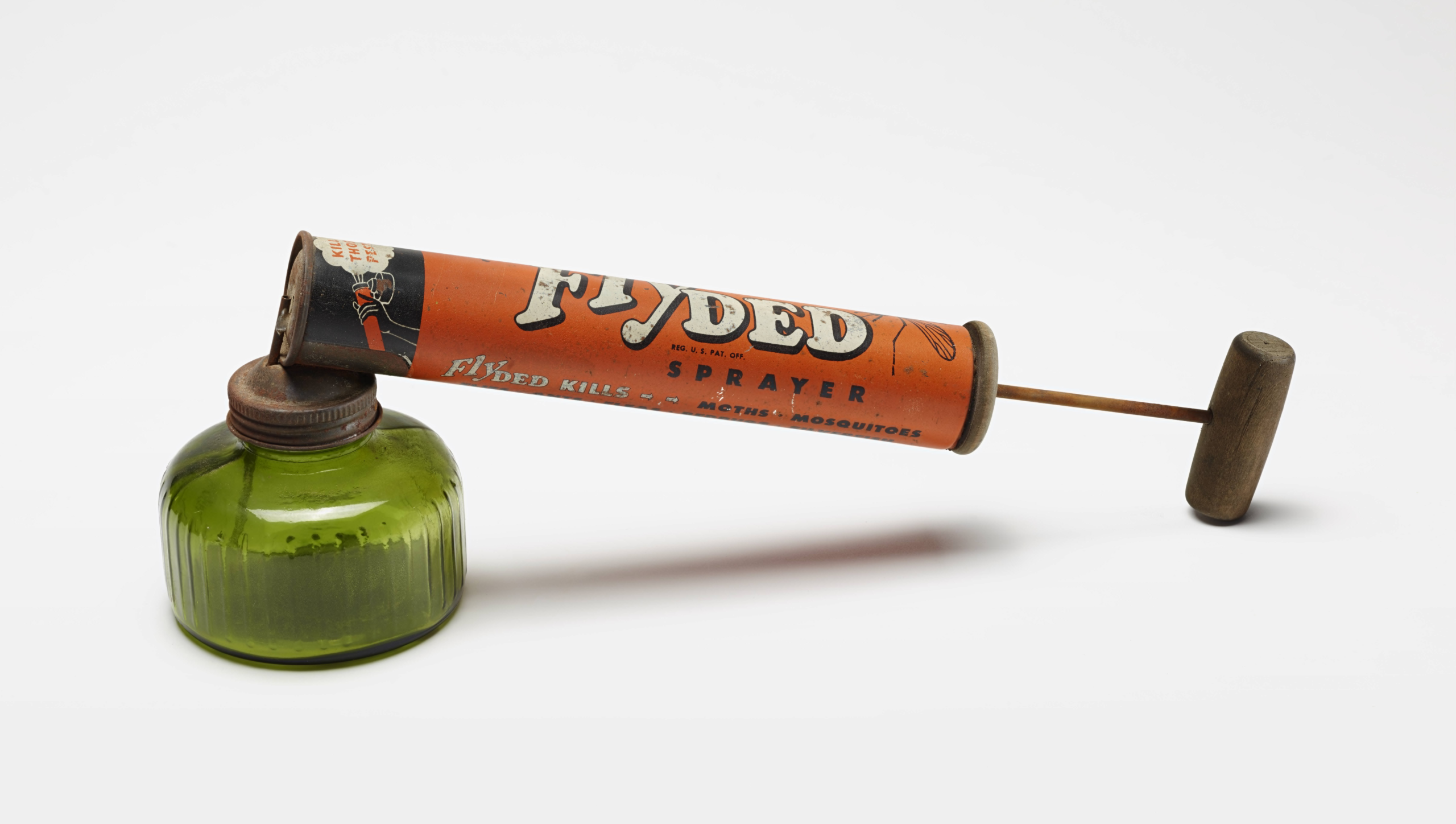
The hand sprayer was the other constant. It was a brass or tin pump with a reservoir, filled from a can, and it was used in the air of rooms, over surfaces, into cupboards and at anything that moved. The solvent base was commonly a petroleum distillate, so the room was also receiving a volume of hydrocarbon vapour.
The general principle that replaced the pump is called integrated pest management, and the first steps in it are not chemical at all: exclude the pest by sealing entry points, remove the food and water it is coming for, and use the least hazardous control that works, in the smallest quantity, at the specific place it is needed. The 1962 approach was the exact inverse, which was to treat the volume of the room. A fly in the kitchen was answered with a cloud, and the cloud settled on every surface in it, including the ones food was prepared on.
Moths, rodents and the rest of the cupboard
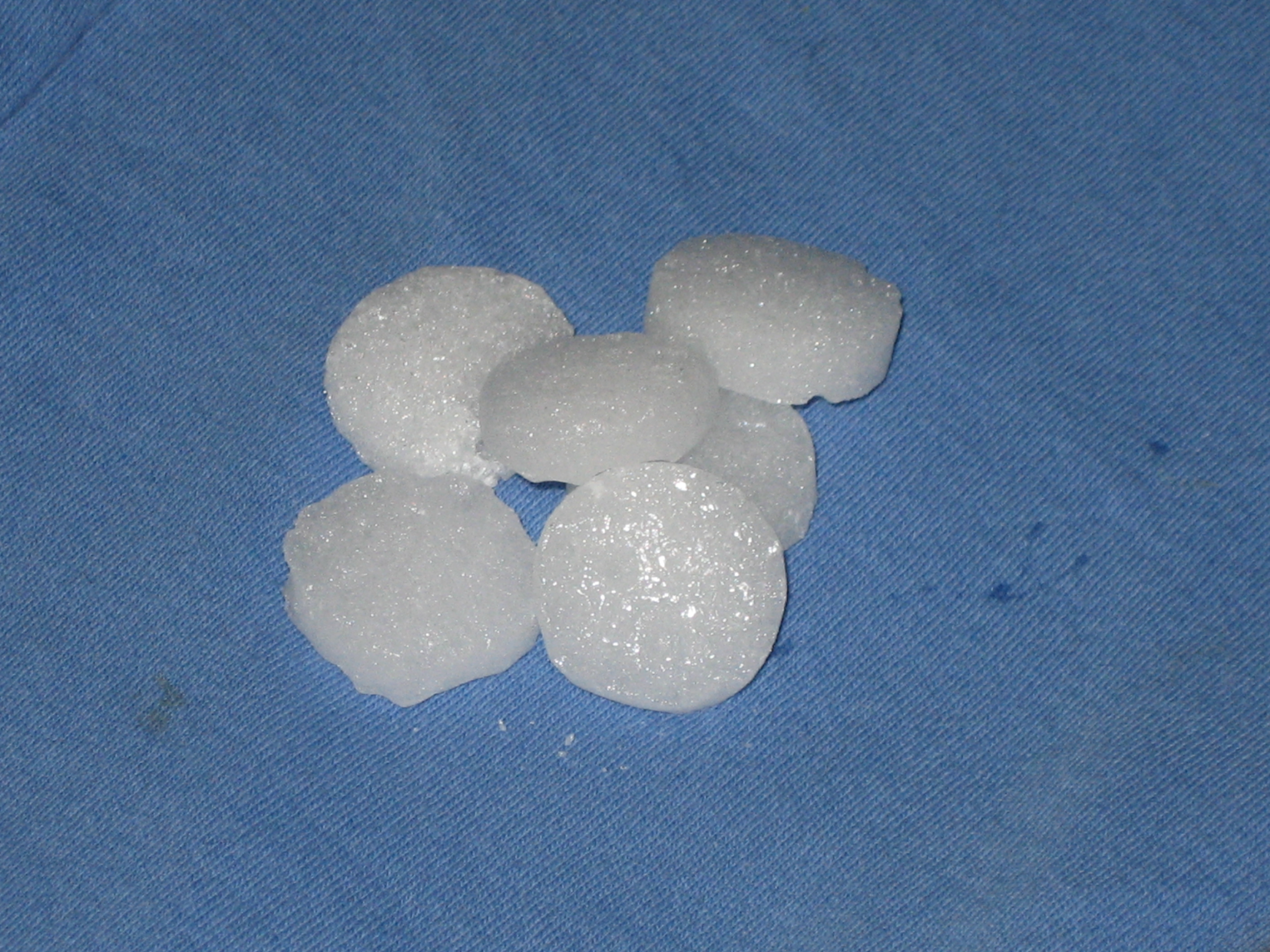
Mothballs were naphthalene or paradichlorobenzene, and both are still available, but the labelling and the understanding have changed completely. They are now sold with explicit instructions to use them only in a sealed container and never in an open wardrobe or a drawer, because the entire mechanism is sustained vapour exposure, and the vapour does not distinguish between a moth and the household. Loose mothballs in a cupboard, which was universal practice, is the one item on this list that people still do.
Rodent control in 1962 drew on a set of compounds that have since been removed from household availability for reasons of acute hazard to children and pets, thallium sulfate among them, and the first-generation anticoagulants that replaced them have themselves been progressively restricted. Current American rules confine the most hazardous rodenticides to professional use and require consumer products to be supplied in tamper-resistant bait stations. No product, preparation or method is described here, and anybody with a rodent problem should be talking to a licensed operator or using a currently approved consumer product exactly as labelled.
Flea powders for pets, which were frequently the same active ingredients as the house products, complete the picture. The animal was treated, the animal slept on the furniture and in the children’s beds, and the distinction between treating a pet and treating a bedroom did not really exist.
What actually changed, and what to do with an old can
The regulatory turning point was the shift from asking whether a compound was acutely poisonous to asking what happened to it afterwards: how long it persisted, whether it accumulated in tissue, whether it concentrated up a food chain, what it did at low doses over long periods and what it did to things nobody was aiming at. Almost every withdrawal in this article follows from that question rather than from an immediate harm, which is why the compounds looked safe to the people using them.
The 1962 householder was not reckless. They were using licensed products as labelled, against real nuisances, in an era when flies in a kitchen and moths in a wardrobe were a daily matter rather than an occasional one, and the products did what they promised. The failure was institutional and it was a failure of the right question.
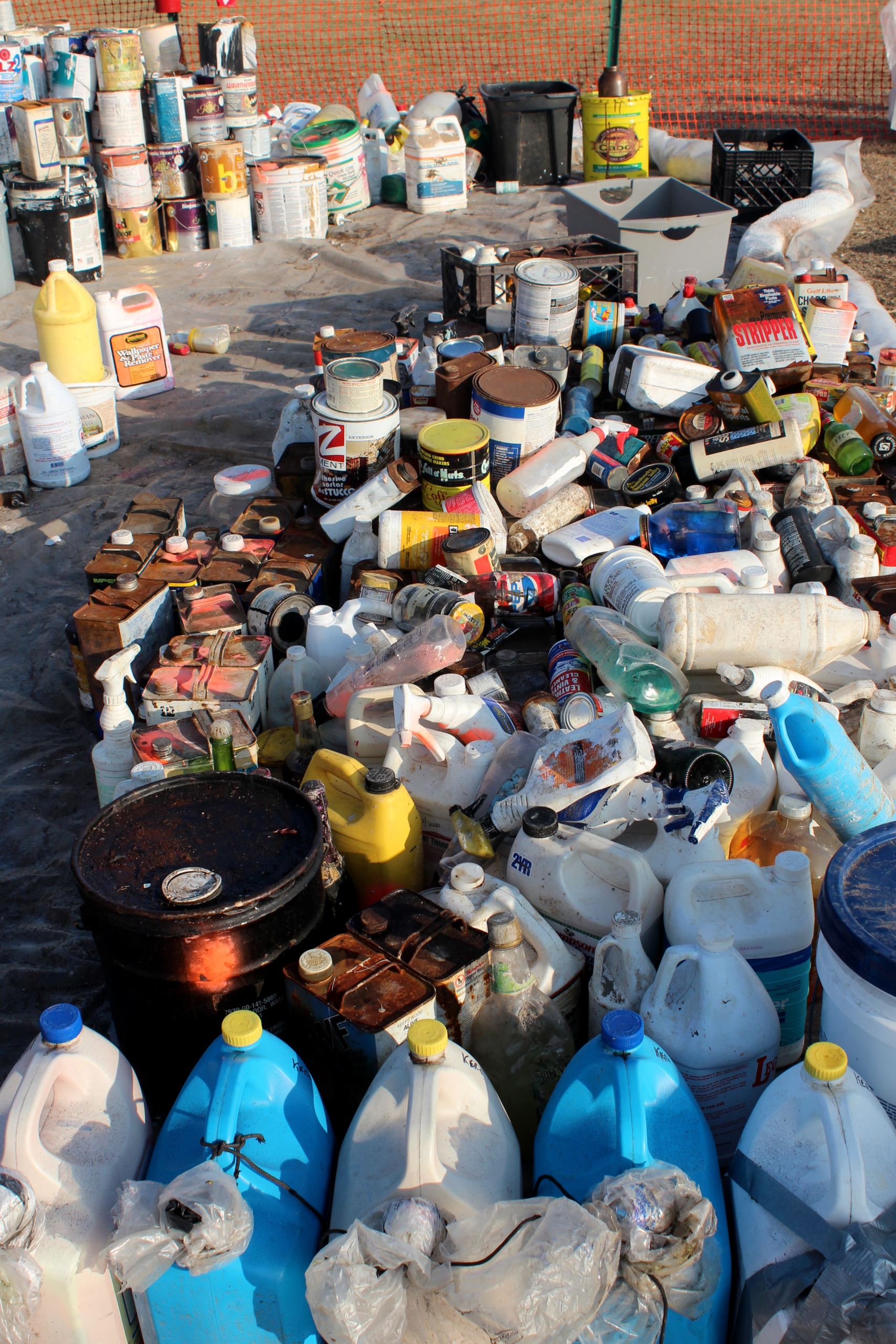
If an old canister or a part-full sprayer turns up in a garage or an inherited house — and they do, regularly — it is household hazardous waste. It does not go in a bin, down a drain or onto a garden. Most American counties run a collection point or a periodic collection event, the container should be left closed and intact, and the only sensible instruction is to take it there.
What is worth keeping from 1962 is the problem rather than the solution. Flies carrying contamination from a street into a kitchen was a real public health matter in an era of open refuse, unscreened windows and far less refrigeration, and moths destroying a wardrobe mattered when clothes were expensive and were expected to last a decade. The household was not spraying for fun. It was answering genuine nuisances with the only tools on the shelf, and the modern answer to the same problems — screens, sealed refuse, refrigeration, airtight storage, and a targeted treatment only where something is actually living — is less satisfying to use and considerably more effective.
Like our content? Follow us for more.