The American hospital of 1960 is close enough in time that people who worked in one are still describing it, and far enough away that almost nothing about its daily routine would survive a modern inspection. What changed was not the medicine, or not only the medicine. What changed was the entire structure of rules around who could do what, who was allowed in the building, what was written down, and what was assumed.
Almost all of that change arrived through specific documents with dates on them. Universal precautions, informed consent as a formal procedure, infection control committees with authority, restrictions on who may give which drug, the elimination of mercury from clinical equipment, the opening of wards to families: each of these replaced something that had been standing practice, and each of them replaced it because the old practice was found to be producing harm that nobody had been counting. The ward in 1960 was run by people who were, by the standards available to them, extremely careful. It is the standards that moved.
The ward was one room
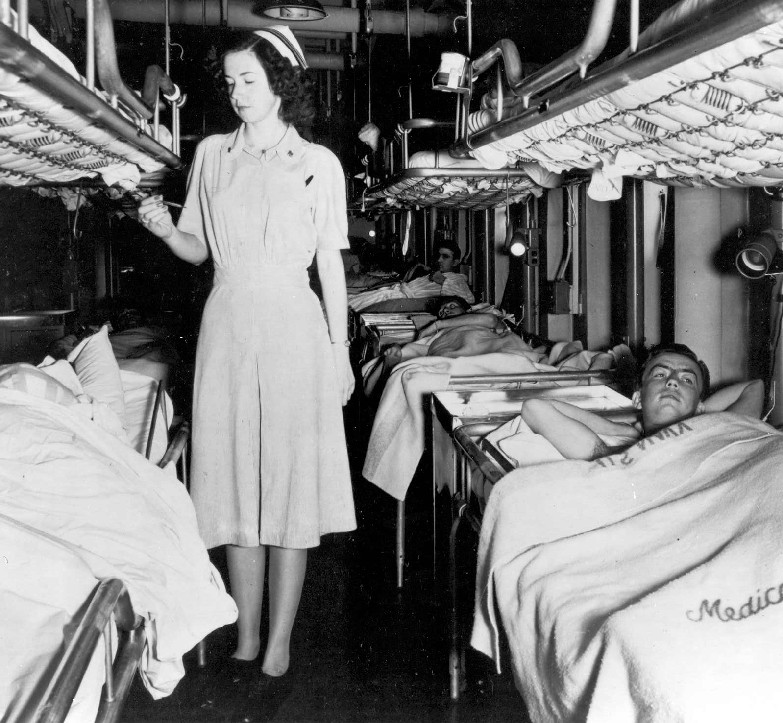
The dominant form was the open ward: a long room with beds down both walls, a nurses’ desk at one end, and curtains on rails that could be pulled around a bed when something needed doing. Twenty to thirty patients in a single space, able to see and hear each other all day and most of the night.
The argument for it was observational. One nurse standing at the desk could see every patient in her care at once, and in an era before electronic monitoring that was a real clinical advantage. Patients also looked after each other, noticed when a neighbour deteriorated, and called out. The argument against it is everything that modern practice means by privacy, and the fact that an open ward is an efficient way to move an infection from one end of a room to the other. Private and semi-private rooms became the American standard over the following decades, and the open ward exists now only in the most constrained circumstances.
Like our content? Follow us for more.
Families were kept out
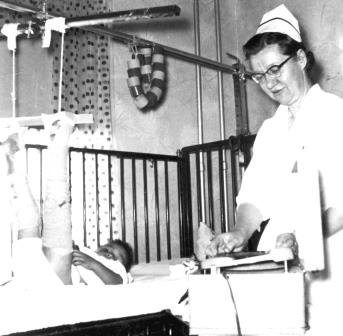
Visiting hours in 1960 were short, specified, and enforced. Two hours in an afternoon was common. Children under twelve were frequently not admitted to the building at all. Fathers were not generally present at deliveries. And on pediatric wards, the rule that reads strangest now was that parents were often permitted to visit their hospitalized child only for a limited window, on the explicit theory that visits upset the child and disrupted the ward.
That theory was examined and dismantled, and the research that did it is some of the most consequential work of the period. The observed distress of a child whose parents leave was being read as evidence that parents should not come. The alternative reading, which prevailed, was that separation itself was the injury. Open visiting on children’s wards and the expectation that a parent may stay overnight both follow from that reversal. It is the clearest case in the whole period of a hospital rule being overturned not by new technology but by somebody looking properly at what was already happening.
The staff smoked at the desk
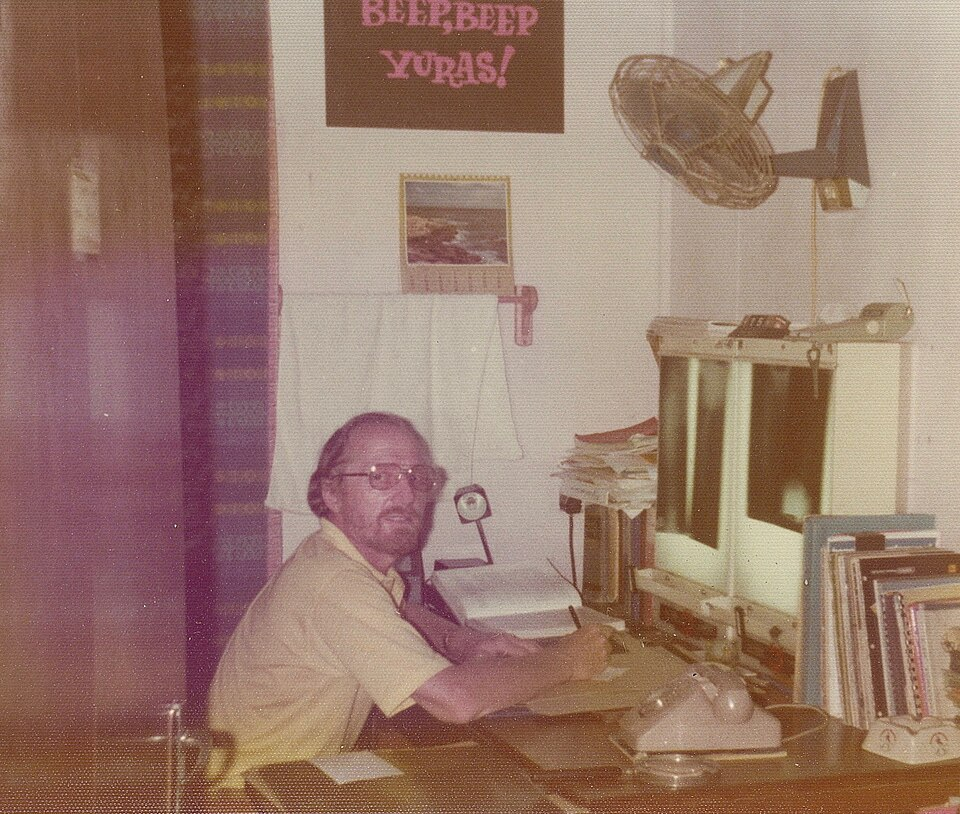
Ashtrays were standard equipment. Nurses smoked in the station, doctors smoked on rounds in some institutions, patients smoked in bed with permission and in day rooms without it, and cigarettes were sold in the hospital lobby. Smoking persisted in American hospital buildings long after the Surgeon General’s report of 1964, and the comprehensive bans came in during the 1980s and 1990s rather than immediately.
It is worth being precise about what this does and does not say about the people involved. The 1964 report is the dividing line in public knowledge, but the institutional response took a generation, and in 1960 the report had not been published. Hospital staff smoking on duty was not a lapse in the standards of the day. It was the standard of the day, in a building full of people with respiratory illness, and it took until the oxygen-safety argument and then the secondhand-smoke argument to move it.
Glass, mercury and resharpened needles
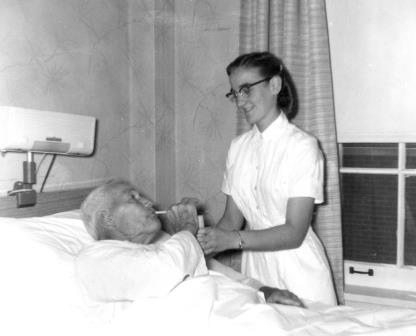
The equipment list is where the distance shows most physically. Clinical thermometers were glass tubes of mercury, shaken down by hand between patients, read by eye, and shared along a row of beds with a wipe between uses. Mercury sphygmomanometers hung on every wall. Mercury has since been removed from American clinical equipment almost entirely, driven both by exposure concerns and by the disposal problem a broken instrument creates.
Glass syringes were sterilized and reused. Hypodermic needles were reused, and when they went blunt they were sharpened, by hand, on a stone kept for the purpose. Central sterile supply departments and single-use disposables replaced that whole system over the 1960s and 1970s. The practice of gloving for routine patient contact, which a 1960 nurse would have considered unnecessary and faintly insulting to the patient, became mandatory with the adoption of universal precautions in the second half of the 1980s.
Rubber tubing was boiled and hung to dry. Glass intravenous bottles were washed and refilled. Bedpans went into a steam unit at the end of the ward and came back warm. A ward in 1960 was a place where almost everything was cleaned and used again, and the skill of knowing whether a thing had been properly cleaned lived in the hands of the senior nurse rather than in an indicator strip or a machine log. That knowledge was real and it was also unauditable, which is the whole difficulty: there was no way for a hospital to demonstrate to anyone, including itself, that the standard had been met on any particular morning.
Hierarchy did the work that protocol does now
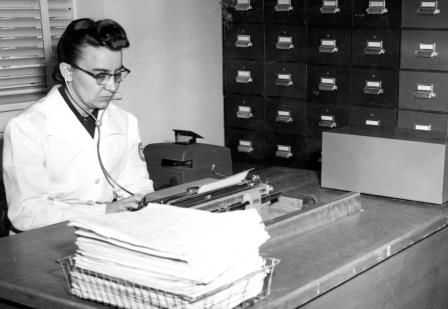
The ward ran on rank. A nurse stood when a physician entered. Student nurses, who in the hospital-run diploma schools of the period provided a very large share of the actual nursing labour in exchange for their training, addressed almost everyone as a superior. Written orders were followed; questioning them upward was socially expensive and in many institutions was simply not done.
That structure has been dismantled deliberately, and the reason is a safety argument rather than an egalitarian one. A system in which the most junior person present cannot easily say that something looks wrong is a system that converts one person’s error into an outcome. Checklists, read-back of verbal orders, formal escalation pathways and the explicit expectation that any staff member may stop a procedure all exist to replace a hierarchy that was efficient at transmitting instructions and very poor at transmitting objections.
What was not written down
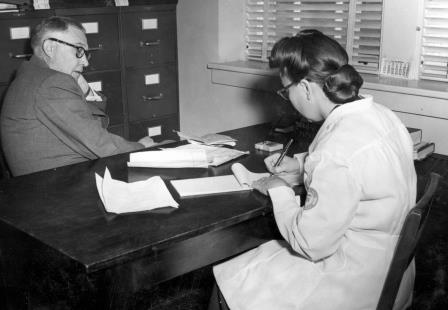
Record-keeping in 1960 was thinner than a modern reader expects. Charts were handwritten, kept at the desk rather than at the bedside, and not generally shown to the patient. Patient identification bands were not yet universal. Drug administration was recorded, but the layered verification that now surrounds it — independent double-checking of certain drugs, machine-readable patient identity, pharmacy review — did not exist, and nurses routinely drew up and mixed preparations at the bedside that a pharmacy now prepares under controlled conditions.
Consent was a signature on a short general form, obtained at admission, covering whatever the physician judged necessary. The modern apparatus of specific informed consent, in which a named procedure with its named alternatives and risks is discussed and documented, developed through the 1960s and 1970s and the standard it set did not previously exist in anything like that form.
Nor was there much expectation that a patient would be told the full picture of their own condition. The judgement about how much to say rested with the physician, was frequently made in consultation with the family rather than the patient, and was often made in the direction of saying less. Surveys of American physicians taken around that period and again a couple of decades later show one of the sharpest reversals of professional opinion on record, from a clear majority who would withhold a serious diagnosis to a clear majority who would disclose it. The ward of 1960 operated on the earlier answer, and a great deal of what a nurse did on that ward involved managing a conversation she was not permitted to have plainly.
The thing the old ward actually had
Set against all of that is something the modern hospital has spent considerable effort trying to recover. The 1960 ward was continuously staffed by people who were physically present in the room, looking at patients rather than at screens, for the whole shift. Backs were rubbed. Beds were made twice a day with the patient in them. Nurses knew every patient on the ward by name and by temperament, because there were twenty-four of them in one room and no way not to.
That is not a reason to want the ward back, and it should not be dressed up as one. The infection rates, the exclusion of families, the suppressed junior voice and the reused needles were not an acceptable price for attentiveness. But the honest account of what was lost in the rebuilding includes the hours of direct presence, and the fact that a great deal of modern reform in nursing is an attempt to get those hours back inside a safer building.
Like our content? Follow us for more.