The milkman is one of the few vanished American trades that almost everybody can still picture, and that familiarity hides how strange the arrangement actually was. A perishable, highly temperature-sensitive food was delivered to an unattended doorstep in a reusable container and left there, uncovered and unrefrigerated, for a period nobody controlled. The system worked for decades, it worked at enormous scale, and it would not now pass the first page of a food safety review.
What ended it is worth getting right, because the obvious answer is wrong. Home delivery did not collapse because regulators banned it. It collapsed commercially, over about twenty years, under pressure from three things: the supermarket, the home refrigerator and the second family car. The regulatory story matters, but it is a story about what the practice would have to look like today rather than about what killed it.
What was actually being left outside
Fluid milk is about as demanding a product as a retail food system handles. It supports bacterial growth readily, it has no preservative, and the thing that keeps it safe between the dairy and the glass is an unbroken cold chain. Pasteurisation, which was effectively universal in American city milk supplies by the 1950s, kills the organisms present at the plant. It does not make the milk shelf-stable, and it does nothing about what multiplies afterwards.
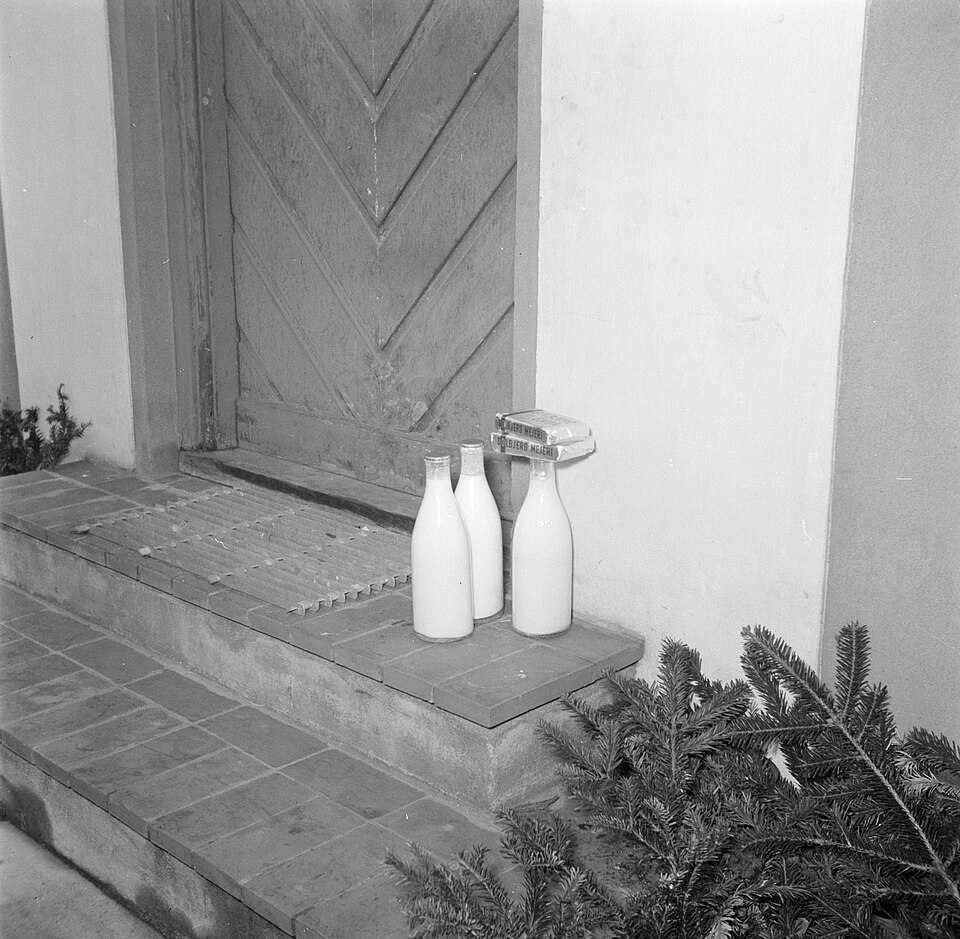
The doorstep system broke the cold chain deliberately. The bottles came off a chilled truck and went onto a step, and from that moment the product’s temperature was a function of the weather and the household’s sleeping habits. On a cold morning in February this was almost irrelevant. In July in Kansas it was not. Households managed the risk with local knowledge rather than with equipment: a shaded step, an insulated box, a standing instruction to the milkman about where to put it, and a child whose job was to fetch it in immediately. All of that is informal control over a step that modern practice requires to be engineered.
Like our content? Follow us for more.
The insulated box and the honour system
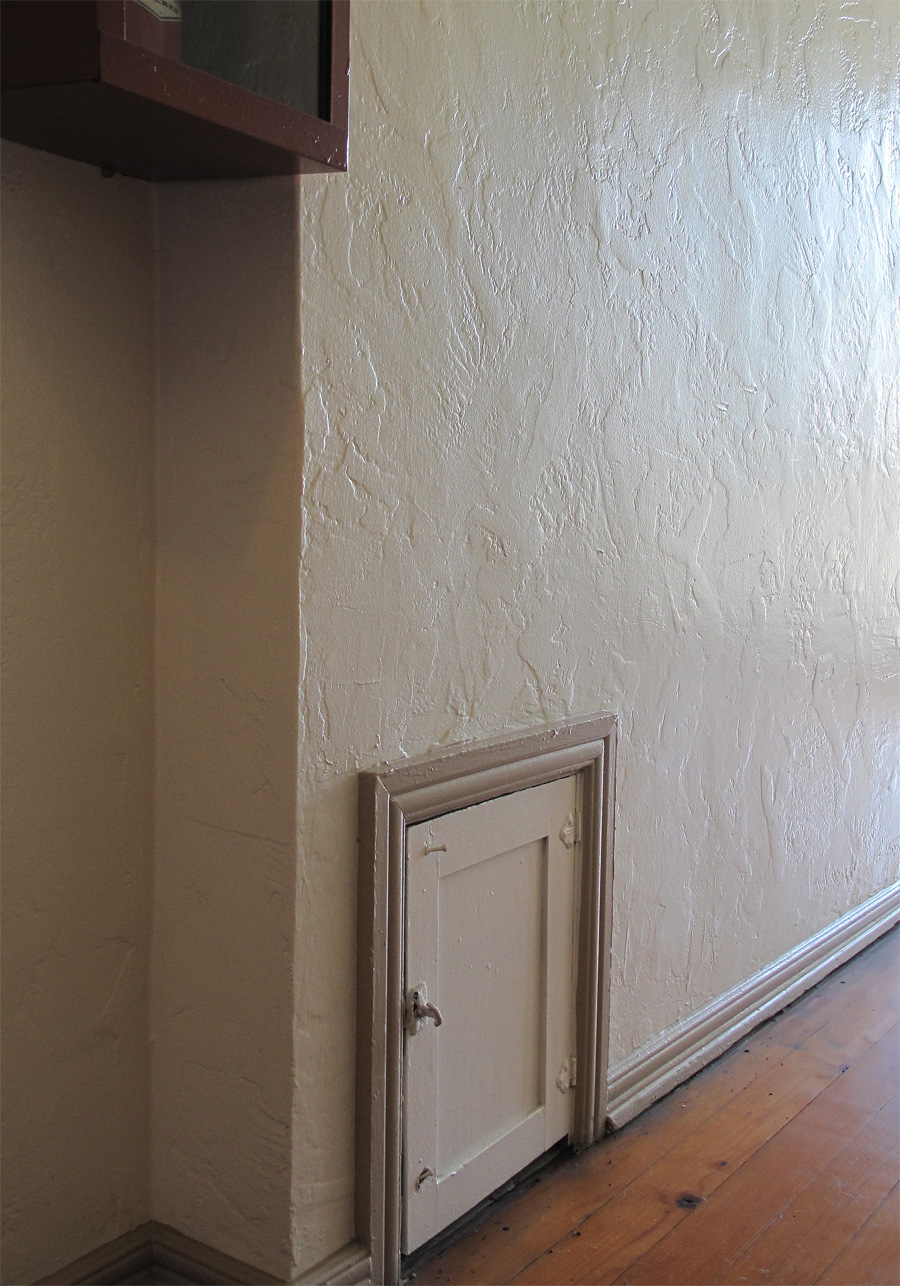
Many American houses had a milk box, a small insulated cabinet on the porch or set into the wall, and that box is the clearest evidence that everybody involved understood the problem. Some were simply galvanised boxes; some had a layer of insulation and a lid designed to shed rain. The best were built into the wall so the milkman loaded from outside and the kitchen unloaded from inside, which is a genuinely elegant solution to a real engineering constraint.
Alongside the hardware ran an honour system that is harder to imagine now than the milk. Payment was weekly or monthly, often by an envelope of cash left in the box or under the mat. Standing orders were written on a card. A household could change its order by leaving a note in an empty bottle. The whole arrangement depended on a route man who knew every house, which was also the system’s great commercial strength and the reason it took so long to die.
What a current rule set requires
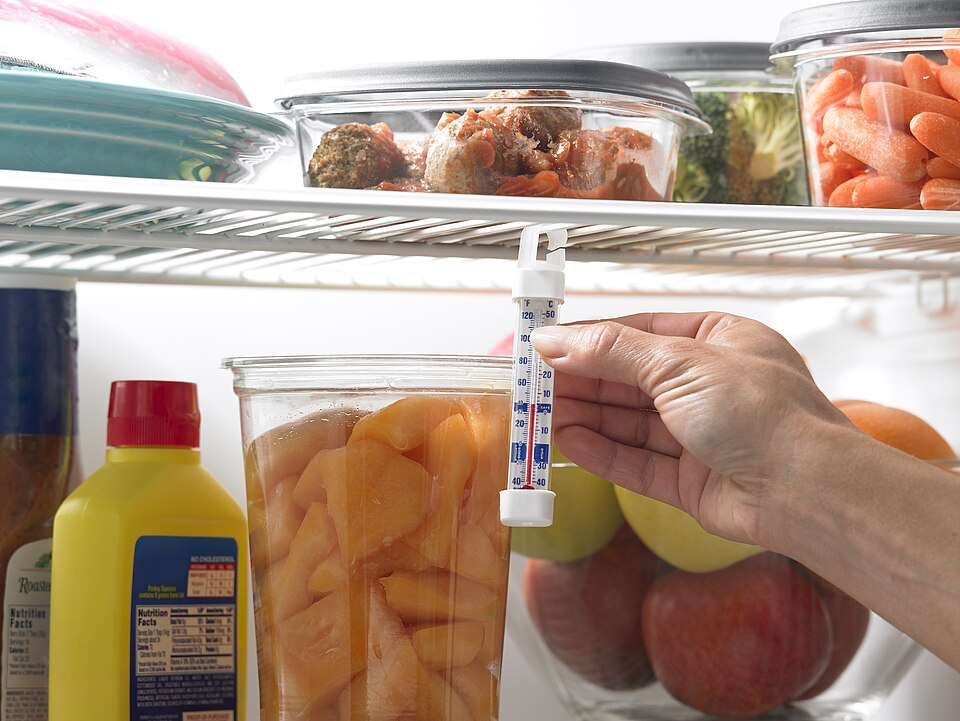
A dairy delivering to American homes today does it differently in every particular. The product goes into an insulated container with frozen gel packs or into a cooler the customer leaves out, and the delivery is timed and often tracked. Milk is a food requiring time and temperature control for safety, and a distributor is expected to be able to demonstrate that control rather than to assume it. The question a regulator asks is not whether the milk was probably fine. It is whether the operator can show what temperature it was at and for how long.
That is the real distance between 1962 and now. The 1962 system had no record. Nobody could say how long a bottle had sat, how warm the step had been, or whether the household had brought it in at six or at ten. The practice was not illegal, because the standard it would have failed had not been written in that form. It is simply incompatible with the documentation that current distribution is built around.
The returnable bottle
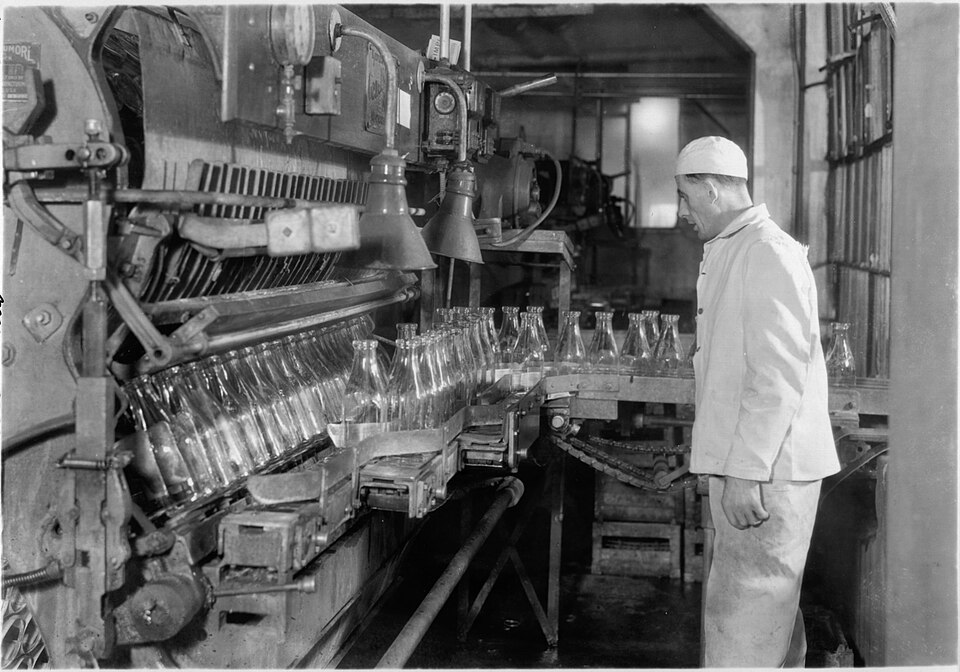
The glass bottle is the other half of the story, and the part people remember most fondly. Bottles were collected, returned to the plant, washed in caustic solution at high temperature, inspected and refilled. A single bottle might make dozens of round trips. By any modern environmental accounting that is a better system than the one that replaced it, and it is the reason the milkman is a recurring figure in arguments about packaging.
It also carried the system’s sharpest hygiene problem, because the thing coming back from the doorstep had been in somebody’s kitchen. Bottles returned with cigarette ends in them, with paint in them, with things nobody wants to read about in them. The washing line was built on the assumption that it had to deal with that, and the plants that did it well did it to a standard that was genuinely impressive. But the economics of glass — the weight, the breakage, the freight, the capital tied up in a fleet of bottles — were always marginal, and the moment a lighter container existed the arithmetic went against it.
Three things that actually killed it
The supermarket came first. Once a family bought a week’s groceries in one trip, milk was something already in the cart, and the delivered price could not compete with a loss-leading gallon at the front of the store. Home delivery carried the cost of a man, a truck and a route for every customer; the store carried it once for thousands.
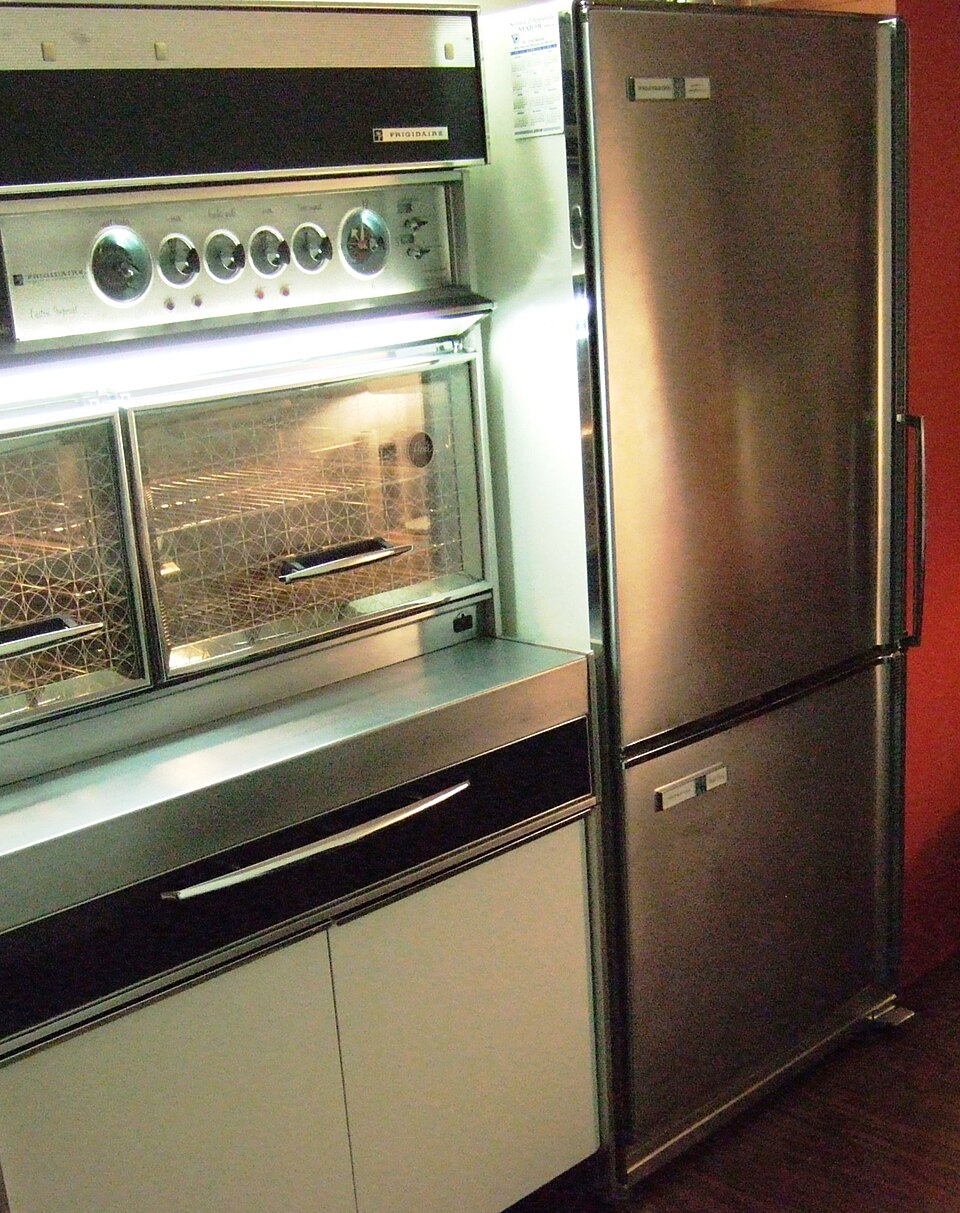
The refrigerator mattered as much. A 1940s icebox could not hold a week of milk; a 1962 refrigerator with a proper freezer compartment could. Delivery existed partly because households could not store more than a day or two, and once they could, the frequency that justified the route disappeared. The second car finished it, by making the trip to the store trivial for the household member who had previously been at home without transport. None of those three is a rule. They are a market, and the trade was competed out of existence rather than legislated out of it.
There is a fourth factor that gets less attention, which is the carton. Waxed paper and then coated board containers were lighter, did not come back, and could be stacked in a store’s cold case in a way glass could not. Once the container stopped being an asset the dairy had to recover, the entire logic of a route dissolved, because the route existed to bring the bottles home as much as to take the milk out. A delivery system built around a returnable container is a loop, and the carton cut the loop in half.
What the milk bottle is doing in our memory
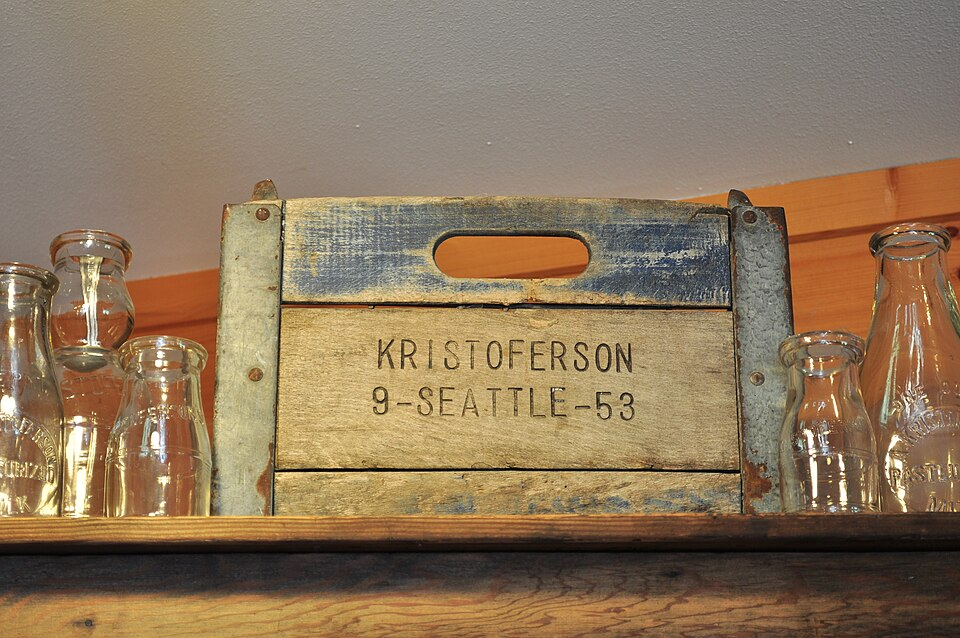
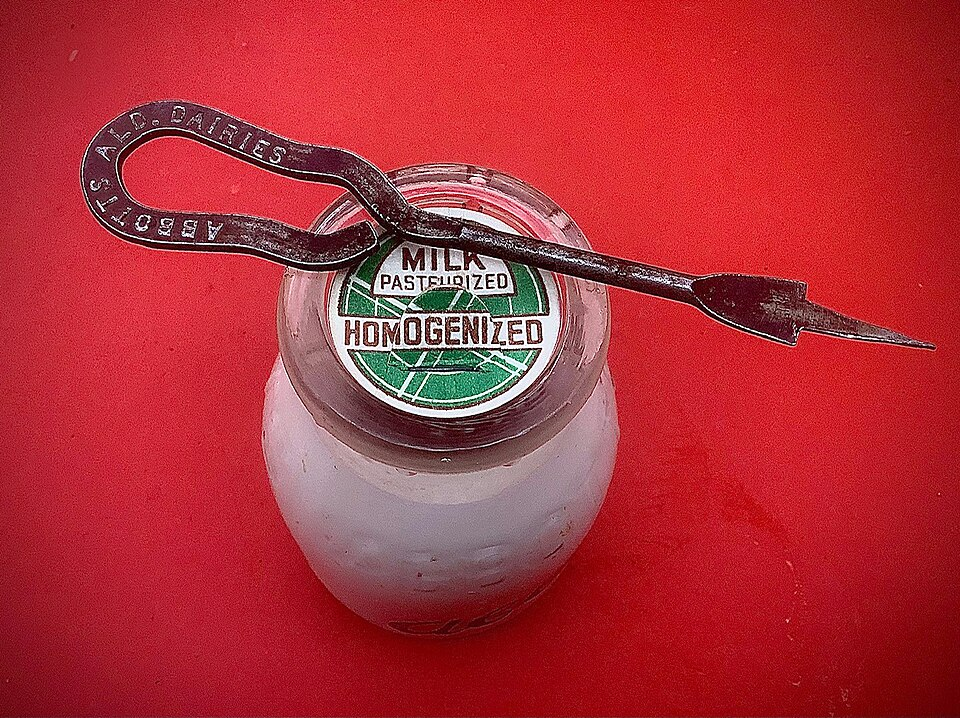
The milkman occupies a strange place in American recollection: he is remembered with a warmth that is mostly about the house rather than about the milk. The sound of bottles on a step at five in the morning, the cream risen to the neck in a bottle that had stood overnight, the foil cap pecked through by birds, the paper hood with the dairy’s name on it. These are early-morning memories, which is to say memories of a time of day most children only encountered by accident.
It is worth resisting one specific move, though, which is to treat the fact that nobody in a given family remembers getting sick as evidence that the open-step system was safe. Families do not keep records of mild foodborne illness and never did, the symptoms were attributed to all sorts of things, and the number of households involved was in the millions. The honest statement is that the system’s safety was never measured, and that it was replaced by one whose safety is.
The small number of routes that survived
Home delivery never quite went to zero in the United States, and it has had a modest revival built on precisely the terms the old system lacked. The operators doing it now sell on provenance and on glass, deliver into insulated boxes, publish their temperature handling, and charge a premium that the 1962 route man could never have asked for. It is a specialty product rather than a utility.
That is the shape of the whole change. In 1962 delivered milk was the default way a family got milk, priced accordingly, handled by local convention, and documented not at all. Today it is a choice, priced as one, with the cold chain closed and written down. The bottles look the same in photographs. Almost nothing behind them does.
That is worth holding onto when the milk bottle turns up as shorthand for a better arrangement, which it does fairly often in arguments about packaging and about neighbourhoods. The glass and the returnable loop really were better than what replaced them on the measure of waste. The handling was worse, the record was absent, and the economics were already failing before anybody made an environmental case for either side. Both halves are true, and the photograph only shows one of them.
Like our content? Follow us for more.