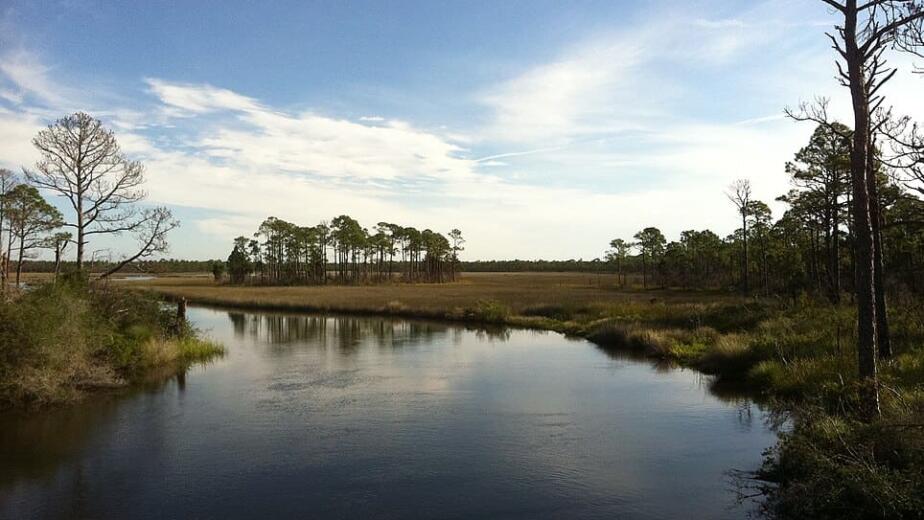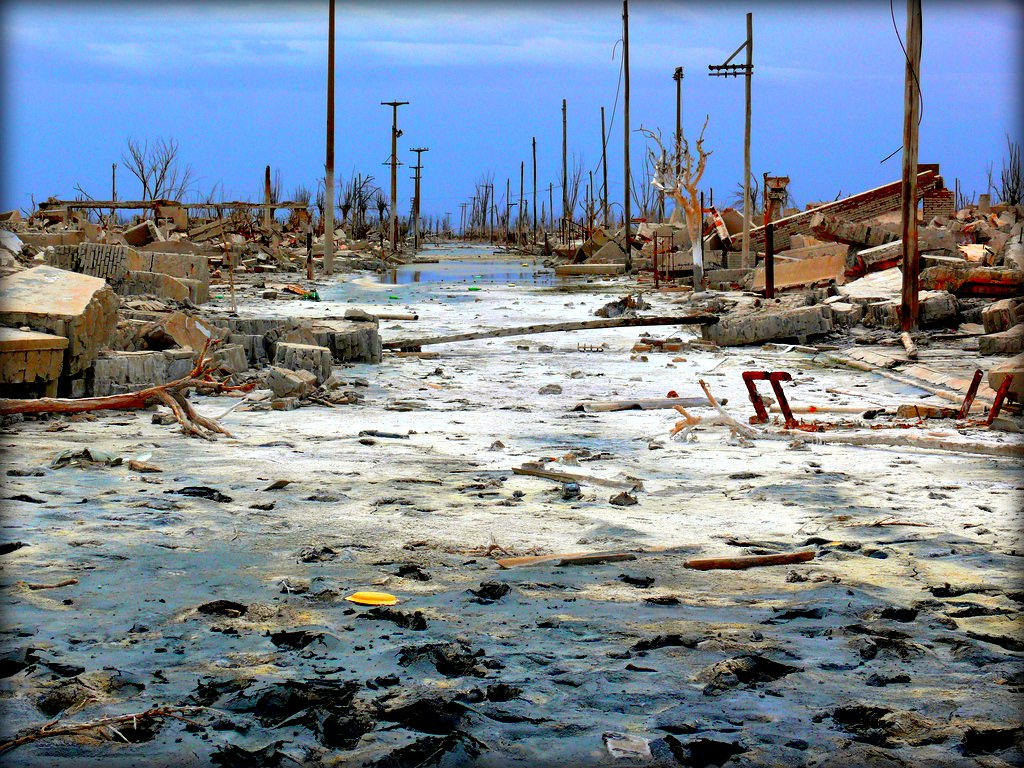
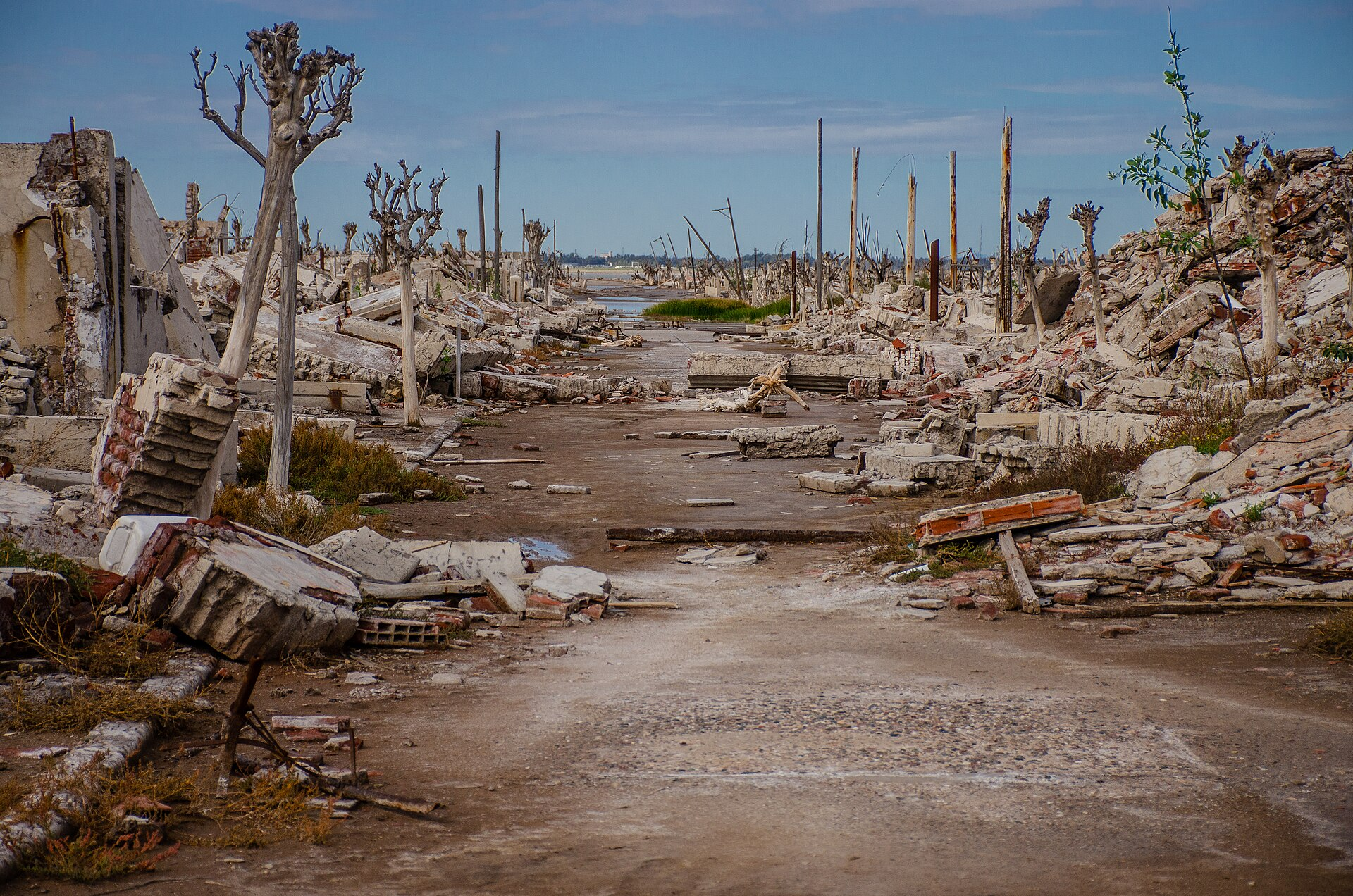
On the eastern shore of a salt lake in Argentina’s Buenos Aires Province, about four miles from the town of Carhué, stands one of the world’s strangest ghost towns, a resort that spent 25 years entirely submerged before slowly re-emerging from the water. Villa Epecuén’s ruins, bleached white by decades of salt and dotted with the bare skeletons of drowned trees, tell one of South America’s most haunting stories of nature reclaiming what people once built.
A Boom Built on Healing Waters
Villa Epecuén was developed in the early 1920s along the shore of Laguna Epecuén, a saline lake whose waters, similar in salinity to the Dead Sea, were marketed as having genuine therapeutic properties for skin conditions, arthritis, and rheumatic pain. Connected to Buenos Aires by rail, the resort grew rapidly through the mid-20th century, and by the 1960s and 1970s it could accommodate around 5,000 overnight guests and welcomed as many as 25,000 tourists each summer season. At its peak, roughly 1,500 permanent residents ran some 280 businesses, hotels, guesthouses, restaurants, and shops, serving the steady flow of vacationers who came to float in the lake’s buoyant, mineral-rich waters.
Like our content? Follow us for more.
A Dam That Couldn’t Hold
The lake that made Villa Epecuén famous ultimately destroyed it. The lagoon was fed by an interconnected chain of ponds whose water levels rose and fell with regional rainfall, and in the late 1970s an unusually wet period began steadily raising the water behind the earthen dikes protecting the town. On November 10, 1985, a seiche, a sudden, standing-wave surge triggered by a shift in wind and atmospheric pressure, overwhelmed the weakened embankment. Water poured into the town, and within days the flooding had made Villa Epecuén completely uninhabitable. Officials later attributed at least part of the disaster to years of inadequate maintenance and oversight of the flood-control infrastructure.
Twenty-Five Years Beneath the Surface
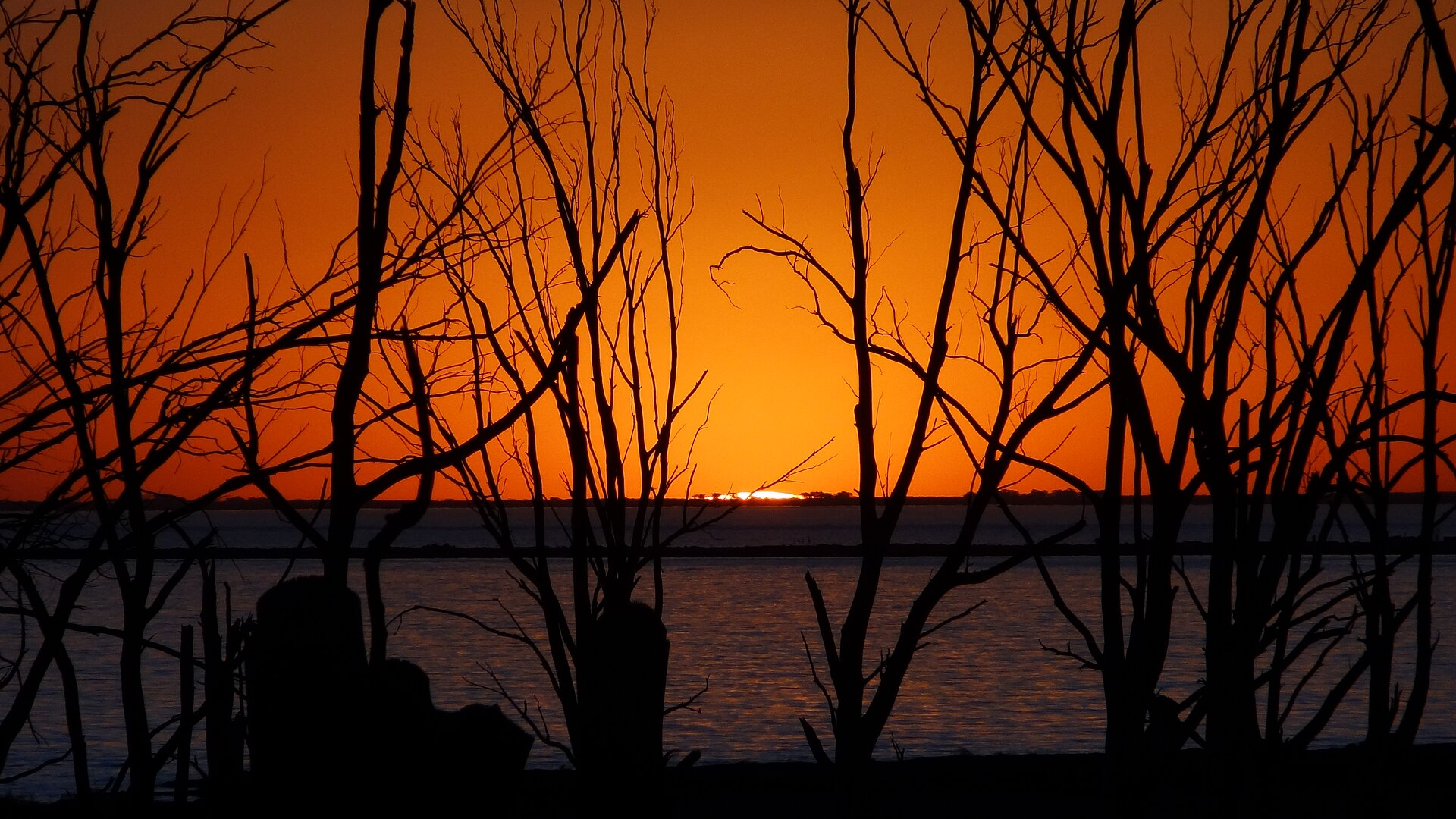
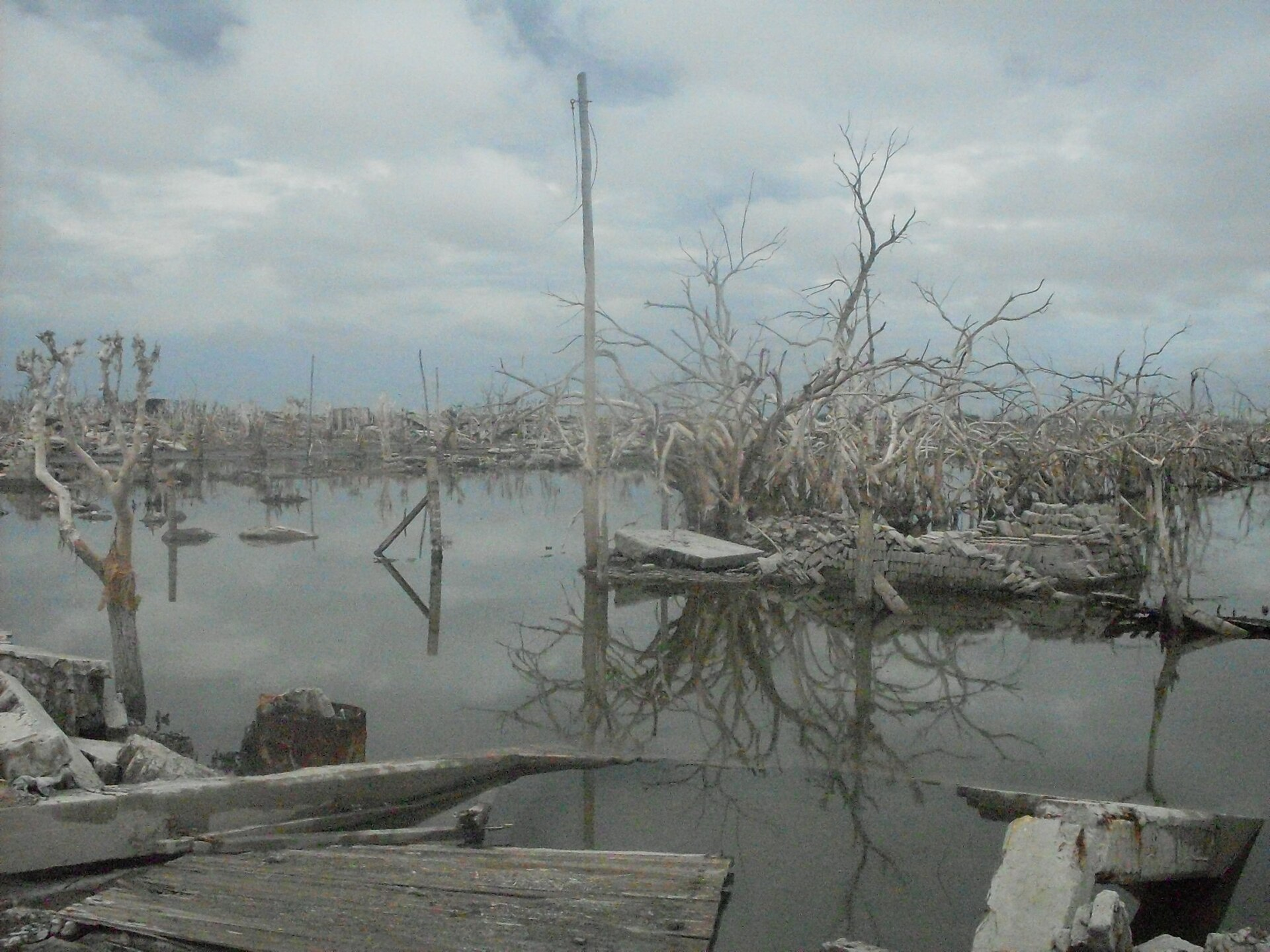
By 1993, the water level over the drowned town had risen to roughly 10 meters, submerging streets, hotels, and homes entirely beneath the saline lake. The town was never rebuilt; reconstruction was considered impossible given the ongoing flood risk, and the roughly 1,500 residents were permanently displaced, most relocating to nearby Carhué. For the better part of two decades, Villa Epecuén existed only as a name on old maps and in the memories of those who had once lived there, its buildings slowly dissolving beneath the brine.
The Water Recedes, and a Ghost Town Emerges
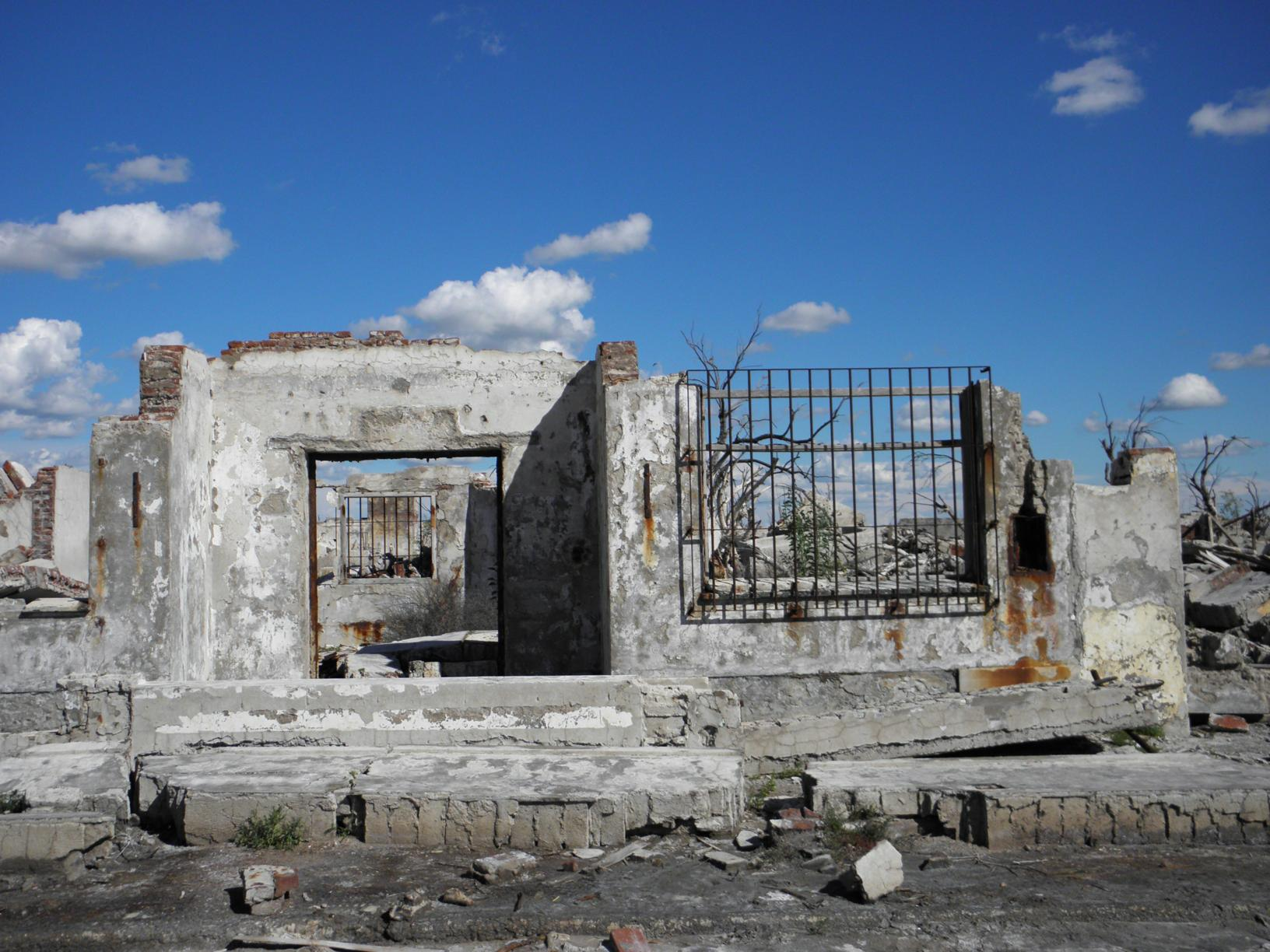
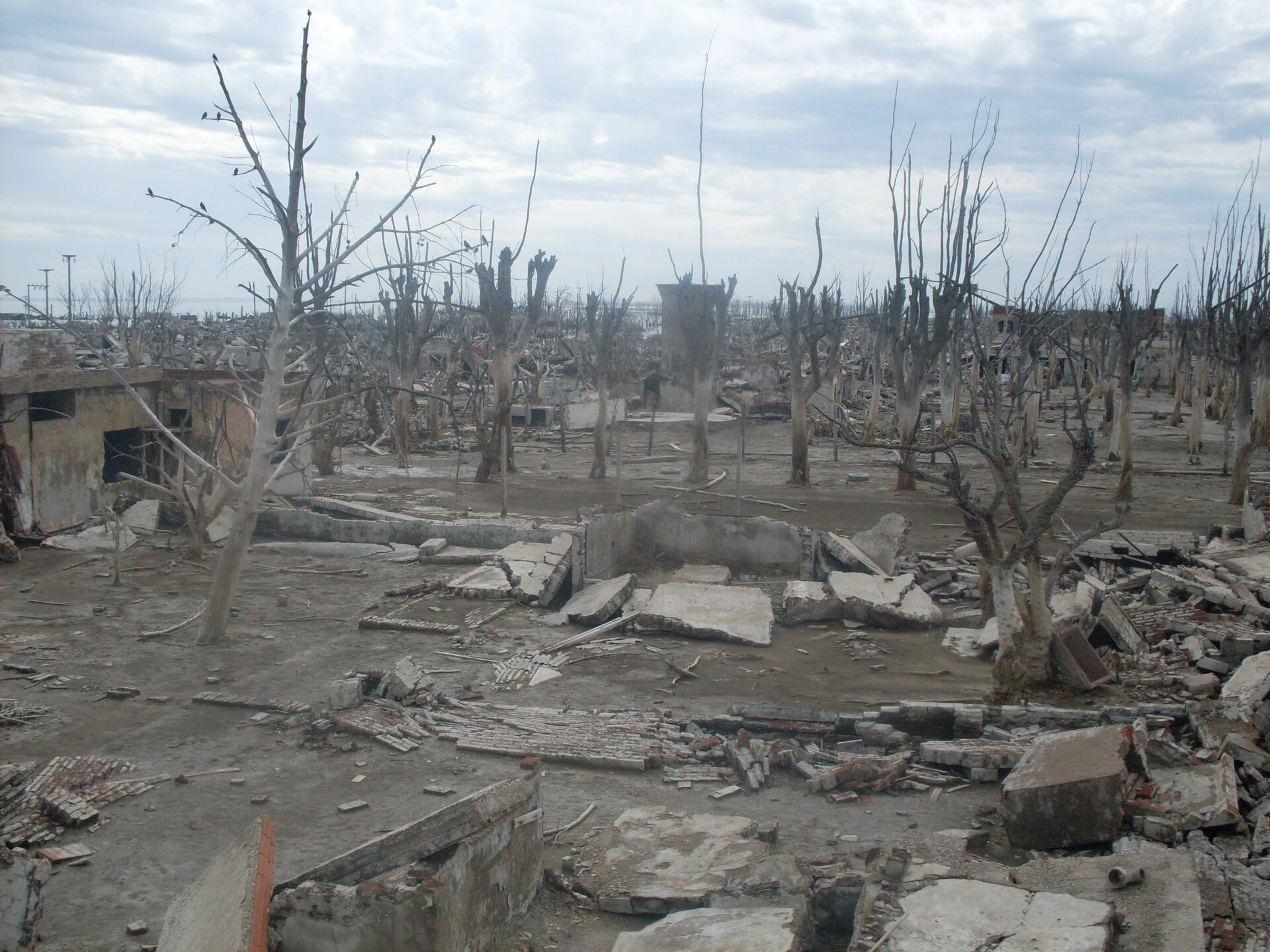
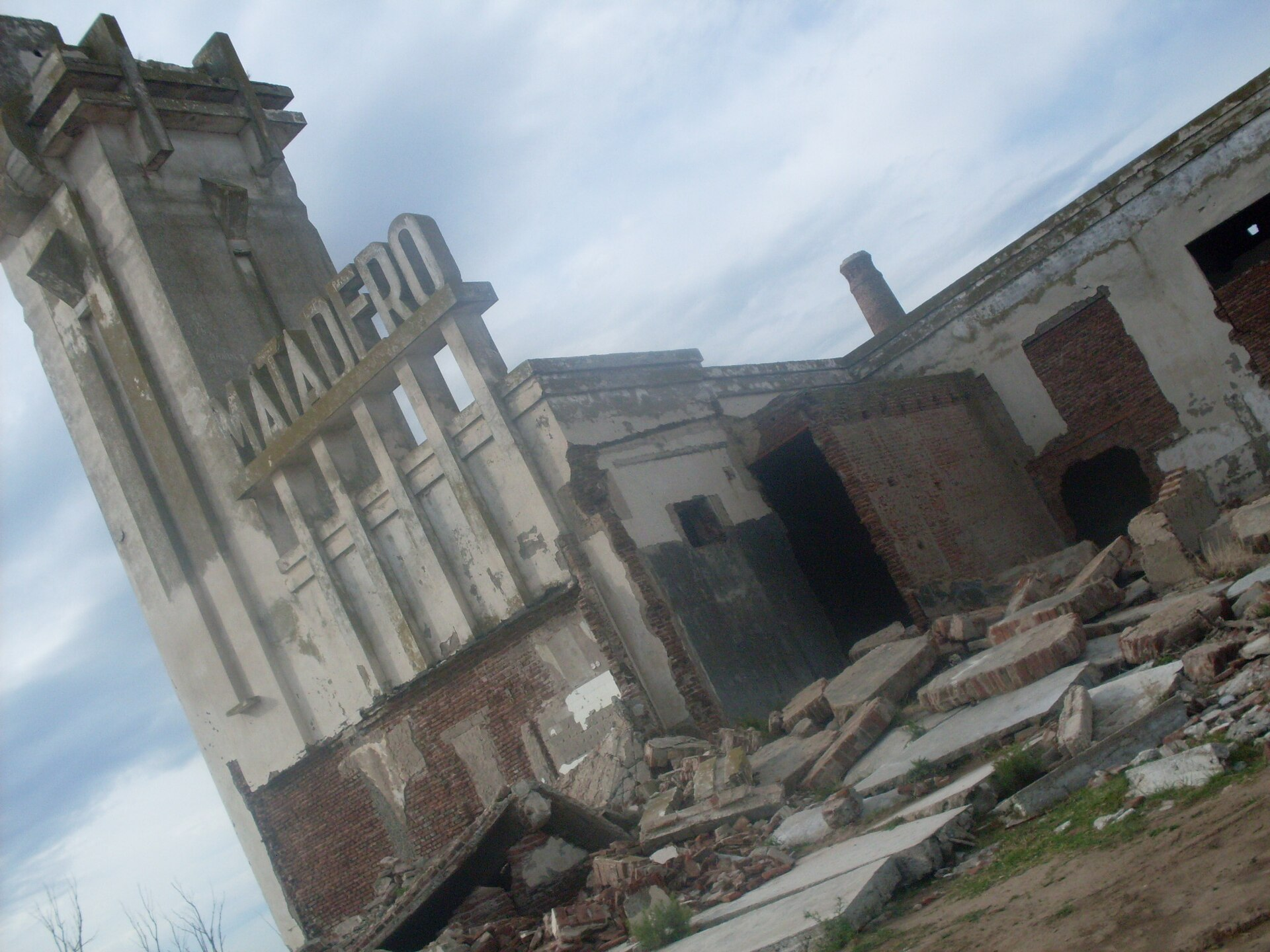
Beginning around 2009, the lake’s water levels started dropping, gradually exposing the town’s ruins to open air for the first time in a generation. What emerged was extraordinary: streets outlined by dead, salt-bleached trees standing like bone-white sentinels, the rusted skeletons of cars, and the crumbling shells of hotels and homes, their walls stained white and gray by decades of mineral buildup. The old railway station, built on slightly higher ground, survived largely intact, along with the ruins of a slaughterhouse designed by noted architect Francisco Salamone. The eerie, otherworldly landscape has drawn photographers and travelers ever since, earning comparisons to a modern Atlantis.
The Man Who Refused to Leave
The most remarkable figure connected to Villa Epecuén’s story is Pablo Novak, a former resident who returned to live alone among the ruins in 2009 as the waters receded, becoming the town’s sole inhabitant for the next fifteen years. Novak’s decision to spend his final years amid the salt-crusted remains of his childhood home became the subject of a 2013 documentary, Pablo’s Villa, and made him something of a local legend. He remained in Villa Epecuén until his death in January 2024, at which point the town was formally declared uninhabited once again.
Visiting the Ruins Today
Villa Epecuén is now accessible to visitors, typically as a day trip from Carhué, a nearby thermal-spa town that has embraced its own connection to the region’s healing waters. Guided tours, some arranged through local tourism offices, lead visitors along the old streets past the ruined hotels, the surviving railway station, and a small museum housed in the former bus terminal that displays photographs and artifacts recovered from the flood. The site has also drawn flamingos, migratory birds that feed on the tiny brine shrimp uniquely adapted to the lake’s harsh, salty waters, adding an unexpected touch of life to the otherwise stark landscape.
A Haunting Story of Loss and Return
Villa Epecuén endures as one of South America’s most powerful monuments to both the destructive and restorative power of nature. Its story, a thriving resort drowned in days, submerged for a generation, and then slowly returned to daylight, offers travelers something genuinely rare: the chance to walk through streets that spent twenty-five years at the bottom of a lake. For anyone drawn to places where history, tragedy, and natural beauty intersect, Villa Epecuén remains an unforgettable, deeply moving destination.
Like our content? Follow us for more.