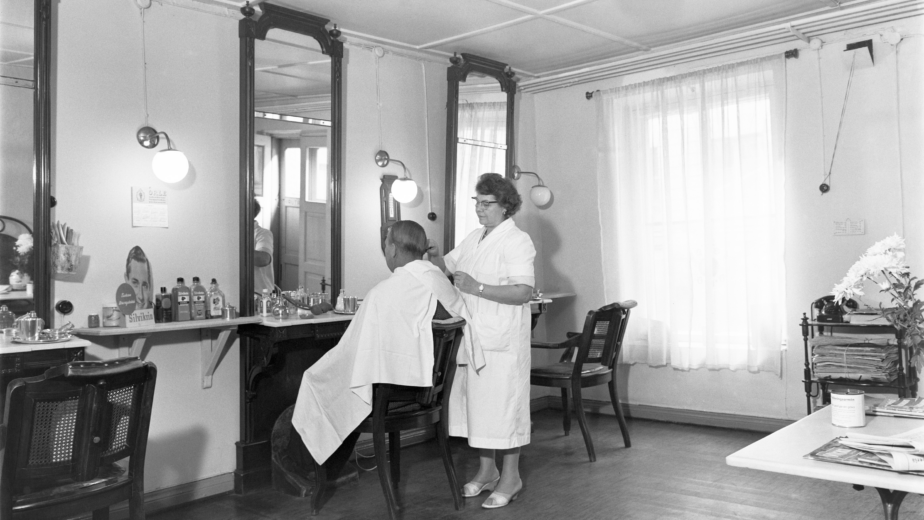
Just inside the front door there was a tall piece of furniture with a mirror in it, hooks across the top, a narrow seat you could lift the lid of, and a trough at the bottom with a metal tray in it for umbrellas.
And a few feet along the same wall, or round the corner, there was a small bench with a table attached to one end, and on the table there was a telephone and underneath it a directory.
The Hall Tree Was Four Pieces of Furniture in One Footprint
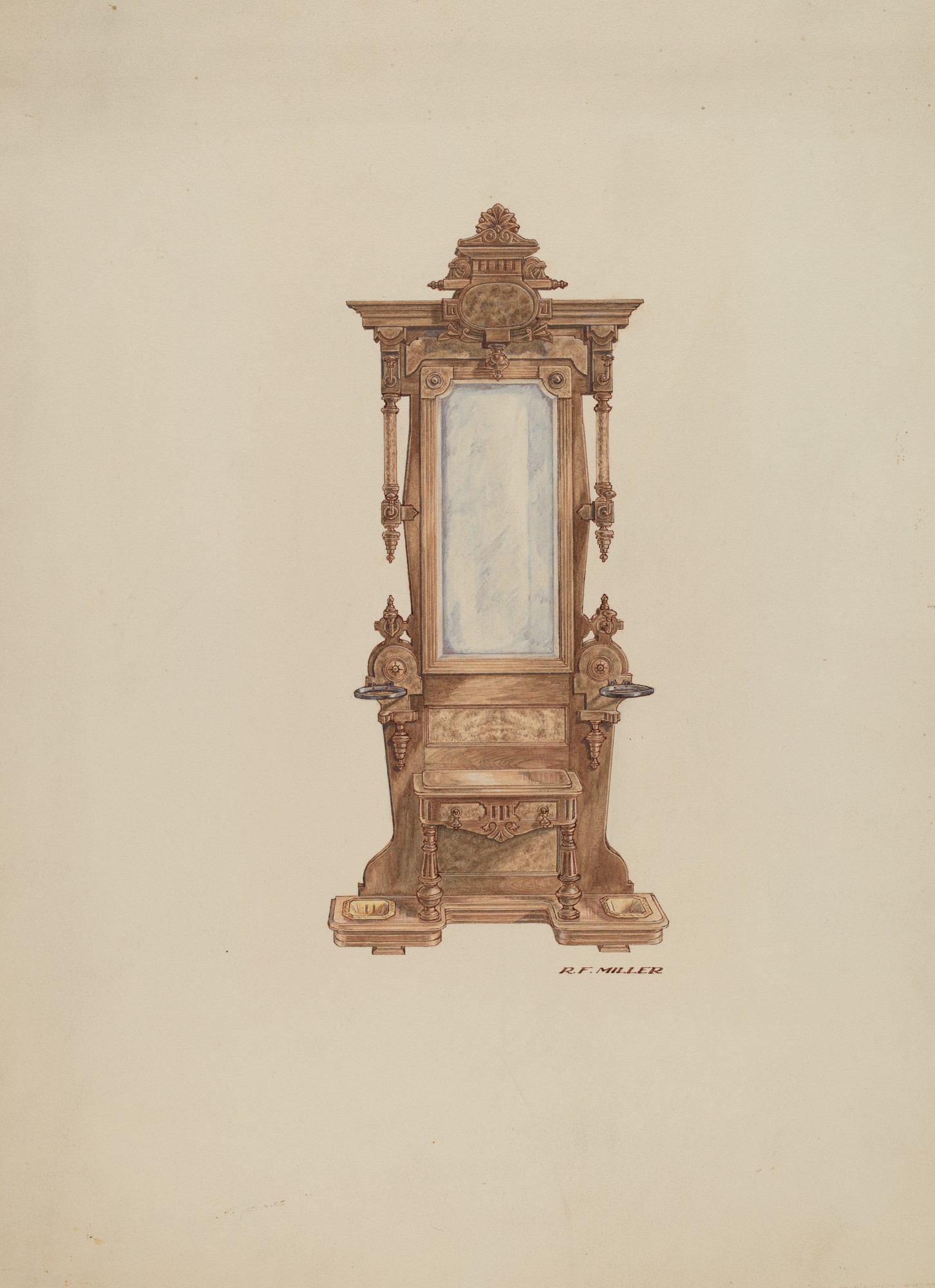
Look at what it actually combined, because the list is longer than anybody expects.
A mirror, at head height, for the last check before going out and the first after coming in – which in an era of hats was not vanity but necessity. Hooks or pegs for coats and hats. A shelf or small drawer for gloves, keys, letters waiting to be posted and the hairbrush. A seat, hinged, with storage underneath for overshoes and boots. And at floor level a recessed trough with a removable metal pan to catch the water off wet umbrellas and sticks.
All of that in about two feet of wall. Which tells you the design problem it was solving: an American front hall was narrow, had a door swinging into it, a stair going up out of it and frequently two more doors off it – so every function had to be stacked vertically against the one available wall.
The seat is the detail that matters most and is least noticed. A seat by the front door exists because getting footwear on and off is a seated operation, and because it gives somebody waiting somewhere to wait.
Like our content? Follow us for more.
The Mirror Was There Because Everybody Wore a Hat
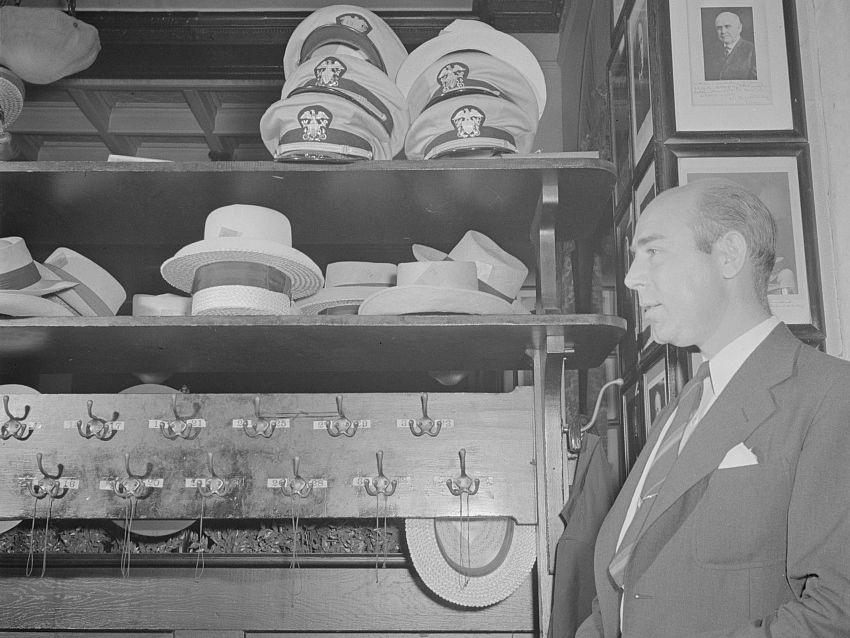
The hall mirror makes complete sense once you remember that an adult American leaving the house in 1960 put on a hat, and that a hat has to be put on correctly.
A hat sits at a particular angle, the brim has a front, and a man or woman who got it wrong looked wrong in a way that other people noticed. There is no way to set a hat without seeing yourself, which is why the mirror is at the height it is and why it is positioned where the coat hooks are rather than in a bathroom.
The same mirror served the coat, the collar, the tie and the hair, and it did so at the exact moment of departure – which is the only moment when checking is useful. A mirror in a bedroom tells you how you looked twenty minutes ago.
The Telephone Table Existed Because a Telephone Could Not Move
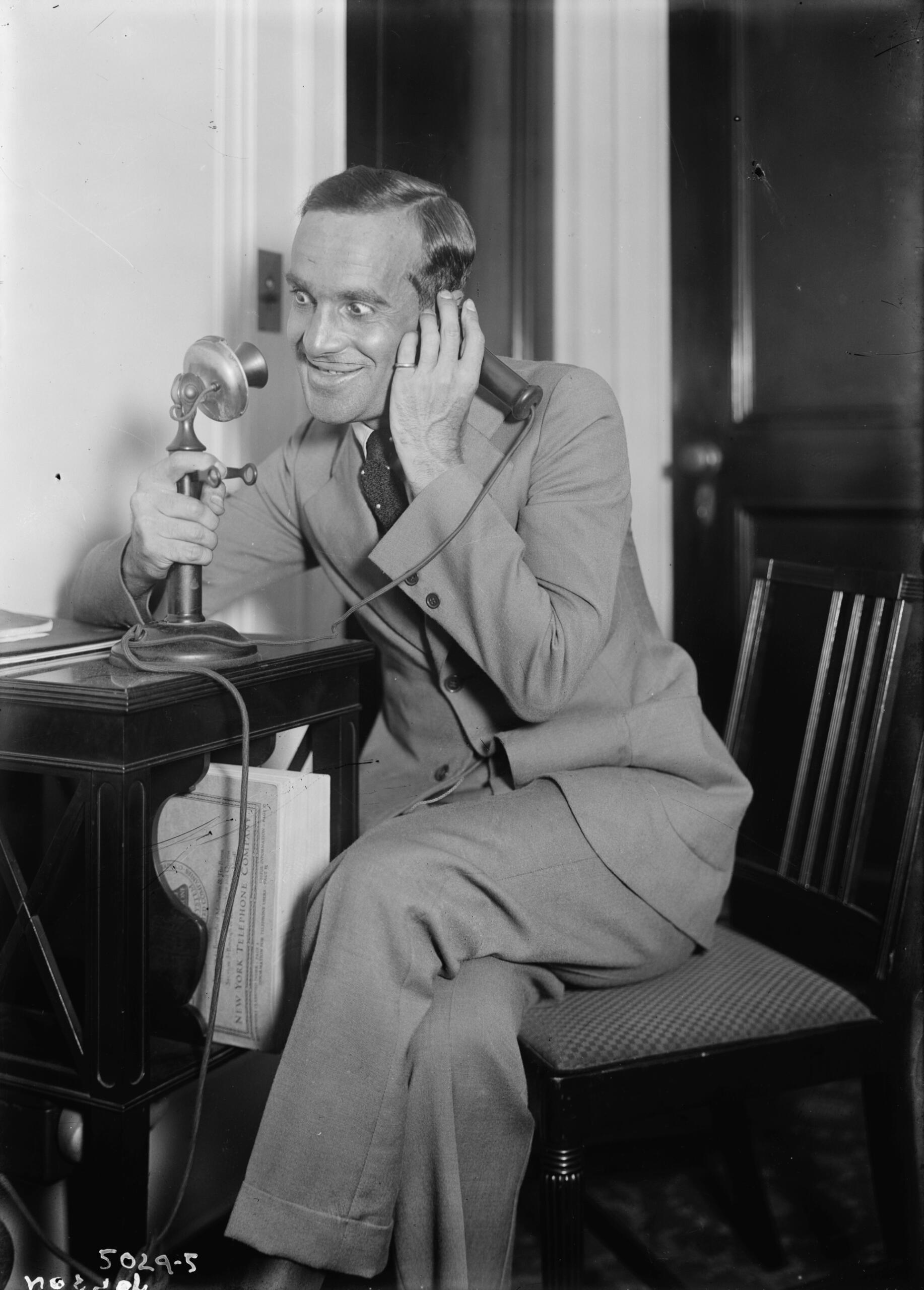
The telephone bench – sometimes called a gossip bench – is the stranger object, and it is strange for a precise reason.
A telephone in 1960 was bolted to a specific point in a specific room. It was wired into the wall, the cord was a few feet long, and there was generally one of them in the house. You did not take a call anywhere; you went to the telephone and stood or sat at it.
Which means a call was a stationary event of unpredictable length, conducted at a fixed location, frequently in a hallway with no furniture in it. Hence a piece of furniture whose entire purpose is to make that location habitable: a seat at the right height, a surface for the instrument at the right height to use while seated, a drawer or shelf for the directory, and somewhere to put a pencil and a pad.
The furniture is a physical record of the telephone’s immobility. Nothing about the design makes sense unless the instrument cannot be carried.
The Hall Itself Was a Room With a Job
Here is the thing that explains both pieces, and it is about social architecture rather than furniture.
An American front hall was not a corridor. It was a room for dealing with people you were not going to admit to the house.
A great many people came to a front door in 1960 and did not come in. The delivery man. The meter reader. A neighbour returning a dish. Somebody collecting for a church. A salesman. A child asking if your child could come out. A man asking for directions. The paper boy settling up on a Friday.
Every one of those is a conversation of two to five minutes requiring a transaction – money, a signature, a parcel, a message – and none of them involves taking a coat off. So the hall had to function as a small office: somewhere to stand, light to see by, a surface to sign on, somewhere to set a parcel, and a door into the rest of the house that stayed shut.
The hall tree and the telephone table are the furnishings of that room, and the hall’s status as a threshold rather than a passage is why both pieces were worth the floor they took.
Both Pieces Were Mass-Produced and Badly
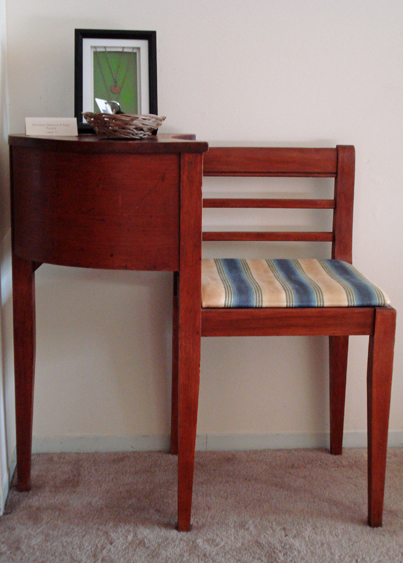
It is worth being honest about the quality, because nostalgia tends to upgrade it.
The good ones were oak, with a bevelled mirror, decent joinery and a brass umbrella pan. The ones most households actually had were cheap: softwood with a thin veneer, a mirror that had started to silver at the edges, a seat lid on a loose hinge that caught your fingers, hooks screwed into end grain that pulled out, and a steel pan that rusted through and was replaced by a cake tin.
Telephone benches were worse, because the form only existed for about thirty years and was made at the lowest possible price for the mass market – frequently in a vaguely colonial style, in a wood stained to resemble something else, with a seat that was too low for the table and a table that was too small for the directory.
Which is part of why so few survived. They were not heirloom furniture, they were a fitting, and when the function went they went.
Three Things Removed the Need for Both

The hats went first, through the 1960s, and the mirror with them. Once a person leaves the house bareheaded there is nothing to set and nothing to check, and a mirror at the front door becomes decoration.
Then the closet. American houses built after the war increasingly had a dedicated coat closet by the entrance – a cupboard with a rail and a shelf – which does what the hooks and the seat storage did, holds considerably more, and hides it. A hall tree is a coat closet with no door, and a closet wins the moment one is available.
And then the telephone came off the wall. Cordless handsets, then extensions in every room, then a phone in every pocket – and each step made a piece of furniture dedicated to a fixed calling point more absurd than the last. There is now no location in a house where calls happen, so there is nothing to furnish.
The Drawer Held the Household’s Small Administration
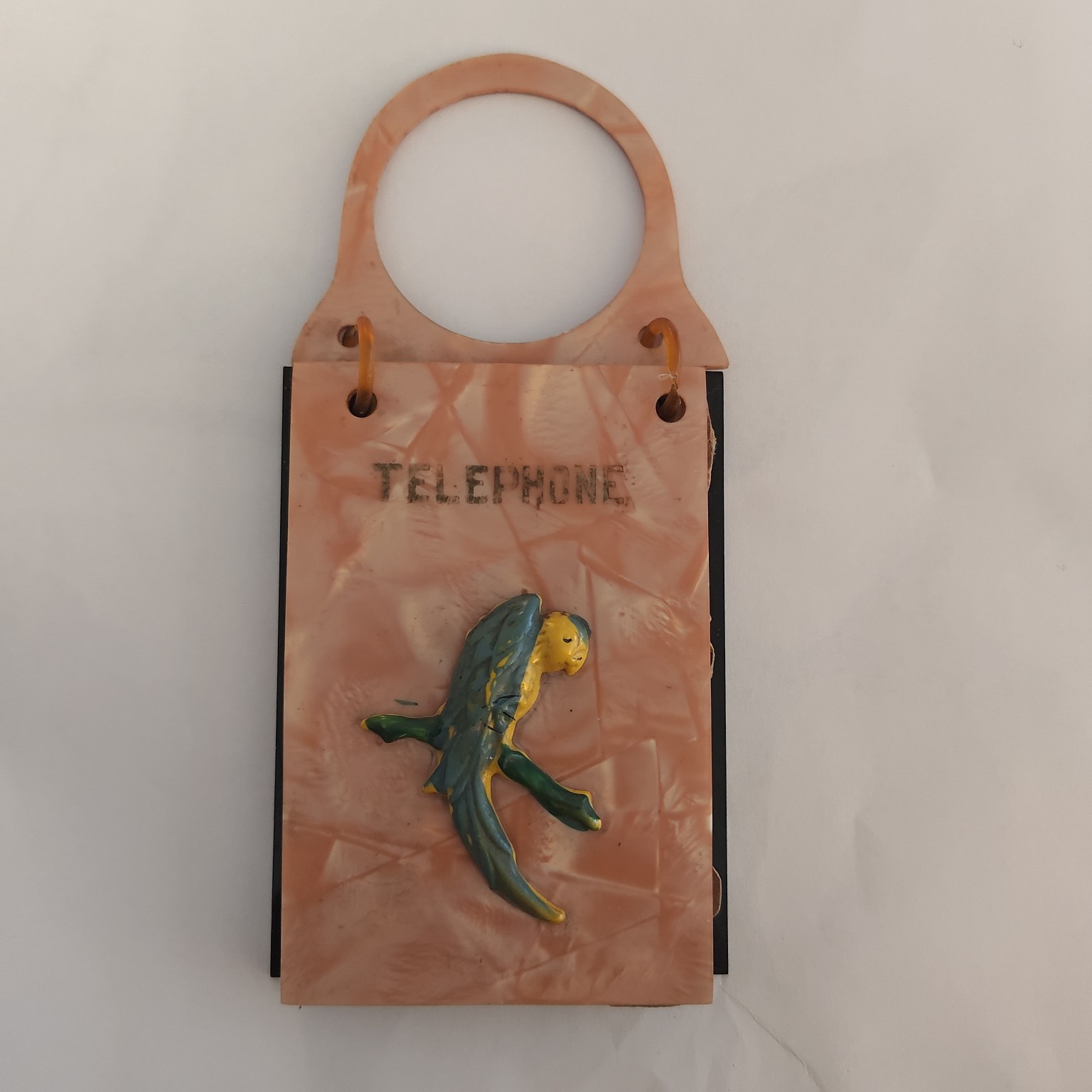
The shelf or drawer on a hall tree, and the one under a telephone table, held a specific and consistent set of things, and the list is a portrait of how a household ran.
The directory. A pad and a pencil, because a call frequently produced a number, an address or a time that had to be written down immediately and there was nothing else to write on. Stamps. Letters waiting to go out, propped where whoever left next would see them. Keys, including the ones nobody could identify. Gloves. A clothes brush. Small change for the paper boy or the collection. A hairbrush or comb.
And in a great many houses, a small book or card index of numbers – the doctor, the school, the plumber, relatives – written by hand and added to over years, which was the household’s own directory of the numbers it actually used.
All of that sat within arm’s reach of the front door, because the front door was where it was all needed. The household’s outward-facing administration was conducted in a space two feet wide.
The Twist: The Front Door Stopped Being Answered
The furniture went because its functions were absorbed elsewhere. The room it furnished went for a different reason, and that is the part worth noticing.
Almost nobody comes to an American front door any more expecting it to be answered.
Deliveries are left on the step and photographed. Meters are read remotely. Bills are paid electronically rather than collected. Door-to-door selling has largely gone, partly by regulation and partly because nobody answers. Charity collection moved to mail and online. Children arrange things by phone rather than by knocking. And a stranger at a door is now a category of event that households treat with suspicion rather than as routine business.
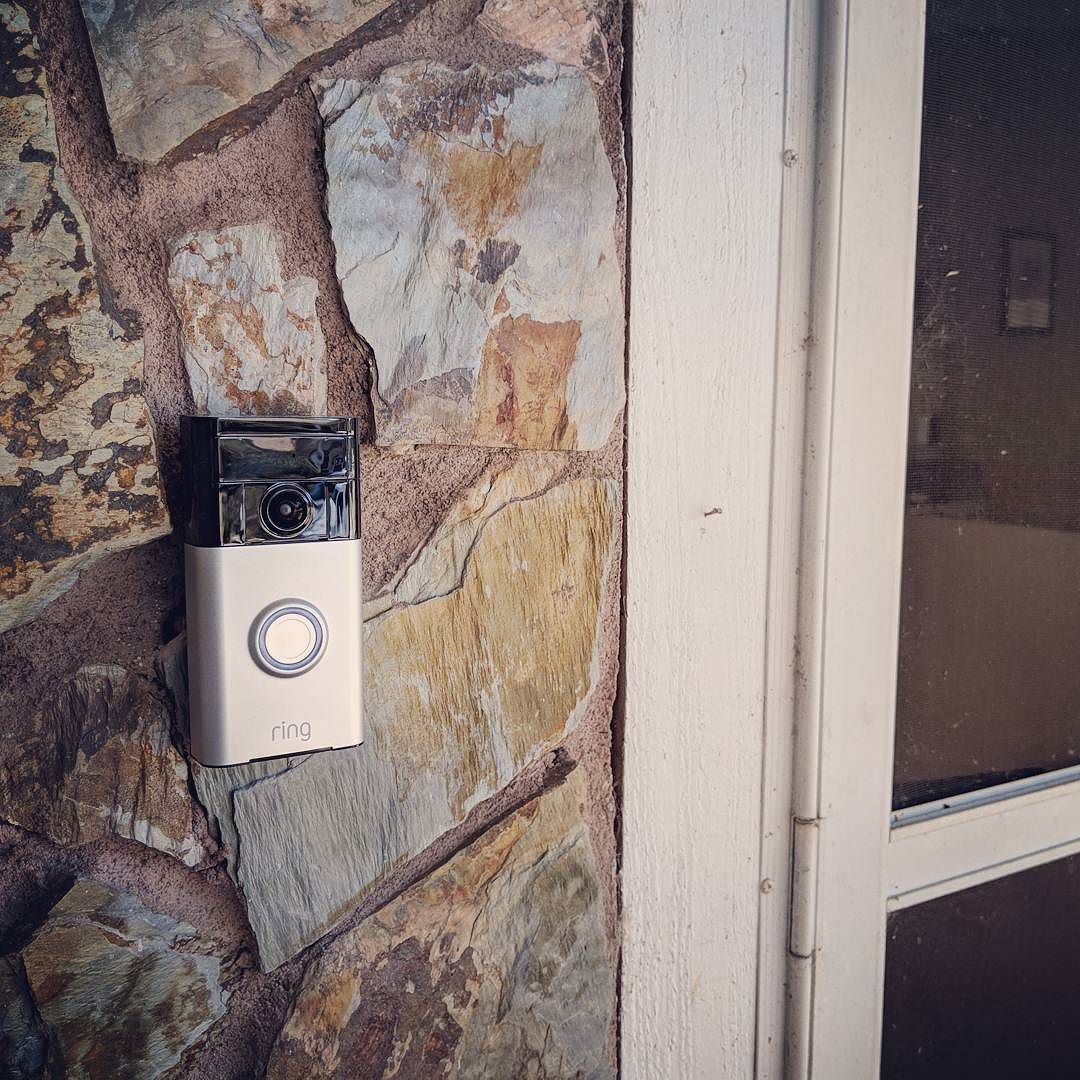
So the hall’s job – a small office for conducting brief transactions with people standing on the step – has almost no transactions left to conduct. A doorbell camera is the modern equivalent, and what it is designed to do is let you deal with somebody at the door without going to it, which is the exact opposite proposition.
That is the real loss here and it is not furniture. A house with a hall tree in it was a house that expected to be interrupted several times a day by people it knew slightly, had a routine for it, and had bought a piece of furniture to support the routine.
The mirror, the hooks, the seat and the umbrella pan were all in service of a doorway that opened constantly. It is shut now, and there is a camera on it.
Like our content? Follow us for more.