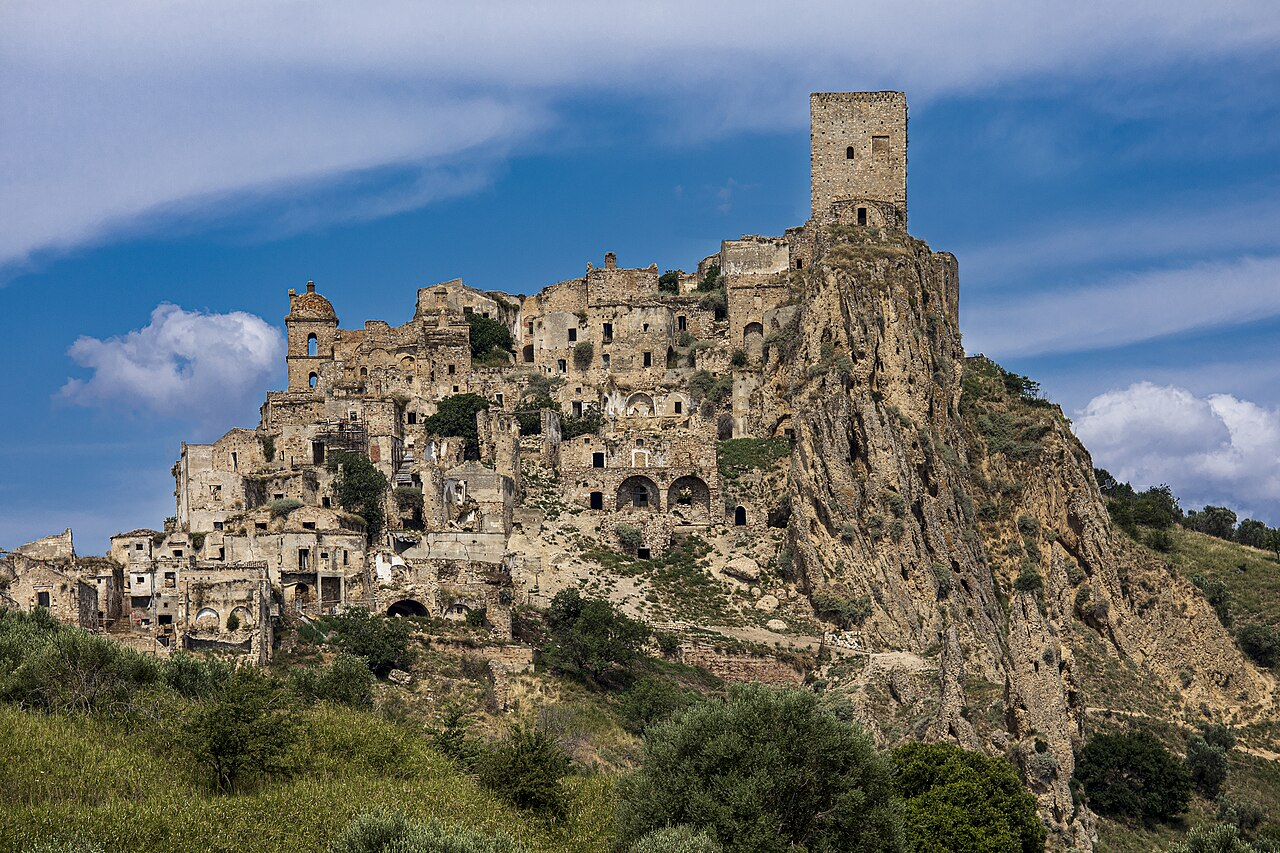
Perched on a steep hilltop in Basilicata, the arch of Italy’s boot, the medieval town of Craco looks from a distance like any of the region’s ancient stone villages, a tight cluster of houses, churches, and a Norman tower rising four hundred meters above a valley of wheat fields and clay ravines. Come closer, though, and the details resolve: empty window openings, roofless houses, staircases climbing into open air. Craco has been empty for more than half a century, and its emptiness is exactly what made it famous.
A Thousand Years on a Hill That Never Stopped Moving
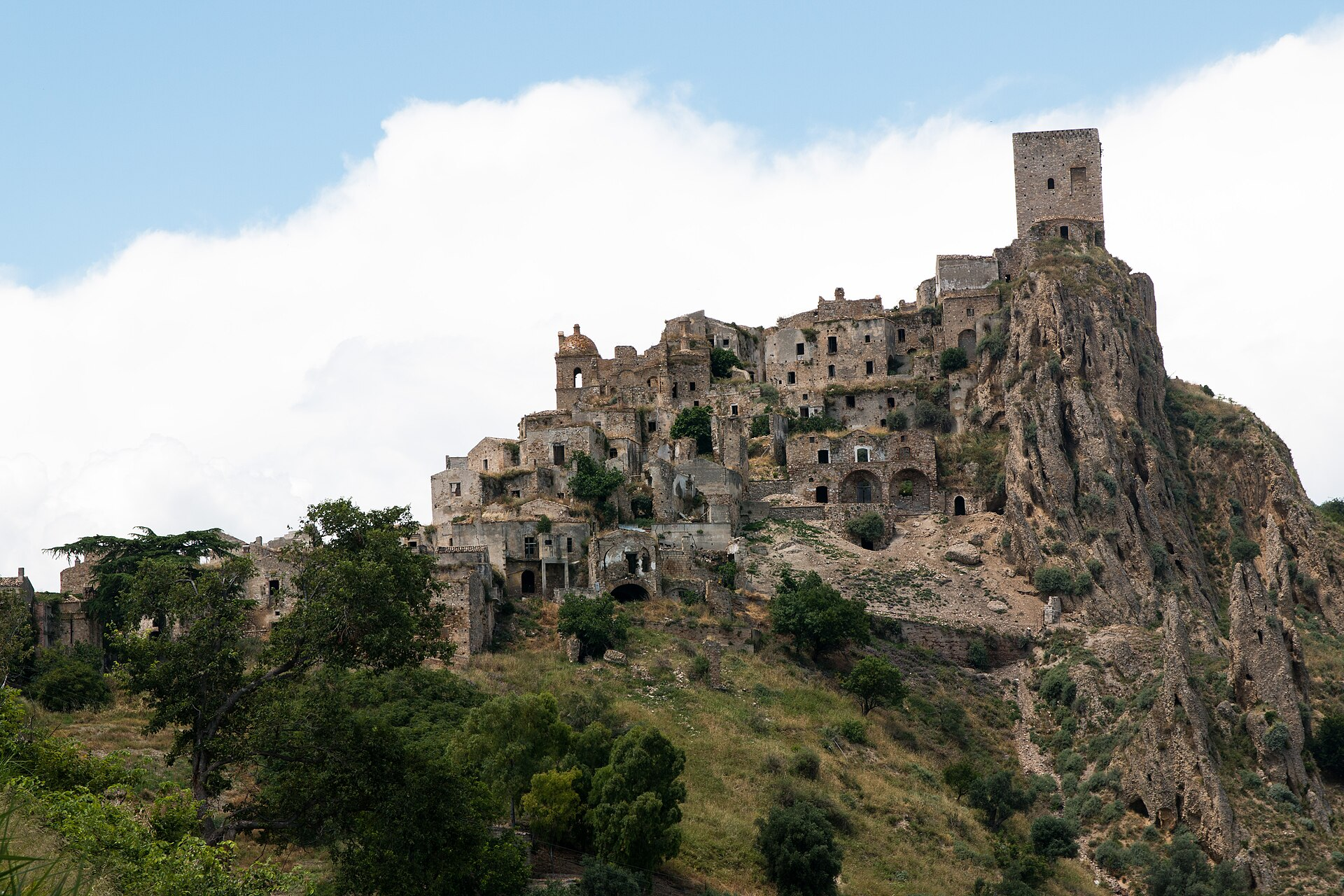
The town’s history stretches back roughly a thousand years, with its hilltop position chosen, as across much of southern Italy, for defense. At its height, thousands of people lived stacked along its narrow streets, farming the surrounding valley and building the churches, palazzi, and university buildings whose shells still crown the hill. But Craco’s founders had chosen a fortress with a flaw: the town sat partly on unstable clay slopes, and the ground beneath it never fully stopped moving.
Like our content? Follow us for more.
The Landslide That Emptied a Medieval Town
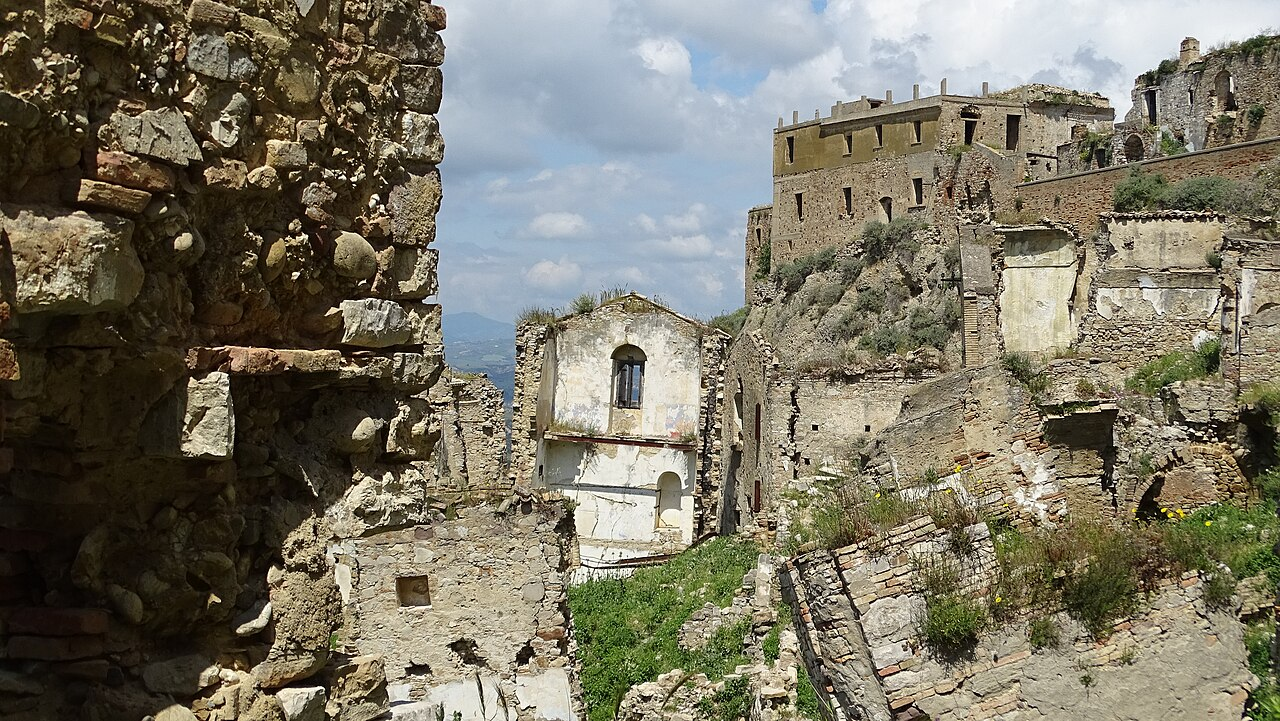
The end came gradually, then suddenly. A landslide in 1963, worsened by aging infrastructure works on the fragile slope, made a large section of the town unsafe, and most of Craco’s roughly 1,800 remaining residents were relocated to a new settlement in the valley below, Craco Peschiera. A flood in the early 1970s and an earthquake in 1980 finished the job, and the old town was abandoned completely, its houses left with the everyday belongings that were too heavy, too worn, or too painful to carry down the hill.
The Empty Skyline That Filmmakers Wanted
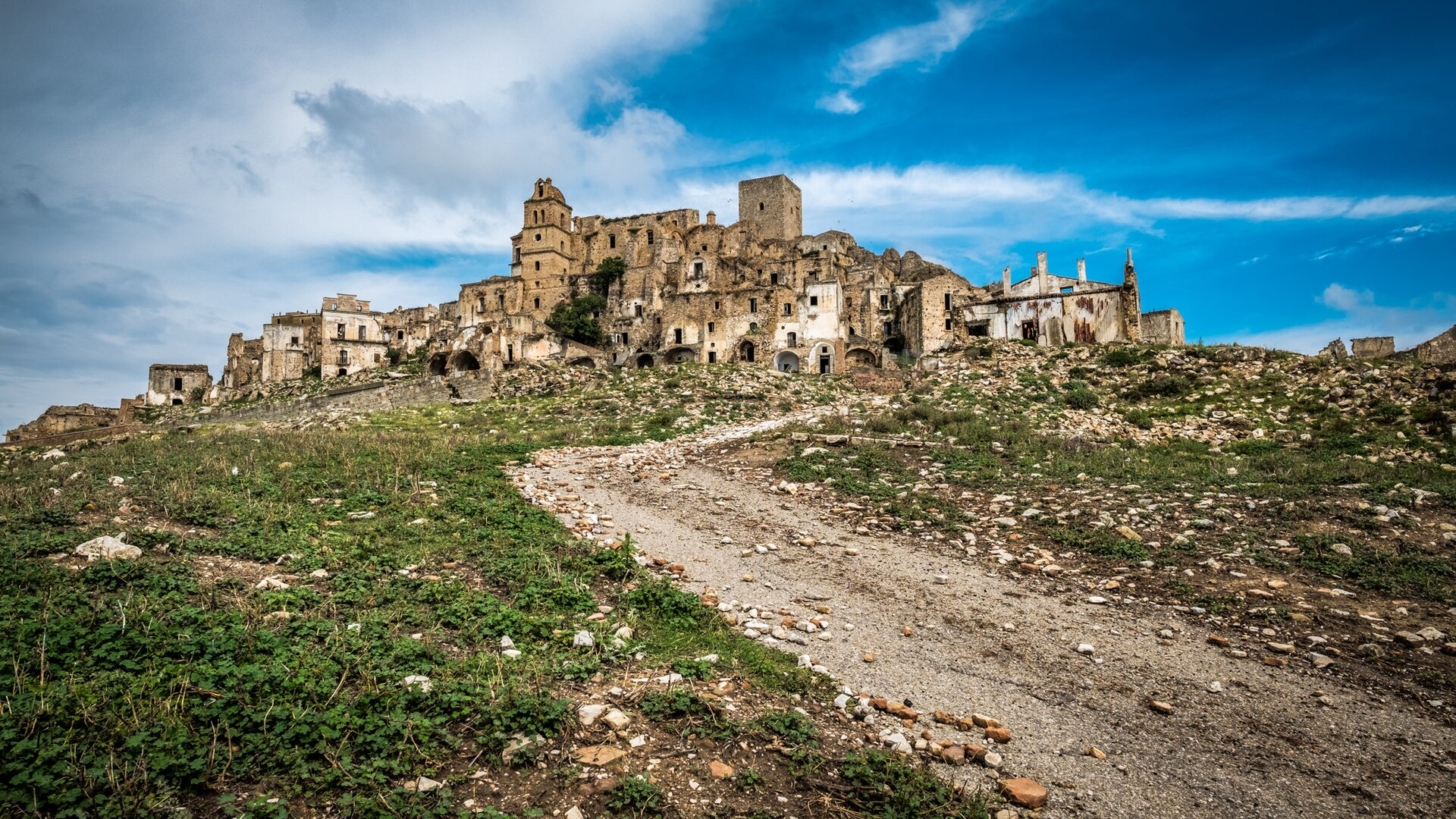
What followed is the strange second act that separates Craco from Italy’s many other emptied villages. The town’s intact medieval skyline, unbroken by modern construction and unpopulated by anyone at all, turned out to be exactly what filmmakers needed. Craco has since appeared in a string of major productions, including “The Passion of the Christ” and the James Bond film “Quantum of Solace,” standing in for biblical landscapes and timeless southern towns. Its silhouette has been photographed for magazines, documentaries, and music videos, making it one of the most recognizable ghost towns in Europe even among people who have never heard its name.
A Ruin That Is Both Off-Limits and Open
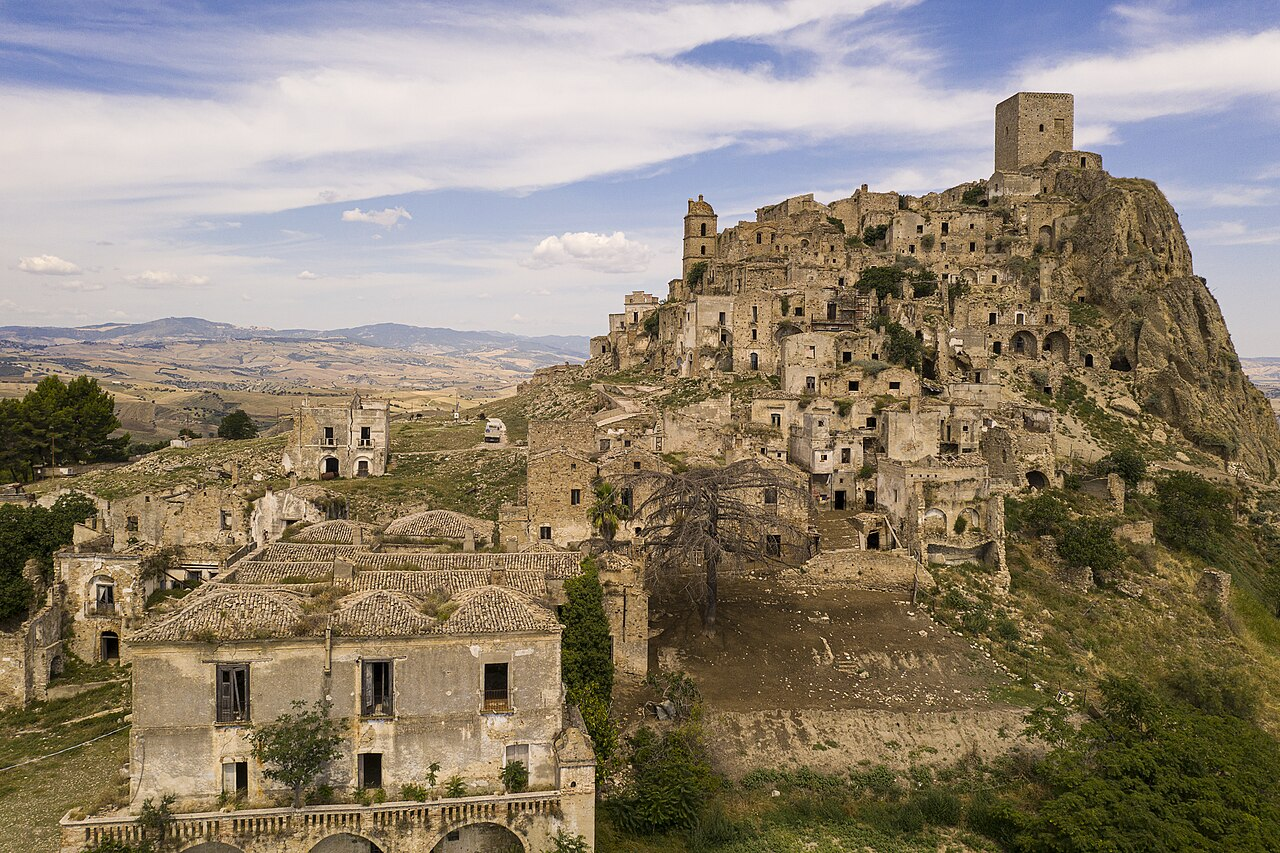
Today Craco occupies an unusual category: a ruin that is both off-limits and open. The town itself remains too unstable for free wandering, but visitors can book guided tours that follow secured routes through the old streets, hard hats included, past the Norman tower, the crumbling churches, and viewpoints over the ravined landscape known as the calanchi. The town has been included on watch lists of endangered cultural sites, which has brought both attention and preservation efforts, and the comune promotes it openly as a destination rather than hiding it away.
The People Who Only Moved Down the Hill
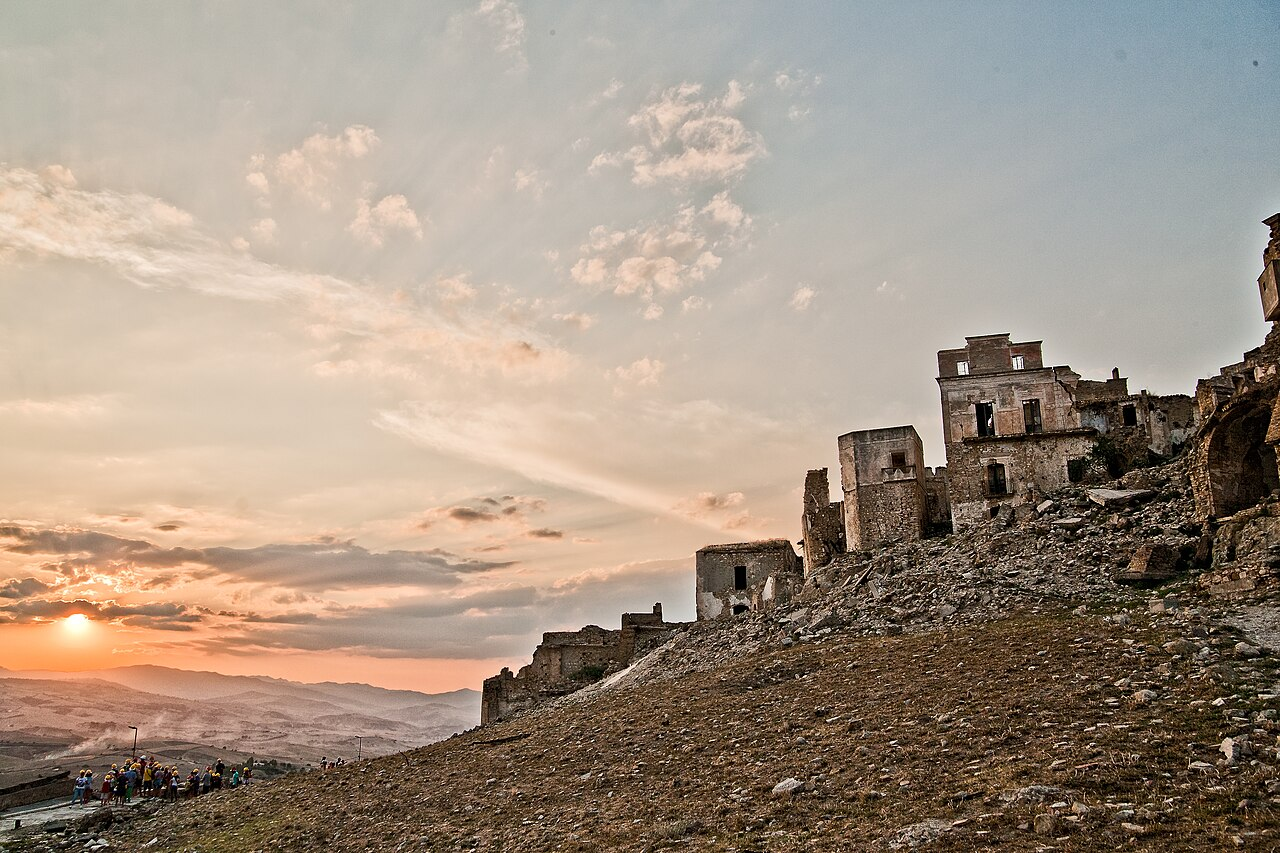
The visit itself is short, a few hours at most, but few travelers leave unaffected. There is the visual drama, a complete medieval town with nobody in it, and there is the quieter human fact underneath: Craco’s former residents didn’t vanish, they simply moved down the hill, and their descendants still live within sight of the town their families left. Some return for religious festivals, when processions climb back up to the old town and its empty streets briefly fill again.
How to Visit Craco Today
Craco is reachable by car from the regional hub of Matera, itself a UNESCO-listed stone city about an hour away, which makes the two an easy and genuinely spectacular pairing for travelers exploring Basilicata. Tours of Craco should be booked ahead, sturdy shoes are essential, and summer visitors should plan around the heat, since the hilltop offers almost no shade.
A thousand years of history, one unstable slope, and an emptiness so complete it became a backdrop for the movies: Craco is what happens when a town’s ending turns out to be the start of its most famous chapter.
Like our content? Follow us for more.