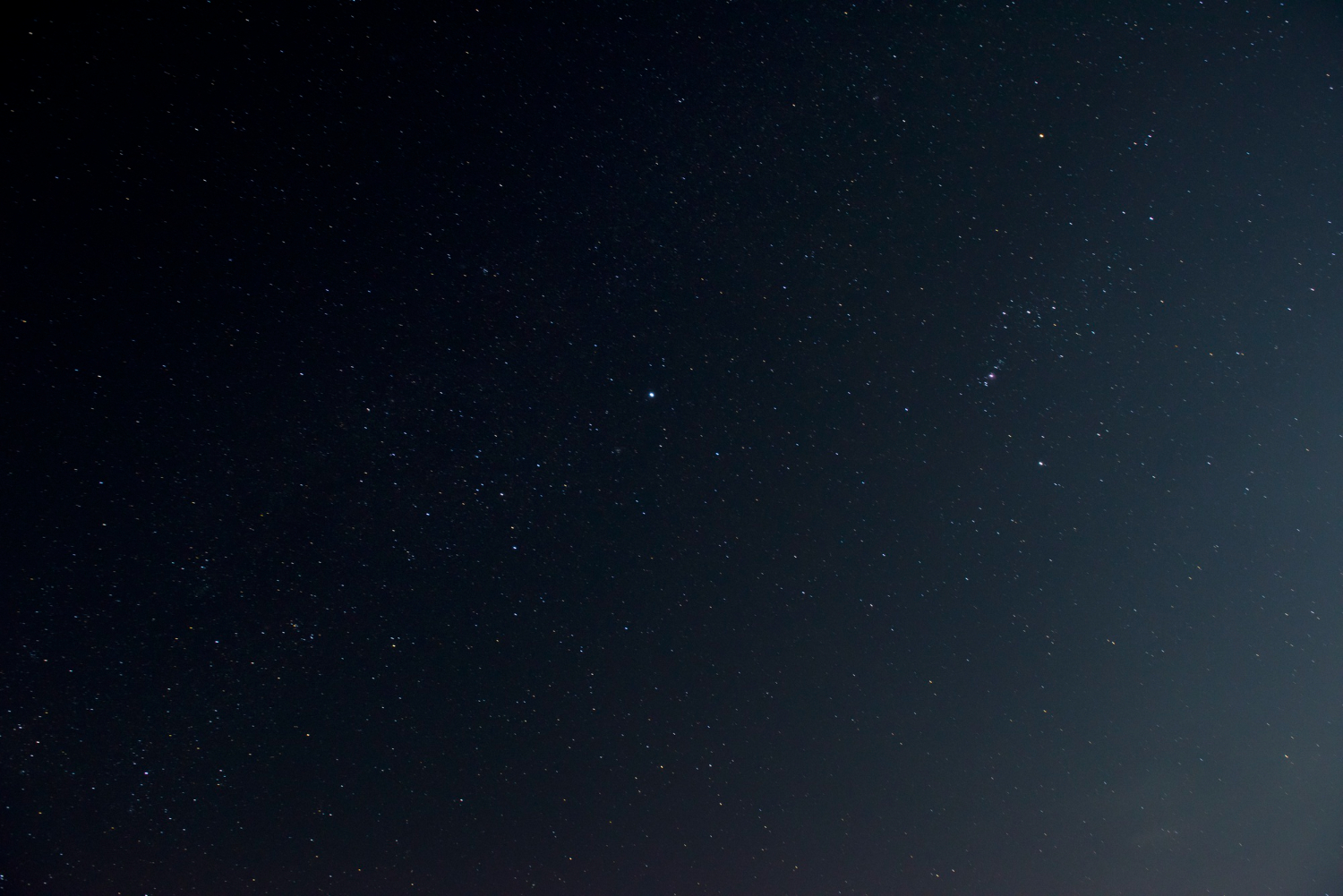
Everybody who has been somewhere completely dark reports the same surprise: the sky is bright.
Not bright like daylight, but visibly not black. There is enough light to see the ground, to distinguish shapes, to walk without a torch after your eyes adjust, and the horizon is discernible against the sky.
The natural assumption is that this is starlight, and starlight is part of it. It is not the largest part, and the largest part comes from a source most people have never heard of.
The composition of natural night-sky brightness is well studied, because it matters enormously to anybody trying to observe faint objects. Here is what is actually up there.
The Air Is Glowing
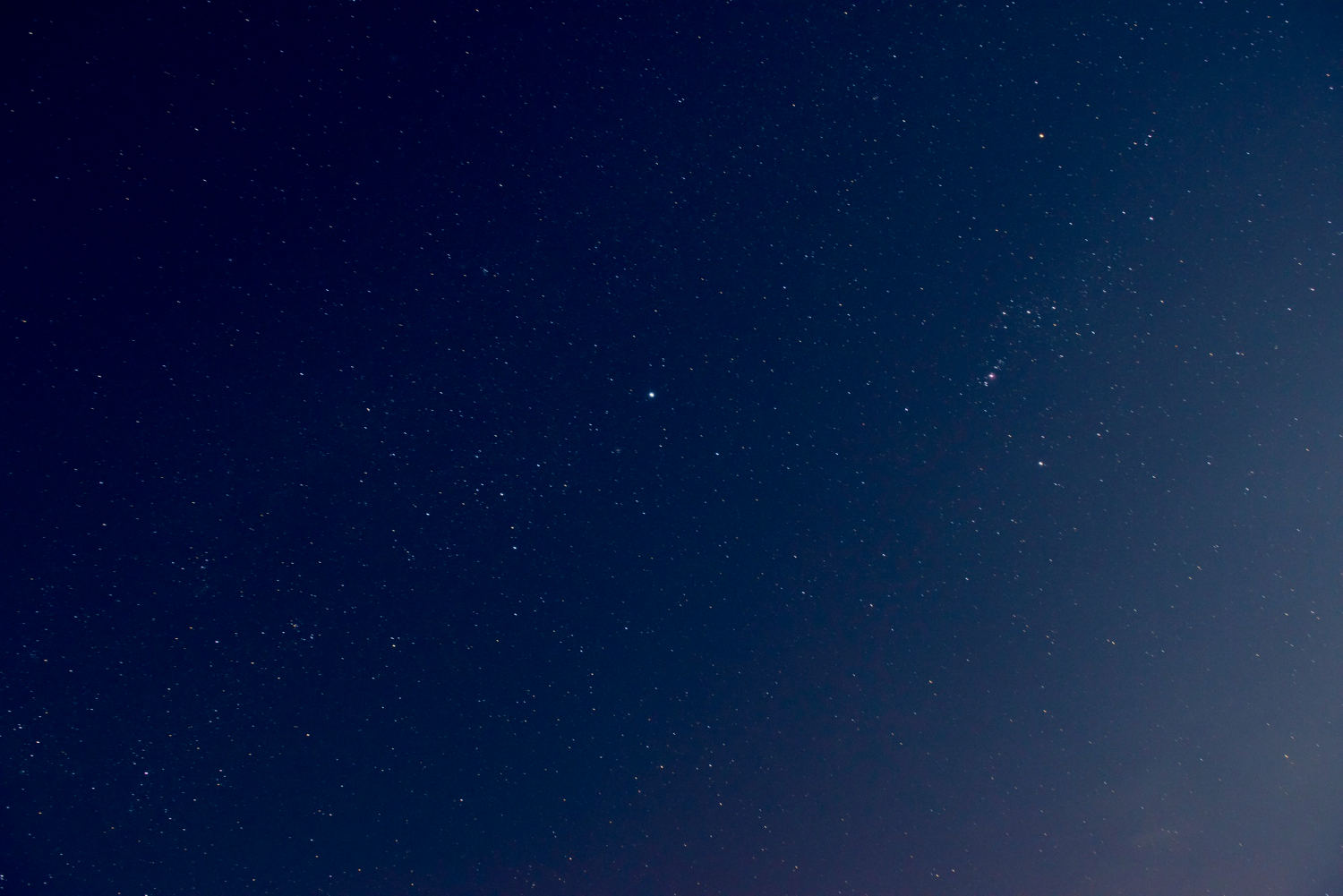
The largest contributor to natural sky brightness on a moonless night, away from artificial light, is airglow.
The mechanism is straightforward. During the day, solar ultraviolet radiation breaks apart molecules in the upper atmosphere — oxygen in particular. At night those fragments recombine, and recombination releases energy as light.
The emission occurs in a layer high in the atmosphere, in the region of ninety to a hundred kilometres up, and it produces a faint glow across the whole sky.
It is not uniform and it is not constant. Airglow varies through the night, varies with solar activity, varies with latitude and season, and moves in waves that can be photographed as banding across the sky.
The colours are specific rather than broad. Particular atomic and molecular transitions emit at particular wavelengths, which is why long-exposure photographs of very dark skies frequently show green and red tones that were not visible to the eye.
This is a different phenomenon from the aurora, though both involve atmospheric emission. Aurora is driven by charged particles from the sun channelled into the atmosphere near the poles, is far brighter, is structured and moving, and is confined to particular regions. Airglow is faint, global and permanent.
Like our content? Follow us for more.
Sunlight That Never Left
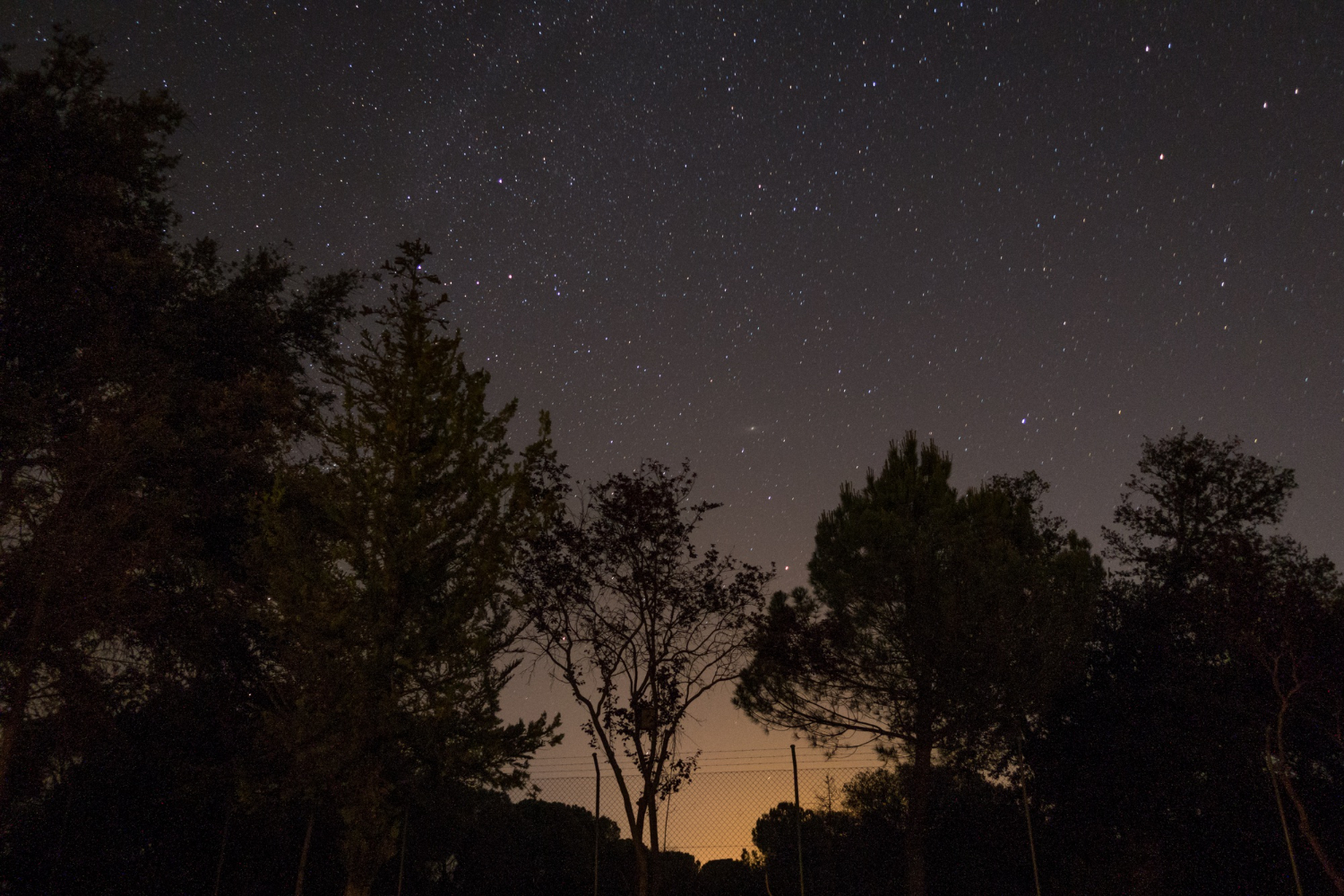
The second major contributor is dust, and it is visible if you know where and when to look.
The inner solar system contains a diffuse cloud of fine dust — material shed by comets and produced by collisions between asteroids — concentrated toward the plane in which the planets orbit.
That dust scatters sunlight, and the scattered light reaches Earth as a faint glow. Because the dust is concentrated in the orbital plane, the glow appears as a band along the same line the sun and planets follow across the sky.
Under dark conditions it can be seen as a faint triangular wedge rising from the horizon after evening twilight or before dawn — brightest near the horizon where the line of sight passes through the most dust, fading upward.
There is a subtler counterpart directly opposite the sun, where dust particles are backlit and appear slightly brighter than the surrounding sky. It is extremely faint and requires exceptional conditions to see at all.
Both are sunlight that has been redirected rather than light produced by anything.
There is a further contribution that varies enormously and is worth separating from the rest: the moon. Even a modest crescent raises sky brightness substantially, and a full moon dominates everything else on this list combined.
That is why observers plan around lunar phase as carefully as around weather, and why any description of natural sky brightness assumes a moonless night.
Everything Else
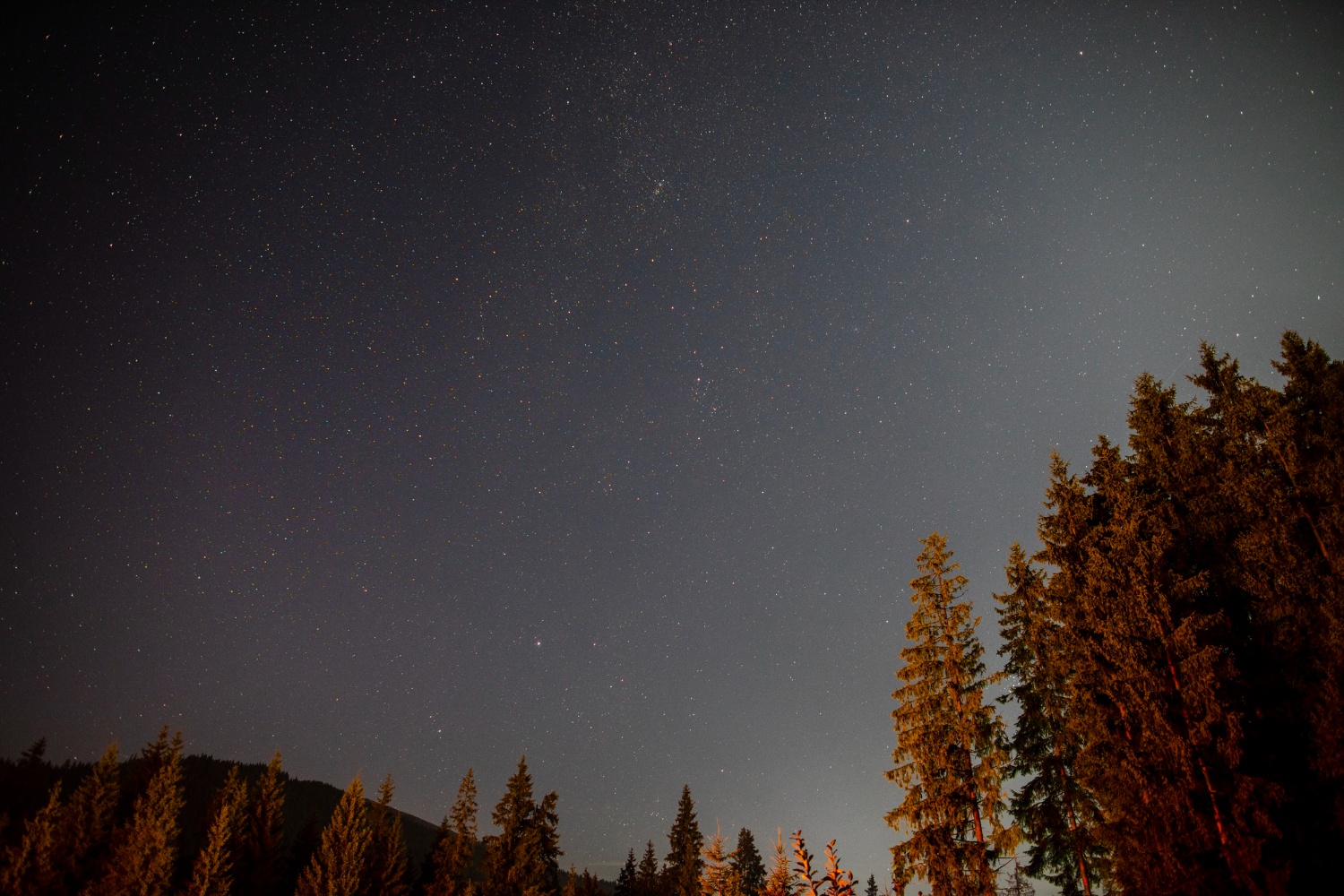
Several further contributions make up the remainder.
Integrated starlight is the combined light of all the stars too faint to resolve individually, which sums to a real contribution across the sky rather than appearing as points.
Diffuse galactic light is starlight scattered by dust within our own galaxy, which spreads illumination that did not travel in a straight line from any visible star.
Extragalactic background light arrives from beyond the galaxy — the combined output of everything outside it — and is a tiny contribution.
Scattered light within the atmosphere redistributes all of the above, so light from any bright source is spread somewhat across the whole sky rather than staying where it came from.
And in most places there is artificial light, which dominates everything else and is the reason the natural components are unfamiliar to almost everybody.
Why Astronomers Care
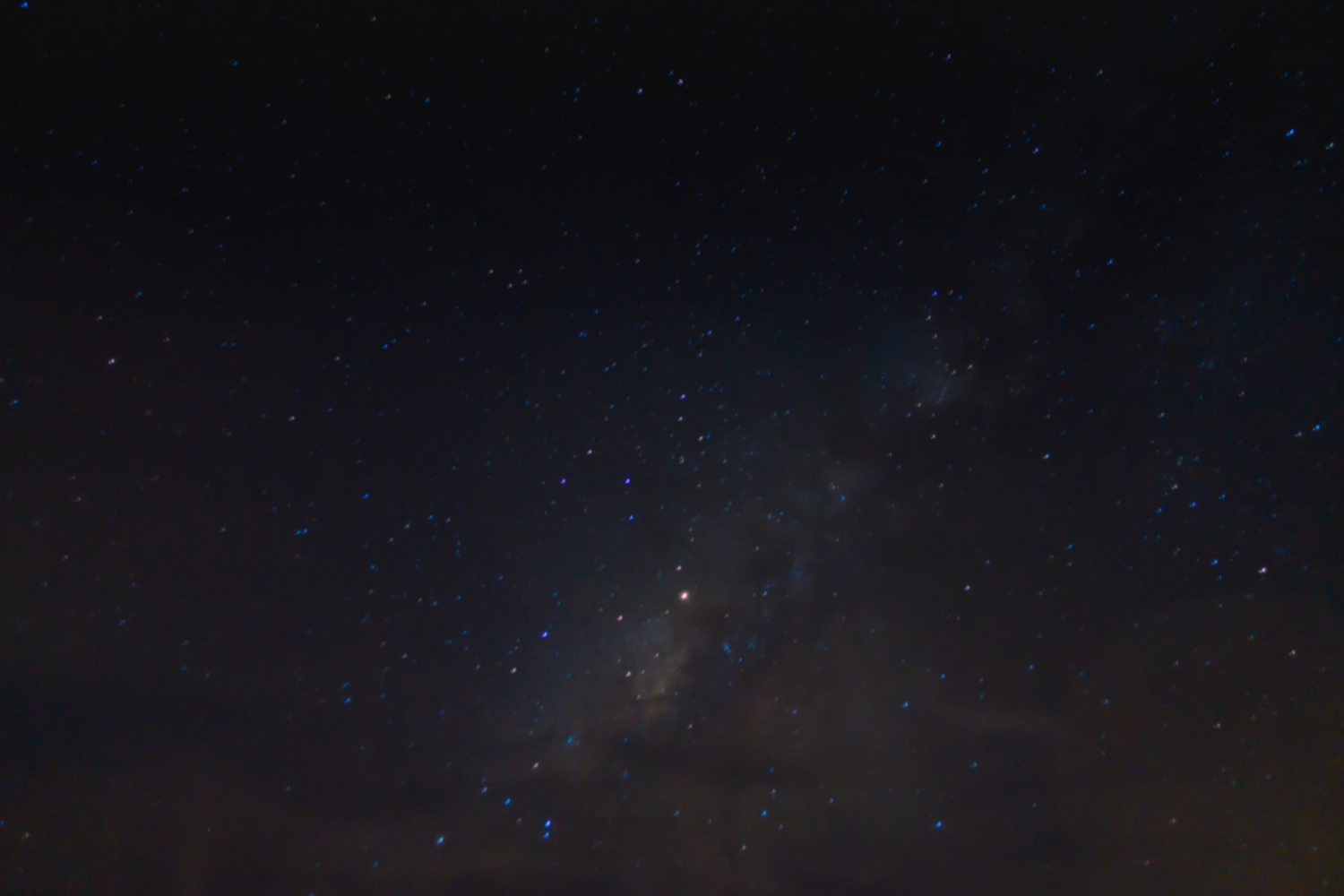
The composition matters practically, because natural sky brightness sets a floor on what can be detected.
An object fainter than the background it sits against cannot be distinguished from it, so the natural brightness of the sky determines the limit of what any telescope on the ground can see, regardless of how large it is.
That is why observatory sites are chosen for atmospheric conditions and altitude as much as for weather, and why the variability of airglow is a real operational problem — the background changes through the night and has to be measured rather than assumed.
It also explains the value of observing from above the atmosphere. Removing airglow and atmospheric scattering removes the dominant components of the background entirely.
The zodiacal contribution cannot be escaped by going up, since the dust is in space rather than in the atmosphere, and it remains a limiting factor for observations in certain directions.
What You Can Actually See
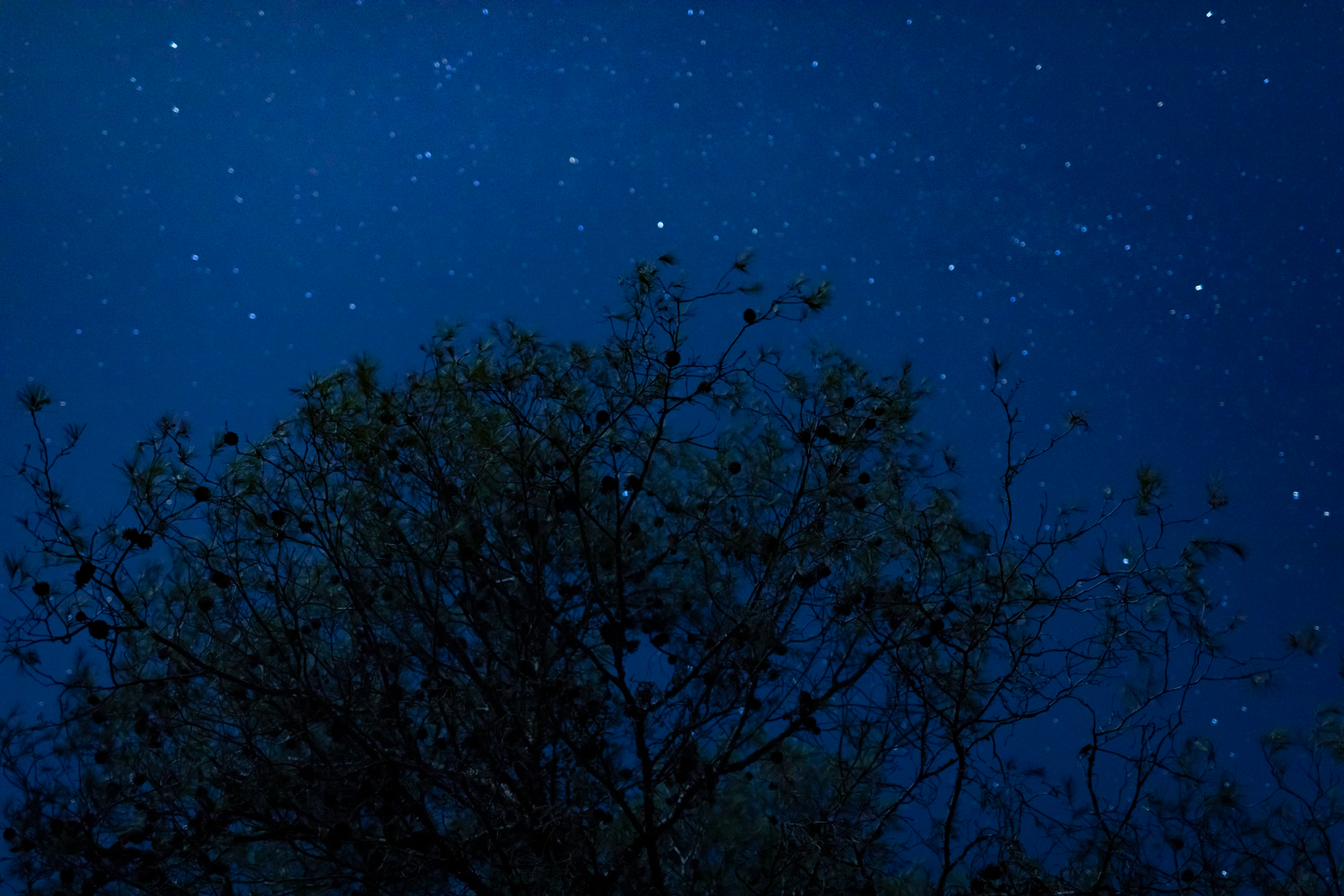
For anybody standing outside rather than operating an instrument, some of this is accessible and some is not.
The dust band is really observable under good conditions — a faint cone of light after full darkness in the evening or before dawn, aligned along the path the sun takes. It requires a dark site, a clear sky, no moon and the right season, and it is frequently mistaken for light pollution on the horizon.
Airglow is generally below the threshold of visual detection as a distinct phenomenon, though it contributes to the overall brightness you can see. It appears readily in long-exposure photography, which is why photographs from dark sites often show colours the photographer did not observe.
The band of the galaxy is the obvious one, and it is worth noting that it is bright enough under completely dark conditions to cast a faint shadow.
And the general observation — that a dark sky is not black — is available to anybody who gets far enough from artificial light and waits long enough for their eyes to adapt, which takes substantially longer than most people allow.
How Dark It Actually Gets
There is a practical dimension worth adding, because the numbers surprise people.
Sky brightness is measured, and the scale used by astronomers expresses it as a magnitude per unit area of sky — a way of asking how bright a patch of empty sky is compared with a star.
The best sites on Earth reach a value that represents the natural floor, set by airglow, zodiacal light and integrated starlight, and cannot go below it regardless of how remote the location is. That is the darkest sky physically available from the ground.
A rural site well away from towns comes reasonably close. A suburban location is substantially brighter, and an urban centre can be brighter by a very large factor, to the point where only a handful of the brightest objects remain visible.
The gap between those extremes is far larger than people expect, and it is not linear — the scale is logarithmic, so a small numerical difference represents a considerable change in what can be seen.
There is a further point about adaptation. Full dark adaptation takes something in the region of twenty to thirty minutes and is undone by a few seconds of bright light, which means most people who visit a dark site never actually experience it.
The single most effective thing anybody can do to see more of the night sky is to arrive, sit down and wait half an hour without looking at anything bright.
An Absence of Darkness
There is a conceptual point in this that is worth drawing out.
Darkness is intuitively an absence — the state remaining when light is removed. The night sky demonstrates that this is not quite right at any location inside a solar system, inside a galaxy, inside an atmosphere.
Light arrives from every direction, from sources at every distance, some of it produced a few tens of kilometres overhead by molecules recovering from the day, some of it sunlight bouncing off dust, some of it from stars, and a very small quantity from beyond anything we belong to.
The sky at night is not the absence of light. It is a very faint, structured, variable illumination that happens to be too dim to read by — and the largest single component of it is being generated in the air above your head, continuously, all night, every night.
Like our content? Follow us for more.