

Technologies are usually lost for identifiable reasons. A market disappears, a cheaper substitute arrives, a war interrupts a supply chain, or the last people who knew a process die without passing it on.
Occasionally something stops being made while demand remains high, the makers are still working, and nothing obvious has changed — and that is the situation with a particular pattern-welded steel whose production ended in the eighteenth century.
The subject attracts an enormous amount of overclaiming. Careful discussion requires separating what is established from what is legend, and the established part is quite strange enough.
What Is Actually Established
Start with what is not in dispute.
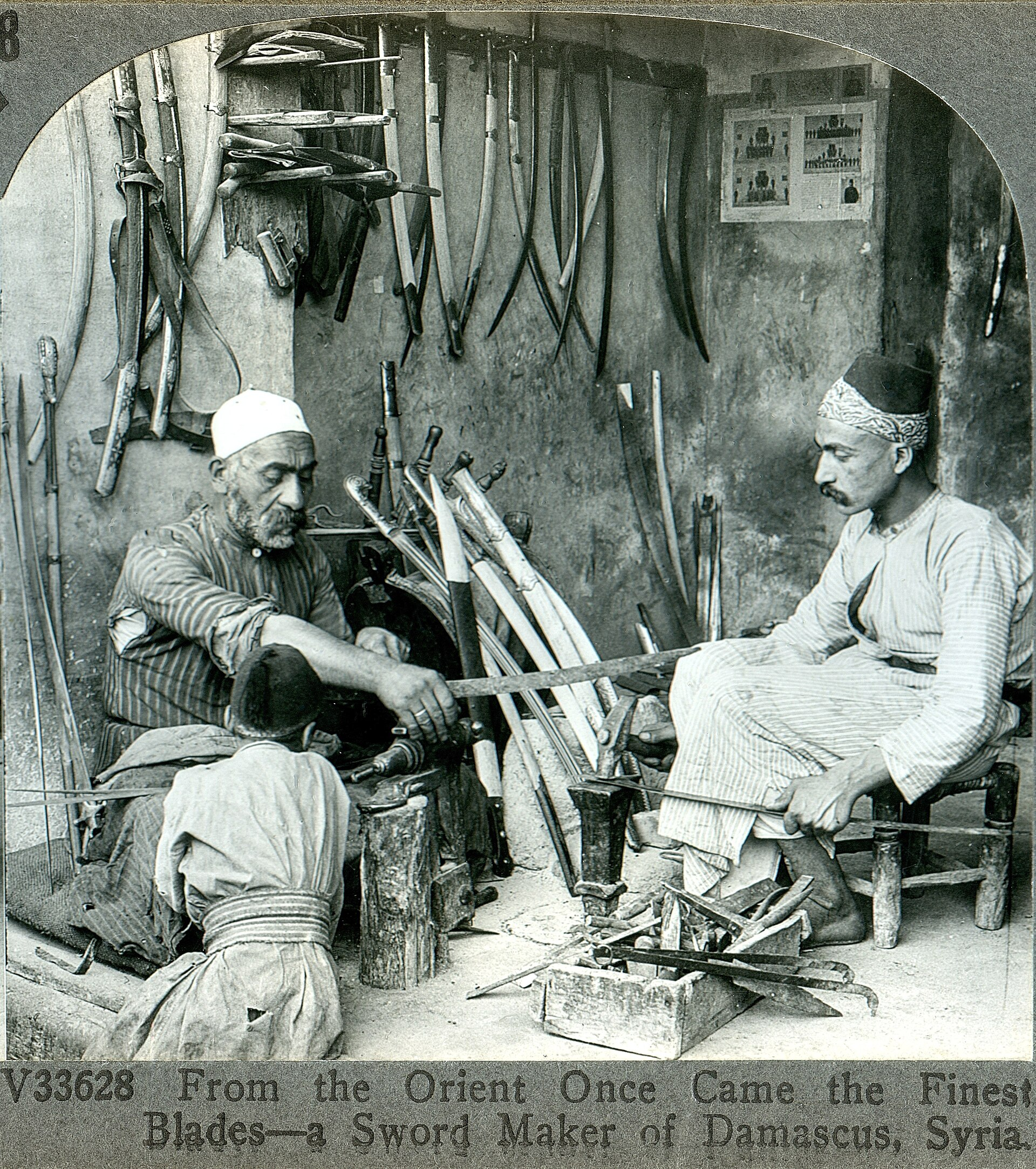
Ingots of a high-carbon steel were produced in south Asia, in a crucible process, and traded widely. Smiths in the Middle East and elsewhere worked those ingots into blades and other objects.
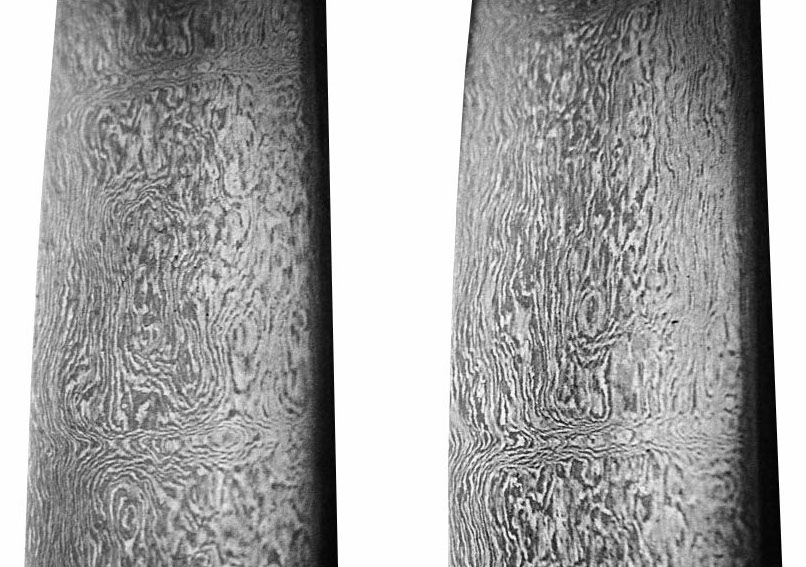
The finished surface carries a distinctive watery or flowing pattern, visible after polishing and etching, which is a consequence of the internal structure rather than a decoration applied to the surface.
The material had a strong reputation for a combination of properties — a hard edge together with resistance to shattering — that was difficult to achieve simultaneously with the metallurgy of the period.
Production of the ingots and of blades from them declined during the eighteenth century and had essentially ceased by around the middle of it.
That much is documented. Everything beyond it is where the difficulty starts.
The crucible process itself is worth a note. Iron and a carbon source were sealed in a clay vessel and held at high temperature for an extended period, producing a homogeneous high-carbon steel in a single mass rather than the uneven material that surface-carburising methods gave.
That homogeneity is the starting condition for everything else. A uniform ingot worked and reheated repeatedly is what allows structures to organise themselves through the metal, and it is why the process and the material cannot be separated.
Like our content? Follow us for more.
What Modern Analysis Found
Examination of surviving blades has produced findings that are truly surprising.
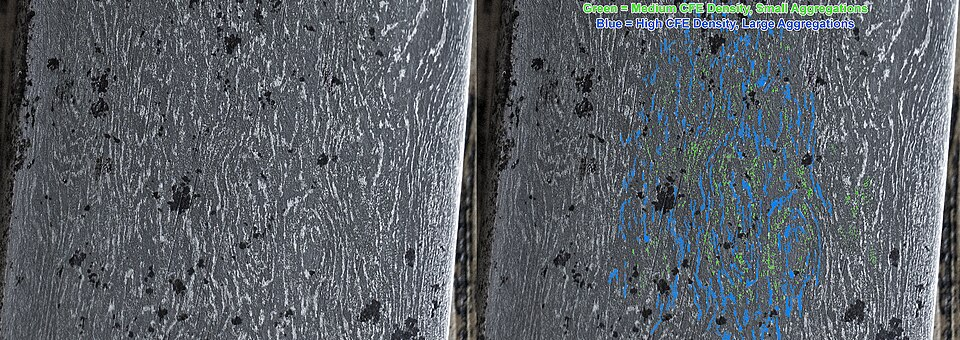
Electron microscopy has identified structures at a very small scale within the metal, including carbide particles arranged in bands, and in some reported studies structures of a kind nobody in the eighteenth century could have known they were creating.
Those findings have been interpreted as contributing to the material properties, and the interpretation is contested in its details. The presence of banded carbide structures is well established; the significance attributed to some of the finer structures is argued about.
The pattern on the surface is generally attributed to those bands, revealed by etching, which is why the pattern cannot be applied to ordinary steel and why it reappears if the surface is repolished.
The important point is the one people miss: whatever produced these structures, the smiths were not aiming at them. They were following a process that worked, refined empirically, and the microstructure was a consequence rather than a target.
The Ore Hypothesis
The leading explanation for the disappearance concerns raw material rather than knowledge.
Analysis of surviving material has found trace elements present in small quantities — vanadium among those most discussed — and there is an argument that these traces acted to promote the banded structure during the repeated heating and working of the metal.
If that is correct, then the process depended on ore from particular deposits containing those traces, and a smith using ore without them would produce steel that looked and behaved differently while doing everything else identically.
The proposed sequence is that specific ore sources were worked out, supply shifted to other deposits, and the material steadily stopped being what it had been — with the smiths unable to identify the cause, since the variable was invisible and had never been part of anybody’s understanding of the process.
That would explain the timing, the relative suddenness, and the absence of any recorded moment at which anybody realised what was happening.
It should be stated clearly that this remains a hypothesis. It is well argued and it has not been demonstrated conclusively, and other contributing factors have been proposed including changes in trade routes, in demand, and in the availability of the specific crucible process.
The Two Things Called by the Same Name
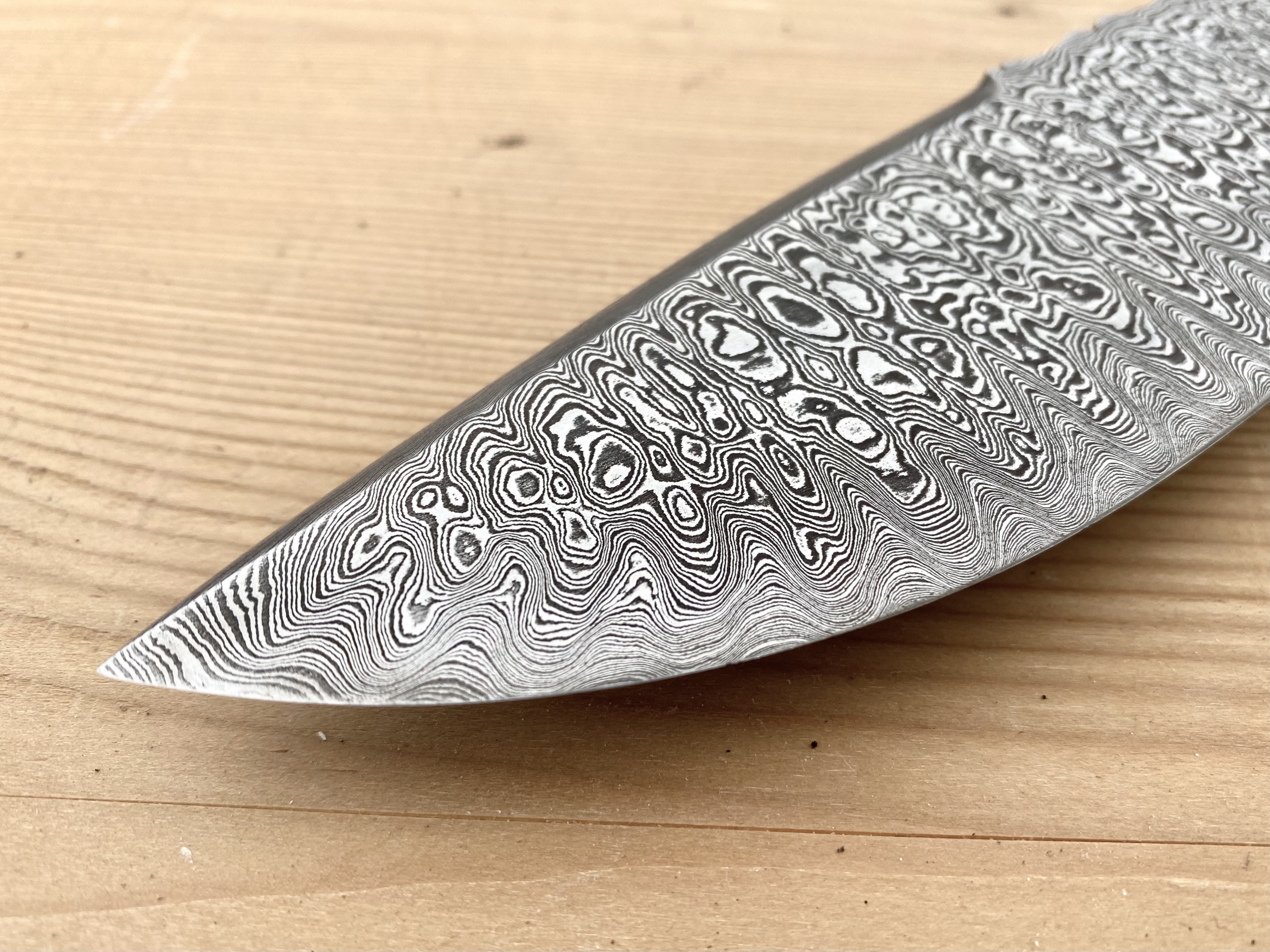
A clarification is necessary here, because two quite different materials share a name and the confusion accounts for a great deal of muddle.
The material described above is a crucible steel, in which the pattern arises from the internal structure of a single homogeneous piece of metal. The bands are carbide distributions within the steel itself.
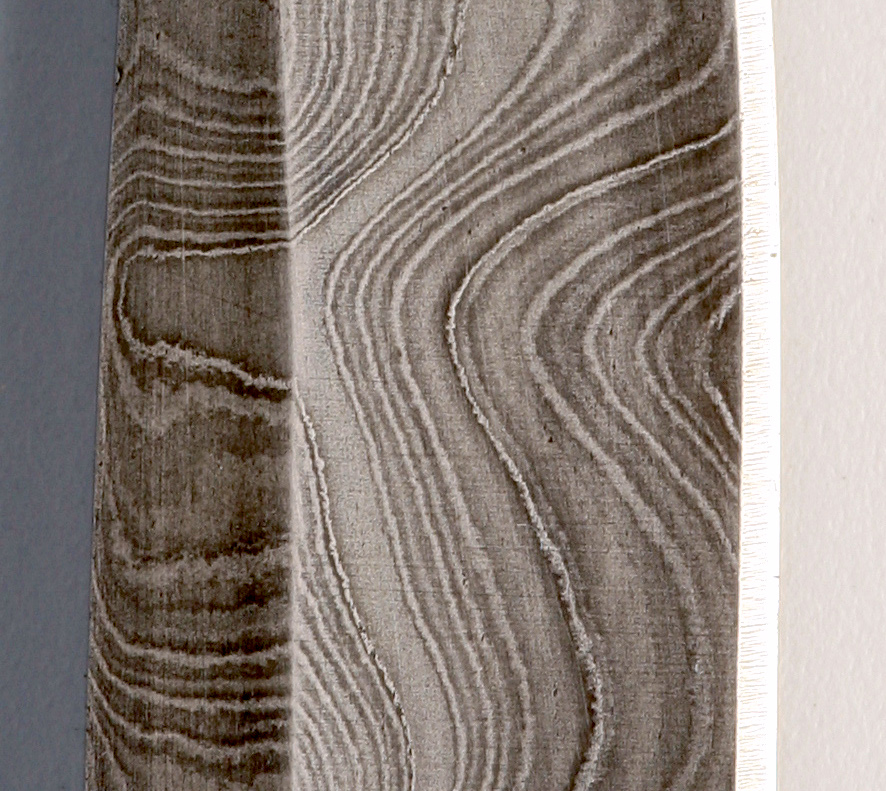
The other material is pattern welding, in which different steels are forge-welded together, folded and manipulated, so that the finished object is physically composed of alternating layers. Etching reveals those layers as a pattern.
Both produce patterned blades. They are entirely different processes producing entirely different materials, and the patterns look distinguishable to somebody who knows what to look for.
Pattern welding was never lost. It has been practised continuously in various traditions and is widely practised today, which is why patterned blades are readily available and why the claim that the technique disappeared confuses people who have seen one.
Nearly every modern object sold as having this appearance is pattern-welded rather than crucible steel, which is not a deception so much as a naming convention that has drifted.
Keeping the two separate is essential to understanding what was actually lost. The layered technique survives; the single-piece crucible material with its internal banding is the one that stopped.
Why “Lost” Is the Wrong Word
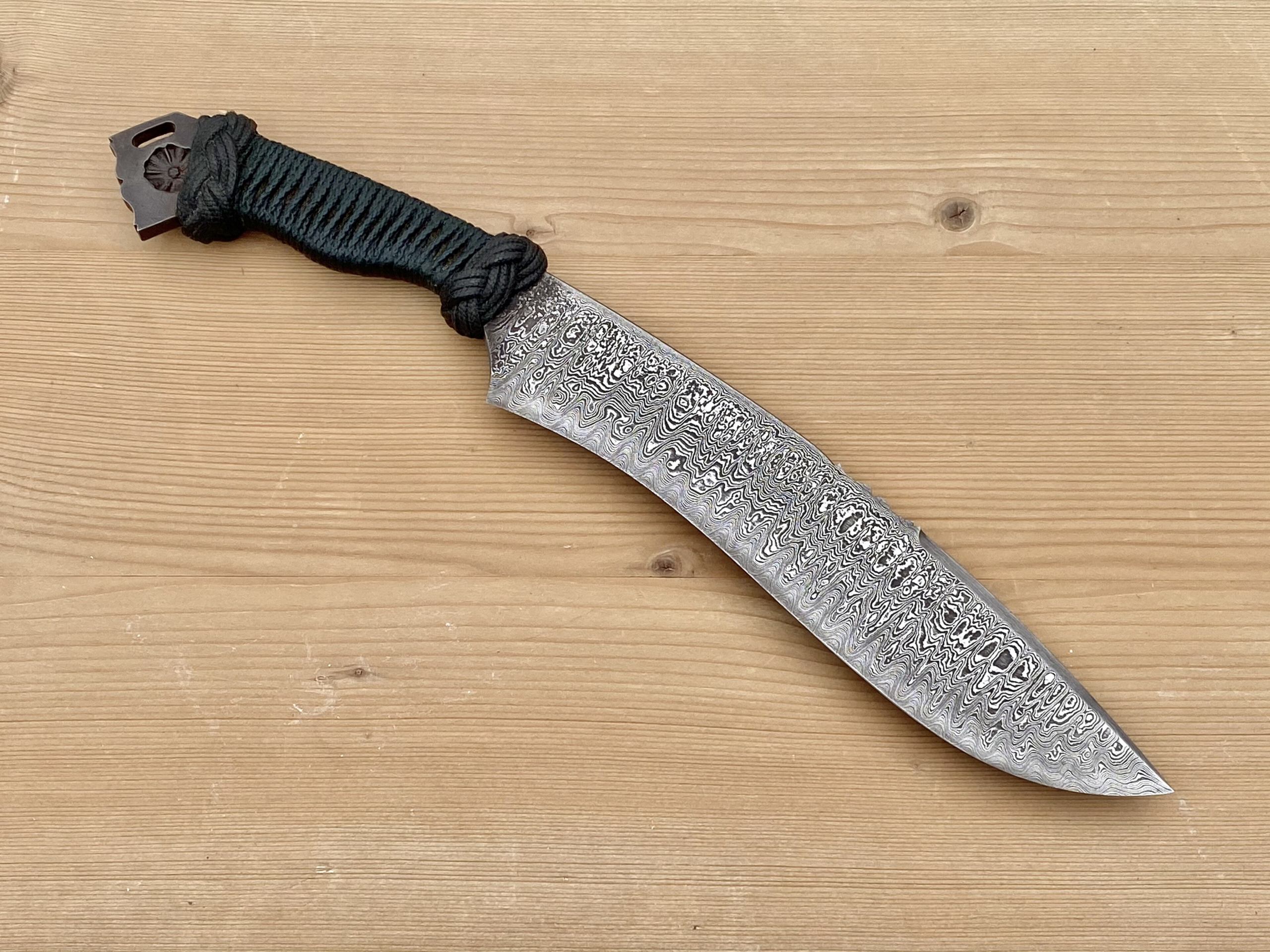
The popular framing describes a lost secret, and that framing is misleading in a specific way.
There was very likely no secret. The process appears to have been widely practised, described in period sources to some extent, and passed between workshops in the ordinary way that craft knowledge moves.
What was lost was not a technique but a combination — a process plus a particular raw material, where nobody knew the material was doing part of the work.
That is a fundamentally different kind of loss. A secret can be rediscovered by someone clever. A dependence on an unrecognised variable cannot be recovered by understanding the recorded procedure, because the recorded procedure was never the whole thing.
Modern metallurgists can produce steels with comparable and superior properties, and can produce surface patterns by various means. What has not been definitively achieved is reproducing the original material by the original route, partly because nobody is certain what the original route depended on.
What This Says About Craft Knowledge

The case is worth understanding for a reason that extends well beyond metallurgy.
Craft processes developed empirically encode variables their practitioners cannot identify. Somebody works out that a particular sequence produces a good result, teaches it, and the teaching transmits the sequence — while the local water, the local clay, the local fuel or the local ore may be contributing something nobody has isolated.
Move the process, or change the supply, and it fails for reasons that are invisible from inside the tradition. The practitioners are doing everything correctly and getting a different answer.
That pattern recurs across a great many crafts. Materials that work in one place and not another, processes that stop working when a supplier changes, and results that cannot be reproduced elsewhere despite identical procedure are all versions of the same phenomenon.
Which reframes the whole case. This is not a mystery about a vanished technique. It is a well-documented example of how empirical knowledge can depend on something the people holding it have no way of knowing about.
An Honest Summary
Where the evidence sits is worth stating plainly, because this subject is surrounded by confident claims in both directions.
Blades of this material exist, are analysable, and show internal structures that are real and well characterised. The reputation was substantially deserved for the period, and comparisons with modern steels are not the relevant test.
The disappearance is real and occurred over a comparatively short span. The ore explanation is the leading account and is not proven. The material has not been reproduced in a way that satisfies everybody, and various modern reconstructions are argued about.
And the most interesting finding is not any of that. It is that people made an exceptional material for roughly a thousand years, using a process they understood in their own terms, which depended on something none of them could have identified — and when it stopped working, nobody could say why, because the answer was in the ore rather than in anything anybody was doing.
That is a truly humbling shape of problem, and it is not confined to the eighteenth century. Any process refined by trial rather than by theory carries the same exposure, and the practitioners have no way of auditing it – which means the question of what a modern craft silently depends on is entirely open too.
Like our content? Follow us for more.
