The instinct when it rains on a trip is to wait it out, which wastes the day. The better approach is to switch to the version of the destination that works in weather. Here are twelve ways to do that.
1. Reverse Your Itinerary Immediately
Most itineraries have outdoor days and indoor days scattered through them, and a wet forecast is a reason to reshuffle rather than to abandon.
Moving museums, galleries, markets and indoor sights to the rainy days and keeping viewpoints and walks for any clear spell costs nothing and salvages everything. Reversing your itinerary immediately is the first thing to do when the forecast turns.
Like our content? Follow us for more.
2. Buy Proper Rain Gear Locally

Travellers routinely try to manage a wet week with an inadequate jacket and a folding umbrella that fails on the first gust.
Buying a decent waterproof and, if needed, waterproof footwear at the destination changes the entire trip from endurance to indifference. It is usually cheaper than you expect. Buying proper rain gear locally is the small purchase that rescues a rainy holiday.
3. Find the Covered Markets
Almost every city of any size has a covered market hall, arcade or bazaar, and they are frequently among the most interesting places to spend a couple of hours.
They are warm, dry, full of local food and produce, and typically much livelier in bad weather because everyone else has had the same idea. Finding the covered markets is the most reliable wet-weather move in any unfamiliar city.
4. Treat Museums as a Whole Day, Not an Hour
Museums are the obvious rain option and are usually visited badly — rushed through in an hour on the way to something else.
Given a wet day and no alternative, you can do one properly: take the guided tour, sit down in front of things, use the café, come back to a room. Treating museums as a whole day is how rain turns an obligation into a highlight.
5. Book the Thing You Would Otherwise Skip
Cookery classes, workshops, tastings, guided indoor tours and craft demonstrations are usually the first things cut from an itinerary when the weather is good.
A wet week is the ideal excuse, and these are often the parts of a trip people remember longest. Many have same-day availability. Booking the thing you would otherwise skip is the rainy-day decision that most often improves a trip.
6. Use the Transport as the Activity

Trams, ferries, funiculars, local trains and sightseeing buses all let you see a place from inside something dry and moving.
A tram route across a city in the rain, with the windows fogged and the streets shining, is a truly good way to spend an hour. It costs the price of a ticket. Using the transport as the activity is the cheapest wet-weather option anywhere.
7. Go Somewhere Warm and Sit Down

Cafés, tea houses, bathhouses, saunas and hotel bars exist partly because of weather, and lingering in them is not wasted time.
The habit of sitting for two hours over one drink is normal in a great many places and is one of the more pleasant ways to observe a city. Nobody will move you along. Going somewhere warm and sitting down is the wet-weather activity most travellers feel guilty about and shouldn’t.
8. Check What Looks Better Wet

Some things are improved by rain, and it is worth actively seeking them out rather than mourning the sunshine.
Waterfalls run harder, gardens and forests are more dramatic, cobbled streets photograph beautifully, and coastal towns look their part in weather. Ask locally what is worth seeing wet. Checking what looks better wet turns a rainy day into a different trip rather than a lesser one.
9. Split the Day Around the Forecast

Rain is rarely constant, and hourly forecasts are reasonably accurate over short horizons.
Planning outdoor stretches into the gaps and indoor activities into the heavy periods gets far more out of a wet day than committing to either. Check again at lunchtime. Splitting the day around the forecast is how experienced travellers handle a bad week rather than surrendering to it.
10. Ask Your Accommodation What Locals Do

The people at the desk live there and have spent years dealing with exactly this weather, and they know the indoor options that are not in guidebooks.
Asking specifically what they would do on a wet Tuesday, rather than for general recommendations, produces much better answers. It is a different question. Asking what locals do is the most underused resource on any rainy trip.
11. Accept a Slower Trip
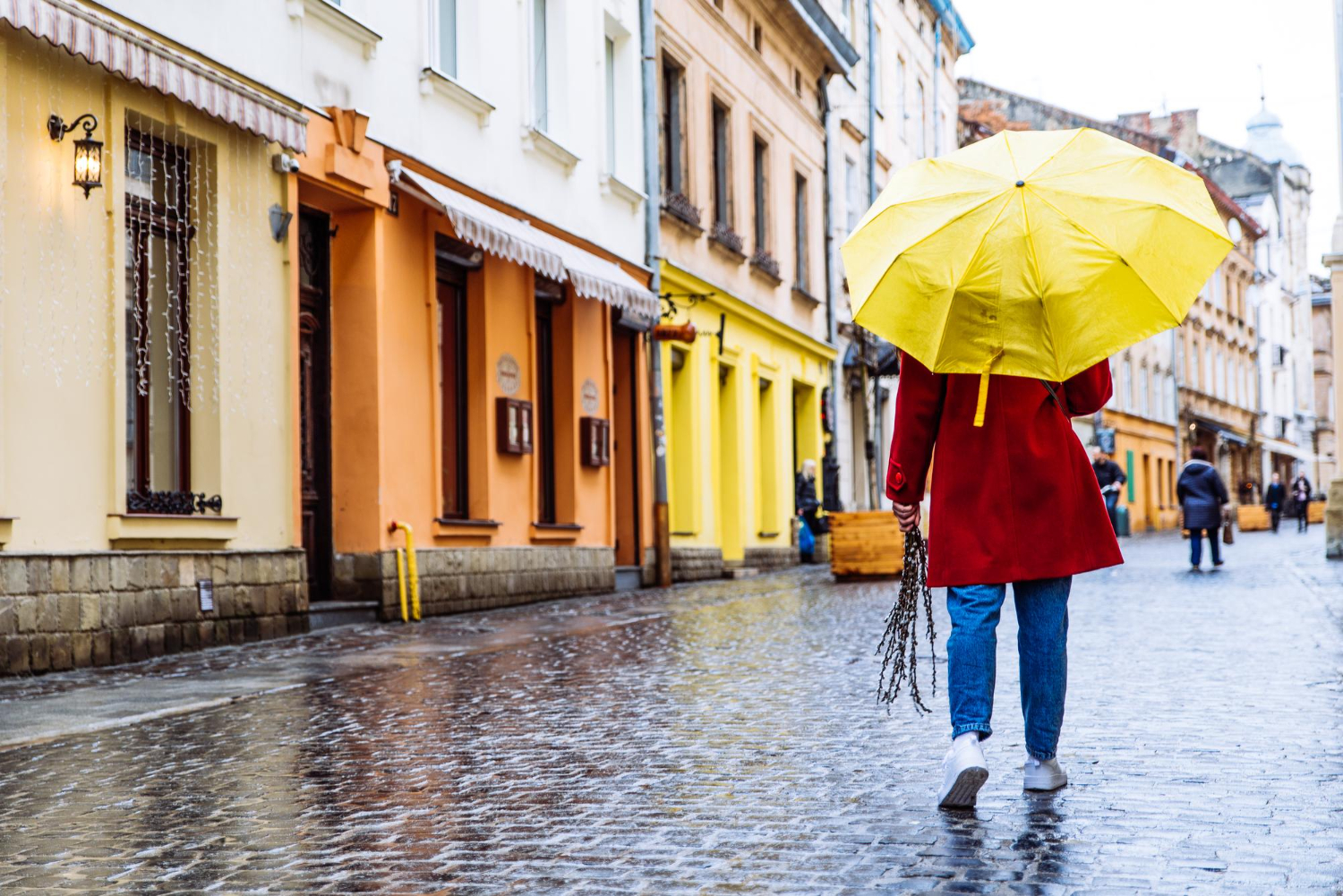
Rain enforces a pace that a lot of people would benefit from anyway, and fighting it produces a worse holiday than accepting it.
Fewer sights done properly, longer meals, an afternoon reading, and no forced march between attractions is a legitimate way to spend a week somewhere. Accepting a slower trip is the reframing that makes a rainy holiday properly enjoyable.
12. Plan the Return Visit

If the weather has actually cost you something specific — a viewpoint, a hike, an island crossing — the useful response is to note it down for next time.
Knowing you will come back removes the pressure to force the thing that is not going to work, and you will arrive next time knowing the place already. Planning the return visit is what turns a washed-out week into an unfinished one.
Weather Is Not the Trip

A destination in the rain is not a diminished version of itself. It is the version its residents live in for a substantial part of the year, which is arguably the more honest introduction.
Buy the jacket, move the museums to the wet days, find the covered market, get on a tram, and sit in a café for two hours without apologising for it. Most people who do that come home having enjoyed the trip, and slightly surprised that they did.
Like our content? Follow us for more.