
A parasite, glued on by a bird, that has never touched soil. Here are fourteen.
1. It Is a Parasite and It Is Stealing From the Tree
Mistletoe is not sitting on the branch for the view. It is tapped into the tree’s plumbing and taking water and dissolved minerals out of it, continuously, for as long as it lives.
It is a partial parasite rather than a total one: it makes its own sugars from its own green leaves, and only the water and minerals are taken. Which is why the relationship is one-sided but slow. The tree is supplying the drink and the mistletoe is providing its own food.
Like our content? Follow us for more.
2. It Never Touches the Ground at Any Point in Its Life
The seed does not fall to the soil, germinate and climb. It germinates where it has been stuck, on a branch, several metres up, and everything that happens afterwards happens there.
So a mistletoe plant completes an entire life cycle – germination, growth, flowering, fruiting, death – without a single part of it ever being in contact with earth. It is a plant for which the ground is simply not a place it goes.
3. A Bird Glues the Seed On
The berries are eaten by birds, and the seeds arrive on branches by two routes: passed through the bird and deposited on a branch it happens to be sitting on, or wiped directly off its beak.
The wiping is the one people do not expect. A bird that has bitten into a berry ends up with an extremely sticky seed attached to its bill, finds this intolerable, and scrapes it off against the nearest bark – which is precisely where the mistletoe needs it to be. The plant’s dispersal strategy is to be annoying.
4. The Glue Is One of the Stickiest Things in Nature
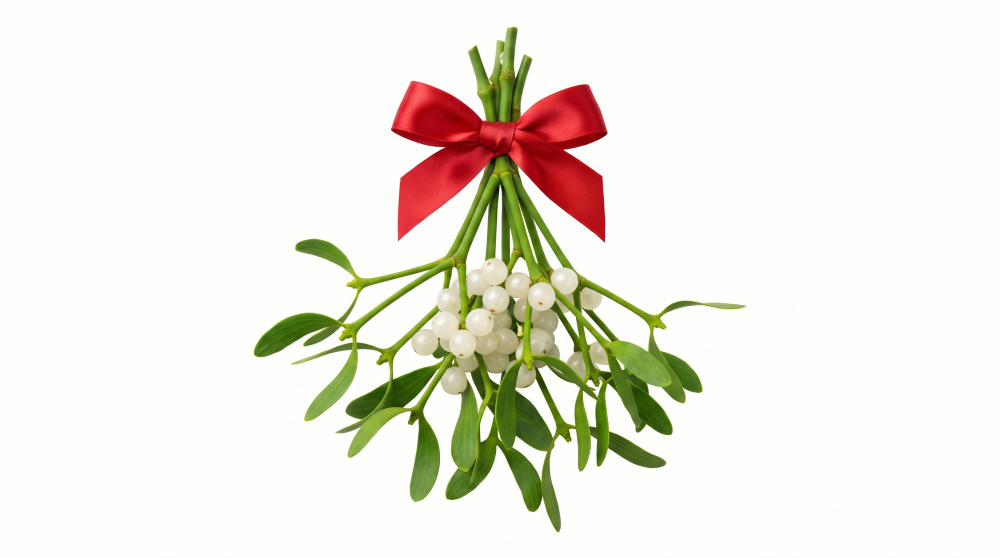
The seed is coated in a substance that is not merely tacky but draws out into long elastic threads and sets hard on bark, and it is strong enough to hold a seed on a vertical branch through a winter of wind and rain.
It is sticky enough to have attracted serious interest as a model for adhesives that need to work on wet living surfaces, which is a difficult problem and one this plant solved a very long time ago. It also means a crushed berry is very hard to get off your fingers.
5. It Drills Into the Tree Rather Than Rooting Into It
What anchors mistletoe is not a root. It is a wedge of tissue that grows through the bark and makes a direct connection with the water-conducting channels inside the branch.
Which is a considerably more invasive arrangement than sitting on something. The structure spreads beneath the bark, sometimes a long way along the branch from the visible bush, so a single plant has substantially more of itself inside the tree than on the outside of it.
6. It Is Evergreen Because It Is Not Working Off the Tree’s Leaves
Mistletoe keeps its thick leathery leaves all year and carries on photosynthesising through the winter, while the tree holding it stands bare.
It can do this because it is not dependent on the host’s productivity, only on its water. A deciduous tree shuts down for the winter and the mistletoe does not, which produces the odd situation of a green plant working at full capacity in January on a branch that is doing nothing at all.
7. Which Is Why It Suddenly Appears in Winter
Mistletoe is not more common in December. It is simply the only green thing left in the tree, so it becomes visible.
Every ball of it was there all summer, hidden inside the host’s own foliage and invisible from the ground. The leaves come off, and what looks like an overnight arrival is a plant that has been sitting in that fork for ten or twenty years. Which is a large part of why the plant acquired a reputation for appearing mysteriously.
8. It Grows by Forking in Two, So You Can Count Its Age
Mistletoe does not branch randomly. Each growing shoot divides into exactly two, once a year, and each of those divides into two the following year.
Which means the plant is a physical record of its own age. Follow a stem from the centre outward, count the forks, and you have the number of years – and it also explains the shape, because repeated equal forking in all directions is a recipe for a sphere. A mistletoe ball is not pruned into that shape by anything. It is the inevitable result of one growth rule applied annually.
9. A Big Ball Is Decades Old
Follow the arithmetic of the previous item and the ages get long quickly. A ball you could not get your arms around represents a great many annual doublings, and the plant will be several decades old.
They are also slow for the first years. A newly germinated mistletoe may take four or five years to produce anything a person would notice from the ground, during which it is a few centimetres of growth on a branch nobody is looking at. The large conspicuous ones are old residents.
10. It Can Kill the Host, Slowly
A tree carrying a heavy load of mistletoe is losing a substantial amount of water to it, and in a dry year that can be the difference.
Death is possible but it is rarely quick and rarely the direct cause. What usually happens is that the host is weakened – individual branches beyond a large plant die back, the crown thins – and something else finishes the job. A single ball on a mature tree is of no consequence. Forty of them on a tree in drought is a different matter.
11. And Yet a Tree With Mistletoe Supports More Wildlife Than One Without
This is the finding that complicates the parasite story. Trees carrying mistletoe hold more birds, more nests and more species than comparable trees without it.
There are several reasons. The dense evergreen ball is shelter and nest structure available in winter when nothing else offers any. It flowers and fruits when little else does, so it feeds things at the hardest time of year. And its fallen leaves break down faster and richer than the host’s, improving the ground beneath. Removing mistletoe from a wood measurably reduces what lives there, which is not what you would predict from the first item on this list.
12. Only the Female Plants Have Berries
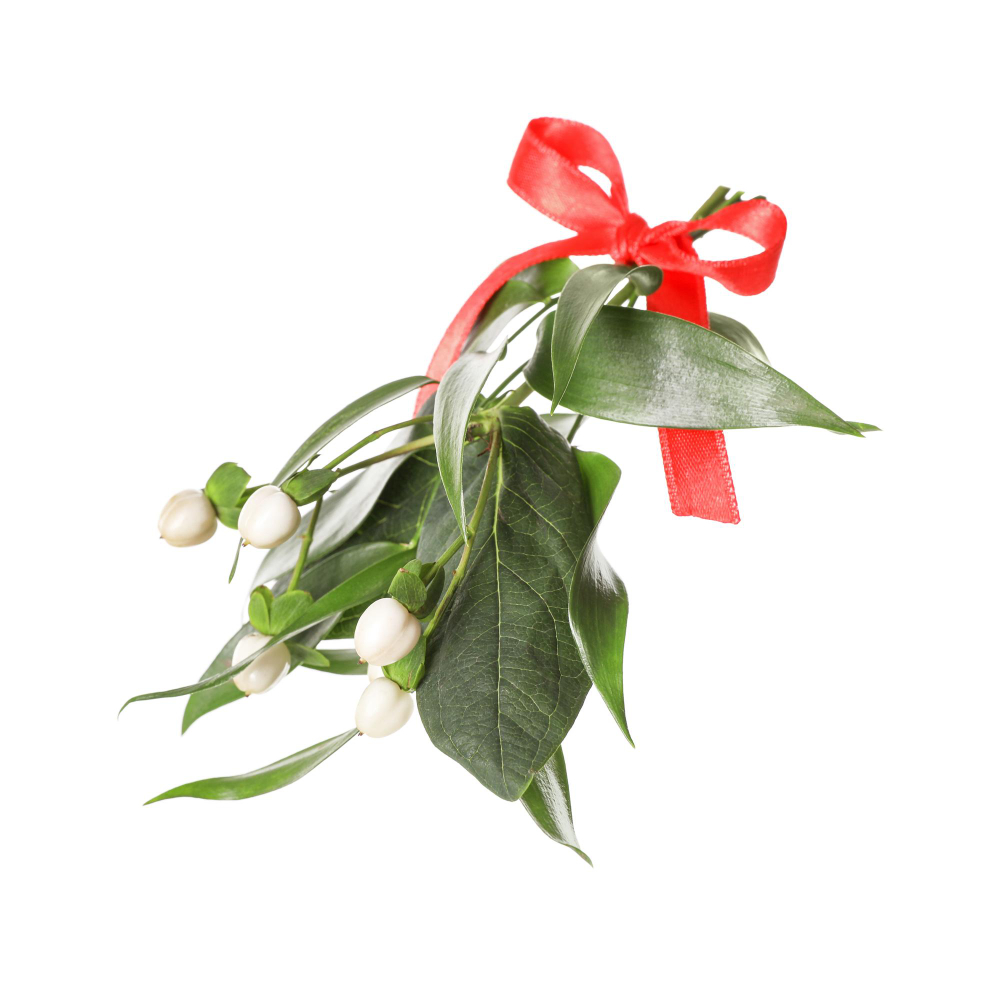
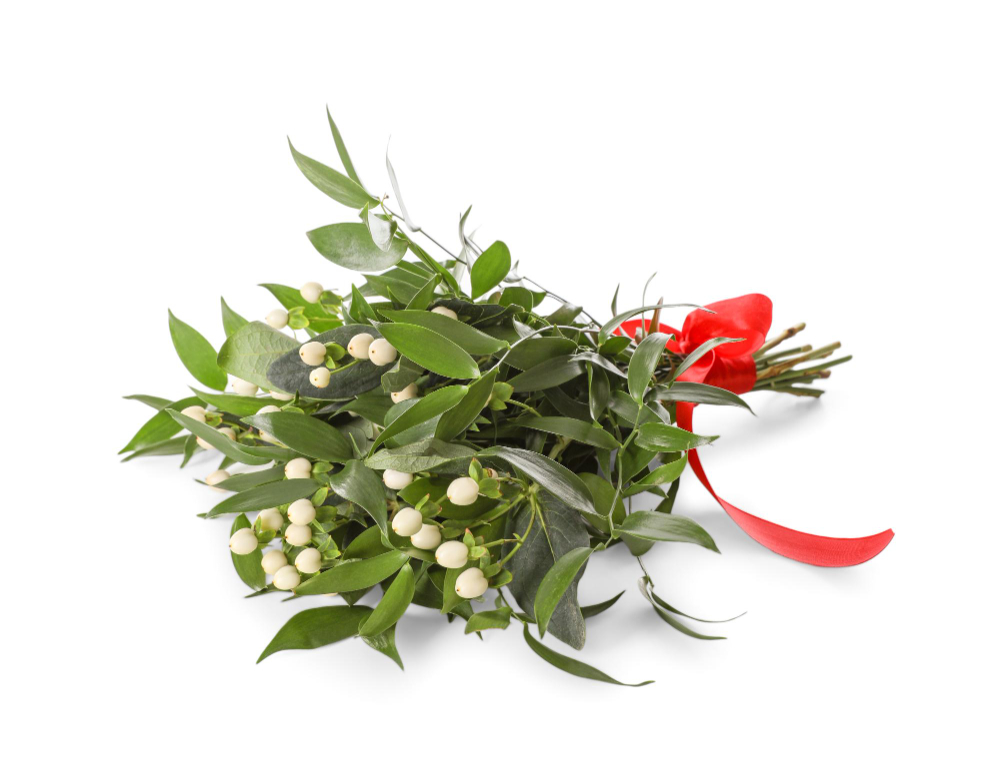
Mistletoe comes as separate male and female plants, and only the females fruit. A male plant will never produce a single berry however long it lives.
Which has a thoroughly practical consequence that catches people out every December: roughly half of all mistletoe is berryless by nature, and a bunch without berries is not unripe, badly kept or picked too early. It is male.
13. The Berries Are Poisonous to Us and Food for Birds
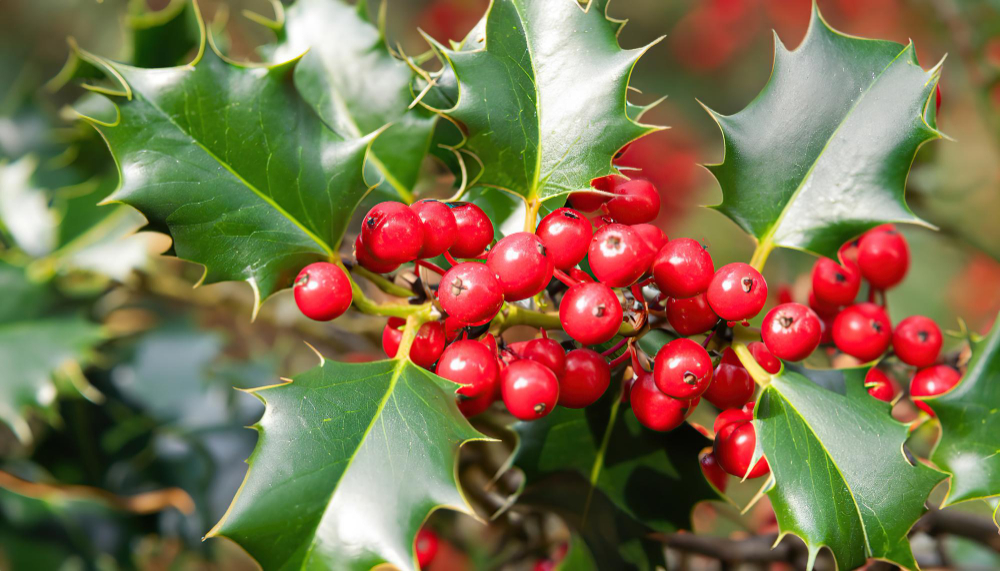
The berries are toxic to people and to a good many mammals, while being an important winter food for several birds. That difference is the whole point of them.
A plant that needs birds to carry its seeds up into trees has no use whatsoever for a mammal eating its fruit at ground level, so the chemistry is arranged to discourage exactly that. Nothing here is medical information and nothing in it should be read as any sort of guidance – the single fact worth taking away is that the toxicity is deliberate and is aimed at the wrong customer.
14. The Kissing Tradition Is Not as Old as Everybody Says
The custom is real, it is well documented, and the confident explanations attached to it mostly are not.
Kissing under mistletoe is recorded in England from around the eighteenth century and became widespread in the nineteenth. The ancient Norse and Druidic origins so often asserted rest on very thin evidence, and the frequently repeated detail about a berry being removed for each kiss appears to be a later refinement rather than an old rule. The plant certainly carried meaning in earlier European custom – a green thing that fruits in midwinter and grows without touching the earth is exactly the sort of object folklore attaches itself to – but the specific tradition is a good deal more recent than its reputation.
A Plant That Has Never Been in the Ground
Tapped into a tree’s water supply, glued to a branch by a bird scraping its beak, anchored by tissue that grows under the bark, green and working through a winter the host spends asleep, forking in two once a year into a countable sphere, and berryless on every male plant.
The eighth item is the one that turns a plant into an instrument you can read. Mistletoe grows by splitting each shoot into exactly two, once a year, every year. Count the forks outward from the centre and you have its age – and the same rule explains the shape, because equal forking in every direction can only ever produce a sphere. Nothing trims it. The ball is simply what one growth instruction looks like after twenty years.
Like our content? Follow us for more.