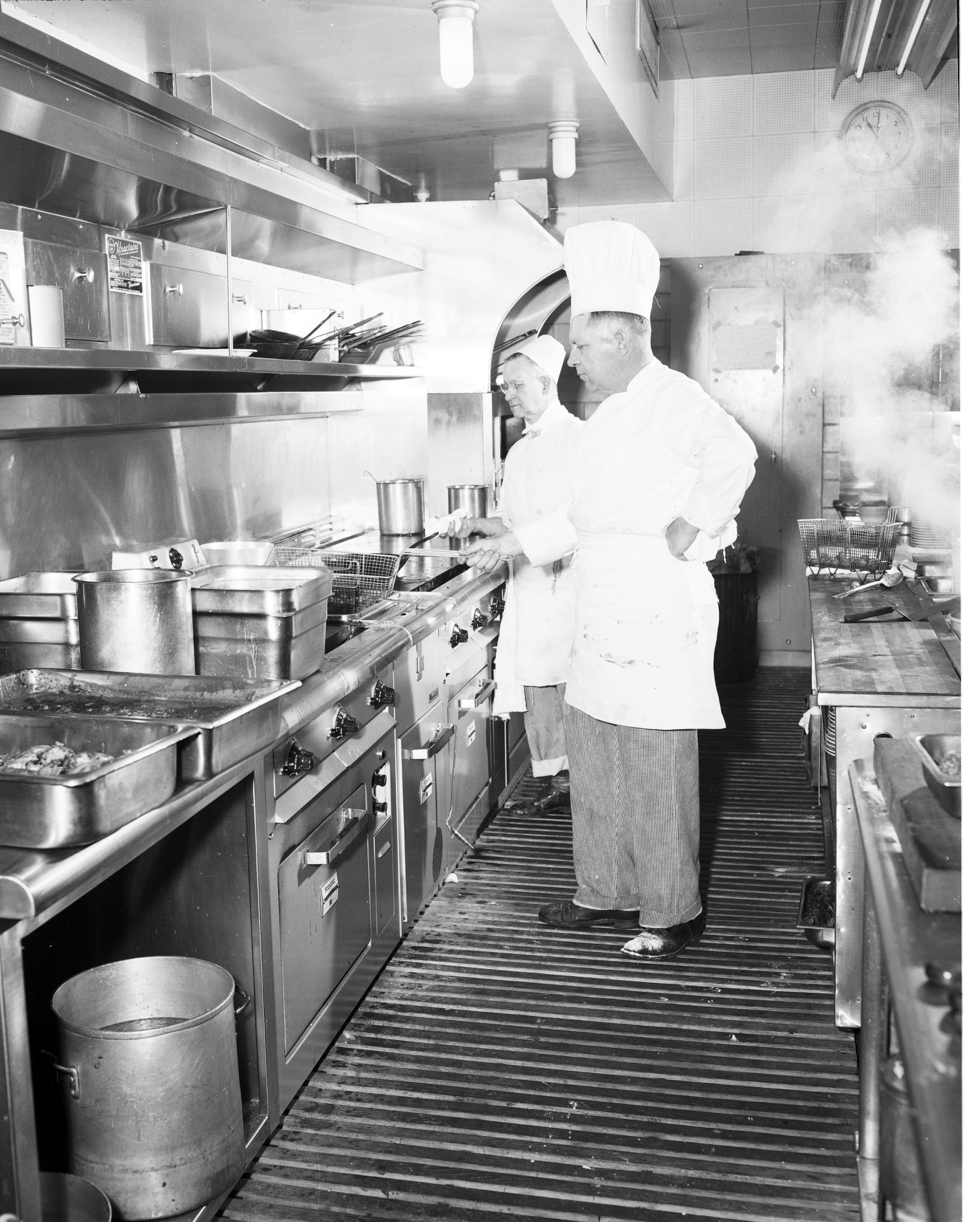
In 1960 a hotel kitchen ran as a military hierarchy in a hot basement, on split shifts spanning fourteen hours, six days a week, with a great many of the staff living in attic rooms upstairs and the cost of the room deducted from their wages.
Shouting was the management method. Burns and cuts were evidence of commitment. The menu was in French. And food safety consisted entirely of whether the head chef cared.
Here are fifteen things that were ordinary in a hotel kitchen in 1960, and what became of each one.
1. The Kitchen Was Organised as a Military Hierarchy and Meant It
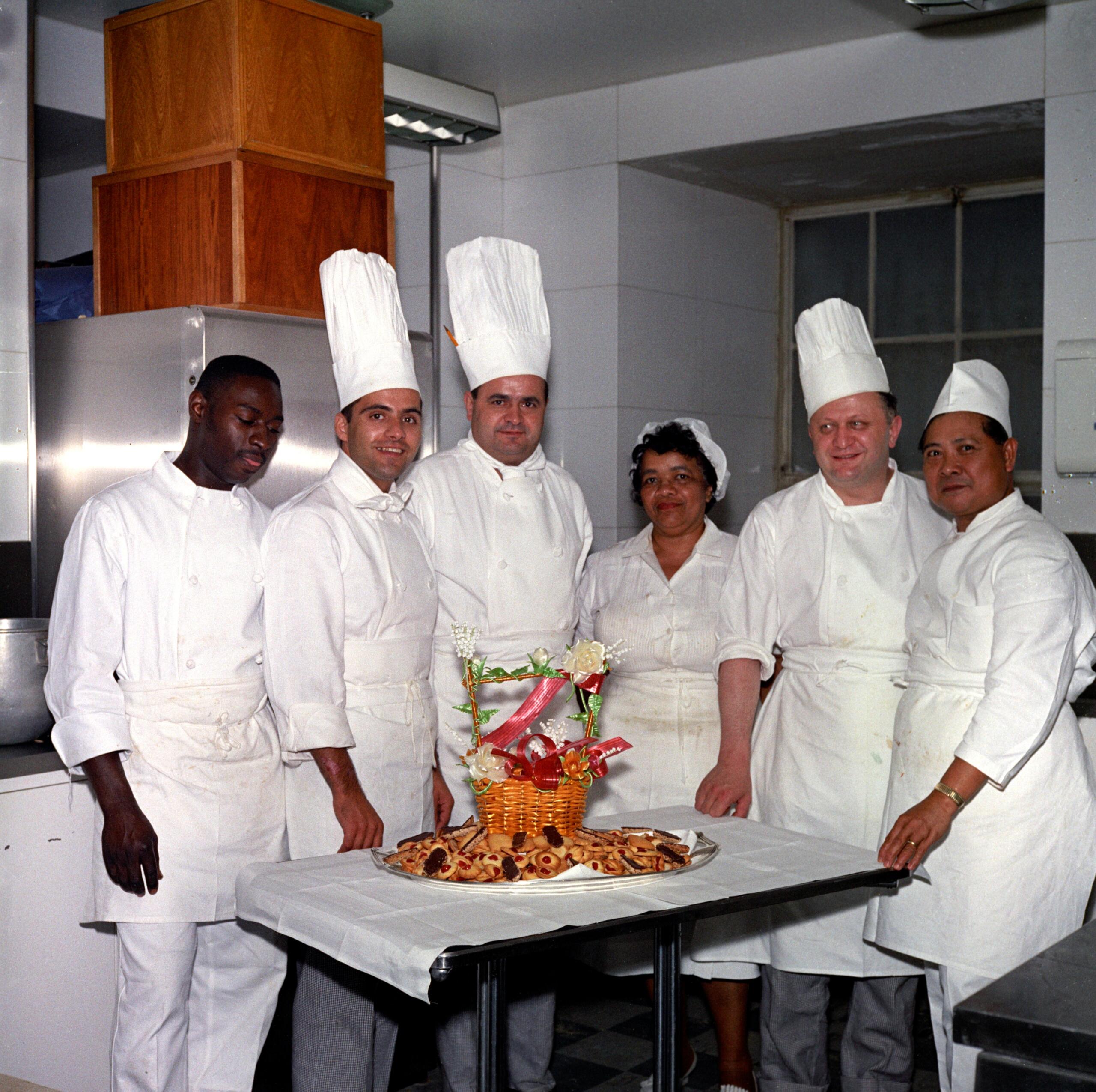
A hotel kitchen ran on a brigade system with a defined chain of command – head chef, sous, and a chef in charge of each section, each with commis under them – adapted directly from military organisation and operated accordingly.
The structure survives in professional kitchens and the manner of its operation has changed substantially. The system itself is sound: it divides an impossible simultaneous task into sections that can each be managed, and it is the reason a kitchen can produce two hundred different plates in an hour at all.
Like our content? Follow us for more.
2. Shouting Was the Management Method and Worse Was Tolerated
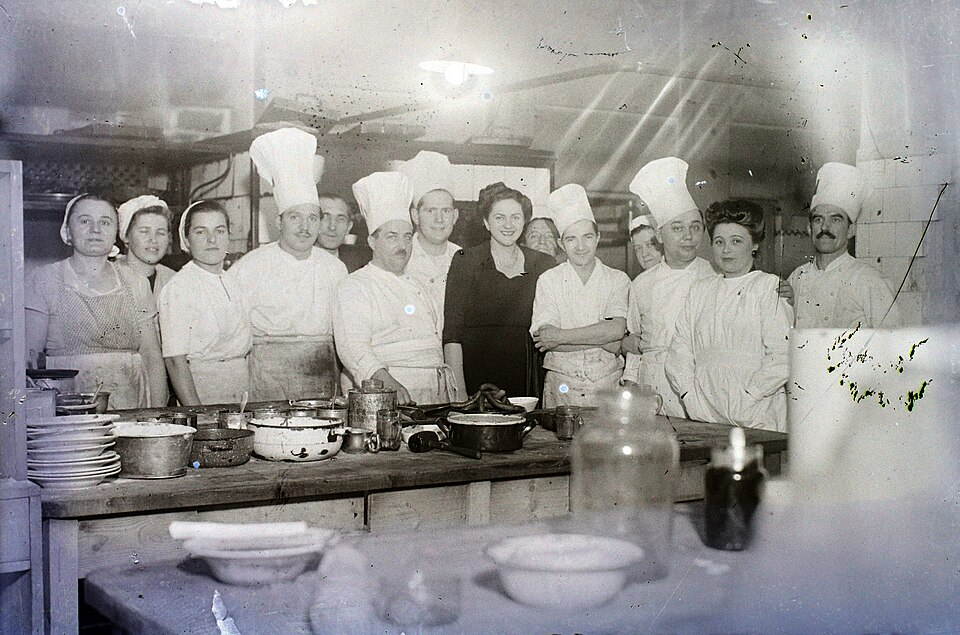
Verbal abuse was standard, physical intimidation was common, and both were defended as necessary to maintain standards under pressure.
Employment law, harassment policy, mental health awareness and a workforce unwilling to accept it have changed professional kitchens considerably, though the industry’s record remains uneven and the problem is not solved. The defence – that pressure requires brutality – was never true, and the kitchens that abandoned it did not get worse.
3. The Hours Were Split and Ran From Morning Until Midnight
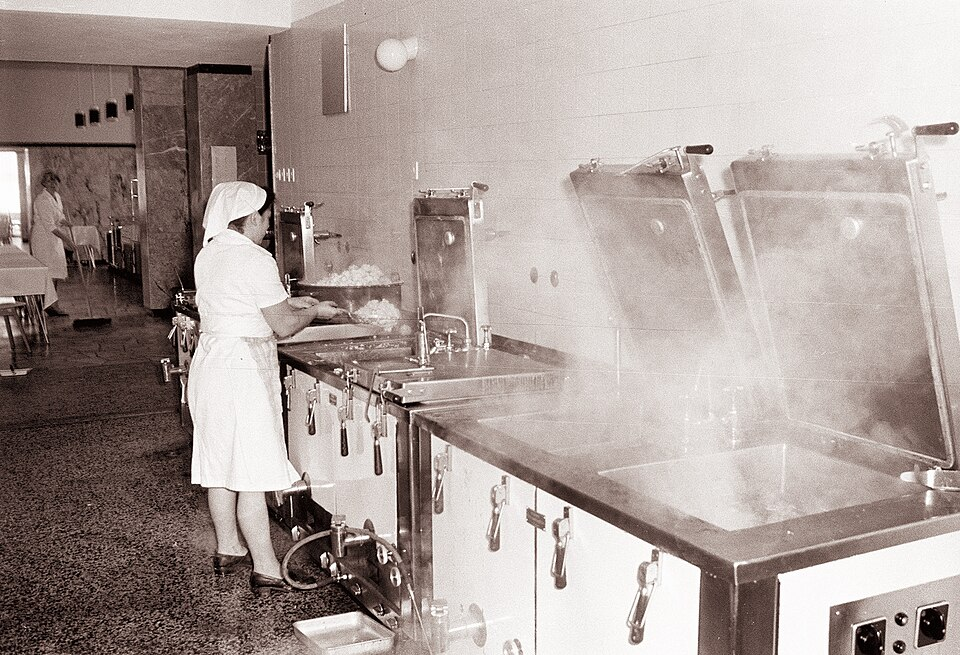
A split shift meant working the lunch service, breaking in the afternoon, and returning for dinner, six days a week – a working day spanning fourteen hours of which perhaps eleven were paid.
Working time regulation, single shifts and straight hours have become far more common, driven as much by a recruitment crisis as by law. The split shift made it effectively impossible to live anywhere other than near the hotel, which is why so many staff lived in.
4. A Great Many Staff Lived in the Building
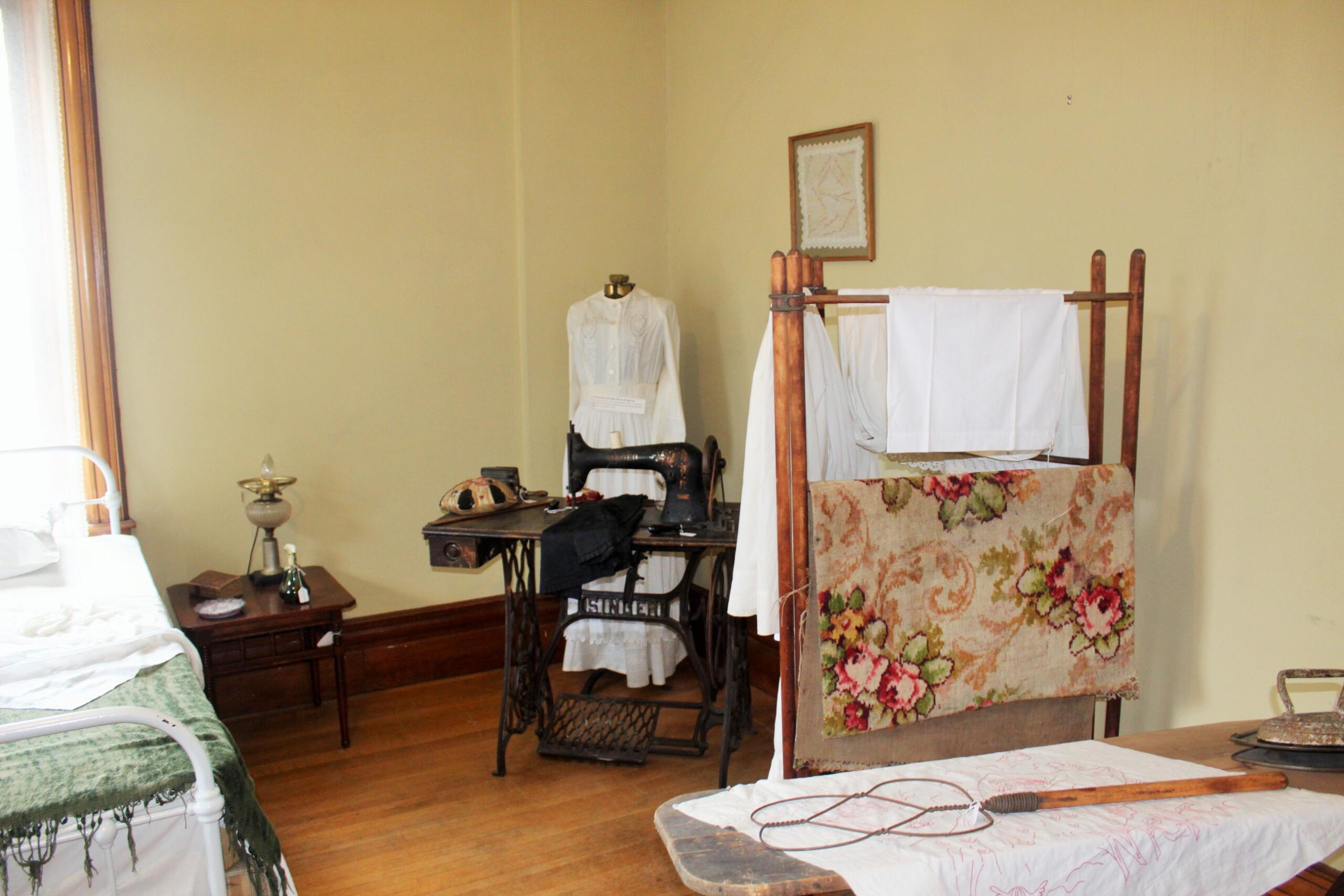
Kitchen and service staff were frequently housed in the hotel – attic rooms, basement accommodation, shared quarters – with board and lodging deducted from wages.
Living out is now the norm and accommodation where offered is subject to standards and to rules on what may be deducted. Living in meant total availability, no separation between work and rest, and a dependency that made leaving a job also mean leaving home.
5. Refrigeration Was Limited and the Deliveries Came Daily
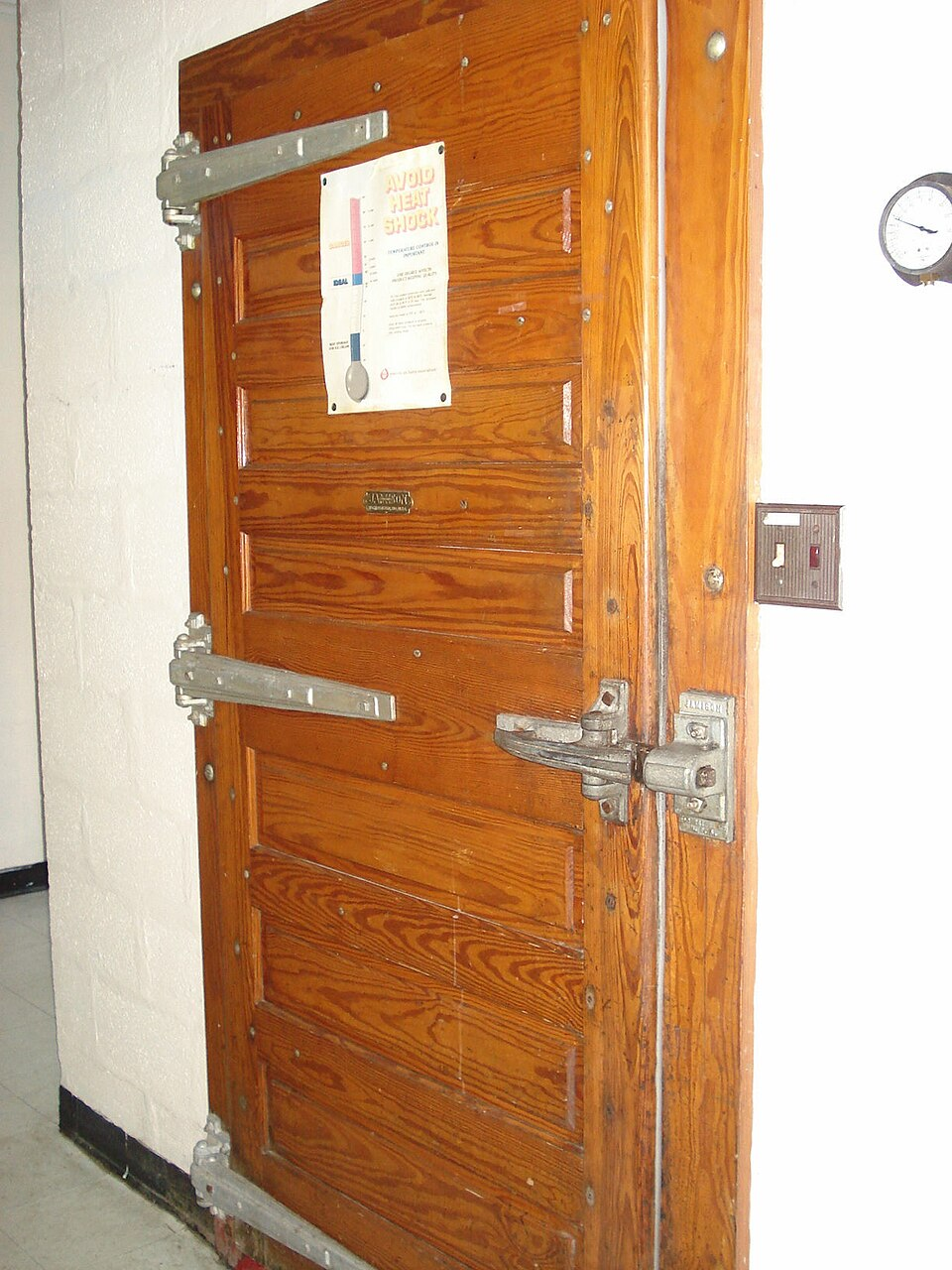
Cold storage was small relative to the volume cooked, so meat, fish, dairy and produce arrived daily and were used within a day or two, with the menu following what had come in.
Walk-in refrigeration, blast chilling, vacuum packing and frozen supply chains decoupled the menu from the delivery. Daily delivery sounds like an artisanal virtue and was a constraint, and the modern version of it – choosing to buy daily from a short supply chain – is a deliberate decision rather than a necessity.
6. The Heat Was Extreme and Nobody Mentioned It
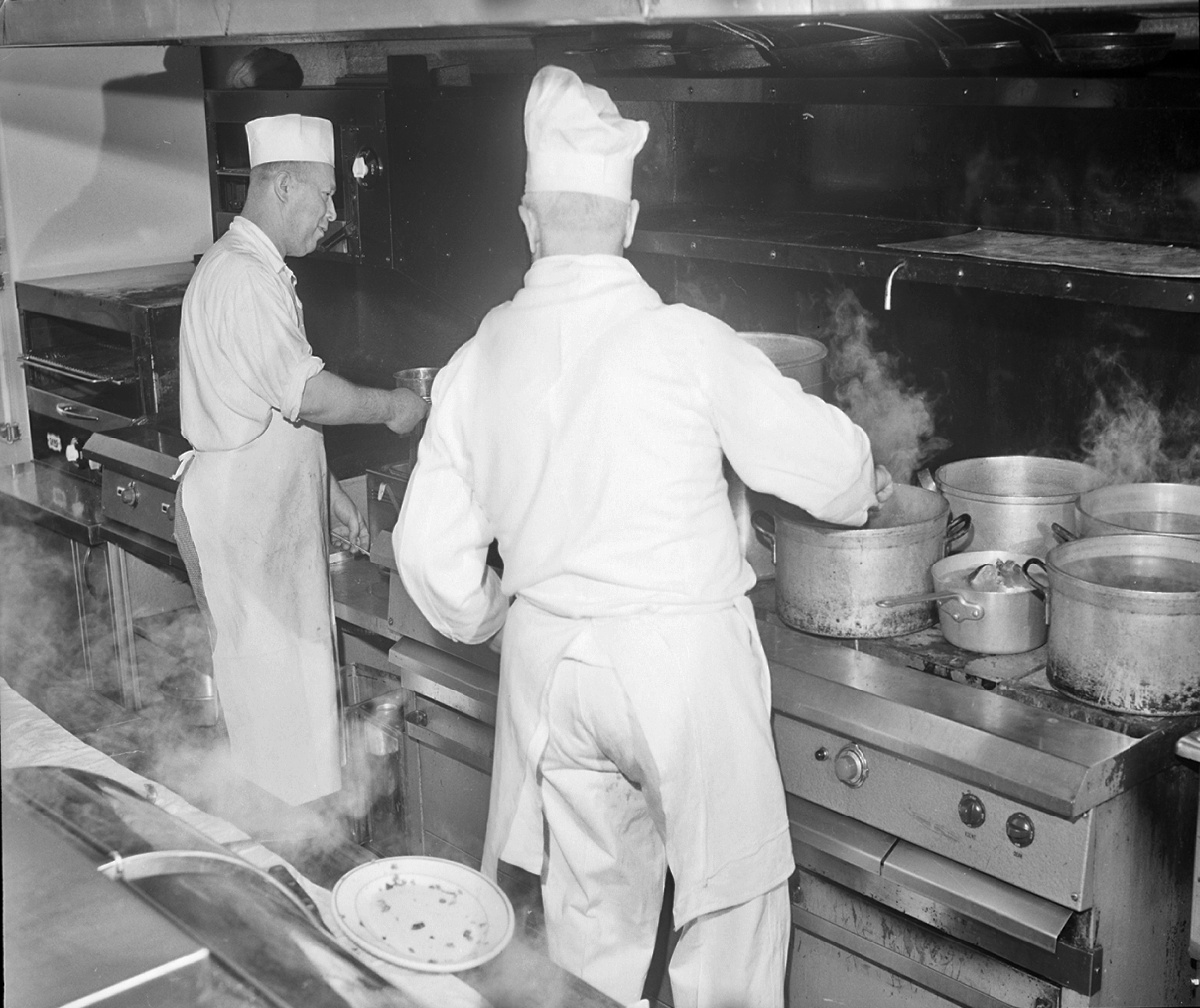
Solid-fuel and gas ranges running continuously in a basement kitchen with minimal extraction produced temperatures that staff simply worked in, in full whites, through a double shift.
Extraction canopies, make-up air systems, induction cooking and temperature monitoring have transformed kitchen environments, and heat stress is now a recognised workplace issue. Basement kitchens with poor ventilation were the standard arrangement because the space was cheap and the guests were upstairs.
7. Knives, Burns and Falls Were Accepted as the Price of the Job

Cuts, burns and slips were constant, were treated on the spot, and were regarded as evidence of commitment rather than as failures of a system.
Reporting requirements, risk assessment, non-slip flooring, equipment guarding and first aid provision changed the framework. The culture of working through injury is the part that has been slowest to shift and it is still present.
8. Food Hygiene Depended Entirely on the Chef’s Standards
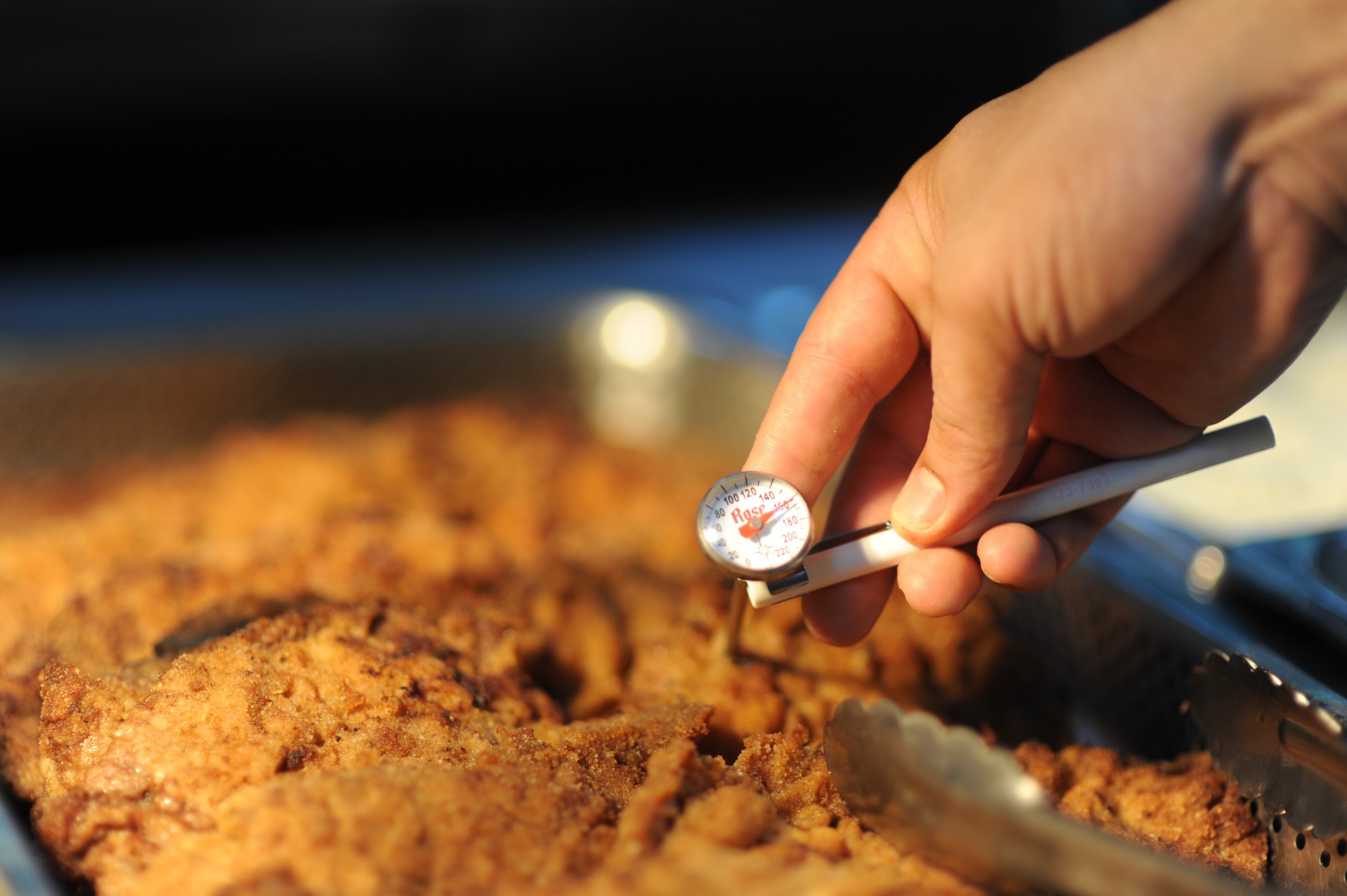
There was no systematic temperature monitoring, no documented cleaning schedule, no traceability of supply and no formal food safety management – the kitchen was as safe as the person running it insisted it be.
Hazard analysis systems, temperature logging, documented cleaning, supplier traceability and inspection regimes replaced individual conscientiousness with a documented process. A good 1960 kitchen was genuinely safe and a bad one was dangerous, and nobody outside could tell the difference until something happened.
9. Everything Was Made in the Building From Raw Ingredients
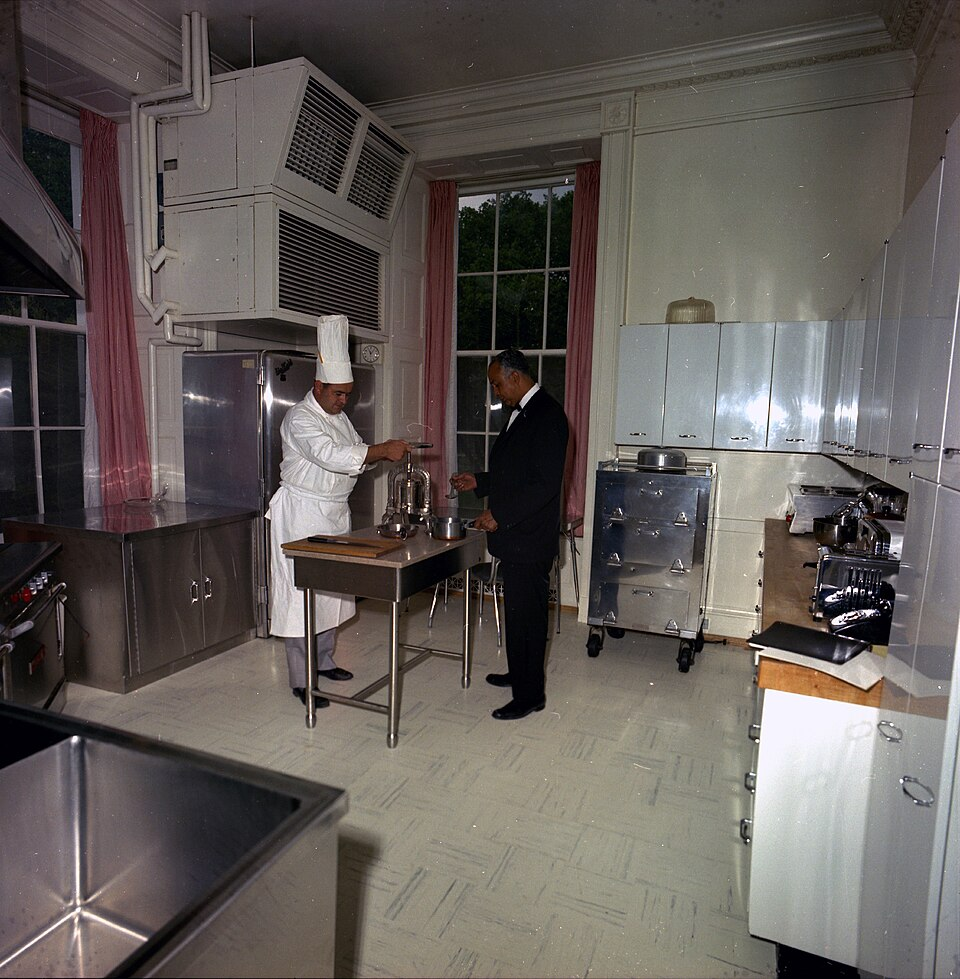
Stocks, sauces, pastry, bread, ice cream and butchery were all done in house, by sections dedicated to them, from raw materials, every day.
Prepared bases, bought-in pastry, portioned meat and specialist suppliers have replaced a great deal of it. The whole-process kitchen required far more staff and produced a kind of consistency that came from one team doing one thing continuously, and the trade-off against bought-in components is genuinely argued over within the industry rather than settled.
10. The Menu Was Written in French and Barely Changed
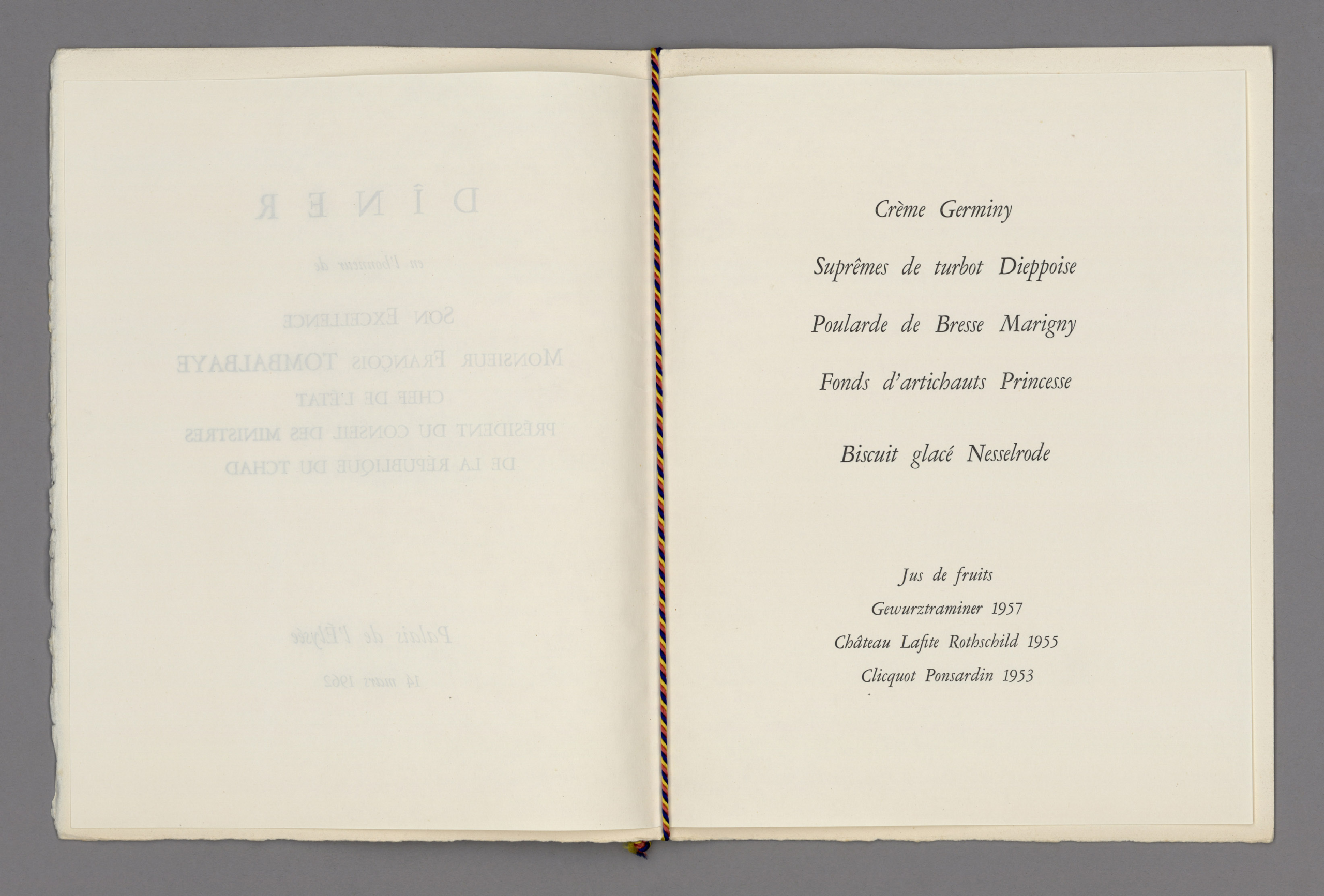
Dishes were drawn from a codified classical repertoire, written in French, with set compositions and garnishes that a trained chef anywhere would recognise from the name alone.
Menus in the local language, shorter, changing frequently and composed freely replaced it. The classical repertoire was a shared vocabulary that let a kitchen brigade assembled from anywhere work together immediately, and the loss of it is why a modern kitchen needs far more explicit communication about what a dish actually is.
11. The Washing Up Was a Job and the Person Doing It Was Invisible
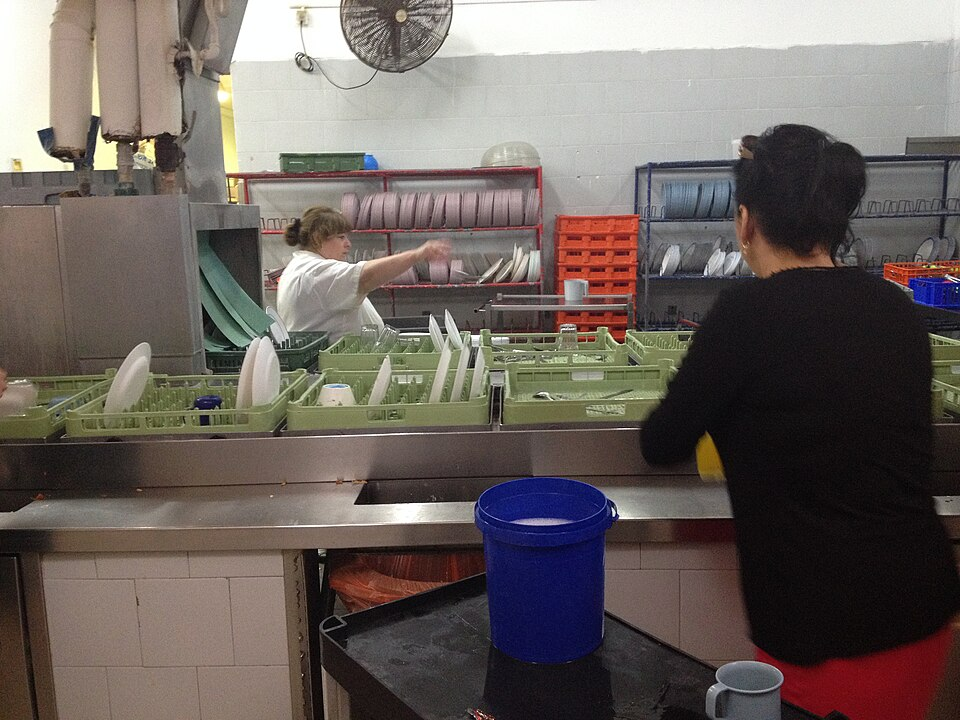
Plate and pot washing was done by hand, continuously, through service, by staff at the bottom of the hierarchy working in heat and water for the whole shift.
Industrial dishwashers handle the volume and the role persists in smaller form. The kitchen porter was the position every account of this period mentions in passing and nobody describes, and the job was the hardest physical work in the building.
12. The Still Room, the Larder and the Pastry Were Separate Kingdoms
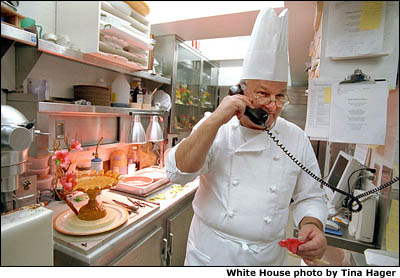
Beyond the hot sections, a large hotel ran a still room producing teas, coffees, toast and breakfast items, a larder handling all cold work and butchery, and a pastry section that operated on a different timetable from everybody else.
Each had its own chef, its own staff, its own equipment and in practice its own culture, and relations between them were frequently poor. Pastry in particular worked early mornings and overnight because dough and chilling dictate the hours, which meant the pastry team barely overlapped with the people they were feeding.
Consolidation of sections, bought-in bakery and pastry, and smaller kitchens generally have merged or removed most of them. The separation was a consequence of scale – a hotel producing several hundred covers plus room service plus banqueting genuinely needs parallel operations – and it also produced a building in which groups of people worked a few yards apart for years without really knowing each other.
13. Nobody Expected the Staff Simply Not to Come
In 1960 there was a reliable supply of people prepared to accept the hours, the conditions and the treatment in exchange for training and a route up.
The supply ended. Recruitment and retention are now the industry’s binding constraint, and the changes to hours, conditions and behaviour have been driven substantially by the fact that people will no longer do it otherwise. It is a rare case where improvement came from labour scarcity rather than from regulation or from anybody’s conscience, and it has worked faster than either.
14. The Brigade Taught the Trade and Nobody Paid for Training
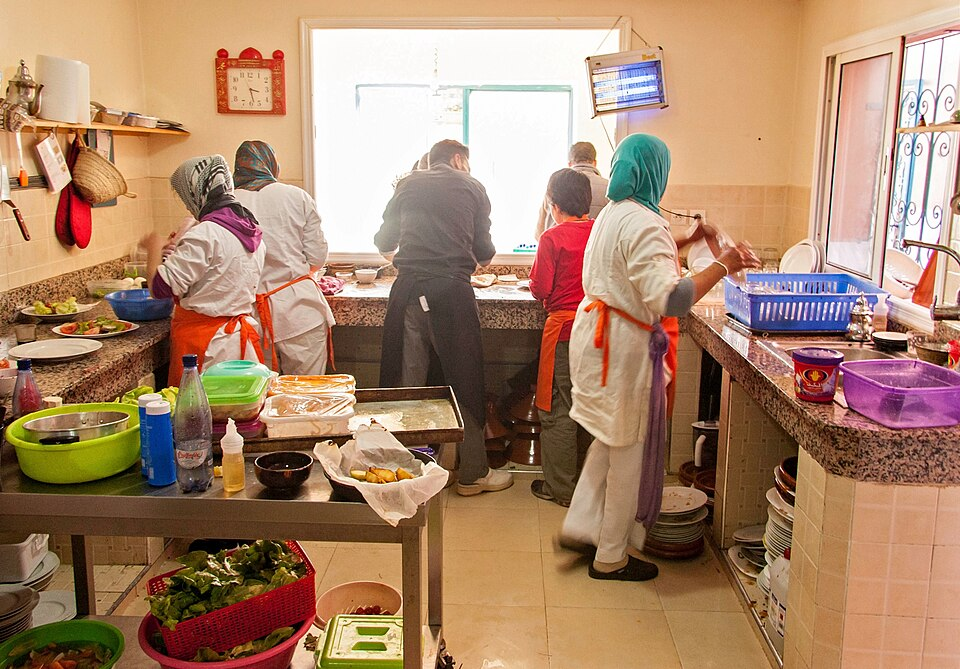
A commis learned by working in each section in turn under people who knew it, over years, for very little money, which was understood as the price of the training.
Catering colleges, apprenticeships with defined standards and structured progression have supplemented it, and the kitchen remains where most of the learning happens. The old arrangement transferred knowledge extremely effectively and relied on people accepting years of poor pay and treatment to get it, which is exactly the trade that stopped being accepted.
15. The Hotel Kitchen Was the Only Place to Learn and It Is Not Any More
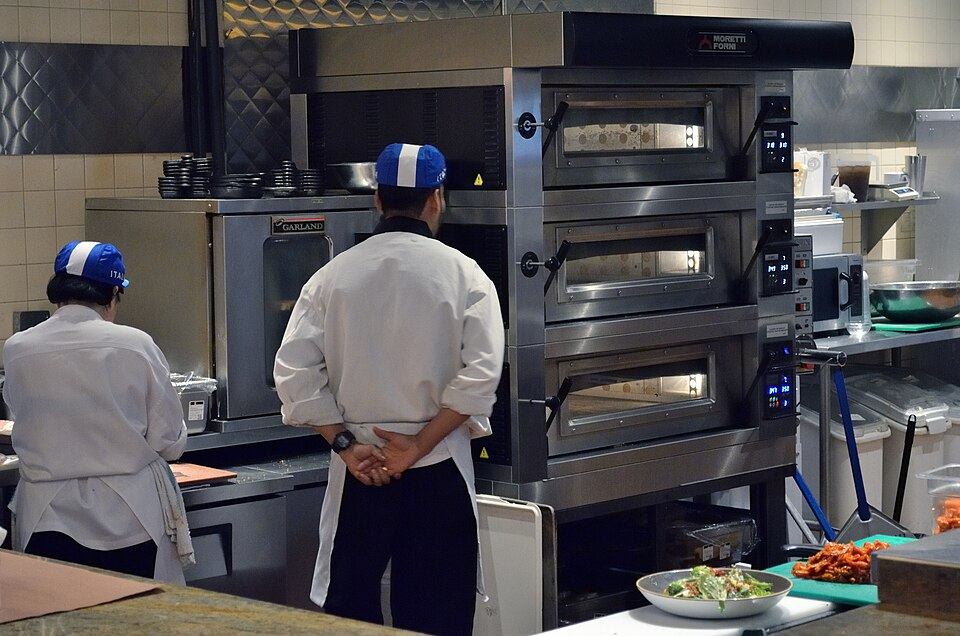
The grand hotel kitchen was the centre of the profession – where the standards were set, where the best people worked, and where a career was made.
Restaurants, and particularly small independent ones, took that position decisively. The hotel kitchen is now one option among many rather than the route, which has changed what the job looks like and removed the single hierarchy that everybody in the profession used to be somewhere inside.
Nobody Reformed It. People Stopped Turning Up.
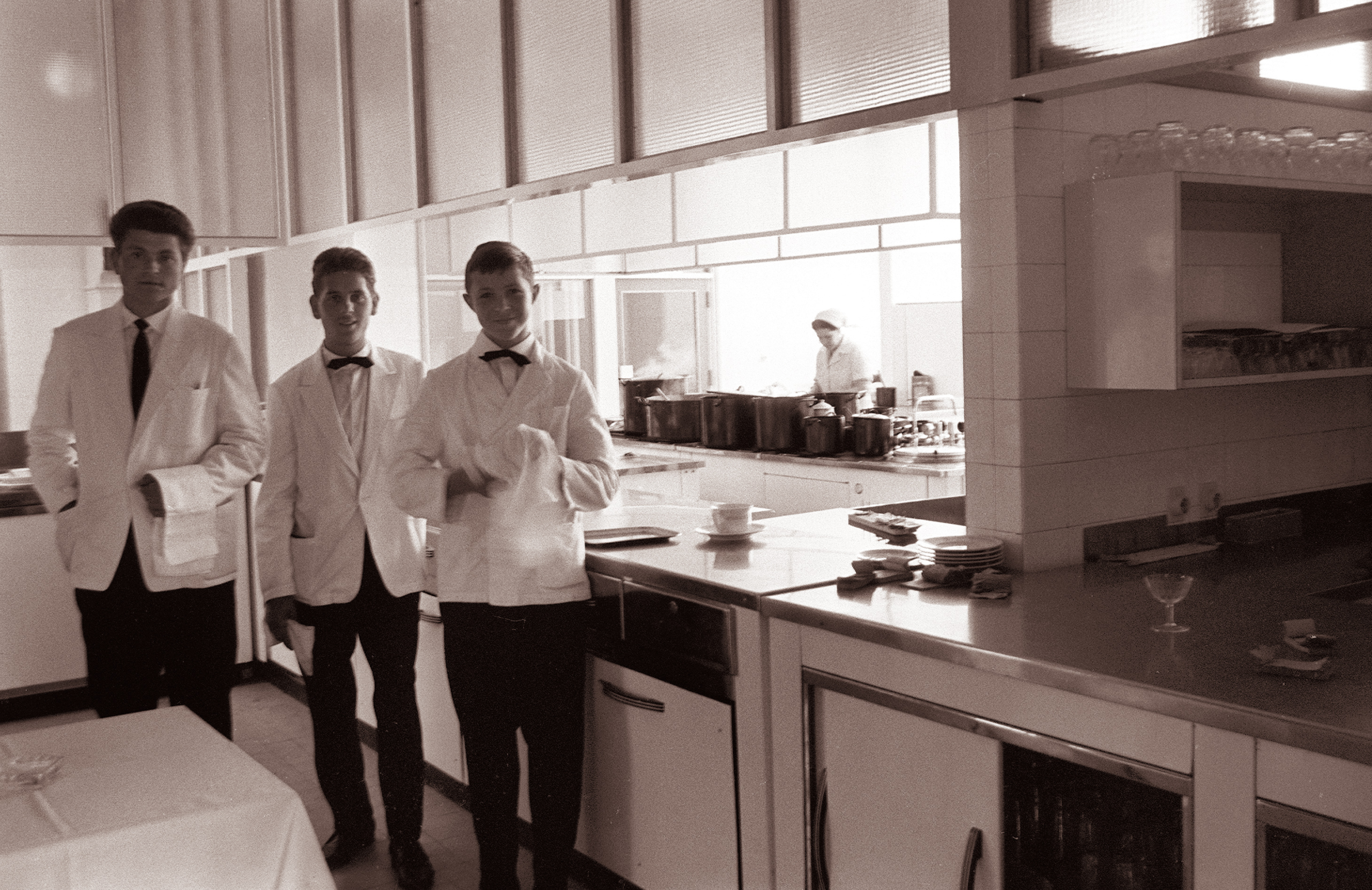
The interesting thing about how professional kitchens changed is where the pressure came from, because it was not mainly regulation and it was certainly not conscience.
Employment law improved and was patchily enforced in an industry of small employers with high turnover and a workforce frequently unaware of its rights. Food hygiene regulation genuinely transformed safety, which is a real success, and it did nothing about hours or treatment. Campaigns and journalism raised the subject repeatedly over decades with limited effect.
What actually moved it was that the supply of people ran out.
The entire system depended on a reliable stream of young people prepared to accept extremely long hours, low pay and routine abuse in exchange for training and a route upward. When other industries offered better conditions, when the training could be got elsewhere, and when the generation arriving simply declined the bargain, kitchens found themselves unable to staff.
At that point the hours changed, the behaviour changed, the split shift started disappearing and the language of management altered – not because anybody was persuaded, but because a kitchen that cannot recruit cannot open.
That is worth sitting with, because it cuts against the comfortable version of how workplaces improve. In this case the moral argument was available for decades and lost repeatedly, and the thing that won was labour scarcity. The improvements are real and welcome and arrived through the market rather than through persuasion.
It also means the gains are not secure in the way a legal right is. A change that came from scarcity can be reversed by surplus, and the parts of the industry where labour is plentiful are reliably the parts where the old conditions have survived.
If you came up through a kitchen like this, you will know which section you started on and what the chef was like.
And you will know whether you would send your own children into it.
Like our content? Follow us for more.