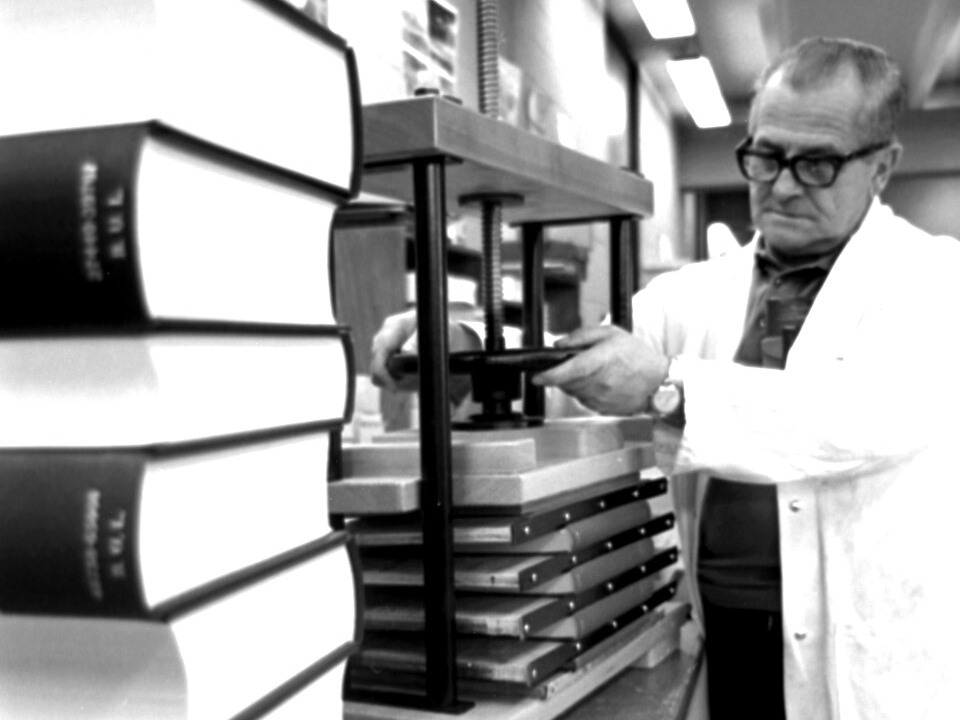
A bindery in 1960 contained three machines capable of taking a hand off or crushing one, a pot of hot animal glue burning all day in a room full of paper and solvent, and a bench where leather was pared with a razor-sharp knife against the operator’s thumb.
It also did a great deal of damage it did not know it was doing, conscientiously and to specification, by trimming and discarding the original bindings of books that are now valued for exactly what was thrown away. Here are sixteen things about that workshop.
1. The glue was animal hide, melted in a pot and kept hot all day
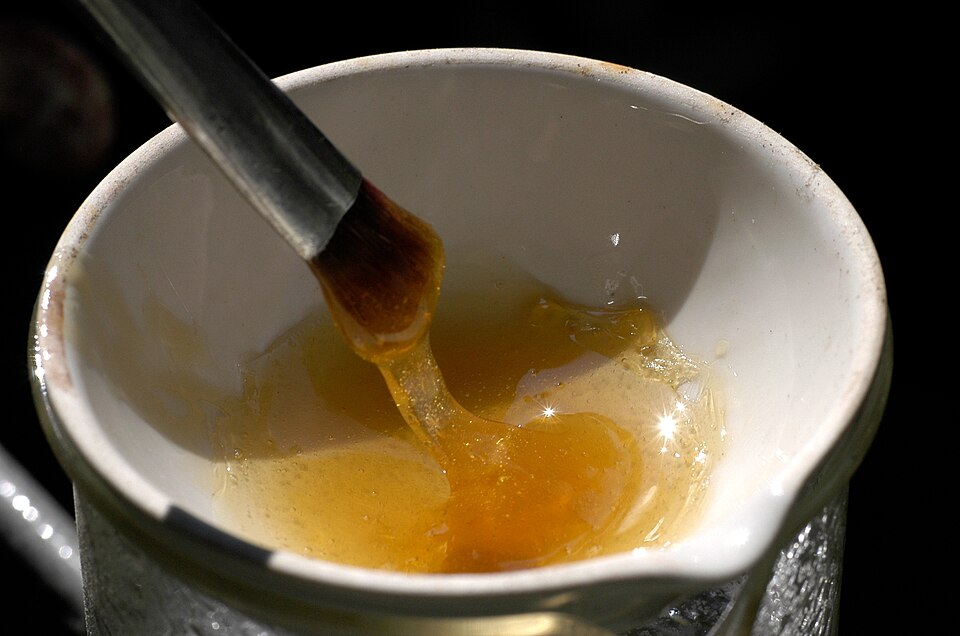
Traditional binding used hide glue, made from collagen, which has to be heated to work and sets as it cools. A bindery kept a glue pot on a gas ring or in a water jacket from the start of the shift to the end of it.
The pot is the problem rather than the glue. A heated vessel of hot adhesive on an open ring, in a room full of paper, board, leather, cloth and solvent, left running all day and refilled while hot, is a fire and scald hazard that modern practice addresses with thermostatically controlled electric pots, enclosed heating and PVA adhesives that need no heat at all.
Hide glue itself has come back into use for conservation work precisely because it is reversible, which is the property that makes it valuable now and made it ordinary then.
Like our content? Follow us for more.
2. The guillotine had no guard and took a hand off at the wrist
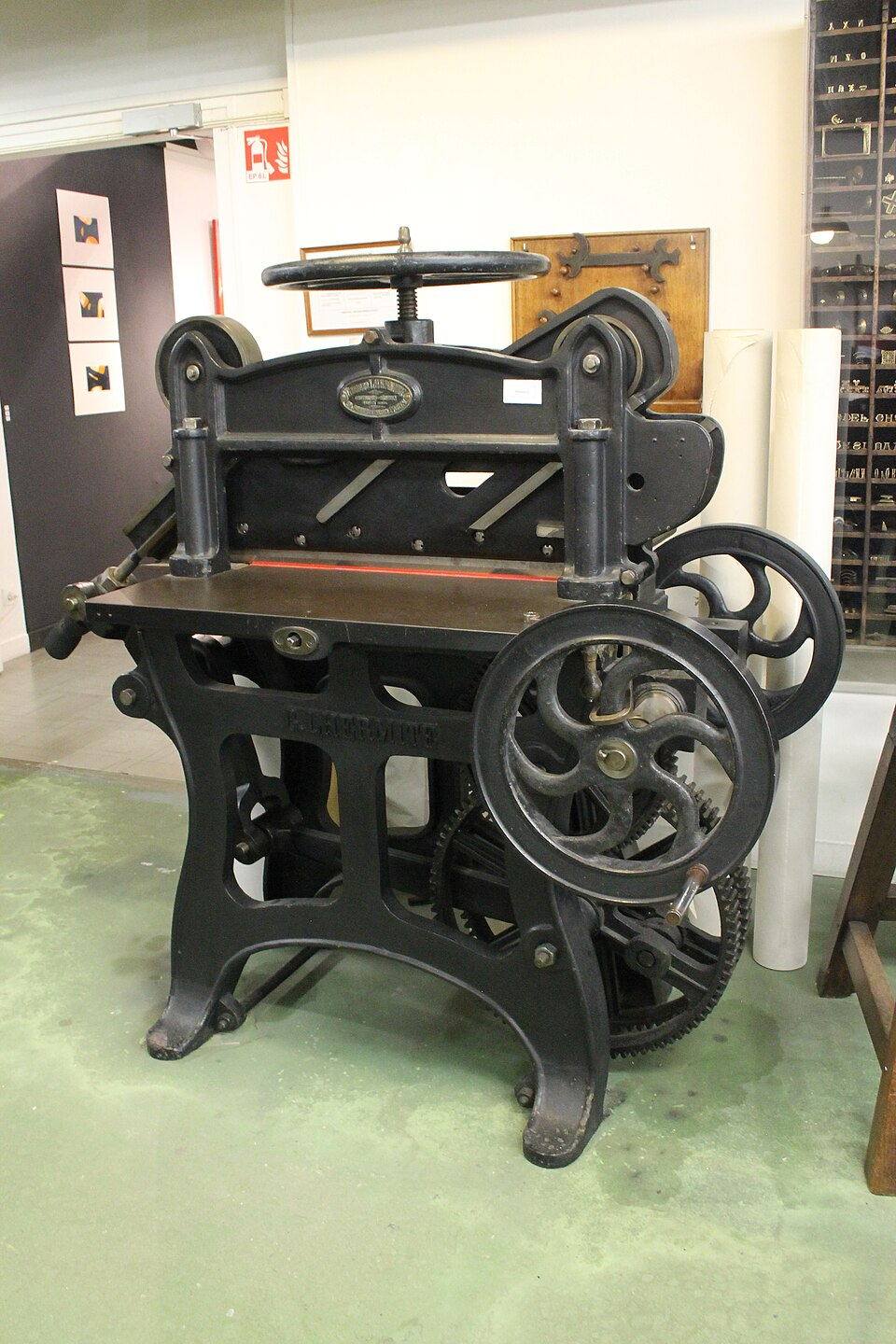
The board guillotine and the paper guillotine were the heart of a bindery: a weighted blade on a lever or a screw, brought down by hand or by foot, cutting through a stack of paper or board in one stroke. On the machines of this period the blade’s path was open.
Industrial guillotines are now among the most heavily guarded machines there are, with two-hand controls, light curtains or interlocked guards, blade-return interlocks, and specific requirements for blade changing, because the consequence of a hand in the path is immediate and total.
This is the one hazard in the trade that everybody in it knew about and nobody could do much about, and it is the reason the modern machine looks the way it does. No injury is described here; the guarding is the point.
3. Leather was pared with a knife held against the thumb
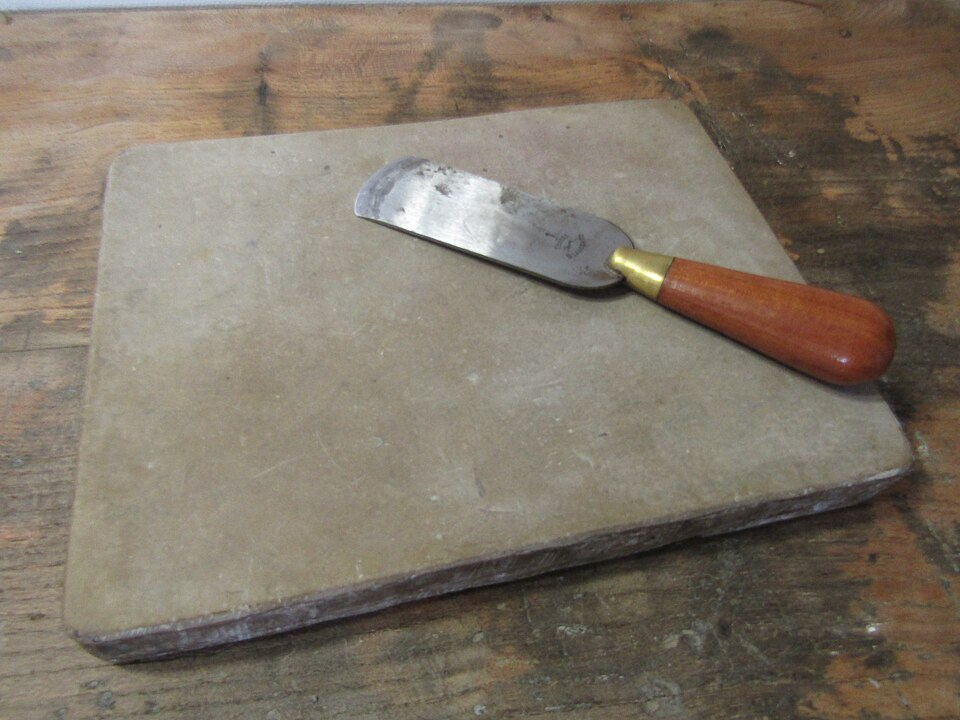
Covering a book in leather requires the edges to be thinned, which is done by paring: a very sharp knife held almost flat, drawn across the leather on a stone or glass slab, with the binder’s thumb as the backstop. A binder’s left thumb accumulated scars.
There is no modern equivalent because there is no better method, and hand paring remains exactly as it was with exactly the same knife. What has changed is the availability of machine-pared and pre-thinned leather for most work, which removes the operation from the great majority of jobs.
It is one of several operations in this file that survive unchanged in conservation and fine binding, where the method is the point and the volume is low enough that the risk is manageable.
4. The leather itself was dressed with chemicals that have since been withdrawn
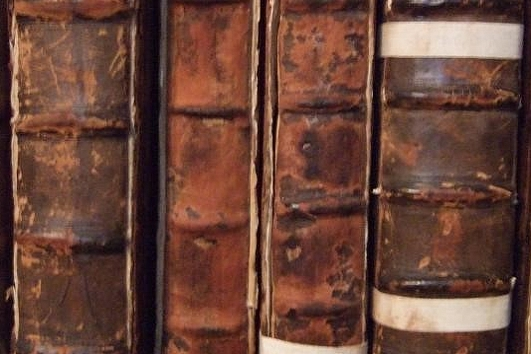
Bookbinding leather was tanned, dyed and dressed, and the preparations used on it in and before this period included compounds that are no longer used: chrome and vegetable tanning agents, aniline dyes, and dressings and preservatives containing substances since restricted.
The significant one for the trade’s own history is the sulphuric acid used in nineteenth and early twentieth century tanning, which is the cause of the red rot that destroys so much Victorian and Edwardian leather binding from the inside. It is a materials failure built into the object at manufacture.
Modern binding leather is tanned to specifications developed specifically to avoid that, and conservation practice treats red rot as effectively untreatable, which is why so many library bindings of that era are now consolidated rather than repaired.
5. Marbled and decorated papers were made with the pigments of the day
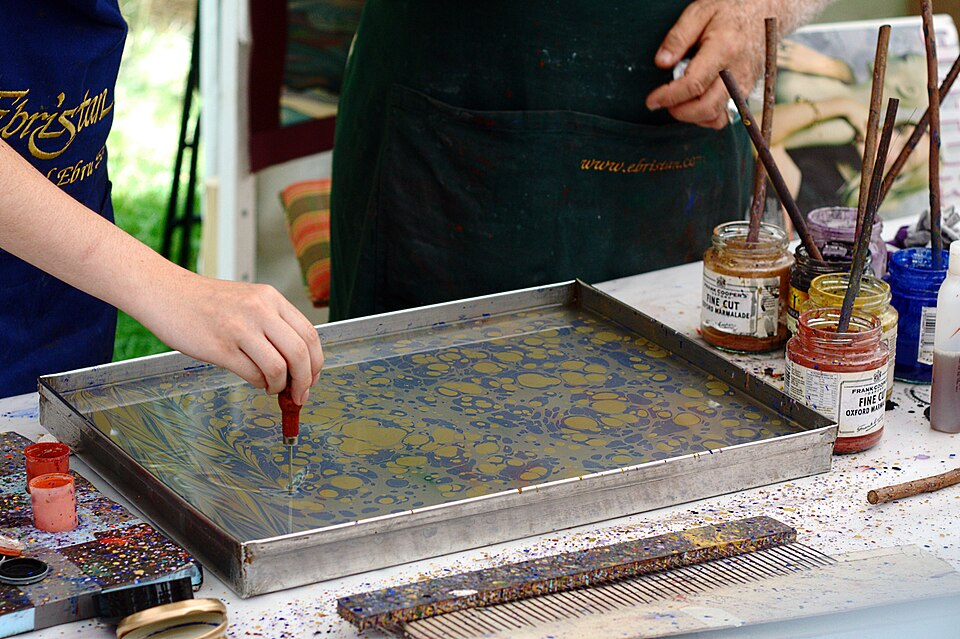
Decorated endpapers were made in the bindery or bought in, and marbling involves floating pigment on a size bath and drawing it off onto paper. The pigments included lead, chromium and arsenical compounds for particular colours, handled wet and as dry powder when the colours were mixed.
The modern marbler uses the same technique with different pigments, because the colours involved are available in non-toxic formulations and the historical ones are not permitted in general sale. Ox gall, the traditional surfactant, is still used and is harmless.
Green is the colour with the worst history across all nineteenth-century decoration, and a great many decorated papers and cloth bindings of that era carry pigments that modern handling guidance treats with care.
6. Bookcloth and board dust was in the air continuously
Cutting, trimming, sanding and rounding produce paper and board dust, and a bindery generated it all day from the guillotine, the backing operation, the edge trimming and the sweeping up afterwards.
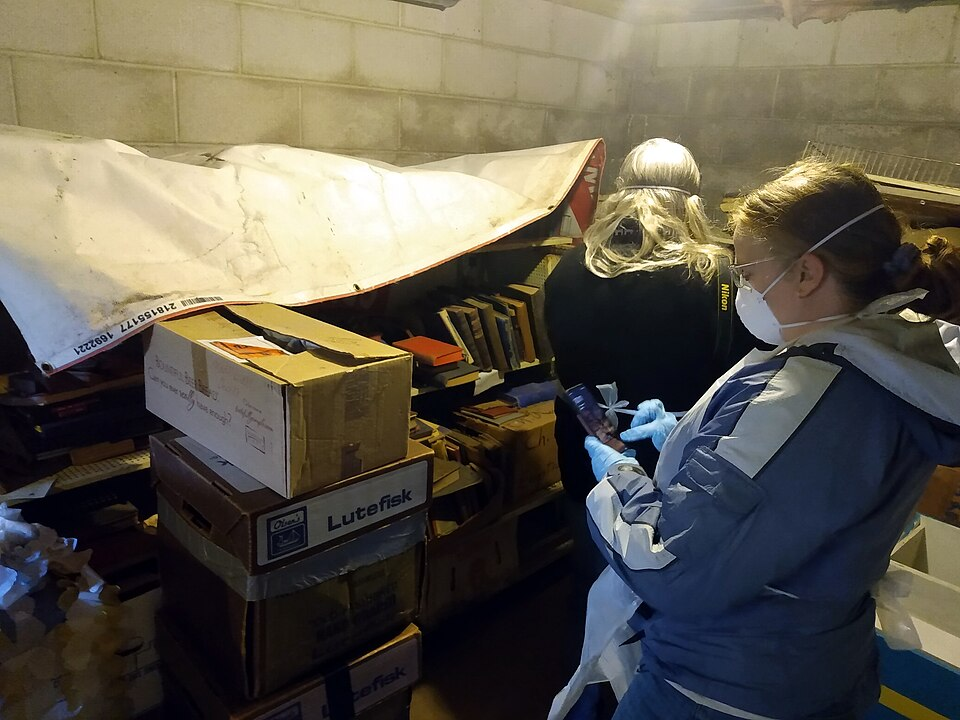
Paper and board dust is a nuisance dust rather than a toxic one, and the modern approach treats it as a respiratory irritant requiring extraction at the machine and vacuum rather than dry sweeping. The specific concern that has emerged since is with old books rather than new: mould and spores in stored material.
That second point is the live one for anybody handling old books now. Conservation guidance covers handling mouldy material with gloves and a mask in a ventilated space rather than brushing it off in a room where people are working.
7. Gold tooling meant heated brass tools pressed by hand
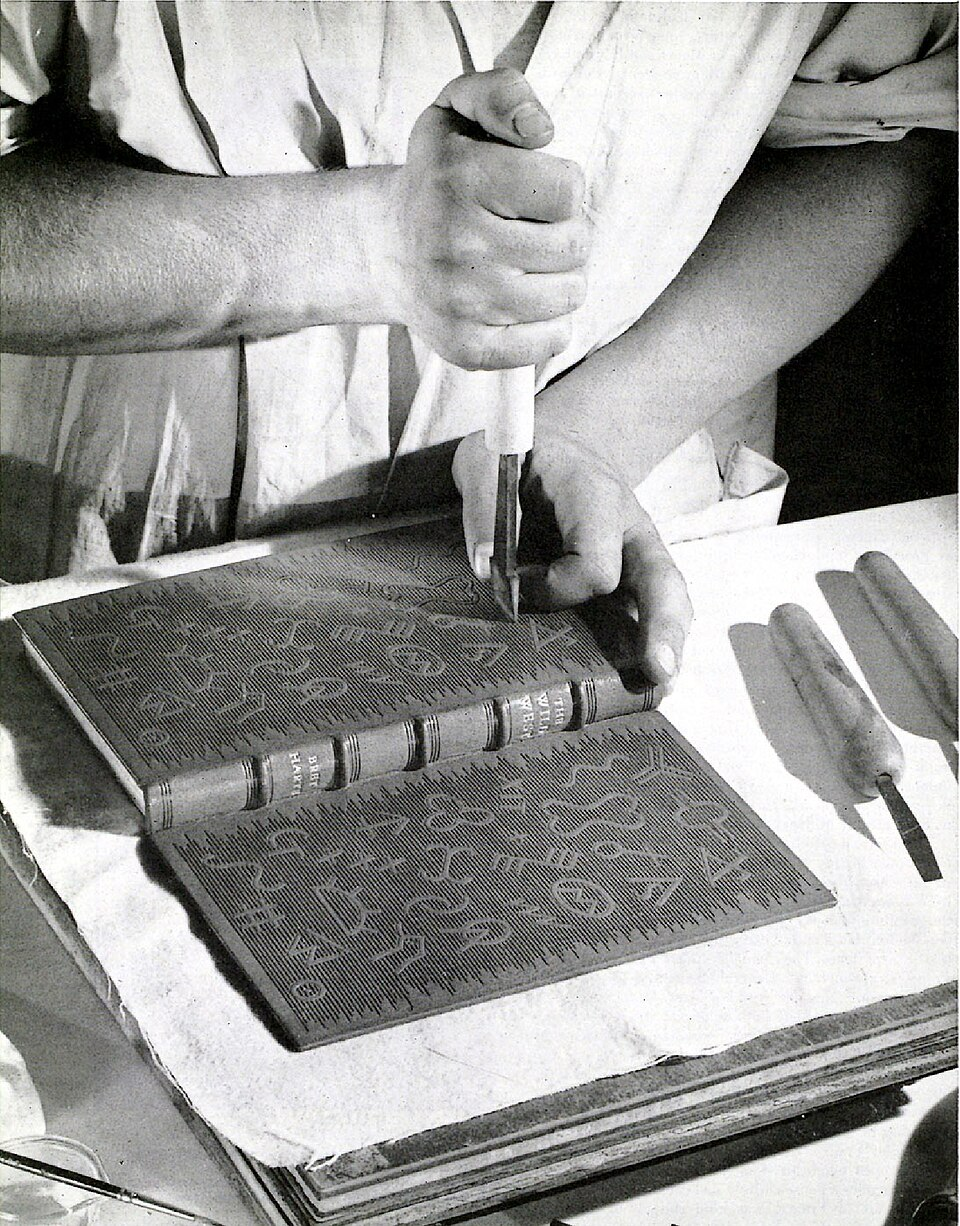
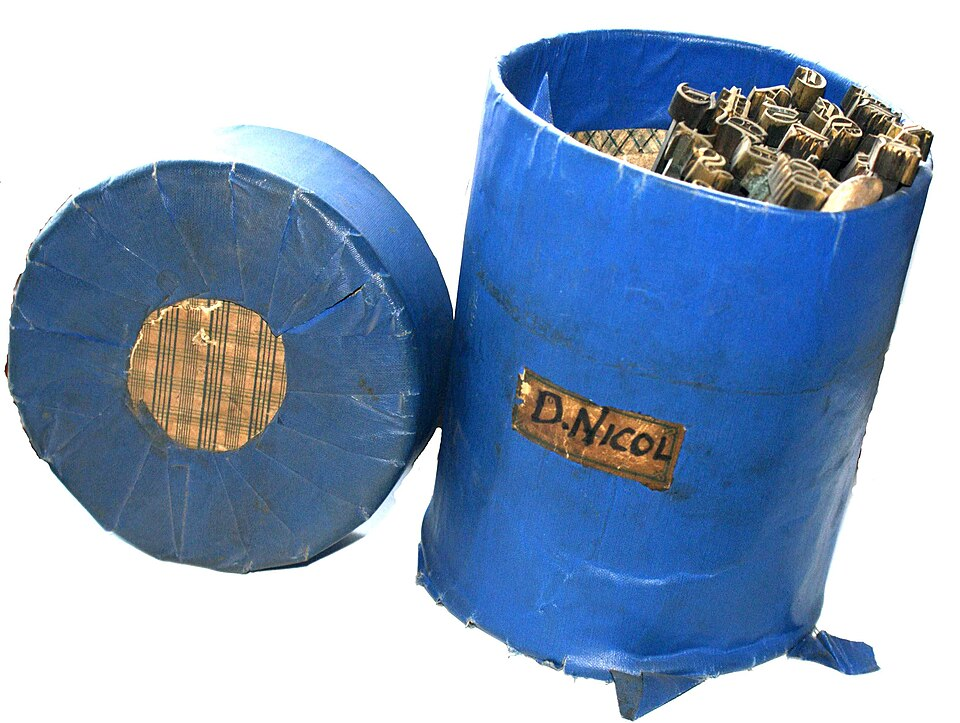
Finishing — the lettering and decoration on a spine — was done with brass tools and type heated on a stove or in an electric heater, pressed through gold leaf onto the leather by hand, with the temperature judged by touching the tool to a damp sponge or to the binder’s cheek.
The method survives in fine binding and the temperature judgement with it, and the only changes are thermostatically controlled heaters and the availability of blocking presses for production work. It is one of the hardest skills in the trade and one of the least changed.
The cheek test is the detail that sounds alarming and is simply how it is done. A finisher learns the temperature as a sensation and there is no instrument that replaces the judgement.
8. The blocking press was a heated platen with no interlock
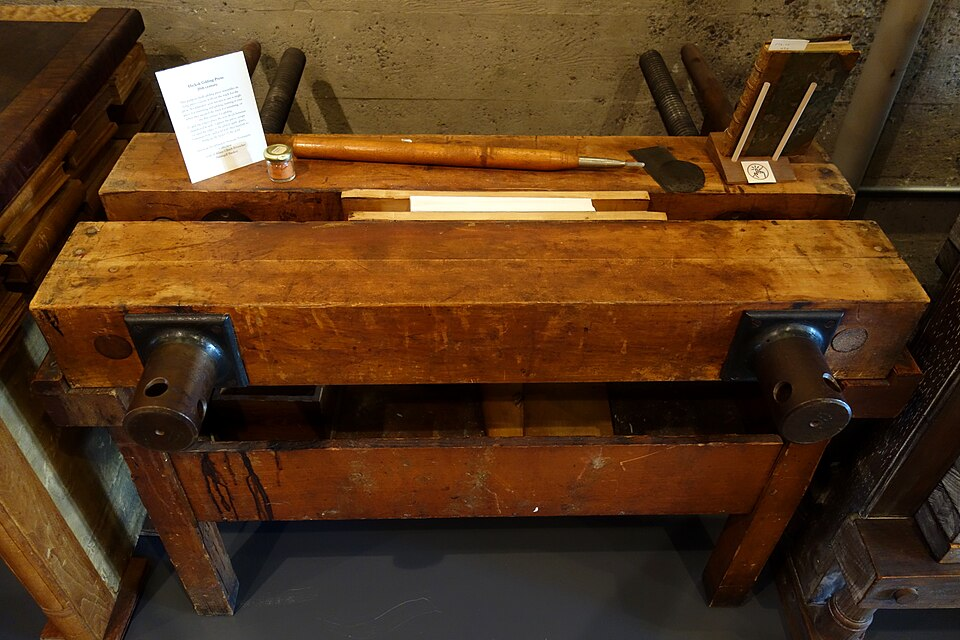
Production lettering used a blocking press: a heated plate carrying type or a brass block, brought down onto the case under pressure by a lever or a treadle, with the operator’s hands feeding the work in and out of the gap.
Modern presses of the same kind have two-hand controls or interlocked guards for exactly the reason the old ones needed them, and the hazard is a crushing and burning one rather than a cutting one. The machines themselves have changed very little otherwise.
A heated platen that closes on whatever is in the gap, operated by the same hands that load it, is the second of the three machines in this file whose modern version is defined by its guarding.
9. The standing press and the nipping press were operated by weight and a long bar
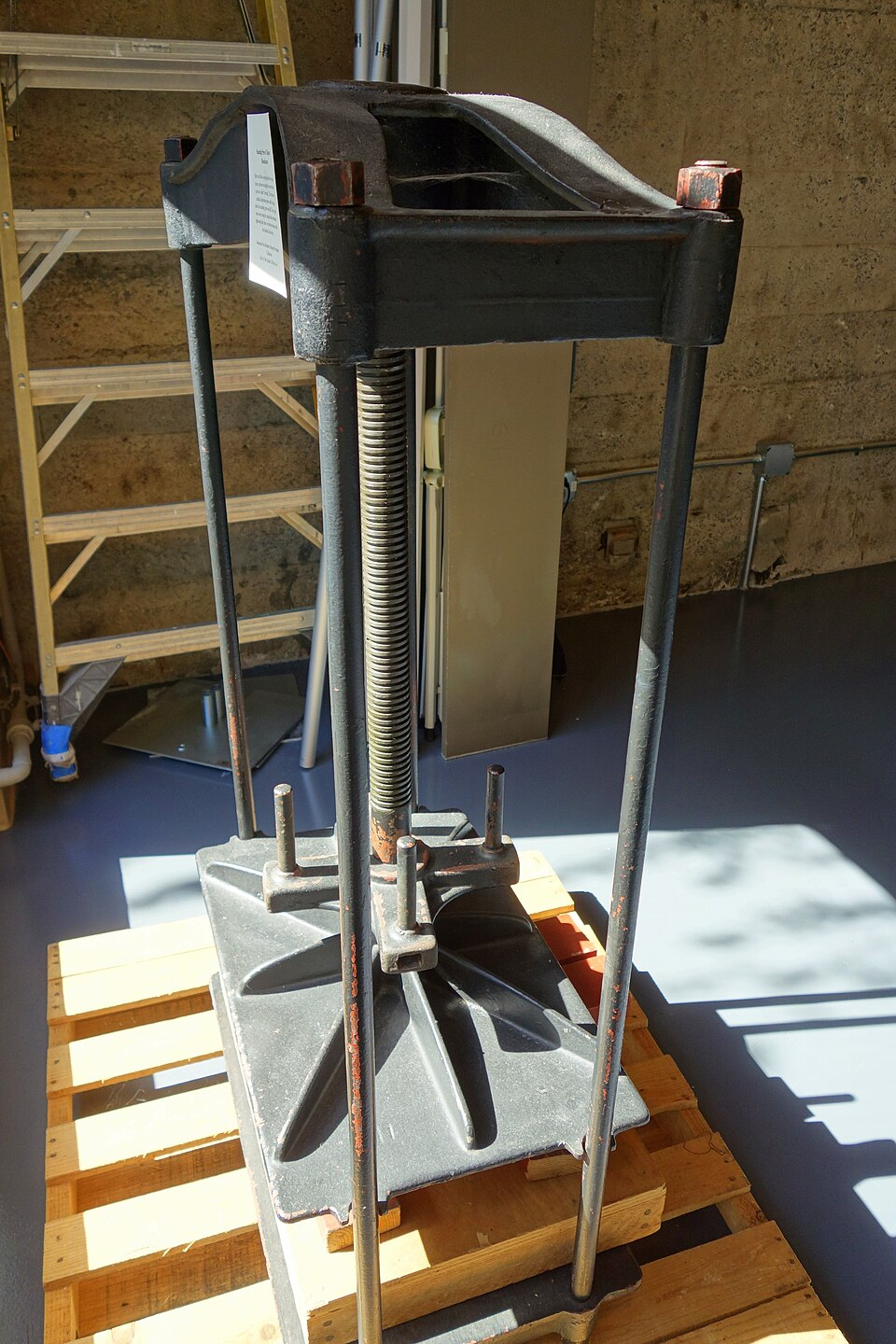
Books under glue were pressed overnight in a standing press — a vast iron screw press operated with a bar — and in nipping presses on the bench. The force applied was whatever the binder could generate, and the presses weighed enough that moving one was a job in itself.
Modern equivalents are hydraulic or are the same cast iron presses still in use, which is common in conservation workshops, and the hazards are manual handling rather than machine ones. Lifting and moving cast iron presses and loaded boards is the trade’s musculoskeletal story.
That is the quiet injury in binding and in most hand trades: not the dramatic machine but the daily lifting, done for forty years with no thought given to it.
10. Benzene and other solvents cleaned everything
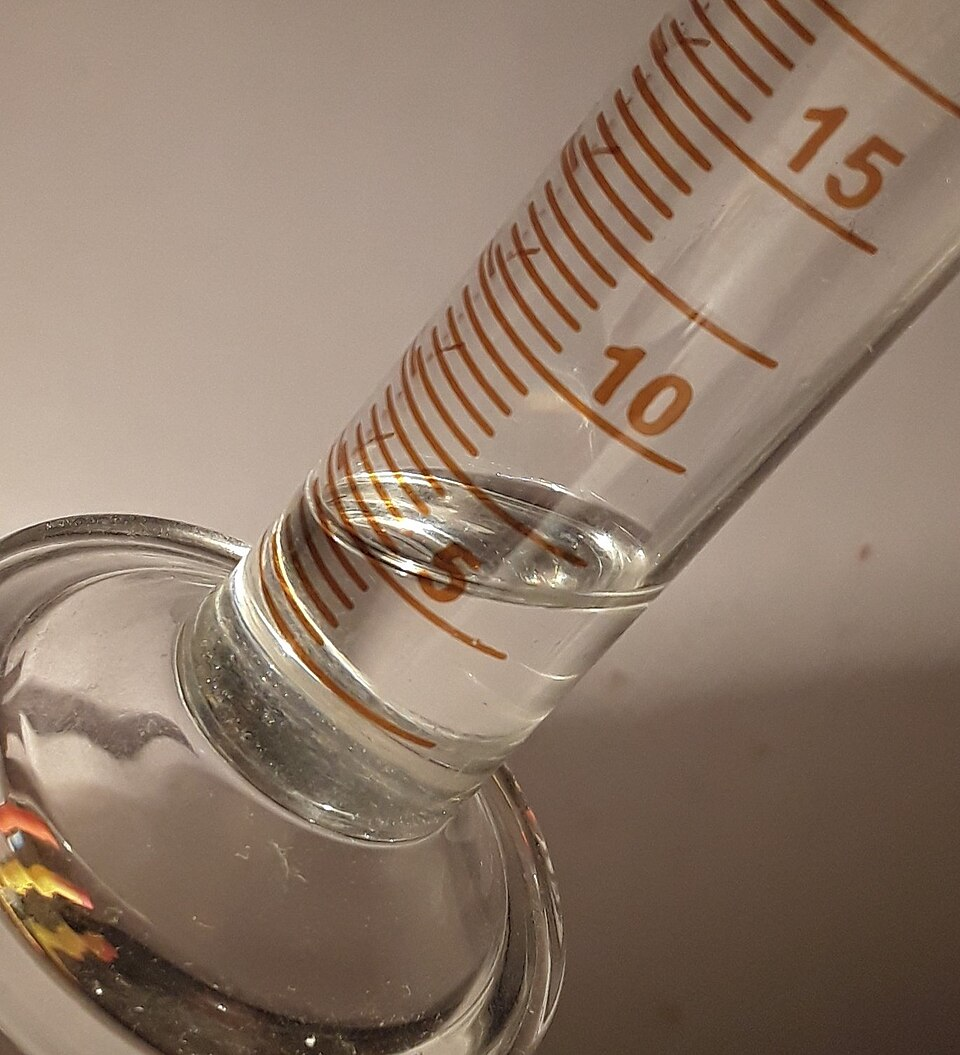
Cleaning tools, type, blocks, glue residue and old bindings used whatever solvent was in the shop, which in this period meant petroleum distillates, benzene in earlier practice and the chlorinated solvents when they were available, used from open containers at the bench.
Benzene is a recognised human carcinogen with no safe occupational exposure level and has been removed from such uses entirely. Conservation practice now uses specified solvents with defined handling, local extraction, gloves and fume hoods for anything volatile, because the people doing it work with these materials for a career.
The bindery is the fourth trade in this series to turn up with benzene on the bench, which is the point worth noting: it was the default solvent of mid-century technical work everywhere, in every small shop, for everything.
11. The library rebinding trade destroyed a great deal of what it bound
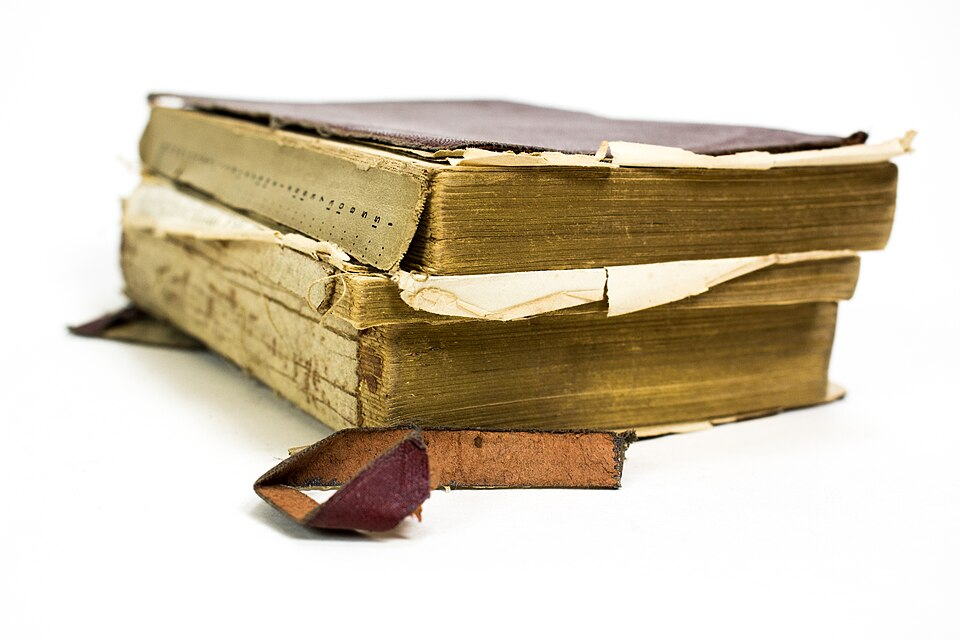
A substantial part of the bindery’s work was library rebinding: taking a publisher’s binding off a book and putting a durable library case on it, trimming the edges square in the process and discarding the original covers, spine, endpapers and sometimes the dust jacket.
Current library and conservation practice is the reverse. Original bindings and jackets are retained because they carry bibliographic and physical evidence, trimming is avoided because it destroys margins permanently, and the modern approach to a failing book is a box or a minimal repair rather than a rebind.
This is the trade’s real legacy problem and it was done conscientiously, to specification, by skilled people, for decades. A great many nineteenth-century books survive only as trimmed library cases because somebody in a bindery was doing their job properly.
12. Repairs were made with materials chosen to last rather than to be removable
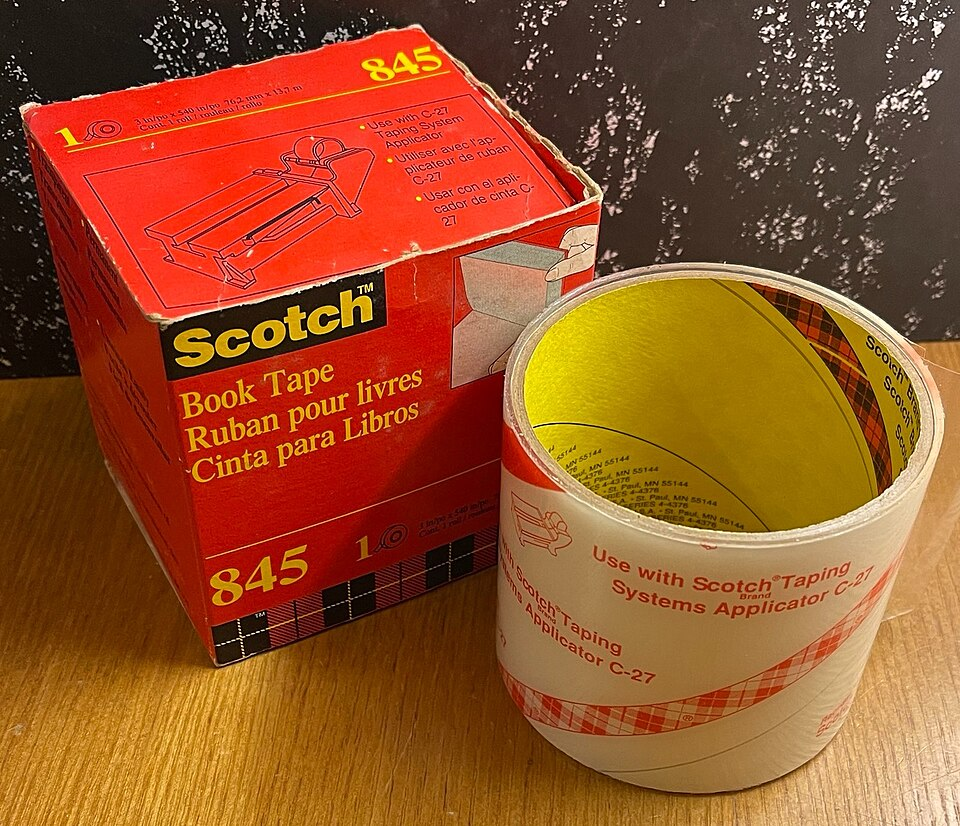
A 1960 repair used whatever was strongest: synthetic adhesives as they arrived, pressure-sensitive tape, heavy linings, new spines glued directly onto old boards, and in some shops lamination of fragile paper between plastic film under heat.
Conservation reversed every one of those principles. The governing rule now is reversibility — a repair must be removable without damaging the original — which rules out pressure-sensitive tape, most synthetic adhesives and heat lamination entirely, and favours wheat starch paste, Japanese tissue and mechanical rather than adhesive attachment.
Cellulose acetate lamination in particular is the one conservators dread, because it was applied to a great many important documents in good faith in exactly this period and cannot be undone without substantial risk.
13. Nothing in the workshop was ventilated
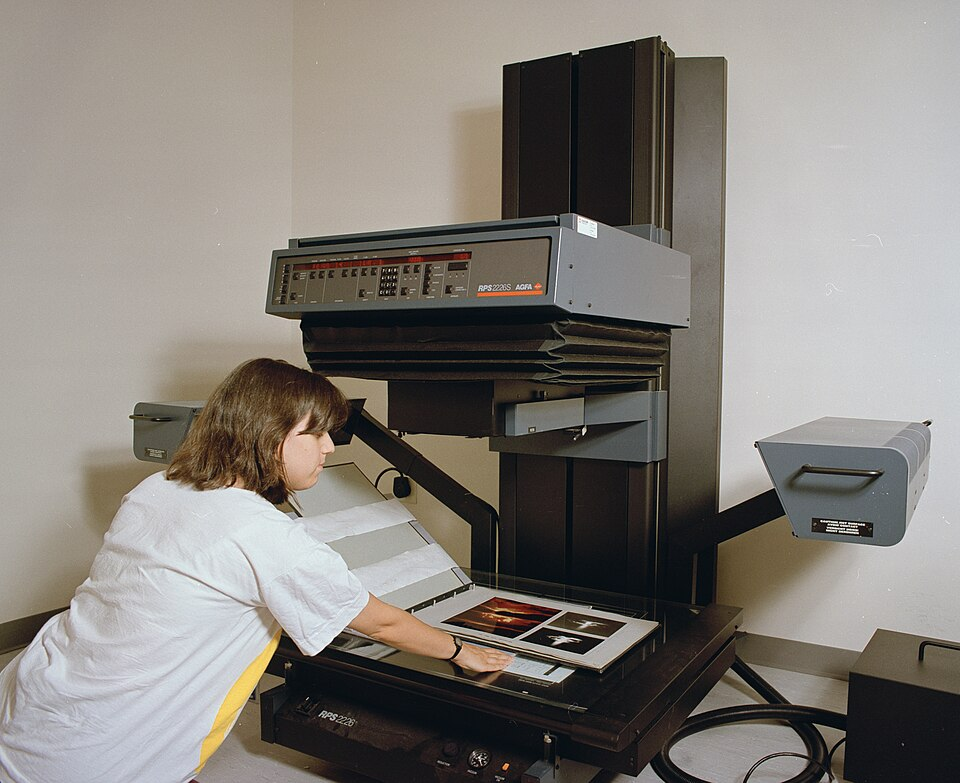
A bindery was a workshop with windows: a glue pot, solvents, dyes, pigments, paper dust and a leather bench in one room, with extraction consisting of whether anybody had opened anything.
Modern workshop requirements cover local extraction at dust-generating machines, fume extraction for solvent work, separation of wet and dry processes and appropriate general ventilation, and the conservation studios that carry on these crafts are built around those provisions.
The same structural point applies here as to every small trade in this series: nobody inspected a bindery, there was no employer in most cases, and the hazards were resolved from outside when the materials themselves were withdrawn.
14. The apprenticeship was long and the knowledge was in the hands
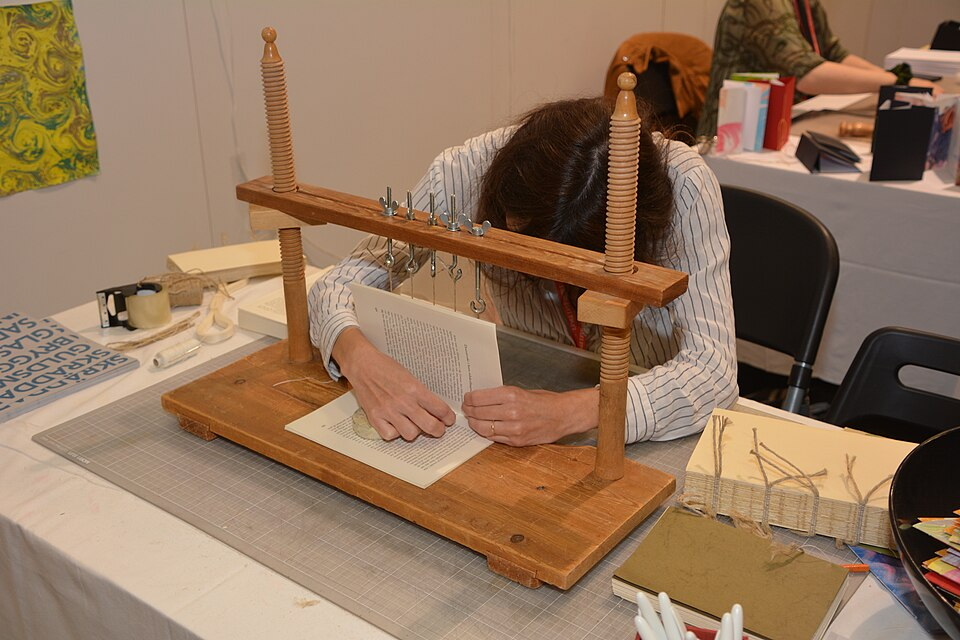
Binding was a multi-year apprenticeship divided into forwarding — the structural work of sewing, rounding, backing and covering — and finishing, the decoration, with finishers regarded as the senior trade and some binders never crossing between them.
The division survives in fine binding and the training does not, in the sense that the industrial apprenticeship system that produced binders in numbers has gone. What exists now is conservation training at postgraduate level, private courses and a small number of workshops taking on apprentices, producing a far smaller number of far more theoretically trained practitioners.
The shift from trade to profession is the real change in this craft, and it has produced better conservation and fewer hands.
15. The trade was destroyed by the paperback and the photocopier
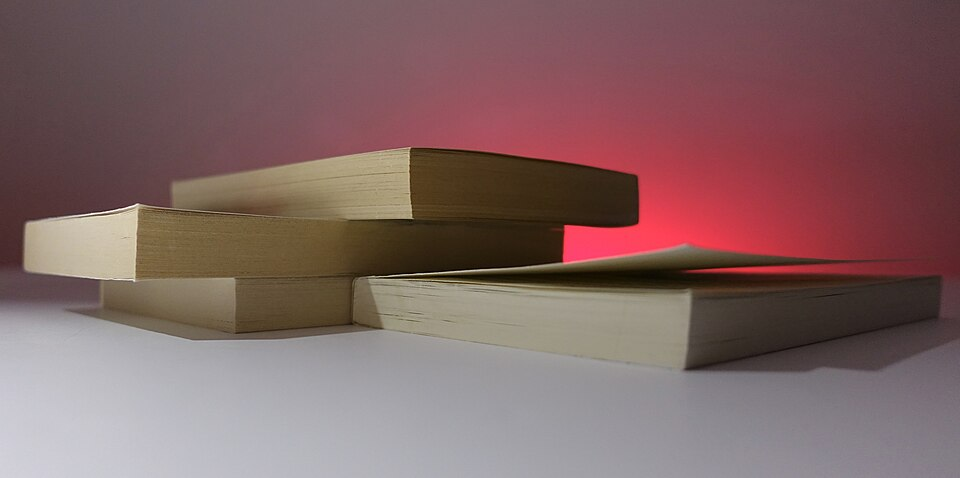
Two technologies ended most of it. Cheap mass-market paperbacks removed the market for durable bindings of ordinary books, and photocopying removed the need to bind periodicals and documents, which had been enormous volumes of bindery work.
What survived is at the two extremes: industrial case binding, which is highly automated and entirely unlike the hand trade, and conservation and fine binding, which are the hand trade with a different purpose. The middle — the jobbing bindery in every town, rebinding library books and binding up journals — has gone almost completely.
A handful of those businesses survive, usually by having moved into conservation, and they are the direct continuation of the trade this file describes.
16. And what the bindery knew that is worth having back
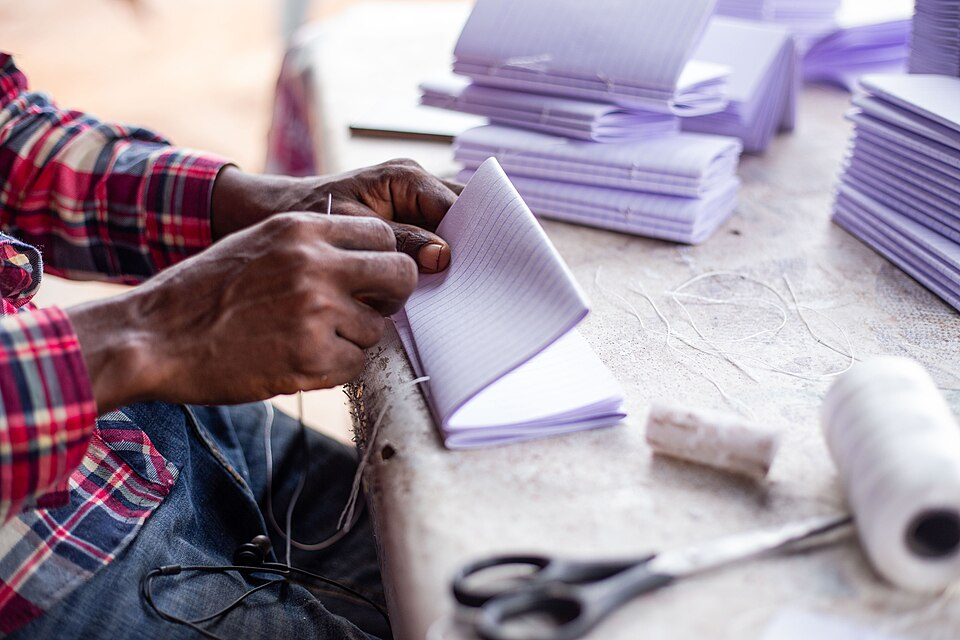
A sewn book opens flat, survives being read, can be repaired and will last centuries. A bindery could take a damaged book apart, resew it, round and back it and recover it, and produce an object better than the one that came in, and it could do that for an ordinary book at a price an ordinary library could pay.
That economics has gone. A modern ordinary book is adhesive-bound, is not designed to be opened flat or repaired, and costs less to replace than to look at, which is a reasonable outcome for a paperback and a poor one for anything somebody wants to keep.
The honest summary is that the guillotine, the blocking press, the glue pot and the benzene were the real hazards and are resolved, that the trade’s worst legacy is the trimming and discarding it did conscientiously for decades, and that the thing worth having back is the sewn structure and somebody within reach who can repair it.
Three machines, one solvent and the damage nobody intended
The hazards sort quickly. Three machines account for most of them — the guillotine, the blocking press and the standing press — and the modern versions of all three are defined by their guarding: two-hand controls, interlocks, light curtains and blade-return devices, because the consequences of a hand in the path of a weighted blade or a heated platen are immediate. The glue pot and the solvent bench account for the rest, and both were resolved from outside the trade: thermostatic electric pots and heat-free PVA adhesives replaced the open ring, and benzene was withdrawn from general use for reasons that had nothing to do with bookbinding.
The quieter hazard is the one the trade never counted, which is the lifting. Cast iron presses, loaded boards and standing work for forty years produced the musculoskeletal injury that every hand trade in this series produced and none of them recorded.
The damage is a different category and is the more interesting half of this file. Library rebinding trimmed margins square and discarded original covers, spines, endpapers and jackets, as the specification required, for decades. Repairs were made with pressure-sensitive tape, synthetic adhesives and in some cases heat lamination between plastic film, chosen because they were strong. Conservation has reversed every one of those principles under a single rule — that a repair must be removable without damaging the original — and the cellulose acetate lamination applied in good faith in this very period is the one conservators now regard as the hardest thing in the field to undo.
There is one thing in this file with a practical application for anybody who owns old books. Do not repair them with tape. Pressure-sensitive tape is the single most common and most damaging thing done to books and documents by their owners, it discolours and migrates into the paper, and removing it later is a specialist job that frequently cannot be done cleanly.
If a book matters, a box costs very little and does more good than any repair an owner can make, and a conservator rather than a bindery is the person to ask. The second useful thing is to leave original covers and jackets on books, which is now the settled position and was the opposite of what this trade was paid to do.
Like our content? Follow us for more.