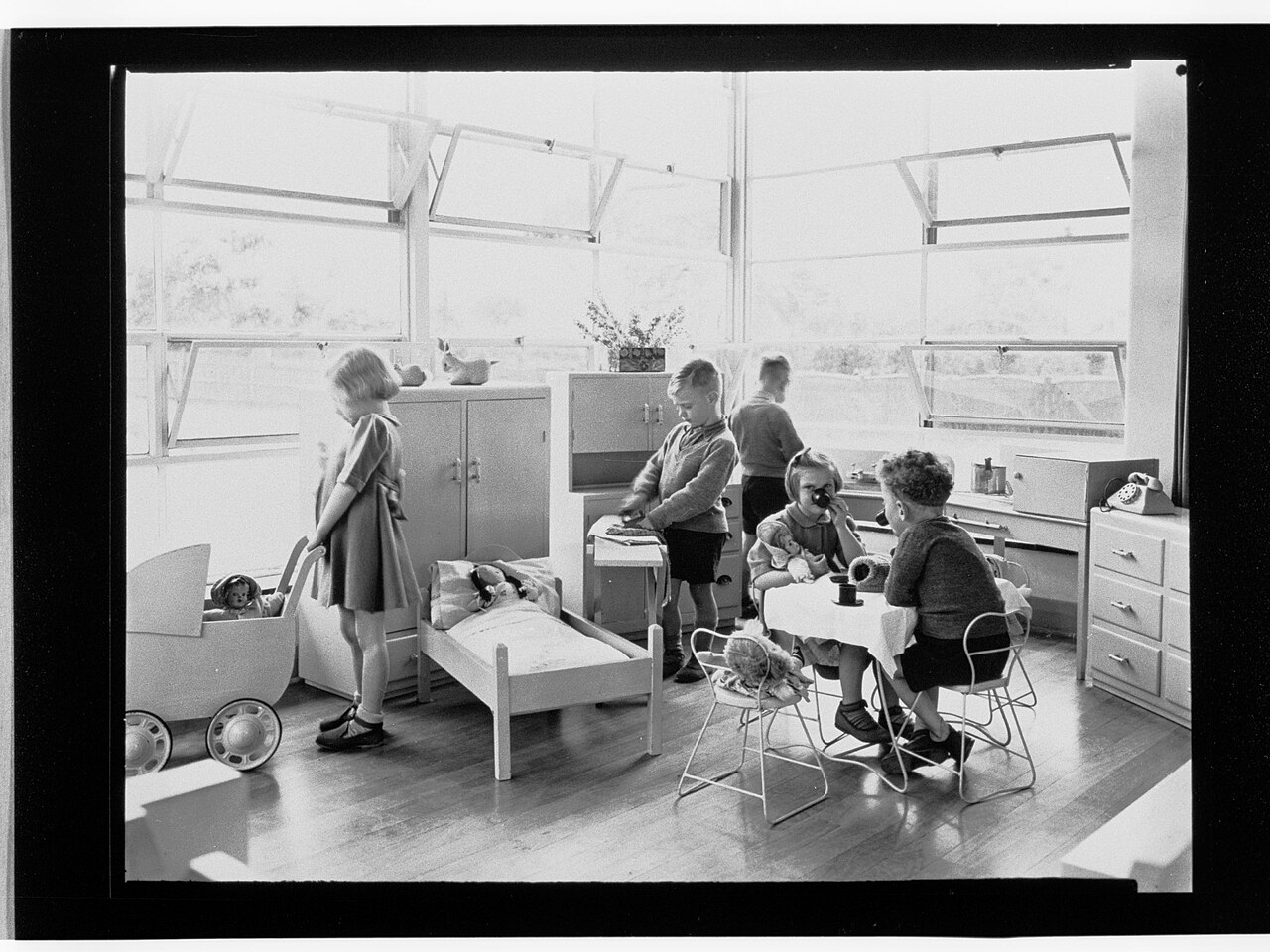
The Wendy house was the only thing in the building sized for the children who used it, and almost all of its equipment is still in use. Here are sixteen things it held.
1. It was a wooden house a child could stand up in
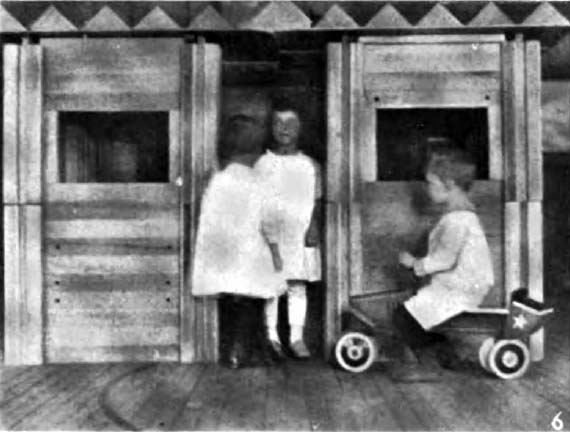
The Wendy house was a free-standing timber structure in the corner of an infant classroom, with a door, a window, sometimes a pitched roof, sometimes curtains, large enough for three or four children to be inside it at once.
The scale was the whole point. It was not a dolls’ house to look into; it was a building a five-year-old could occupy, which gave it a quality no other piece of classroom furniture had.
Modern early years provision still has role-play spaces and they are frequently lighter, modular, open-sided and reconfigurable, partly for supervision and partly so they can become a shop, a hospital, a cafe or a rocket rather than being permanently a house. The enclosure has been traded for flexibility.
Like our content? Follow us for more.
2. The home corner was fitted out like a kitchen
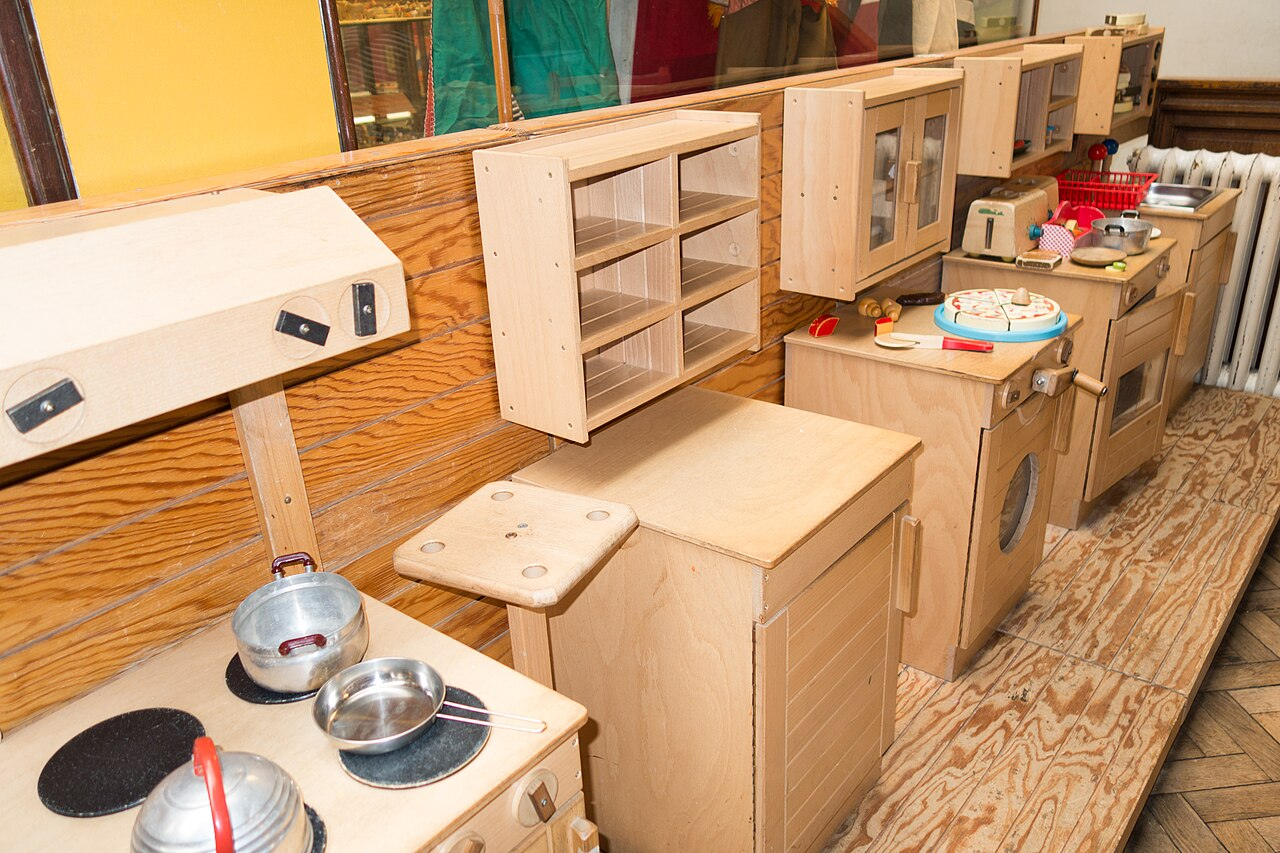
Beside or inside it sat a wooden cooker with painted rings, a sink unit, a cupboard, a small table and chairs, a tea set, pans, a clothes airer and a dolls’ pram.
That equipment was substantial, purpose-made and bought from educational suppliers, and a well-equipped home corner represented a serious proportion of an infant classroom’s capital.
The same equipment is still made and is still central to early years practice, which is one of the strongest endorsements any item in this series receives. What has changed is the surrounding intention: the area is now planned, resourced and changed deliberately to extend particular kinds of play rather than set up once and left.
3. In practice it was treated as the girls’ corner
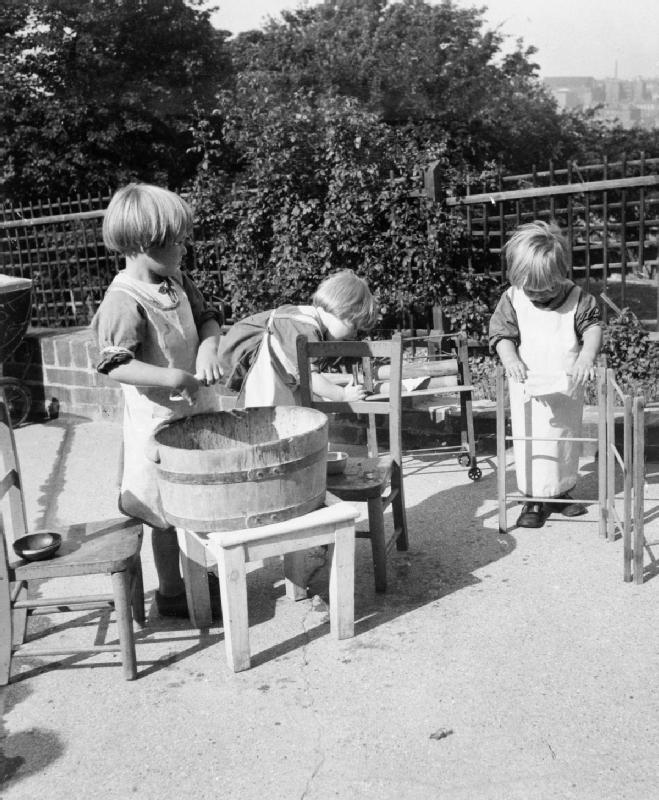
Nobody put up a sign, and the effect was universal. The home corner was understood by children and frequently by adults as girls’ territory, and boys who used it were steered elsewhere or let it be known among themselves that it was not for them.
That was reinforced by everything around it: the equipment was domestic, the dressing-up clothes were sorted by sex, and the adults’ expectations were visible without being stated.
Early years practice now works at this deliberately and explicitly. Role-play areas are resourced to invite every child, are reframed through the year into contexts with no domestic coding at all, and practitioners are trained to notice and interrupt exactly the steering that used to happen invisibly. It is a case where naming the problem was most of the solution.
4. The dressing-up box was next to it and was sorted by sex
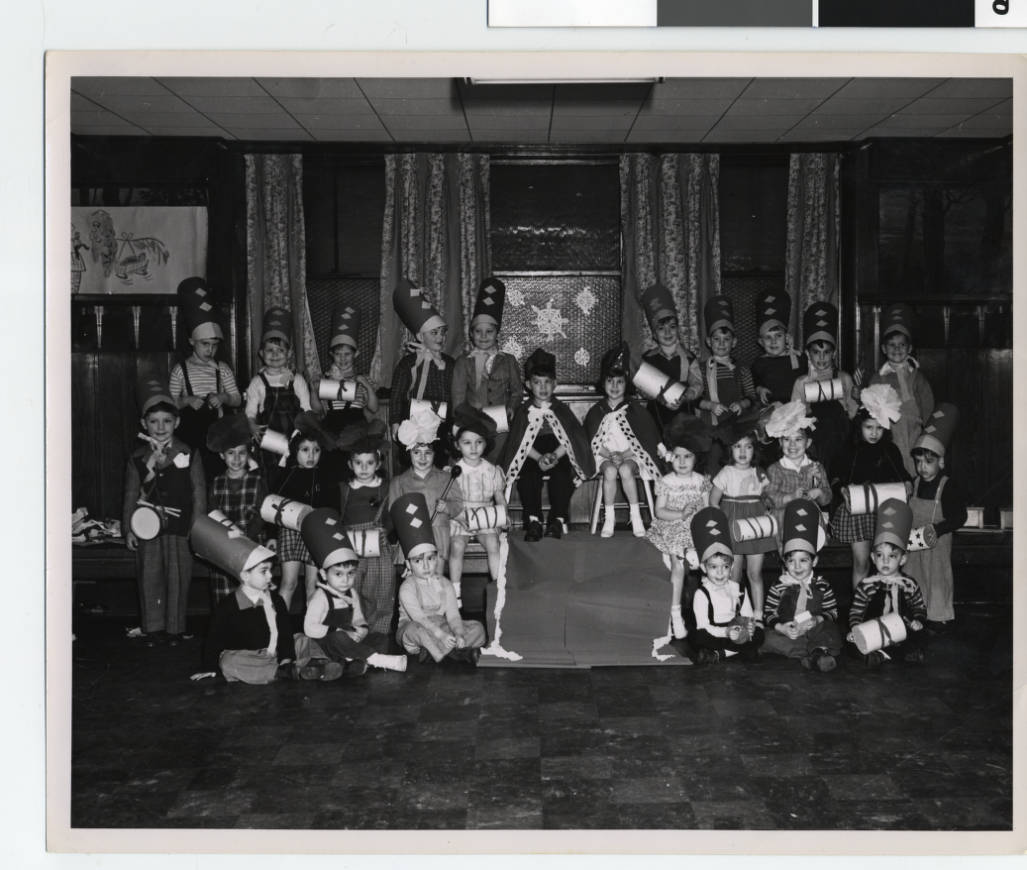
A box or rail of clothes sat beside the home corner: aprons, hats, a nurse’s outfit, a cowboy hat, handbags, a tie, lengths of fabric, and whatever a parent had donated.
Children chose from it, and the choices available to them were shaped by what was in the box, which was shaped by a set of assumptions about who would wear what.
Modern provision deliberately avoids role-coded costume sets in favour of open-ended material — fabric, hats, bags, badges, uniforms from a wide range of occupations — on the reasoning that a child who can be anything will be, and a box of costumes tells a child what they are allowed to be.
5. The toys predate every toy safety standard there is
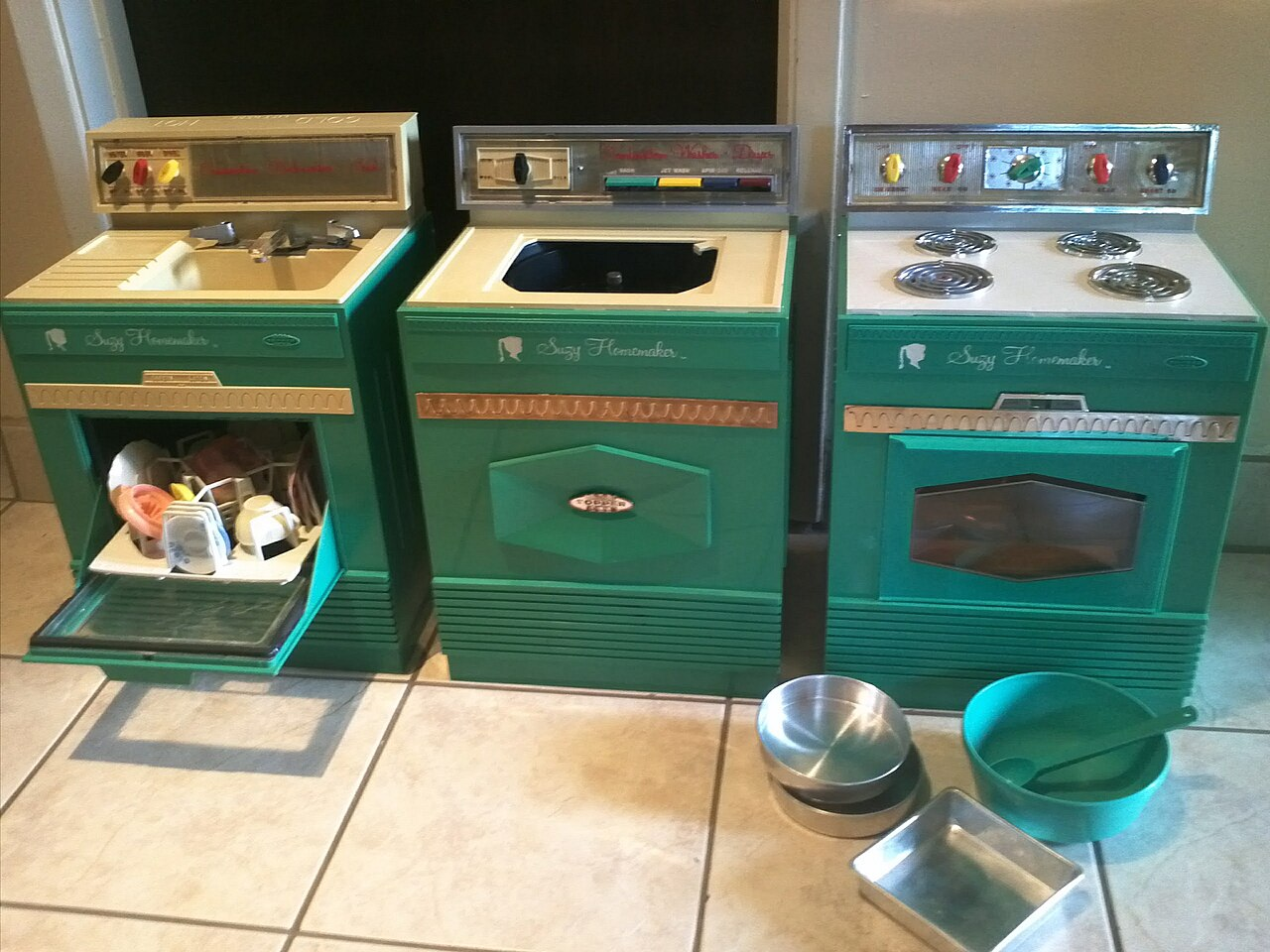
Classroom equipment of 1966 was made before the modern toy safety regime existed. Paint finishes, small detachable parts, the flammability of fabrics and soft furnishings, the stability of free-standing structures and the geometry of openings were not governed in the way they now are.
Toys and children’s equipment are now subject to detailed safety standards covering mechanical and physical properties, flammability, chemical migration from surfaces, labelling and age marking, with conformity assessment and market surveillance behind them.
This file names no substance, no standard and no test, and anybody who has inherited pre-standard children’s equipment — a painted wooden toy, an old cot, a vintage playhouse — should treat it as a decorative object rather than as something a child uses, and seek advice from their local authority’s trading standards or product safety service. That boundary is deliberate.
6. It was the quietest place in a noisy room
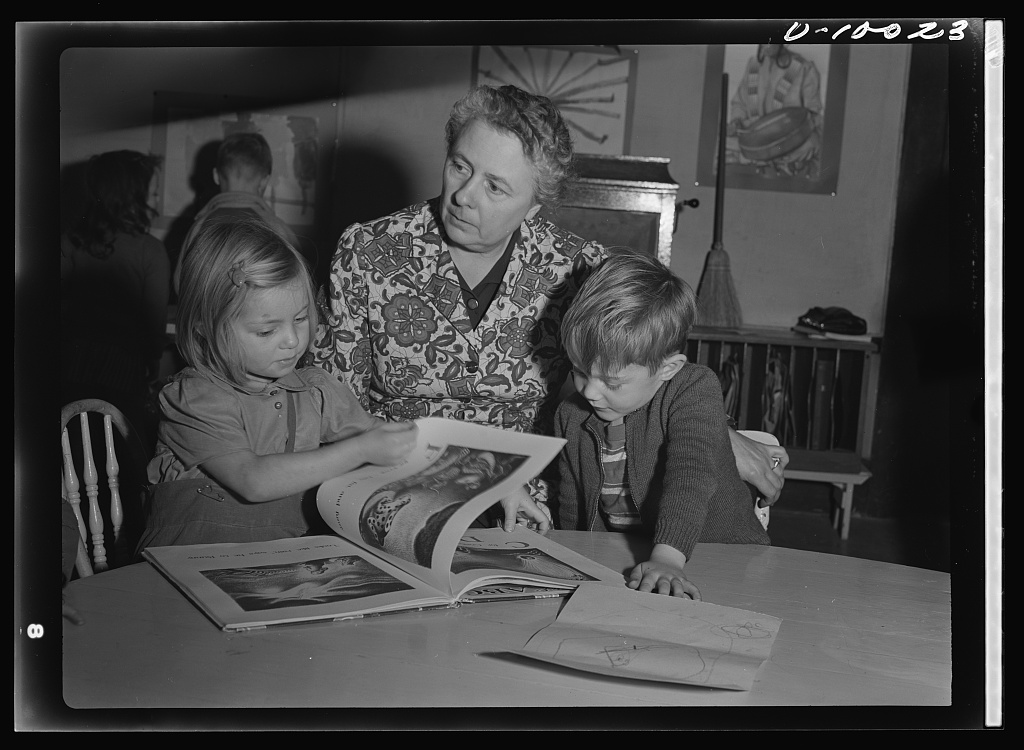
An infant classroom is loud, and the Wendy house was enclosed, which made it the one place a child could be out of the noise and out of sight, and children used it for that as much as for play.
Teachers of the period understood this perfectly well and allowed it, because a five-year-old who needs ten minutes alone in a small wooden house is telling you something and the house is solving it.
Modern settings provide this deliberately with quiet areas, dens, reading corners and spaces designed for withdrawal, as a recognised part of good provision rather than a side effect of a playhouse. The need was always there and it is now planned for.
7. Being out of sight is exactly why the design changed
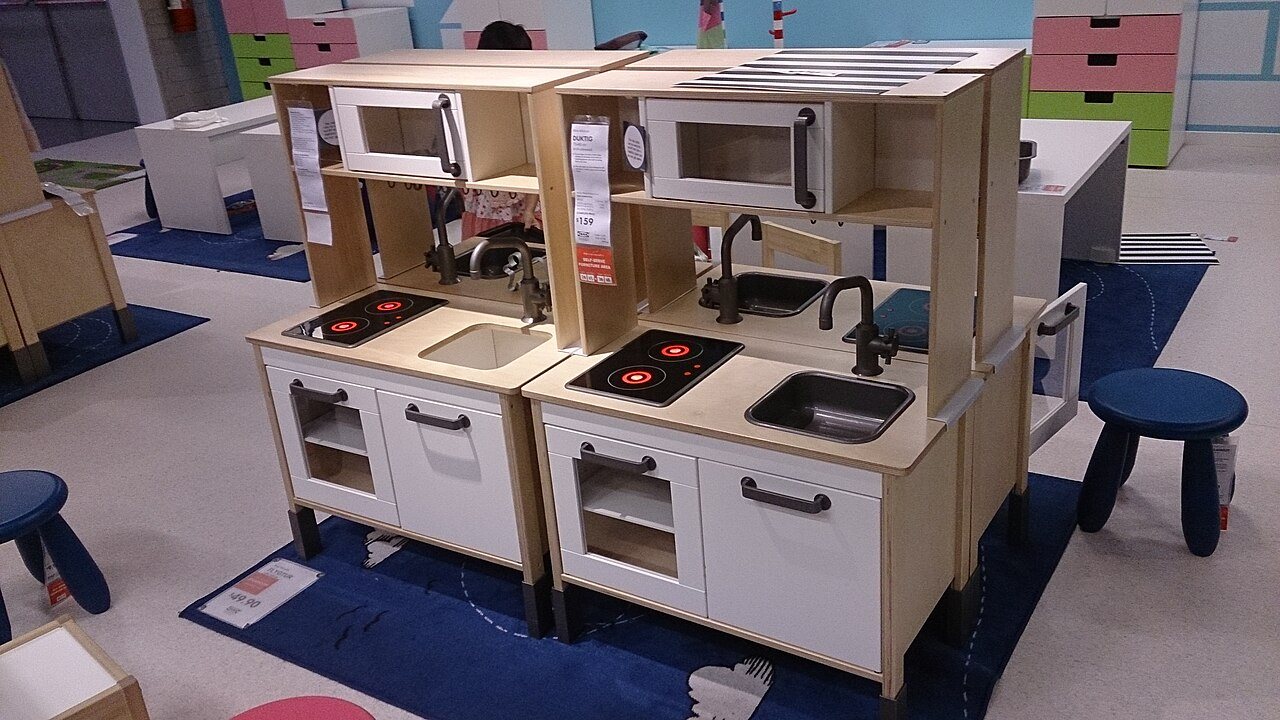
The feature that made the Wendy house valuable to children — walls, a door and no view in — is the feature that modern provision will not accept, because an adult must be able to see what is happening.
That is a straightforward safeguarding requirement and it is not negotiable. Supervision of young children requires sight lines, and a solid enclosed structure in the corner of a room defeats them.
The resolution is open-sided and low-walled role-play spaces, windows and doorways without doors, and layouts planned around visibility, which keeps the sense of a separate place while removing the blind spot. It is the clearest example in this file of a design change made for a reason that cannot be argued with.
8. The play in it was the curriculum, and nobody said so
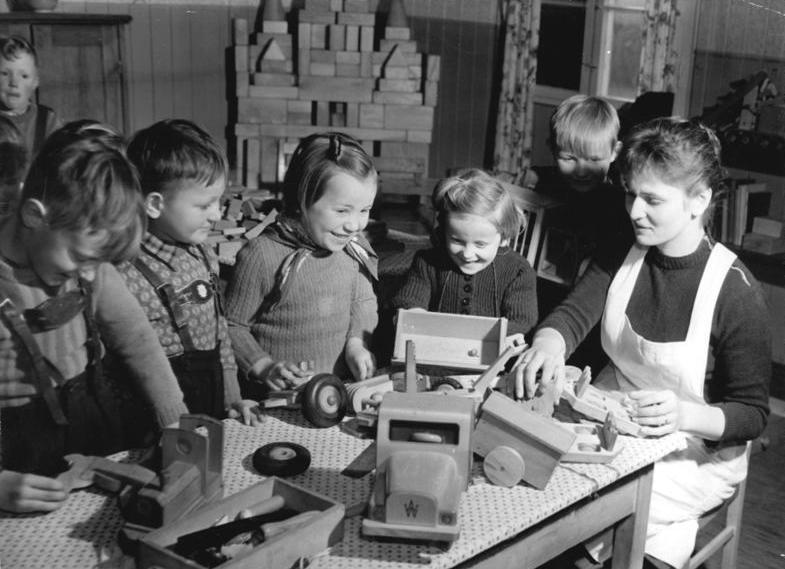
Children in a home corner negotiate roles, assign jobs, sustain a narrative, use registers of language they do not use elsewhere, count, measure, serve, pay and argue about rules.
In 1966 that was understood vaguely as good for them. The theoretical account of why — the role of imaginative and social play in language, cognition and self-regulation — developed substantially afterwards and is now the basis of early years curricula in most systems.
So the activity was right and the explanation arrived later, which is unusual. Practitioners now plan role play with specific intentions, observe it as assessment and extend it deliberately, and the Wendy house turns out to have been doing considerably more than anybody claimed for it.
9. A teacher could not hear what was said inside it
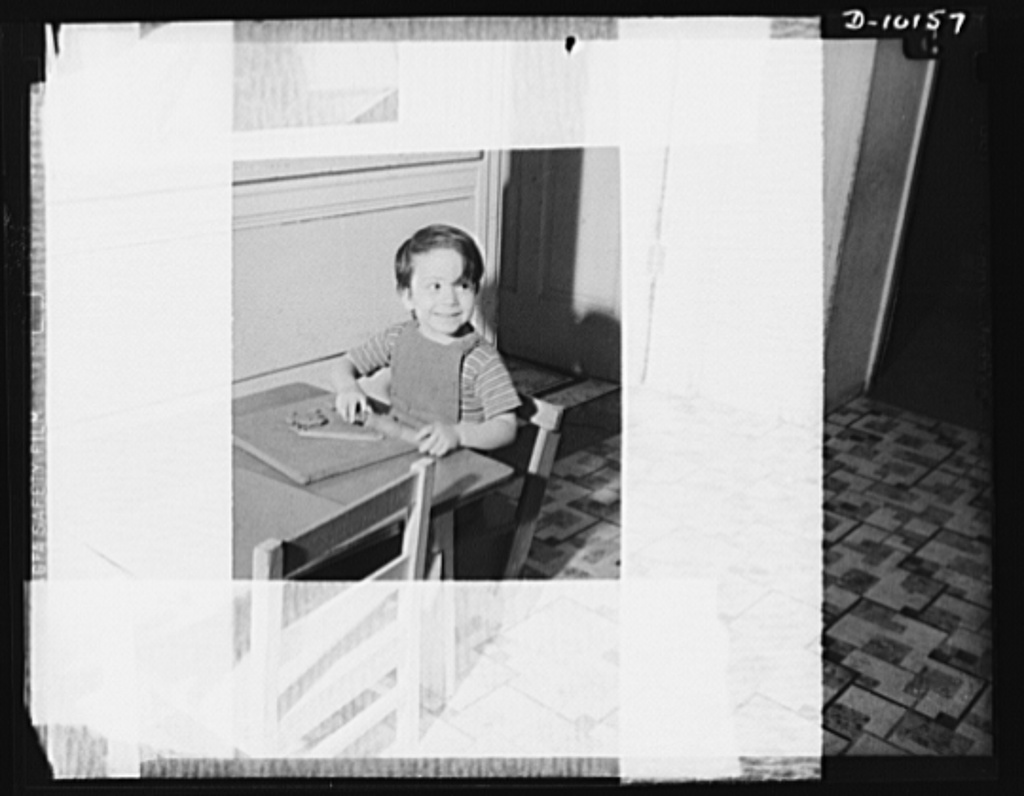
The enclosure that gave children privacy also removed the adult from the conversation, which in modern terms means the single richest source of language in the room was happening where nobody could join it.
That matters because adult interaction inside play is now understood as the thing that makes it developmentally powerful — modelling vocabulary, asking a question, extending a story — rather than something that interrupts it.
Open role-play areas exist partly for that reason. A practitioner who can hear can join, and joining is the intervention. The Wendy house was excellent at play and actively obstructive to the teaching that should have accompanied it.
10. It doubled as the shop, the hospital and the bus
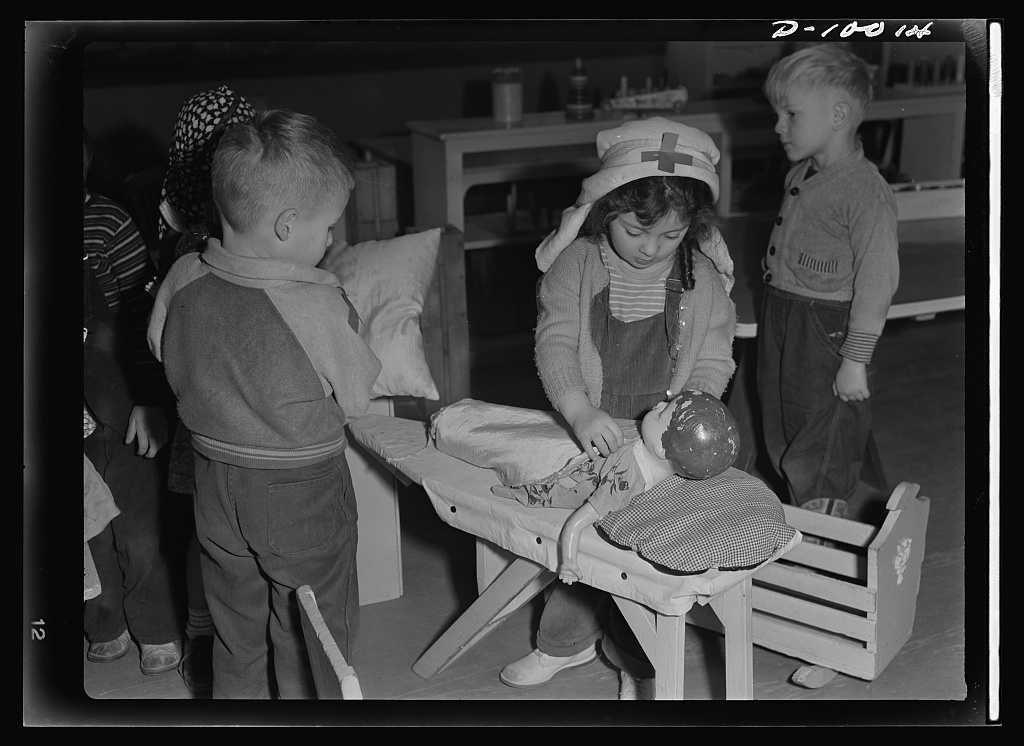
Teachers repurposed it constantly, pinning up a sign and changing the equipment so the house became a greengrocer, a post office, a surgery, a cafe or a vehicle, which transformed the vocabulary and the play with almost no resources.
That improvisation was one of the most effective things in an infant classroom, and it was done by individual teachers out of their own ingenuity.
Modern role-play areas are designed for exactly this, with themed resource boxes, planned rotation through contexts, props bought for purpose and links to whatever the class is learning about. The teacher’s trick became the specification, which is what should happen to a good idea.
11. The pram and the dolls were part of the equipment and still are
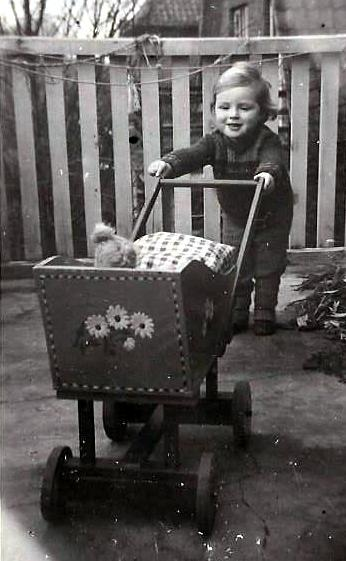
A home corner came with dolls and a pram, and caring play — feeding, dressing, putting to bed, pushing round the room — was a large part of what happened in it.
That is developmentally valuable for every child and is now resourced on that basis, with dolls representing a range of appearances and abilities, and with care play framed as something all children do rather than as rehearsal for a particular role.
The equipment is almost identical and the framing is entirely different, which is the pattern across this whole file. Very little of what was in an infant classroom was wrong. A good deal of what was assumed about who it was for was.
12. Three children fitted and four caused trouble
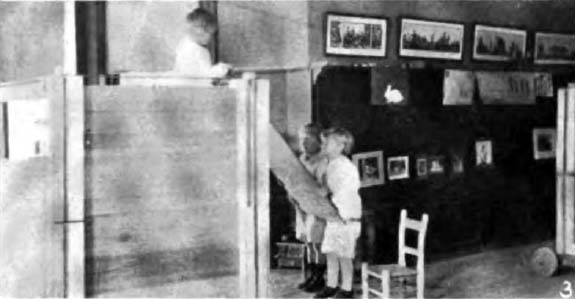
The physical capacity of the house was a real constraint, and negotiating who was in it was a continuous feature of infant classroom life, handled by children with varying success and by adults with rotas, sand timers and rules about numbers.
That negotiation was itself valuable, and the numbered-places system — four pegs by the door, take a peg to go in — is one of the neatest pieces of classroom management ever devised.
It is still used, in exactly that form, in a great many settings. Some solutions do not need improving.
13. It was frequently homemade and sometimes dangerous because of it
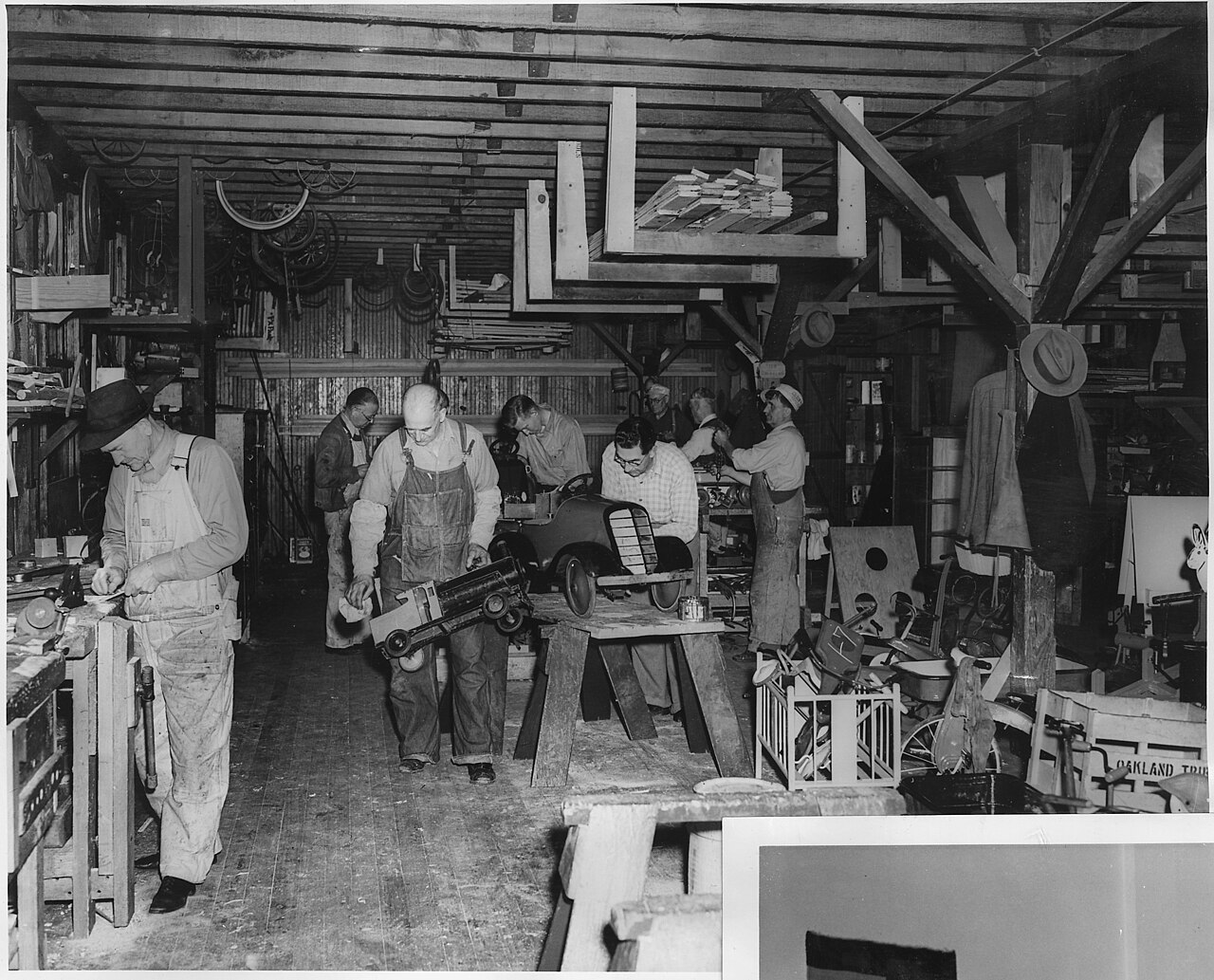
A substantial proportion of Wendy houses were made by a caretaker, a parent or a woodwork class rather than bought, which produced structures of variable stability, with unfinished timber, exposed fixings and no thought about tipping.
That is a specific hazard and it is why modern provision uses equipment that has been assessed for stability and finish rather than built on site.
Furniture and equipment in early years settings is now bought to standards, checked on a maintenance schedule and removed when damaged. This file describes no construction and gives no specification, and anybody with a homemade structure in use by children should have it looked at by somebody competent.
14. It stayed in the classroom all year and became invisible
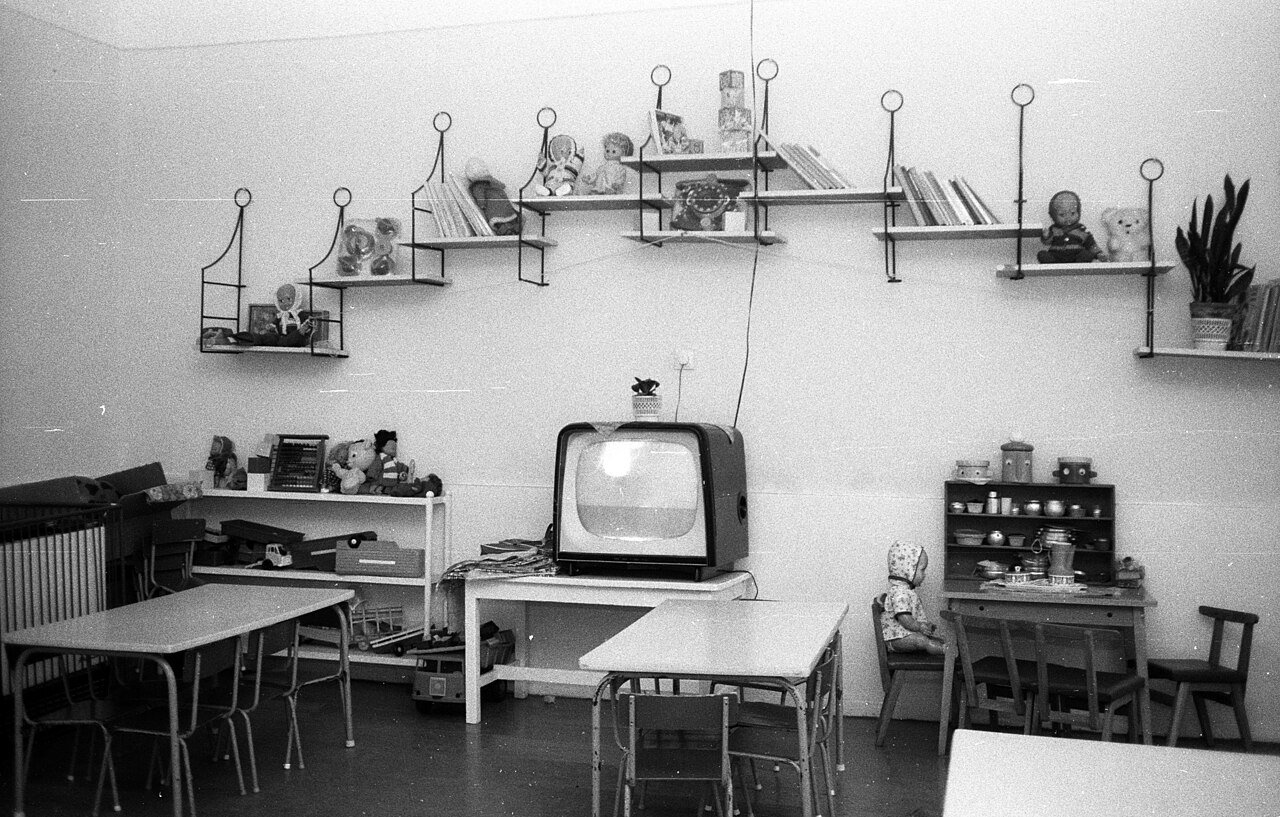
A Wendy house was set up in September and was still there in July, in the same corner, with much the same equipment, and children’s interest in it followed a predictable curve from obsession to indifference.
Teachers noticed and the better ones intervened, changing the contents or the theme to revive it, but the structure itself could not move and so the corner was fixed.
Modern practice treats the role-play area as something to be changed, moved and re-provisioned through the year specifically because of that curve. Observing when interest drops and responding to it is now part of the job rather than an individual teacher’s instinct.
15. It disappeared from older classrooms entirely
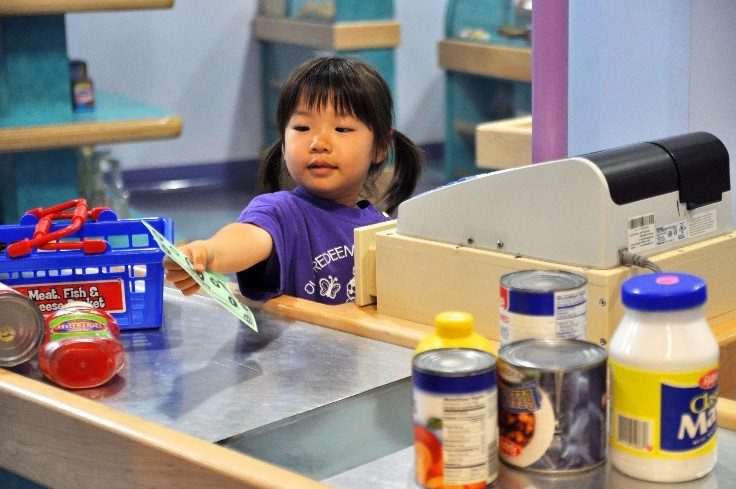
In 1966 a version of the home corner persisted into the junior years in some schools. That has gone completely, and role play above infant age is now delivered through drama, hot-seating, performance and structured activity rather than through a permanent domestic area.
That is partly a curriculum decision and partly a space decision, and it is also an acknowledgement that an eight-year-old’s imaginative play looks different and needs different provision.
What has been lost is the continuity. A child who moved up a year lost the house, and in a great many schools lost the whole category of play with it at an age where research suggests it still has considerable value.
16. It is the piece of school furniture people remember most fondly
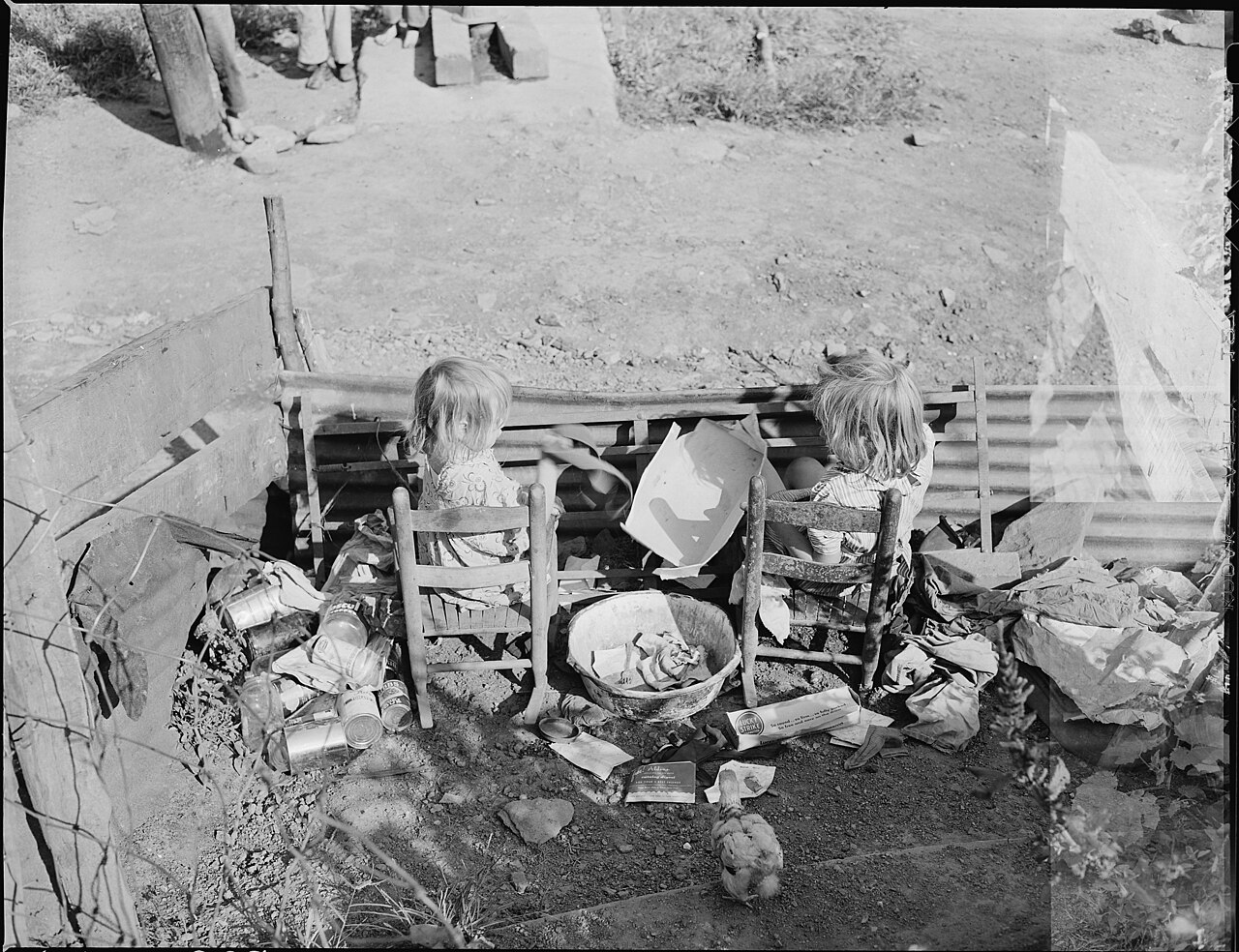
Ask anybody who was at an infant school in the period what they remember about the room and a surprising proportion name the Wendy house, before the teacher, the lessons or anything else.
The reason is probably the scale. It was the only thing in the building sized for them, that they could enter, close, and be inside, and in an institution built entirely to adult proportions that is an extraordinary thing to be given.
The honest summary: the Wendy house was a timber structure a five-year-old could stand inside, fitted out with a wooden cooker, a sink, a tea set, dolls and a pram, frequently homemade, treated in practice as the girls’ corner, repurposed by teachers into a shop or a surgery with a pinned-up sign, and managed with four pegs by the door; almost all of the equipment survives in modern early years practice and two things changed decisively — the sex coding, which practitioners are now trained to notice and interrupt, and the solid walls, which supervision requires to be open so an adult can see in and, just as importantly, join the conversation.
Two things changed and the rest is still there
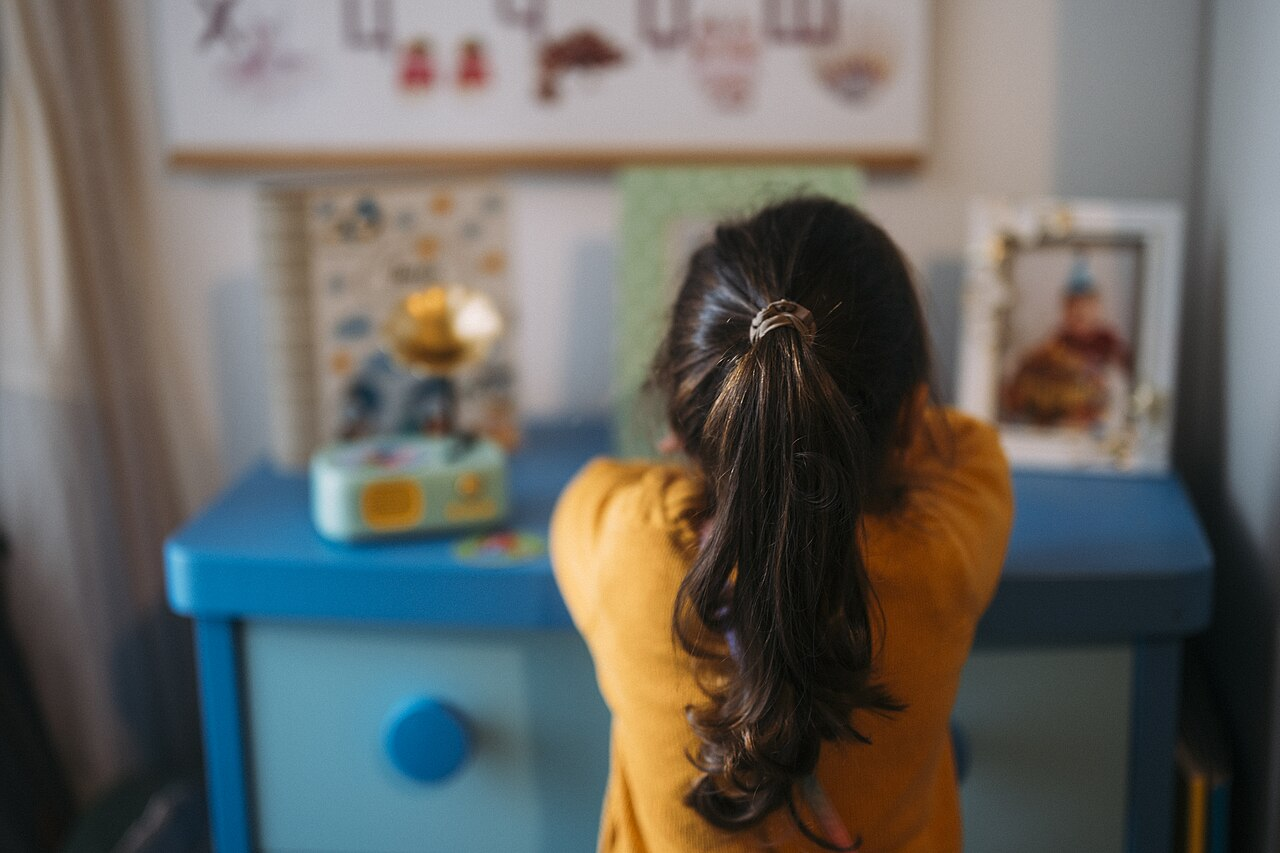
This is one of the few files in the batch where the verdict is overwhelmingly favourable. The wooden cooker, the sink, the tea set, the dolls and the pram are still made, still bought and still central to early years practice, and the theoretical account of why imaginative play matters arrived after the practice rather than before it. Two things changed decisively. The sex coding, which nobody ever stated and every child understood, is now something practitioners are trained to notice and interrupt. And the solid walls have gone, because supervision requires an adult to be able to see in — and because an adult who can hear what is being said inside can join it, which is the part that makes the play developmentally powerful.
The four pegs by the door, one taken by each child who goes in, is one of the neatest pieces of classroom management ever devised and is still used in exactly that form. Some solutions do not need improving.
Like our content? Follow us for more.