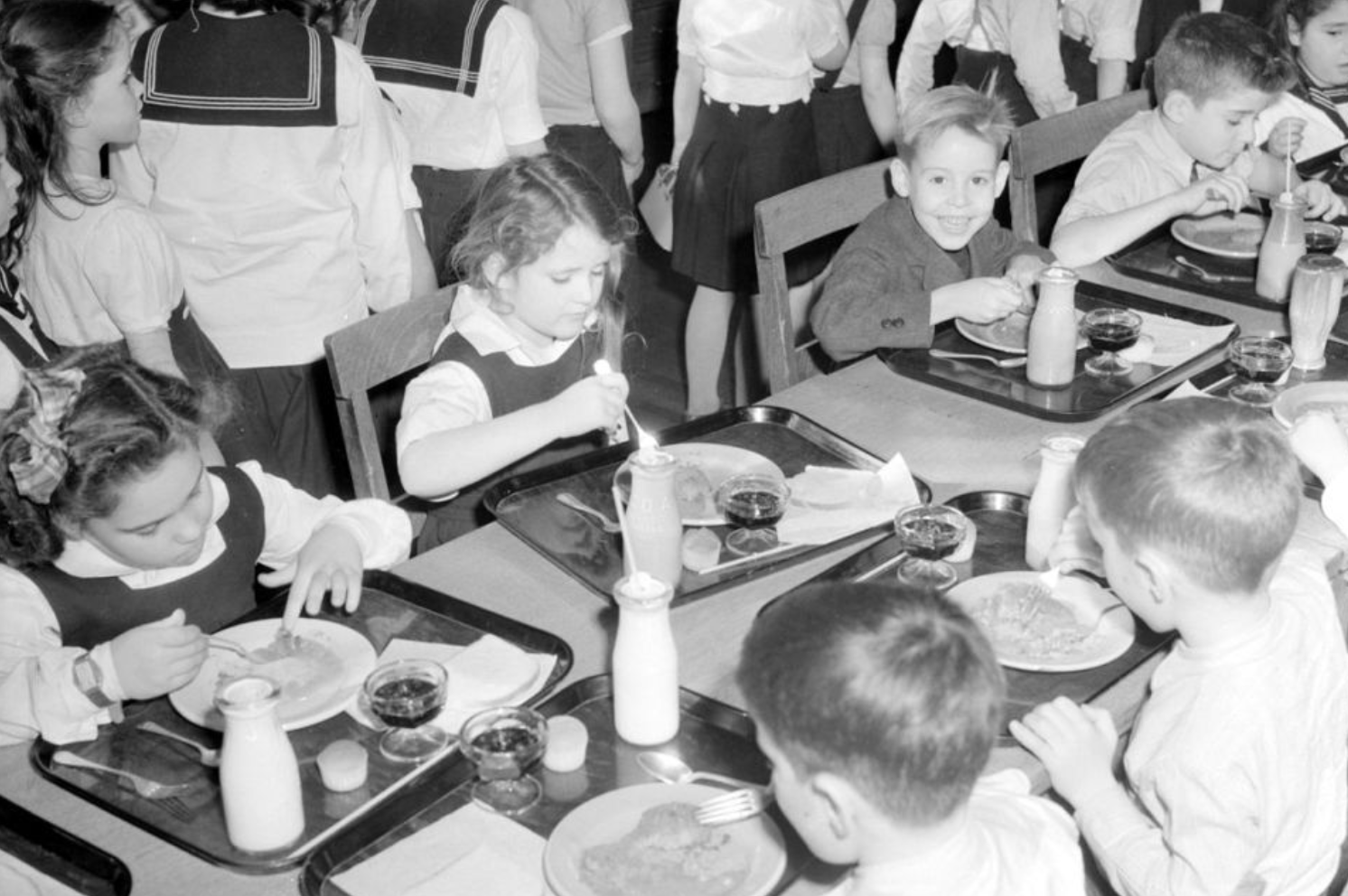
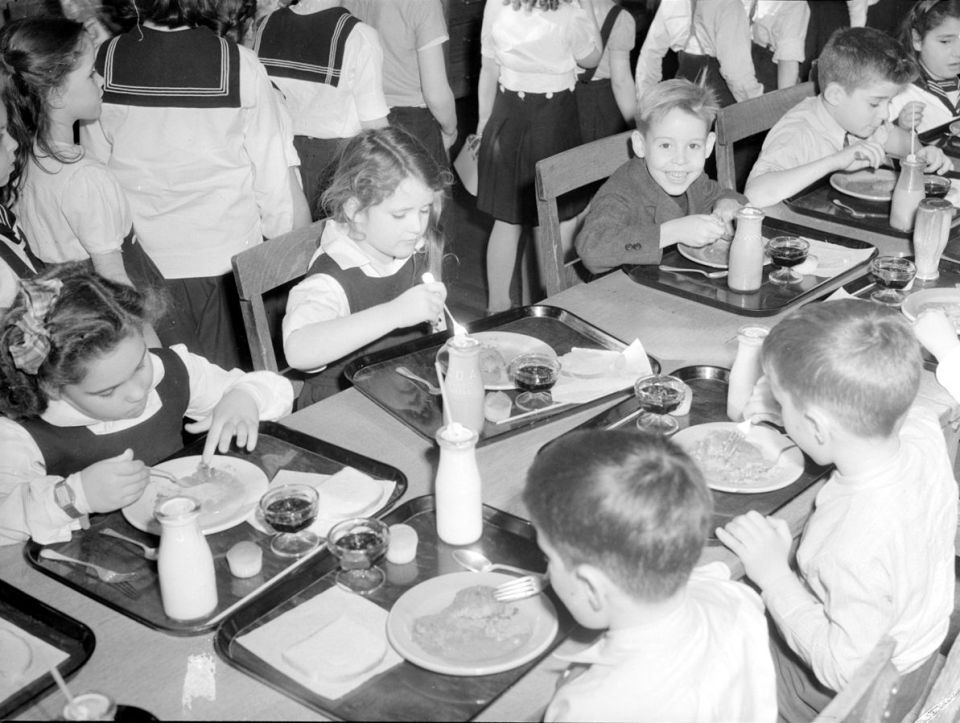
Every American who went to public elementary school in the 1970s ate a school lunch tray that would now be illegal to serve. Some of the ingredients have since been banned outright by the FDA — partially hydrogenated oils, red dye No. 3, brominated vegetable oil. Others fail the USDA’s nutrition standards for the National School Lunch Program. And starting in 2027, California will block six more synthetic dyes from any food sold in a public-school cafeteria. Here are fifteen things on a 1975 lunch tray that no public school can legally put on a 2026 tray.
1. Whole Milk in the Half-Pint Carton
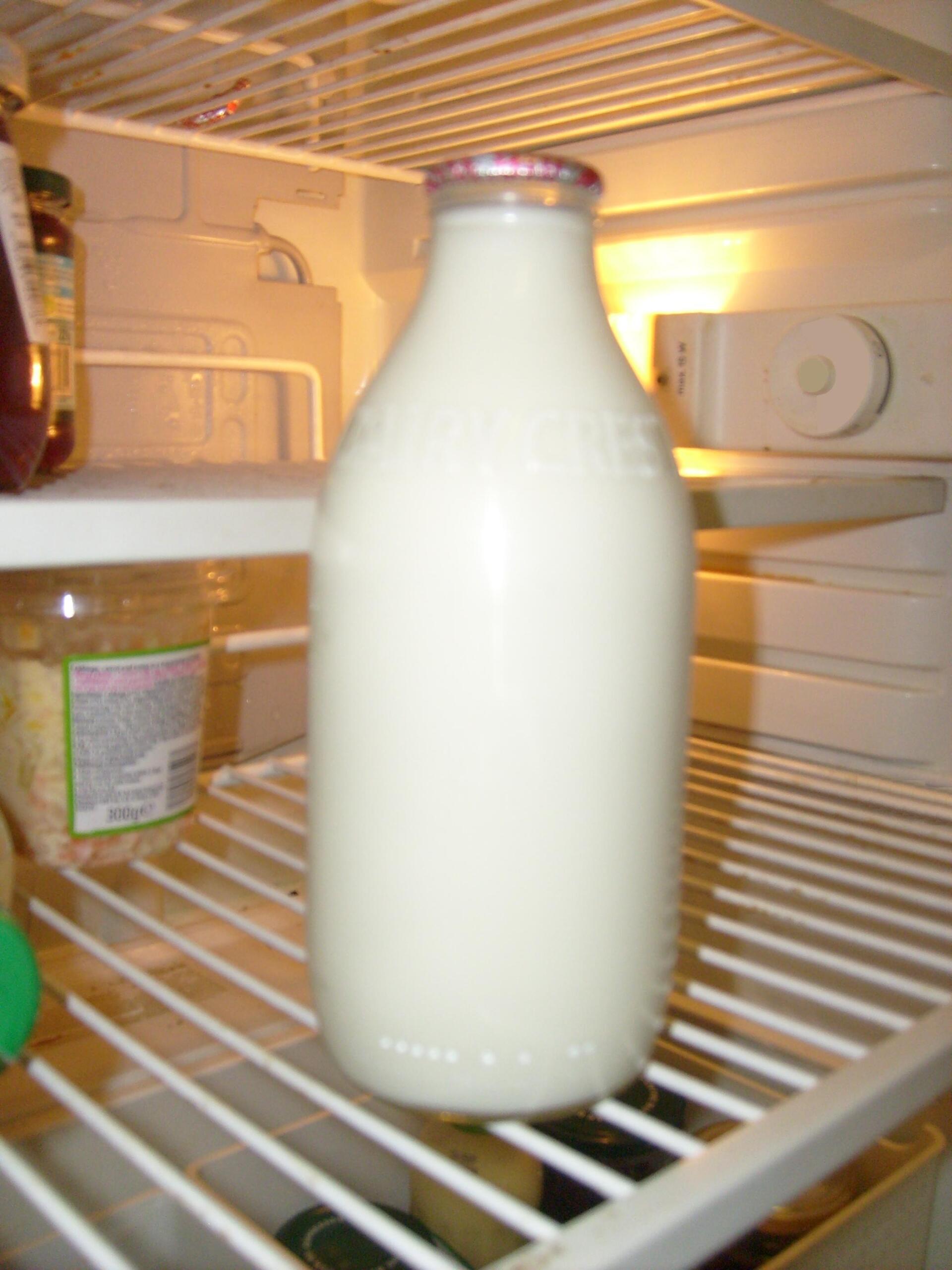
The 1970s school lunch tray came with a half-pint of whole milk, no questions asked. Whole milk was the default; chocolate milk was the upgrade for Friday. The Healthy, Hunger-Free Kids Act of 2010, signed by President Obama and supported by First Lady Michelle Obama’s school nutrition initiative, removed whole milk from federally subsidized school meals — only 1% and fat-free are currently allowed under the National School Lunch Program rules. The Whole Milk for Healthy Kids Act, which would restore whole milk as an allowed option, passed the U.S. House in late 2023 with bipartisan support but has not passed the Senate as of early 2026. Dairy industry groups have continued to lobby for the bill, and the USDA has signaled willingness to revisit the policy. Until then, whole milk in a school lunch line remains technically out of compliance with federal nutrition standards.
2. Pop-Tarts with Red Dye No. 3
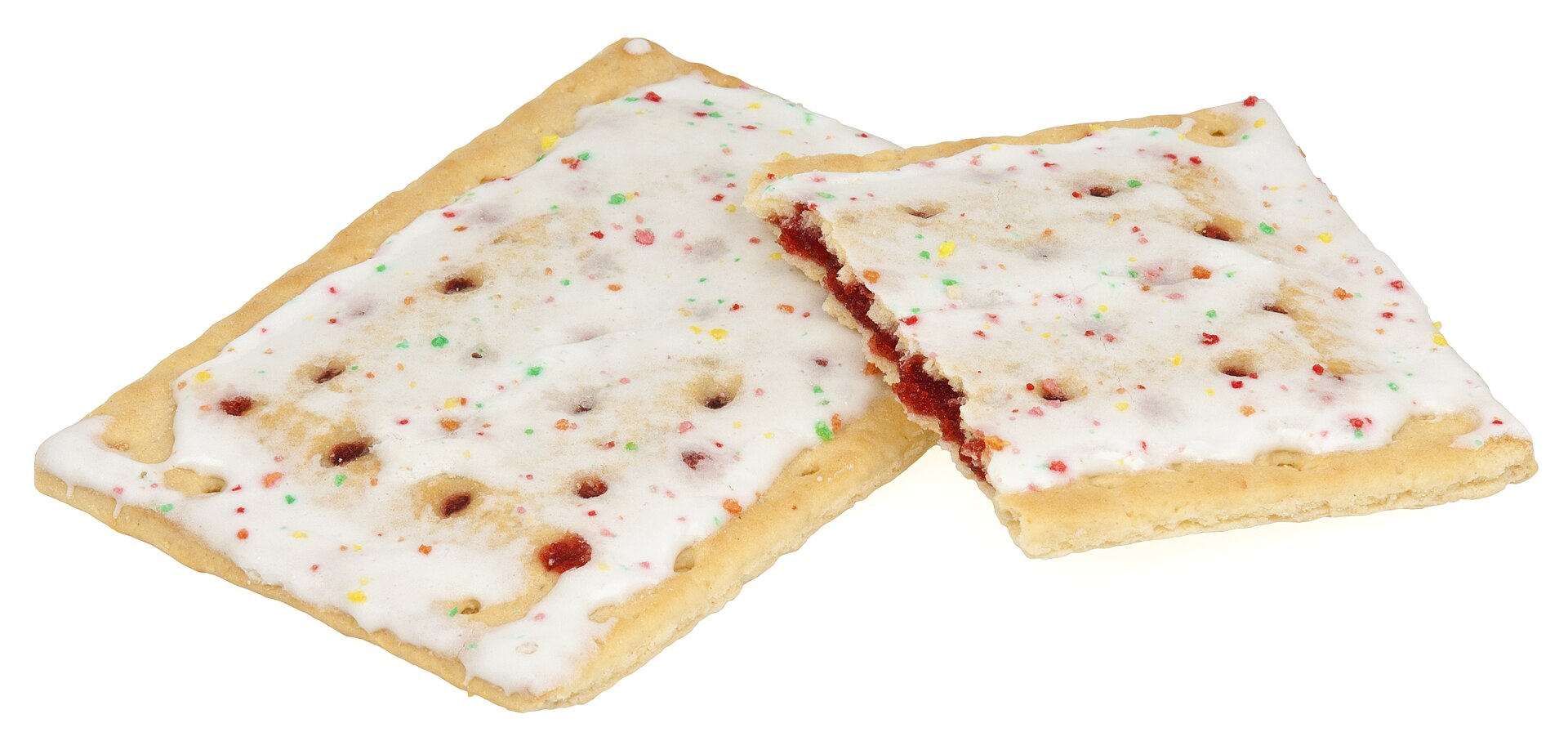
The frosted cherry Pop-Tart of 1975 was colored with Red Dye No. 3, also called erythrosine. The FDA revoked authorization for Red 3 in food on January 15, 2025, after a thirty-year delay following the agency’s own 1990 finding that the dye caused cancer in male laboratory rats. Manufacturers are required to remove Red 3 from food products by January 2027 and from oral drugs by January 2028. The dye had been banned in cosmetics since 1990 — a 35-year regulatory gap that the FDA’s own commissioner described as overdue. Kellogg’s, which makes Pop-Tarts, reformulated the frosted cherry Pop-Tart with beet-juice-based coloring in 2024 ahead of the federal deadline. The original-formula cherry Pop-Tart of a 1975 lunchbox no longer exists on store shelves.
3. Trans-Fat Tater Tots

The crispy edges of a 1975 tater tot came from partially hydrogenated soybean or cottonseed oil — pure trans fat. The FDA banned partially hydrogenated oils from all U.S. food production in June 2018 after determining they were “no longer generally recognized as safe.” The decision followed decades of research linking trans-fat consumption to cardiovascular disease, with the CDC estimating that the ban would prevent 20,000 heart attacks per year in the United States. Modern tater tots use refined high-oleic canola oil, sunflower oil, or non-hydrogenated soybean oil. The texture is similar; the chemistry is fundamentally different. Pre-ban tater tots, if any still exist in commercial freezer storage, would now be illegal to sell or serve.
4. Hostess Twinkies with Red 40 and Yellow 5
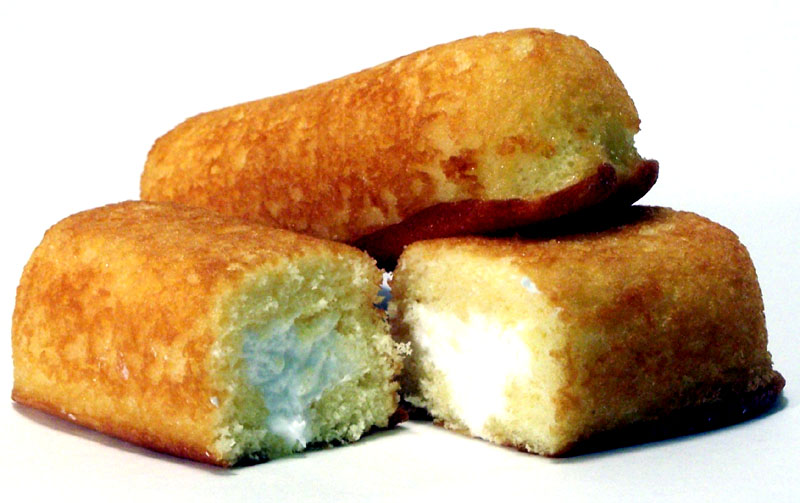
The Twinkie in the lunchbox got its golden cake color from Yellow Dye No. 5 and trace amounts of Yellow Dye No. 6. California’s School Food Safety Act, signed by Governor Gavin Newsom in September 2024, bans Yellow 5, Red 40, Yellow 6, Blue 1, Blue 2, and Green 3 from all public-school food beginning December 31, 2027. Manufacturers have already begun reformulating to avoid losing the California schools market, which serves over 6.3 million students daily. Hostess Brands, owned by J.M. Smucker Co. since 2023, has announced reformulation timelines for several of its products. The 1975 Hostess Twinkie, with its distinct golden color from Yellow 5, will not be the same Twinkie a California fifth-grader eats in 2028 — and the practical effect will roll out nationally, since manufacturers tend not to maintain two product formulations.
5. Hot Cheetos, Doritos, and Other Cheeto-Style Snacks
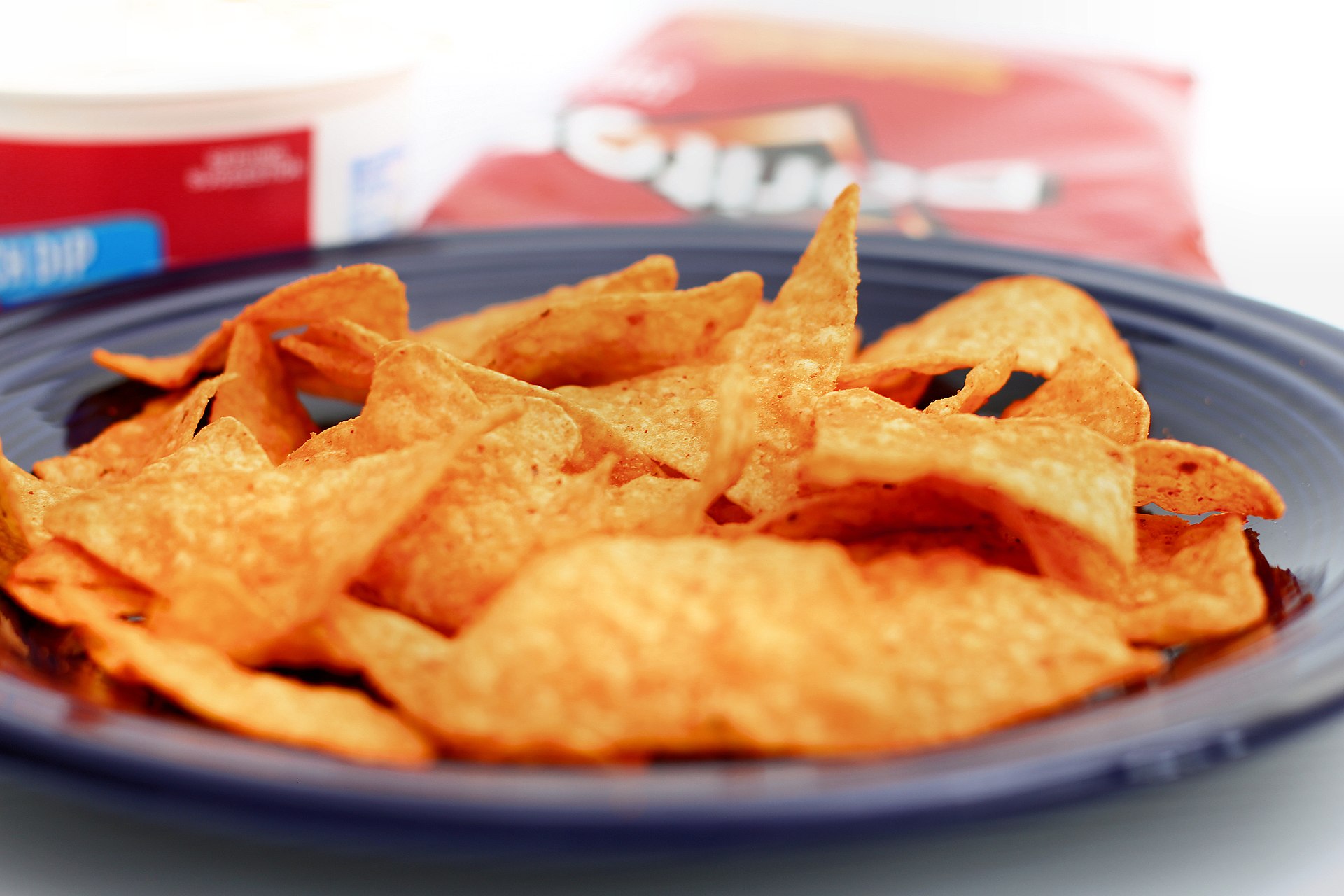
The vivid red dust on a Hot Cheeto comes from Red Dye No. 40, the same dye banned in California public schools by 2027. Doritos’ Nacho Cheese flavor uses both Yellow 5 and Yellow 6. The Frito-Lay reformulation effort is already underway across the company’s portfolio. Frito-Lay’s parent company, PepsiCo, has committed to removing artificial colors from its products as part of a broader corporate sustainability push announced in 2025. Most artificially colored snacks currently sold in school vending machines, on à la carte lines, and through school fundraisers will either be reformulated with natural color sources — paprika, beet juice, turmeric, annatto — or pulled from the California market by the December 2027 deadline. The chemistry of the cheese-dust is changing. The flavor, in early reformulated test batches, is reportedly close to the original but not identical.
6. Salisbury Steak Coated in Hydrogenated Oil
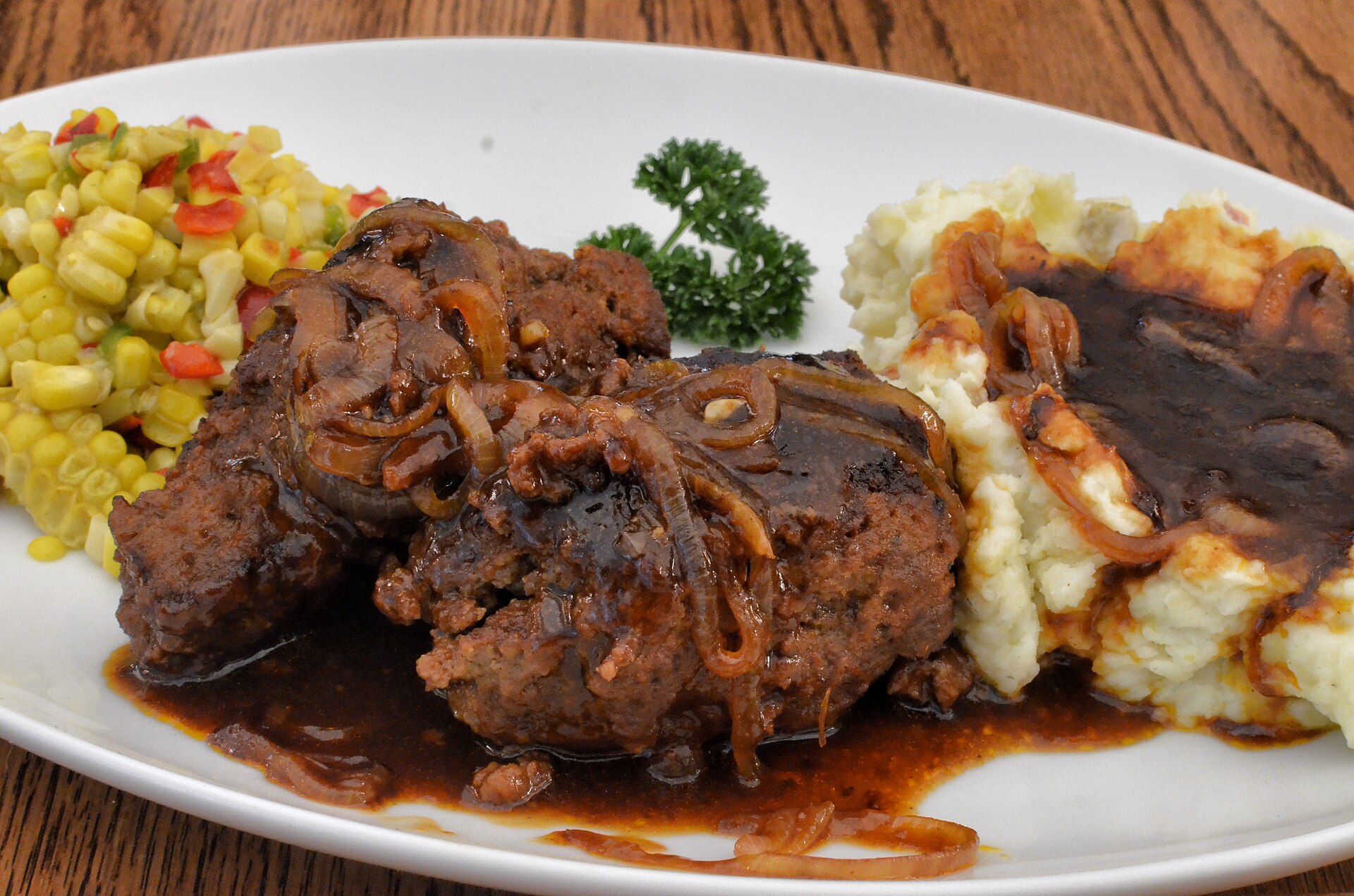
The pre-fried, frozen Salisbury steak patty of the 1970s was coated with breading fried in partially hydrogenated soybean oil — making it doubly trans-fat-laden between the breading and the gravy. PHOs have been banned in all U.S. food production since June 2018 under the FDA’s Final Determination on Partially Hydrogenated Oils. School Salisbury steak today uses fully refined liquid oils, almost always sunflower, canola, or soybean in non-hydrogenated form, and breading is typically applied at the manufacturing plant with high-oleic frying oils. The taste is similar; the cardiovascular effect over a thirty-year period is meaningfully different. The school cafeteria Salisbury steak of a 1978 lunch tray would today fail FDA labeling requirements before it could even be sold to a school district.
7. Fruit Cocktail in Heavy Syrup
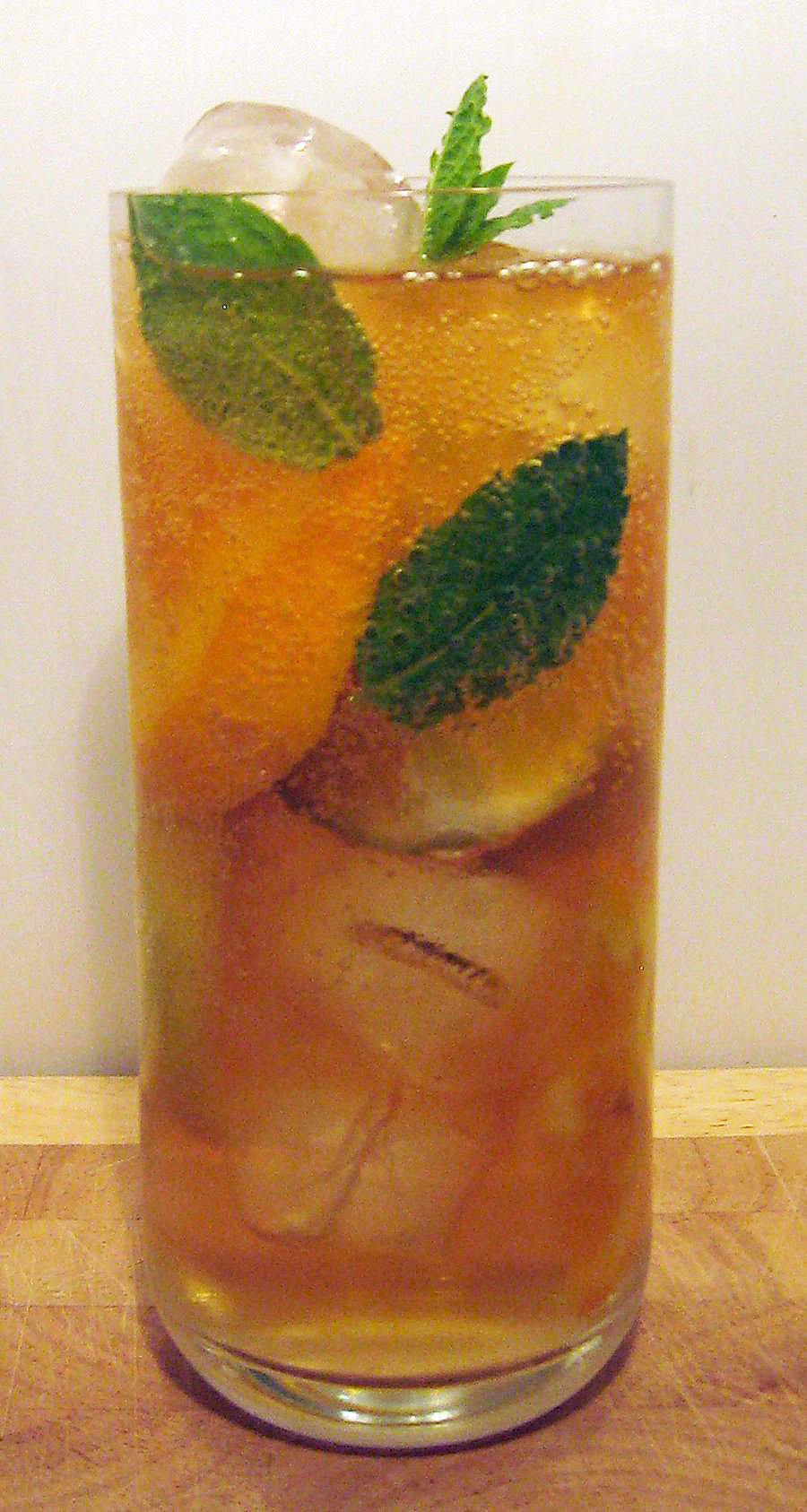
The 1975 fruit cup came in heavy syrup containing approximately 21 grams of added sugar per half-cup serving — more sugar than a serving of regular Coca-Cola. USDA Smart Snacks in School standards, in effect since 2014 and updated in 2024, now cap added sugars at 10% of total calories per item in federally subsidized programs. The 2024 final rule from the USDA further tightened added-sugar limits for breakfast cereals (no more than 6 grams per dry ounce) and for flavored yogurts and milks (no more than 12 grams per 8-ounce serving). The light-syrup, juice-packed, or unsweetened-in-water fruit cup is the modern replacement. The original Del Monte fruit cocktail in heavy syrup is still sold at supermarkets, but it cannot be served as part of a federally reimbursed school meal.
8. Original-Formula Capri Sun
The original 1981 Capri Sun pouch (the U.S. launch year — the German product debuted in 1969) contained roughly 16 grams of added sugar per 6.75-ounce serving, with high-fructose corn syrup as the primary sweetener. After the Smart Snacks rule of 2014, manufacturers reformulated for the school market. The current “Roarin’ Waters” line, which Kraft Heinz markets specifically to schools, contains under 7 grams of added sugar per serving. The original-formula Capri Sun is still sold at retail but no longer qualifies for federally subsidized school sale. The reformulation also reduced artificial colors in several flavors, with the company removing Red 40 from grape and cherry varieties ahead of the California 2027 deadline. The Capri Sun a 1985 fourth-grader pulled out of a lunchbox is functionally a different product today.
9. White Wonder Bread
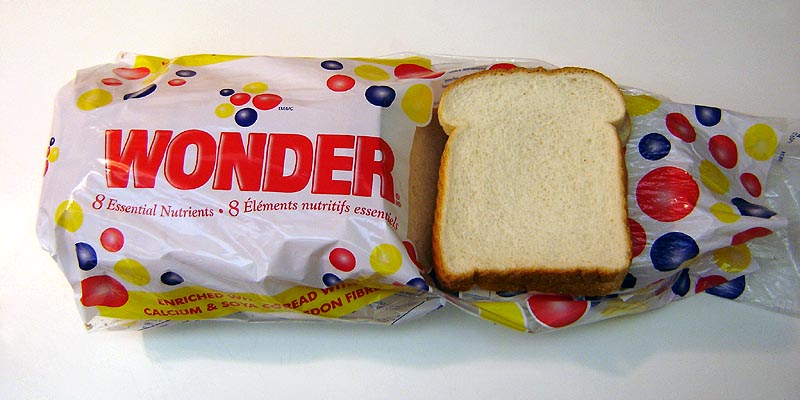
The white-bread sandwich of 1975 used roller-milled refined flour with most of the bran, germ, and natural fiber removed in the milling process. The USDA’s whole-grain-rich requirement, in effect since 2014 under the Healthy, Hunger-Free Kids Act, mandates that at least 51% of all grain products served in the National School Lunch Program be whole grain. Pure refined white bread, like the original-recipe Wonder Bread of 1975, no longer qualifies. Wonder Bread’s current school-meal product is a 51%-whole-grain-blend version that meets federal standards while preserving most of the familiar texture. The original Continental Baking Company’s enriched white loaf, still sold at retail under the Wonder brand, has been quietly replaced in school cafeterias with whole-grain variants over the past decade.
10. Squeeze Cheese (Easy Cheese, Cheez Whiz)
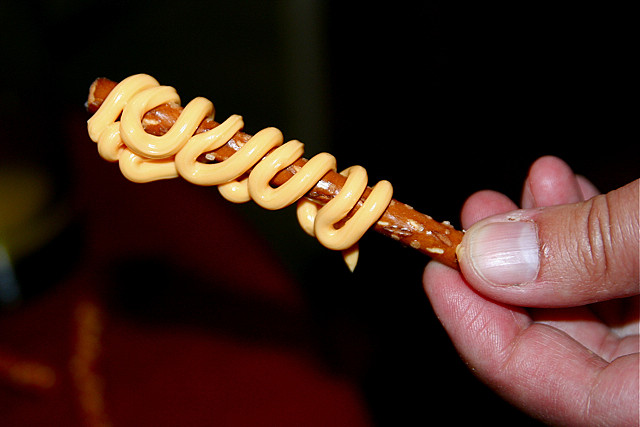
The processed cheese spread popular in 1970s lunchboxes carried roughly 380 mg of sodium per serving, high saturated fat content, and stabilizers including disodium phosphate. The original Cheez Whiz was developed by Kraft Foods in 1952 as a sterile, shelf-stable processed cheese product, and Easy Cheese followed in spray-can form. USDA sodium ceilings for school meals — Target 1 and Target 2 standards under the most recent 2024 final rule — have been steadily tightened. Squeeze cheese fails both the sodium ceiling and the saturated fat cap for federally subsidized lunches and competitive-food sales. Reformulated lower-sodium versions exist for some products, but the classic squeeze-cheese-on-Ritz lunchbox snack of 1975 is no longer compliant. Several major school districts have also banned the spray-can format entirely as a food-safety concern about propellant aerosol contamination.
11. Brominated Vegetable Oil Sodas

Citrus sodas of the 1970s and 1980s — Mountain Dew, Sun Drop, Squirt, Fresca — contained brominated vegetable oil as a citrus-flavor stabilizer, keeping the citrus essence evenly distributed through the bottle. The FDA revoked authorization for BVO in food in August 2024, citing toxicological concerns that had been documented for decades. California had already banned the additive a year earlier under the California Food Safety Act of 2023, which also banned Red 3, potassium bromate, and propylparaben statewide. The reformulated versions of citrus sodas began rolling out before the federal deadline. Mountain Dew’s reformulated version is on shelves now, though the original 1970s formulation is gone. School beverage rules under HHFKA had already restricted soda sales in elementary and middle schools well before the BVO ban, so the practical effect on schools is limited; the effect on the broader food supply is significant.
12. Pre-Mix Sloppy Joe Sauce (Manwich)
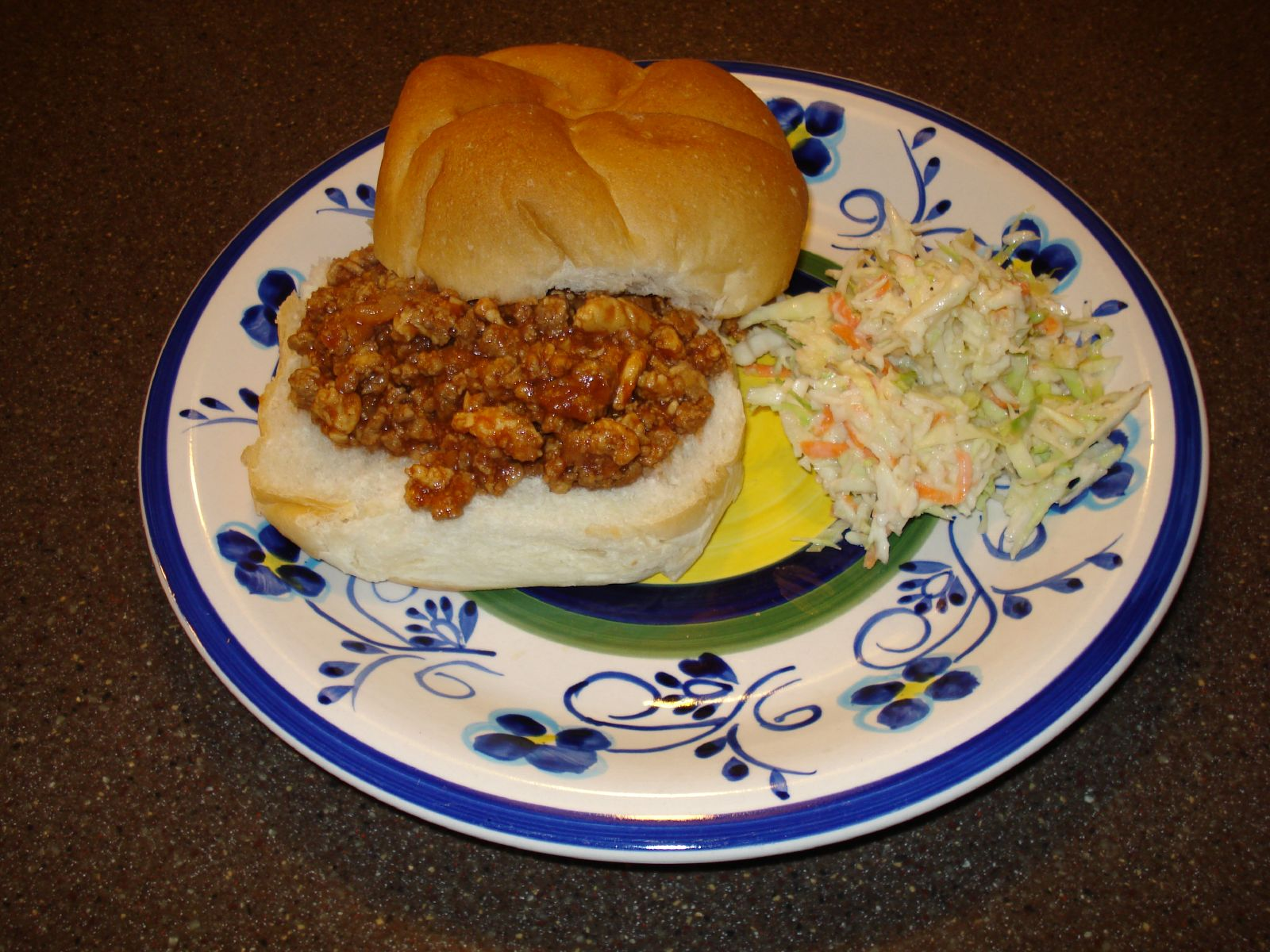
The canned Sloppy Joe sauce of 1975 — Hunt’s Manwich, introduced in 1969 — contained roughly 410 milligrams of sodium per 65-gram serving, well over the USDA’s per-meal sodium ceiling for the National School Lunch Program. The original Manwich formula has been reformulated multiple times to reduce sodium, and ConAgra (which owns the brand) now sells a “lower sodium” school-friendly version. The original-formula Manwich is still sold at supermarkets but is not compliant with current school meal standards without modification. Cafeteria managers who want to serve Sloppy Joes today typically use a school-friendly base sauce or make their own from-scratch sauce with controlled sodium content. The 1978 Manwich cafeteria Sloppy Joe, served from a steam-table pan with a sesame-seed bun, no longer meets the math.
13. Hot Dogs Cured with Sodium Nitrite
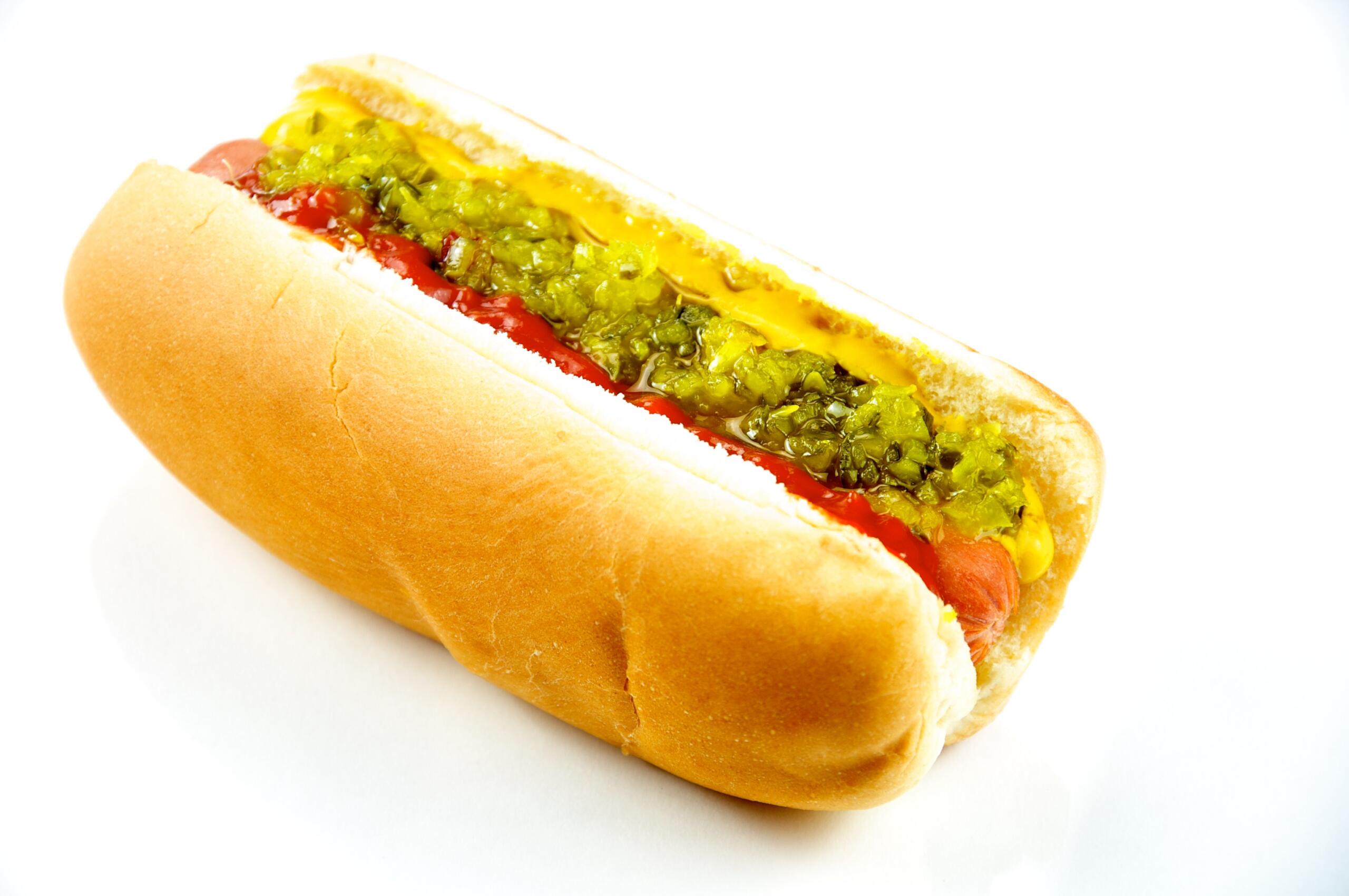
The 1975 cafeteria hot dog was cured with sodium nitrite — still legal at the federal level for adult food products, but capped tightly under USDA school meal standards. Combined with the standard frank’s roughly 480 mg of sodium per link, traditional hot dogs are difficult to serve under the current Target 1 sodium standard for K-5 schools. Most school districts have shifted to reduced-sodium franks or to uncured “no-nitrite-added” hot dogs that use celery powder (which contains naturally occurring nitrites) as a substitute curing agent. The classic Oscar Mayer cafeteria hot dog of 1975, with its bright pink color from the nitrite cure and its high sodium content, would not pass current federal school meal standards. The American Institute for Cancer Research has cited processed-meat consumption as a Group 1 carcinogen, which has accelerated school-district moves away from traditional hot dogs entirely.
14. Fluorescent Pink Birthday Cake with Red 40

The classic 1970s cafeteria birthday cake was iced with frosting tinted by Red Dye No. 40, the most widely used artificial food coloring in the United States. California’s 2027 ban applies to any food sold or served on a school campus, including foods brought in for student birthday parties under school district approval. Sheet cakes ordered through compliant suppliers must now use beet-juice or carmine-based natural colorants. Several major bakery suppliers — Aspen Mills, Bake’n Joy, Otis Spunkmeyer — have already reformulated their school-account products to remove the six dyes covered under California’s School Food Safety Act. The 1975 cafeteria birthday cake with hot-pink frosting from a sheet pan would not pass California compliance review in 2028, and would likely also fail the FDA’s voluntary phase-out of the six remaining synthetic dyes by the end of 2027.
15. Frosted Sugar Cereals at Breakfast Programs
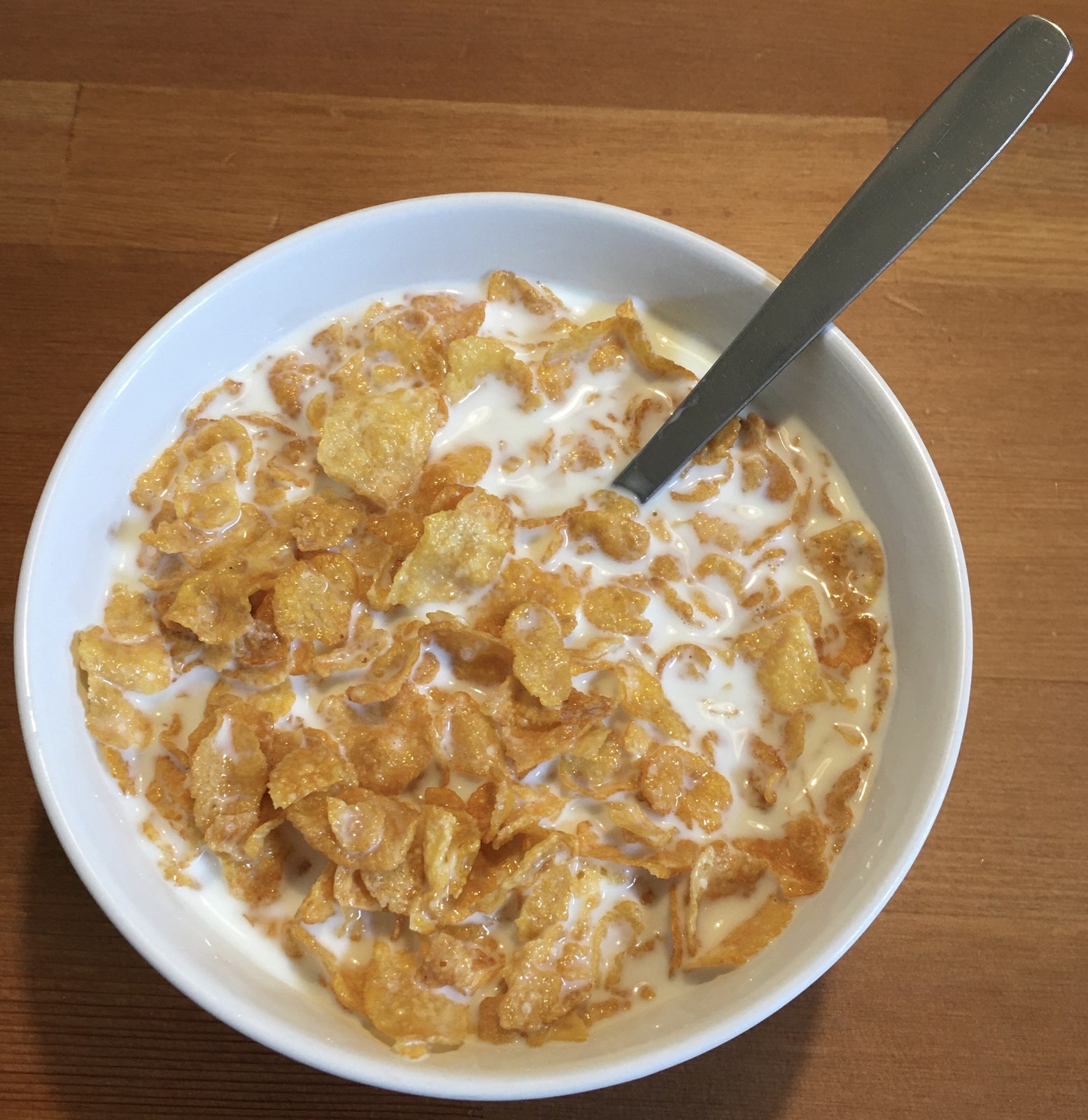
Many sugar-frosted breakfast cereals sold for use in school breakfast programs in the 1970s — Frosted Flakes, Apple Jacks, Lucky Charms, Cocoa Puffs — exceeded 10 grams of added sugar per single-serving pouch. Under the 2024 USDA final rule on breakfast cereal sugar content, schools cannot serve breakfast cereals exceeding 6 grams of added sugar per dry ounce. The original formulations of most marshmallow and frosted cereals from the 1970s would fail this standard by significant margins. General Mills, Kellogg’s, and Post have reformulated their school-line breakfast cereals with reduced sugar content over the past decade. The retail versions remain unchanged. The breakfast bowl a 1975 second-grader ate in the school cafeteria — Frosted Flakes from a small box, sugar still gritty at the bottom — exists at home today but is gone from federally subsidized morning programs.