Long before the drive-thru window or the self-checkout kiosk, there was the automat, a restaurant concept that let diners serve themselves from a gleaming wall of small glass-fronted compartments, each holding a sandwich, a slice of pie, or a hot dish, waiting behind its own tiny door. Drop in a few coins, and the little door popped open. For decades, the automat was a beloved fixture of American city life, a place where bankers and secretaries, students and stevedores, all lined up at the same shining machines for a quick, affordable meal.
A German Idea Comes to Philadelphia
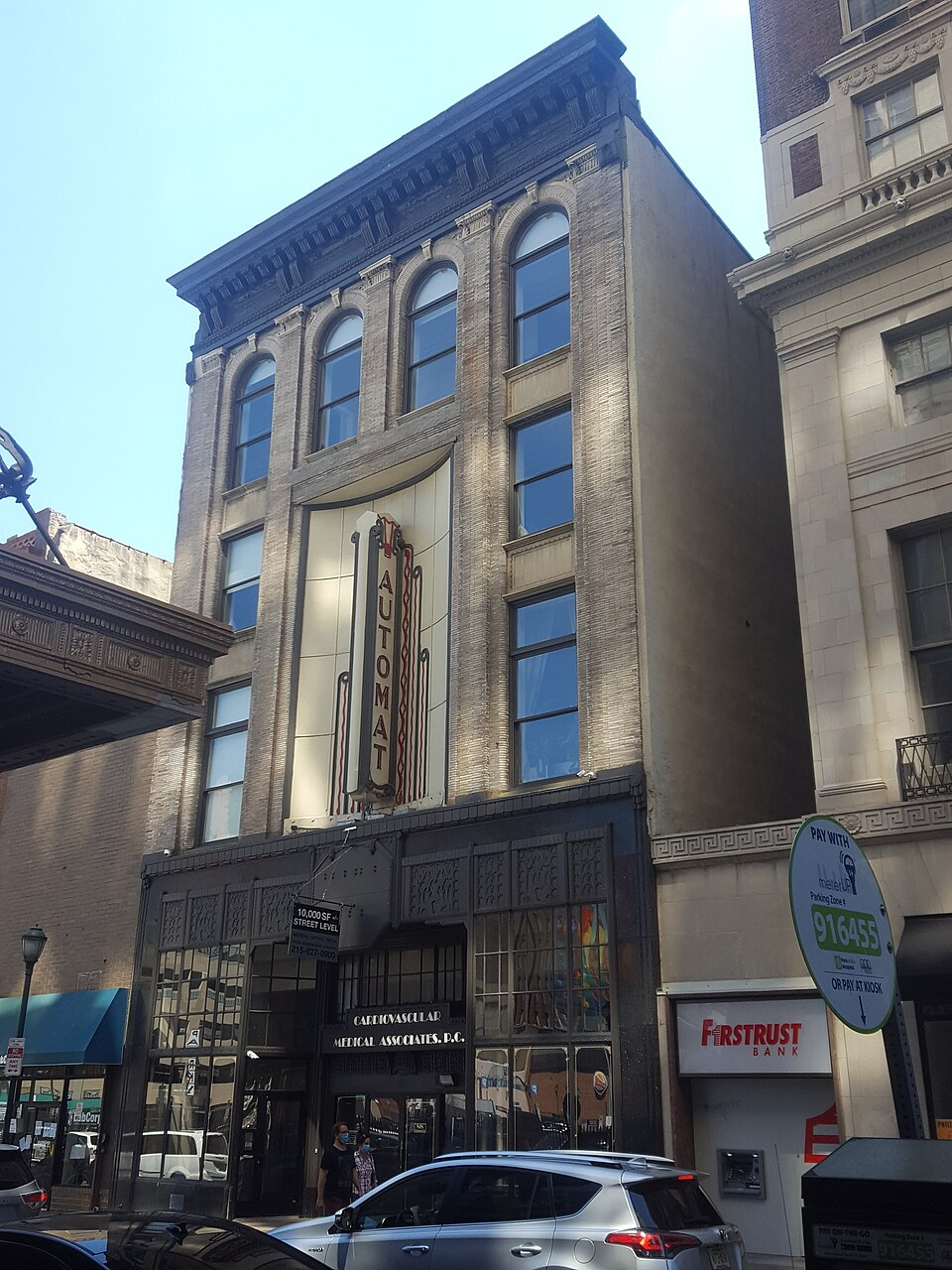
The automat concept originated in Germany in the 1890s, and Philadelphia restaurateur Joseph Horn and his New Orleans-raised partner Frank Hardart, who had already been running a small luncheonette together since 1888, brought the idea to America. On June 9, 1902, they opened the first U.S. automat at 818 Chestnut Street in Philadelphia, importing the coin-operated vending equipment directly from its Berlin manufacturer. The Philadelphia Inquirer noted at the time that Horn and Hardart had solved the city’s “rapid transit luncheon problem,” a quick, efficient answer to feeding a growing urban workforce on the go.
Like our content? Follow us for more.
How It Worked
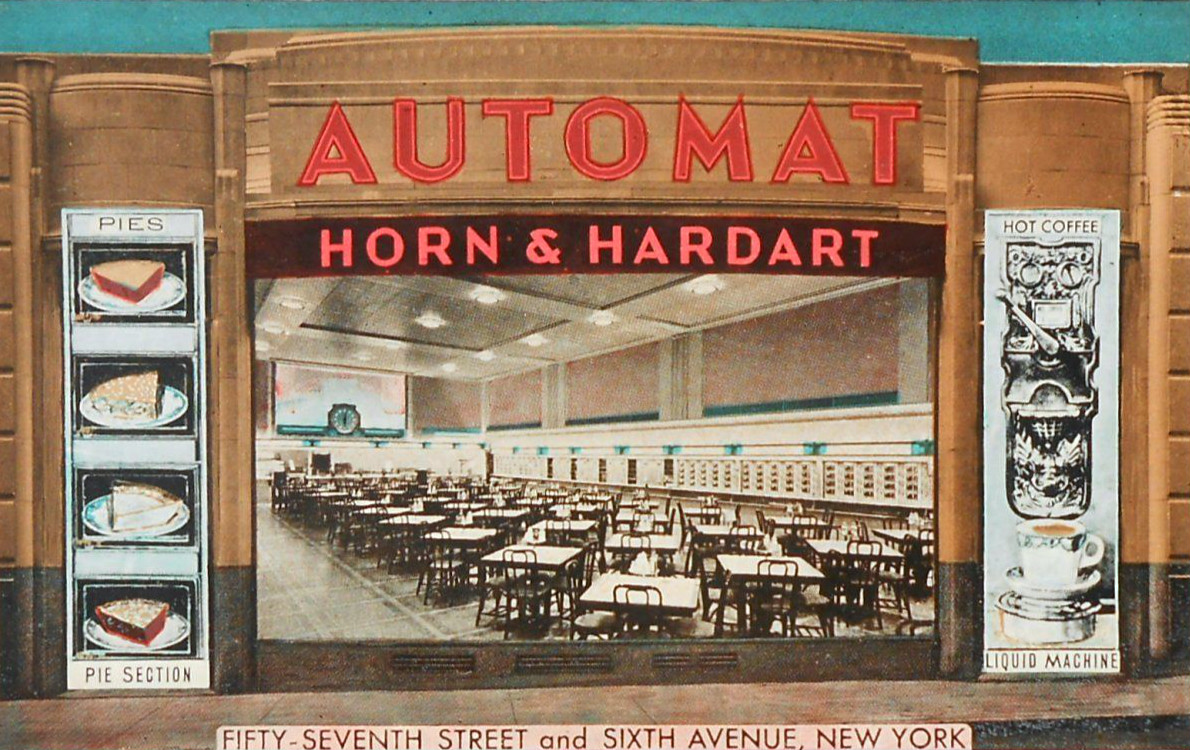
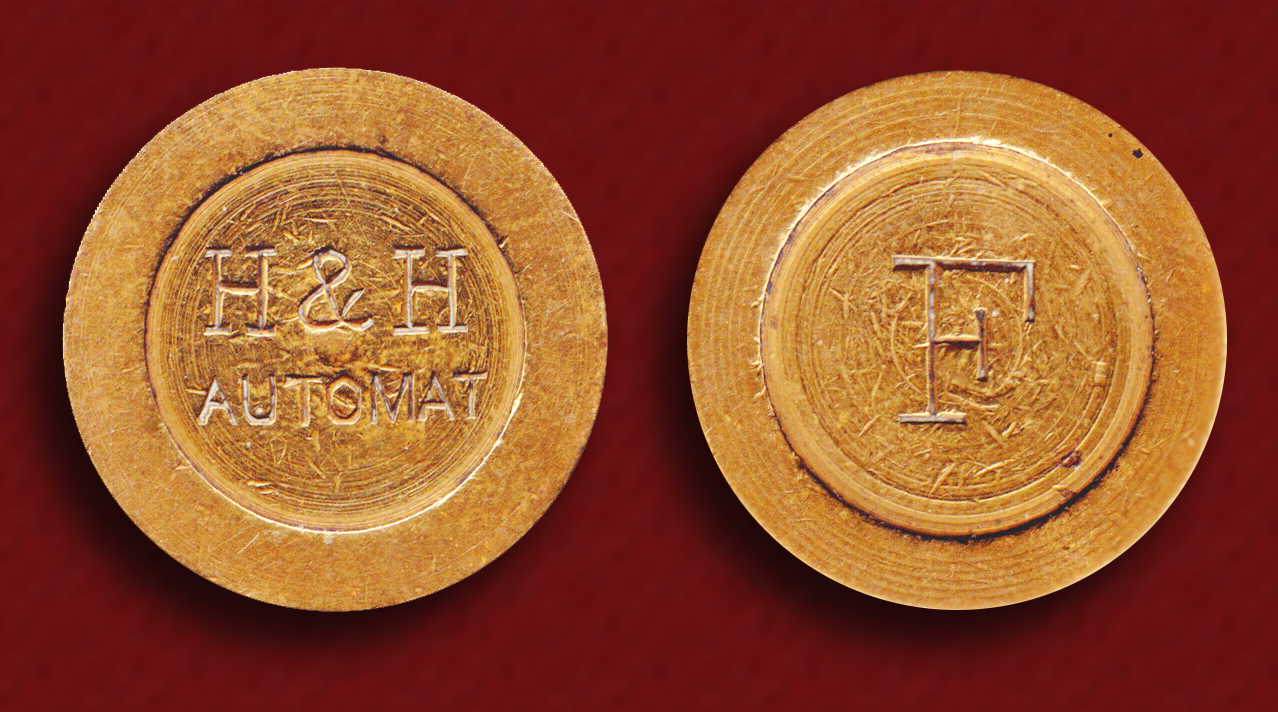
The automat’s appeal was its elegant simplicity. Diners walked up to a wall lined with small glass-fronted compartments, each displaying a sandwich, a slice of pie, a bowl of baked beans, or another dish. After dropping coins into a slot beside the desired item, the little glass door would pop open, letting the customer retrieve their food. Behind the scenes, unseen kitchen staff worked constantly, sliding fresh replacements into the compartments as quickly as items were taken. Diners could sit wherever they liked, at gleaming marble tables, with no assigned seating and no obligation to a waiter.
The World’s Largest Restaurant Chain
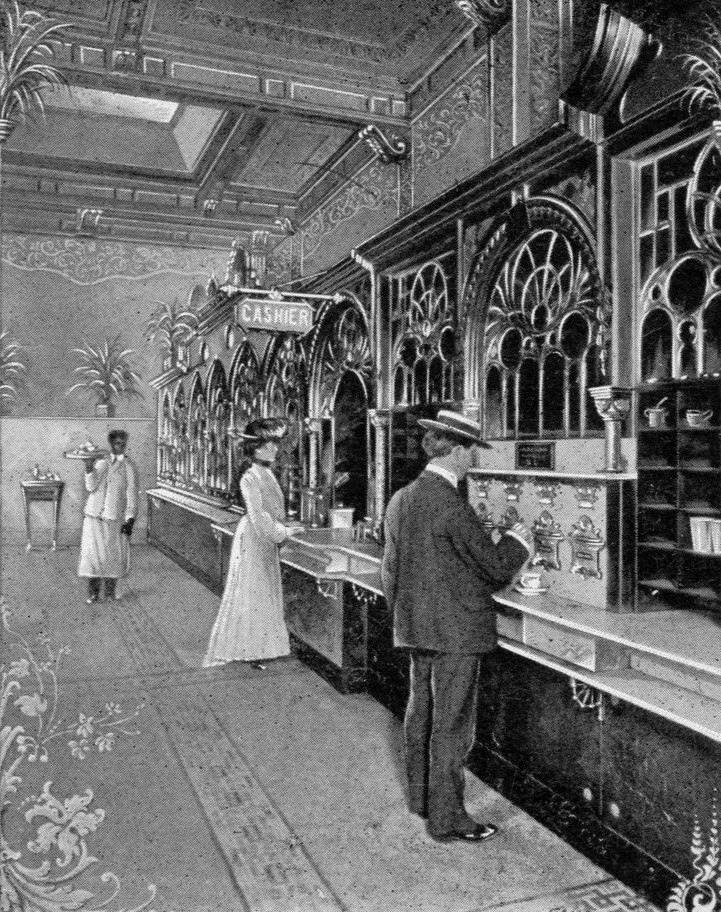
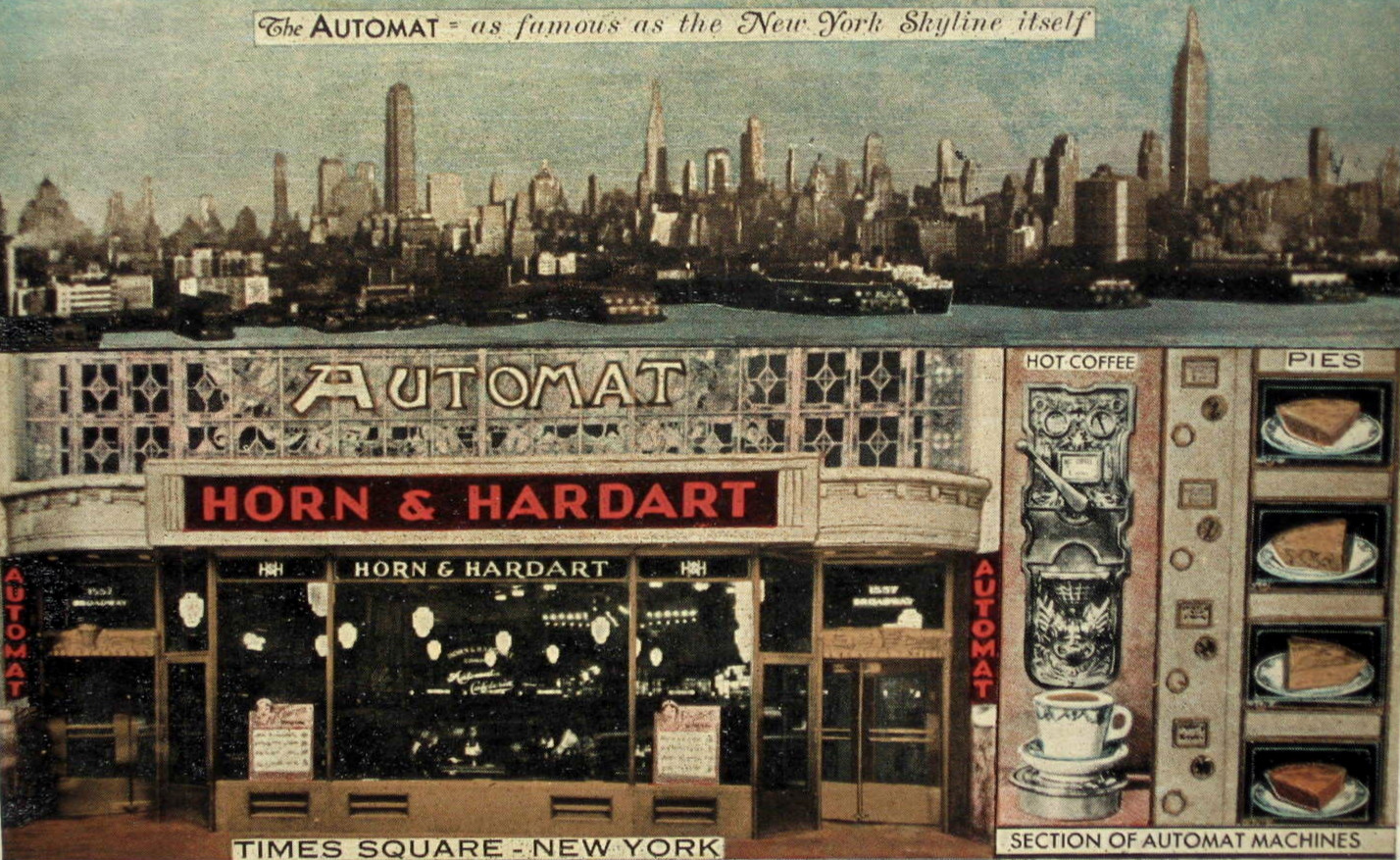
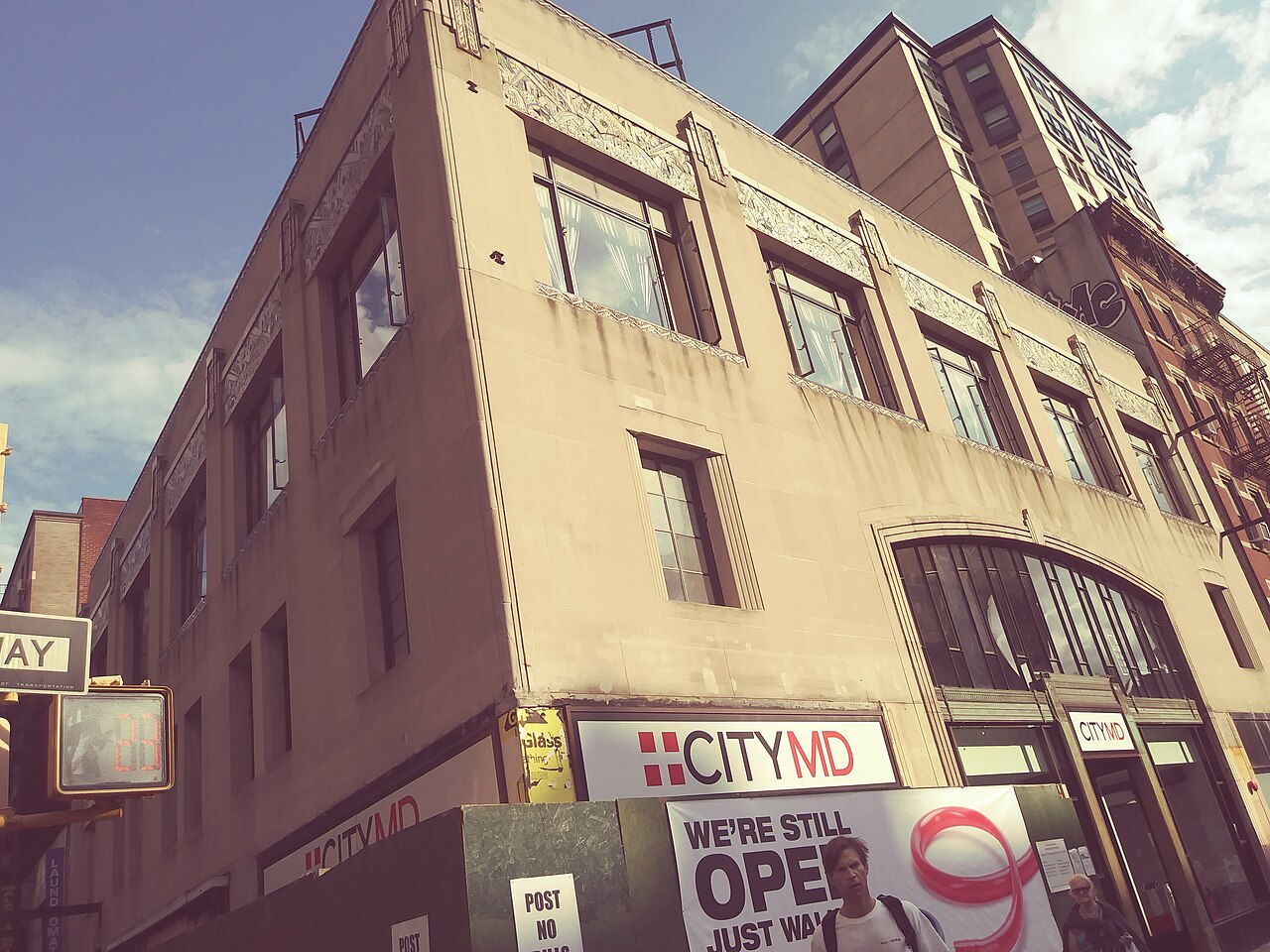
Following its Philadelphia debut, the automat concept expanded to New York City in 1912, and it grew rapidly. By 1940, Horn & Hardart automats were feeding an estimated 700,000 people a day, and at their peak the company operated more than 100 locations, making it, by some accounts, the largest restaurant chain in the world. The restaurants were famous for their striking design, gleaming chrome fixtures, ornate tilework, marble counters, and Art Deco signage that made even a quick lunch feel like an occasion. Automats became genuine cultural landmarks, celebrated in songs, films, and the daily routines of millions of city dwellers.
The Great Equalizer
Part of the automat’s enduring appeal was its social openness. With no waitstaff to navigate and no visible prices to signal status, automats became known as places where people from every walk of life ate side by side, executives and factory workers, judges and students, sharing the same tables and the same coin-operated machines. The playwright Neil Simon once memorably described the automat as “the Maxim’s of the disenfranchised,” a nod to how it delivered a dignified dining experience to anyone with a few coins in their pocket, regardless of income.
A Point of Pride: Always Fresh
Horn & Hardart built its reputation on genuine quality control, a detail that set the automat apart from being merely a novelty. The company maintained a strict policy that no food could sit out overnight in any location, and coffee that had been brewed and sat for more than twenty minutes was discarded and remade fresh. Freshly squeezed orange juice left standing too long was poured down the drain rather than served. That coffee, in fact, became one of the chain’s signature draws, so beloved that composer Irving Berlin wrote a jingle about it, which became the company’s unofficial theme song.
Why the Automat Faded
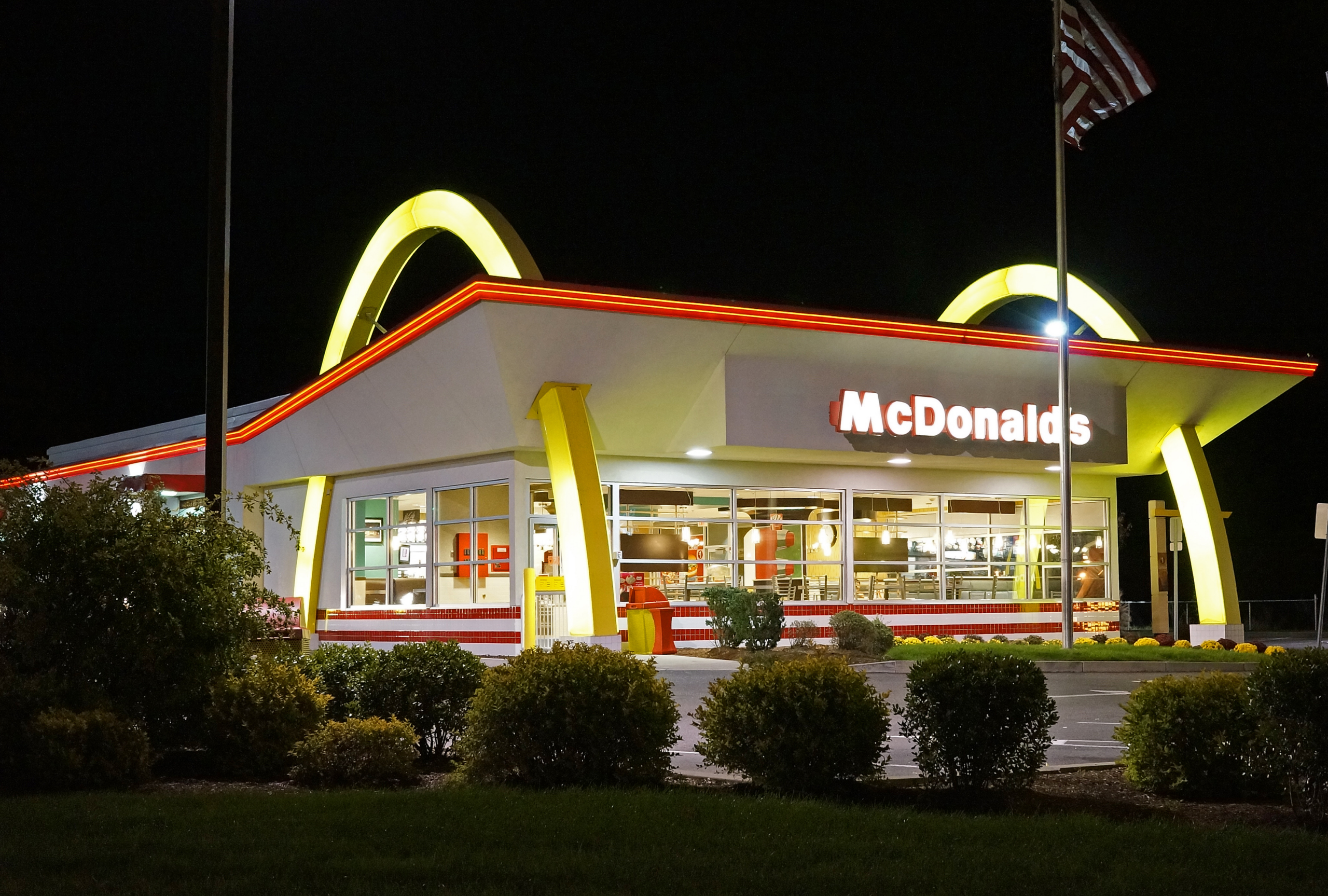
The automat’s decline began after World War II, as suburban migration and the rise of car culture reshaped American dining habits. Fast-food chains like McDonald’s, with their drive-thru windows built for an increasingly mobile, suburban population, offered a speed and convenience the automat’s downtown, walk-in model couldn’t match. Rising inflation made the coin-operated system increasingly impractical, and changing tastes moved away from the automat’s traditional comfort-food menu. Horn & Hardart itself eventually purchased franchises of the very fast-food chains that were outcompeting it, including Burger King and Arby’s locations, before finally closing its last automat, a New York City location on East 42nd Street, in 1991.
A Beloved Piece of Americana
Though the last coin slot closed decades ago, the automat lives on vividly in memory and popular culture. A section of an original 1902 Philadelphia automat is preserved in the Smithsonian’s National Museum of American History, and museums and exhibitions have periodically recreated the experience for new generations. In recent years, the Horn & Hardart name has even been revived by entrepreneurs hoping to recapture some of its old magic, starting, fittingly, with that famous coffee. For those who remember visiting one, the automat represents a uniquely charming chapter of American dining, equal parts efficient, elegant, and genuinely fun.
More Than Just a Meal
The automat endures as a beloved symbol of a particular moment in American history, when technology, design, and a democratic spirit of dining came together behind a wall of little glass doors. It offered something that felt both futuristic and comforting at once, fresh food, self-serve simplicity, and a shared dining room open to absolutely everyone. For anyone who remembers dropping a nickel into a slot and watching that little door swing open, the automat remains one of the most fondly recalled restaurants in American history.
Like our content? Follow us for more.