Every traveler who loves Venice has heard the warning, usually delivered with a sigh: go now, because it’s sinking. It’s one of those lines that sounds like exaggeration, a bit of romantic doom to sell gondola rides.
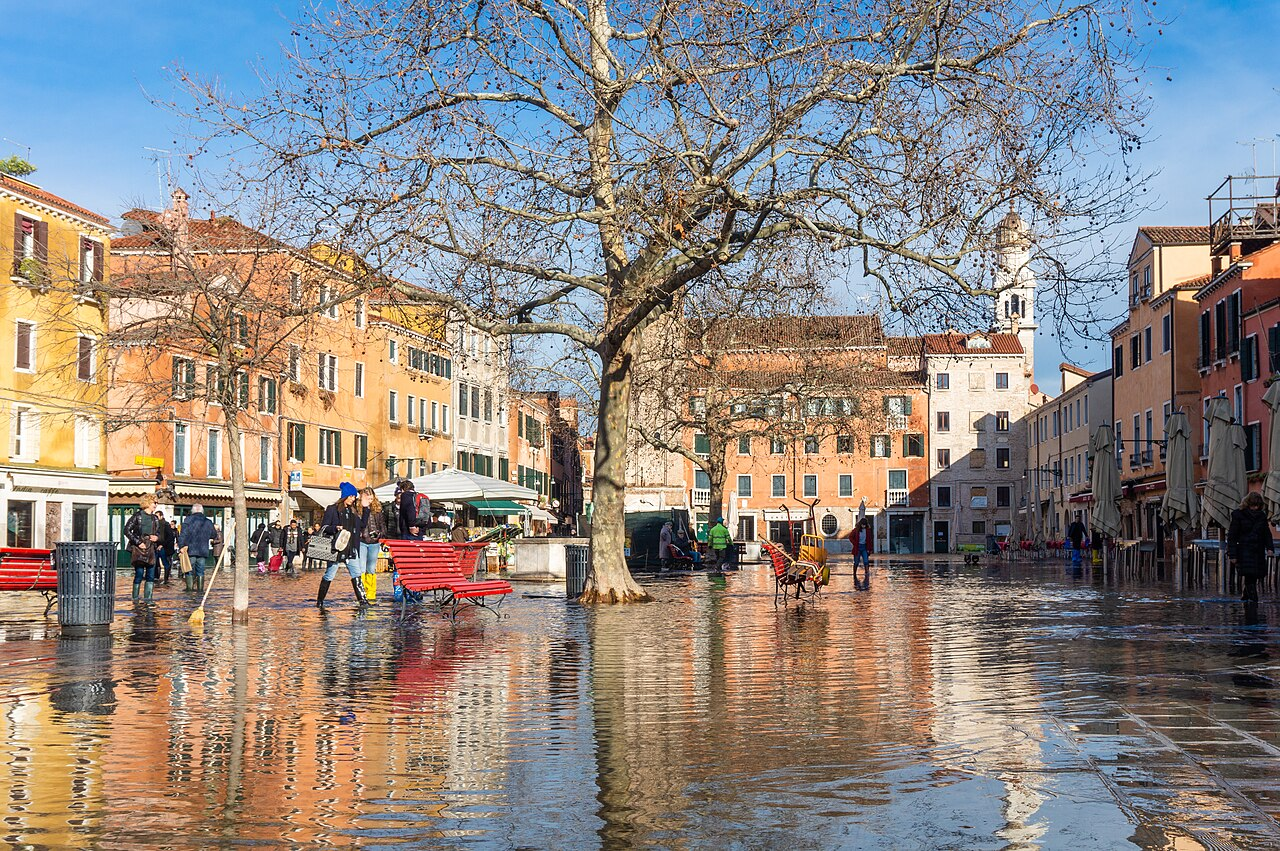
Here’s the uncomfortable part: it’s true. Venice is sinking — slowly, measurably, and in combination with a rising Adriatic that multiplies the effect. The city floods so regularly that Venetians have a name for it, a siren system to announce it, and elevated walkways stored on every major square, ready to deploy like furniture. And in response, Italy has built one of the most audacious pieces of engineering in Europe: a ring of 78 mobile floodgates, invisible beneath the waves on an ordinary day, that rise from the seafloor to shut the sea out of the lagoon entirely.
Whether that system can save Venice for the long run is one of the great open questions in the world of travel. What’s certain is that visiting Venice now means visiting a city in the middle of the fight of its life — and knowing the story makes every flooded square and every yellow gate mean more.
Why a City Was Built in a Lagoon in the First Place
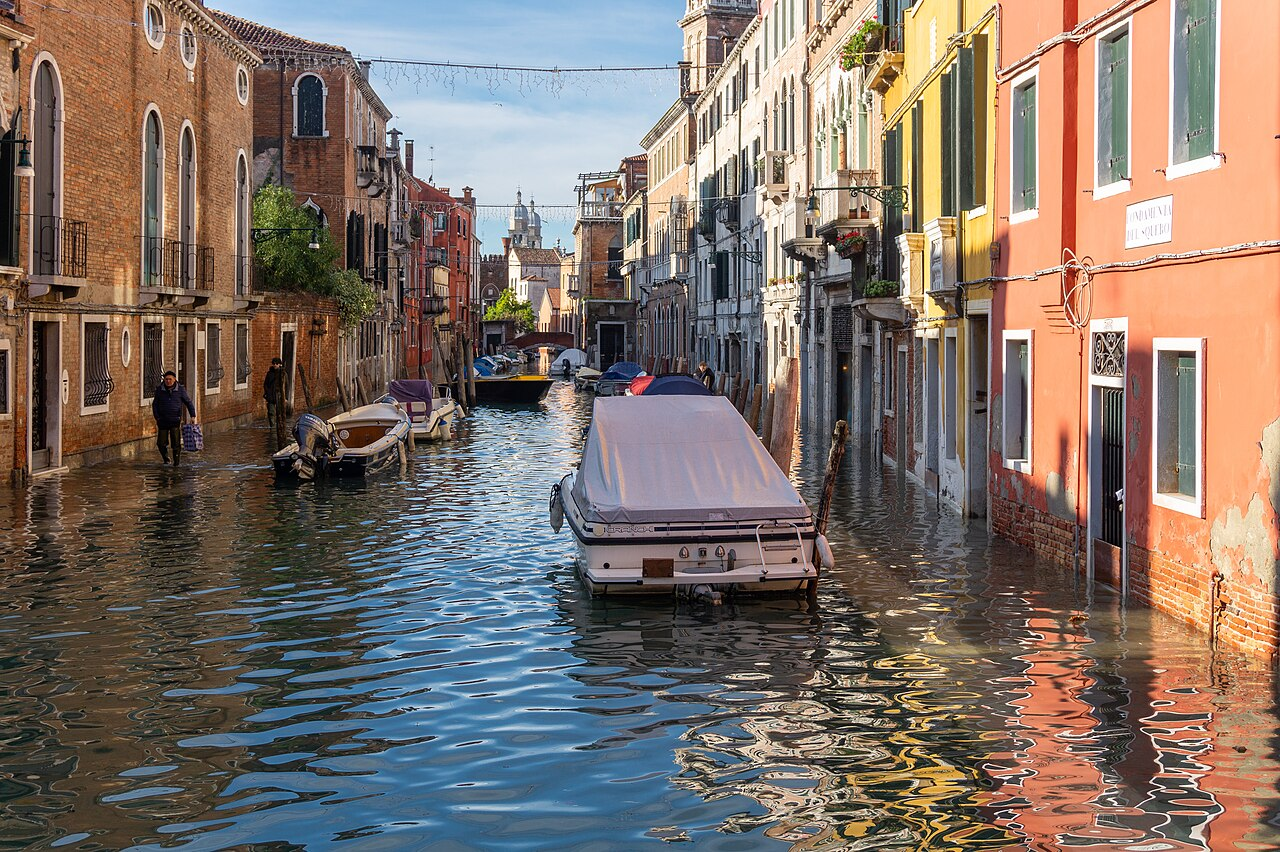
Venice exists because its founders were running away. As Roman Italy collapsed in the fifth and sixth centuries, mainland communities fleeing invasions took refuge on the marshy islands of a shallow lagoon — miserable real estate, which was the point. Water was the city wall. No cavalry crosses a lagoon.
The refugees stayed, and over centuries they performed one of history’s great construction tricks: driving millions of wooden piles through the mud into firmer clay, capping them with stone, and building a maritime empire on top. Deprived of oxygen underwater, the wooden piles petrified rather than rotted; much of what tourists walk on today still rests on timber sunk five hundred to a thousand years ago. The lagoon that protected Venice from armies, though, came with a permanent condition: the city would live at sea level, in a negotiation with the tides that could never fully end.
For most of Venetian history, the negotiation went fine. Seasonal high waters — acqua alta, driven by tides, wind, and pressure — flooded the lowest spots a few times each winter, Venetians put on boots, and life continued. The twentieth century broke the balance.
Like our content? Follow us for more.
Nine Inches Down, and the Sea Coming Up
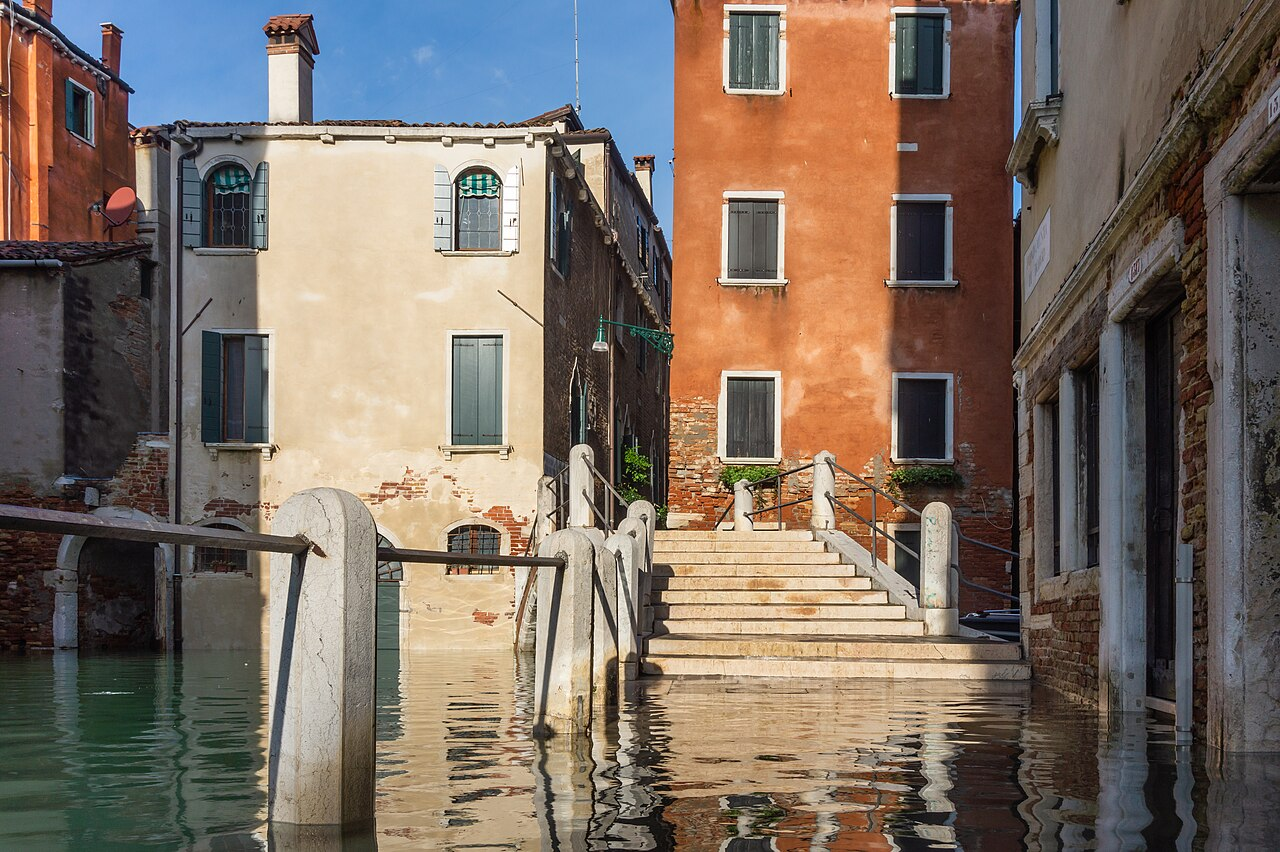
Two things happened at once. First, Venice sank faster than usual — a natural, gradual subsidence made dramatically worse in the mid-1900s, when mainland industry pumped groundwater from beneath the lagoon and the city settled measurably before the wells were shut down. Second, the sea began its modern rise. Between subsidence and rising water, Venice sits roughly nine inches — about 23 centimeters — lower relative to the sea than it did a century ago.
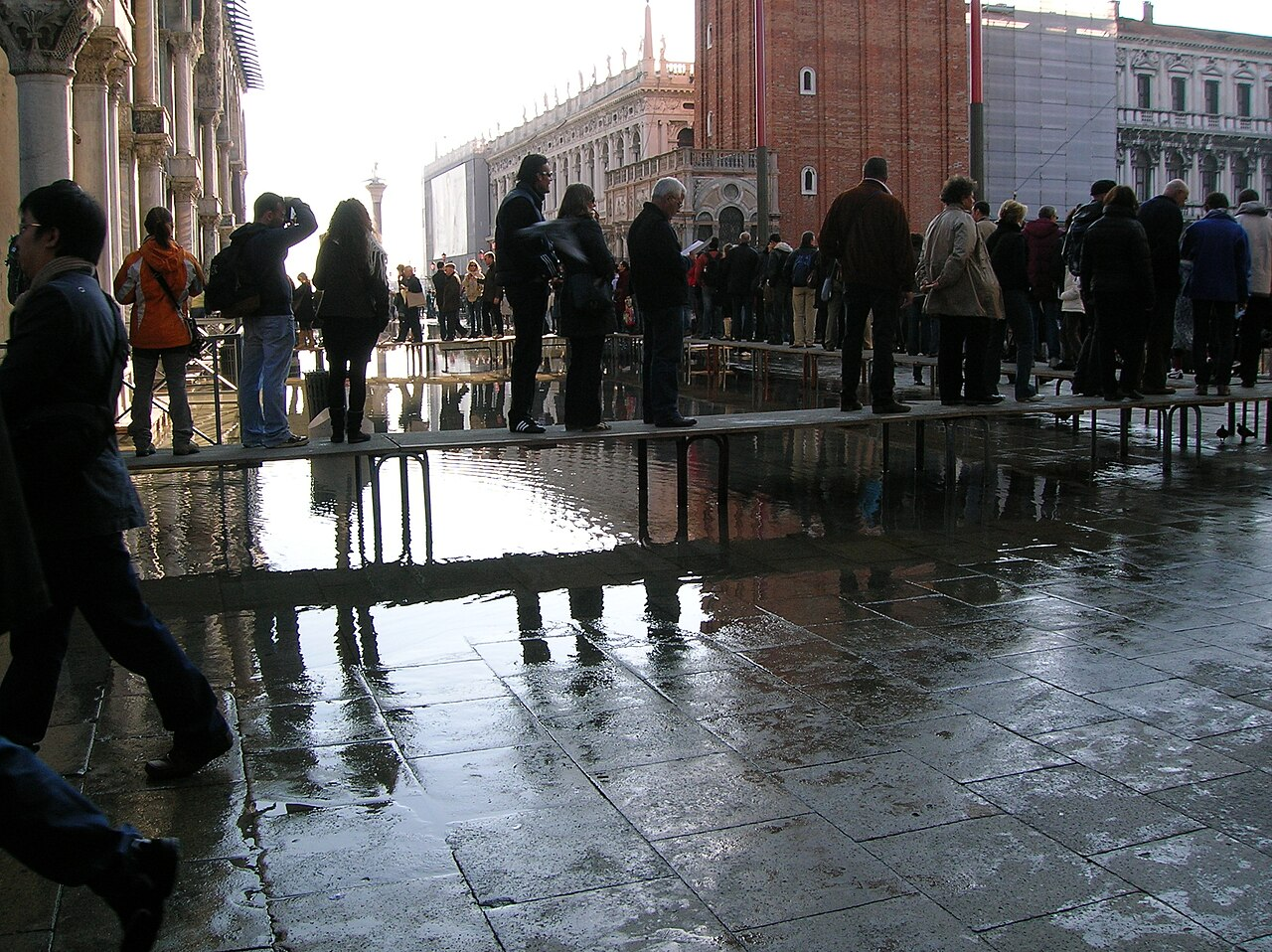
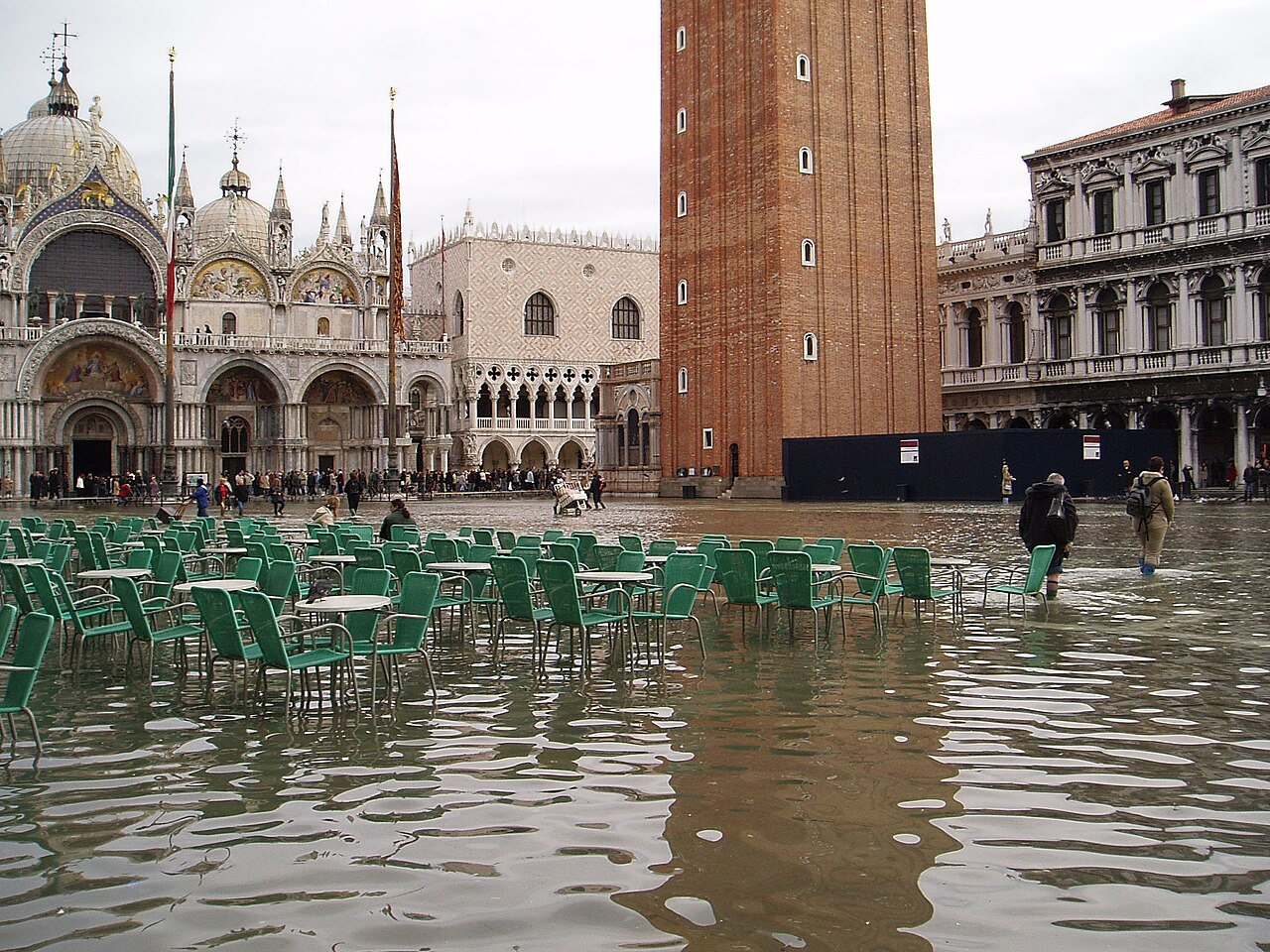
Nine inches doesn’t sound like much until you see what it does. St. Mark’s Square, the city’s magnificent front room, is also nearly its lowest point; floods that once touched it a handful of times a year now reach it dozens of times annually. The warning came in 1966, when a catastrophic flood put the entire city under more than six feet of water and shocked Italy into decades of commissions and plans. The confirmation came in November 2019, when the second-worst flood ever recorded — over six feet again — submerged more than 80 percent of Venice, poured seawater into St. Mark’s Basilica, wrecked shops and ground floors across the city, and made headlines that read like obituaries.
By then, the answer had been under construction for sixteen years. It just wasn’t switched on yet.
MOSE: 78 Gates Sleeping on the Seafloor
The system is called MOSE — an Italian acronym that also winks at Moses, the original parter of waters — and the concept is beautifully simple even though the execution took decades. The Venetian lagoon connects to the Adriatic through just three inlets. MOSE places rows of enormous hollow steel gates — 78 in all, each up to about 65 feet wide — in concrete housings on the floor of those inlets. On a normal day, the gates lie flat and full of water, invisible; ships pass over them, and the lagoon breathes with the tide as it always has.
When forecasts show dangerous high water coming, compressed air is pumped into the gates. They empty, swing upward on hinges, and break the surface as a bright yellow wall — sealing all three inlets and turning the entire lagoon, for a few hours, into a protected pool while the Adriatic piles up harmlessly outside. When the tide drops, the gates flood, sink, and disappear again.
MOSE raised its walls against a real flood for the first time in October 2020, and the scene in St. Mark’s Square that day made the news worldwide for the best reason: nothing happened. Water that should have covered the square never arrived. Since then the gates have been raised dozens of times per flood season, and the elevated-walkway ritual, while not gone, has become dramatically rarer. Venetian shopkeepers who spent decades hauling merchandise upstairs at every siren describe the change in the tones people usually reserve for medical miracles.
The Catch — Because There’s Always a Catch
MOSE works. What nobody can promise is for how long. The system was designed around twentieth-century assumptions about sea level, and it defends the city only while the gates are up — they can’t stay raised permanently without strangling the lagoon’s ecosystem and the port traffic Venice depends on. As the baseline sea keeps rising, the gates will need to close more and more often, and engineers openly discuss the horizon — decades out, with the timing depending on how fast the Adriatic climbs — where “more and more often” collides with “not sustainable.”
The project also carries baggage Venetians will happily detail for you: it took about seventeen years to build, cost on the order of six billion euros, and was delayed for years by a corruption scandal that brought down local officials. And it protects against the sea, not the sink — Venice’s slow settling continues, and proposals to physically lift the city by injecting water or other material deep beneath it remain on the drawing board, somewhere between visionary and science fiction.
None of which changes the bottom line: for the first time in its 1,500-year history, Venice can tell the sea no. That’s not a small thing to be able to watch.
Visiting the Sinking City, Wisely
For travelers, the practical picture is better than the headlines suggest. Acqua alta is seasonal — overwhelmingly a late-autumn-through-winter event, peaking around November — and even then it’s brief, typically a few hours around high tide, and partial, touching the low zones while most of the city stays dry. Summer visitors may never see a puddle. Those who come in flood season get a functioning city with a strange amenity: the passerelle walkways, the sirens with their rising musical tones announcing the water’s expected height, and locals in stylish boots conducting business as usual. Many visitors find a mild acqua alta morning in St. Mark’s — the mosaics of the basilica doubled in a mirror of seawater — strangely unforgettable, and the flooding photographs that alarm the world are, to Venetians, mostly Tuesday.
A few habits make it painless: check the tide forecast the city publishes daily, pack waterproof footwear for November trips, book rooms above the ground floor in the lowest districts, and remember that a raised MOSE day is the system succeeding, not failing. And spare a look, from any vaporetto heading toward the Lido, at the inlets where the yellow gates sleep. Somewhere under that ordinary-looking water is the machine holding back the Adriatic — the newest chapter in fifteen centuries of a city refusing, elegantly, to accept its situation.
Venice has been improbable since the first refugee drove the first pile into the mud. Sinking is just the latest thing it has declined to accept.
One more reason to pay attention: the rest of the coastal world is watching this experiment closely. Rotterdam, London, and New Orleans already operate storm barriers of their own, but none seals a living lagoon city the way MOSE does, and planners from Jakarta to New York study Venice’s raising data, its ecological trade-offs, and its costs as a preview of decisions dozens of cities face this century. Venice spent fifteen hundred years as Europe’s laboratory for living on water. It has, without asking for the job, become the world’s — and every raising of those yellow gates adds another data point to a file half the planet’s port cities will eventually need to read.
Like our content? Follow us for more.