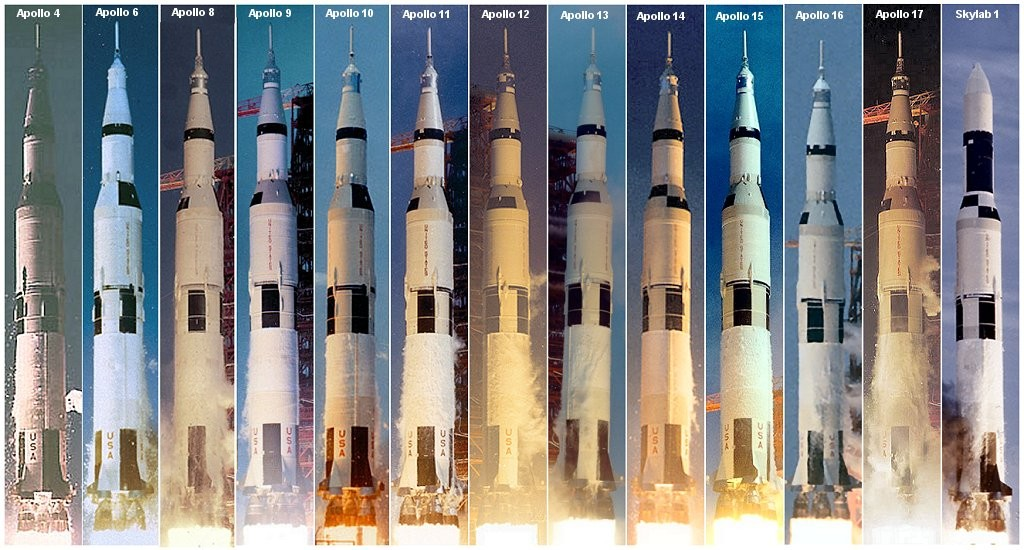
Fifty-seven years after Neil Armstrong stepped off the ladder, the machinery that got him there is still here — parked in hangars, suspended from museum ceilings, and lying on its side at full, absurd length in three different states. International Moon Day, observed every July 20 since the United Nations declared it in 2021, honors the night an estimated 600 million people watched the same grainy image at the same time. It’s also, for travelers, an invitation: the Apollo program left a trail across America that you can drive, and at more than one stop, you can put your bare hand on a piece of another world.
Here’s the itinerary, from the launch pads to the small Ohio town that raised the first man on the Moon.
Florida: Where the Ground Still Remembers the Rumble
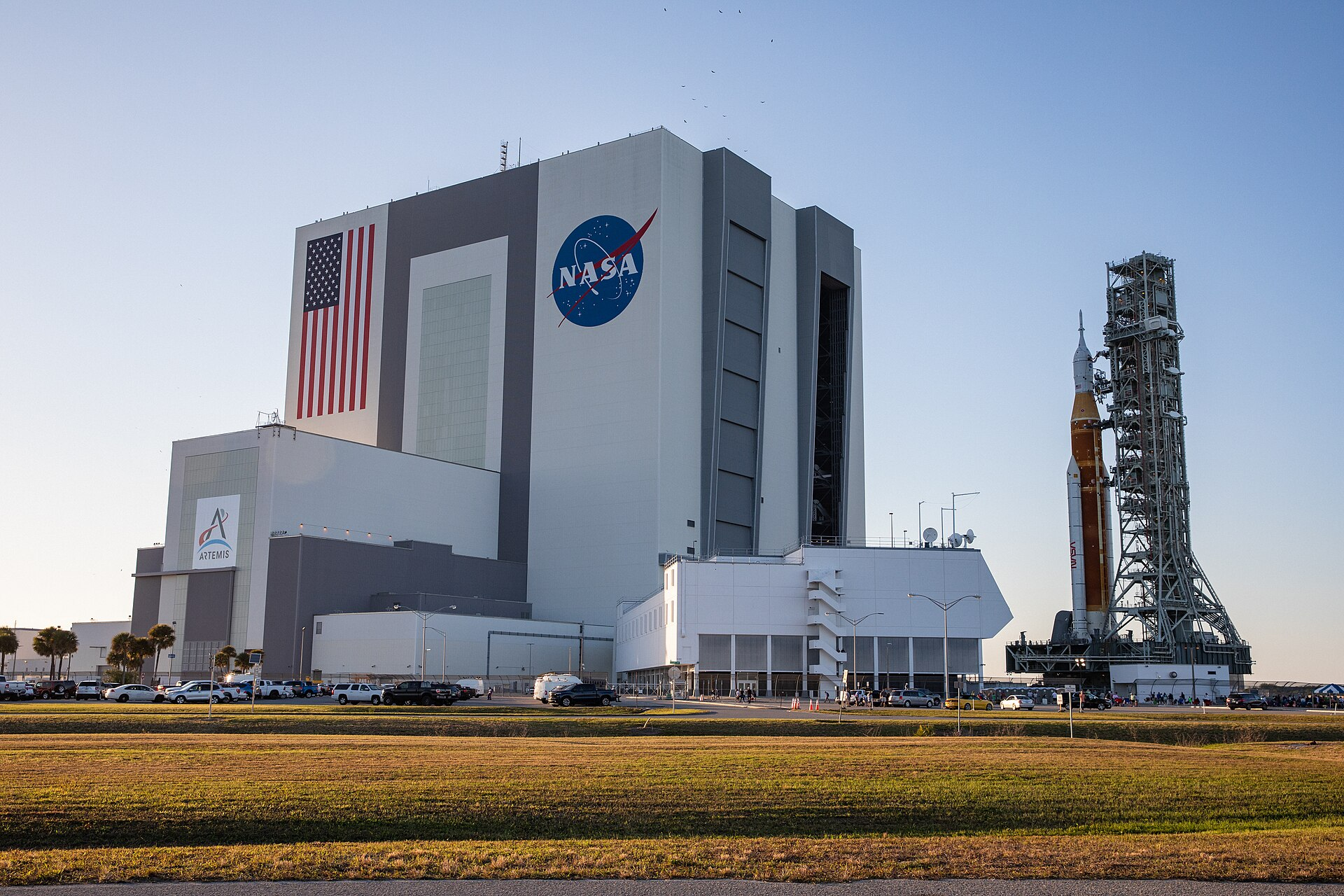
Kennedy Space Center on Florida’s Space Coast is the program’s front door, and its centerpiece stops first-timers mid-stride: an entire Saturn V — the 363-foot rocket that threw Apollo at the Moon — displayed horizontally, stage by stage, in a building constructed around it. Walking its length recalibrates you. Photographs never convey that the engines alone are the size of delivery trucks, or that human beings rode the top of this thing while it burned twenty tons of fuel a second.
The visitor complex layers the rest around it: the actual Apollo-era firing room reactivated in sound and light for a launch simulation, the Rocket Garden’s standing boosters, and bus tours that roll past Launch Complex 39A — the pad Apollo 11 left from, still in active use today, which may be the site’s best trick. This isn’t a graveyard. Rockets still leave from here regularly, and a launch viewed from the causeway remains one of American travel’s great free spectacles. Check the schedule before you book; timing a visit to a liftoff turns a museum day into a memory with a shockwave.
Like our content? Follow us for more.
Houston: The Room Where “The Eagle Has Landed” Landed
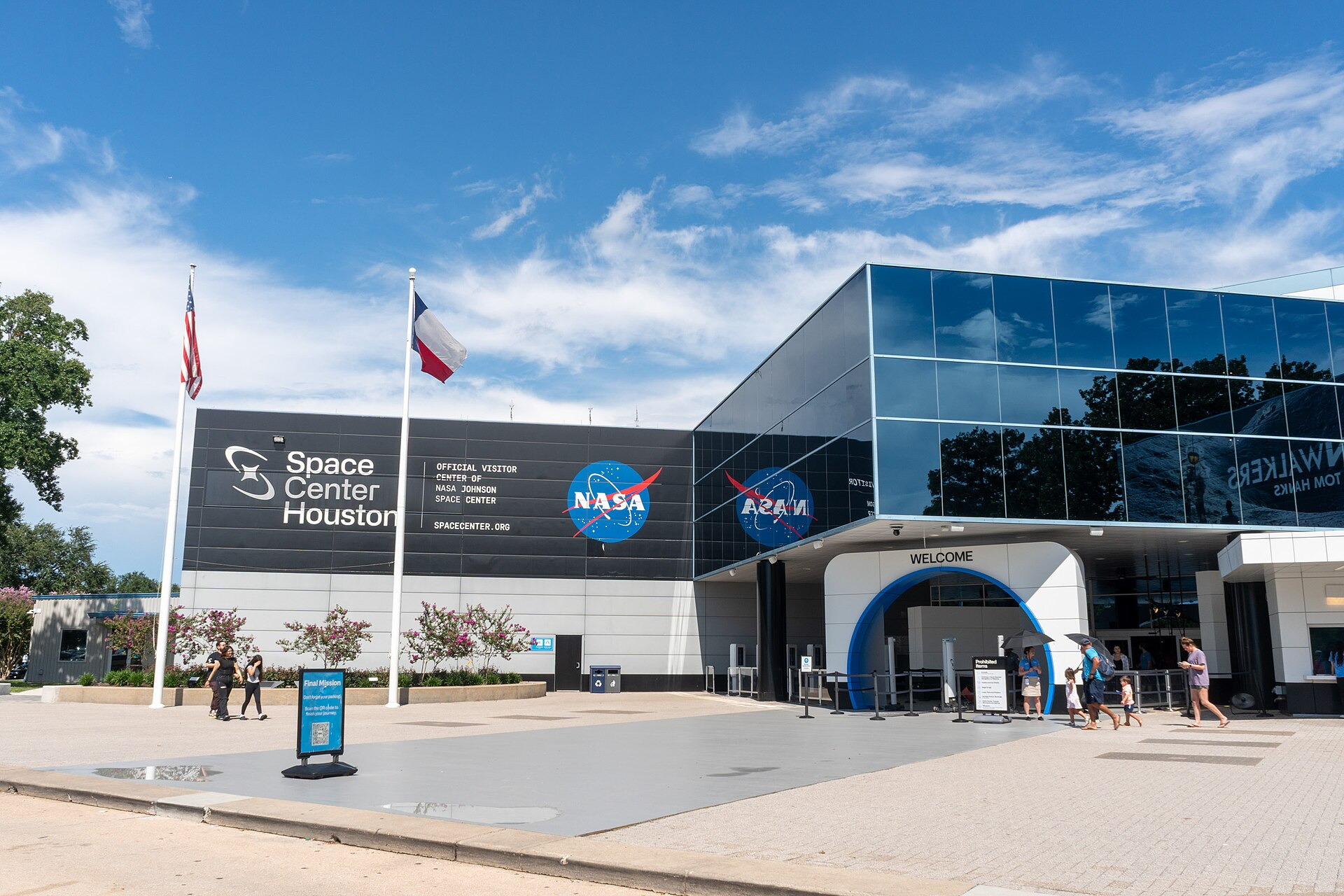
Space Center Houston, beside NASA’s Johnson Space Center, holds the mission’s other end: the consoles. The restored Apollo Mission Control Room — returned in 2019 to its exact July 1969 condition, down to the rotary phones, the coffee cups, and the wallpaper — is viewed from the glassed gallery where astronauts’ families once sat, and visitors routinely go silent in it. This is the room that said “we copy you on the ground.” It looks impossibly small for the job.
Houston also offers the trip’s signature souvenir, which costs nothing and can’t be purchased: a sliver of Moon rock mounted for public touching, worn smooth by millions of fingers. There are only a handful of touchable lunar samples on Earth — the Smithsonian’s National Air and Space Museum in Washington has another — and pressing a fingertip to one is the rare museum moment that works equally on eight-year-olds and eighty-year-olds. The Saturn V lying in Rocket Park next door, one of only three complete vehicles surviving, closes the visit at full scale.
Huntsville: The Alabama Town That Built the Fire
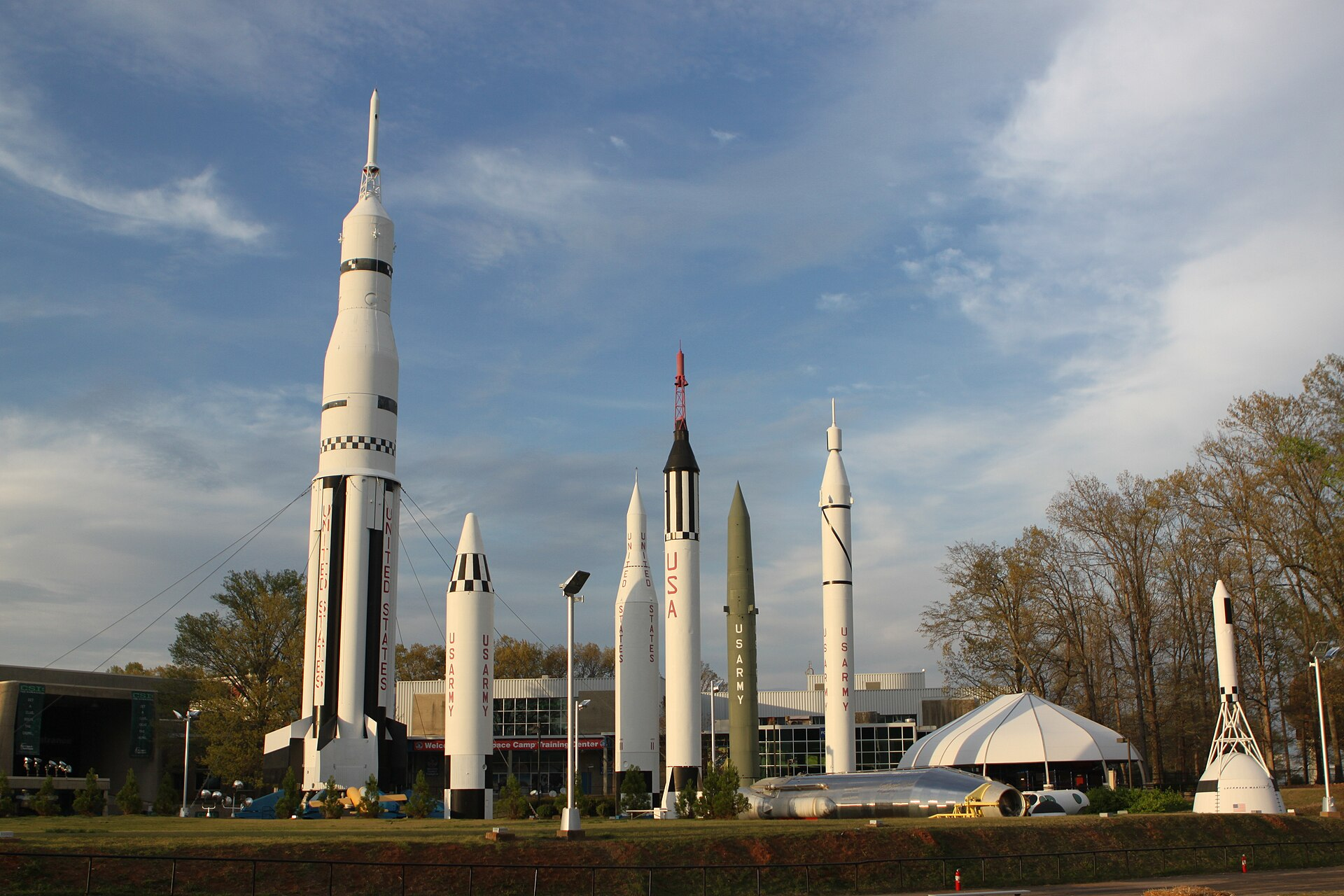
Before Florida launched them, Alabama built them. Huntsville’s U.S. Space & Rocket Center anchors the city where Wernher von Braun’s team engineered the Saturn V, and it shows the hardware with a hometown’s pride: a third complete Saturn V indoors, a full-scale vertical replica towering over the interstate as the city’s de facto skyline, test stands in the hills where engine firings once rattled windows for miles, and the beloved Space Camp running year-round on the grounds. Huntsville is the itinerary’s engineering chapter — the place that makes clear the Moon landing was, among other things, the largest craft project in human history, built by hand in Alabama.
Ohio: The Small Town That Sent the First Man
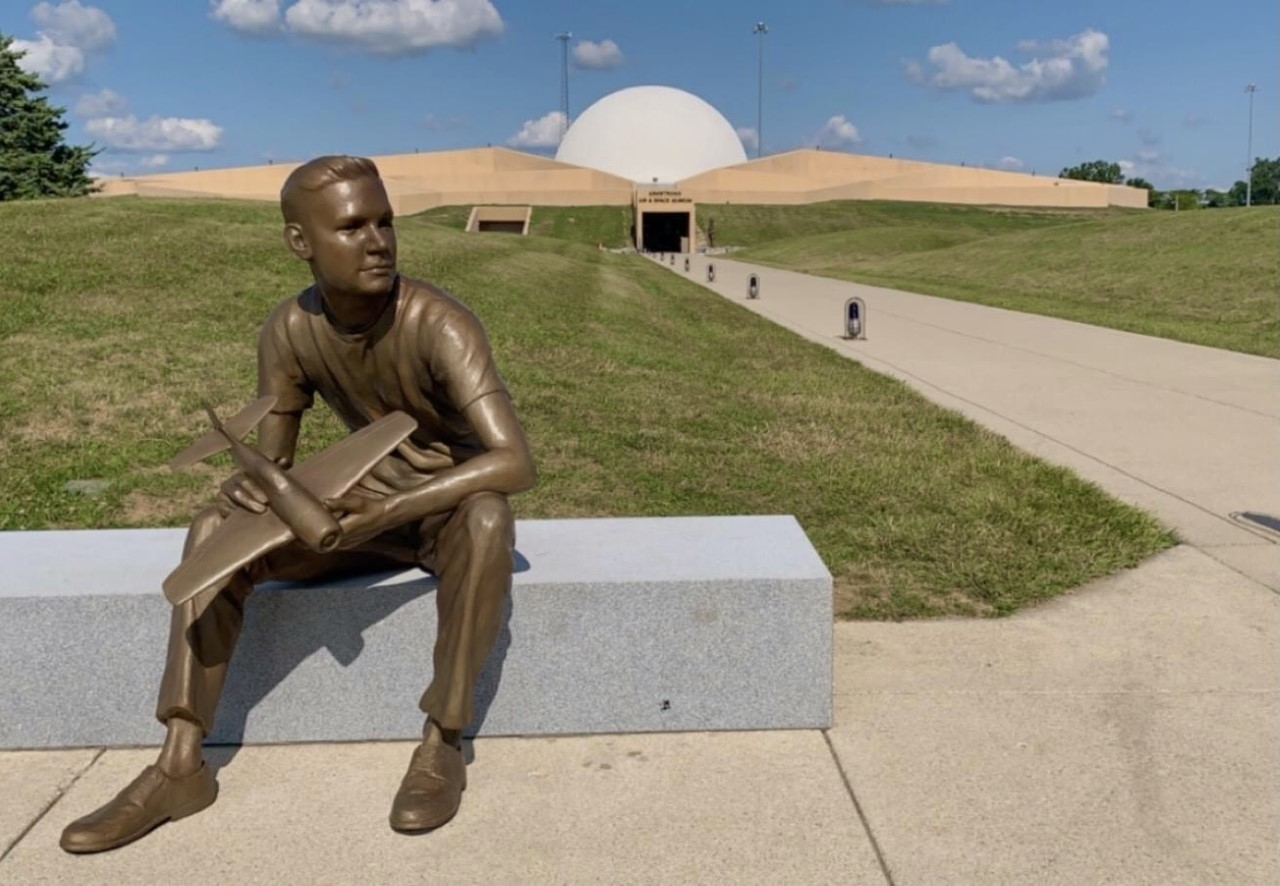
The trail’s most affecting stop is its smallest. Wapakoneta, Ohio — population about 10,000 — is where Neil Armstrong grew up, and its Armstrong Air & Space Museum, opened just three years after the landing, tells the story at human scale: the plane he learned to fly at fifteen, his Gemini spacecraft, a Moon rock, and the quiet, insistently Midwestern message that the first footprints up there started from a farm town off I-75. Every July, the town throws its Summer Moon Festival around the landing anniversary. It is exactly as wholesome as it sounds, and a fitting place to raise a glass of root beer to the neighbors’ kid who did it. The museum’s dome, visible from the interstate, is shaped like a rising moon — small towns do not miss a trick when one of their own makes history, and Wapakoneta has been making the most of its favorite son for more than half a century, with the town’s businesses, murals, and water tower all in on the theme.
Honorable mentions ring the country for completists: the Cradle of Aviation Museum on Long Island displays a genuine, flight-ready lunar module — built there by Grumman workers whose fingerprints are effectively on the Moon — and “Moon trees,” grown from seeds that orbited with Apollo 14, stand in parks and courthouse squares in dozens of states, usually beside a modest plaque that no one reads and everyone should.
The Rocks That Came Home — and the Ones That Wandered Off

Between 1969 and 1972, Apollo crews hauled back 842 pounds of the Moon — rocks, core samples, and dust — and most of it lives today in a nitrogen-filled vault at Johnson Space Center, doled out to researchers a gram at a time; scientists are still opening samples that were sealed on the lunar surface and saved, deliberately, for instruments that hadn’t been invented yet. The public gets its share through the touchstones in Houston and Washington and through display samples at museums nationwide, each one armored like a crown jewel, because that’s roughly what it is: no material on Earth has been more expensive to collect.
Then there’s the strangest sub-plot in the whole Apollo story. After the missions, the U.S. presented tiny “goodwill” Moon rocks to every state and dozens of nations — and over the decades, an astonishing number of them went missing: lost in government moves, destroyed in fires, swallowed by storage rooms, and occasionally surfacing on the black market, where they’ve been the target of real federal sting operations. A retired NASA investigator spent years hunting them down like a detective in a heist film, recovering dozens. Some are still out there. It’s worth remembering on International Moon Day that somewhere, possibly in a forgotten drawer in a state archive, a piece of the Sea of Tranquility is waiting to be found — which may be the only Apollo experience still available to amateurs.
The Part You Can’t Visit — Yet
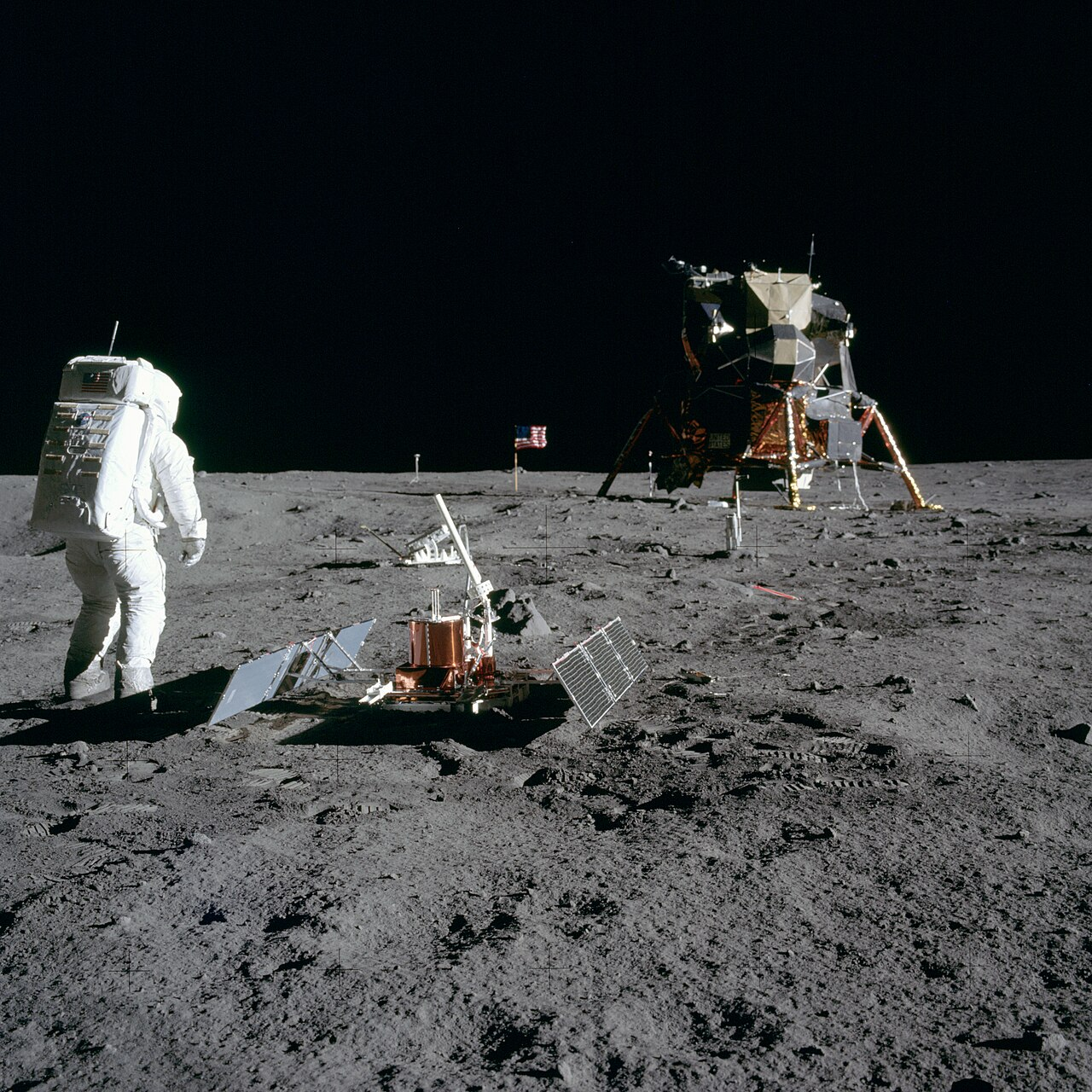
The trail’s final stop is 239,000 miles up and closed to the public. Tranquility Base — the landing site, the descent stage, the flag, the famous footprints in dust that doesn’t weather — remains exactly where July 20, 1969 left it, and preservationists have spent years pushing to protect Apollo sites as humanity’s first off-world heritage landmarks before future landers arrive. The instruments still work, incidentally: retroreflector mirrors left by Apollo crews are bounced with lasers to this day, measuring the Moon’s slow drift away from Earth — about an inch and a half a year — which means the mission never actually ended. It’s still returning data every clear night.
And the sequel is in production. NASA’s Artemis program is working toward returning astronauts to the lunar surface in the coming years, with new rockets rolling out to the same Florida pads the Saturn V used. Whenever that landing happens, the next generation’s version of the 600 million will watch it — likely in better resolution, definitely with the same held breath.
Marking the Day
International Moon Day itself is easy to celebrate at any scale: museums and planetariums across the country run events around July 20, the Moon obligingly rises for free everywhere, and even a decent pair of binoculars from a porch will show the Sea of Tranquility — you can point at the exact place where the whole story touched down. The holiday’s official framing looks forward as much as back — the UN pairs the anniversary with the peaceful exploration of space and the missions still to come — but the American version needs no programming beyond geography. Between Florida’s pads, Houston’s consoles, Alabama’s engines, and Ohio’s hometown museum, the whole story is parked within driving distance of most of the country, and summer is exactly the season for it. However you mark it, this holiday has a road-trip answer: the rockets are still here, the control room is still listening, and in Houston and Washington, the Moon itself is sitting on a pedestal, waiting for your hand.
Like our content? Follow us for more.