

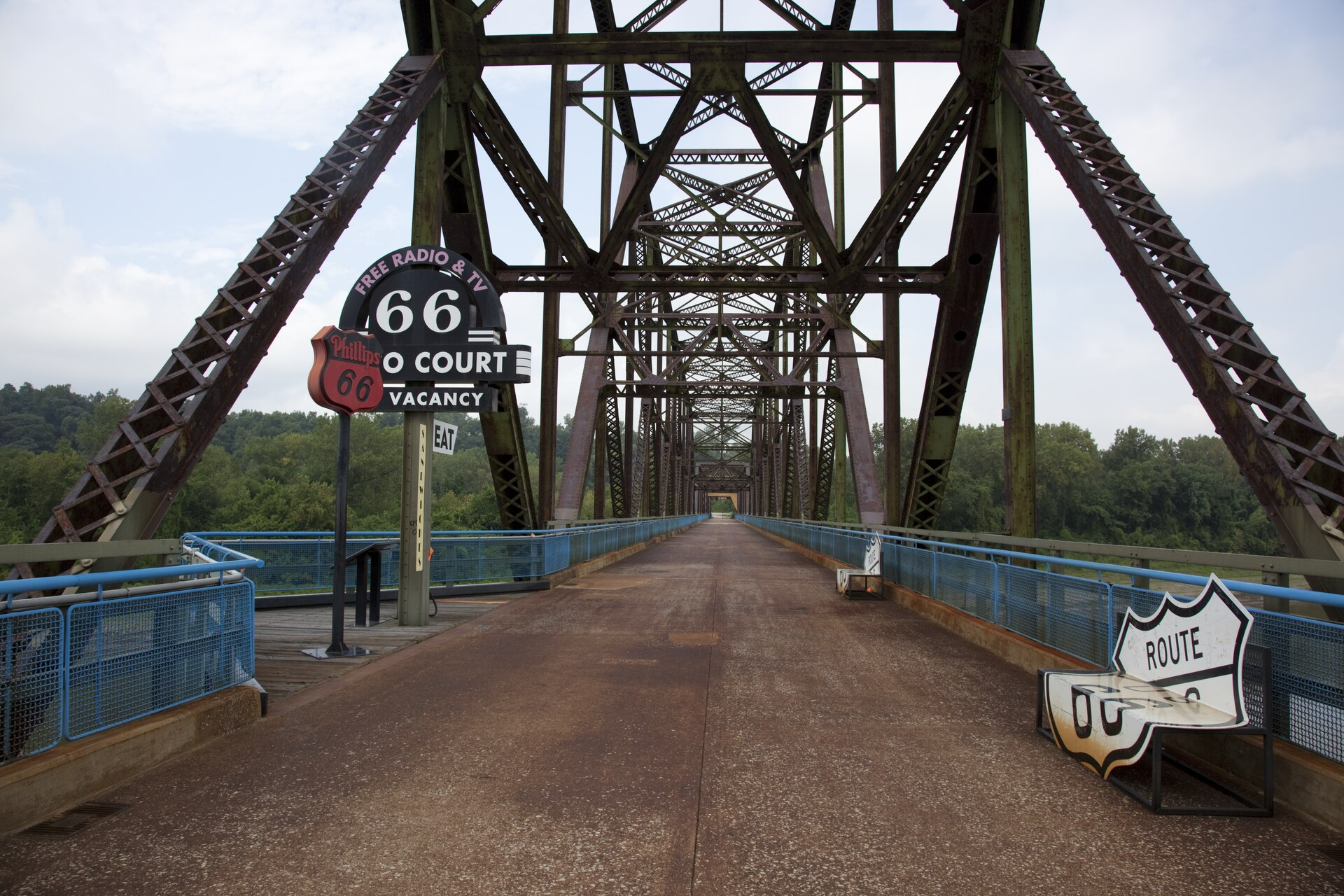
America’s most famous road doesn’t officially exist. Look for Route 66 on a modern highway map and you’ll find a ghost — decommissioned in 1985, its shield signs taken down, its number reassigned to nothing, its 2,448 miles absorbed into interstates and county roads. And yet this year, that nonexistent road is throwing itself a hundredth birthday party across eight states, with restored neon flickering back on in desert towns, centennial events stacked from Illinois to California, and a permanent stream of road-trippers — a striking share of them from overseas — driving a highway the government erased four decades ago.
That’s the Route 66 paradox in full: officially dead since 1985, culturally unkillable, and in 2026 — one century after its commissioning on November 11, 1926 — enjoying the biggest year it’s had since Eisenhower was president. Understanding how all three things can be true is the best reason to drive it.
The Road That Invented the American Road Trip
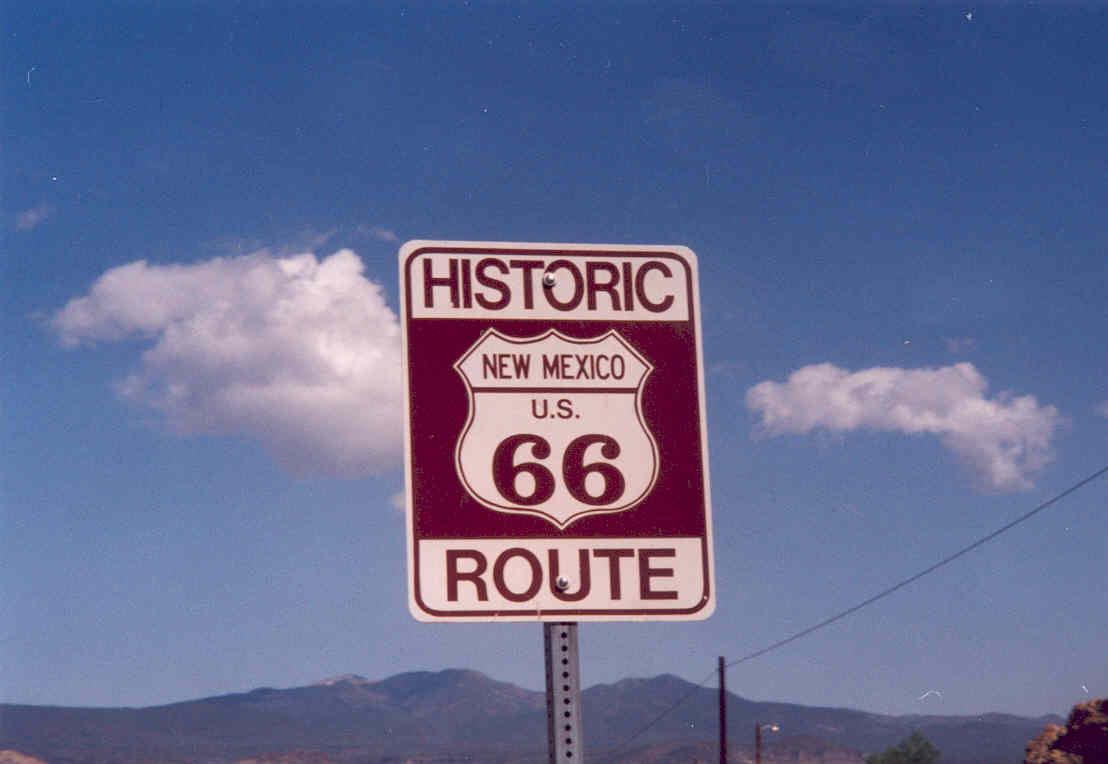
Route 66 was born from a stroke of route-planning genius. When the federal highway system was drawn up in 1926, the Chicago–Los Angeles route was deliberately threaded through hundreds of small towns across Illinois, Missouri, Kansas, Oklahoma, Texas, New Mexico, Arizona, and California — a diagonal Main Street of America, which its boosters trademarked as a slogan almost immediately. Unlike railroads, which stopped where they pleased, the highway delivered travelers directly past every town’s front doors, and an entire roadside economy sprouted to catch them: motor courts, filling stations, cafés, and attractions engineered to make children beg their fathers to stop.
Then history got on the road. In the 1930s, Route 66 became the Dust Bowl’s corridor of exodus — the road Steinbeck’s Joads traveled in “The Grapes of Wrath,” where he coined the name that stuck: the Mother Road. In the 1940s it moved war materiel and enlisted men. And in the 1950s it hit its golden age, as postwar families with new cars, new vacation time, and new tail fins turned the drive west into a national rite — the era of the Wigwam motels, the Meramec Caverns barn ads, the songwriter’s instruction that everyone obeyed: get your kicks. Route 66 didn’t just carry the American road trip. It invented the form — the roadside attraction, the motel neon, the souvenir pennant — and every family vacation since has driven in its ruts.
Like our content? Follow us for more.
How the Interstates Killed It in Slow Motion
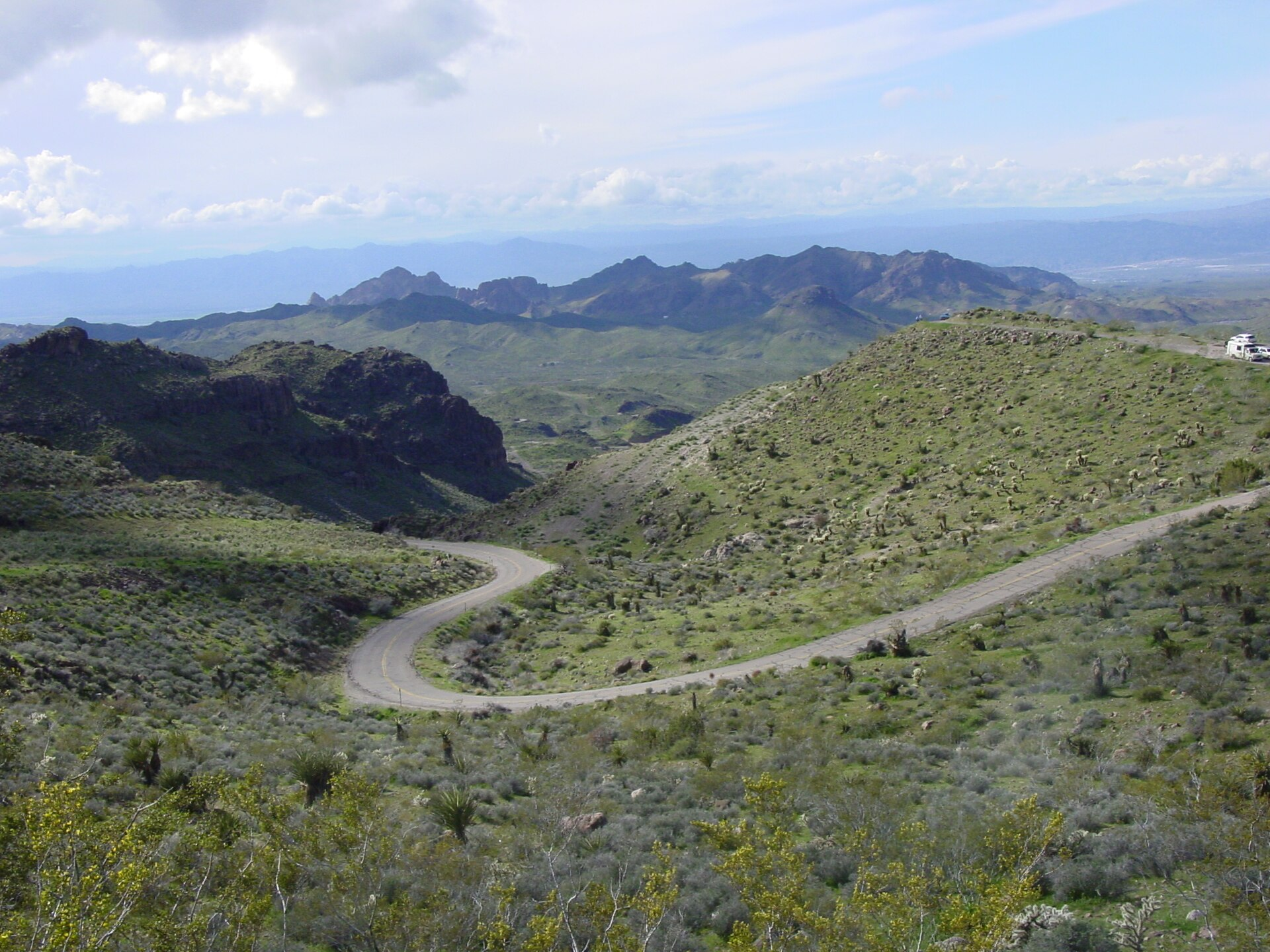
The road died of success. The traffic that made Route 66 rich also made it obsolete — two lanes, town speed limits, and dangerous stretches that earned the nickname “Bloody 66” — and the 1956 Interstate Highway Act signed its death warrant in the name of speed and safety. The execution took three decades: five interstates (I-55, I-44, I-40, I-15, I-10) were laid alongside or on top of the old road, and town after town watched the traffic that fed it lift onto a bypass and vanish at seventy miles an hour.
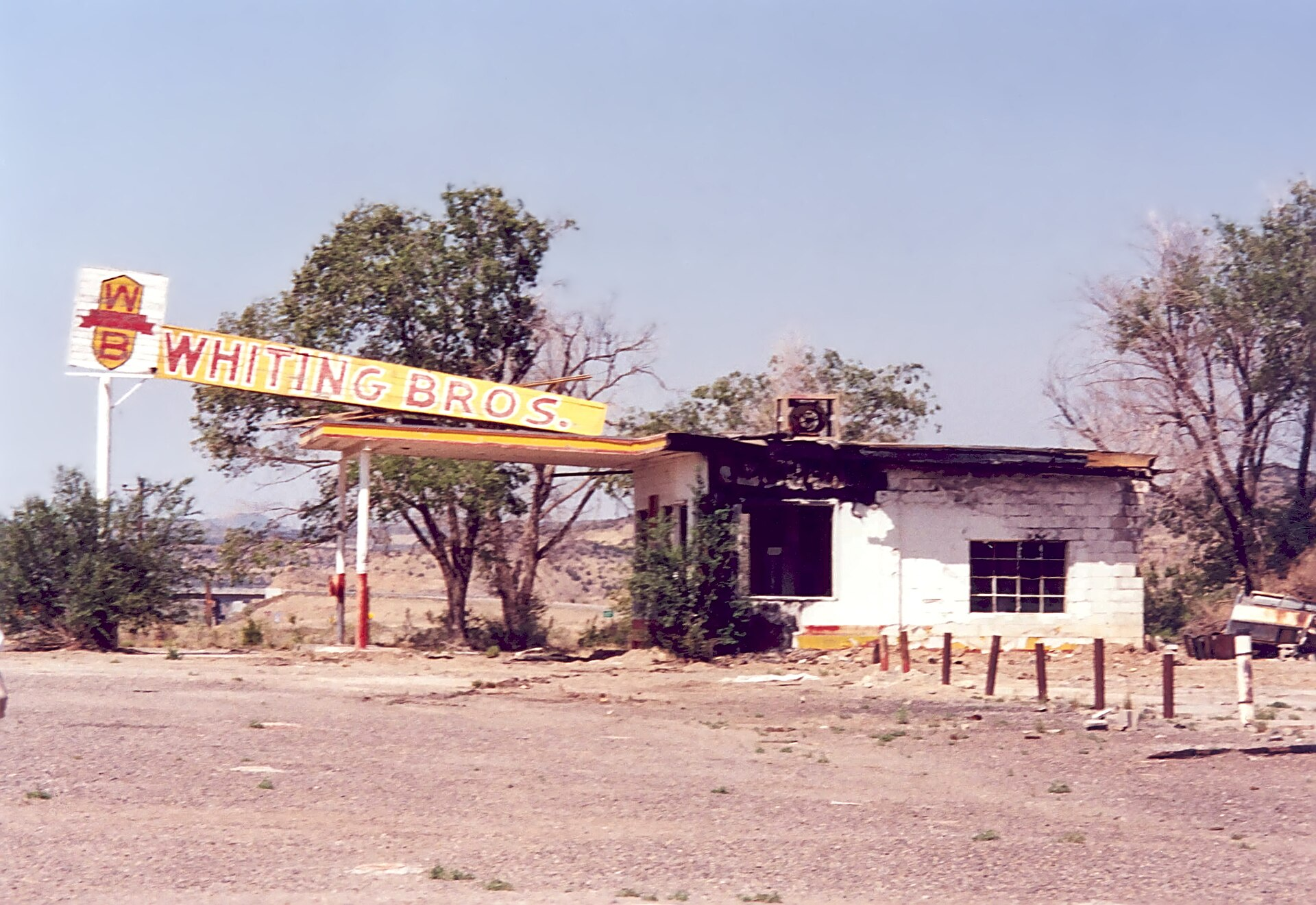
What followed was the great die-off that gives the road its melancholy today. Businesses that had thrived a hundred feet from the traffic starved a mile from it; motels went dark, cafés closed, and some towns — Glenrio on the Texas–New Mexico line, Two Guns in Arizona — emptied entirely into ghost status. In 1985, with the last interstate segment complete, the American Association of State Highway and Transportation Officials removed Route 66 from the federal system. The shields came down. The most famous road in the world became, administratively, no road at all.
The Barber Who Refused to Let It Die
The revival began, as Route 66 stories tend to, in a very small town. In Seligman, Arizona — bypassed by I-40 in 1978, its main street gone silent overnight — the town barber, Angel Delgadillo, decided the road’s history was worth more than its traffic, and in 1987 he gathered neighbors to found the first Historic Route 66 Association, lobbying Arizona to designate the old alignment a historic highway. It worked, other states followed, and the barber of Seligman became the revival’s patron saint — his shop a pilgrimage stop, his story the acknowledged inspiration for the bypassed town in the animated film “Cars,” which introduced the whole saga to a generation born after the road died.
Congress eventually joined in, funding a National Park Service preservation program that has helped restore the road’s landmarks — the neon, the motor courts, the diners — and the states stitched together “Historic Route 66” signage so travelers could follow the old alignments. The result today: roughly 85 percent of the original road remains drivable in some form, from interstate frontage to cracked 1930s concrete humming under the tires exactly as it did under the Joads’.
What’s Actually Worth Stopping For
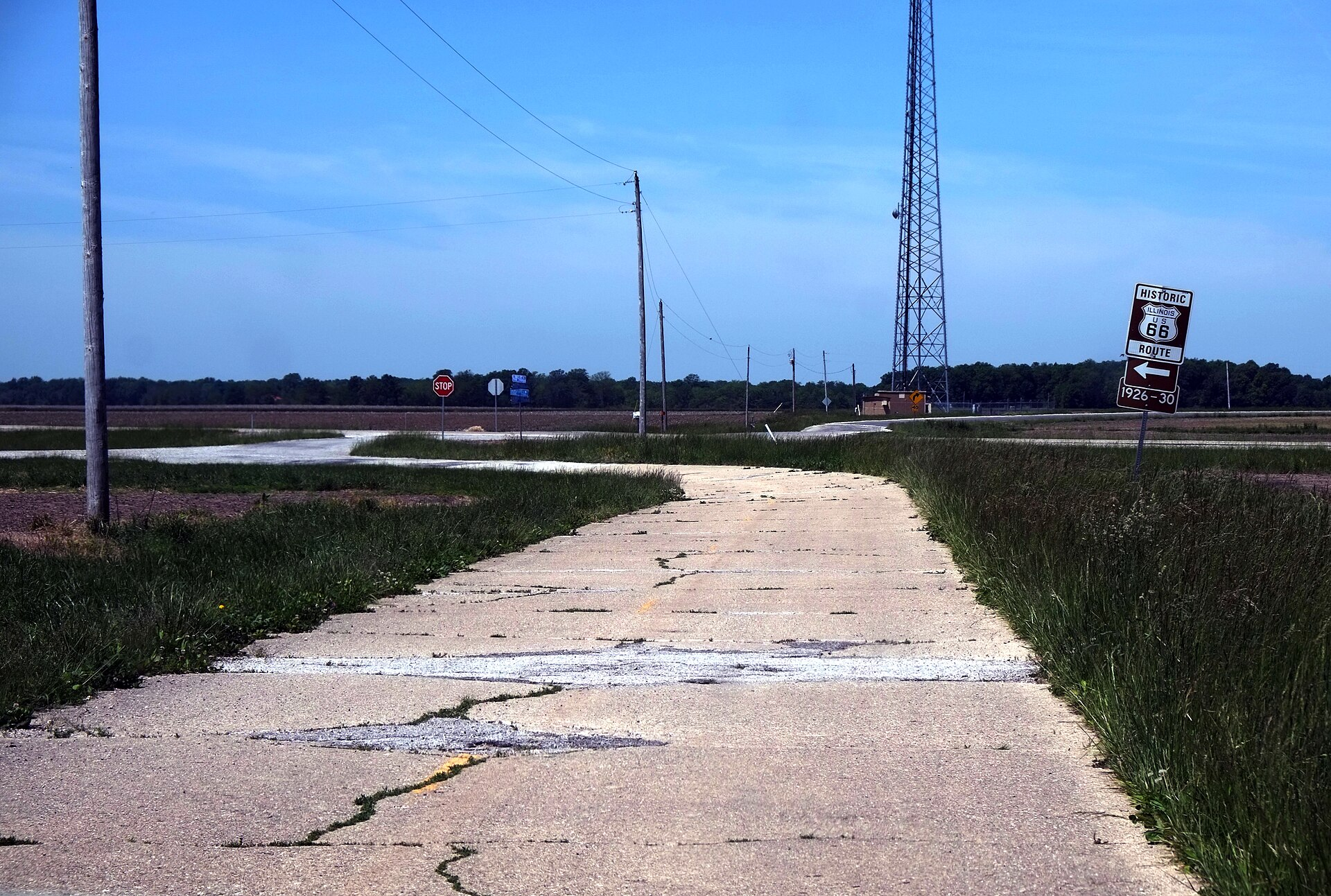
A century in, the road’s living inventory is remarkable. Illinois serves the classic diners, the giant fiberglass roadside statues the state collects like trophies, and the launch mythology of Chicago’s “Begin 66” sign. Missouri offers Meramec Caverns itself and the Gary Turner-era filling stations preservationists brought back. Oklahoma — which holds more drivable miles than any state — counters with the Blue Whale of Catoosa, a grinning roadside leviathan lovingly restored, and Tulsa’s neon-rich stretch. Texas contributes Cadillac Ranch, ten graffiti-crusted cars nose-down in a wheat field outside Amarillo, plus the free-72-ounce-steak theatrics of the Big Texan. New Mexico’s stretch through Tucumcari is the neon capital of the entire road — the Blue Swallow Motel’s sign alone justifies the detour — and Albuquerque’s Central Avenue still runs miles of vintage signage. Arizona owns the long, unbypassed heart: the Seligman-to-Kingman stretch through Hackberry and Peach Springs is the longest intact segment anywhere, ending near the Wigwam Motel’s concrete teepees in Holbrook. California brings it home through Bagdad Café territory to the Santa Monica Pier, where a sign announces the end of the trail above the Pacific.
The centennial year adds a layer: states and towns along the route have organized festivals, car rallies, restoration unveilings, and museum exhibitions throughout 2026, with events clustering toward the November 11 anniversary — worth checking against your dates, because a small-town Route 66 festival — classic cars on the old alignment, the whole county out — is the road at its absolute best.
Driving It Now
The practical advice is simple and mostly amounts to permission. You don’t need to drive all 2,300-odd miles; the road rewards sampling, and the consensus greatest hits are Arizona’s Seligman–Kingman run and New Mexico’s Tucumcari for neon night photography. Two weeks does the whole thing properly; five days does a magnificent western half, and even a single-day detour off I-40 pays for itself in neon. Navigation apps handle the interstates, but the old alignments reward a dedicated Route 66 guide app or paper map, since the historic road weaves across and alongside I-40 like a stitch, ducking through towns the GPS considers detours — which is, of course, the entire point of driving it in the first place. Book the vintage motels ahead — the restored ones fill fast in centennial season, and sleeping under working neon is half the argument for the trip — and adopt the road’s one commandment: stop. The whole point of 66 is that it goes through places instead of past them, and every “world’s largest” whatever, every family-run café, every neon sign buzzing back to life after forty dark years is the road doing the thing the interstates were built to eliminate.
One more thing to expect out there: company from everywhere. Route 66 has become a global pilgrimage — European and Japanese travelers arrive by the busload and the rented-convertible-load, guidebooks to the road are published in a dozen languages, and Route 66 associations exist on continents the road never touched. In some bypassed towns, international visitors now outnumber domestic ones at the motel desk, a development the locals find both hilarious and salvational. It makes for one of the road’s best modern pleasures: standing at a diner counter in Oklahoma while a German family, a Tokyo motorcycle club, and a retired couple from Ohio compare notes on the same stretch of 1932 concrete. The centennial has amplified all of it, so book ahead in the small towns — and if the neon motel is full, take that as the healthiest sign the Mother Road has shown in seventy years.
A hundred years after its birth and forty after its funeral, Route 66 has settled into the role it was maybe always headed for — not a way to get somewhere, but a place to go. The traffic left in 1985. The road, it turns out, kept the kicks.
Like our content? Follow us for more.

