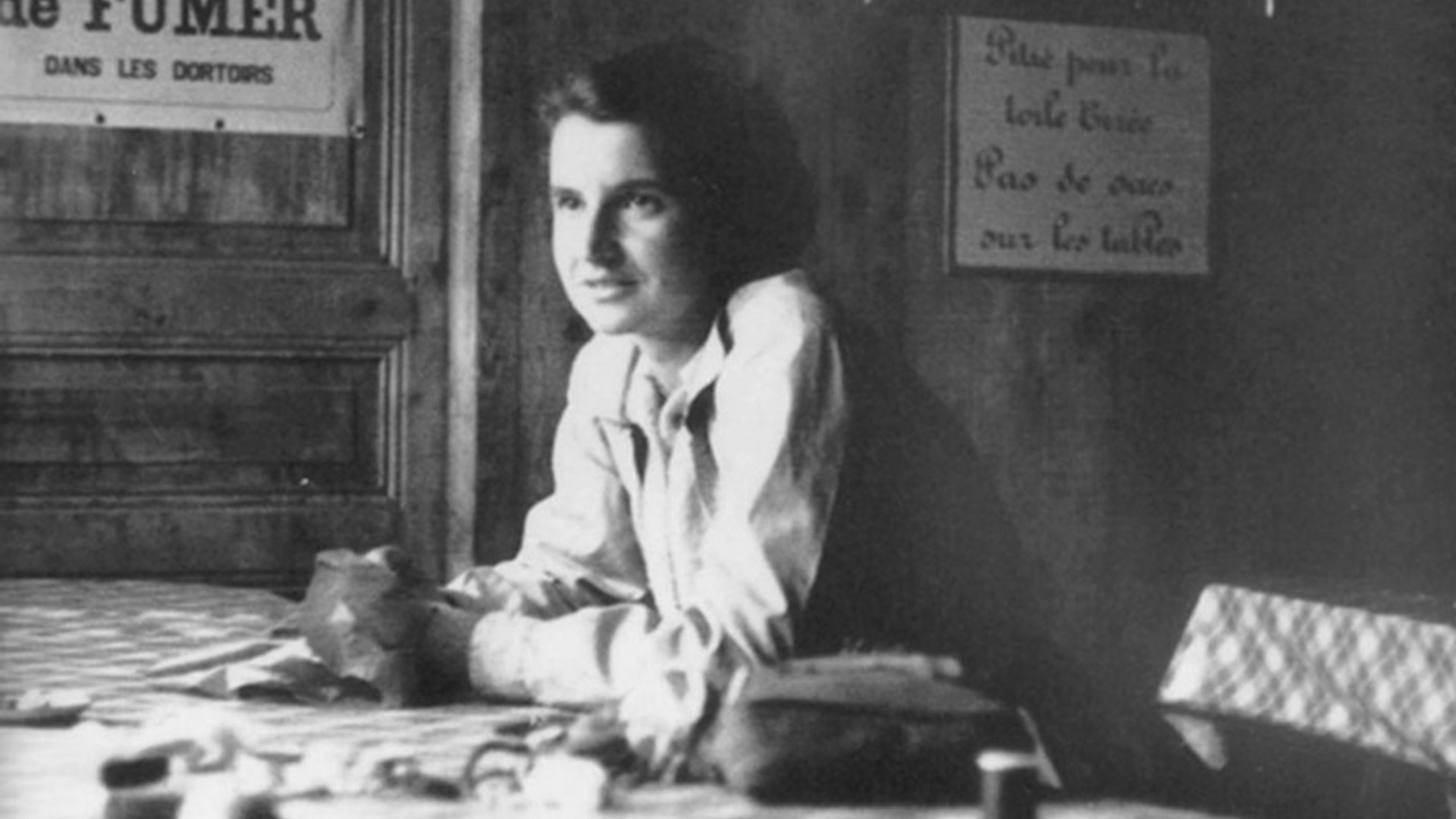
Every July 25 marks the birthday of a scientist whose name most people now know, and whose actual work most people could not describe. Rosalind Franklin was born in London in 1920 and died in 1958 at the age of 37, and in between she produced some of the most consequential experimental data of the twentieth century — including a single X-ray image, catalogued as Photograph 51, that sits at the center of the discovery of the structure of DNA.
The story attached to her has hardened into a modern parable: a brilliant woman whose crucial photograph was taken from her without permission, handed to two men who used it to win a Nobel Prize, while she died unrecognized and never grasped the significance of what she had captured. It’s a compelling narrative, it contains real truths about how women were treated in mid-century science, and — according to a growing body of historical work, including a widely discussed 2023 reassessment published in Nature — significant parts of it are simply not accurate. Her birthday is a good occasion to look at what she actually did, because the corrected version does her substantially more justice than the myth.
The Scientist Before the Photograph
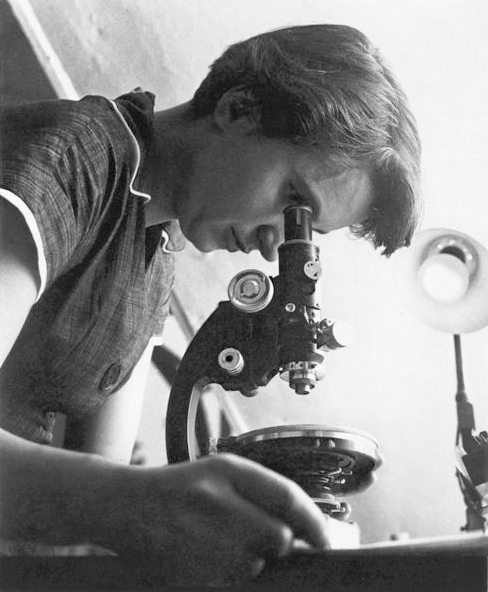
Franklin was a physical chemist by training, and she was very good at an extremely difficult technique. After studying at Cambridge, she spent several years in Paris working on the structure of carbons — coal and graphite — where she mastered X-ray diffraction, a method for determining molecular structure by firing X-rays at a sample and interpreting the pattern they scatter into. It is painstaking, technically demanding work that depends on sample preparation, equipment skill, and a mathematical facility for reading patterns that mean nothing to the untrained eye.
In 1951 she was recruited to King’s College London, to a biophysics unit where researchers were turning the tools of physics onto biological problems. Her assignment was DNA. Also working on DNA at King’s was Maurice Wilkins, whose earlier attempts at X-ray images had not produced usable data, and the working relationship between the two of them was strained from the beginning — partly a real misunderstanding about who was responsible for what, partly the ordinary friction of two able people assigned overlapping territory, and partly the environment of the era. Meanwhile, at Cambridge, James Watson and Francis Crick were pursuing the same structure by a different route: building physical models and looking for experimental data to constrain them.
Like our content? Follow us for more.
Photo 51
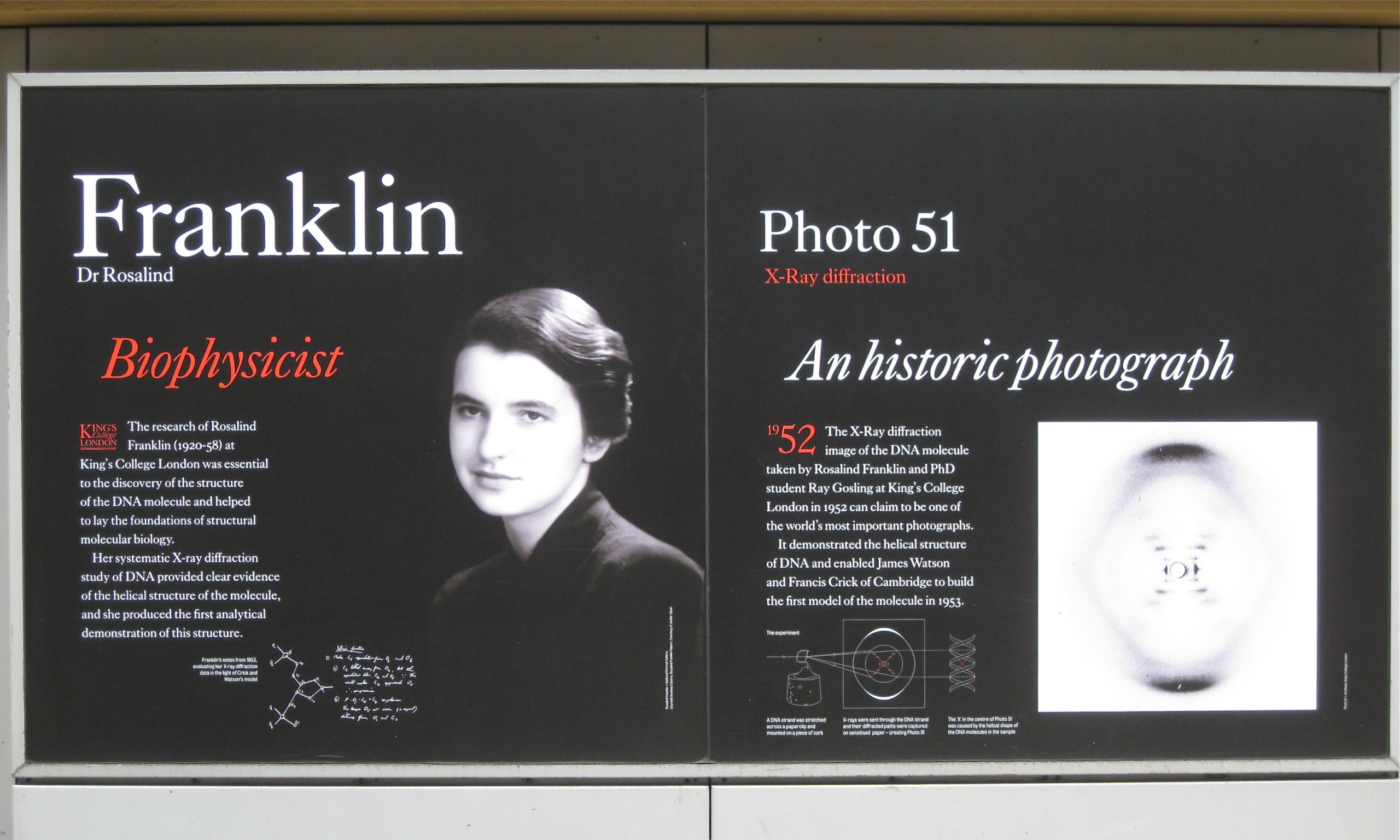
In May 1952, working with her doctoral student Raymond Gosling, Franklin produced the image that would become famous. It was not a photograph of DNA in any ordinary sense — X-ray diffraction images show scattered patterns, not objects — and the technical achievement was substantial. DNA does not readily form crystals, so she worked with hydrated fibers, controlling humidity precisely to capture the molecule in a particular state, and the exposure took many hours.
What emerged was a pattern of extraordinary clarity: a distinctive X-shaped arrangement of dark smudges that, to someone able to read it, encoded specific structural information. A pattern of that form indicates a helix. The spacing of the marks carries information about the dimensions of that helix and the arrangement of its repeating units. Photograph 51 was, in short, unusually strong evidence about the shape of the most important molecule in biology, and Franklin’s notes show she recognized what it indicated.
What Actually Happened Next
Here is where the popular story and the historical record diverge, and it’s worth being precise, because the details matter.
In early 1953, Wilkins showed the image to Watson — without Franklin’s knowledge, which is the fact the “stolen” narrative rests on. Watson later described that moment as decisive. Separately, Crick had access to Franklin’s data through a research council progress report that circulated among the labs, a legitimate if unglamorous channel. Watson and Crick used this information, alongside other work, to build the double-helix model they published in April 1953.
The complication for the theft narrative is that the data was not confidential, and the sharing, while discourteous to Franklin, was not the clandestine heist the story implies. The complication for the “she didn’t understand her own data” narrative is more damaging still. Historians examining an overlooked 1953 letter and an unpublished contemporary news article have argued that Franklin understood the structure was a double helix, was working as part of an effectively collaborative effort, and was not a passive victim who failed to interpret her own results. On this reading she was a full participant in a discovery that involved several groups, rather than either a robbed genius or a confused technician.
The publication record supports the collaborative picture. When Watson and Crick’s model appeared in Nature in April 1953, it appeared alongside two other papers — one from Wilkins and one from Franklin and Gosling, the latter presenting the diffraction evidence. The three papers ran together. Watson himself was reportedly surprised at how immediately Franklin accepted the model, which makes obvious sense if she could see that it fit the evidence she had spent months gathering. By then she had already moved on from King’s to Birkbeck College.
The Rest of a Career That Gets Forgotten
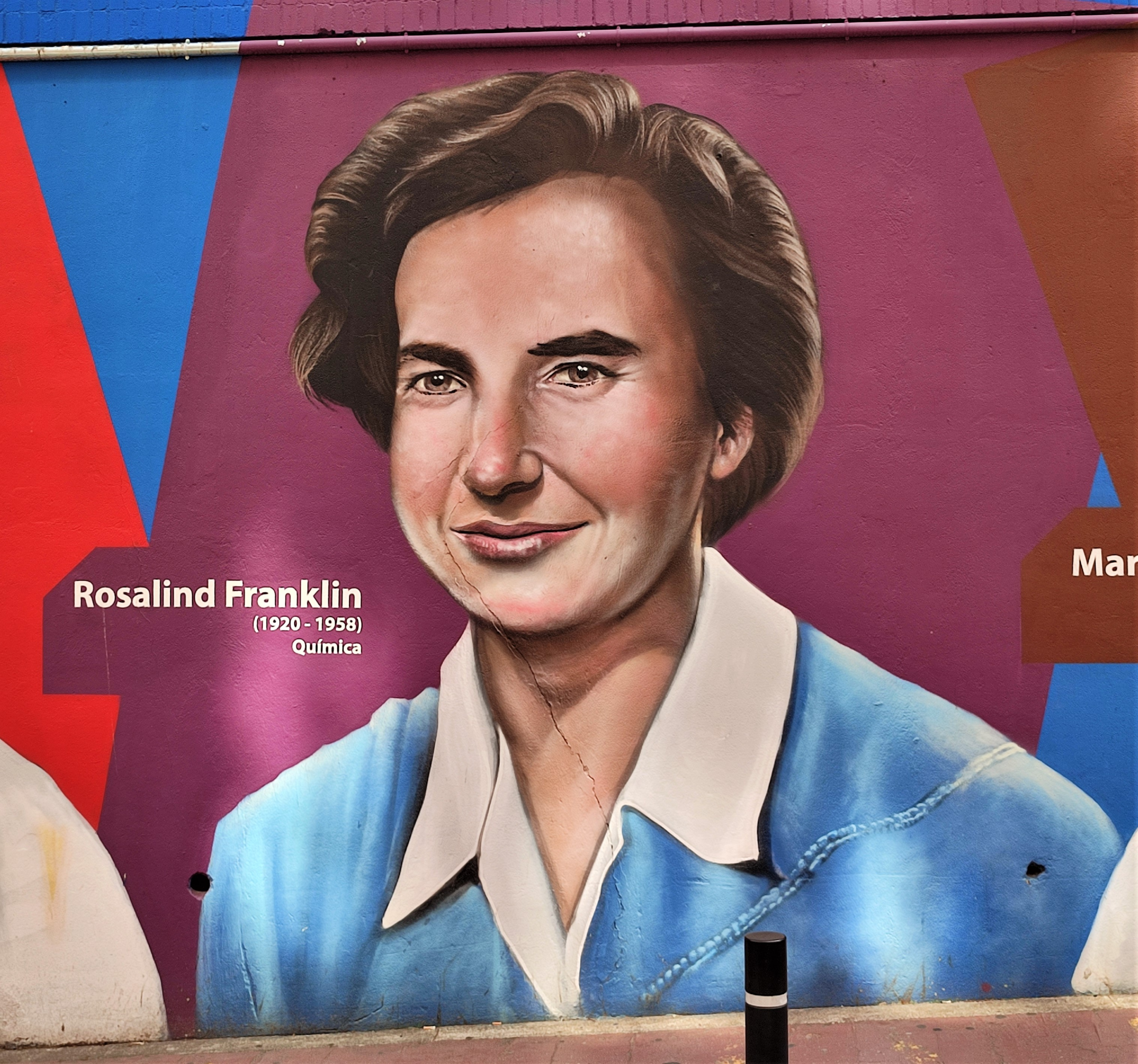
The disproportionate focus on Photo 51 obscures the fact that Franklin’s DNA work occupied roughly two years of a career that was accomplishing a great deal elsewhere. At Birkbeck she turned to viruses, and her work on the structure of tobacco mosaic virus was outstanding — she established key features of how its protein and RNA are arranged, essentially founding a line of structural virology. In her final years she had begun work on the polio virus.
That research program had a notable afterlife. Her collaborator Aaron Klug continued the work and was awarded a Nobel Prize in 1982, in part for crystallographic work developing from this line of research. Franklin’s earlier work on the structure of coal and graphite, meanwhile, was substantial in its own right and had practical applications. She was, by any measure, an exceptional structural scientist across several fields, and the “woman who took one photograph” framing does not capture that at all.
The Nobel Question
The most persistent misconception is that Franklin was denied a Nobel Prize. The 1962 Nobel Prize in Physiology or Medicine went to Watson, Crick, and Wilkins. Franklin had died in 1958, of ovarian cancer, at 37. The Nobel Foundation does not make awards posthumously, so she was not eligible for consideration — the prize could not have been given to her regardless of the committee’s view of her contribution.
That does not settle the fairness question so much as relocate it. The reasonable criticism is not that the committee excluded her but that she died before the recognition arrived, that the accounts written afterward minimized her, and that her contribution went underacknowledged for decades in the popular telling of the discovery. The most damaging single document was Watson’s 1968 memoir, which centered himself and Crick and portrayed Franklin dismissively — and which, in an irony worth savoring, provoked such a backlash that it triggered the sustained historical work that eventually corrected the record in her favor.
The Conditions She Worked In
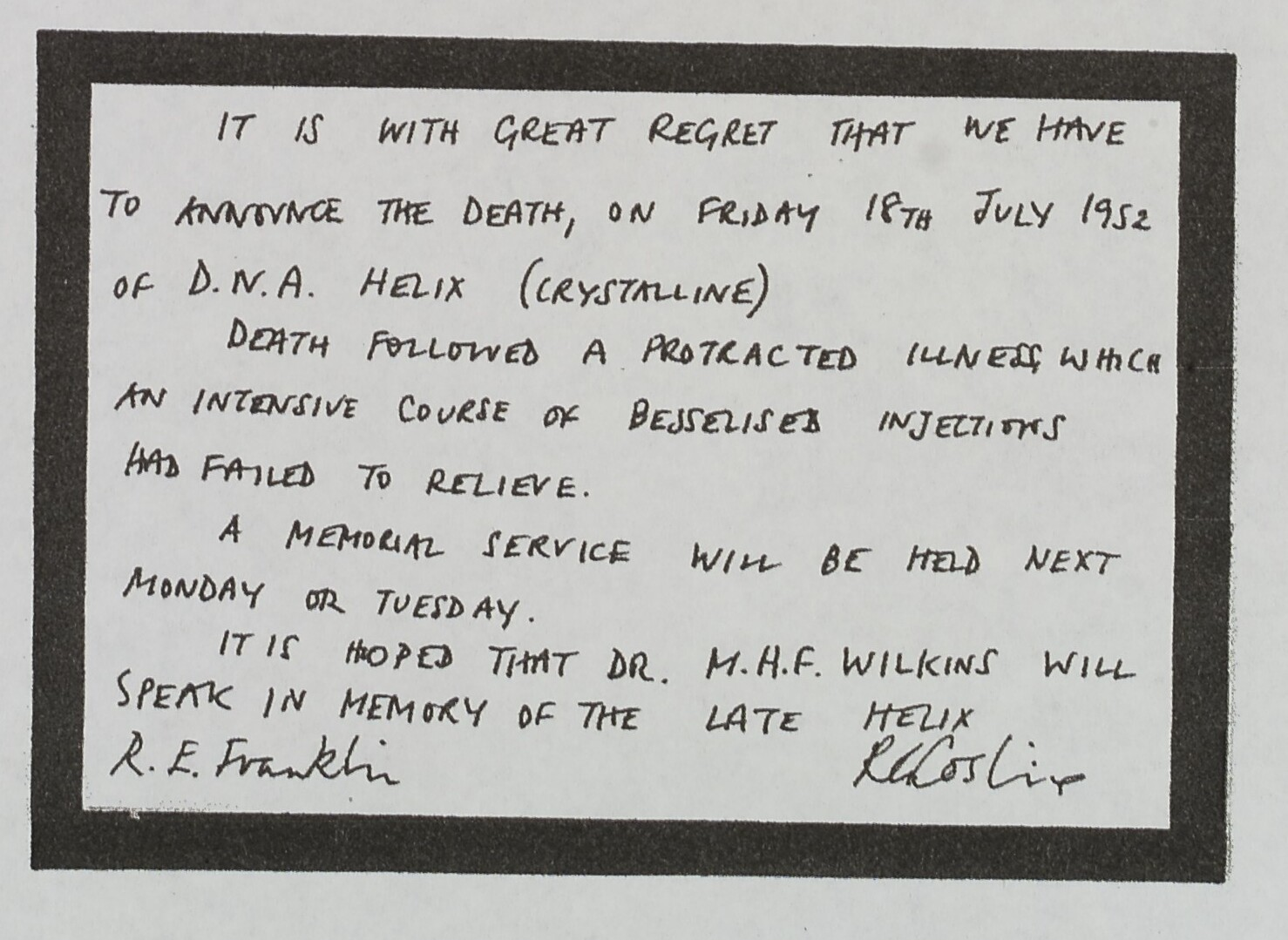
None of the corrections erase the environment. King’s College London in the early 1950s was not an easy place to be a woman doing serious science, and the ordinary indignities of the era were real — exclusion from some social spaces where colleagues talked shop, assumptions about seniority, and a general atmosphere in which a woman’s authority over her own project could be treated as negotiable. The confusion over whether Franklin was leading the DNA work or assisting Wilkins was itself partly a product of that atmosphere: the arrangement was never made clear to either of them, and the resulting friction shaped everything that followed.
That context matters for judging the story fairly. The argument is not that Franklin faced no obstacles — she plainly did — but that the obstacles were structural rather than a single dramatic act of theft, and that treating one photograph as the whole injustice lets the wider environment off the hook. The everyday version, in which capable women were routinely given less clarity, less authority, and less credit than their male colleagues, is both more accurate and harder to dismiss than a story about one stolen image.
Why the Corrected Story Is Better
There’s a reason the myth spread: it’s clean, it has a villain, and it makes a sharp point about women in science that badly needed making. But the accurate account is more useful, because it replaces a story about a victim with a story about a formidable scientist.
In the corrected version, Franklin is not someone things happened to. She is an expert in a demanding technique who produced the decisive experimental evidence, understood what it showed, published it in the same issue of the same journal as the famous model, moved on to found a new area of virus research, and died in the middle of an exceptional career. The injustices are real — the discourtesy over the image, the dismissive memoir, the decades of marginal billing — and they matter. But they are injustices done to a peer, not to a bystander.
That’s the version worth marking on July 25. Rosalind Franklin’s birthday is not an occasion to retell a story about a woman who was robbed; it’s an occasion to notice how much she actually did, in how little time, and with what skill. The photograph is famous for good reason. The scientist deserves to be famous for more than the photograph.
Like our content? Follow us for more.