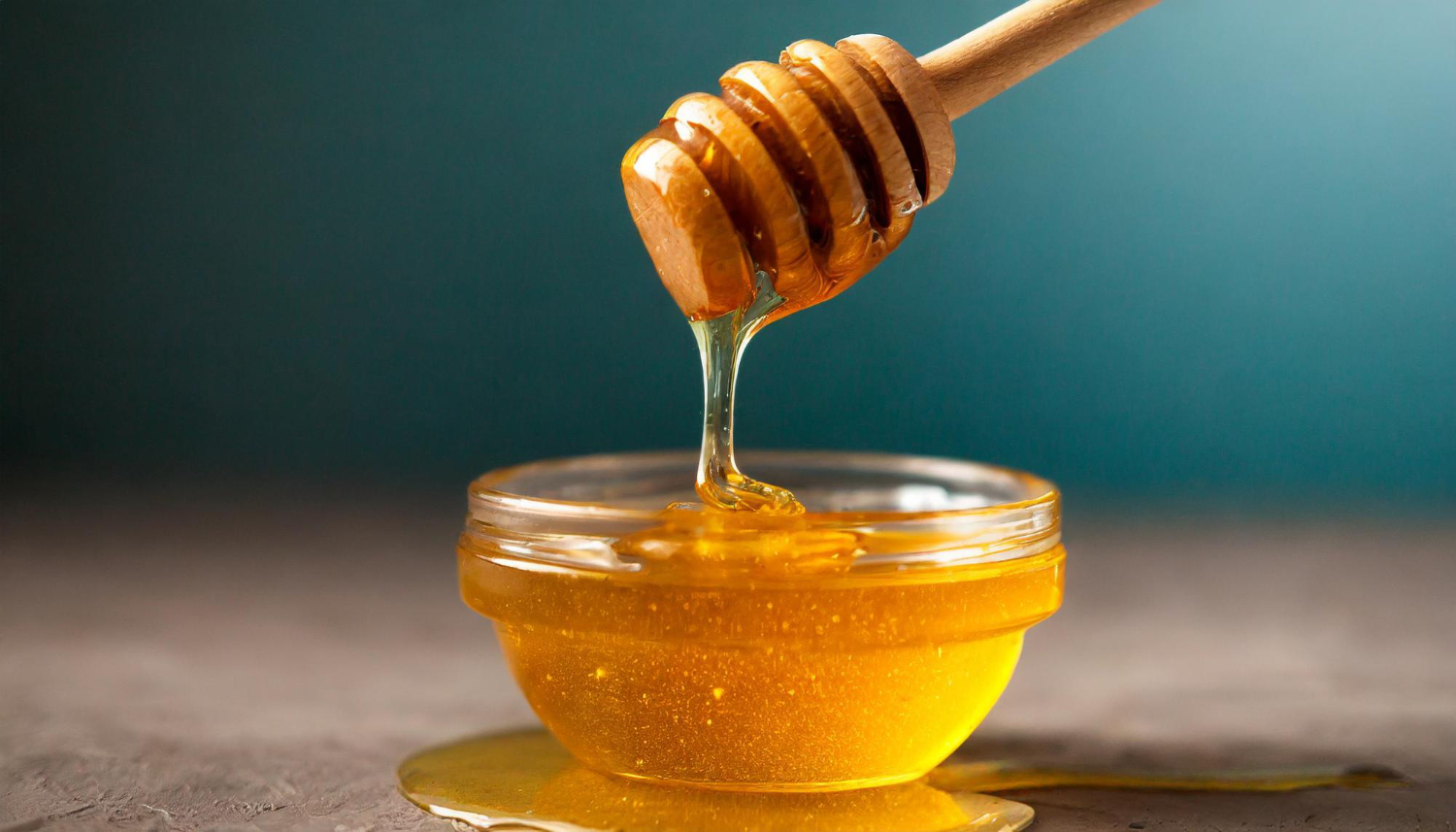
Walk through the storage areas of any museum with a substantial Egyptian collection and you will find, among the pottery and the alabaster, vessels that once held food. Most of their contents are long gone, degraded past recognition. But among the items recovered from tombs across the Nile Valley are sealed jars containing a thick amber substance that chemists identified as honey.
Some of these jars were closed roughly three thousand years ago, when bronze was still a strategically important metal. The bees that filled them foraged on flowers that bloomed during the reign of the pharaohs. And by every available chemical measure, the contents were still honey. Reports describe archaeologists tasting the material and finding it still sweet, which sounds like the kind of story that gets better with each retelling. The chemistry underneath it, though, is entirely real and well understood. Honey is one of the very few foods on Earth that, if sealed and kept dry, does not spoil at all. Here is why.
Why Everything Else Goes Bad
To understand why honey is exceptional, it helps to be clear about what spoilage actually is. Food does not decay on its own through some inevitable property of age. It decays because things eat it: bacteria, yeasts, and molds colonize it and break it down. Everything those organisms need in order to do that determines how long a food lasts.
What they need most is water. Microorganisms require available moisture to live and reproduce, and without it they cannot function. This is the principle behind most traditional preservation: drying, salting, and curing all work primarily by removing water or locking it up so tightly that microbes cannot use it.
Foods also spoil through chemistry that has nothing to do with microbes. Fats oxidize and turn rancid, which is why dried meat eventually goes off even when nothing is growing on it. Grains attract insects and mold. Wine, even perfectly sealed, slowly transforms through chemical reactions until it is no longer the thing it was.
Honey sidesteps essentially all of these. It is almost pure sugar with trace enzymes and acids. There is no meaningful fat to oxidize and no protein to putrefy. That is the first part of the answer, and it is the least interesting part. The active defenses are better.
It is worth pausing on how unusual that combination is. Most foods we think of as long-lasting are really just slow-losing. Dried beans keep for years but eventually degrade. Salt cod lasts a season. Canned goods last a decade or two before the seals and the contents begin to give way. Even the classic examples of stable foods are operating on a timescale of years or decades, not millennia. Honey is in a different category altogether, and it gets there by combining passive properties with an active, bee-manufactured defense.
Like our content? Follow us for more.
Defense One: Almost No Water
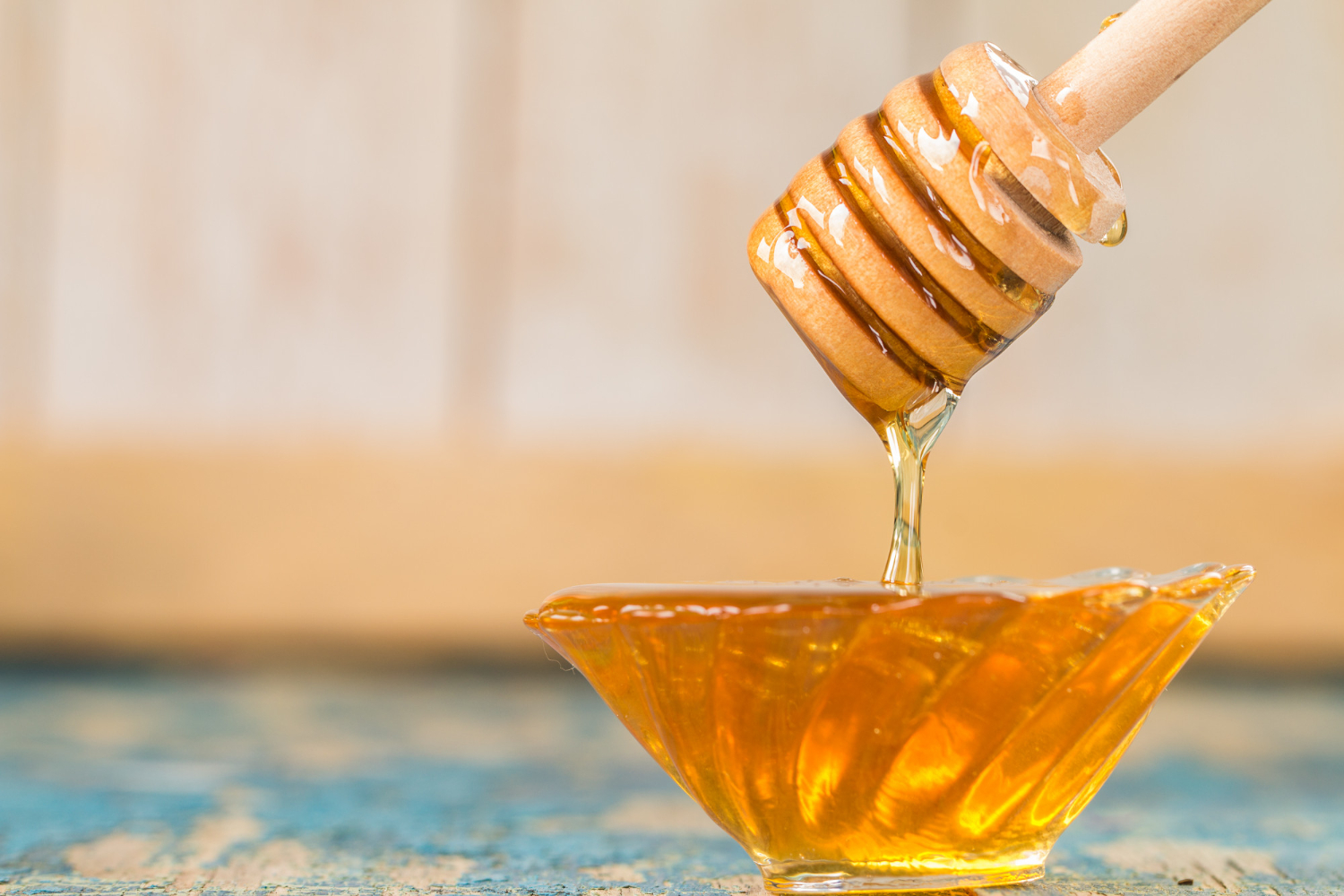
Honey starts life as nectar, which is roughly 60 to 80 percent water. Finished honey typically contains less than 18 percent. The bees do that work themselves, fanning their wings over the comb to physically evaporate the moisture down.
The result is a substance in which the water that remains is chemically unavailable. Honey is hygroscopic, meaning it aggressively pulls moisture from its surroundings, and the sugar concentration is so high that it draws water out of anything placed in it. A bacterial cell landing in honey does not find a wet environment to colonize; it finds an environment that actively pulls water out of the cell itself. As a food scientist with a university honey and pollination center put it, very few bacteria or microorganisms can survive in an environment like that. Nothing alive can hold onto its water in there.
That alone would make honey unusually stable. It is not, however, sufficient by itself, and comparing honey with a near neighbor shows why.
Defense Two: Acidity
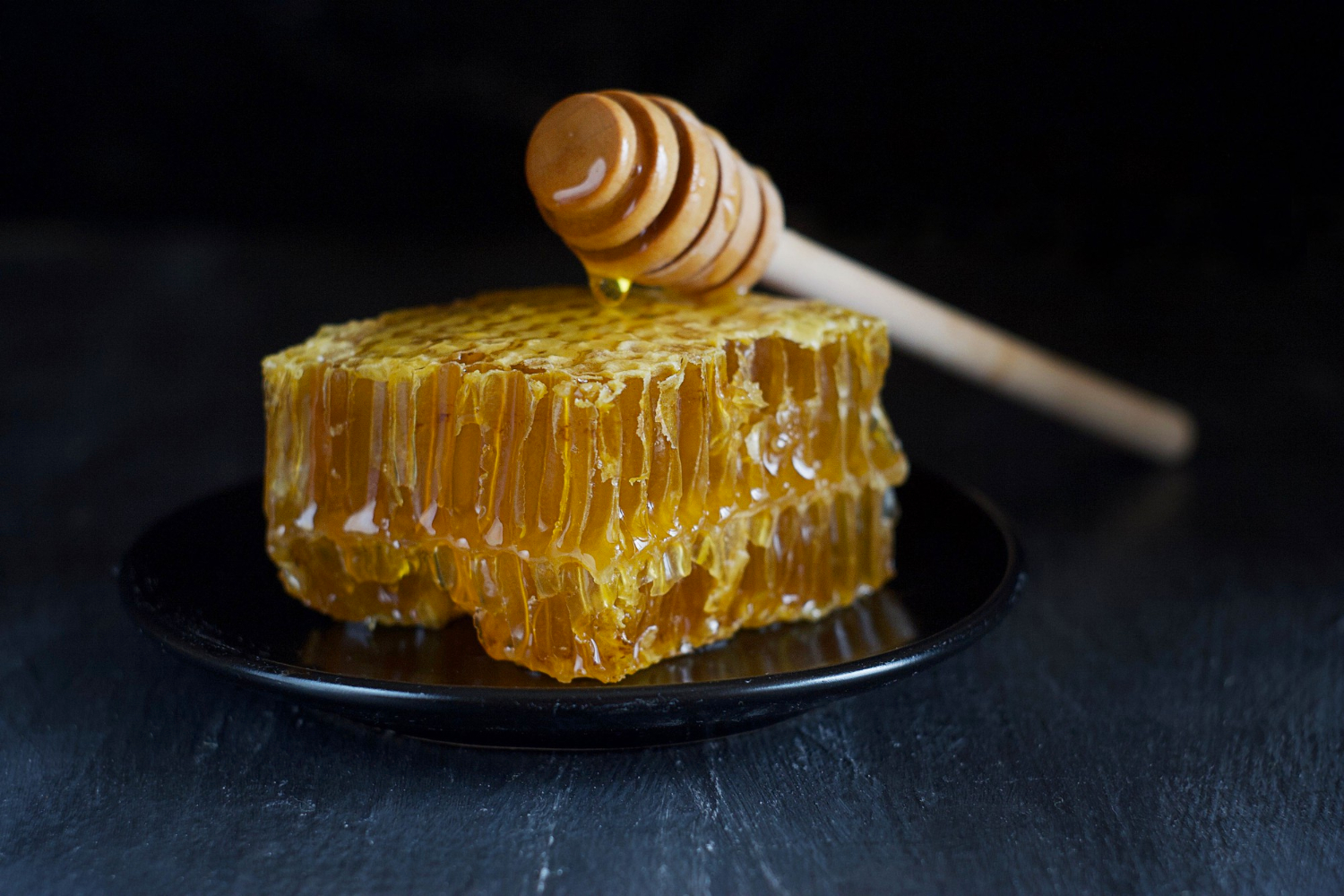
Honey is acidic, with a pH generally in the range of about 3 to 4.5. That is acidic enough to be inhospitable to the great majority of organisms that might otherwise try to grow in it.
Here the useful comparison is molasses. Molasses is also a concentrated sugar syrup, also hygroscopic, and also acidic, with a pH around 5.5. And molasses eventually spoils. That one point of difference in acidity, combined with slightly different moisture behavior, is enough to separate a syrup that goes bad from one that outlasts civilizations. It is a good illustration of the fact that honey’s durability is not just about being sugary. Plenty of things are sugary. Honey stacks multiple defenses on top of one another, and the combination is what makes it exceptional.
Defense Three: The Bees’ Own Contribution
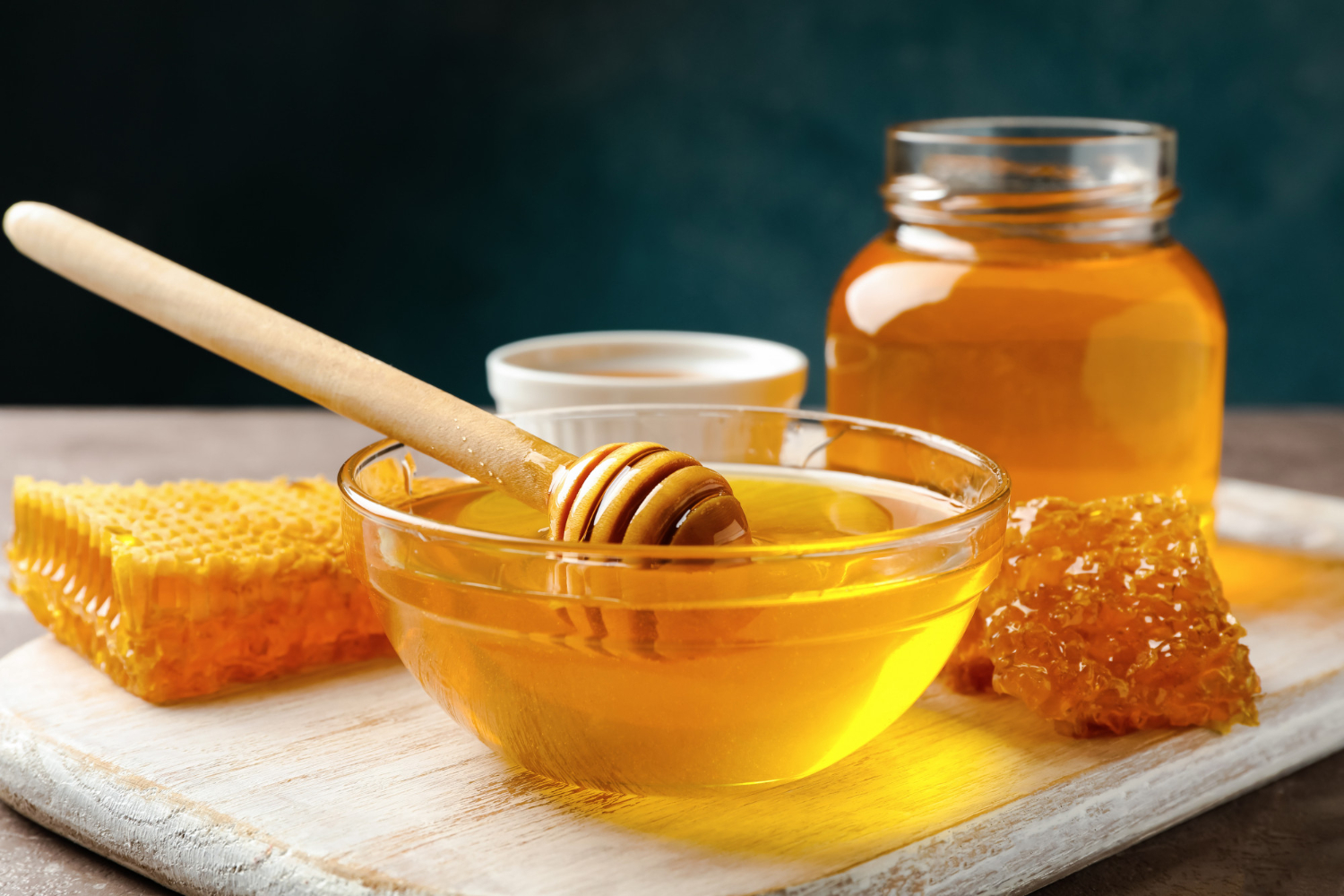
The third defense is the one that truly surprises people, because it is manufactured biologically rather than being a passive property of the substance.
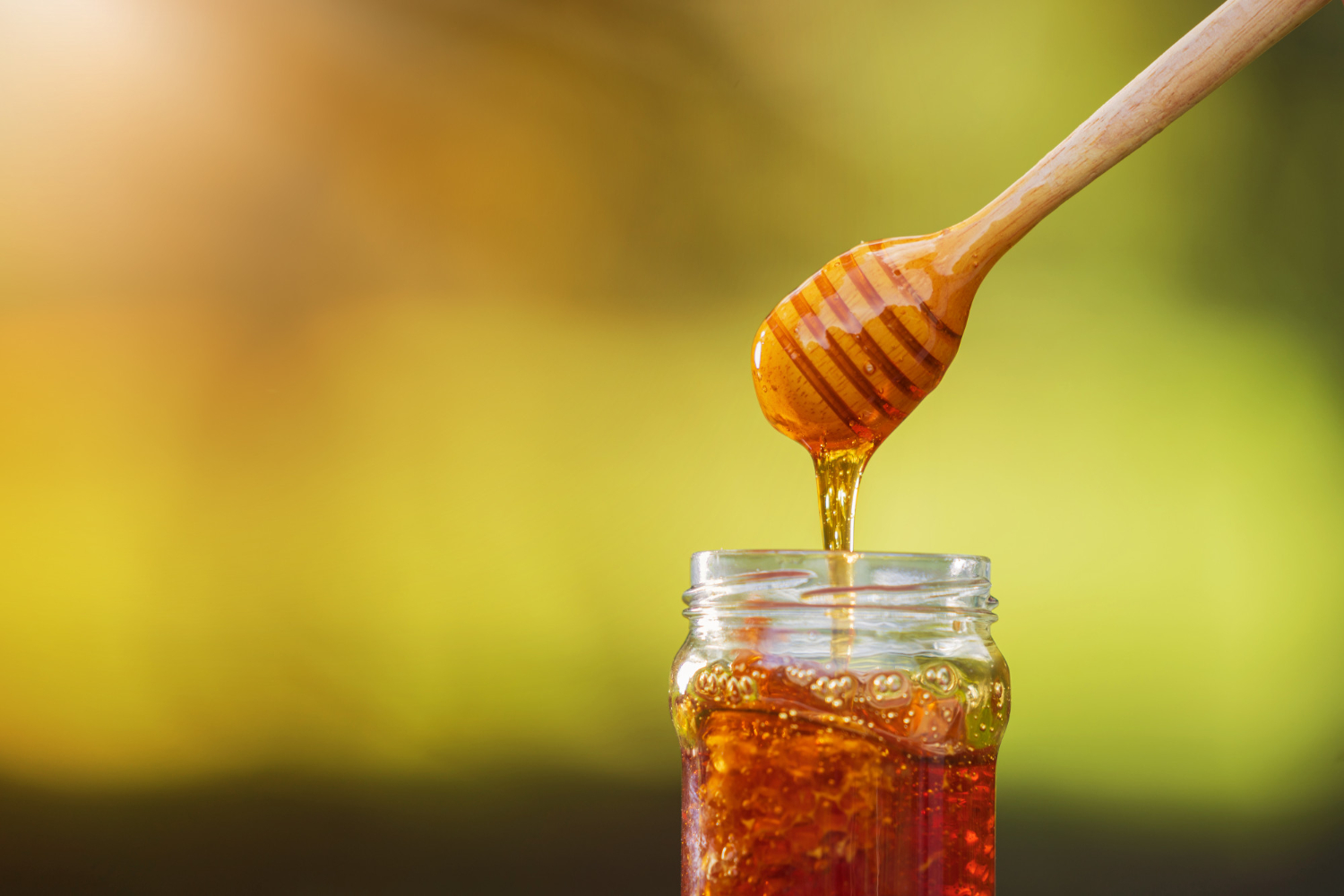
When a bee processes nectar, an enzyme from its stomach called glucose oxidase is added to the mix. That enzyme converts some of the glucose into gluconic acid, which contributes to the acidity described above, and produces small quantities of hydrogen peroxide as a byproduct. Hydrogen peroxide is an antimicrobial agent, and its slow, continuous presence in low concentrations gives honey an active defense rather than merely a hostile environment.
So the full picture is three overlapping barriers, any one of which would give most microorganisms difficulty, and which together make honey close to biologically inert: almost no available water, an acidic pH, and a trickle of peroxide generated by bee enzymes. This is also the basis of honey’s long history in traditional medicine. Sumerian clay tablets included honey in a substantial share of their recorded prescriptions, and Egyptian practitioners applied it to skin and used it for eye complaints. Modern medicine has taken a renewed interest in medical-grade honey for wound care, though that is a clinical matter well outside the scope of a kitchen conversation, and ordinary supermarket honey is not a medical product.
The Part Everyone Forgets: The Seal
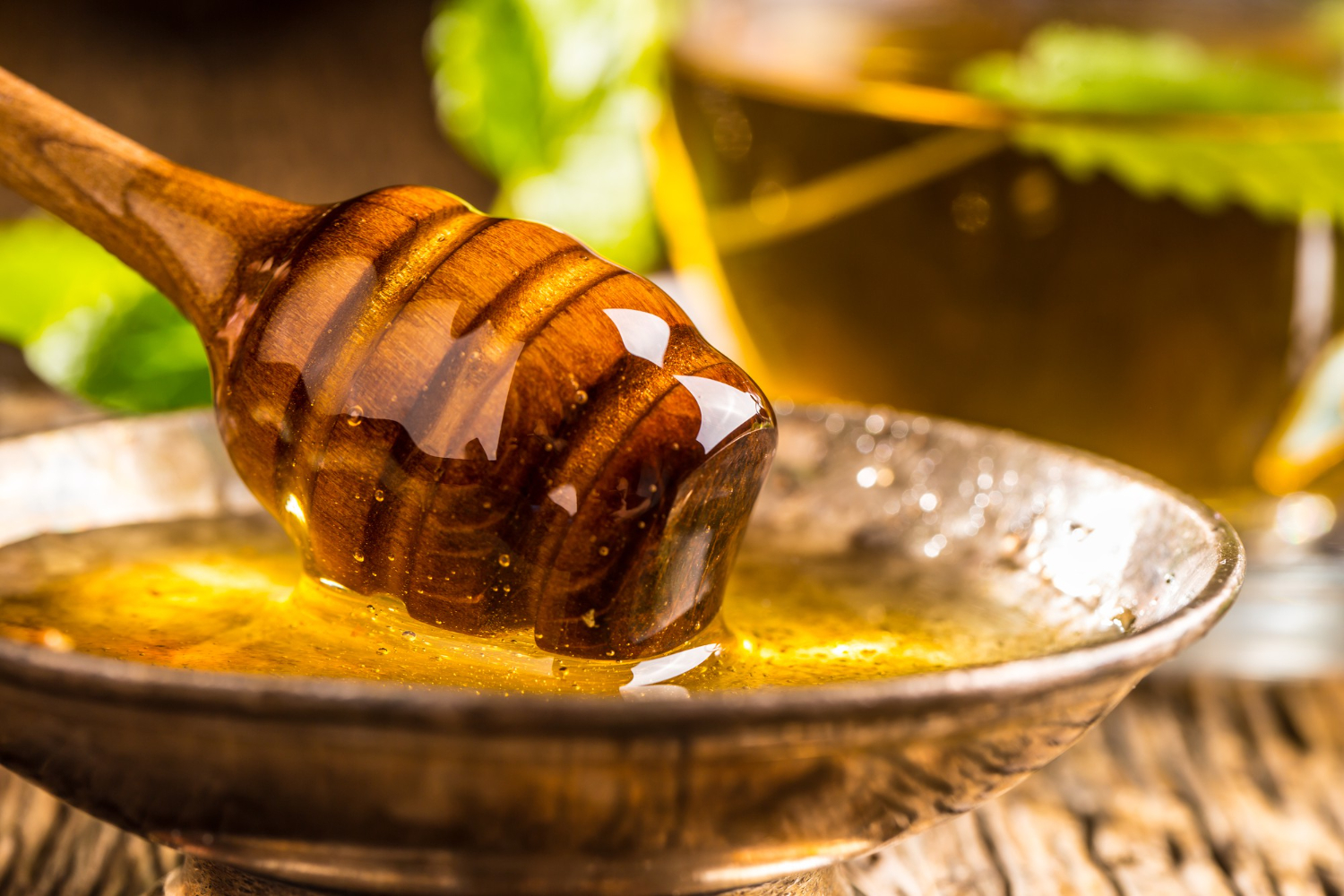
Here is the detail that gets lost in the viral version of this story, and it is the single most important practical caveat.
Every account of ancient honey leads with the age, which is understandable, because three thousand years is the arresting number. But the age is not really the achievement. The seal is.
Honey’s stability depends on staying dry, and honey is hygroscopic, which cuts both ways. In a sealed vessel it holds its low moisture content indefinitely. Left open in a humid kitchen, it does exactly what its chemistry inclines it to do: it absorbs water from the air. Once enough moisture accumulates, the concentration that made it inhospitable is diluted, fermentation becomes possible, and the honey can go off.
The tomb honey survived, in other words, not only because of what honey is but because somebody put a lid on it. And a sealed Egyptian tomb turns out to be, essentially by accident, one of the better archival environments humans have ever constructed: dry, dark, stable in temperature, and closed. The same conditions that preserved the honey preserved a great deal else in those chambers.
There is a further wrinkle that explains why this matters more than it might seem. Honey is not sterile. It naturally contains dormant yeast spores, picked up from flowers, nectar, and the hive itself. Those spores are simply unable to do anything in an environment with so little available water and so much acidity. They are not absent; they are held in check. Add water to the equation and the conditions holding them dormant weaken, and fermentation becomes possible. This is not a hypothetical: fermented honey is the basis of mead, one of the oldest alcoholic drinks known, produced by deliberately diluting honey with water and letting exactly that process run. The line between an indestructible food and a fermenting one is, quite literally, a matter of moisture.
This is worth keeping in mind at home. Honey in your cupboard will last more or less indefinitely if it is sealed and kept dry. It may crystallize, which is a normal physical change rather than spoilage. It may also slowly darken over the years, as the sugars undergo a gradual browning reaction that alters color and flavor without making it unsafe. Neither is decay in the sense that applies to other foods.
A Food That Outlasts Empires
There is something steadily astonishing about the whole business. Honey is not rare, not expensive, and not exotic. It sits in ordinary kitchens in ordinary jars. And it happens to be one of the only foods humans eat that can, under the right conditions, outlast the civilization that produced it.
The jars in those tombs were sealed by people who could not have imagined the world that would eventually open them. Everything else about that world has gone: the language shifted, the dynasties fell, the technology was forgotten and rediscovered. The honey stayed honey. It did so not because the Egyptians knew some lost preservation secret, but because bees, working on their own problem of storing food through a winter, happened to engineer a substance with three independent defenses against decay, and because someone thought to close the lid.
Next time you scrape the last of it from a jar at the back of a cupboard, wondering vaguely whether it is still good, the answer is almost certainly yes. That jar is participating in a chemistry that has already demonstrated it can run for three thousand years.
Like our content? Follow us for more.