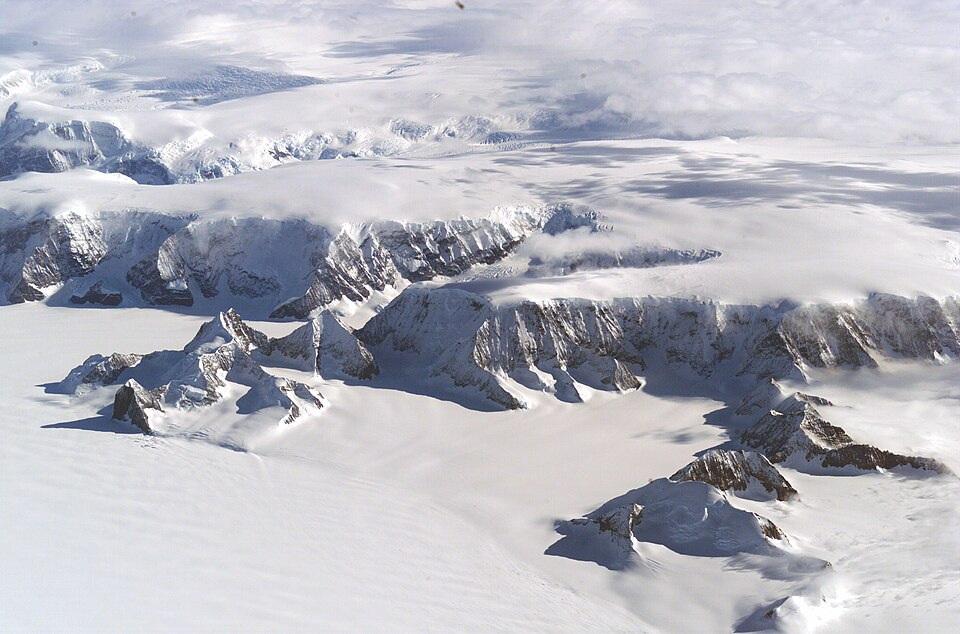
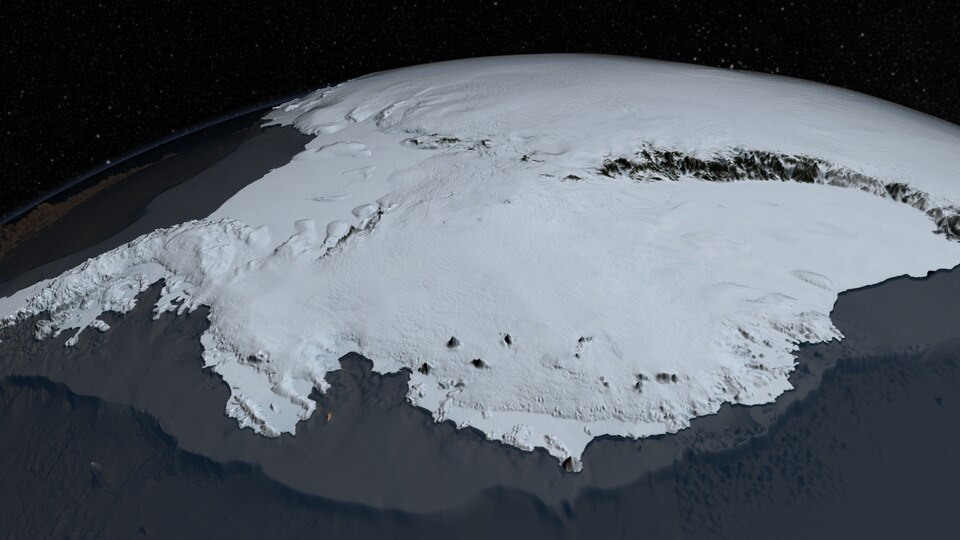
Antarctica has around four hundred known subglacial lakes: bodies of liquid water trapped beneath kilometres of ice, kept from freezing by geothermal heat from below and the insulating weight of ice above.
Lake Vostok is by far the largest. It sits under the East Antarctic ice sheet at roughly 78 degrees south, is about 250 kilometres long and 50 wide, comparable in area to Lake Ontario, and reaches more than 800 metres deep in places. It is the only one big enough to have its own internal currents and tides.
It has also been sealed. The ice above it has been in place for something like 15 million years, and the water has been cut off from sunlight, from the atmosphere and from the rest of the biosphere for an interval with no straightforward parallel anywhere accessible.
That makes it one of the most interesting places on the planet, for reasons that reach beyond Antarctica. Here is what is known, what is contested, and why the answer matters for moons orbiting other planets.
An Accident of Drilling
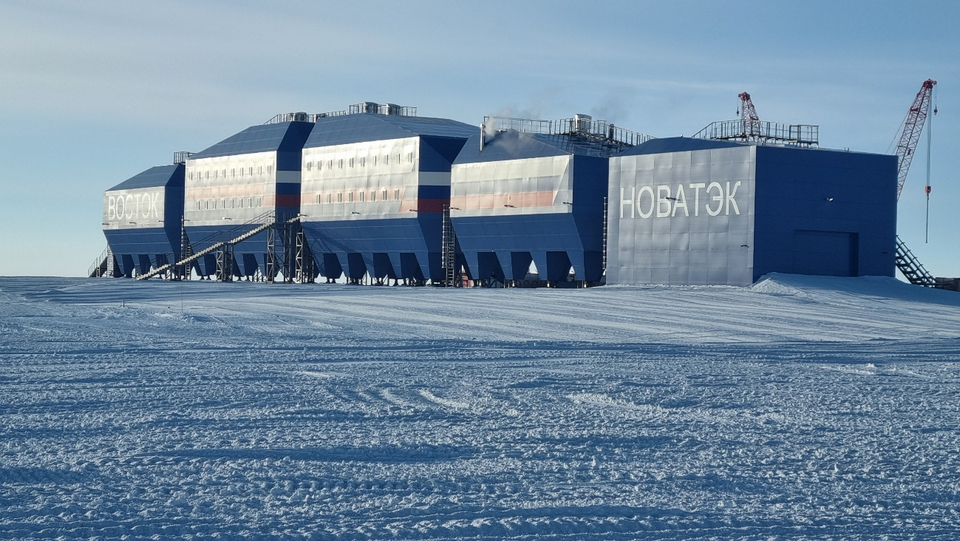
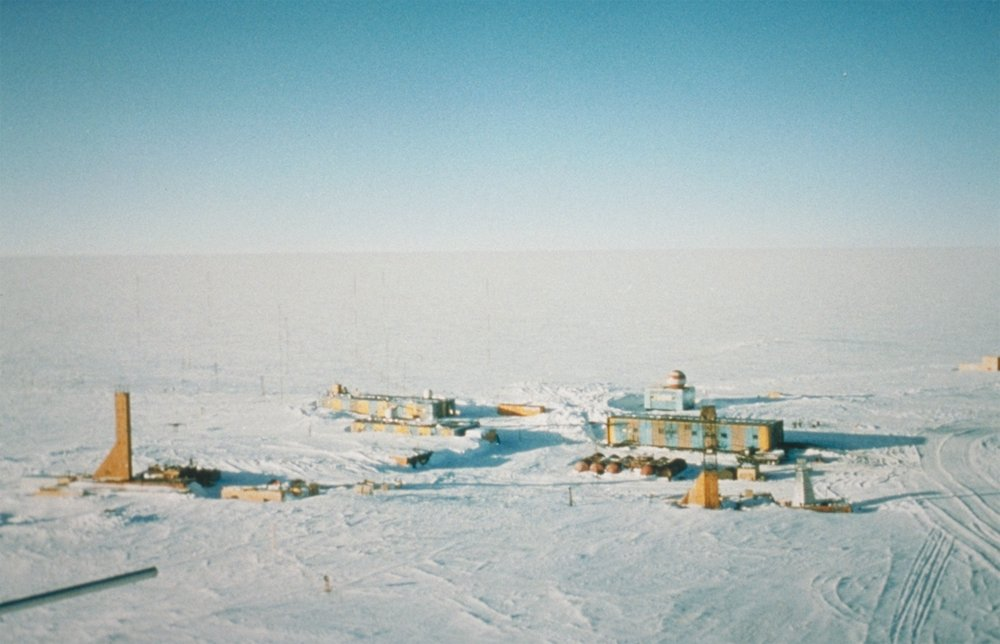
The Russian Antarctic Expedition began drilling at Vostok Station in 1989, and at the outset nobody knew what they were drilling toward.
The purpose was climate science. Antarctic ice preserves a layered record of past atmospheres, with bubbles of ancient air trapped in each year’s snowfall. The Vostok cores reach back more than 400,000 years, covering four glacial cycles, and became one of the most heavily cited paleoclimate archives in science.
The borehole advanced slowly, a few hundred metres per season. Meanwhile, radio-echo sounding surveys were revealing something beneath: a flat reflective surface consistent with liquid water, on an enormous scale.
The realisation that the drill was heading toward an ancient, sealed body of water changed the project entirely. What had been a climate programme became a question about contamination, and by 2002 an international panel convened at the American Geophysical Union was publicly debating how to sample the water without ruining it.
The concern was concrete. Any organisms in Vostok would have spent millions of generations adapting to darkness, extreme pressure and no fresh nutrients from above. Introducing surface bacteria would not merely muddy the results; it could compromise the environment permanently.
Like our content? Follow us for more.
Breaking Through
The Russian team reached the lake surface on 5 February 2012, completing the deepest ice core ever taken — roughly 3,769 metres.
The breakthrough was dramatic. Pressure in the lake was such that water surged up the borehole like a geyser and froze in place before any instrument could be lowered to meet it. That frozen plug was sampled the following year.
And here is the problem that has shaped everything since. The borehole had been kept open with kerosene and Freon, standard practice to prevent refreezing at those depths. When the drill broke through, lake water surged up and mixed with that fluid. The fluid carried surface bacteria.
The international reaction was sharp. Researchers had pressed for sterile protocols; the Russian team did not adopt them, having spent decades on a four-kilometre borehole they were not willing to restart. Critics were direct about the consequence: organisms subsequently reported from Vostok ice cannot be cleanly separated from contamination introduced during the drilling.
For comparison, in January 2013 a United States-funded expedition reached Lake Whillans in West Antarctica using sterile techniques, and found chemolithoautotrophs — microbes that derive energy from inorganic chemical reactions rather than sunlight, exactly the kind of life a sealed lake would need.
What the Samples Showed, and Why It Is Disputed
Analyses of Vostok ice have produced results that do not agree with one another, which is itself informative.
A 2013 analysis of accreted ice — ice formed from lake water freezing onto the underside of the glacier — reported genetic sequences from thousands of taxa, including sequences associated with organisms that live in the intestines of fish, and material suggesting a surprisingly complex ecosystem.
Other work found almost nothing. The Russian microbiologist Sergey Bulat cautioned that even a single candidate organism might be a contaminant rather than a native.
Evidence for microbes in accretion ice was first reported in the journal Science as far back as 1999, and the ice in some places above the lake is more than 650 feet thick and thought to be around 20,000 years old.
The honest reading is the uncomfortable one: the disagreement says less about what lives in the lake than about whether anyone has yet sampled the lake at all. Two research groups examining material from the same borehole reached incompatible conclusions, and the contamination problem means neither can decisively rule out the other.
Subsequent work has described chemolithoautotrophs among the organisms reported, which would fit a chemosynthetic ecosystem, but the provenance question remains.
How Long, Exactly?
Even the headline figure carries more uncertainty than it usually receives.
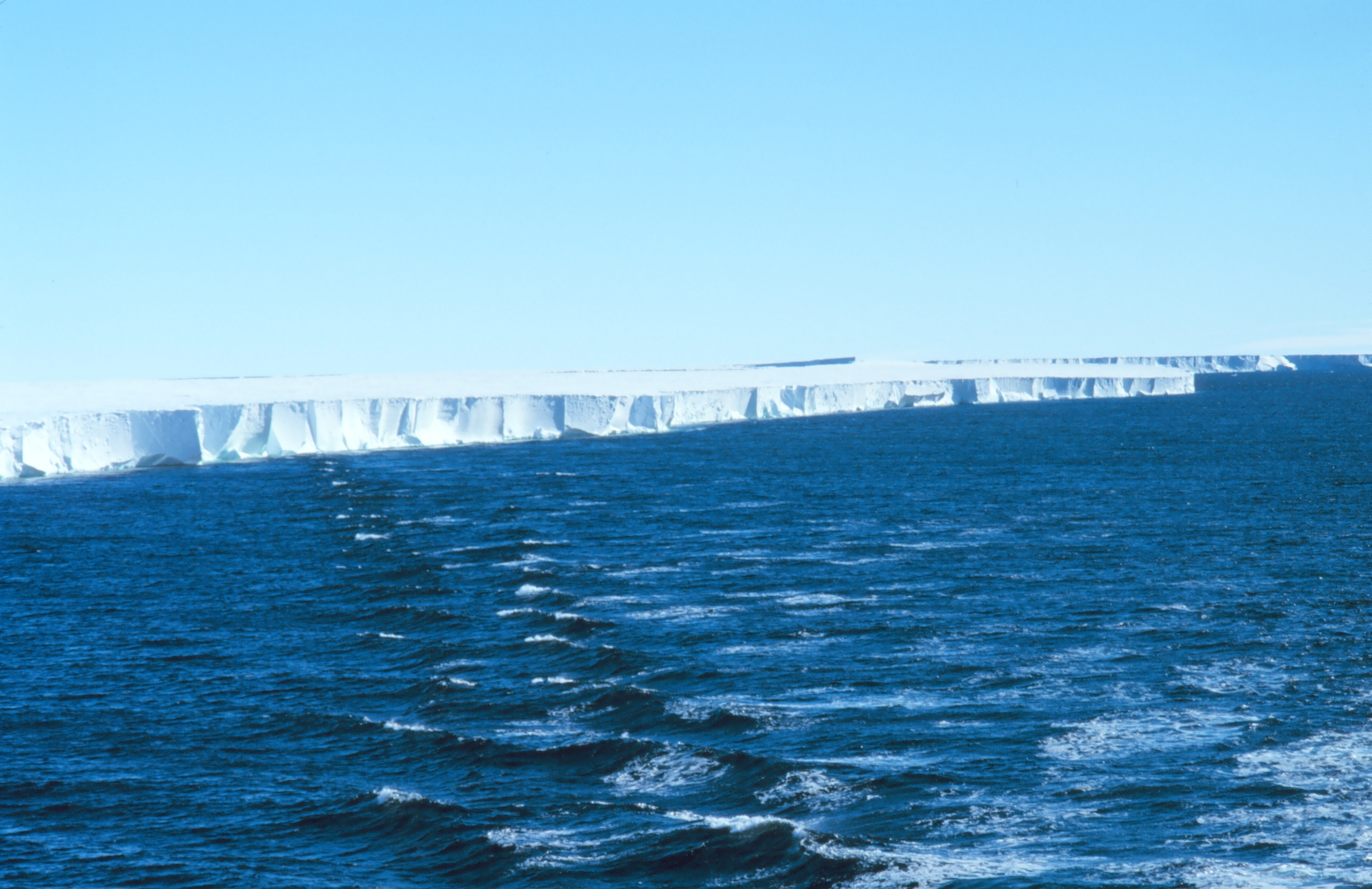
The ice above the lake has covered it for something like 15 million years, and some analyses put the isolation of the water itself at 15 to 25 million years. More cautious figures run substantially lower — one peer-reviewed assessment describes the lake as sealed from free exchange with the atmosphere for around 420,000 years.
The discrepancy is not sloppiness. It depends on what is being measured: how long ice has covered the site, versus how long the water itself has been isolated from any exchange. The lake is not stagnant. Water is gradually replaced over thousands of years, replenished by meltwater from the ice above, and subglacial waterways may connect it to other systems, potentially introducing organisms from outside the basin.
The water sits at around minus 3 degrees Celsius and remains liquid because of geothermal heat and the immense pressure of the overlying ice.
So the popular framing — untouched for 15 million years — is a reasonable approximation of the ice cover and an overstatement of the water’s isolation.
How You Find a Lake You Cannot See
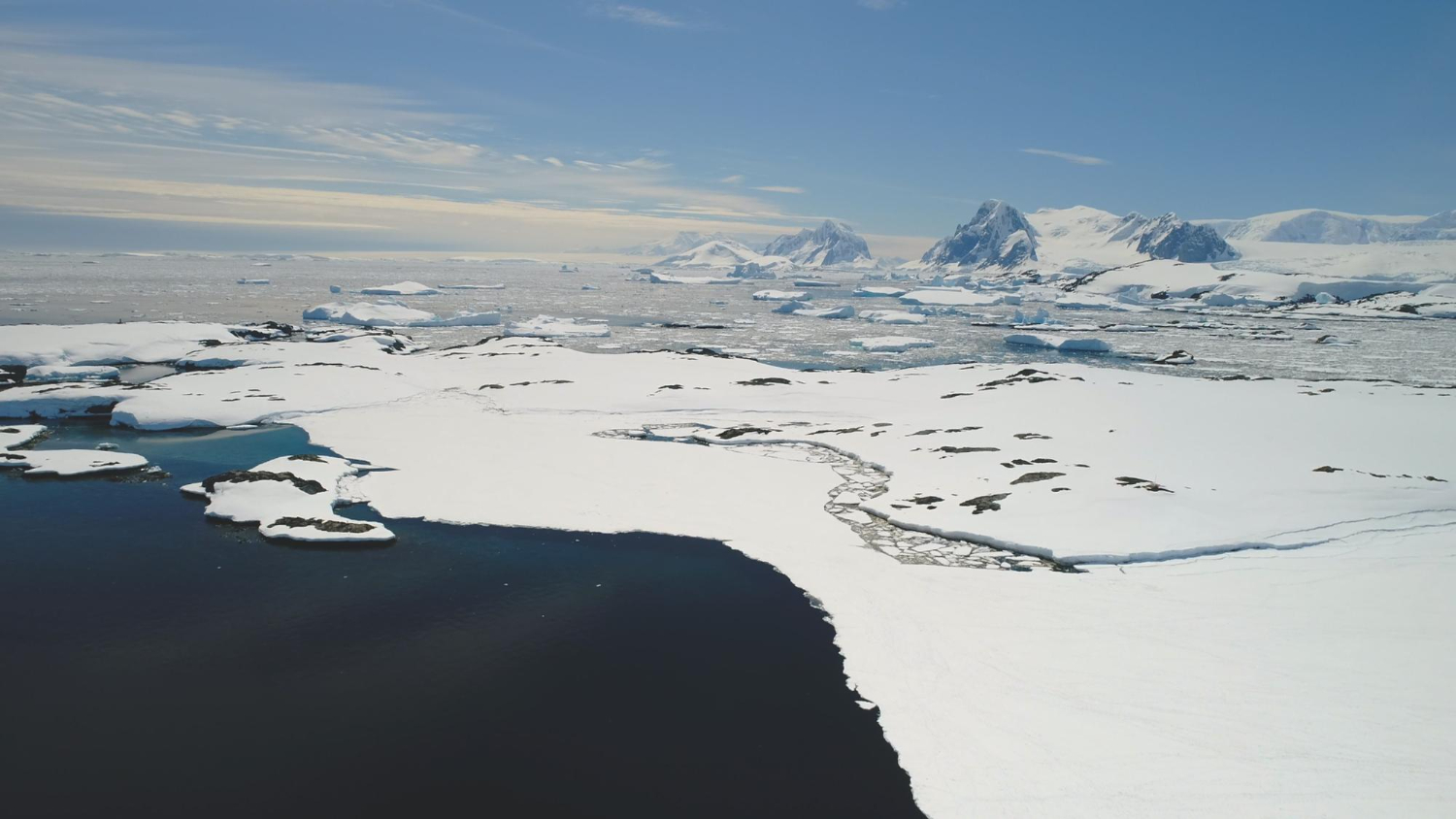
A reasonable question is how anyone knew the lake was there at all, given four kilometres of ice above it.
The answer is radio-echo sounding, a technique developed for mapping ice sheets. An aircraft flies a survey line transmitting radio pulses downward. The pulses pass through ice, which is relatively transparent to them, and reflect off whatever lies beneath. Timing the return gives the depth, and the character of the reflection indicates the material.
Rock produces an irregular, scattered return. Liquid water produces something distinctive: a very strong, very flat, mirror-like reflection, because a lake surface is smooth in a way a rock surface is not.
Soviet and British surveys across Antarctica from the 1960s onward began registering exactly that signature beneath Vostok Station — an enormous flat reflector at consistent depth. Satellite altimetry later confirmed it from above, because the ice surface over a subglacial lake is unusually level, floating on water rather than resting on terrain.
That combination is how nearly four hundred subglacial lakes have been mapped without anyone reaching a single one of them. The continent’s hidden hydrology has been charted almost entirely by remote sensing.
Life Without Sunlight
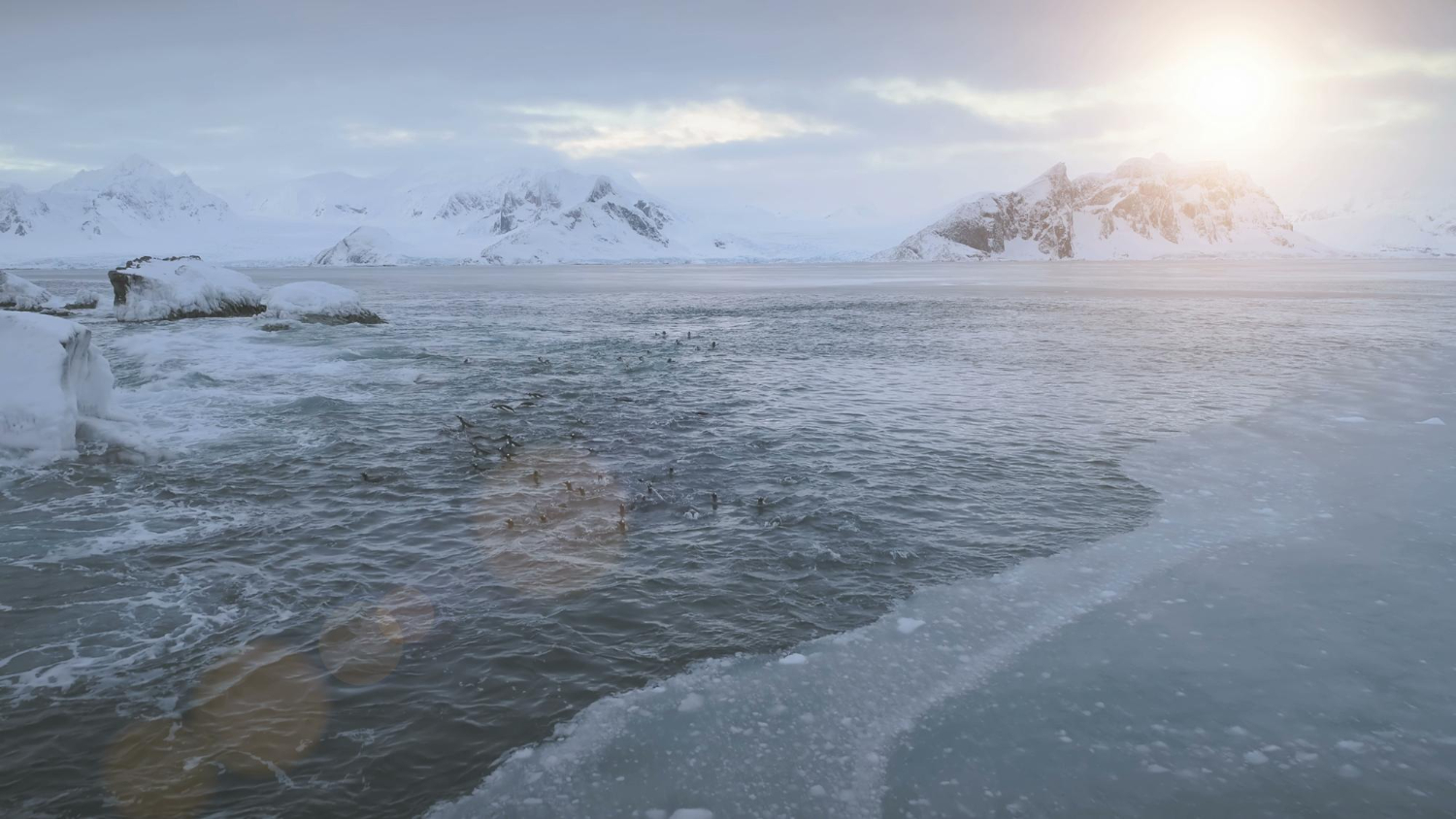
If anything does live in Vostok, it faces a specific problem, and the solution is known from elsewhere.
Almost every ecosystem on Earth’s surface runs on photosynthesis. Sunlight is the input, and everything else eats downstream of it. Remove the light and that entire arrangement collapses.
The alternative is chemosynthesis, in which organisms extract energy from chemical reactions instead — oxidising compounds such as hydrogen, iron or sulphur. Chemolithoautotrophs of exactly this type were the organisms found beneath West Antarctic ice at Lake Whillans.
Analysis of Vostok’s glacial and accretion ice suggests the raw materials for such a system could be present, with several possible electron donors available. It also suggests obstacles: unusually high oxygen levels, and low concentrations of both inorganic and organic nutrients.
That combination is why the question is interesting rather than obvious. Vostok is not straightforwardly hospitable even to chemosynthetic life, which makes whatever survives there — if anything does — worth identifying precisely.
Why Anyone Cares Beyond Antarctica
The scientific interest is not primarily about Antarctica. It is about Europa and Enceladus.
Jupiter’s moon Europa and Saturn’s moon Enceladus are both thought to hold liquid water oceans beneath frozen shells. If life exists in either, it will have to survive in permanent darkness, under ice, without photosynthesis, deriving energy from chemistry.
That is precisely the situation at Vostok, which makes it the closest accessible rehearsal for the problem. Not just for the biology, but for the engineering and the protocols: how do you sample a sealed body of water through kilometres of ice without contaminating it? Vostok is where that question is being answered, partly by demonstrating how it goes wrong.
Future exploration is expected to involve robotic probes with sterilisation technology, precisely to avoid repeating the kerosene problem. Extreme pressure conditions make collecting uncontaminated samples truly difficult.
There is a broader point about Antarctica hiding in this. Fifty-odd million years ago the continent was forested — palm trees grew there. Today more than 97 percent of it is under ice, and beneath that ice are four hundred lakes, landscapes, mountain ranges and river systems that no one has seen.
Vostok is the largest of them, and after more than three decades of drilling, the most basic question about it — whether anything lives there — is still open. Not because it is unanswerable, but because the one attempt to answer it directly compromised the sample. That is a frustrating place to be, and an honest one.
Like our content? Follow us for more.