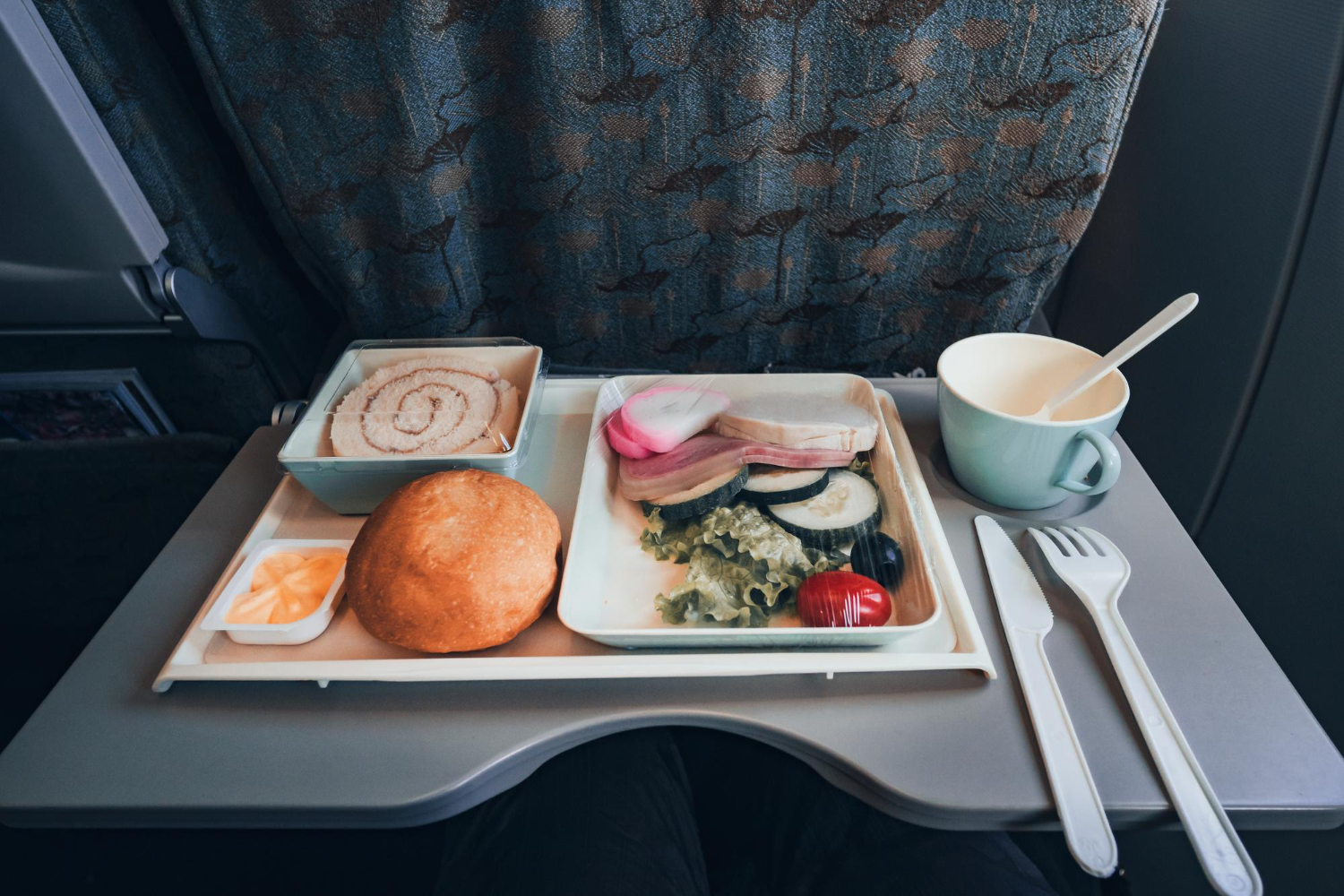
Complaining about airline food is close to a universal experience, and the usual assumption is that the catering is simply poor. Meals are cooked in bulk on the ground, chilled, transported, stored and reheated in a galley oven, which is not a process that flatters anything.
That is certainly part of it. But it is not the main reason, and the evidence for that is straightforward: the same meal tastes noticeably better on the ground than it does in the air.
The problem is not primarily the food. It is you. At cruising altitude your sense of taste is measurably impaired, by at least three separate mechanisms working at once, and airline caterers have spent decades trying to compensate. Here is what actually happens to your palate at 35,000 feet.
The Air Is Drier Than a Desert
Start with humidity, because it is the most extreme variable and the least appreciated.
Cabin humidity typically runs very low — figures cited range from under 15 percent down to around 12 percent at altitude, and sometimes as low as 5 percent. Comfortable indoor humidity on the ground is roughly 30 to 50 percent. Cabin air is, by a reasonable margin, drier than most deserts.
This matters because most of what we call taste is actually smell. The tongue registers a limited set of basic sensations; the rich, specific flavours we experience come from aroma molecules reaching receptors in the nose, both through the nostrils and from the back of the mouth while chewing.
Dry air dries out the nasal passages and suppresses the sense of smell. Taste receptors also need a certain level of moisture to interact properly with flavour compounds. Strip the moisture out and you have degraded the primary channel through which flavour arrives.
Dehydration compounds it. On a long flight you become progressively more dehydrated, which is one reason the final meal on a long-haul service tends to taste worse than the first — not only because it is later in the catering cycle, but because you are.
Like our content? Follow us for more.
Pressure Does Its Own Damage
Cabin pressure is maintained well below sea-level pressure, typically at the equivalent of somewhere around 6,000 to 8,000 feet of altitude.
The effect on taste is significant and measurable. Reduced pressure dulls the sense of smell further and suppresses the perception of sweet and salty tastes specifically. One frequently cited figure holds that the change in air pressure numbs roughly a third of the taste buds’ effectiveness.
Charles Spence, the Oxford experimental psychologist who works on multisensory perception, has documented how low pressure and background noise together repress the ability to taste sweet and salty foods. The practical consequence for caterers is stark: to make food taste on a plane the way it would on the ground, they have to add up to 30 percent more sugar or salt.
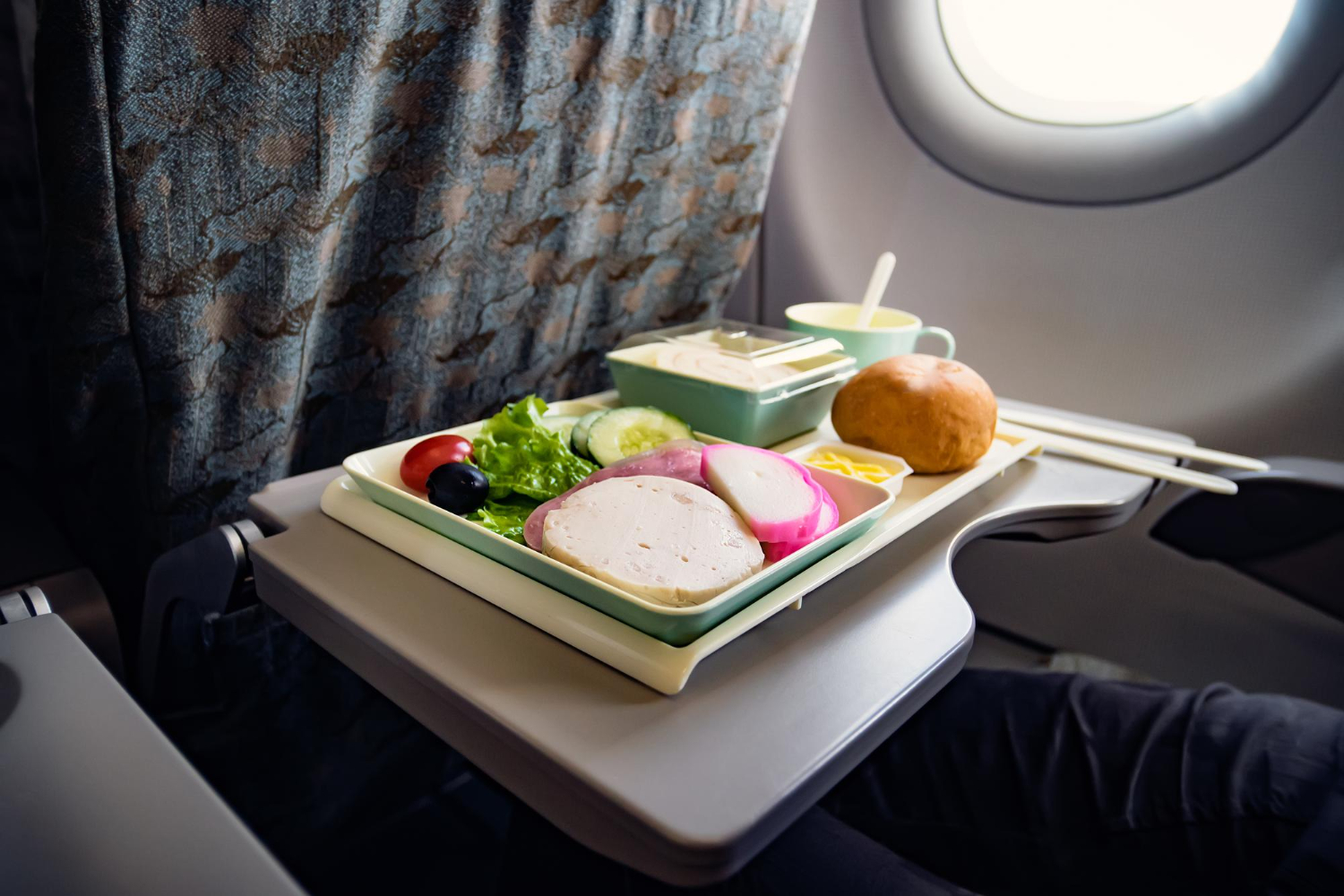
That is worth knowing next time airline food seems oddly aggressive in seasoning. It is not carelessness. It is compensation for a palate operating at reduced capacity, and if you ate the same tray at your kitchen table it would probably taste over-seasoned.
The Noise Experiment
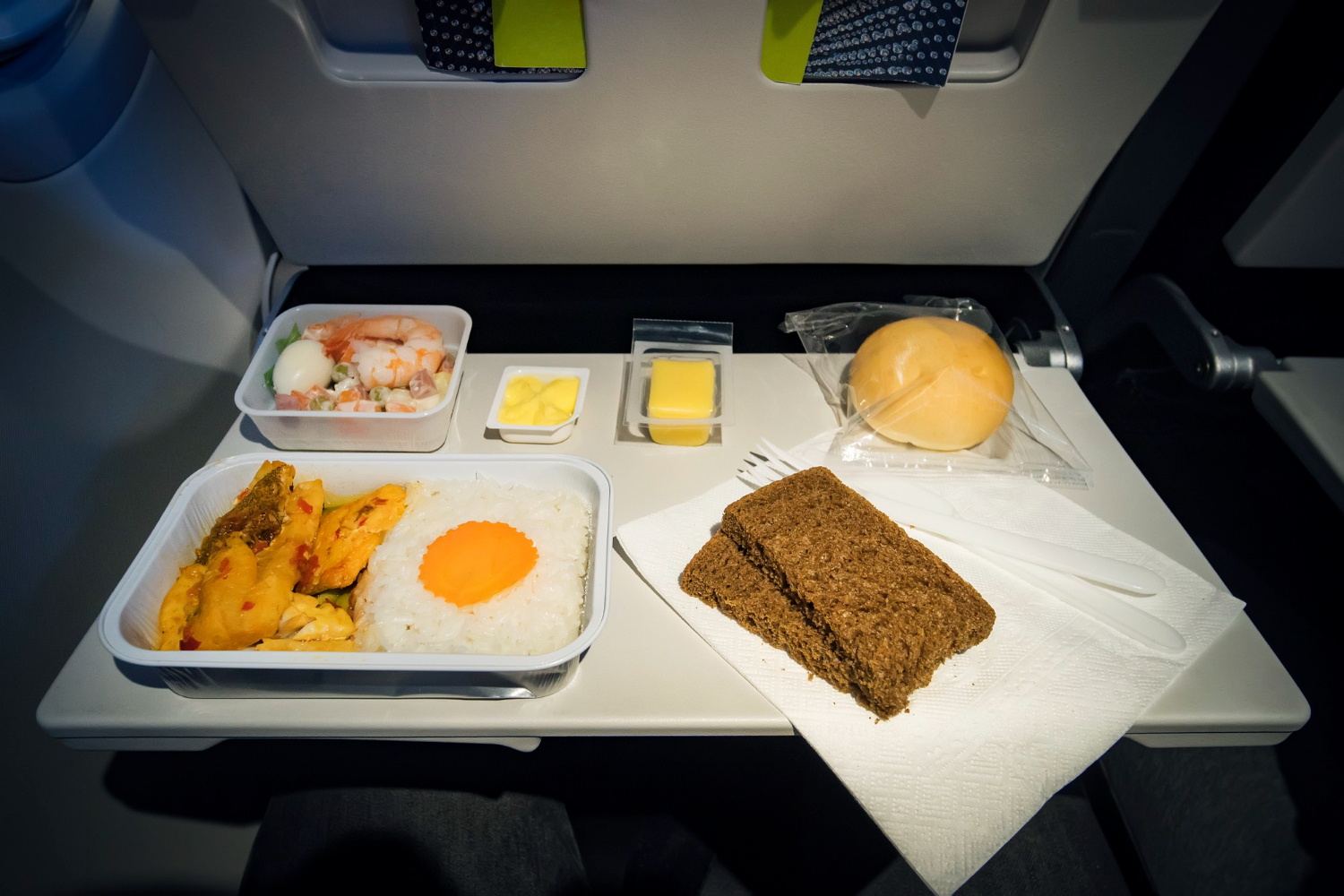
The third factor is the one that sounds implausible until you see the research: the engines are affecting your tongue.
In 2015, food scientists at Cornell ran a controlled study. Forty-eight participants were played loud airplane noise — around 85 decibels, comparable to a jet cabin — while tasting solutions representing the five basic tastes: sweet, salty, sour, bitter and umami.
The results were specific rather than general. Noise did not affect salty, sour or bitter. Sweetness was significantly suppressed, with intensity rated progressively lower. And umami — the savoury taste associated with glutamates — was significantly enhanced, particularly at higher concentrations.
Robin Dando, the food scientist who led the work, summarised it directly: in an environment of loud noise, the sense of taste is compromised, and this was specific to sweet and umami, with sweet inhibited and umami significantly enhanced.
The proposed mechanism is anatomical. The chorda tympani, a nerve carrying taste signals from the tongue, passes very close to the eardrum on its route. Mechanical stimulation of that nerve by loud noise may shift taste perception. An alternative explanation is attentional: loud background noise draws cognitive resources away from processing flavour.
A separate 2010 study by the Fraunhofer Institute for Building Physics, commissioned by the airline Lufthansa and conducted in a flight simulator replicating cabin conditions, found the same pattern: noise suppressed sweetness and enhanced umami.
The Tomato Juice Mystery
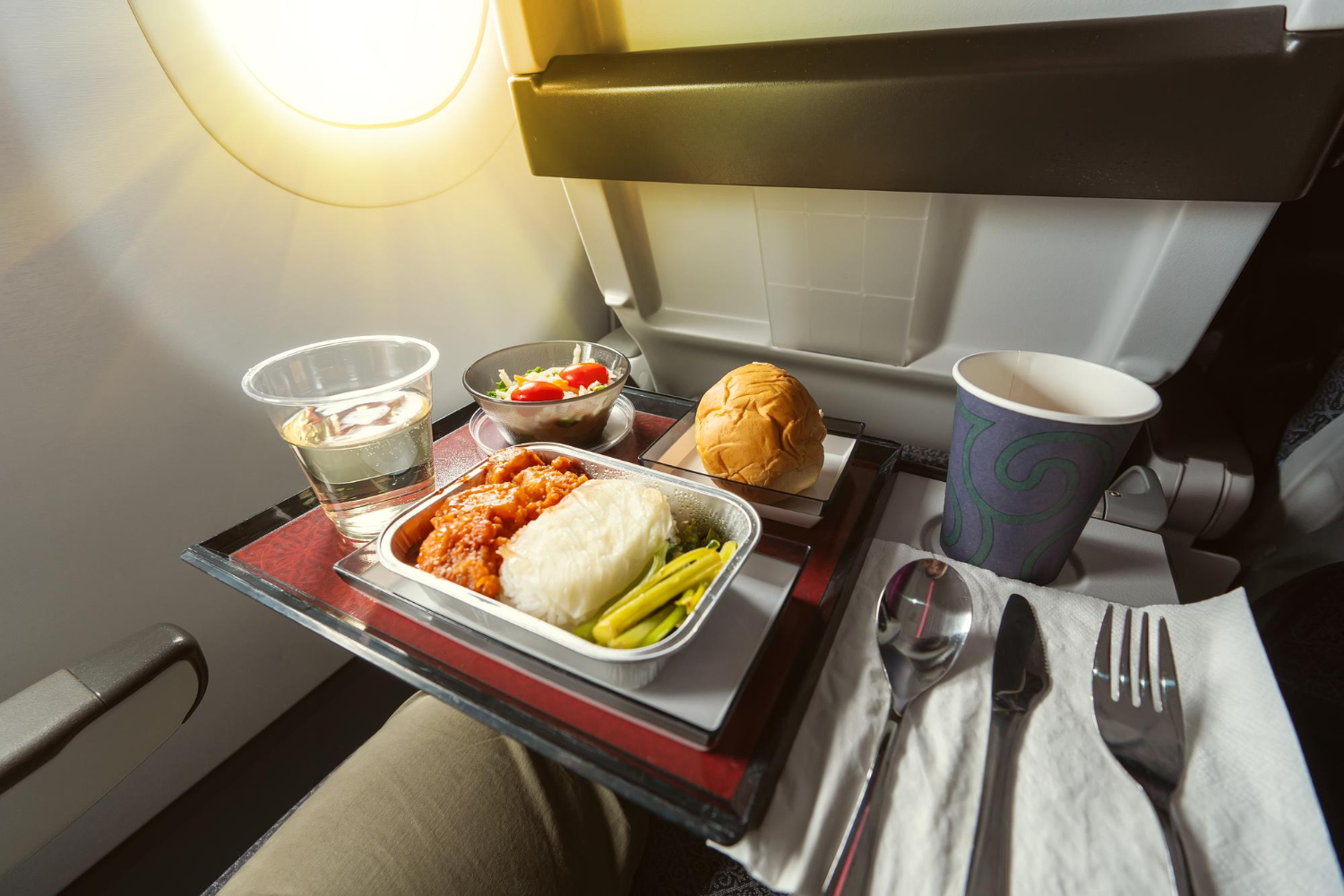
All of this explains an oddity that airlines noticed before they understood it.
Passengers order tomato juice on planes in quantities that make no sense relative to their behaviour on the ground. The German airline that commissioned the Fraunhofer research did so partly because it had discovered passengers were drinking roughly as much tomato juice as beer — a notably surprising statistic in a beer-drinking culture. Reported consumption figures run to well over a million litres a year.
The explanation follows directly from the umami finding. Tomatoes are rich in glutamic acid, which sits at the top of the umami scale. On the ground, tomato juice tends to read as somewhat earthy and is a minority taste. In the air, with sweetness suppressed and umami amplified, the same drink tastes lighter, fresher and substantially better.
People are not developing a strange in-flight craving. They are responding to a drink that really does taste different up there, in a way that happens to suit the conditions.
What Airlines Do About It
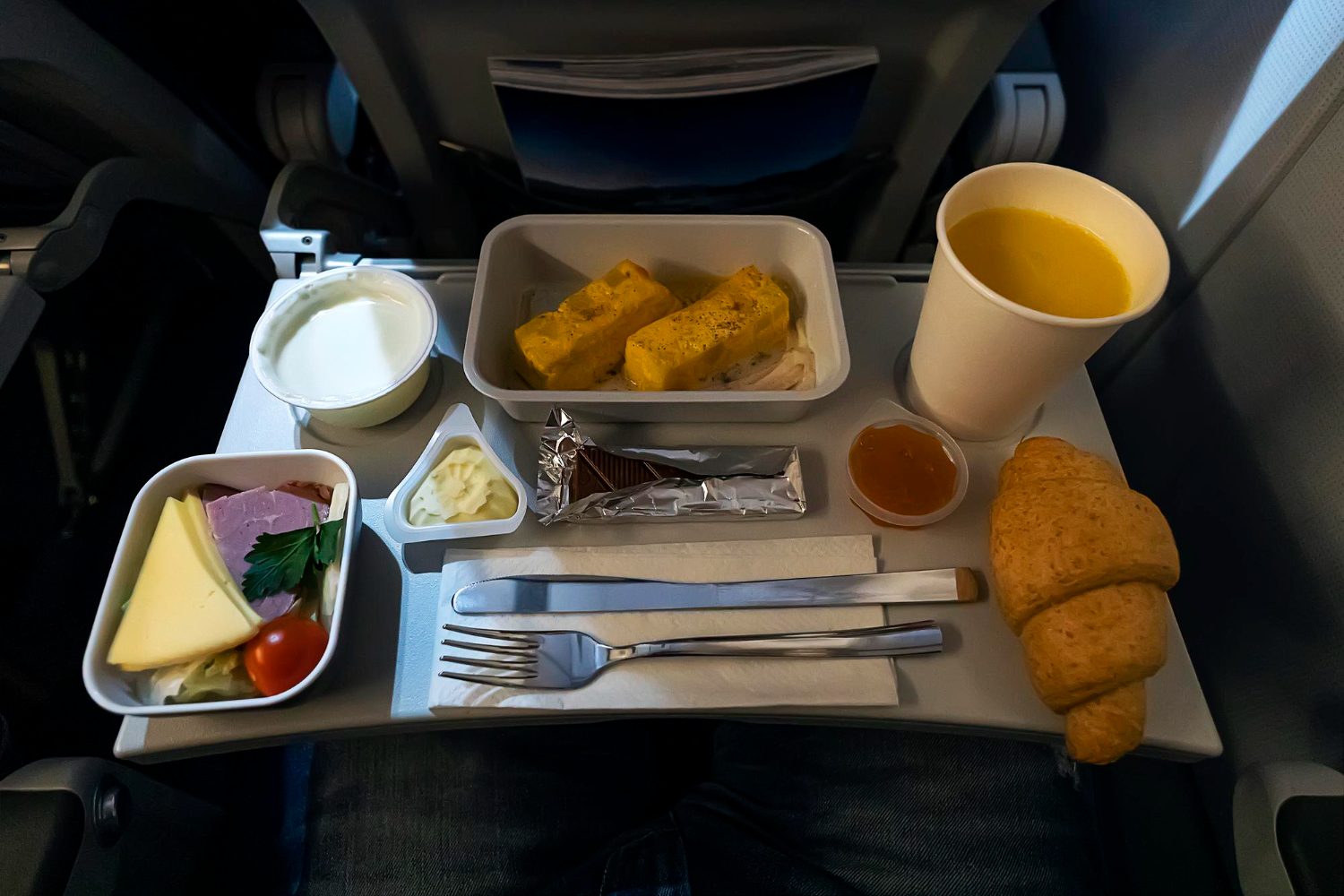
Once the research existed, caterers changed their approach.
The airline that funded the Fraunhofer work shifted away from simply adding more salt and sugar, moving instead toward naturally intense flavours — orange and tomato oils, tomato concentrate — doubling the quantity of fresh herbs used in sauces and reducing acidity in salad dressings. Those changes were applied across all cabin classes. Other carriers have similarly leaned into umami.
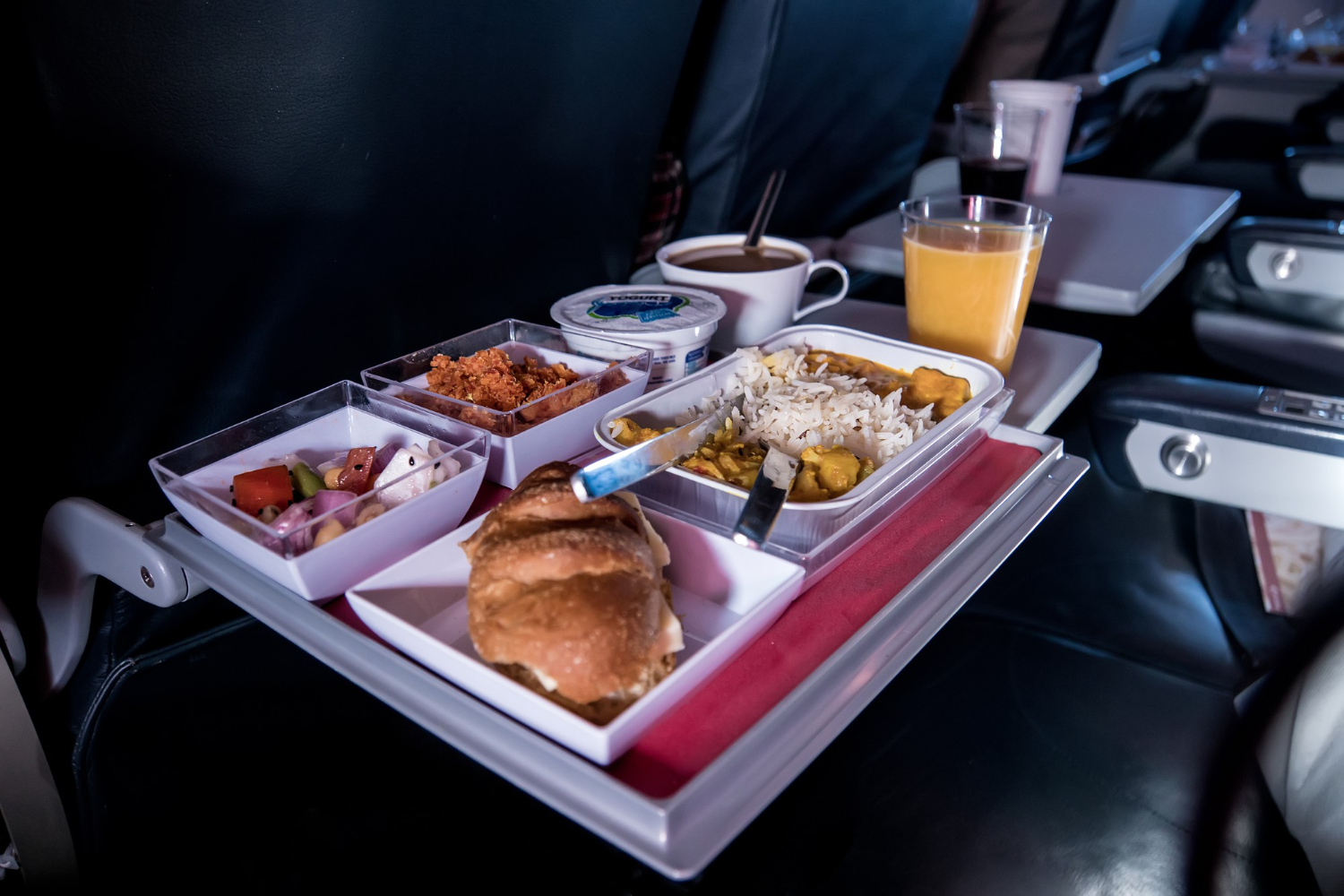
This is also why certain dishes work better in the air than others. Strongly savoury food — curries, dishes built on tomato, mushroom, cheese or soy — retains far more of its character at altitude than delicate or sweet dishes. A rich curry will taste much closer to intended than a strawberry cheesecake, which depends on the sweetness that altitude is actively suppressing.
Which produces a useful piece of practical advice. Offered a choice of airline meals, the savoury, sauce-heavy, umami-rich option is the one most likely to survive the journey to your palate. Eating earlier in a long flight helps too, before dehydration compounds the problem.
Spence has also suggested that noise-cancelling headphones may help, by removing the acoustic component of the interference — which is a pleasantly simple intervention for a problem this multi-layered.
The Catering Problem on Top of Everything Else
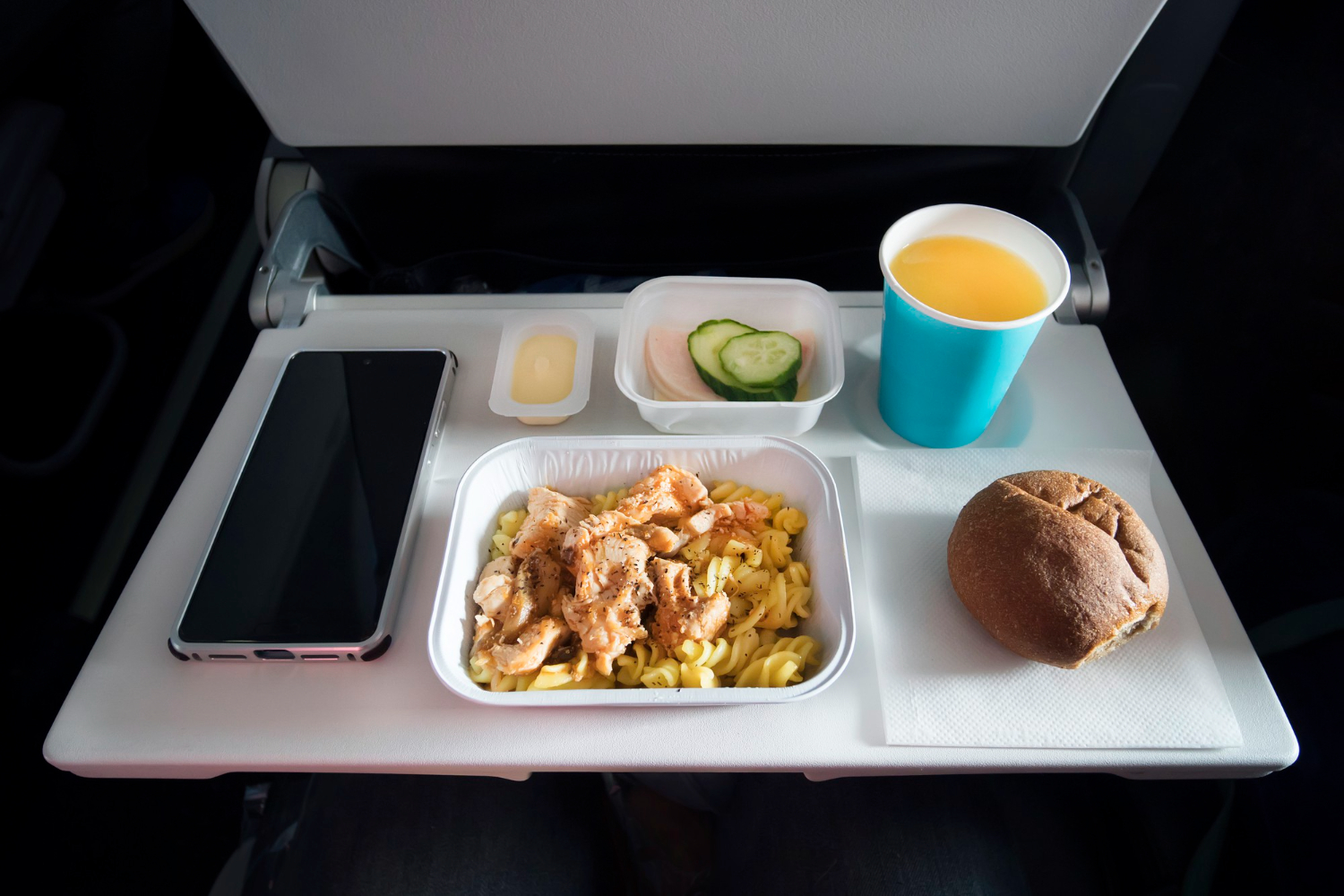
The physiology explains most of the complaint, but it is worth being fair about the real constraints on the food itself, because they are severe.
Airline meals are cooked on the ground in large volumes, chilled rapidly, held cold, loaded, and then reheated in a galley oven that offers very little control. Almost nothing is cooked to order at altitude.
That process punishes certain foods and forgives others. Anything that depends on a crisp texture or a precise moment of doneness will not survive it, which is why steak and fish are difficult and braised dishes, curries, stews and pasta bakes appear so often. Those recover well from being cooked, cooled and reheated.
Portion sizes, weight limits, packaging that must survive turbulence, and the requirement to serve hundreds of people from a small galley in a fixed window all constrain what is possible before anyone considers flavour.
There is also a practical reason airlines cannot simply solve the problem by seasoning everything aggressively: the same tray has to be acceptable to a very broad range of passengers, and food engineered around one taste profile will not suit everyone. Catering directors have said as much publicly.
Your Palate, Not the Kitchen
There is something clarifying about all this, and it slightly rehabilitates a much-maligned industry.
Airline catering has real constraints — bulk preparation, chilling, storage, reheating in a confined galley — and those constraints are real. But the specific complaint that airline food is bland turns out to be substantially a fact about the diner rather than the dinner.
You are eating in a pressurised metal tube at a simulated altitude of several thousand feet, in air drier than a desert, while being subjected to 85 decibels of continuous noise, in a progressively dehydrated state. Under those conditions, roughly a third of your capacity to taste sweetness and saltiness has been switched off, and your sense of smell — the source of most flavour — is running at reduced capacity.
The remarkable thing is not that the food tastes flat. It is that anyone manages to make food that tastes of anything at all, and that the solution turned out to be discoverable: find the one taste that survives, and build the menu around it.
Like our content? Follow us for more.