

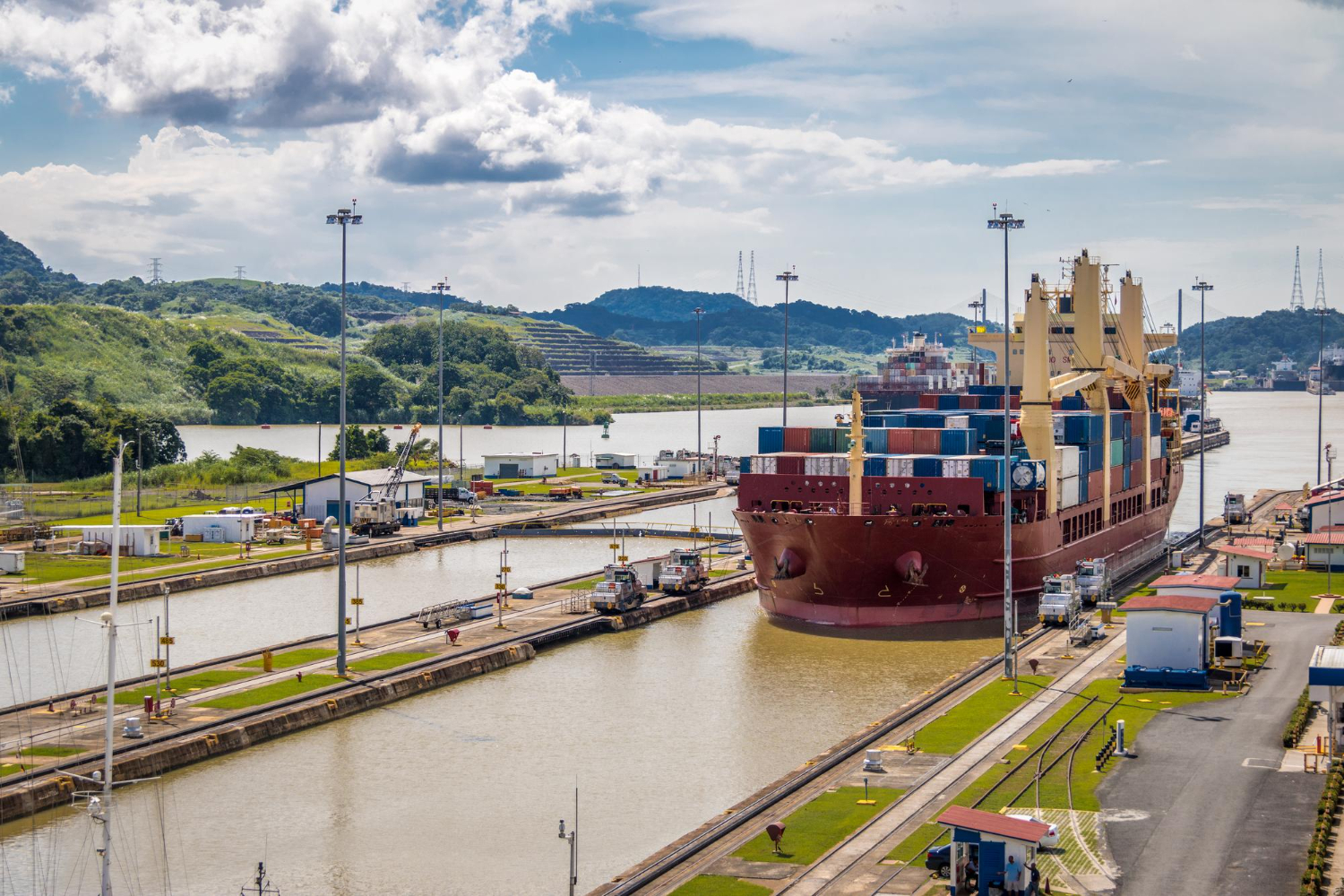
Most people picture the Panama Canal as a ditch: a channel cut through the isthmus, joining two oceans, with ships sailing along it. That picture is wrong in a specific and interesting way.
The canal is not a channel at sea level. It is a water bridge. Ships are lifted up out of one ocean, carried across a lake perched roughly 85 feet above sea level, and lowered back down into the other. The lake in the middle is artificial, created by damming a river, and for a time it was the largest man-made lake in the world.
The lifting is done by locks, and the locks work on a principle so simple it verges on anticlimactic: water flows downhill, and water finds its own level. That is the entire mechanism. No pumps were used when the canal opened in 1914 and none are used now. Here is how you move a container ship uphill using nothing but gravity.
Why It Was Not Built at Sea Level
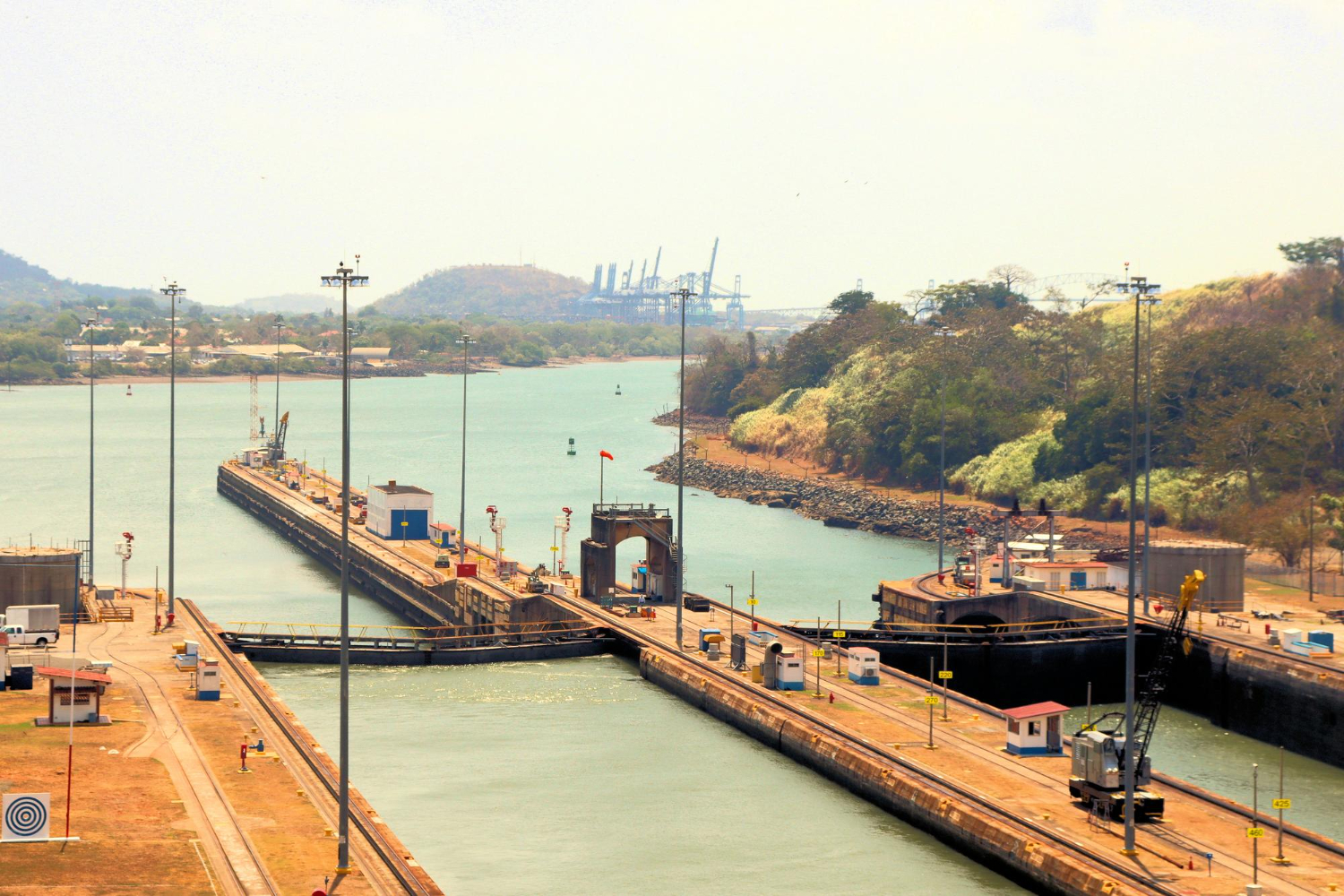
The obvious design would be a sea-level canal, and it was seriously proposed. The Suez Canal, completed decades earlier, is essentially a sea-level cut, and the French attempt at Panama initially aimed for the same thing.
The obstacle was the terrain. Panama has a continental divide running through it, and the ground between the oceans rises substantially. Excavating a sea-level channel would have meant digging away an enormous quantity of rock and earth through high ground — an undertaking that defeated the earlier French effort.
The alternative was to leave the high ground mostly in place and raise the ships instead. Dam the Chagres River to create a lake at elevation, cut a channel through the narrowest and highest section, and use locks at each end to lift vessels up to lake level and back down.
There is a further wrinkle often mentioned in explanations of the canal: the two oceans do not sit at quite the same level, and the Pacific side has a substantially larger tidal range than the Caribbean. This is true and it mattered for the design of the locks at each end, but it was not the reason locks were chosen. The reason was the ground in between.
Like our content? Follow us for more.
Gatun Lake
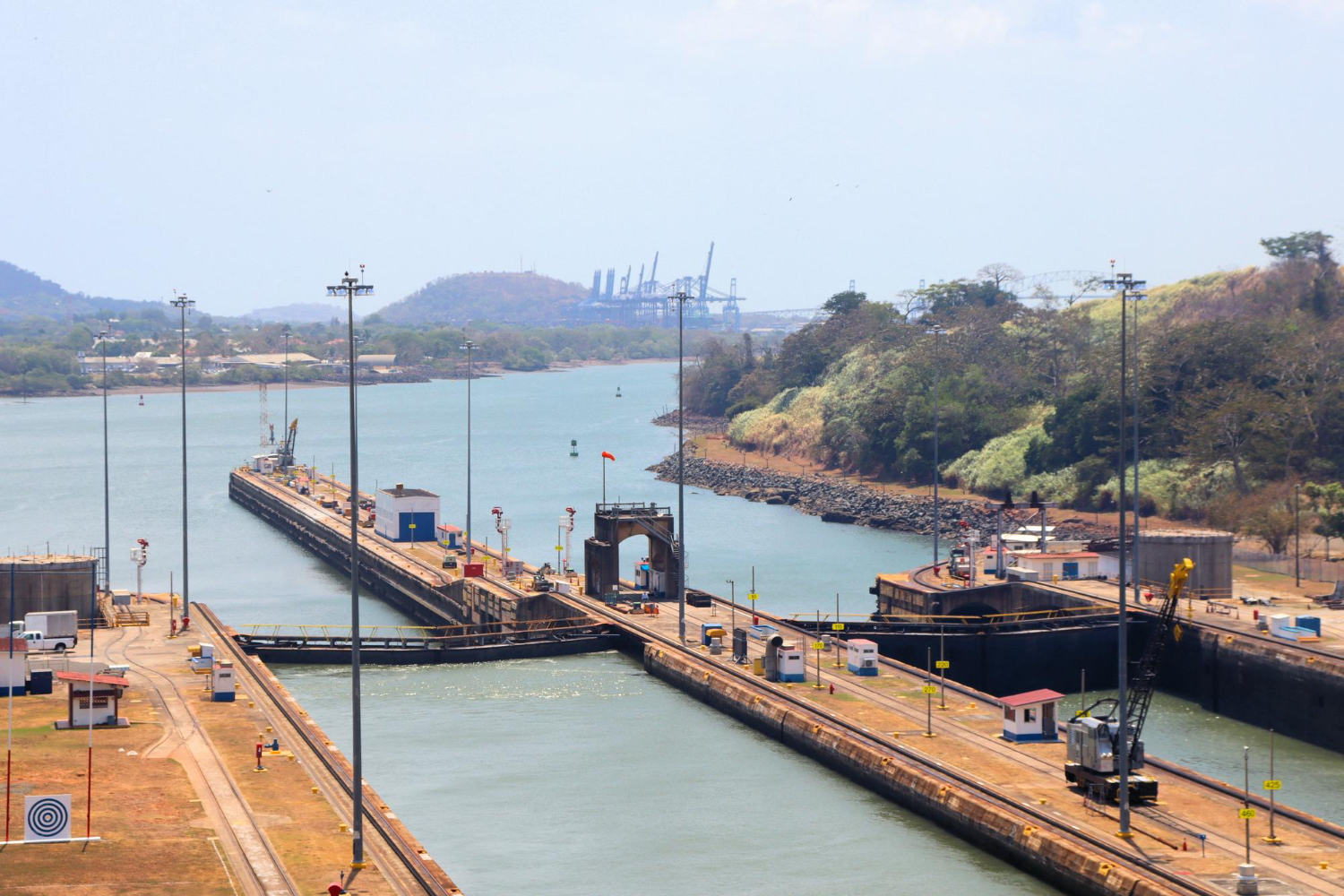
The centrepiece is Gatun Lake, created in 1913 when the gates of the spillway at Gatun Dam were closed and the Chagres River backed up behind it.
The lake sits at roughly 85 feet above sea level, with the operating level varying somewhat with rainfall and having been raised slightly during later expansion. Ships cross around 21 to 24 miles of it during a transit, sailing over drowned forest and hills in what was until recently a river valley.
Gatun Lake is not decorative. It is the fuel supply. Every drop of water used to raise and lower ships in the locks comes out of it, along with the water for the surrounding watershed’s other needs. When constructed it was the largest artificial lake on Earth.
The route also includes the Culebra Cut, an eight-mile channel carved directly through the continental divide, which is the narrowest section of the canal and was the most difficult part of the excavation.
How a Lock Actually Works
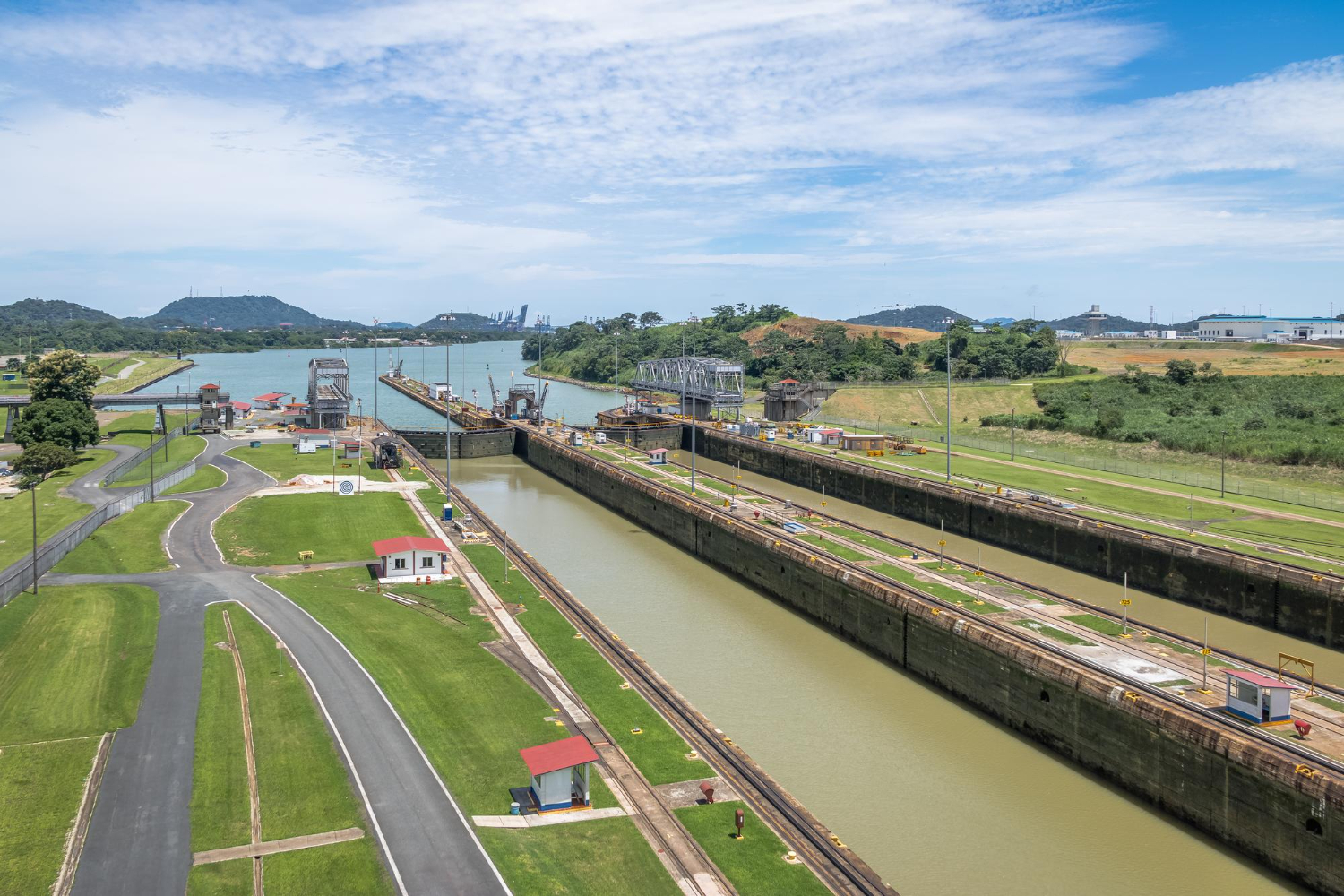
Here is the sequence, and the elegance is in what is absent from it.
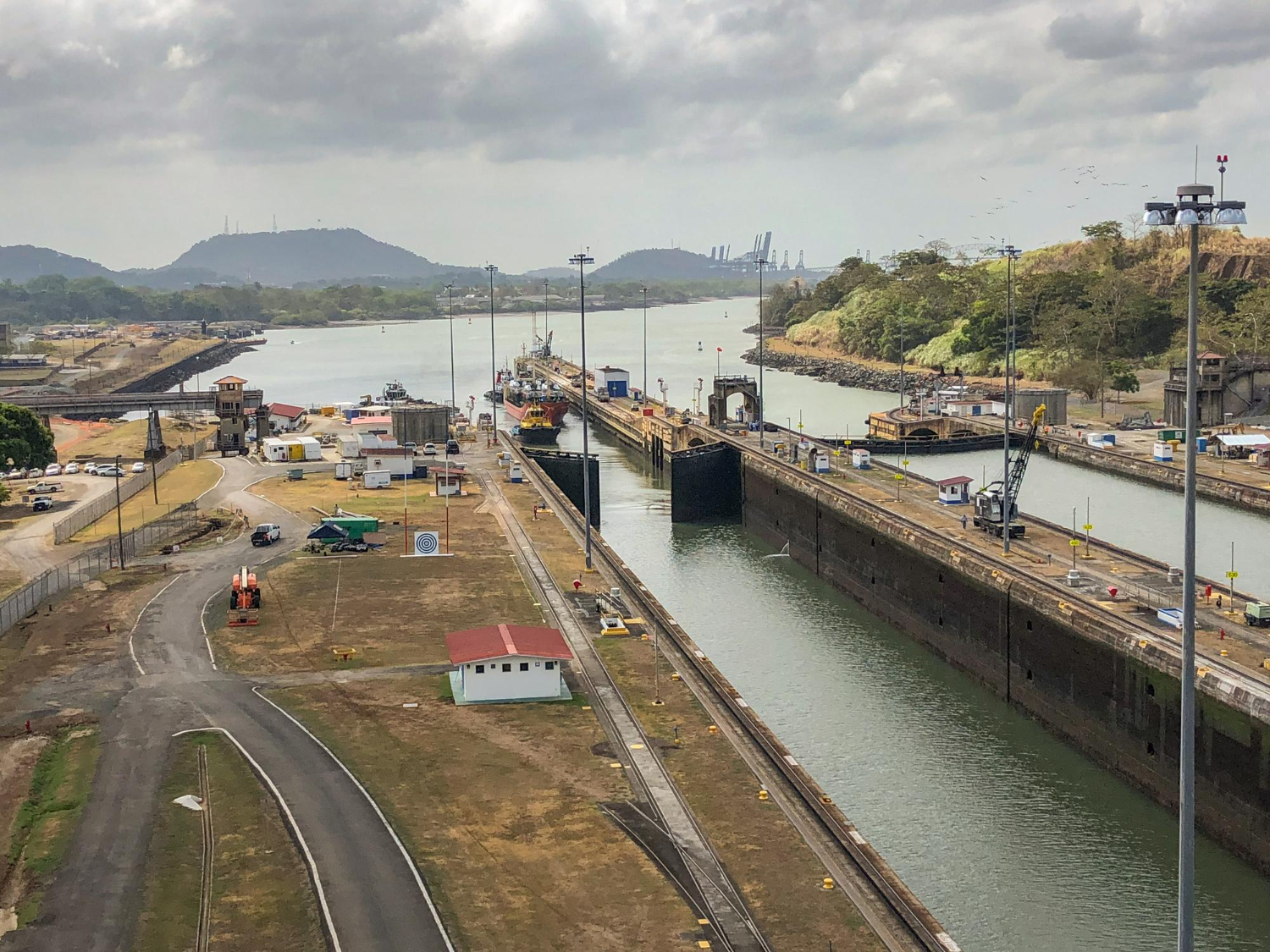
A ship arriving from the Atlantic enters the first chamber of the Gatun Locks, at sea level. The watertight gates close behind it. The chamber is now a sealed box with a ship floating in it.
The next chamber, immediately ahead, holds water at a higher level. A valve is opened, and water flows through underground culverts from the higher chamber into the lower one. It flows because it is higher, and for no other reason. It continues until the two chambers are level, at which point it stops on its own — water seeks its own level, and once the levels match there is nothing driving further flow.
The lock-master closes the valve. The gates between the chambers open. The ship, now floating at the higher level, moves forward into the second chamber. The process repeats.
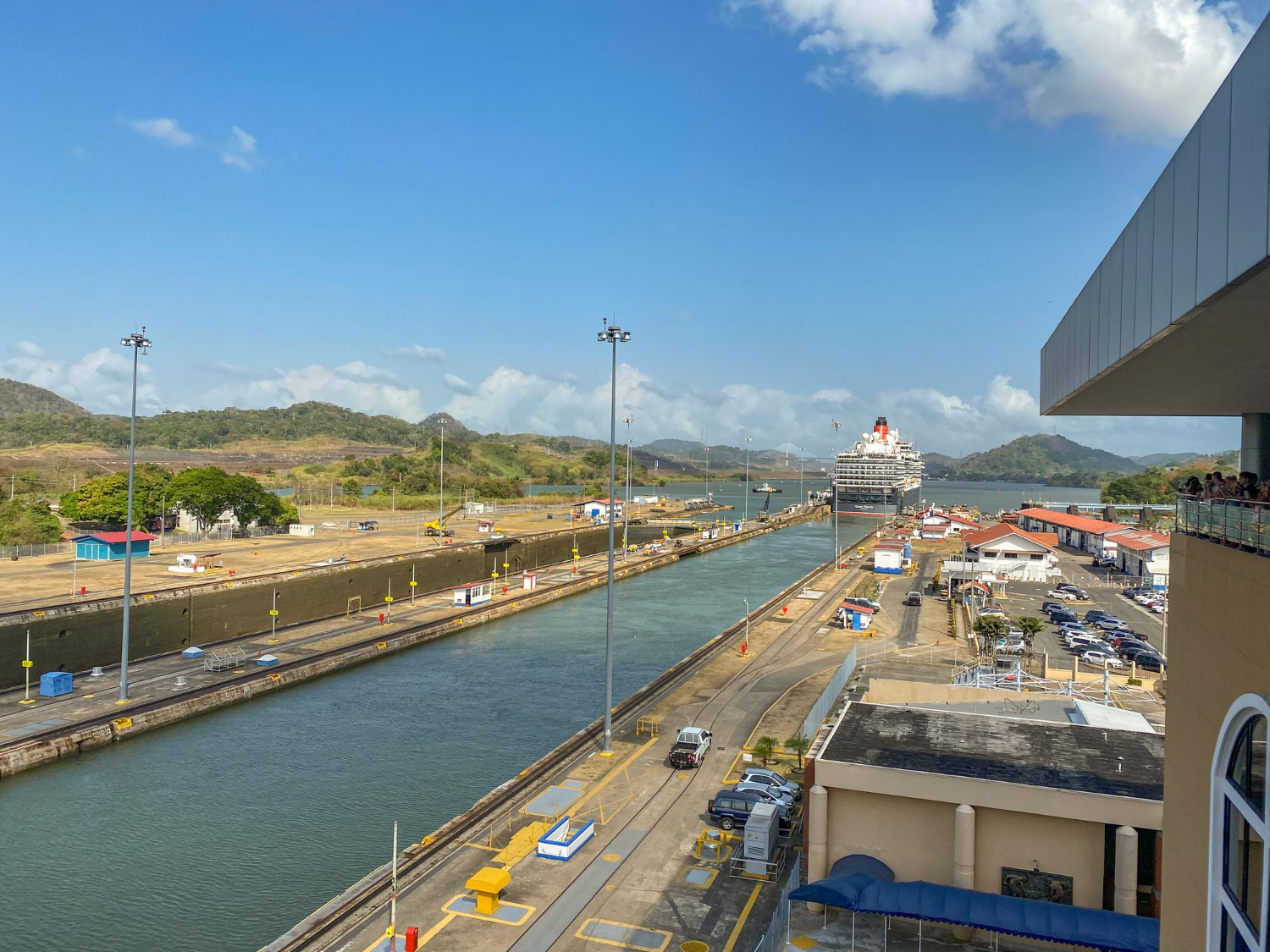
Three chambers at Gatun raise a vessel roughly 85 feet to Gatun Lake. On the Pacific side it descends again: one chamber at Pedro Miguel lowering it about 31 feet, then two chambers at Miraflores taking it the remaining distance, with the final chamber compensating for the Pacific tides.
Each chamber holds roughly 26 to 26.7 million gallons. To lower a ship, the same volume drains out — downhill again, toward the sea.
The whole operation depends on gravity and on the fact that the lake sits above every lock. Ships are also guided by locomotives running on tracks along the lock walls, and a heavy fender chain at the end of each chamber prevents vessels from striking the gates.
What It Costs in Water
The arithmetic has a consequence that has become the canal’s central vulnerability.
Roughly 26 million gallons flow out to the ocean each time a ship passes through one end, meaning something in the region of 52 million gallons for a complete transit. Estimates in litres put the figure around 200 million per ship.
That water is not recycled. It flows out to the Atlantic or the Pacific and is gone. The lake is replenished by rainfall in the surrounding watershed, and in normal years that balance works.
In drought years it does not. When rainfall is low, the level of Gatun Lake drops, and because the locks need a fixed volume per transit, the canal authority has to reduce either the size of ships or the number of daily crossings. During the 2023-2024 drought period, capacity was reduced by roughly 30 percent at its worst, and some shipping companies considered alternative routes.
Panama has been investing in additional water sources to reduce future vulnerability, including a proposed reservoir on the Indio River. The essential point is structural: a canal that lifts ships with fresh water is dependent on rain, in a way a sea-level canal would not be.
Fresh Water, Not Sea Water
An easily missed detail explains something important about the canal’s ecology and its engineering.
The water in the locks is fresh, not salt. It comes from Gatun Lake, which is fed by the Chagres River and by rainfall on the surrounding watershed. Ships are therefore lifted out of salt water, floated across a freshwater lake, and lowered back into salt water on the other side.
That has consequences. The lake acts as a biological barrier between the two oceans: marine species cannot simply swim across, because the freshwater crossing is inhospitable to most of them. The canal connects two oceans for shipping while keeping them substantially separate for marine life — an accidental quarantine that has attracted considerable scientific attention.
It also means the locks are flushing fresh water into the sea with every transit, which is why the water budget is a live constraint rather than a theoretical one. A saltwater canal would not have the same problem, because the ocean would refill it.
The freshwater lake was a solution to a terrain problem that turned out to have ecological consequences nobody was designing for in 1914.
Still Running on the Original Idea
The system that opened in 1914 is still in operation. Larger Neopanamax locks were added in 2016 to accommodate bigger vessels, and those incorporate water-saving basins that recycle a portion of each lockage — but the original locks work as designed, on the same principle, more than a century on.
The scale has changed around them. The older lock chambers were about 100 feet wide; the newer ones run 175 to 185 feet. A large ship pays a toll that can run from several hundred thousand dollars into the millions depending on size, which is set against the alternative: a voyage of roughly 13,000 kilometres around the southern tip of South America, which was the only option before 1914.
Control of the canal passed from the United States to Panama under treaties signed in 1977, taking effect at the end of 1999.
What stays with you about the canal is not the scale of the excavation, impressive as it was, but the restraint of the mechanism. Faced with the problem of moving ships over a mountain range, the engineers did not build an enormous pumping system. They built a lake at the top, arranged a staircase of boxes beneath it, and let water do what water does.
Every ship that crosses Panama is lifted by nothing more than the weight of water in a lake, released a chamber at a time, and then allowed to run back to the sea.
Like our content? Follow us for more.
