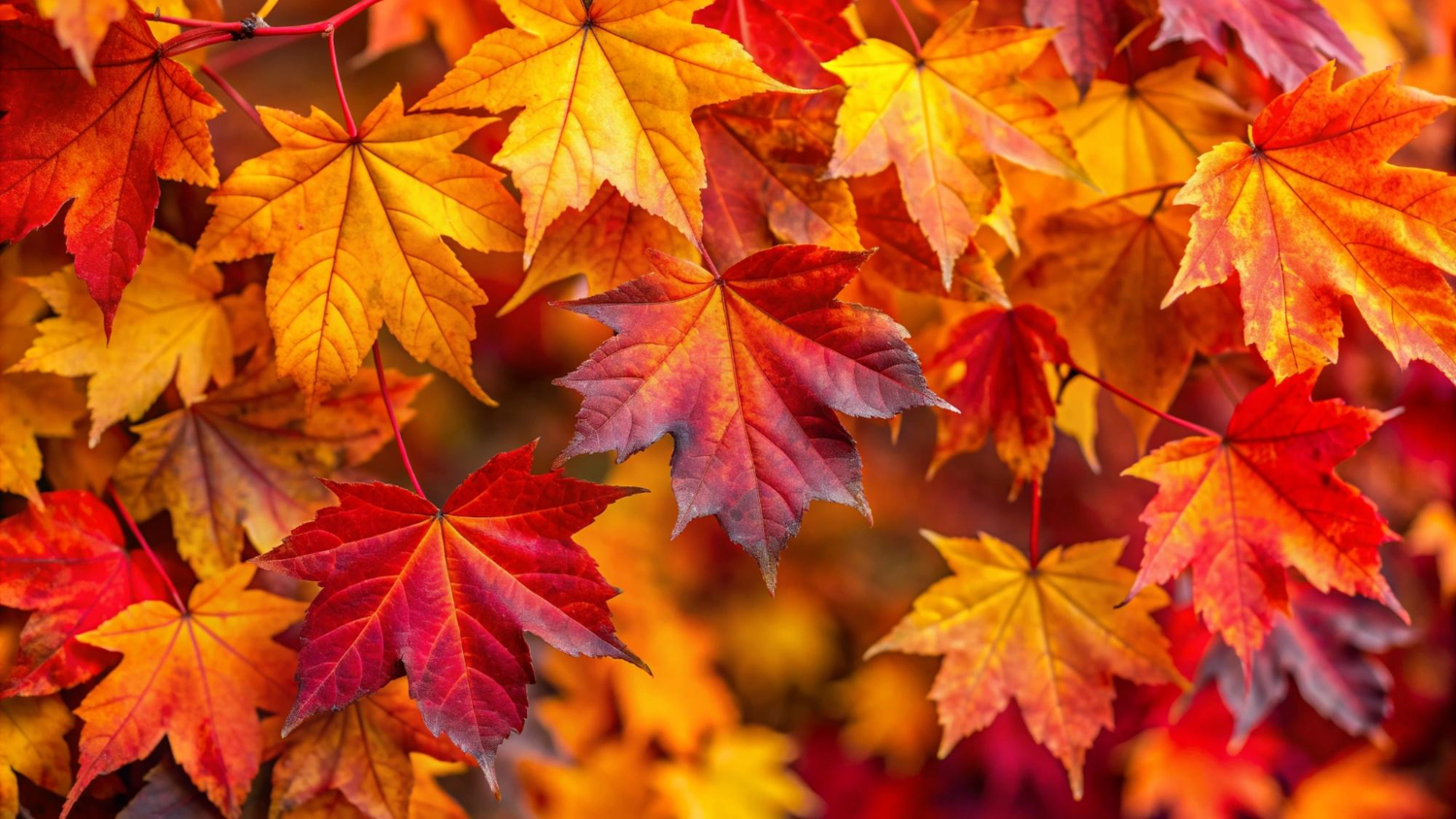
Autumn colour is usually described as leaves changing colour, which frames it as something the leaf does. That is only half right, and the half that is wrong is the more interesting one.
Most of the colour was already there. What changes is not the pigment but the concentration of the pigment that was hiding it. Remove the green and you reveal what has been present since spring.
The reds are a different matter entirely. Those are made fresh, in autumn, in a leaf that has weeks to live, by a tree spending energy on a structure it is about to discard. Why it does that is a question with several competing answers.
Here is what is actually happening inside a leaf in October.
Green Is a Working Pigment
Chlorophyll is not decoration. It is the molecule that absorbs sunlight to drive photosynthesis, converting carbon dioxide and water into the sugars the tree runs on.
Throughout the growing season chlorophyll is continually produced and continually broken down, maintained in balance, which is why leaves stay green. It is by far the most abundant pigment in the leaf, and it dominates everything else visually.
Underneath it, all summer, sit the carotenoids — the yellow xanthophylls and the orange beta-carotene. These are the same class of compounds that colour carrots, bananas, buttercups and daffodils.
They are not idle. Carotenoids assist photosynthesis by capturing wavelengths of light that chlorophyll cannot use, and they protect the leaf from damage caused by excessive sunlight. They are functional components that happen to be invisible.
Tannins are present too, responsible for the browns and coppers of oaks and beeches, and also present year-round.
Like our content? Follow us for more.
Why the Green Goes
The trigger is the approach of winter, and the tree’s motivation is recovery rather than display.
Broadleaf trees in temperate regions drop their leaves in a controlled fashion because winter would damage them and because maintaining them is not worth the cost. The process is initiated by shortening days and falling temperatures.
Before the leaf goes, the tree salvages what it can. Chlorophyll is a nitrogen-rich molecule, and nitrogen is expensive. So the tree disassembles chlorophyll in an orderly way and moves the nitrogen back into the branches and trunk for storage over winter and reuse in spring.
That salvage operation is the reason the green fades. It is a dismantling process, not a decay.
At the same time, an abscission layer forms at the base of the leaf stalk — a band of specialised cells that gradually closes off the vessels connecting leaf and tree, restricting the flow of water and nutrients. Auxin, a plant hormone, prevents this layer from fully developing during the growing season; as auxin production ends in autumn, the layer completes.
Once it does, the leaf is severed and usually removed by wind or rain, leaving a sealed scar that protects the tree from infection and water loss.
As chlorophyll disappears, the carotenoids that were there all along stop being masked. The yellow was never added. The green was subtracted.
The Reds Are Different
Anthocyanins — the pigments responsible for reds, crimsons and purples — are not present in summer leaves. They are synthesised in autumn, which makes them a real puzzle.
The chemistry connects to the abscission layer. As the vessels narrow, sugars produced in the leaf cannot move out and accumulate. In those conditions, and under bright light, genes encoding the enzymes for anthocyanin synthesis are activated, and the trapped sugars are converted into pigment.
The specific shade depends on the acidity of the cell sap: more acidic conditions produce red, less acidic conditions shift toward purple. Combined with retained carotenoids the result is orange; combined with residual chlorophyll it produces brownish tones.
Because anthocyanins are made rather than revealed, they depend heavily on weather in a way yellows do not. Yellows and golds are fairly consistent from year to year. Reds are unreliable, and the best displays come from a run of warm sunny days followed by cool nights that stay above freezing — conditions that maximise sugar production while preventing it from leaving the leaf.
Anthocyanins are produced by roughly 10 percent of tree species in temperate regions generally, though in some areas — northern New England being the most famous — the proportion is far higher.
Why Bother Making a Pigment for a Dying Leaf
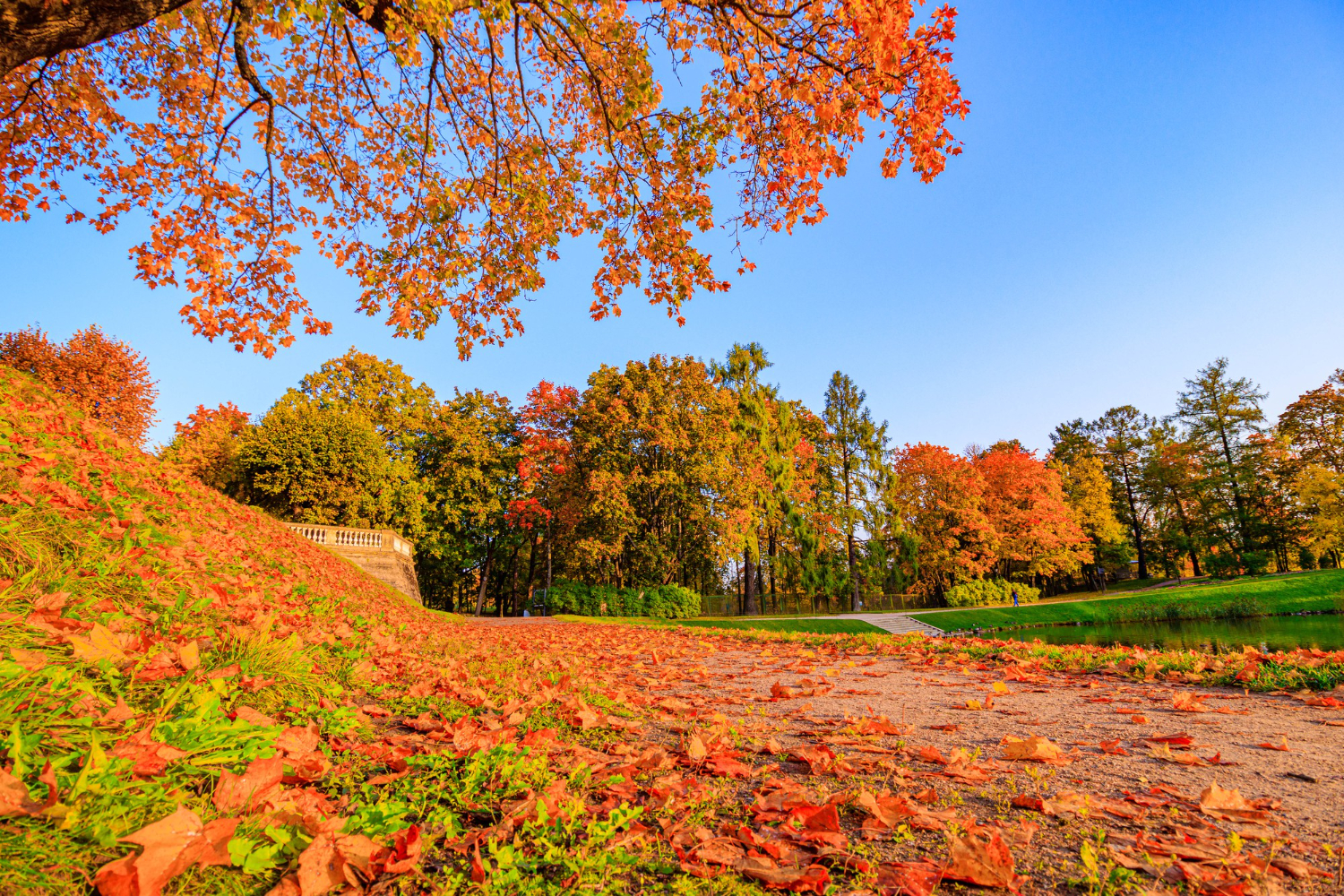
This is the part that remains truly open, and several explanations compete.
The leading one is protection. Once chlorophyll starts breaking down, the leaf becomes vulnerable to damage from ultraviolet light, and it still needs to function long enough to complete the nutrient salvage. Anthocyanins act as a sunscreen, blocking damaging light and allowing the leaf to keep working through the recovery process. The longer the leaf stays functional, the more nitrogen the tree gets back.
A related account emphasises protection against cold and against pests that might exploit a senescing leaf.
Other hypotheses have been proposed, including signalling to insects, and the question of why some species invest in anthocyanins while others do not has not been fully resolved.
What is clear is that red is an active investment and yellow is a reveal, which is why the two behave so differently from year to year.
Two pigment groups get all the attention, and a third does quiet work that most descriptions omit.
Xanthophylls are a subgroup of carotenoids responsible for the paler, more lemon-toned yellows, as distinct from the deeper orange of beta-carotene. Trees differ in the ratio, which is why some go butter yellow and others burnt orange from the same underlying process.
Tannins produce the browns and coppers that dominate oaks and beeches, and they are present throughout the year. When a leaf ends up brown rather than yellow, that is frequently tannins showing through alongside remaining carotenoids rather than the leaf simply dying.
There are also leaves that fall while still partly green, when the chlorophyll salvage is interrupted by early frost or wind. Those pale green or yellow-green fallen leaves are a record of a process cut short.
And a small number of species retain enough chlorophyll to fall green, which is why the ground under some trees looks quite different from the ground under others in the same week.
The full palette of an autumn wood, then, is four pigment groups in varying proportions: chlorophyll disappearing, carotenoids emerging, tannins showing, and anthocyanins being manufactured.
What Makes a Good Autumn

Given all that, the conditions for a spectacular display follow directly from the chemistry.
Warm, sunny autumn days drive sugar production in leaves that still have some chlorophyll working. Cool nights, below about seven degrees Celsius but not freezing, slow the movement of those sugars out of the leaf and encourage anthocyanin formation. A hard early frost cuts the process short.
Soil moisture matters too. Drought stress during the growing season, or heavy rain and wind during autumn, both reduce the display — the first by weakening the trees, the second by removing the leaves before the colour peaks.
This is why the same forest looks different every year, and why local predictions are so unreliable: the outcome depends on a sequence of weather conditions rather than on a date.
Species differ predictably, though. Birches, poplars and hickories go yellow because they rely on carotenoids. Maples, oaks, sumacs, sweetgums, dogwoods and cherries can produce strong reds because they make anthocyanins.
Why Some Trees Do Not Bother
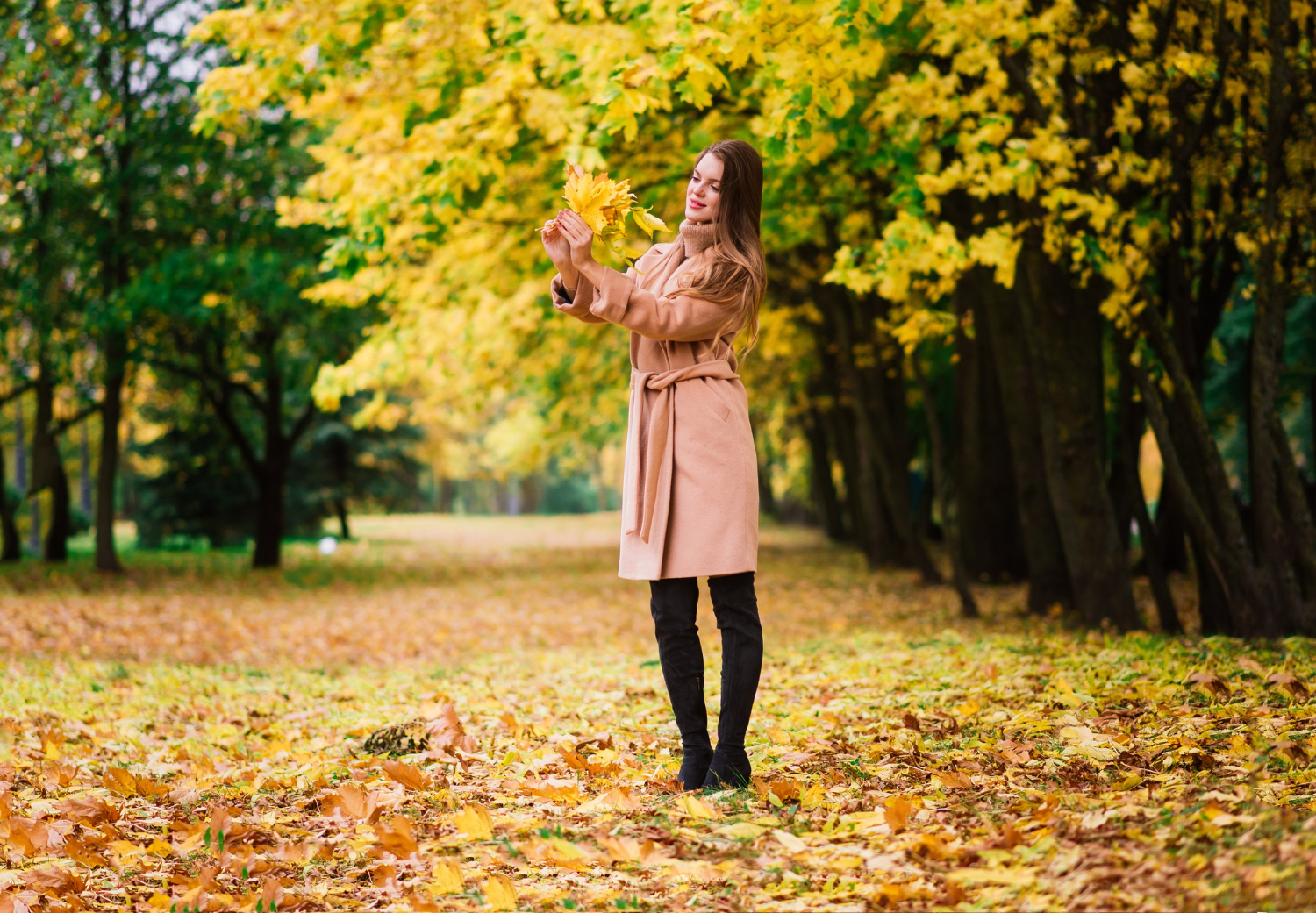
A question the colour story raises but rarely answers is why some trees drop their leaves and others keep them.
Evergreen conifers take the opposite strategy. Rather than building cheap leaves for one season and discarding them, they build expensive ones — needles with thick waxy coatings, small surface areas and structures that resist freezing and water loss — and keep them for several years.
That is a different economic calculation. A broadleaf tree invests little in each leaf, harvests sunlight aggressively through a short growing season, then recovers the nitrogen and starts again. A conifer invests heavily in leaves that survive winter, photosynthesising slowly whenever conditions allow.
Which strategy wins depends on conditions. Where the growing season is long and soils are rich, the broadleaf approach pays. Where seasons are short, soils are poor and nutrients are hard to recover, the evergreen approach does — which is why conifers dominate at high latitudes and high altitudes.
There are intermediate cases. Larches are conifers that drop their needles, turning gold in autumn. Some oaks retain dead brown leaves through winter, a behaviour called marcescence whose purpose is not firmly settled.
So autumn colour is not a universal property of trees. It is the visible signature of one particular strategy for surviving winter.
A Different Way to Look at a Forest
There is something worth carrying into a walk in October.
The yellow trees are not doing anything new. They are trees that have withdrawn their green and revealed what was underneath the whole time, in a purely subtractive process.
The red trees are doing something else. They are actively manufacturing pigment in leaves they will shed within weeks, spending resources to protect a salvage operation, and the intensity of that red is a record of the specific weather of the preceding fortnight.
And every leaf on the ground is the end of a controlled disassembly — nitrogen extracted, vessels sealed, connection severed — rather than something that simply died and fell off.
Autumn colour is often described as trees preparing for winter, which is accurate but undersells it. It is a tree recovering its investment, and the colours are what that process happens to look like from outside.
Like our content? Follow us for more.