

Hiccups are so ordinary that almost nobody asks what they are for. Everyone gets them, they arrive unbidden, they are mildly annoying, and they go away.
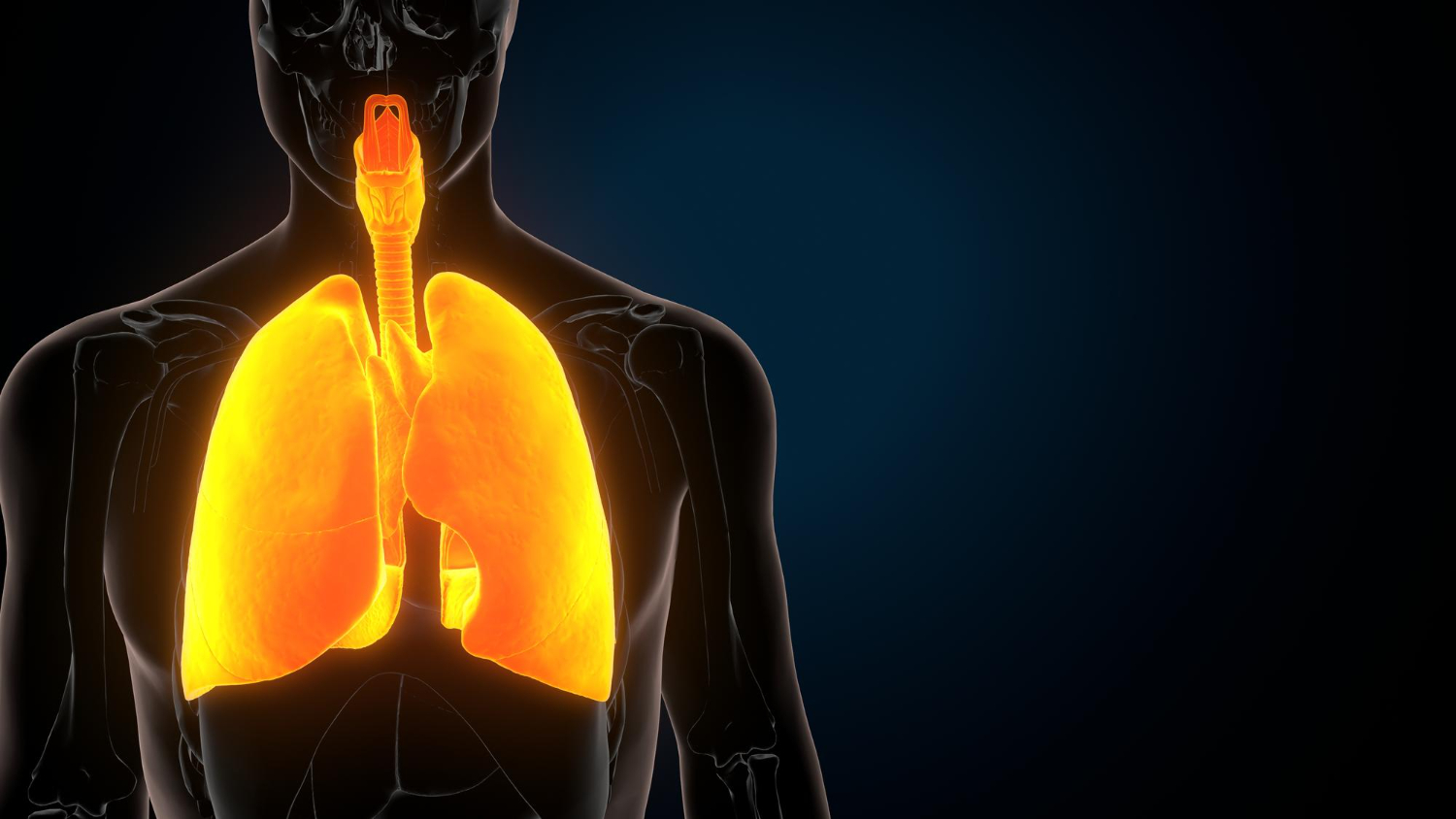
But consider what is actually happening. The diaphragm — the sheet of muscle beneath the lungs that drives breathing — contracts sharply and without instruction. A fraction of a second later the glottis, the opening between the vocal folds, slams shut. The result is an abrupt intake of air that is immediately cut off, producing the characteristic sound.
That is a reflex: a fixed, involuntary, reproducible motor pattern. Reflexes generally exist because they do something. Coughing clears an airway. Sneezing expels an irritant. Blinking protects the eye.
Hiccups appear to achieve nothing at all in an adult human, and yet the wiring is preserved with total consistency across the species. Here is what is known, and how much of it remains unresolved.
What a Hiccup Physically Is

The medical term is singultus, and the mechanism is well characterised even though the purpose is not.
The sequence begins with a sudden involuntary contraction of the diaphragm, often involving the intercostal muscles between the ribs as well. This pulls air sharply inward.
Roughly 35 milliseconds later, the glottis closes abruptly. That closure is what makes the noise — the sound is air hitting shut vocal folds, not the diaphragm itself.
The timing is the strange part. If the point were to draw breath, closing the airway a fraction of a second afterwards defeats it entirely. The contraction and the closure work against each other, which is why the reflex looks purposeless.
The pathway involves the phrenic nerve, which supplies the diaphragm, the vagus nerve, and a coordinating region in the brainstem and upper spinal cord. It is a circuit, not a random spasm, and it is remarkably stereotyped — hiccups occur at a fairly regular interval, and the rate tends to be consistent within an individual bout.
Common triggers are well established even where the purpose is not: eating quickly, large meals, fizzy drinks, sudden temperature changes, and excitement or stress. All of these involve either distension of the stomach or stimulation of the nerves running near it.
Like our content? Follow us for more.
The Gill Hypothesis

The most-discussed evolutionary explanation is startling, and it turns on the observation that the hiccup circuit resembles something used elsewhere in the animal kingdom.
Amphibians such as tadpoles, which breathe using gills, pump water in through the mouth and out over the gills, and to do this they must close the glottis so water does not enter the lungs. The motor pattern — an inward pumping contraction paired with glottal closure — is broadly comparable to the hiccup sequence.
The proposal is that the neural circuitry for this behaviour is ancient, conserved from aquatic ancestors, and that hiccups in mammals are that same circuit firing in an animal that no longer has any use for it.
This idea is often attributed to work by researchers including Christian Straus and colleagues, and it has been widely reported because it is memorable and because the parallel is real.
It should be treated as a hypothesis. Critics point out that resemblance between motor patterns does not establish descent, that the timing and details differ, and that a great many reflexes look superficially similar without being related. It is a plausible and much-cited account rather than a demonstrated one.
The Suckling Hypothesis

A second explanation focuses on infants rather than on distant ancestors, and it has some practical evidence behind it.
Hiccups are far more common in babies than in adults, and they occur in the womb well before birth — foetal hiccups are routinely observed on ultrasound, sometimes from remarkably early in development.
One proposal is that the reflex helps a nursing infant clear swallowed air from the stomach, since the combination of diaphragm contraction and glottal closure could assist in bringing up air trapped above milk.
A related and more recent line of thinking suggests that foetal hiccups serve a developmental purpose — that the repeated activity helps the developing brain map the location and function of the diaphragm, effectively calibrating the breathing apparatus before it is needed. Research measuring brain activity in newborns during hiccups has been used to support this.
On these accounts, hiccups are not purposeless at all. They are useful in infancy and simply persist afterwards, like a great many other developmental features, because there is no cost to retaining them.
Why the Question Is Hard

The reason this remains open is worth understanding, because it explains why a common phenomenon lacks a confident answer.
Evolutionary explanations for reflexes are difficult to test. You cannot run an experiment on an ancestral population, and the fossil record does not preserve neural wiring. What is available is comparative anatomy, developmental observation and inference, which supports plausible stories rather than proofs.
There is also no pressure to resolve it. Ordinary hiccups are harmless and self-limiting, so there is limited clinical motivation to fund research into why they exist, as opposed to how to stop them in the rare cases where they become persistent.
And the two leading hypotheses are not mutually exclusive. An ancient circuit could have been retained precisely because it acquired a useful function in infancy, which would explain both the deep conservation and the age distribution.
The honest position is that the mechanism is well described, the triggers are known, and the purpose is not settled.
What Sets a Hiccup Off

The triggers are better understood than the purpose, and they point consistently at one region of the body.
Most reliable triggers involve the stomach becoming distended: eating a large meal, eating quickly, swallowing air, or drinking something carbonated. A full or gas-filled stomach presses against the diaphragm directly above it and can stimulate the nerves running through that area.
Sudden temperature change is another common trigger — a cold drink taken quickly, or moving abruptly into cold air. The vagus nerve runs close to the oesophagus, and rapid temperature shifts along that path appear to be enough to provoke the reflex.
Emotional states feature too. Excitement, stress and sudden laughter are all reported triggers, which fits a circuit connected to the autonomic nervous system rather than to digestion alone.
What unites these is proximity. The phrenic nerve, the vagus nerve, the oesophagus, the diaphragm and the stomach are all packed closely together, and the hiccup reflex appears to be provoked by irritation or stimulation anywhere in that congested region.
That anatomical crowding is also why the reflex is so easy to set off and so hard to attribute to any single cause.
Popular remedies are numerous and mostly untested, but the plausible ones share a logic worth knowing.
The hiccup circuit involves the vagus and phrenic nerves, and a great many folk remedies involve stimulating those nerves or altering breathing in ways that could interrupt the pattern. Holding the breath, breathing into a bag, drinking cold water, swallowing something granular, and pulling on the tongue all plausibly act by stimulating the throat or changing carbon dioxide levels.
Distraction and surprise are also frequently reported to work, which fits a reflex governed by a brainstem circuit that can apparently be reset.
None of this constitutes medical advice, and most of these remedies have not been rigorously tested. Almost all hiccup bouts stop on their own within minutes, which makes any remedy look effective and makes evaluating them difficult.
Persistent hiccups lasting longer than a couple of days are a recognised medical matter with a range of possible underlying causes, and are something to raise with a doctor rather than to treat with folk remedies. This piece is about why the reflex exists, not about managing it.
What Other Animals Do

Comparative evidence is one of the few tools available here, and it is worth knowing what it shows.
Hiccups are not unique to humans. They have been observed in a wide range of mammals, which indicates the circuit is old rather than a recent human quirk. Cats, dogs, horses and rats all hiccup, and the pattern is recognisably similar.
Crucially, the phenomenon appears to be confined to mammals. Birds, reptiles and fish do not hiccup in the way mammals do, which places the origin of the reflex somewhere in mammalian ancestry rather than earlier or later.
That distribution is used as an argument on both sides. Supporters of the ancient-circuit account note that a reflex conserved across all mammals is unlikely to be incidental. Sceptics point out that if the wiring really did descend from gill-breathing ancestors, one might expect traces in a broader range of vertebrates.
Frequency also varies with age in other mammals much as it does in humans, with young animals hiccupping more than adults, which supports the developmental account.
None of this settles the question. It does narrow it, which in the absence of experiments is the most that comparative anatomy can offer.
An Unfinished Answer
There is something clarifying about a phenomenon this universal remaining unexplained.
Every human being hiccups. It happens before birth, throughout childhood and across a lifetime, in a consistent pattern with identifiable triggers and well-mapped neural machinery. And the question of what it is for has two competing answers, one involving tadpoles and one involving infant feeding, neither of which has been established.
That is not a failure of science so much as a demonstration of what is easy and hard to study. Describing a reflex is tractable; explaining why a reflex exists requires reconstructing history that left no direct record.
So the next time you get hiccups, the accurate summary is this: your diaphragm has contracted for no reason you need, your vocal folds have closed a thirtieth of a second later to cancel it out, and biologists are still arguing about whether the wiring came from something that used to breathe underwater.
Like our content? Follow us for more.
