

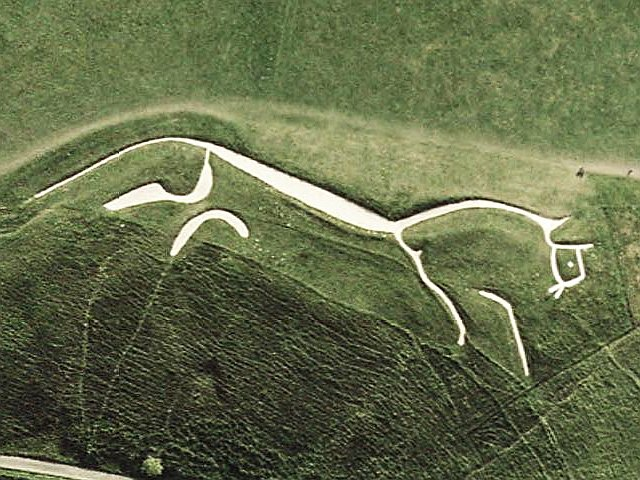
Most ancient monuments survive because they are made of something durable. Stone lasts. Metal lasts. Fired clay lasts. Their survival requires nothing from anybody.
There is a category of monument that works entirely differently, and southern England has the best examples of it.
A chalk hill figure is made by removing turf and topsoil from a hillside to expose the white chalk beneath. That is the whole technique. The figure is not built or carved in any lasting sense — it is a shape where the grass has been taken away.
Which means it starts disappearing immediately. Grass grows back, soil creeps downhill, and vegetation closes over the exposed chalk within a decade or two.
So every chalk figure that still exists is a record of continuous human attention. Here is what that means.
What They Actually Are
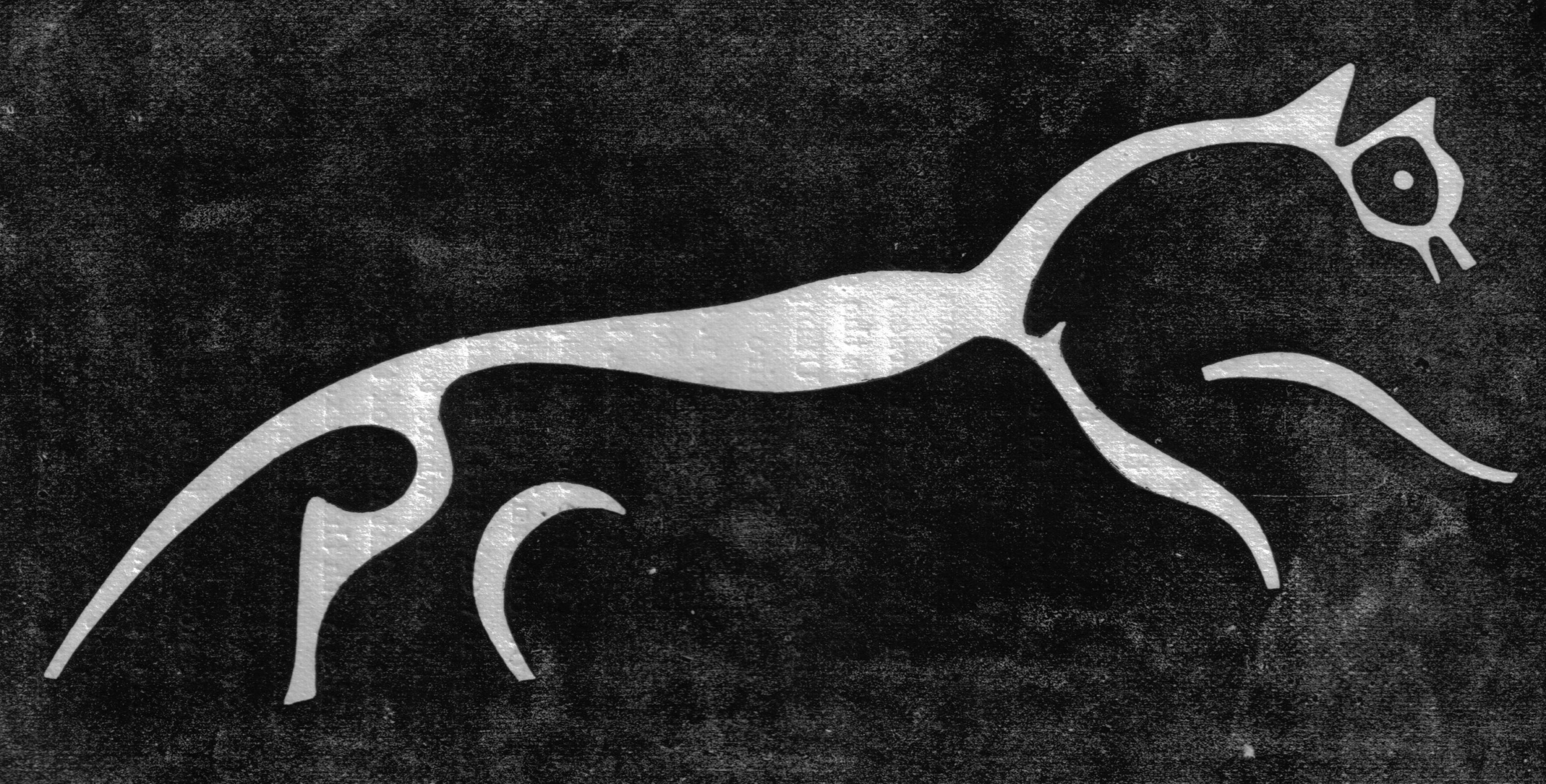
There are at least fifty landscape figures in England, the great majority in the chalk downland of the south.
The subjects are mostly horses — Wiltshire alone has recorded around fourteen — along with a small number of human figures, abstract designs and, in the modern era, some regimental badges and commercial marks.
The construction is straightforward in principle and substantial in practice. Turf is stripped, topsoil removed, and the chalk exposed. Excavation at Uffington established that the figure is not merely scratched into the surface: it is cut into the hill to a depth of up to a metre and packed with chalk, which is substantially more than a shallow outline and which is part of why it has persisted.
The visual effect depends on contrast — brilliant white against short green downland — and on scale, since these were made to be seen from a distance rather than from the hill itself.
Like our content? Follow us for more.
Dating Something Made of Absence
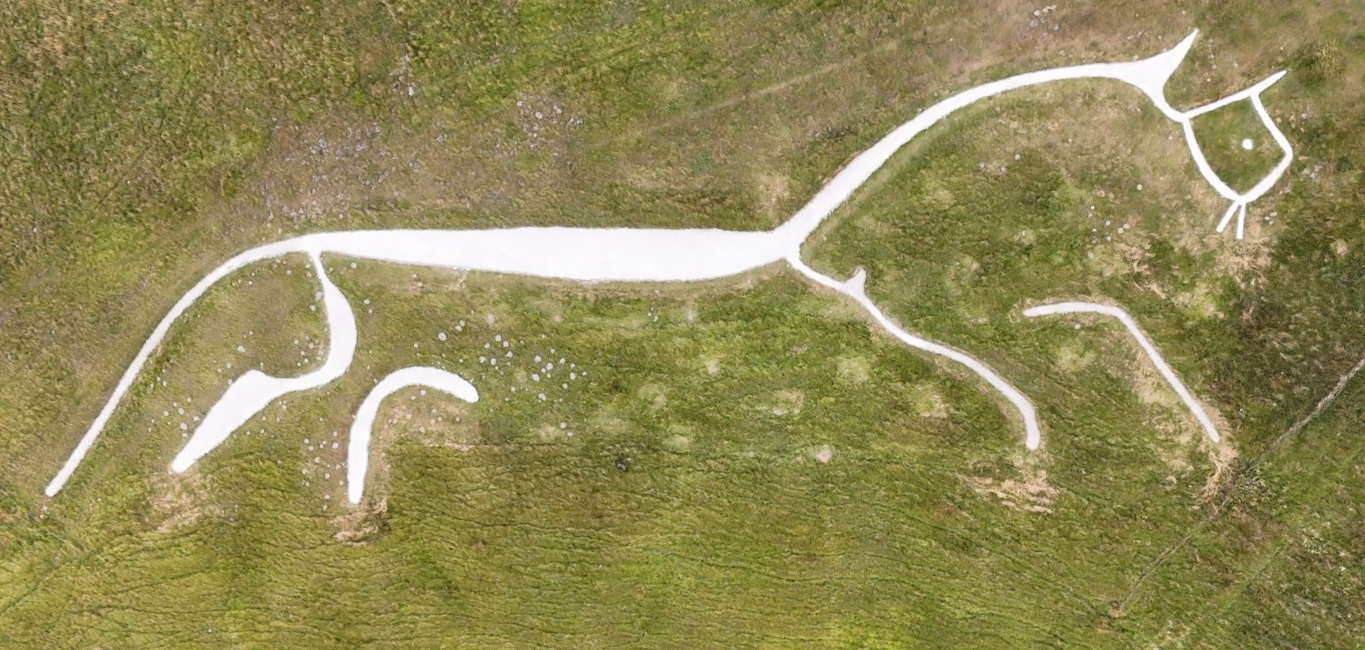
Establishing the age of a hole in the ground is not obvious, and for a long time it could not be done.
The breakthrough at Uffington came from a technique called optically stimulated luminescence, which determines how long buried mineral grains have been shielded from sunlight. Samples from the lowest levels of the figure produced a date range in the late Bronze Age or early Iron Age, in the region of 1380 to 550 BC.
That made it substantially older than previously assumed, and it is generally described as the oldest hill figure in Britain, with some sources extending that to Europe.
The dating also produced a correction that is worth noting, because it cuts the other way. A great many figures long assumed to be ancient turn out, under modern examination, to be relatively recent in their current form. Uffington appears to retain a truly prehistoric shape; a number of its neighbours do not, having been created or substantially recut in the eighteenth and nineteenth centuries.
The Cerne Abbas Giant, frequently assumed to be prehistoric, has been dated to around the tenth century. The Long Man of Wilmington is generally placed in the early modern period.
So the honest summary is that the tradition is very old, one figure is demonstrably ancient, and much of what looks timeless is not.
Why They Need Scouring
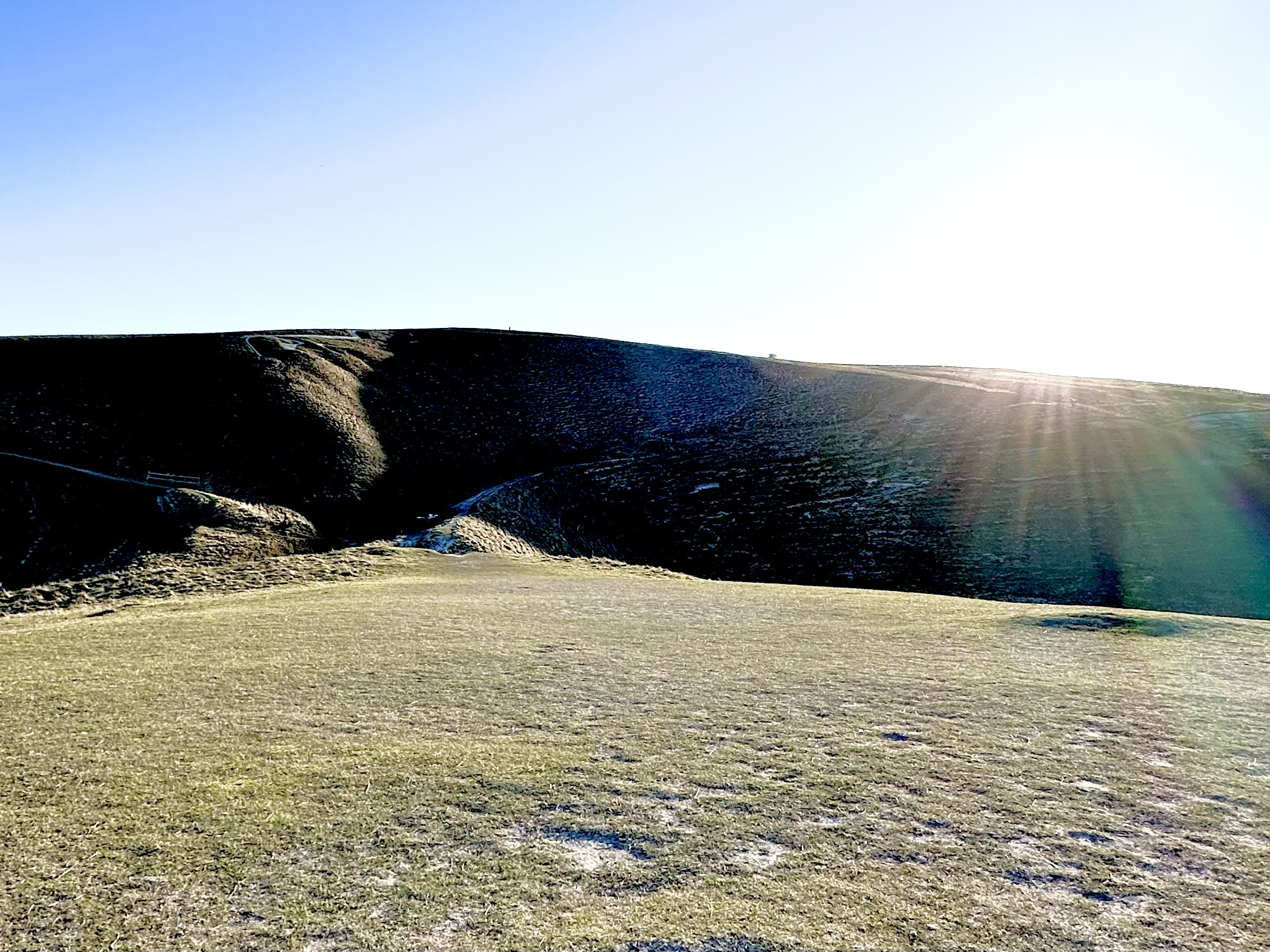
The maintenance is the heart of the story, and it has a name.
Scouring is the process of clearing encroaching vegetation and re-exposing or renewing the chalk. At Uffington it involves people kneeling along the figure with hammers and buckets of chalk, breaking it into a paste and working it into the surface — one participant described it as the world’s largest exercise in colouring between the lines.
Without it, the figure would not last more than about twenty years before being entirely overgrown and eroded.
The historical record shows this has been going on for a very long time. A medieval Welsh text refers to a mountain near Abingdon bearing the figure of a white stallion on which nothing grows. An eighteenth-century Oxford archivist recorded that the ceremony of scouring the horse had been solemnised since time immemorial by large numbers of people from the surrounding villages.
That is the pattern: the work was not a chore performed by an official body but a periodic communal event, followed by a festival.
The figures that disappeared are the ones whose associated traditions lapsed. Several are documented as lost — a horse in Warwickshire, figures on the Devon coast, an earlier white horse in Wiltshire — and in each case the mechanism was simply that people stopped coming.
The Problem Nobody Expected
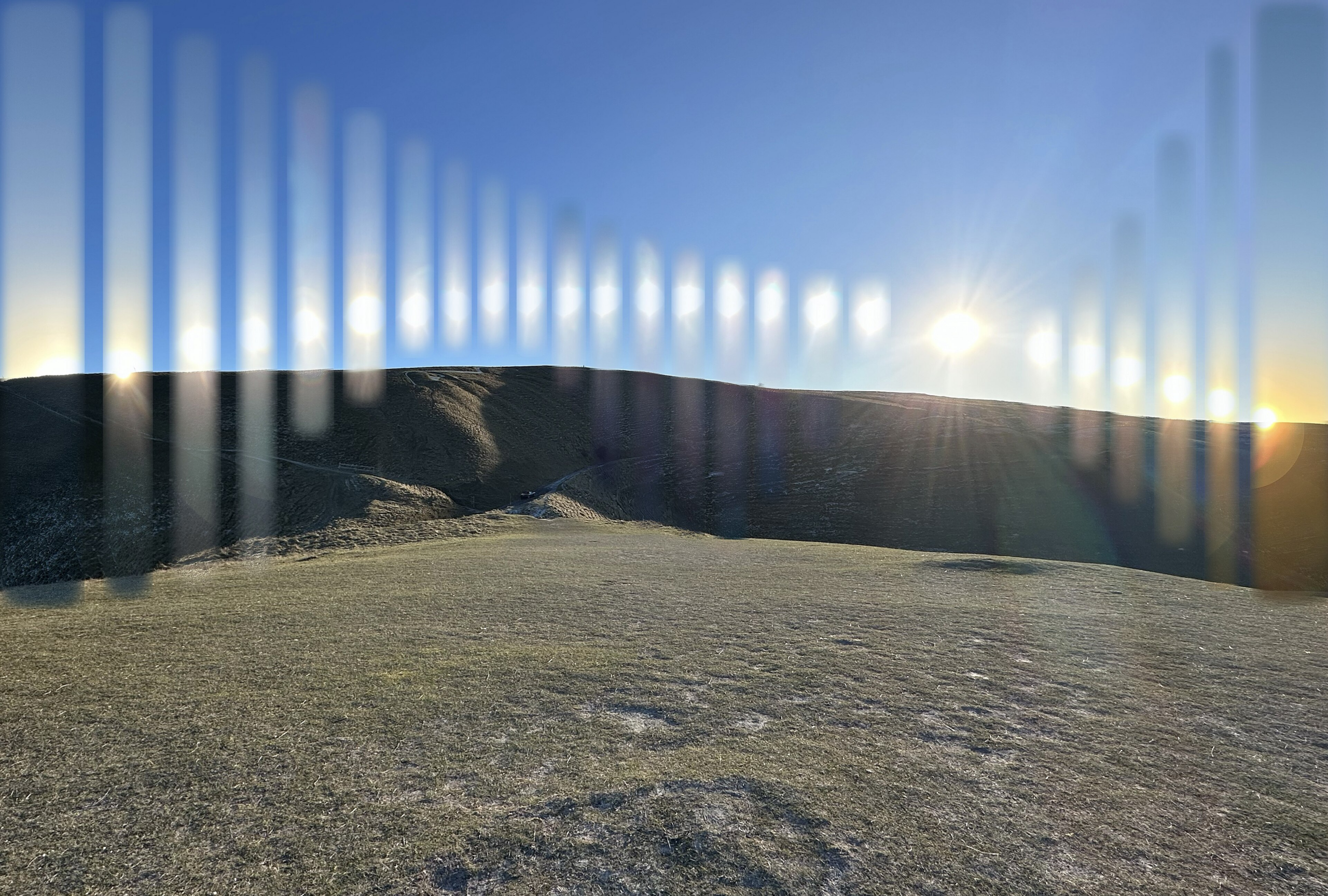
Modern conservation has revealed that even sustained maintenance has a slow structural drift.
A survey found that the white chalk lines of the Uffington horse had shrunk by something in the order of forty percent over about four decades. Trenches confirmed the mechanism: soil creeping downhill was progressively narrowing the figure from the edges inward.
The neck and head had suffered most, reportedly reduced to less than half their original width, which is enough to change the shape of the animal rather than merely thin it.
A restoration project addressed this, and the figure has been returned closer to its original proportions. But the finding is instructive: the figure was being maintained throughout that period, and it was still shrinking, because scouring restores whiteness rather than width.
Which means the survival of a chalk figure requires not only continuous effort but continuous effort of the right kind — and establishing what the right kind is took modern survey techniques.
Nobody Knows Why They Were Made
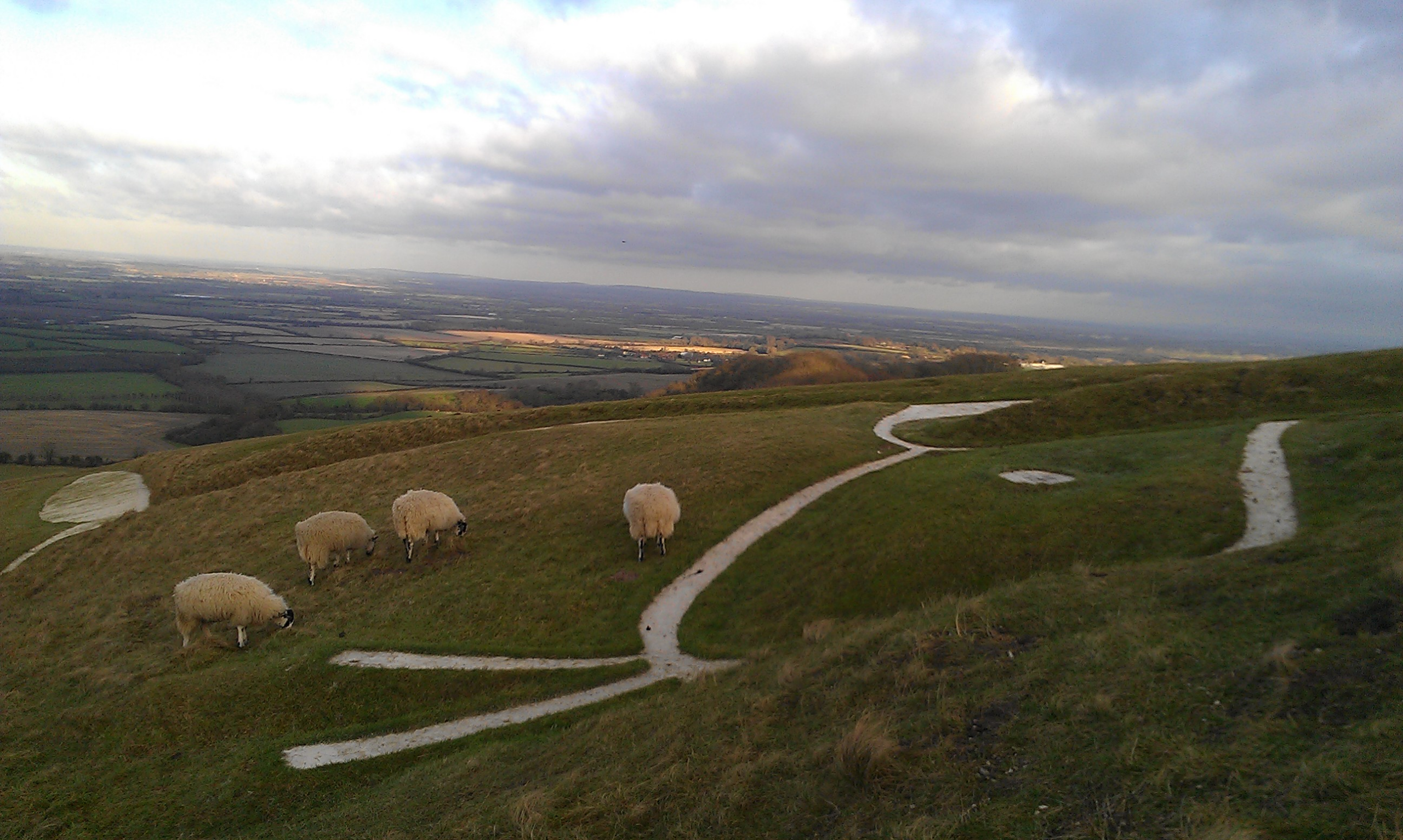
The purposes are truly unresolved, and it is worth resisting confident explanations.
Proposals for Uffington include a territorial marker, a tribal or political emblem, a religious symbol and a representation of something other than a horse — a dragon has been suggested, given the proximity of a hill carrying that name in local legend.
There is a supporting argument for the political reading: the figure dominates the valley below, which is what a statement of ownership would do, and coins of the Iron Age carry comparable stylised horse imagery.
For the Cerne Abbas Giant, proposals have included a muster point for West Saxon forces and a piece of much later political satire.
None of these is established. The figures predate any written explanation, and the folklore attached to them accumulated long afterwards.
There is one wartime footnote that is well documented and rather good: the figures were deliberately covered over during the Second World War, because they were unmistakable from the air and would have served as navigational landmarks.
The Ones Made Recently
A category worth separating out, because it changes how the older figures should be read.
A substantial number of hill figures are demonstrably modern. Several white horses were cut in the eighteenth and nineteenth centuries, some to commemorate a coronation or a local event, and at least one is attributed to a named parish clerk with a documented date.
The twentieth century added regimental badges, cut by soldiers stationed on chalk downland, and there are commercial and commemorative figures of more recent origin still.
So the tradition is not a single ancient practice that faded. It is a continuous one, in which people have been cutting shapes into chalk hillsides for at least three thousand years and have never entirely stopped.
That reframes the older figures usefully. Uffington is not the last survivor of a lost custom; it is the oldest example of something people were still doing in living memory.
It also explains the dating problem. When a figure has been recut, reshaped and maintained for centuries, the shape you see may not be the shape originally cut, which is precisely what modern investigation has found at several sites — ancient in origin, modern in outline.
What They Are Really a Monument To
There is a way of looking at these figures that makes them more remarkable rather than less.
A stone circle is a monument to the people who built it. A chalk figure is a monument to everyone who has maintained it since, because the original act of cutting would have counted for nothing without the hundred generations that followed.
Nobody organised that. There was no institution running continuously from the Bronze Age, no endowment, no legal protection until very recently. What there was, apparently, was a recurring local conviction that the horse ought to be kept — passed down through the collapse of every political arrangement that has governed that hillside.
The people who cut it are unknown, their language is unknown, their reasons are unknown, and their empire, kingdom or tribal grouping has been replaced many times over.
The horse is still there because somebody keeps turning up with a bucket of chalk.
Like our content? Follow us for more.
