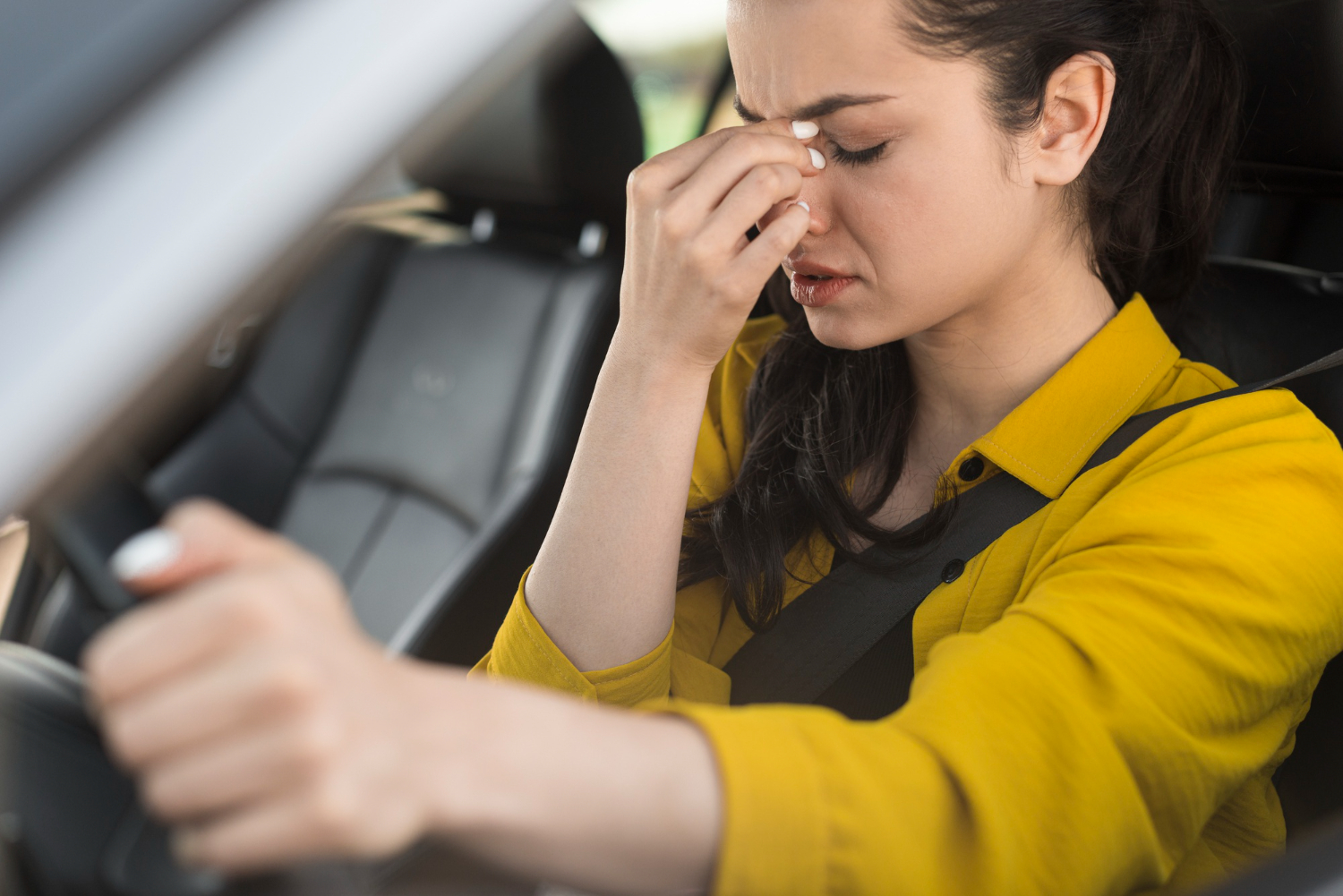
Almost everybody has experienced this, and almost nobody has considered how strange it is.
Sitting still in a vehicle, entirely uninjured, having eaten nothing unusual, a person becomes progressively unwell — pale, sweating, nauseated — for no reason that is visible from outside. Stop the vehicle and stand on solid ground and it subsides.
Nothing has gone wrong with the body. No toxin has been ingested, no infection is present, and nothing is damaged. And yet a specific and unpleasant physiological response has been triggered.
The mechanism producing it is well understood. The reason that particular response was selected is not, and the leading explanation is stranger than the phenomenon. Here is where the science sits.
Two Systems That Normally Agree
The body determines its own motion using several independent inputs, and in ordinary life they corroborate one another.
The vestibular system, in the inner ear, is the primary motion sensor. It contains fluid-filled canals that detect rotation of the head, and structures containing dense crystals that detect linear acceleration and the direction of gravity. When you turn or accelerate, fluid and crystals lag behind, and the resulting deflection is reported to the brain.
Vision supplies a second and completely independent estimate. If the visual scene streams past, you are moving.
Proprioception supplies a third — the sense of where the limbs are, what the muscles are doing, and how weight is distributed.
Under normal circumstances all three agree, because walking involves visible motion, vestibular acceleration and muscular effort simultaneously. The brain combines them into a single confident estimate.
Like our content? Follow us for more.
What a Vehicle Does to That
A vehicle breaks the agreement in a specific and unusual way.
Sitting in a moving car, the inner ear reports acceleration, braking, cornering and every irregularity in the road surface. That input is entirely accurate.
Meanwhile the eyes, if directed at a book or a phone, report a stationary scene. The page is not moving relative to the reader, so vision insists nothing is happening. That input is also entirely accurate, within its own frame of reference.
Proprioception mostly agrees with vision, since the muscles are doing very little.
So one system says moving and two say still, and none of them is malfunctioning. The conflict is a real consequence of being carried by something rather than moving yourself, which is a situation that did not exist for most of the history of the species.
Below deck on a ship the same thing happens more severely: substantial vestibular input from the swell, and a visual scene consisting of a cabin that appears completely stable.
The reverse configuration produces the same result. Some people experience it in immersive video, where the eyes report vigorous motion while the inner ear correctly reports sitting on a sofa, which is why simulator and screen-induced sickness is a recognised phenomenon.
Why the Response Is Nausea
This is the truly interesting question, and it has no settled answer.
A sensory conflict could plausibly produce dizziness, disorientation, a headache or simply an inaccurate sense of position. Nausea, sweating and pallor are a specific and quite elaborate physiological package, and it is not obvious why a disagreement about motion should trigger it.
The most widely discussed explanation is the toxin hypothesis, and the reasoning runs as follows.
Certain neurotoxins disrupt the nervous system in ways that produce exactly this kind of sensory disagreement — vision and balance ceasing to corroborate one another. From an evolutionary standpoint, an animal experiencing that would most plausibly have been poisoned.
The appropriate response to suspected poisoning is to empty the stomach, and the appropriate accompanying response is to feel thoroughly unwell so that whatever was eaten is avoided in future.
On this account, motion sickness is not a malfunction. It is a correctly functioning defence being triggered by a stimulus it never evolved to encounter, because being transported passively in a vehicle produces the same sensory signature as a poisoning without any of the poison.
It is worth being clear that this is a hypothesis rather than a demonstrated fact. It is plausible, widely cited and difficult to test directly, and alternative accounts have been proposed involving postural instability. The honest position is that the mechanism is understood and the evolutionary rationale is inferred.
There is a further observation that supports the conflict account rather than any simpler explanation. People who are congenitally without vestibular function do not experience motion sickness at all, in circumstances that reliably affect everyone else.
If the vestibular system cannot report anything, there is nothing for vision to disagree with, and the conflict cannot arise. That is difficult to explain on any account that does not place the disagreement at the centre of the mechanism.
Why It Varies So Much
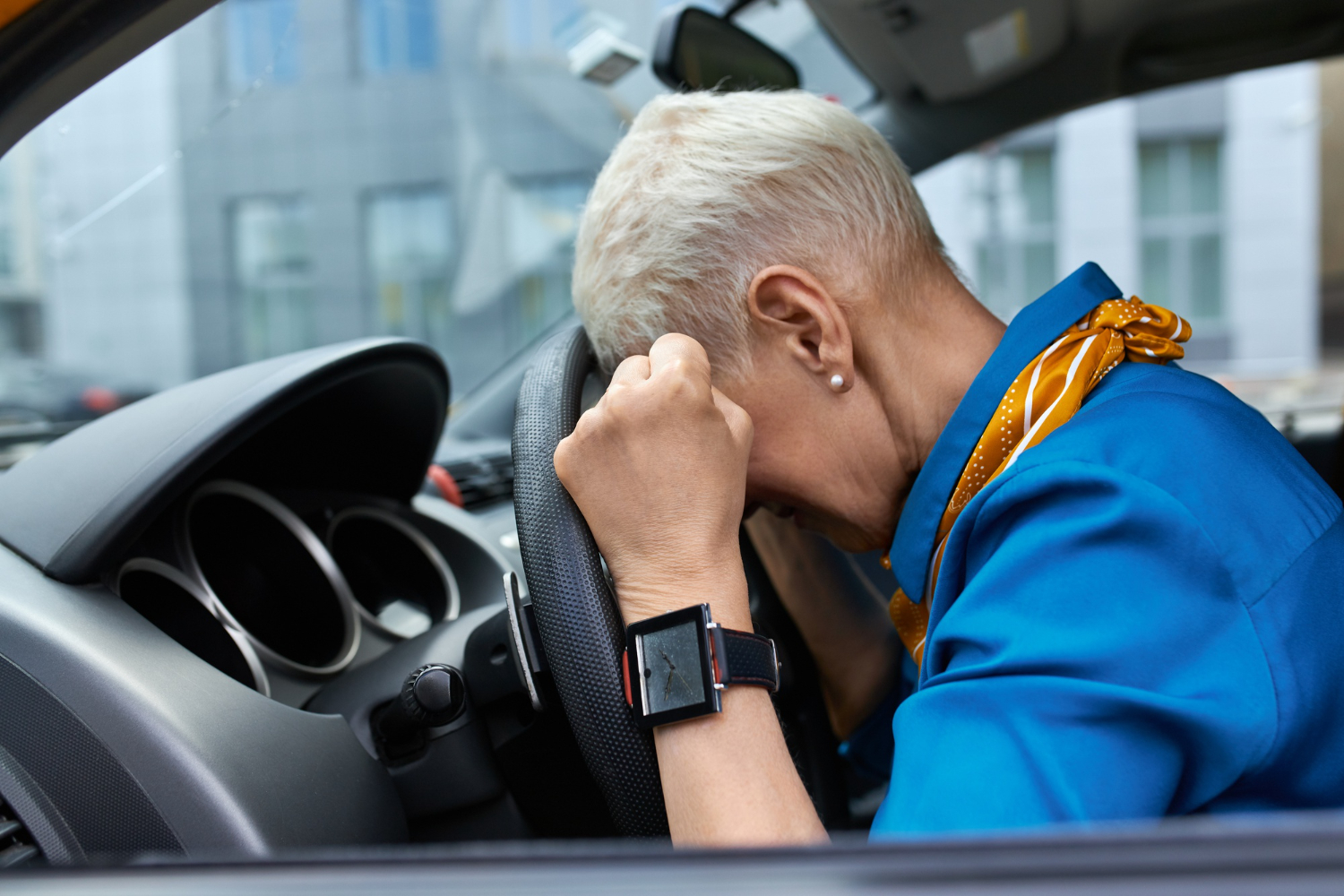
Susceptibility differs enormously between individuals, and several patterns are reasonably well established.
Children are generally more susceptible than adults, with susceptibility often peaking in later childhood and declining afterwards. Very young infants appear relatively unaffected.
There is a substantial individual component, with some people essentially never affected and others affected by mild motion.
Adaptation occurs with sustained exposure. People who spend extended periods at sea generally cease to be affected, as the brain recalibrates its expectations — and notably, some experience a reverse effect on returning to land, where stable ground briefly feels wrong.
Drivers are affected far less than passengers, which fits the model neatly. A driver anticipates every acceleration and corner because they are producing them, so the incoming vestibular signal matches a prediction, and the conflict is substantially reduced.
That predictive element appears throughout. Anticipated motion is tolerated far better than unanticipated motion, which is why looking at the road ahead helps and looking down does not.
What This Explains About Advice

The standard suggestions make sense once the mechanism is clear, and this is offered as explanation rather than as guidance.
Looking at the horizon or the road ahead restores agreement between vision and the inner ear, since the eyes now report the motion the ears are detecting.
Sitting where movement is least — over the wheels rather than at the back, amidships rather than at either end of a vessel — reduces the magnitude of the vestibular input.
Fresh air and a forward-facing seat are frequently recommended, and the forward-facing element again concerns matching visual motion to actual motion.
Anyone who experiences this severely or persistently should discuss it with a doctor or pharmacist rather than with an article, since there are medical approaches and they are not something to select from general reading.
The Version That Happens Standing Still
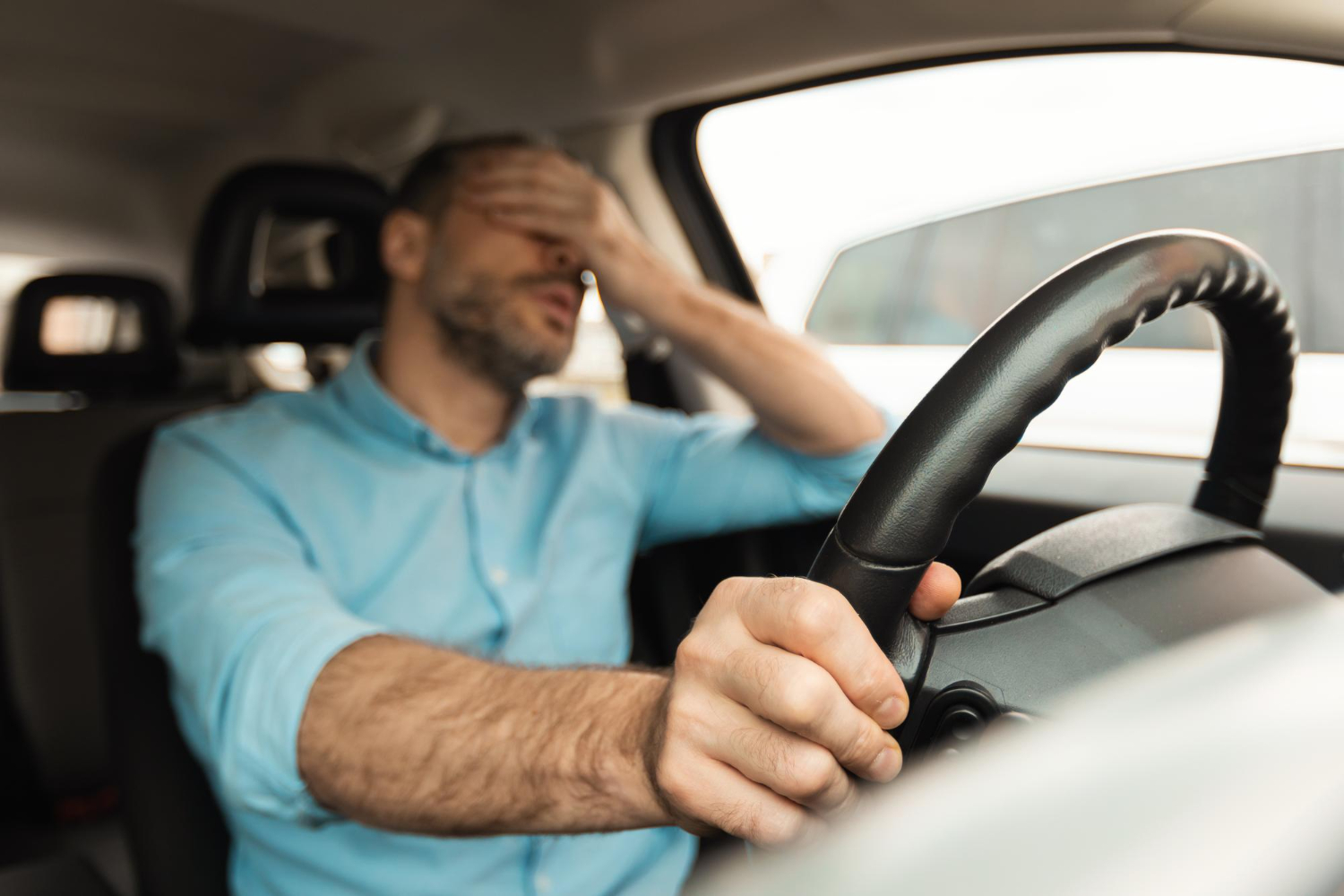
There is a modern variant that makes the mechanism unusually clear, because the conflict runs the other way round.
Immersive screens, virtual reality and some games present a visual scene that moves convincingly while the viewer sits entirely stationary. Vision reports vigorous motion; the inner ear correctly reports none.
That is the exact inverse of the car-and-book situation, and it produces the same symptoms — which is strong evidence that the conflict itself is what matters rather than any particular direction of mismatch.
The effect is a substantial and well-recognised design problem, and the mitigations developed for it map neatly onto the theory. Reducing the mismatch helps, whether by limiting artificial movement, providing a fixed visual reference that stays still relative to the viewer, or keeping the frame rate high enough that the visual motion is smooth rather than stuttering.
A related and older version affects some people in cinemas with large screens and sustained camera movement, where the visual field is wide enough to be read as self-motion.
There is also the reverse-adaptation case mentioned earlier, in which someone accustomed to a moving vessel finds solid ground briefly unstable — the brain having recalibrated to expect motion and now finding its predictions wrong in the other direction.
All of which points the same way: the system is comparing inputs and reacting to disagreement, regardless of which input is the odd one out.
A Defence With Nothing to Defend Against
What makes motion sickness worth understanding is what it reveals about how the body works.
The system is not broken. The inner ear is reporting accurately. The eyes are reporting accurately. The brain is combining them exactly as designed, detecting an inconsistency, and executing a response that would have been appropriate in the circumstances that shaped it.
The only thing that has changed is the world. Nothing in evolutionary history moved a body at speed while keeping its visual field static, and vehicles do that routinely.
So a perfectly good protective mechanism, aimed at a real danger, fires at a situation it was never designed to assess — and produces a response calibrated for a threat that is not present.
Which is a reasonable description of a great many things the body does, and an unusually clear example of one.
Like our content? Follow us for more.