

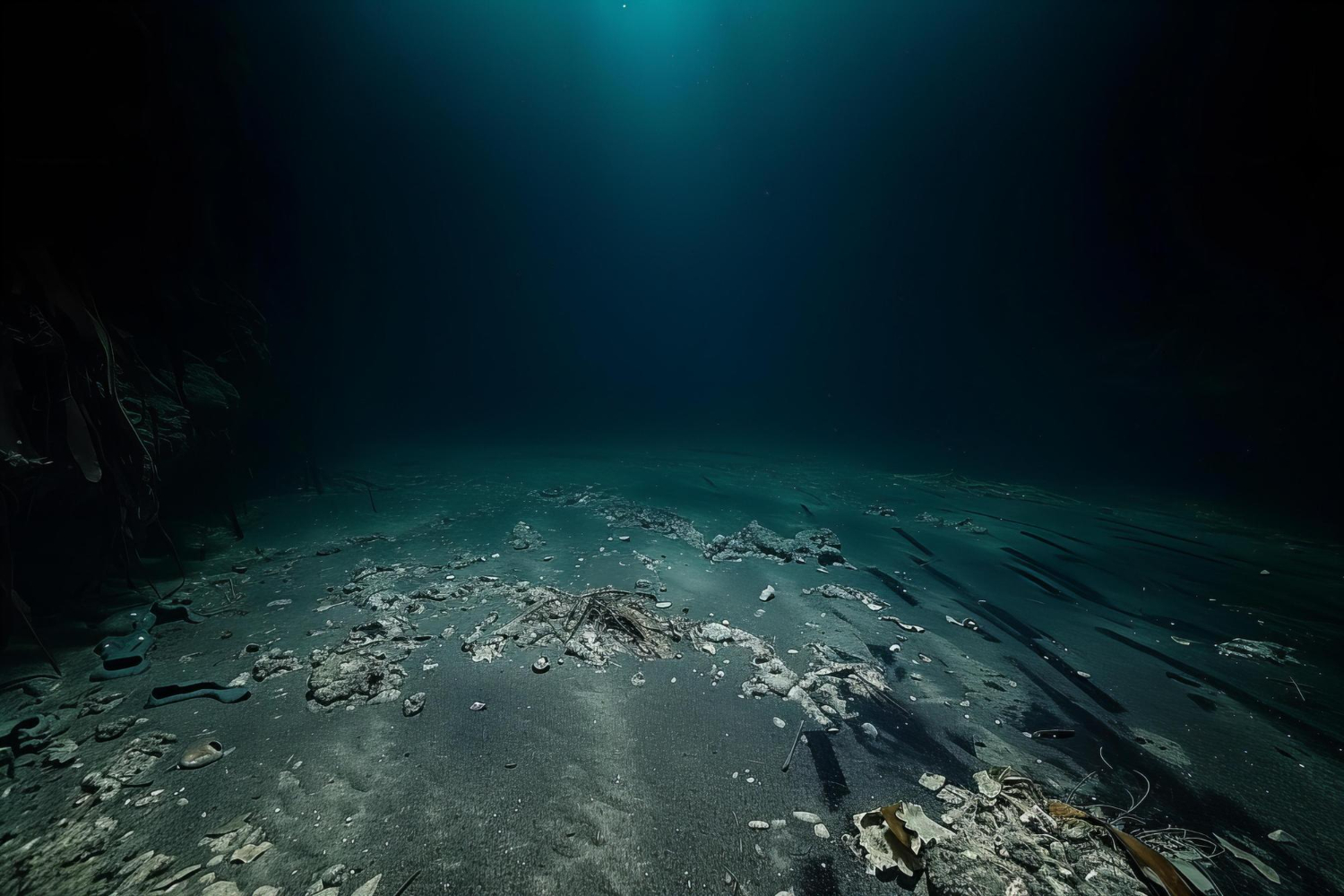
The abyssal plain is frequently described as a desert, and the comparison is a good one for a specific reason.
Deserts are not lifeless. They are places where the limiting resource is so scarce that everything is organised around obtaining it, and the population is thin, patchy and concentrated wherever the resource happens to appear.
On the deep seafloor the limiting resource is food. No light reaches it, so nothing grows there, and everything living depends on material sinking from the productive layers far above. That material arrives as marine snow — a continuous fine drizzle of fragments, faeces and remains — and it is a very thin supply.
Then, occasionally, forty tonnes of carbon arrives at once.
What happens next is one of the more remarkable sequences in ecology, and it was barely understood until researchers began deliberately placing carcasses on the seabed and watching.
The Scale of the Delivery
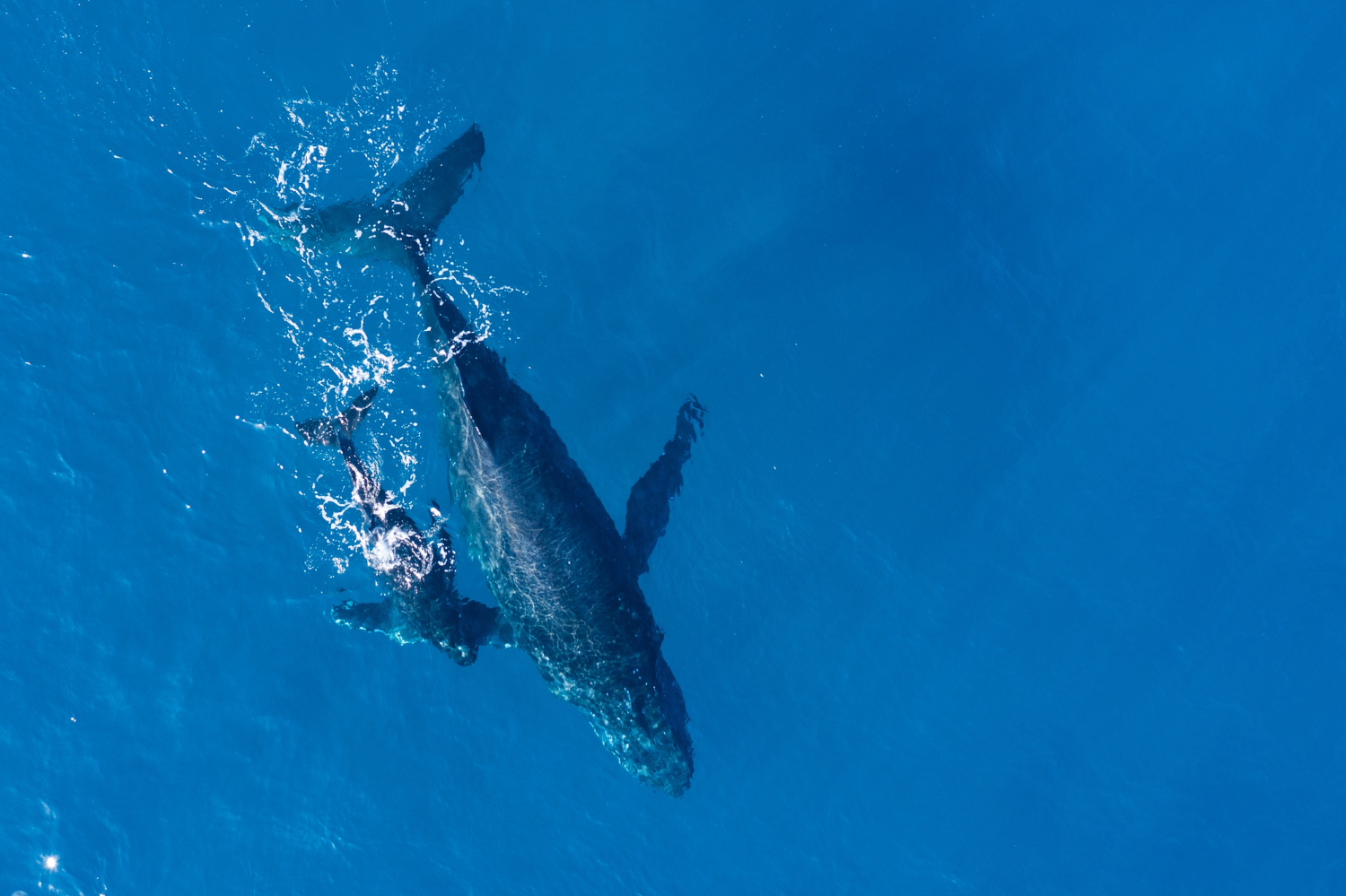
The comparison that gets repeated, and that comes from the research literature, is worth stating carefully.
A large whale carcass reaching the seafloor delivers to that patch of ground something in the region of the carbon that would otherwise arrive there over two thousand years of ordinary sinking material.
That is not a small enrichment. It is a step change in the local conditions, and it produces exactly what a step change in resource availability produces anywhere: a rapid, structured, competitive succession of organisms exploiting it.
Sediment around one studied carcass showed organic carbon enrichment above fifteen percent and elevated pore-water sulphide for six to seven years afterwards, which gives some sense of how far the effect extends beyond the bones themselves.
It is worth pausing on why the deep seafloor is quite so food-poor, because the contrast is what makes the event significant.
Only a small fraction of the organic material produced in sunlit surface waters ever reaches the bottom. Most is consumed, recycled or decomposed on the way down, and the proportion arriving at depth falls with distance — so the deeper the water, the thinner the supply.
At abyssal depths, what lands is a slow, fine, continuous sediment of fragments. Organisms living there are adapted to extremely low energy availability: they grow slowly, reproduce slowly, and are sparsely distributed because there is not enough arriving to support anything denser.
Into that arrives, occasionally, an intact carcass weighing tens of tonnes.
Like our content? Follow us for more.
Stage One: Everything That Can Move
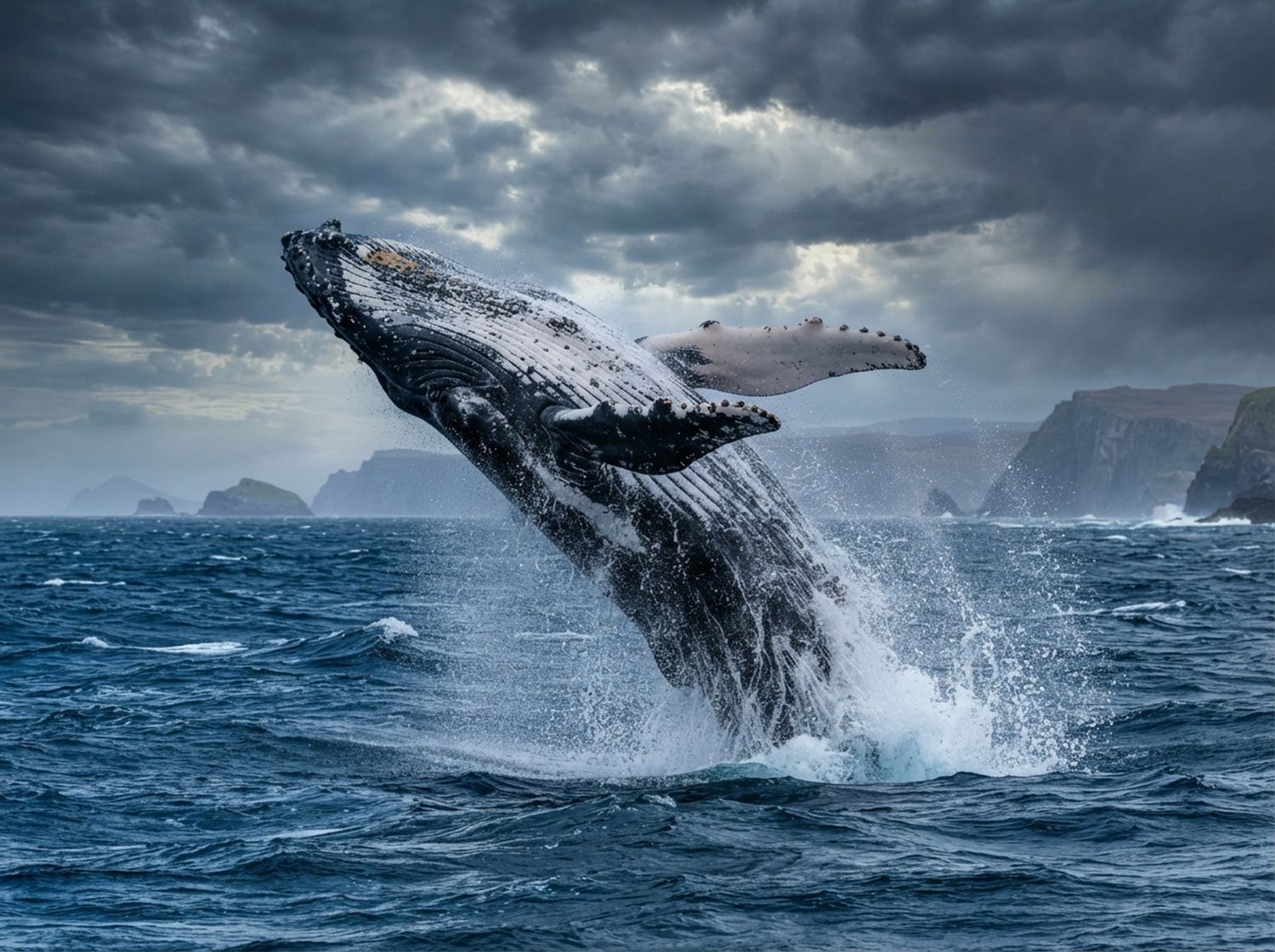
The first arrivals come from a considerable distance, drawn by chemical traces spreading through the water.
They are mobile scavengers: hagfish in very large numbers, sleeper sharks, rattails, crustaceans. They remove soft tissue at a rate estimated in the region of forty to sixty kilograms a day.
Reported durations for this stage vary between sources and with carcass size, generally falling somewhere between a few months and around a year and a half.
What is striking is the density. Studies describe hundreds of hagfish on a single carcass, arriving within weeks at a location where the standing population of anything is normally extremely sparse.
They are not resident. They arrive, feed, and leave in search of the next opportunity, which is why the stage ends — not through competition but through the resource being consumed.
Stage Two: The Sediment Around It
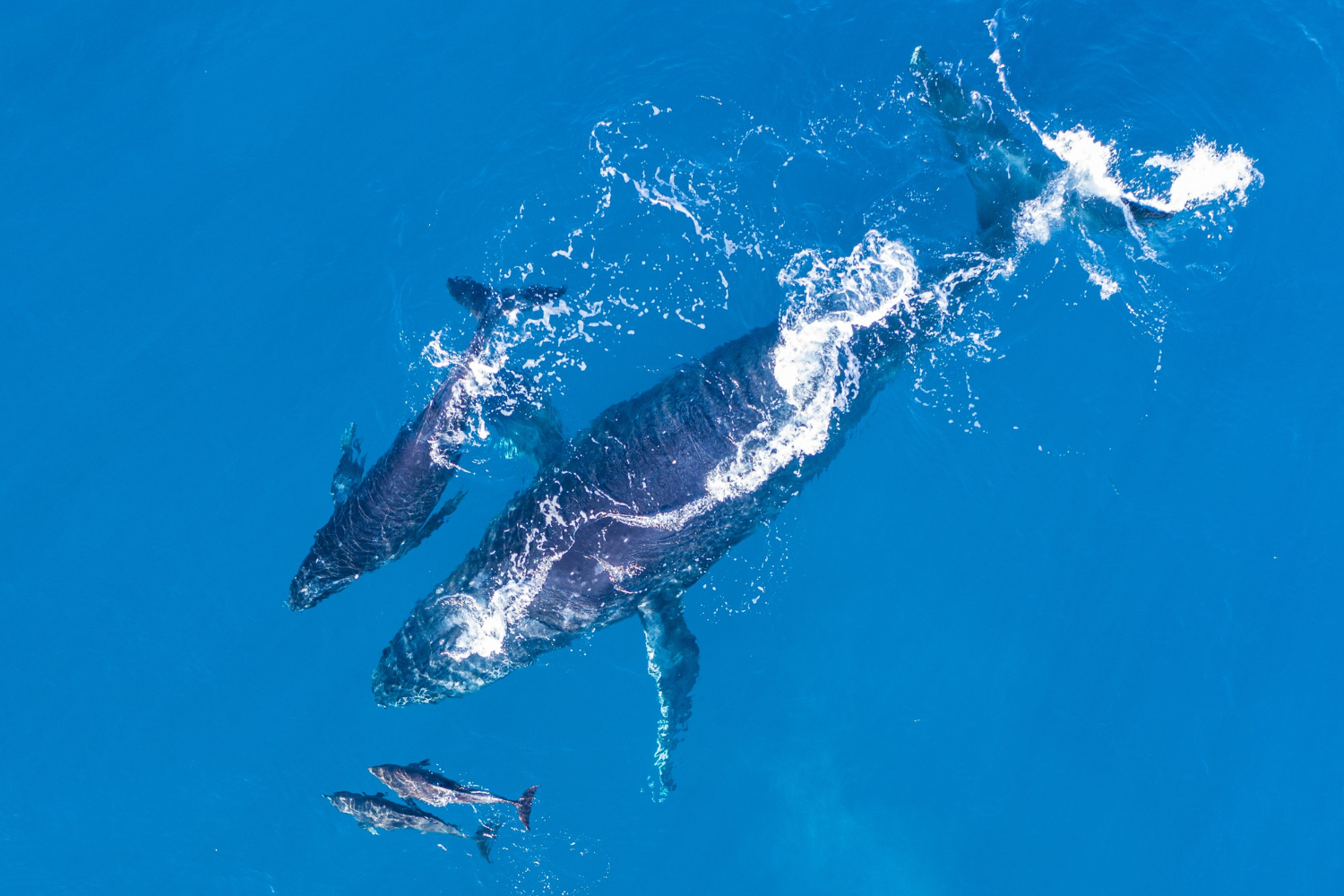
Once the accessible soft tissue has gone, a different community moves in, and it works on what the first stage left behind.
Scavengers are messy. A large carcass being stripped scatters fragments across the surrounding seabed, and the sediment nearby becomes heavily enriched with organic material.
Smaller organisms colonise that enriched sediment in extraordinary densities — polychaete worms, crustaceans and molluscs, at reported concentrations of tens of thousands of individuals per square metre. That is a population density more characteristic of a nutrient-loaded shallow-water site than of the deep sea.
This stage generally runs from around one to four years, and it ends when the available oxygen in the enriched sediment is used up, which is the transition to the strangest part of the sequence.
Bones are also being colonised at this point, including by organisms that consume the bone itself.
Stage Three: The Ecosystem That Runs on Chemistry
The final stage is the longest by a wide margin and operates on an entirely different energy source.
Whale bone is unusually rich in lipids, and once oxygen is exhausted, anaerobic bacteria break those lipids down. That process produces hydrogen sulphide, which seeps out of the skeleton continuously.
Hydrogen sulphide is toxic to most life and is food for some. Chemoautotrophic bacteria oxidise it and use the energy to build organic matter, which means they occupy the position that photosynthesis occupies everywhere else — the base of a food web, powered by chemistry rather than by light.
On top of that base develops a species-rich community of clams, mussels, snails and worms, many of them hosting symbiotic bacteria internally.
Reported durations for this stage range from a couple of decades to fifty years or more, with total whale-fall lifespans of fifty to a hundred years commonly cited. The figures vary substantially between sources and with carcass size, depth and conditions.
There is a further stage after the lipids are exhausted, in which the bare mineral skeleton acts as hard structure on a soft seabed — a reef for suspension feeders in a landscape that otherwise offers nothing to attach to.
Species That Live Nowhere Else
The most consequential finding is that this is not simply a feast for existing deep-sea animals.
A seven-year study of one carcass identified around a hundred macrofaunal species in the surrounding sediments. Of those, ten abundant species were found only at whale falls. Six were shared with cold seeps, five with hydrothermal vents, and twelve with kelp and wood falls.
That distribution is the interesting result. Whale falls support truly distinct assemblages, and they also share species with other chemically powered deep-sea habitats — which raises the possibility that they function as stepping stones, allowing organisms adapted to sulphide-rich conditions to disperse between vents and seeps across otherwise uninhabitable seafloor.
Estimates of nearest-neighbour distances between whale falls in one region fall in the range of five to sixteen kilometres depending on stage, which is within documented larval dispersal distances for comparable habitats. So the stepping-stone hypothesis is at least geometrically plausible.
The bone-eating worms deserve a mention of their own. They have no mouth or gut, bore into bone using symbiotic bacteria to release the lipids, and several species occupy different niches on the same skeleton.
How Anybody Found Out
The discovery history is worth knowing, because this is not something that could be observed by accident.
The seafloor at these depths is dark, enormous and almost impossible to search. A carcass on the abyssal plain is a single point in a landscape the size of a continent, and nobody was going to find one by looking.
The early evidence arrived indirectly. A new mussel species was reported from a piece of whale material in the nineteenth century, and deep-sea trawling operations a century later occasionally brought up material suggesting something unusual had been on the bottom.
Systematic study required submersibles. A carcass located on the seabed in the late 1980s, examined directly, revealed a community that nobody had predicted — including species new to science living on the bones.
The method that followed is a good illustration of experimental ecology at scale. Rather than waiting to find carcasses, researchers began deliberately placing them: transporting a carcass to a chosen deep-water site, sinking it at a known location and depth, and then returning repeatedly over years to document what arrived and in what order.
That is how the successional sequence was established. The seven-year study of a thirty-tonne carcass at 1,675 metres exists because somebody put it there and went back.
It is slow, expensive, logistically awkward science, and it produced an entire category of ecosystem that had been operating unobserved on every ocean floor on the planet.
What This Changes
The reason this matters beyond the spectacle is what it says about how the deep sea works.
The standard picture is of a uniformly food-limited environment with a thin, evenly distributed population. Whale falls indicate something different: a landscape punctuated by intense, long-lived, patchily distributed islands of resource, each supporting a community that assembles, matures and eventually disperses.
That has consequences for how deep-sea biodiversity is understood. Species adapted to these conditions require a supply of falls within dispersal range, which means the population of large whales and the ecology of the seafloor are connected in a way nobody suspected before the 1980s.
It also reframes a whale as an ecological event rather than only an animal. An individual that spends decades feeding in productive surface waters, accumulating an enormous quantity of carbon, and then delivers all of it to a single point on the abyssal plain, is performing a transfer that essentially nothing else in the ocean performs at that scale.
Whether that transfer happens at the historical rate is a question researchers raise, and the answer depends on population figures that are outside the scope of this article.
What is not in doubt is the sequence itself: arrival, scavengers, enriched sediment, sulphide chemistry, bare bone, and eventually nothing — a century of ecology on a patch of seabed that was empty before and will be empty afterwards.
Like our content? Follow us for more.
