

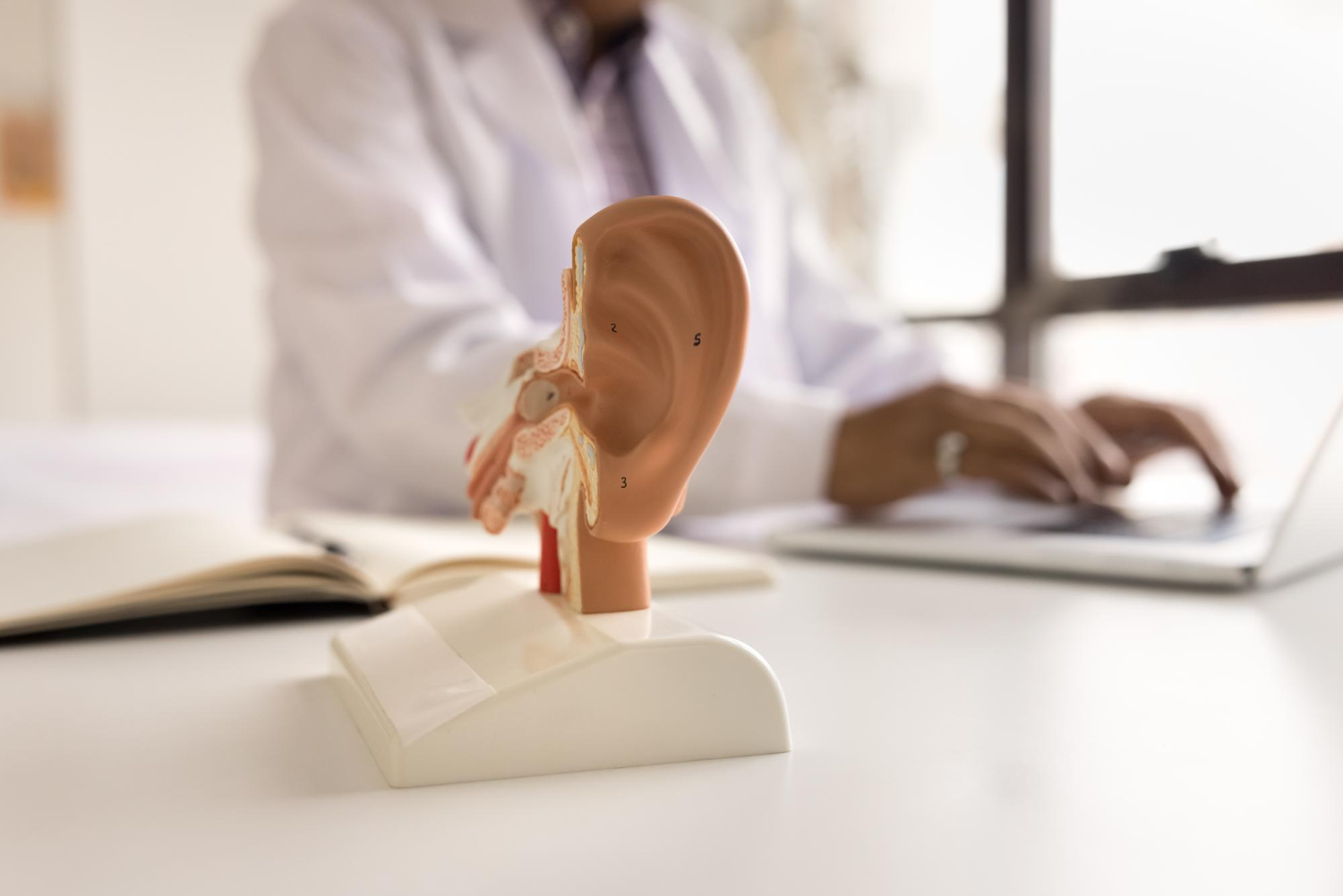
Most visible human variation is complicated. Height, skin tone, hair texture and facial structure each involve many genes contributing small effects, which is why they vary continuously rather than falling into categories.
There are a small number of exceptions where a single genetic change produces a clear either-or outcome, and one of them concerns something nobody expects to be interesting.
Earwax exists in two distinct types. One is wet, sticky and yellow-brown. The other is dry, flaky and pale grey. There is essentially no middle ground, and which you produce was decided by one position in one gene.
That gene turns out to do several other things, and the geographic distribution of the two versions traces a pattern across human populations that is truly informative. Here is the story.
What It Is and What It Does
Start with the substance, since it is more purposeful than its reputation suggests.
Cerumen, to use the proper term, is produced by specialised glands in the outer part of the ear canal, mixed with secretions from sebaceous glands and with shed skin cells.
It serves several functions at once. It coats and lubricates the canal, preventing the skin from drying and cracking. It is slightly acidic and contains antimicrobial components, which discourages some organisms. It is sticky, which traps dust, debris and small particles before they reach deeper.
And it removes itself. The skin of the ear canal grows outward, carrying the wax with it in a slow continuous conveyor, so material produced deeper migrates out over time. This is a truly unusual arrangement — a self-cleaning tube.
Which means the substance is not dirt and is not waste. It is a functional secretion doing a job, and the ear is designed around producing and then exporting it.
Like our content? Follow us for more.
The Two Types
The distinction is stark rather than gradual.
Wet cerumen is honey-coloured to dark brown, sticky and moist. Dry cerumen is grey or light brown, flaky and crumbly, and detaches easily.
The difference is not a matter of hydration or hygiene. It is a difference in what the glands secrete, and it is determined before birth.
The responsible gene codes for a transporter protein that moves substances across cell membranes in secretory glands. A single change at one position in that gene alters the protein so that it functions differently, and the result is the dry type.
The dry version behaves as recessive in the standard sense — two copies are required to produce it — and the wet version is dominant. So a person with one copy of each produces wet cerumen.
That is an unusually clean piece of inheritance for a visible human trait, and it is why the example appears in genetics teaching.
The Map It Draws
The distribution is the part that connects to something larger.
The dry variant is carried at very high frequency across East Asian populations, and at very low frequency in populations of European and African ancestry. Intermediate frequencies appear across Central Asia and among some populations in between.
That gradient is informative. A variant arising once and then rising in frequency within a population produces exactly this pattern, and mapping it contributes to the reconstruction of how populations moved and separated.
Several possibilities are discussed for why the dry form became so common where it did. One is straightforward drift — a variant becoming common by chance in a population passing through a period of small size. Another is selection, if the associated traits conferred some advantage in particular conditions.
Neither is established, and it is worth being clear that a variant being common somewhere does not mean it was advantageous there. Population history produces a great many frequency differences that carry no functional significance at all.
The Other Thing the Gene Does
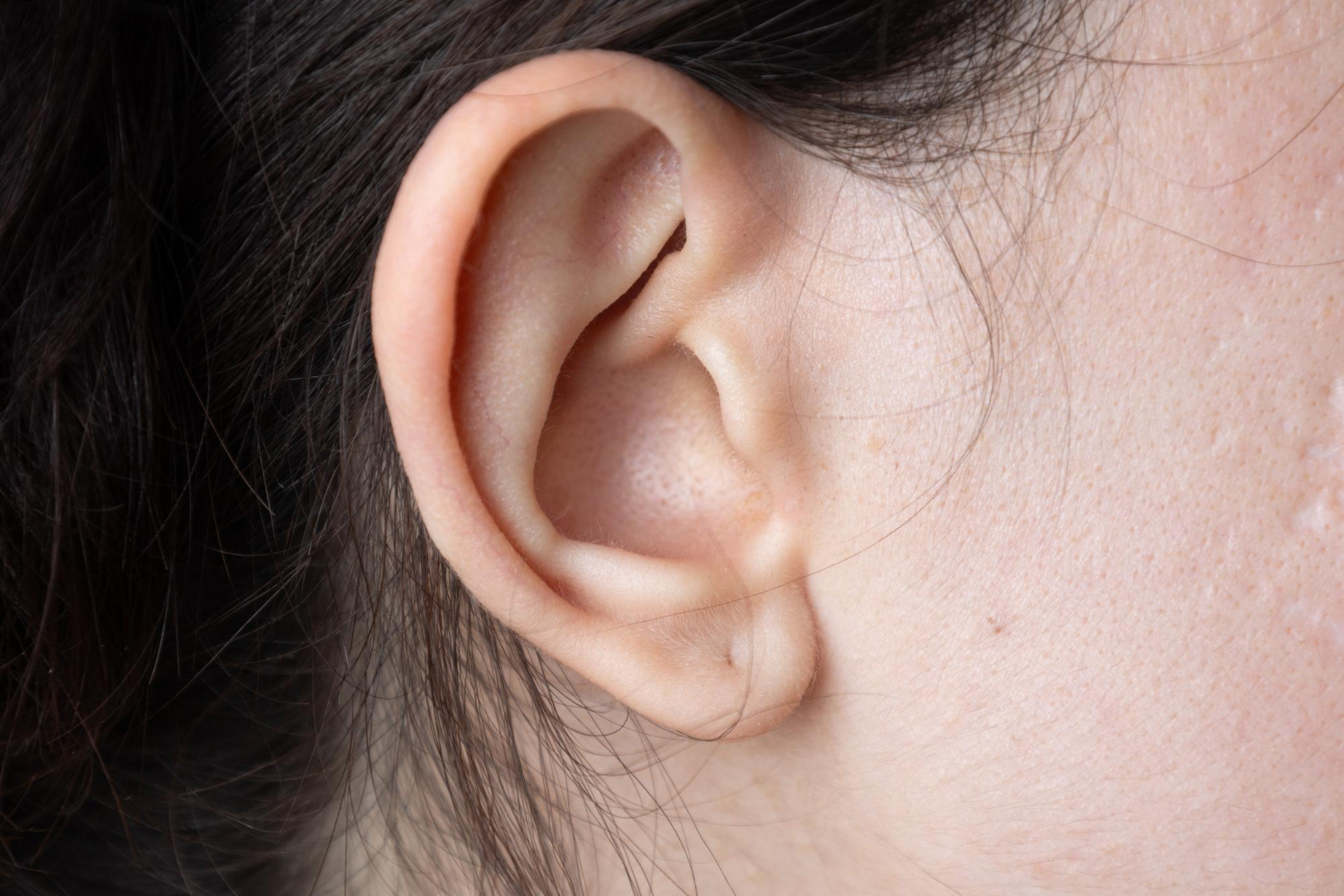
The connection that surprises people is that the same gene affects body odour.
The transporter protein operates in apocrine glands generally, not only in the ear. Those glands are also present in the underarm, where their secretions are broken down by skin bacteria to produce odour compounds.
The variant producing dry cerumen also reduces the secretion those bacteria act on, which means the same single genetic change affects both traits together. The correlation is strong and is a direct consequence of the shared mechanism rather than a coincidence.
This has a documented cultural dimension: in populations where the dry variant is near-universal, body odour is comparatively uncommon, which affects everything from consumer product markets to social expectations around the subject.
It is one of the better examples of a single molecular change producing effects in two apparently unrelated places, simply because the same protein is doing the same job in different tissues.
It is worth noting how unusual the clean either-or pattern is, because it is the reason this trait gets used as a teaching example.
Most human variation is polygenic — many genes each contributing a small amount, producing a continuous range rather than categories. Height is the standard illustration: there is no tall gene and no short gene, only a great many small contributions.
A trait determined by one position in one gene, producing two discrete outcomes with nothing in between, is the exception rather than the rule, and there are not many of them.
Which is why any claim that a complex human characteristic traces to a single gene should be treated with suspicion. The cases where that is actually true tend to look like this one: unglamorous, discrete, and concerning something nobody expected to be genetically interesting.
Why the Ear Cleans Itself
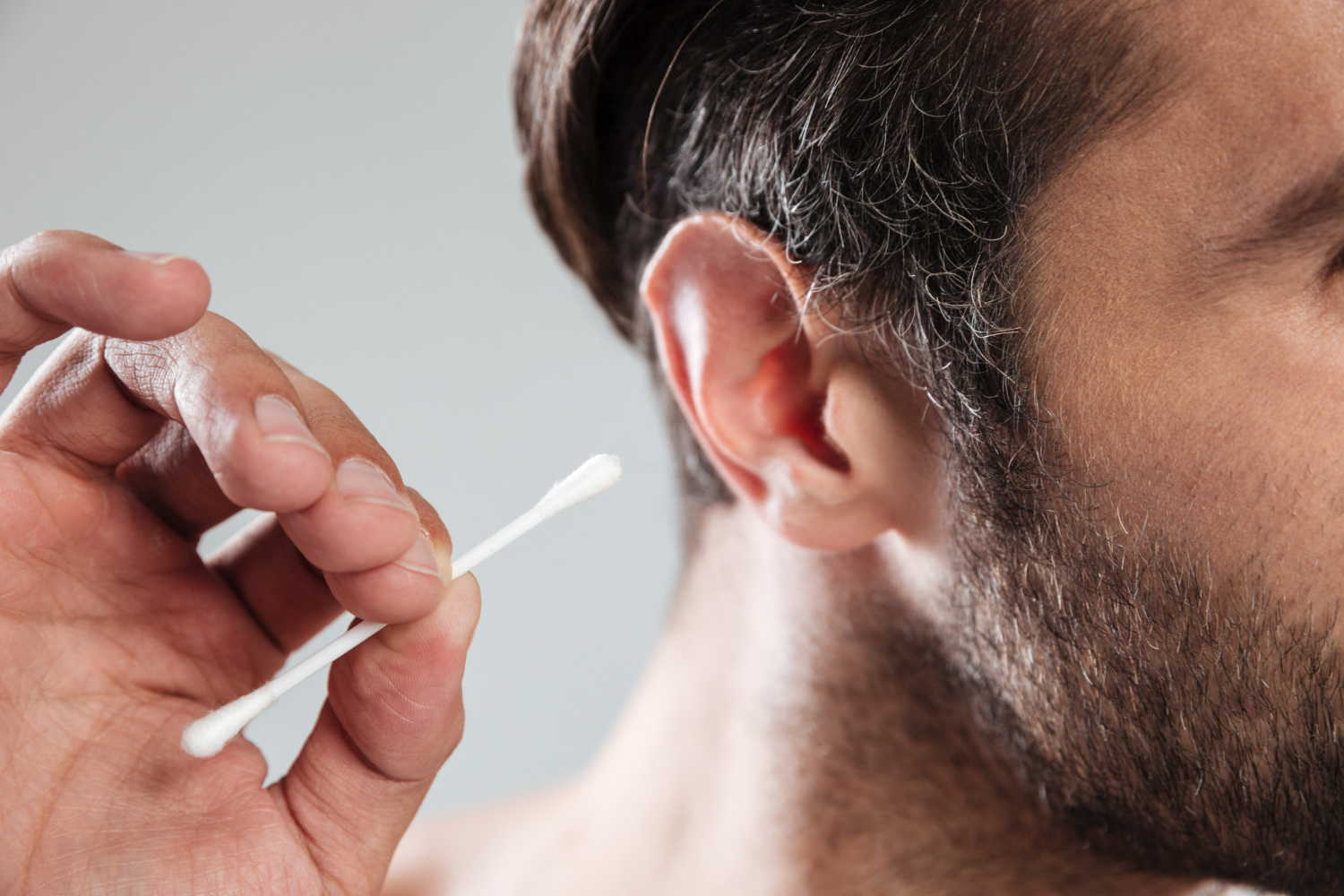
The self-cleaning mechanism deserves its own explanation because it explains why the ear is built as it is.
Skin cells in the ear canal are produced at the eardrum and migrate outward, at a rate comparable to fingernail growth. Anything sitting on that skin travels with it.
Jaw movement assists the process — talking and chewing flex the canal and help move material along.
The consequence is that a healthy ear canal exports material continuously without any intervention, and material introduced from outside interferes with that flow rather than assisting it.
That is the mechanism, and it is the reason the medical position on ear cleaning is what it is.
Why the Trait Was Ever Noticed
There is a small historical detail worth including, because it explains how an obscure secretion came to be a well-studied genetic marker.
The two cerumen types were described long before anybody could sequence a gene. The distinction is visible without any equipment, it falls cleanly into two categories rather than a spectrum, and it does not change during a person’s life.
Those properties made it useful. Before molecular methods existed, researchers studying human population variation needed traits that were easy to observe, unambiguous to classify and clearly inherited — and there are surprisingly few of them.
Earwax type qualified on every count, and it was consequently surveyed across a great many populations during the twentieth century, producing the distribution map long before the responsible gene was identified.
When the gene was found, it confirmed what the trait surveys had indicated: a single genetic switch, a clean recessive-dominant pattern, and a frequency gradient tracing population history.
That sequence is a good illustration of how genetics developed. The observable trait came first, the map came second, and the molecular explanation arrived decades later and confirmed both.
It also explains why this particular example appears so frequently in teaching. It is one of the very small number of human traits where a visible either-or difference traces to one position in one gene and nothing else complicates it.
What This Is Not
An important limit belongs here.
Nothing in this article is guidance about ears. Anybody experiencing hearing difficulty, discomfort, discharge, blockage, ringing or any change in hearing should see a doctor or a pharmacist, and that applies regardless of what any article says about how the ear canal works.
This article does not describe how to clean ears, what to use, what not to use, or what any symptom means, because ear canals are delicate, the eardrum is close, and this is a matter for people qualified to look inside one.
The material above is an explanation of a secretion, a gene and a distribution. It is not medical information and is not a substitute for any.
What it offers instead is a small piece of perspective. One position in one gene, altered at some point in the past, determines a visible trait shared by billions of people, correlates with a second trait nobody would connect to it, and traces a line across the map that records how populations moved.
All of which is sitting in an ear canal, doing a job, and being widely regarded as a nuisance.
Like our content? Follow us for more.
