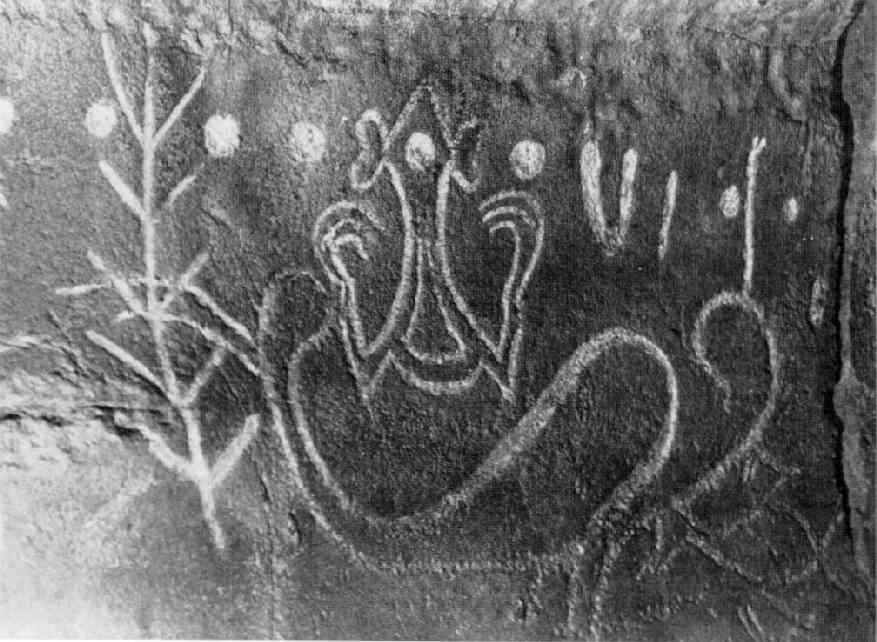
Writing is rarer than it looks.
Almost every script in use today descends from a small number of original inventions, spreading and adapting rather than being independently devised. Real independent invention — a society working out from nothing that speech can be represented by marks — appears to have happened only a handful of times.
That makes any additional candidate significant, and one of the strongest sits on a small island in the eastern Pacific, further from another inhabited landmass than almost anywhere people live.
The script is called rongorongo. It is carved on wood, it has never been deciphered, and the corpus is so small that the situation is worse than it first appears.
Here is what is known and why the case matters even without a reading.
What the Objects Are
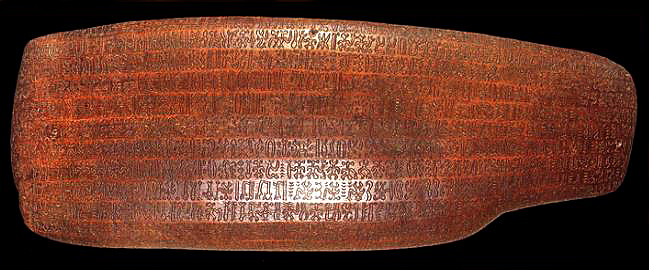
The surviving material is extremely limited and physically distinctive.
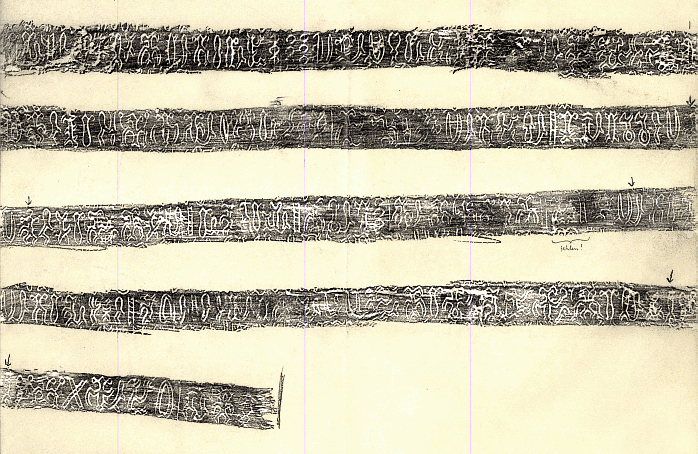
Fewer than thirty objects are generally accepted as real, most of them wooden tablets, along with a small number of other carved items. All are now held in museums and collections outside the island.
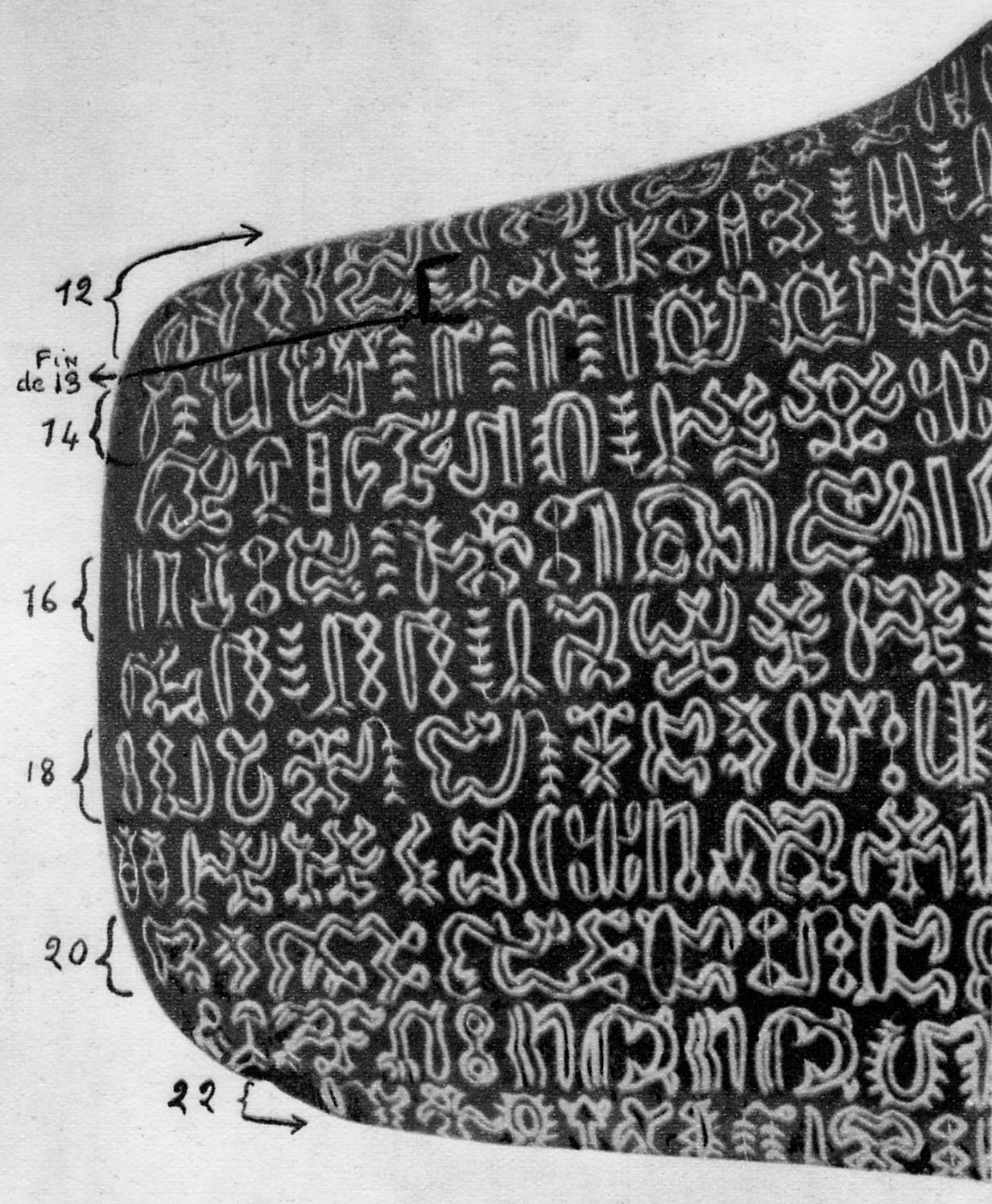
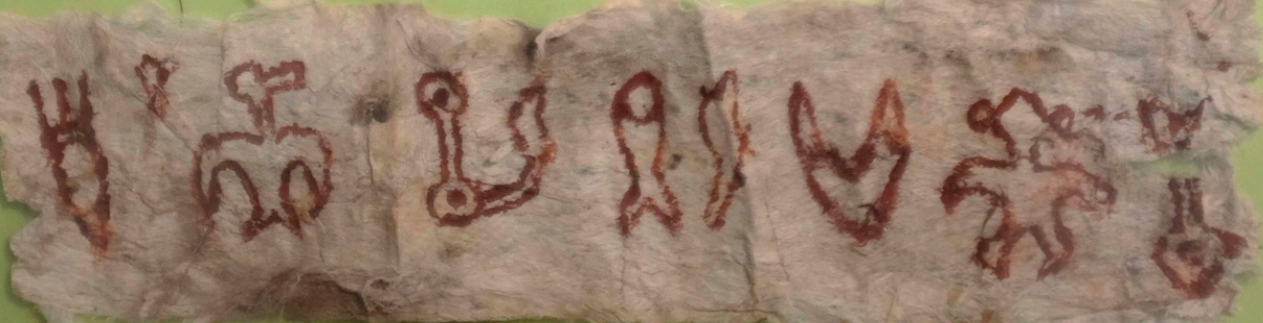
The signs are small, carved in rows, and consist of figures that are recognisable as forms even when meaningless: human-like shapes, birds, fish, plants and geometric elements, in a stylised and consistent manner.
The writing direction is the detail everybody remembers. The lines run in alternating directions, with each successive line inverted relative to the one before — so a reader must rotate the tablet a hundred and eighty degrees at the end of every line, or turn their head, to continue.
This arrangement has a name in the study of scripts and appears elsewhere in the world, but rarely, and combined with the inversion it produces one of the more visually striking writing systems anywhere.
Sign counts vary depending on how variants are classified, and the total number of distinct signs is disputed for exactly that reason.
Like our content? Follow us for more.
Why It Might Be an Independent Invention
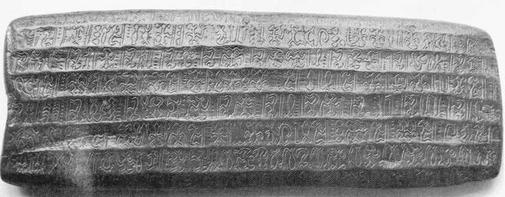
The question of whether the script was devised locally is truly open, and both possibilities are interesting.
The case for independent invention rests on isolation. The island is extraordinarily remote, and there is no evidence of contact with any literate society before European arrival in the eighteenth century.
The case against rests on timing. The earliest secure documentation of the script postdates European contact, which raises the possibility that the idea of writing was observed and then implemented locally in an entirely original form.
That second possibility is not a lesser achievement. Stimulus diffusion — seeing that writing exists and inventing an entirely independent system to do it — is a documented phenomenon and requires most of the same conceptual work.
The evidence does not currently settle it, and researchers are divided. Radiocarbon dating of the wood of some objects has been attempted and produces results that complicate rather than resolve the question, partly because the age of the wood is not necessarily the age of the carving.
Why It Cannot Be Read
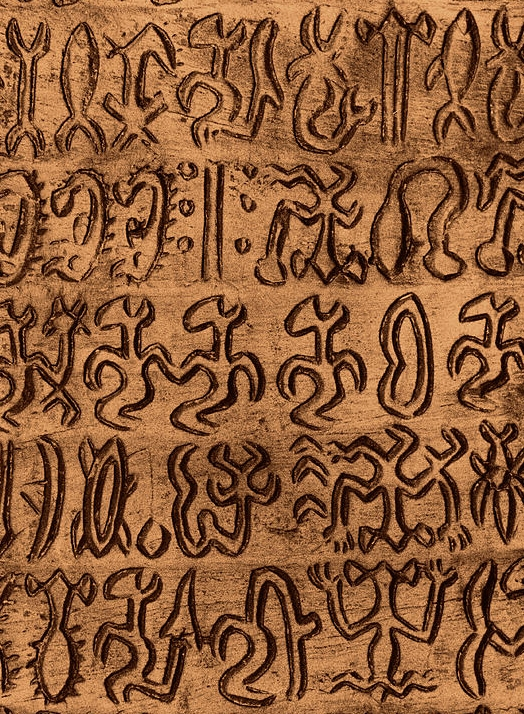
The obstacles are severe and largely structural.
The corpus is tiny. Fewer than thirty objects, some heavily damaged, represents a body of text far too small for the statistical approaches that decipherment depends on.
The knowledge was lost within living memory of contact. The island’s population suffered catastrophic decline in the nineteenth century, and the specialists able to read or recite the tablets did not survive that period. There is no continuous tradition connecting the objects to anybody who could explain them.
Accounts recorded from islanders afterwards are inconsistent. Attempts were made to obtain readings, and the results conflict with one another and with the physical structure of the texts, which suggests the informants were recalling recitations rather than reading.
The underlying language is known — the island’s language is spoken today — which ought to be an enormous advantage and is offset by not knowing how the signs relate to it.
And there is no bilingual. Nothing exists giving the same content in a script anybody can read.
There is a further difficulty specific to this case. Even the number of distinct signs is unsettled, because it is not clear which visual differences are meaningful and which are variation between carvers or wear on the wood.
That matters enormously, since the sign count is what indicates whether a script is alphabetic, syllabic or logographic. Not knowing it means not knowing what kind of system anybody is trying to read.
What Has Been Established
Progress has been made, and it is worth distinguishing from decipherment.
One object carries a sequence that has been convincingly identified as a lunar calendar, on the basis of its internal structure and its correspondence to recorded island calendrical terms. That is a real partial result and is widely accepted.
Statistical work on sign frequency and distribution has established that the texts have properties consistent with writing rather than with decoration — signs recur in patterned ways, certain signs appear only in certain positions, and the distribution does not resemble random or ornamental marking.
That matters more than it sounds. It rules out the possibility that the objects are decorative, which was a live question.
Beyond that, proposed readings exist in quantity and none is accepted. As with any small corpus, the difficulty is that a proposal can be fitted to the text without any means of testing it against material it was not built on.
The Part That Is Not About Reading
There is a dimension to this that is easy to lose behind the puzzle.
These objects are not primarily an intellectual curiosity. They are the surviving cultural record of a community, produced by people whose descendants live on the island today, and held almost entirely in institutions elsewhere.
Questions about where such material should be, who should be involved in studying it, and how the community relates to objects made by its own ancestors are live and are properly for the people concerned rather than for a general-interest article.
What can be said is that any account treating the tablets purely as an unsolved puzzle is missing what they are. The reason nobody can read them is not an interesting accident; it is a direct consequence of a period in which the island’s population collapsed and the people who held the knowledge did not survive it.
That is stated here as a plain historical fact, without elaboration, because it is the actual explanation for the decipherment problem and omitting it would misrepresent the situation.
How Few Times Writing Was Invented
The rarity claim deserves substantiating, because it is the reason a marginal case matters so much.
The securely independent inventions of writing are conventionally counted on one hand. Mesopotamian cuneiform is one. Egyptian hieroglyphs are usually counted separately, though some argue for influence. Chinese characters are a third. Mesoamerican writing is a fourth.
Everything else — every alphabet, every syllabary, every script in daily use across most of the world — descends from one of those, adapted, borrowed and reshaped over millennia but not invented from nothing.
That is an extraordinarily small number for a species that has been fully modern for a very long time and that produces art, music, mathematics and technology readily.
It suggests that representing speech with marks is not an obvious idea. Counting marks, ownership marks, tallies and pictorial records appear widely and repeatedly; the specific step of making marks correspond to the sounds of a language appears to be truly difficult to arrive at independently.
Which is why a possible fifth case, on an island thousands of kilometres from anywhere, is significant regardless of whether anybody ever reads it. The question of whether writing was invented four times or five is a real question about human cognition, and one small collection of carved wood is a substantial part of the evidence.
Why It Matters Anyway
Set the reading aside and the significance holds.
If the script was independently devised, it belongs to one of the smallest categories in human history — societies that worked out the principle of writing from nothing. Even if the idea arrived from outside, the system itself is original in its signs, its structure and its reading direction, which is a substantial achievement in its own right.
Either way it demonstrates something about the invention of writing: that it is not the inevitable product of a large state with bureaucratic needs, which is the setting for most of the other cases. A small, isolated island community produced a coherent system of signs with internal grammar and structure.
And it demonstrates how fragile writing is as a technology. A script is only readable while somebody knows how to read it, and that knowledge lives in people rather than in objects. The tablets survived. The reading did not.
Which is the sharpest available illustration of the difference between preserving a text and preserving a language — and the reason that fewer than thirty pieces of carved wood remain truly unreadable on a subject nobody can now ask about.
Like our content? Follow us for more.