There is a category of historical evidence that is systematically misleading in a way nobody notices, and early photographs are the clearest case.
A photograph feels like direct evidence. It is not a description written by somebody with opinions; it is a mechanical record of what was in front of the lens.
That intuition holds far less well than it should for the first several decades of the medium, because the technology could only record certain things, and everything else is absent in ways that look like fact.
The empty street is the obvious example. The subtler consequences run through the entire early record of photography, and they shaped what the nineteenth century looks like to anybody who has ever seen a photograph of it.
Why Exposures Were So Long
The constraint was chemical sensitivity, and it was severe.
The earliest successful processes required the light-sensitive surface to be exposed for an extremely long period — the first surviving photograph from nature is generally described as involving an exposure of many hours, possibly a full day.
Improvements over the following decades brought that down substantially, first to tens of minutes, then to minutes, then eventually to fractions of a second. But for a considerable period, an exposure was measured in minutes rather than moments.
The consequence is arithmetic. Anything that stays in one place for the whole exposure registers. Anything that moves is spread across so many positions that it contributes almost nothing to any of them, and disappears.
A person walking across a frame during a five-minute exposure leaves no trace. A carriage leaves no trace. A crowd leaves no trace. The buildings, being stationary, come out perfectly.
Like our content? Follow us for more.
The Consequences for What Survives
Several things follow, and together they distort the visual record substantially.
Cities appear deserted. Photographs of major thoroughfares from the period show empty streets that were in fact busy, and the emptiness is a property of the process rather than of the place.
Portraits are stiff and unsmiling. Holding a smile for several minutes is impossible, holding a neutral expression is merely uncomfortable, and sitters were braced against head supports to keep still. The resulting solemnity has been read as evidence of a more serious age, and it is evidence of a long exposure.
Interiors are rare, because they required even longer exposures in poorer light.
Anything truly fast is entirely absent. There are no photographs of the period showing movement, action or spontaneity, because such photographs could not be made.
And subjects were chosen for their suitability. Buildings, monuments, landscapes and posed portraits dominate the early record because they were what the technology could capture, not because they were what people found interesting.
The Illusion of Completeness
The deeper problem is that these absences do not look like absences.
A written account that omits something reads as incomplete, and a reader knows they are getting one perspective. A photograph reads as total — this is what was there — and the omissions are invisible because there is nothing in the frame to indicate that anything is missing.
So a viewer looking at an empty street does not think the traffic was removed by the process. They think the street was empty.
That is a systematic bias in a body of evidence that feels like the least biased material available, and it is compounded by the fact that photographs are the visual record most people encounter.
The general nineteenth century that exists in the popular imagination — still, solemn, formal, uncrowded — is substantially an artefact of exposure times.
What Changed and When
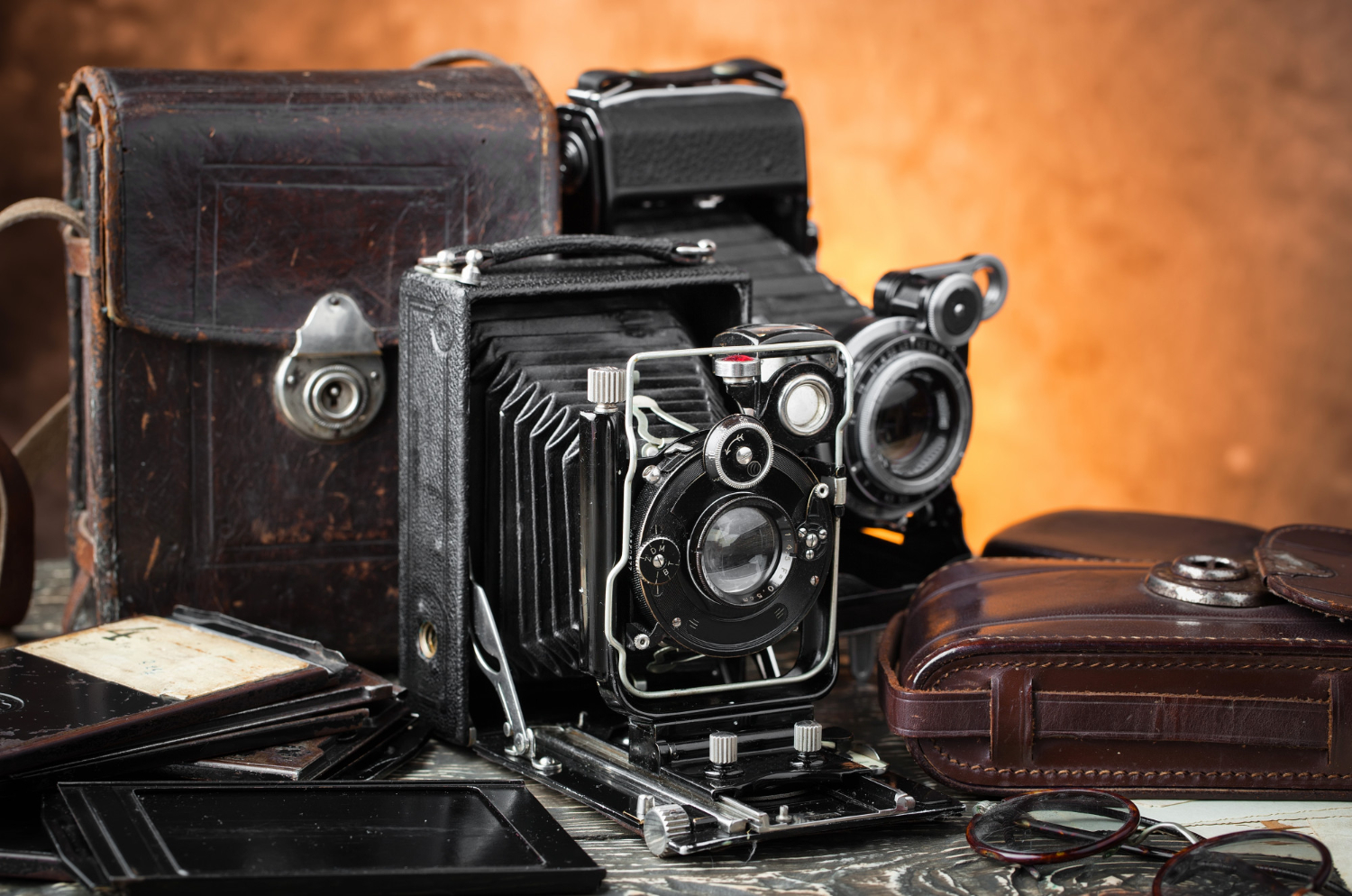
The transition is worth understanding because it changes what photographs from different decades can be used for.
Faster processes and better optics reduced exposures progressively. At some point the technology crossed a threshold where a person could be photographed without being braced, and then another where movement could be frozen.
That second threshold changed the subject matter entirely. Once fast exposures were possible, photography could record events, action, work in progress and people behaving naturally rather than sitting for a portrait.
It also permitted something that had not previously existed: photographs taken without the subject’s cooperation. When an exposure takes minutes, everybody in the frame is a participant. When it takes a fraction of a second, they need not be, and the ethics of photography began at that moment.
The famous work on animal locomotion — settling whether a horse ever has all four feet off the ground — was possible only after that threshold, and it demonstrated something no observer had been able to determine by eye.
That is the point at which photography stopped merely recording what could hold still and started showing things nobody could see.
What Photography Replaced
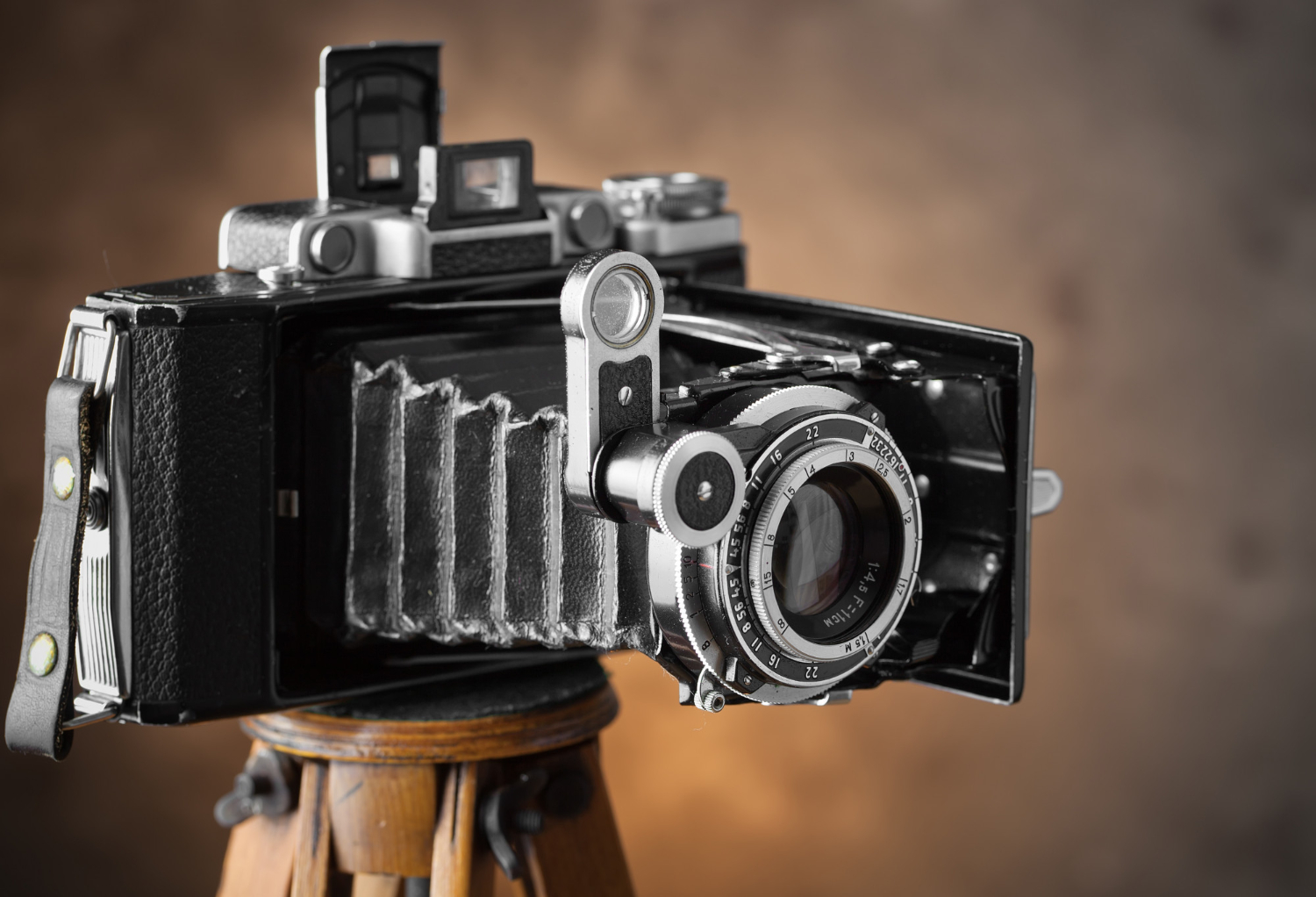
The context worth adding is what existed before, because it explains why long exposures were tolerated at all.
Prior to photography, a visual record of a person or a place required a painter or a draughtsman — expensive, slow, dependent on skill, and available only to people who could pay for it.
Against that, an exposure of several minutes was extraordinarily fast and extraordinarily cheap. A sitting that took twenty minutes and produced a likeness was a dramatic improvement on one that took several days and cost a substantial sum.
That is why the medium spread so quickly despite its limitations. It was not competing with instant photography; it was competing with portrait painting, and it won overwhelmingly on cost and speed.
It also explains the subject matter from another angle. Early photographers photographed portraits, monuments and views because those were the things people had previously paid artists to produce, and the market already existed.
There is a consequence for the historical record. Photography made visual documentation available to social groups who had never been depicted before, because the price fell far enough to reach them.
So the early record is simultaneously narrower than it looks — constrained by what could hold still — and broader than what preceded it, in who appears at all. Both are true, and treating the period’s photographs as either comprehensive or as elite documents misses one half of it.
The Records That Do Not Exist

There is a category of absence worth naming, because it shapes what the nineteenth century looks like more than any individual image.
No photographs exist of anything before roughly 1826, which means the entire human past up to that point has no photographic record at all and is known visually only through art, description and physical remains.
That boundary is abrupt and it is closer than people assume. A great many things that feel deeply historical happened well within the photographic era, and a great many that feel recent happened just outside it.
There is also a first generation of people who were photographed in old age having been born long before the medium existed, which means the earliest photographic record includes faces formed entirely in an unphotographed world.
And there is an asymmetry in who appears. Photography required a subject who could attend a studio, pay a fee and sit still, which selected for particular people in particular circumstances during the earliest period.
Working life, poverty, ordinary domestic activity and anything transient are correspondingly underrepresented, not because they were considered unimportant but because the process could not reach them.
That gap narrowed as the technology got faster and cheaper, and the point at which it narrowed is visible in the record — which means the photographic archive is a document about the spread of a technology at least as much as about the century it covers.
Reading Old Photographs Properly
The practical upshot is a set of questions worth asking of any early image.
How long was this exposure, roughly, given the period and the conditions? That determines what could have appeared.
What is absent that should be there? An empty street, a still workshop, a river with no boats — each indicates motion removed rather than absence.
Was this posed, and how long did the subject hold it? Formality in a portrait is a technical requirement before it is a cultural attitude.
And why this subject? Early photographers photographed what was photographable, and the selection tells you about the equipment as much as about the interests.
Answering those turns a photograph from a window into a document — something produced by a process with limits, showing a subset of what was there, selected partly by what the chemistry allowed.
Which is the same discipline applied to any other historical source, and it is applied to photographs far less often because they do not look like they need it.
Which is the whole difficulty in one line. A photograph presents itself as the absence of an author, and the author is the chemistry – selecting what could be recorded, discarding everything that moved, and leaving a record that looks complete because nothing in it indicates what is missing.
Like our content? Follow us for more.