
The single fact that organises the subject is that magnetism is produced by moving electric charge, and every electron is both moving and carrying an intrinsic property that behaves like a tiny magnet. Here are sixteen results.
1. Magnetism Comes From Electrons
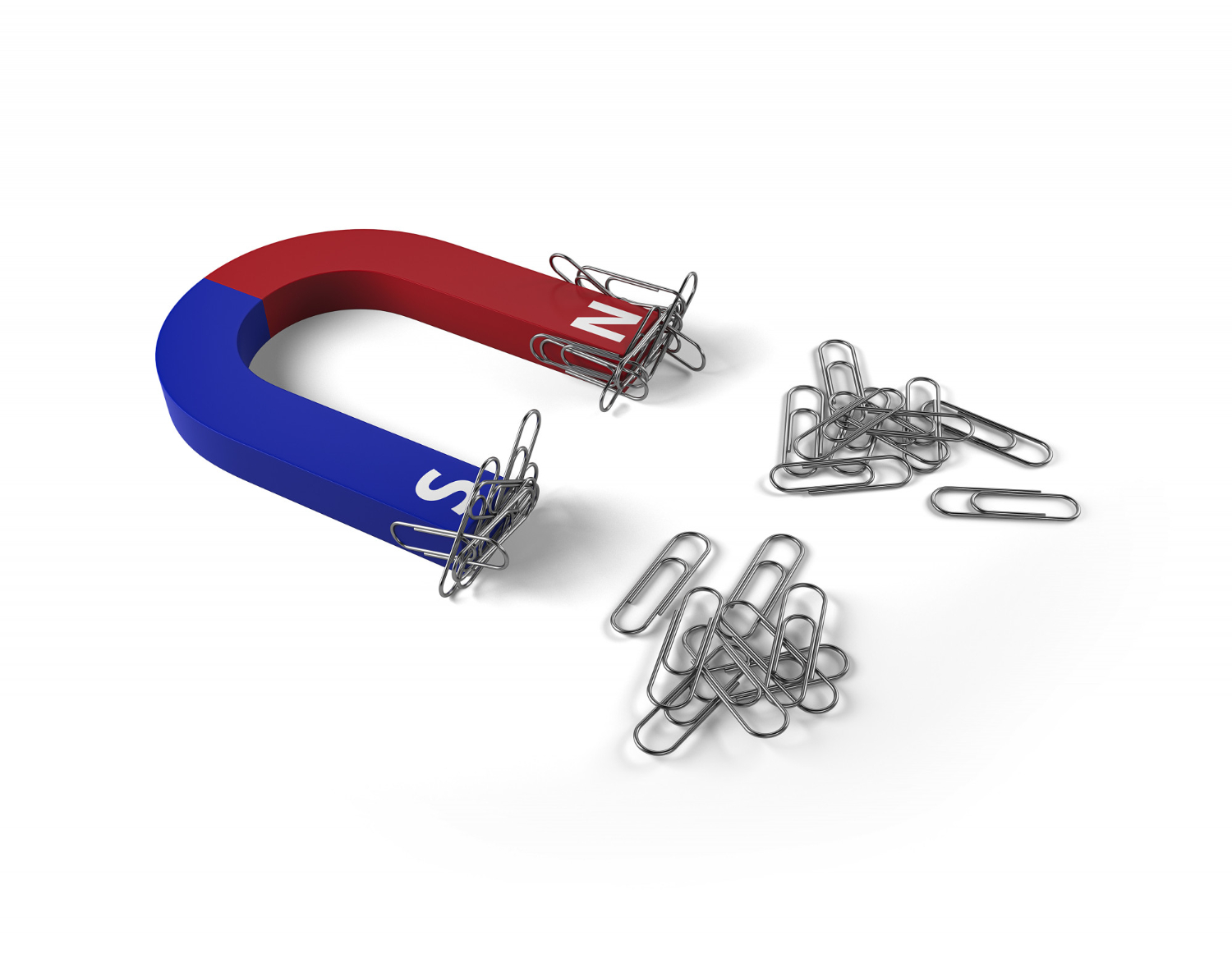
The magnetic properties of any material arise from the orbital motion of its electrons and from an intrinsic property each electron carries that behaves like a minute magnet.
There is no separate magnetic substance. Electron origin is the fact that connects magnetism to electricity.
2. In Almost Everything, It Cancels

Electrons generally pair up with opposite orientations, so their contributions cancel and the material shows no net magnetism at all.
That is why most things are not magnetic. Cancellation is the default state and magnetism is the exception.
3. A Few Materials Line Up Instead

In certain elements the arrangement of electrons allows neighbouring atoms to align rather than cancel, and that alignment propagates through regions of the material.
Very few elements do this at ordinary temperatures. Spontaneous alignment is the property that defines a magnetic material.
4. Those Regions Are Called Domains

A piece of iron contains many small regions, each internally aligned, but pointing in different directions relative to one another.
Within a domain everything agrees; between domains it does not. Domain structure is the middle layer people never hear about.
5. An Ordinary Nail Is Full of Magnets

A piece of unmagnetised iron is not free of magnetism – it is full of it, arranged so that the domains point in every direction and cancel out overall.
Nothing has to be added to magnetise it. Random orientation is what unmagnetised actually means.
6. Magnetising Is Just Aligning Them

Applying an external field rotates domains into agreement with it, and in a suitable material that alignment persists when the field is removed.
No material is created or added. Domain alignment is the entire process of making a magnet.
7. Heat Destroys It

Above a specific temperature, thermal motion overcomes the alignment and the domains randomise, at which point the material stops being magnetic entirely.
The temperature differs by material and is sharply defined. Thermal randomisation is the reliable way to erase a magnet.
8. And So Does Hitting It
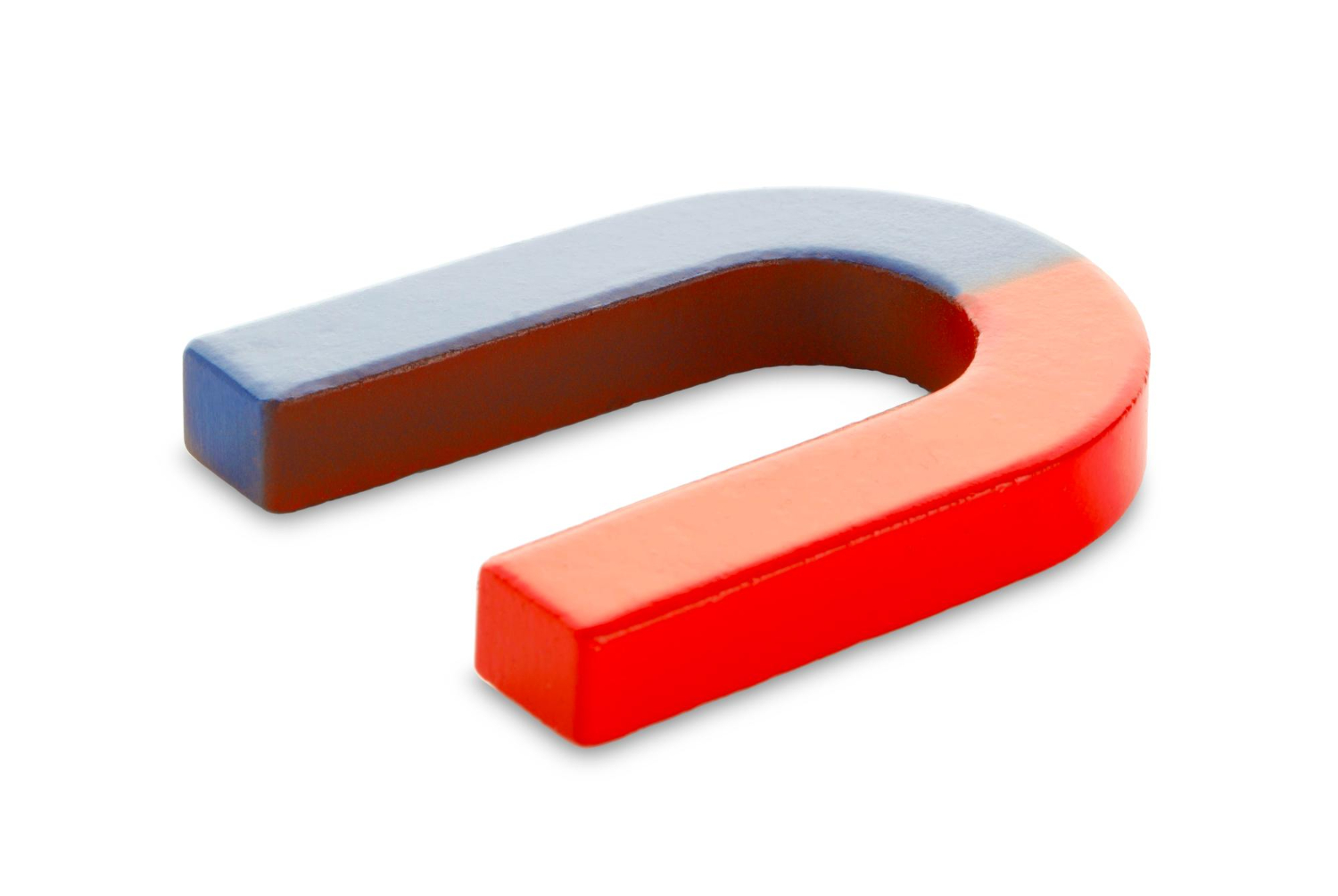
Mechanical shock disrupts domain alignment, which is why dropping or striking a magnet weakens it over time.
The effect is cumulative rather than sudden. Impact disruption is why magnets deteriorate with rough handling.
9. You Cannot Have One Pole

Breaking a magnet in half does not separate the poles – it produces two complete magnets, each with both, and this holds however far you divide it.
The property is distributed through the material rather than located at the ends. Inseparable poles are the fact that distinguishes magnetism from electric charge.
10. The Field Lines Form Closed Loops

Because there are no isolated poles, magnetic field lines have no beginning or end and always return to where they started, passing through the magnet itself.
The familiar pattern in iron filings is the outside half of a loop. Closed loops are the geometric consequence of having no monopoles.
11. Only a Handful of Elements Do It

Ferromagnetic behaviour at room temperature occurs in very few elements, though a considerable number of alloys and compounds are magnetic where their components are not.
Combining materials can produce what neither has alone. Restricted membership is why magnetic materials are a specialised category.
12. Everything Responds a Little

All materials interact with magnetic fields weakly, some drawn very slightly toward them and some pushed very slightly away, at strengths far too small to notice ordinarily.
Sufficiently strong fields make it visible. Universal weak response is the fact that surprises people most.
13. A Current Makes a Field

Electric current flowing through a wire produces a magnetic field around it, which is the same phenomenon as a permanent magnet arriving by a different route.
Coiling the wire concentrates it. Current-generated fields are the basis of every electromagnet.
14. And a Moving Field Makes a Current

Moving a magnet near a conductor drives current in it, which is the reverse of the previous item and is how essentially all electricity is generated.
The two are one relationship rather than two facts. Induction is the reciprocal half of the same principle.
15. An Electromagnet Can Be Switched Off

Because the alignment is maintained by current rather than locked into the material, an electromagnet stops being magnetic the moment the current stops.
That controllability is the entire advantage. Switchable magnetism is why electromagnets exist alongside permanent ones.
16. Some Materials Push Fields Out Entirely

Under particular conditions certain materials expel magnetic fields from their interior completely, which produces the striking effect of a magnet held suspended above them.
It is exclusion rather than repulsion in the ordinary sense. Field expulsion is the behaviour that looks most like a trick and is not.
Alignment, and What Destroys It

Electrons that cancel in almost everything, a few materials where they align, domains that agree internally and disagree with each other, and heat or impact that randomises the lot.
The fifth item is the one that reframes everything. An ordinary piece of iron is not lacking magnetism; it is completely full of it, pointing in every direction at once – and magnetising it adds nothing at all, but simply persuades what is already there to agree.