There is a systematic bias in what the past leaves behind, and it favours hard things.
Bone, shell, wood and teeth survive burial. Skin, muscle, hair, feathers, membranes and anything microscopic generally decay long before anything can preserve them.
The consequence is that a great deal of what is known about extinct life is reconstructed from skeletons, with the soft parts inferred.
Amber breaks that pattern in one narrow but spectacular way. It preserves the things nothing else preserves, at a scale and level of detail that is difficult to credit — and it does so because the preservation mechanism is entirely different from every other route into the fossil record.
Why It Works So Well
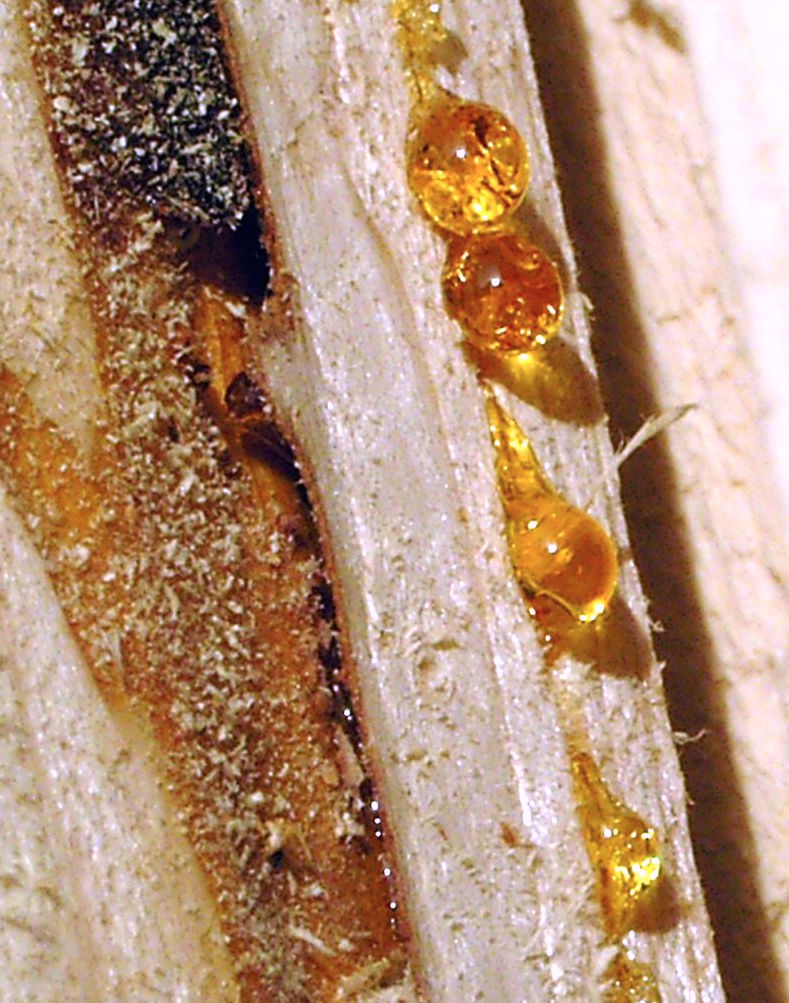
The mechanism has several stages and each contributes something.
Resin is produced by certain trees as a defence — against injury, insects and infection — and it is sticky, flows slowly and hardens on exposure.
An organism landing on fresh resin is trapped, and further flows engulf it. That is the first stage: physical capture.
The second is sealing. Resin excludes air and water almost completely, which stops the decay processes that require them. Bacteria and fungi cannot operate, and oxidation cannot proceed.
The third is chemical. Resin contains compounds that actively inhibit microbial growth, so anything already present on the organism is suppressed.
The fourth is dehydration. Resin draws water out of the trapped organism, which fixes the tissues in something like their original shape rather than allowing them to collapse.
And the final stage is hardening. Over very long periods the resin polymerises and loses volatile components, becoming the hard stable material that can survive burial for millions of years.
That combination — trapped, sealed, chemically protected, dried and then encased in something durable — is why the results are what they are.
Like our content? Follow us for more.
What It Preserves
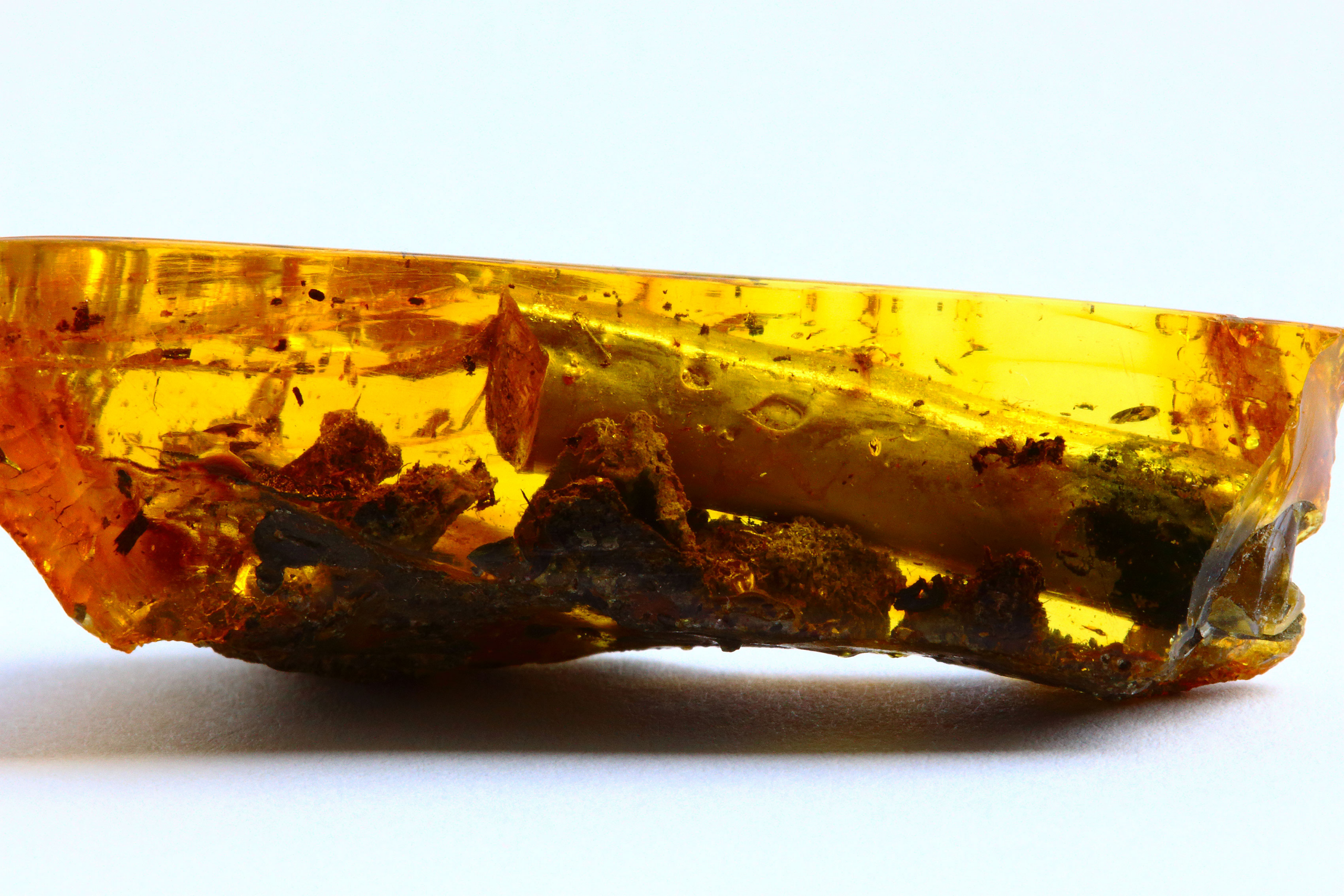
The detail available is the part that surprises people.
Individual hairs and feather structures are preserved with their microscopic architecture intact, which allows features to be examined that would be invisible in any other kind of fossil.
Colour patterns survive in some cases, which is extraordinary given that colour almost never persists elsewhere.
Extremely small organisms — mites, microscopic life, pollen, spores — are preserved whole, and these are essentially absent from the rest of the record.
Behaviour is captured. Specimens exist showing organisms feeding, mating, fighting, carrying young or caught mid-action, which is a category of information the fossil record otherwise provides only through indirect evidence like footprints.
And the surroundings come with it. A piece of amber frequently contains plant fragments, other organisms, air bubbles and debris from the same moment, which makes it a sample of an environment rather than of one individual.
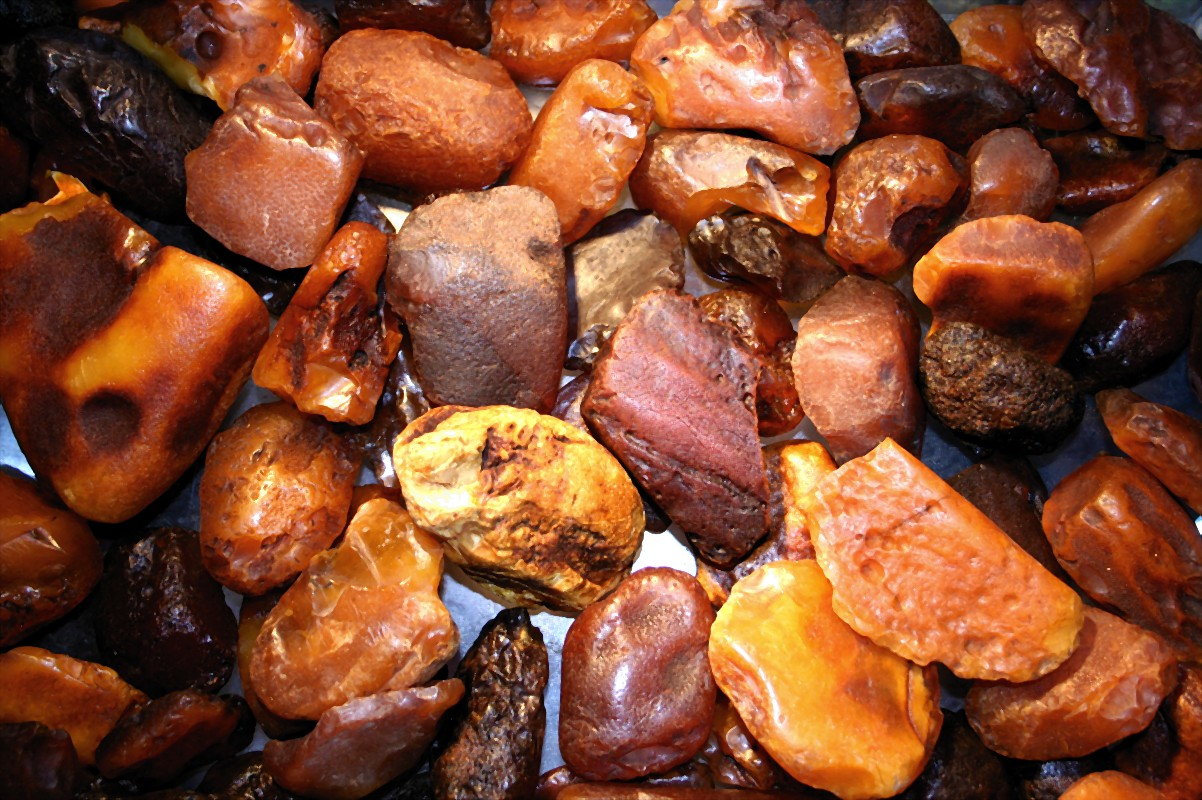
There is a scale point worth stating. Individual pieces of amber are generally small, and a deposit yielding scientifically useful inclusions may require sorting through an enormous quantity of material to find a handful worth examining.
That labour is a substantial part of why notable specimens are valuable, and it is done by people who are rarely the ones publishing the findings.
What It Does Not Preserve
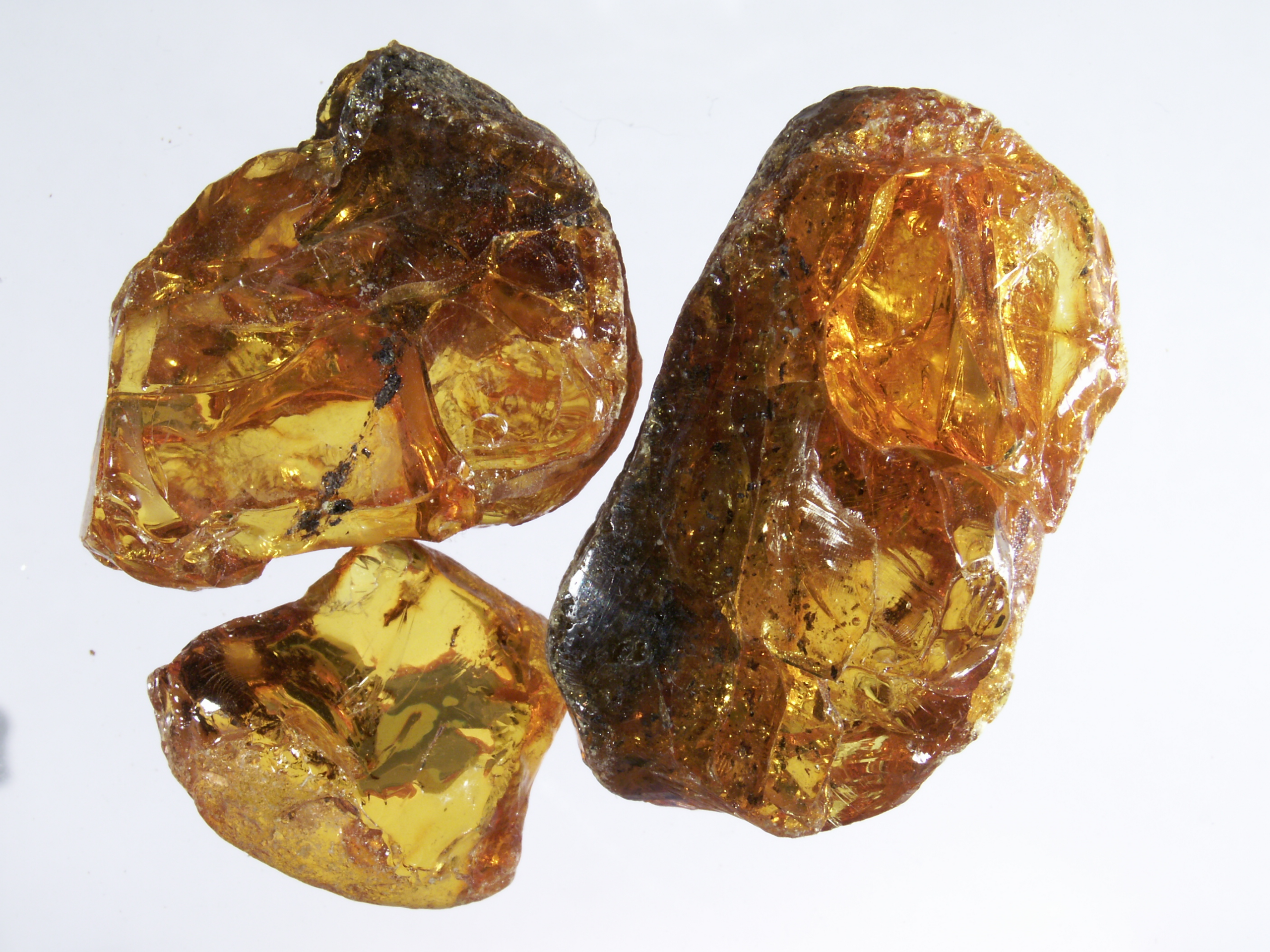
The limitations are equally important and are frequently glossed over.
Size is the fundamental constraint. Resin flows are small, so amber preserves small things — insects, spiders, tiny vertebrates, fragments. Nothing large is preserved whole, and larger animals appear only as detached parts that happened to be caught.
Habitat is a second constraint. Only organisms living on or near resin-producing trees are captured, which means the sample is drawn from a very specific environment and says nothing about anywhere else.
Geography and time are limited by where such trees grew and when, so amber deposits represent particular places at particular periods rather than a continuous record.
And the preservation, while astonishing structurally, is chemically limited. The original material is substantially altered, and what survives is frequently a detailed impression and a residue rather than intact original tissue.
That last point matters enormously for what can be extracted from it, which is the subject of considerable overstatement.
There is a further preservation detail worth noting. Some inclusions are surrounded by a thin gap where the original tissue has decayed, leaving a hollow mould rather than the organism itself.
That distinction matters for interpretation, since a perfect external impression and an intact specimen look similar from outside and are different things entirely.
What Cannot Be Recovered
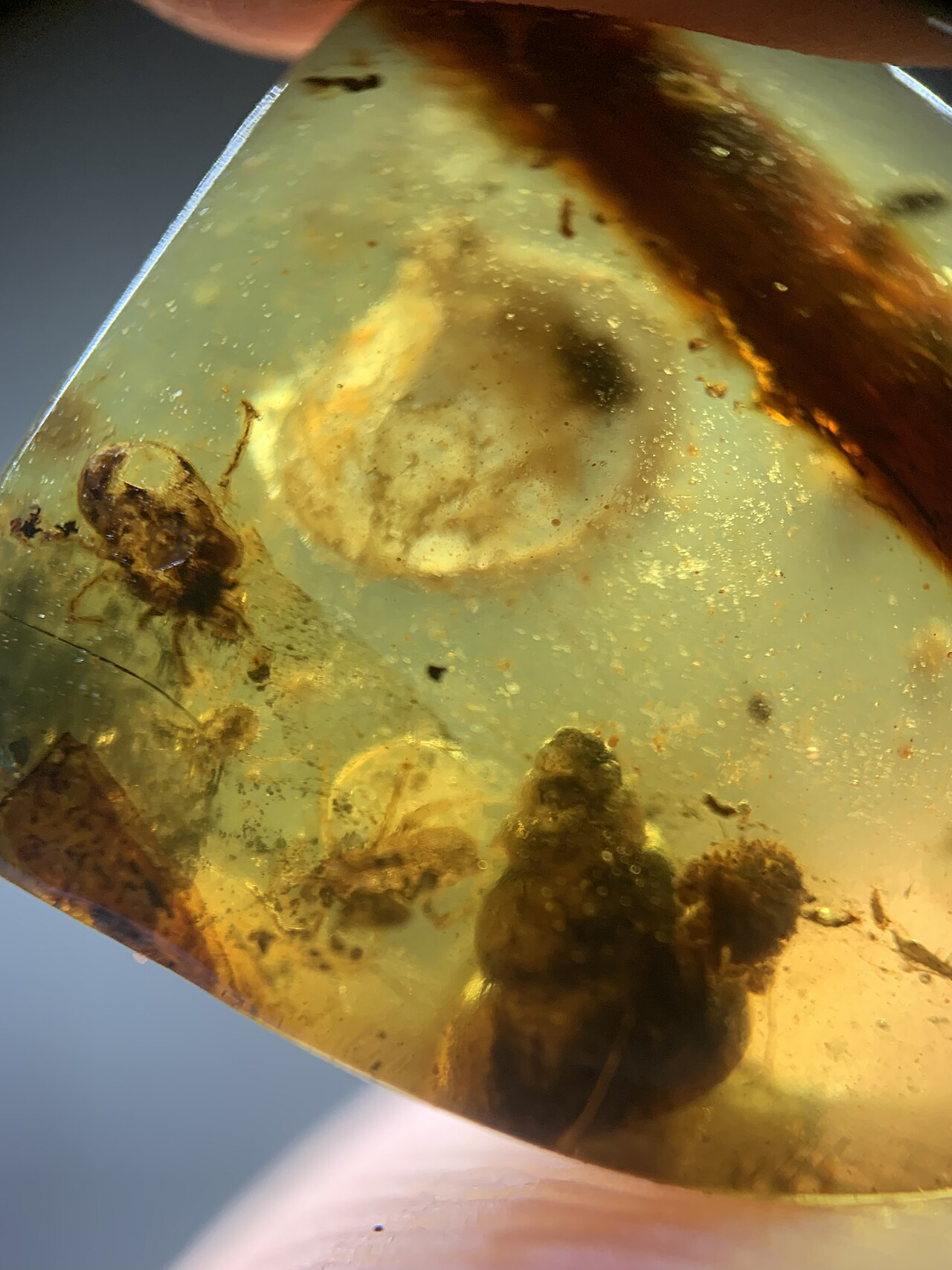
A correction belongs here because one claim about amber is more famous than everything true about it.
Recovering usable genetic material from amber inclusions has been attempted, some early reports were published, and those results have not been replicated and are generally attributed to contamination.
The reasons are chemical rather than technical. Genetic material degrades over time regardless of conditions, breaking into progressively shorter fragments, and the timescales involved with amber are far beyond any plausible survival, even in ideal circumstances.
Amber’s preservation is structural. It holds the shape, the surface detail and the microscopic architecture exceptionally well, and the molecules themselves have been altered by the same processes that preserved the form.
That is worth being clear about, because the popular association is so strong that it affects what people think amber can do — and what it actually does is more than impressive enough without it.
There is a further limit on what can be read from a specimen. An organism trapped in resin was caught at one moment in one posture, and inferring behaviour from a single frozen instant is the same problem as inferring a film from a photograph.
Specimens showing apparent interaction are consequently interpreted cautiously, since two organisms in contact may have arrived separately.
How It Is Studied
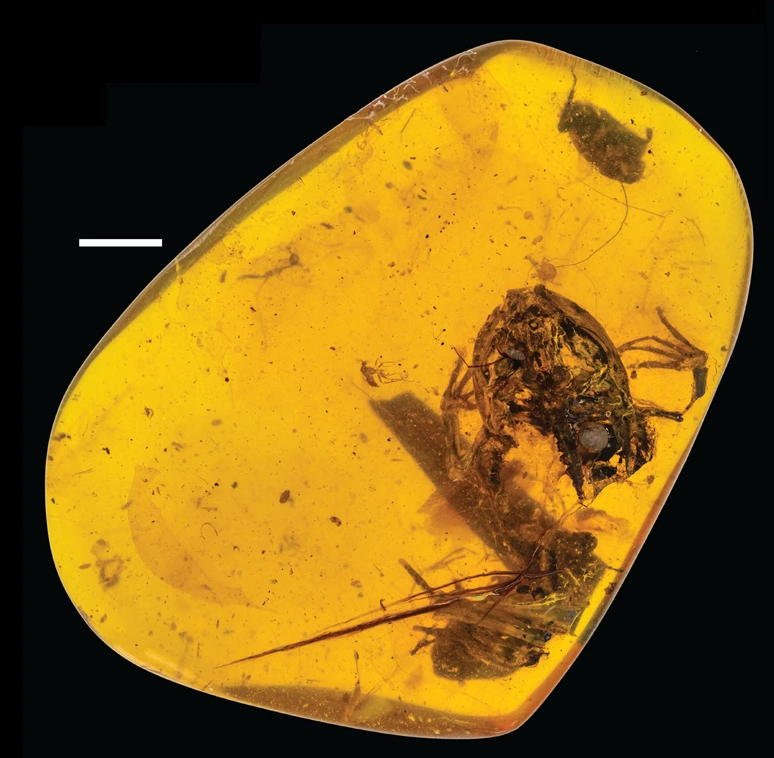
The methods are worth describing because they have changed substantially.
Historically, examination meant grinding and polishing the amber to see the inclusion clearly, which risked damaging both.
Imaging techniques that see through the material without cutting it have transformed the field, allowing inclusions to be reconstructed in three dimensions, viewed from any angle and examined internally without the specimen being touched.
That has also allowed the examination of material previously considered unusable — cloudy amber, pieces where the inclusion is obscured, specimens too valuable to cut.
The result is that a great deal of existing material has been re-examined and has yielded findings that were unavailable when it was collected.
Where It Comes From
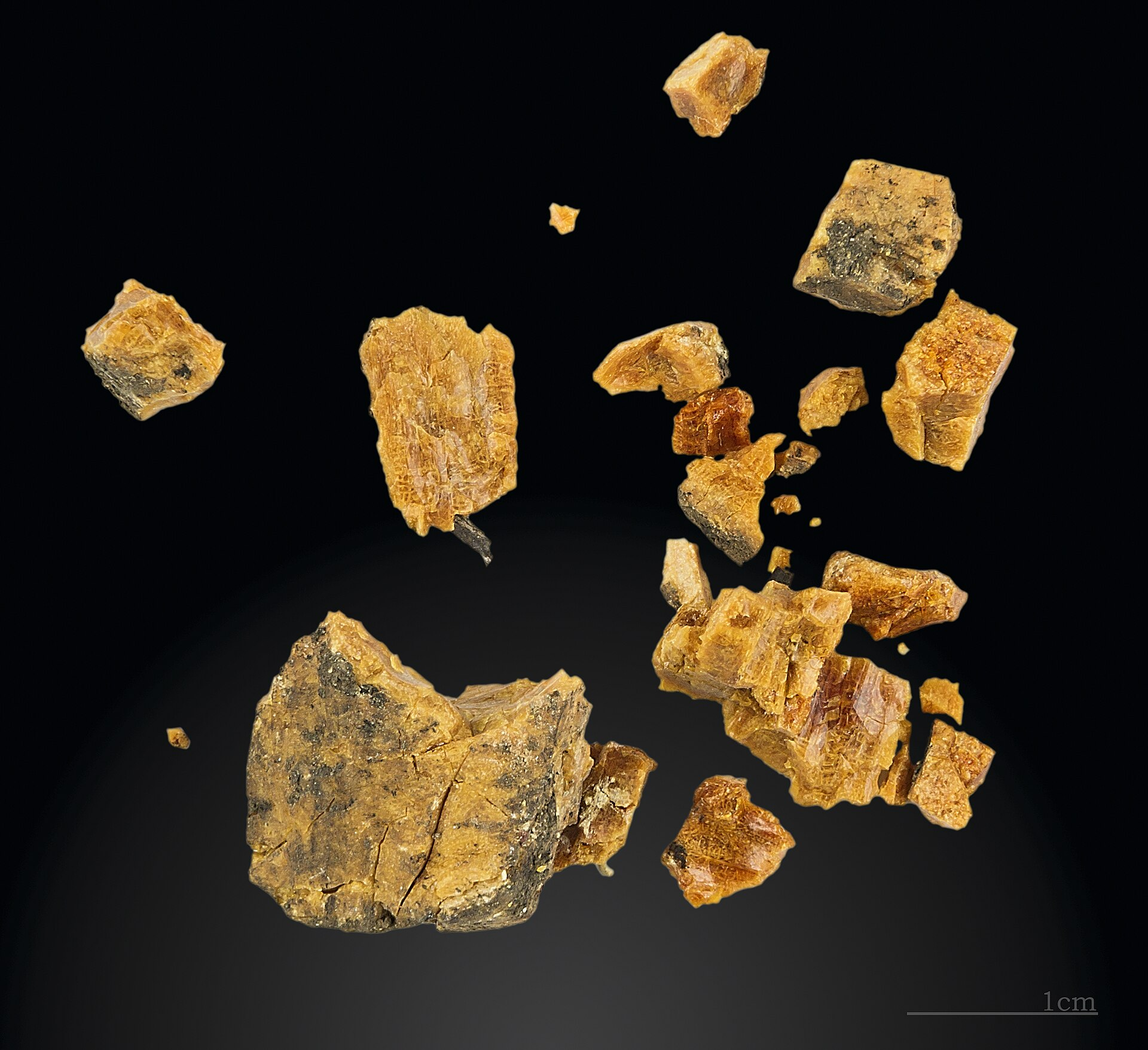
The geological side explains why deposits occur where they do and why some periods are represented and others are not.
Resin production is not universal among trees. It occurs in particular groups, and abundant production sufficient to generate deposits appears to have been associated with specific conditions — possibly stress, possibly insect pressure, possibly climate.
For resin to become amber it must avoid being eaten, burnt or decomposed, which means it needs to reach an environment where it is buried quickly and kept away from oxygen.
That generally means being washed into water and incorporated into sediment, which is why amber deposits are frequently found in marine or lagoonal sediments rather than where the trees grew.
It also means the amber has travelled, sometimes a considerable distance, which complicates working out what forest it came from.
The hardening then requires an enormous span under burial. Younger resin that has not completed the process is a different material — softer, more soluble, and distinguishable from fully hardened amber by simple tests.
The result is that amber deposits are concentrated in particular periods and particular regions, corresponding to where resin-producing forests met conditions that buried their output rapidly.
Which means the record is not merely biased toward small organisms near resinous trees. It is biased toward small organisms near resinous trees that grew beside somewhere sediment was accumulating — which is a narrow window, and it is astonishing that it captured as much as it did.
The Difficulty With the Subject
One matter requires stating plainly, because it affects the science directly.
Amber is a commercial commodity as well as a scientific material. It is mined, traded and sold, and specimens with notable inclusions have substantial value.
That creates problems. Material sold through trade frequently arrives without reliable information about where it came from or which deposit it belongs to, and that information is essential for dating and interpreting it.
Some amber originates from regions where the circumstances of extraction raise serious ethical concerns, and this has prompted considerable discussion within the field, with journals and institutions adopting policies on what material can be published.
That discussion is ongoing and is a live question rather than a settled one, and anybody reading about spectacular amber discoveries should be aware that provenance is a real issue rather than a technicality.
Which is worth registering alongside the science. The material is extraordinary, what it shows is available nowhere else, and the route by which a given piece reached a laboratory is not always straightforward.
Both of those are worth holding together. A material that preserves a moment from the deep past with unmatched fidelity, arriving through a trade that frequently cannot say where it came from, is a truly awkward combination for a field that depends on knowing exactly that.
Like our content? Follow us for more.