There is a category of change so complete that the previous state becomes difficult to imagine, and street lighting is among the largest.
The state it replaced was real darkness. Not dimness — darkness, in which a moonless overcast night in a city meant being unable to see the ground, the buildings or anybody approaching.
That condition shaped everything. Work stopped when light did. Social activity was confined to lit interiors. Movement required carrying a light or hiring somebody to carry one, and doing so marked you as somebody who could afford it.
Changing that took several technologies over several centuries, and the consequences ran substantially further than visibility.
Before Anything Public
The arrangements that preceded public lighting are worth describing because they explain what was being replaced.
Individuals carried lights — lanterns, torches, candles in holders — which illuminated a small area immediately around them and left everything beyond it darker by contrast.
Those who could afford it employed somebody to carry one, which was a recognised occupation and served as escort as much as illumination.
Some cities required householders to hang a light outside their premises on certain nights, which is an early form of public provision implemented by private obligation — the cost fell on the resident and the benefit on the street.
Compliance was variable, enforcement was intermittent, and the result was patchy at best.
Like our content? Follow us for more.
The Oil Lamp Era
The first systematic public lighting used oil, and it established the pattern everything afterwards followed.
Lamps were mounted on posts or brackets at intervals, filled with oil, lit at dusk and extinguished at dawn — which required somebody to visit every lamp twice a day.
That produced a job with a fixed round, performed on a schedule, with a ladder and a taper, and the person doing it became a recognisable figure of the urban night.
The light produced was modest by later standards, and the spacing was wide, which meant a lit street was a sequence of pools of light with darkness between them rather than continuous illumination.
Maintenance was constant. Lamps required cleaning, wicks required trimming, glass required replacing, and the oil supply required managing.
That is the point at which lighting became a public service with a budget, a workforce and an administrative structure rather than an individual arrangement.
There is an intermediate stage worth noting. Improved oil lamps with better burners and reflectors substantially increased output before gas arrived, and some cities installed them at scale.
That mattered because it established the administrative apparatus – the contracts, the inspection, the rating – into which the gas systems were later fitted.
Gas and the First Networks
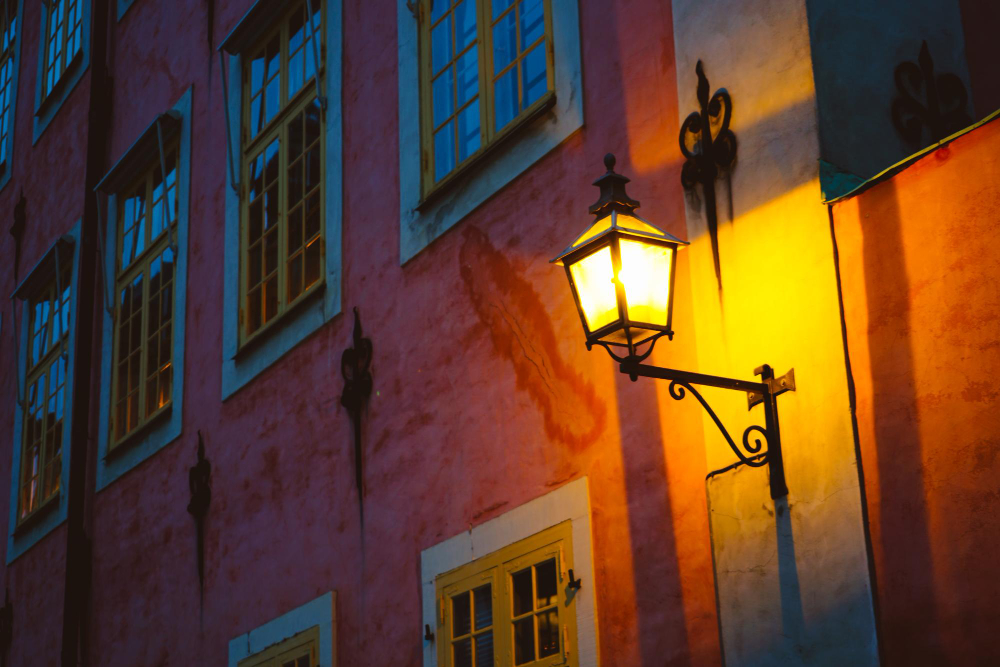
The gas era is the substantial transformation and its significance is frequently underestimated.
Gas lighting required something no previous system had: a network. Gas was manufactured centrally, distributed through pipes to every lamp, and consumed at the point of use.
That meant laying a distribution system beneath the streets before any lamp could be lit, which is an enormous capital undertaking requiring organisation, financing and the legal ability to dig up roads.
The result was an infrastructure network — one of the first — and it established precedents for everything laid beneath streets since.
The light was substantially better and substantially cheaper per unit, which allowed closer spacing and longer hours, and the same network supplied interiors as well as streets.
Lighting still required somebody to visit each lamp, since the supply was continuous and the lamp had to be turned on and lit, so the occupation continued until timing mechanisms and later electrical switching removed it.
There is a further consequence of the network worth stating. Because gas was distributed to premises as well as to lamps, the same infrastructure that lit the street lit the interiors along it – which meant the decision to light a street changed what happened inside the buildings on it.
That coupling is why gas spread so fast once a network existed. The expensive part was the pipes, and once they were laid every additional connection was comparatively cheap.
What the Objections Were
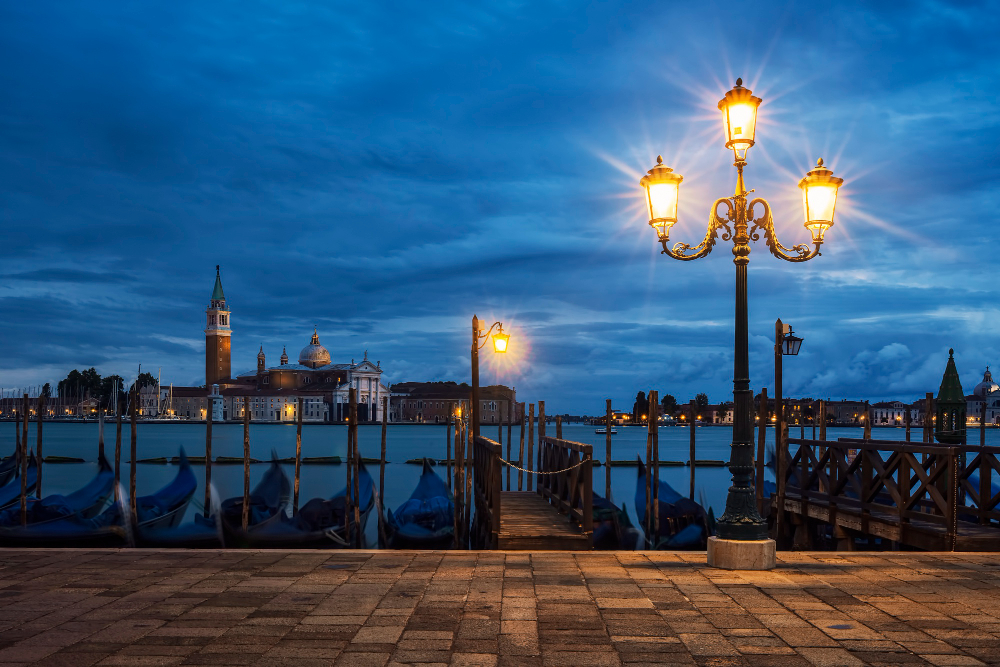
The resistance is the part that is most interesting and is generally reported as mere conservatism.
Some objections were aesthetic, concerning the appearance of lamps and the loss of night sky, and those were real even if they did not prevail.
Some were moral, arguing that illuminating the night encouraged activity that ought not to be happening and that darkness performed a useful restraining function. That argument looks strange now and was seriously made.
Some were economic and were entirely reasonable. Public lighting is paid for collectively and benefits those who are out after dark, who were a minority — so ratepayers who were indoors by nightfall were funding a service used by others.
And some were about control. Lighting makes public space observable, which changes the relationship between people in the street and whoever is watching it, and the objection to that was not unreasonable either.
Those arguments were had in city after city, and the pattern of adoption reflects who won them locally rather than any technical readiness.
There is a geographical point worth noting. Lighting spread outward from the centre of cities, which meant that for a long period a place was lit in the middle and dark at the edges, with a visible boundary between the two.
That boundary moved outward over decades, and it corresponded closely to where the built-up area was regarded as ending.
What Actually Changed
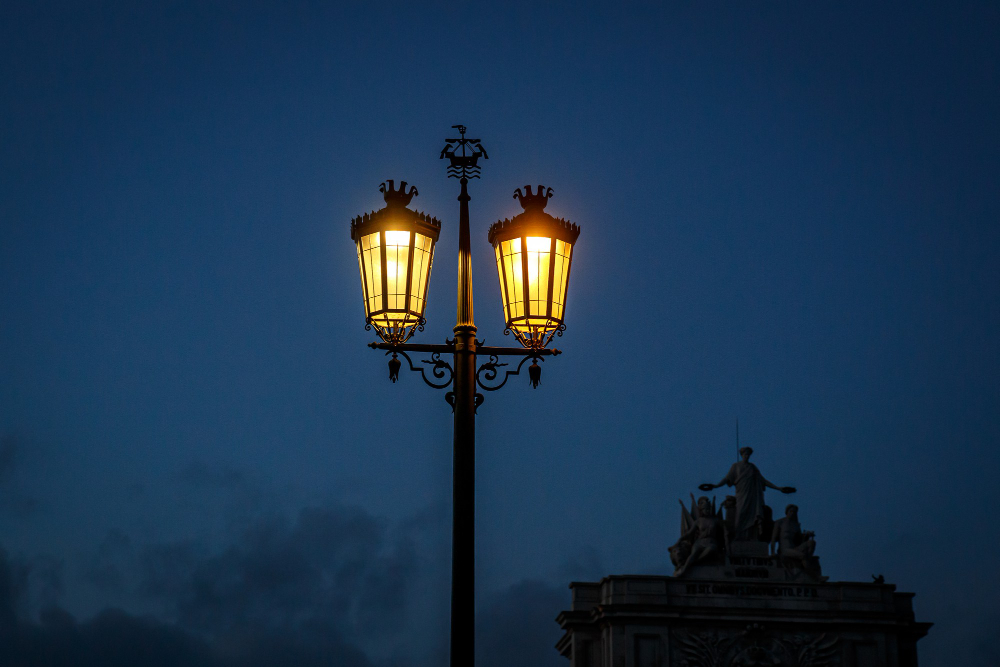
The consequences went well beyond being able to see.
The working day extended, which had substantial effects on manufacturing, trade and hours — not all of them welcomed by the people whose hours extended.
Evening social activity became possible outside private houses, which produced entertainment, dining and public life after dark on a scale that had not existed.
Retail changed, since shops could remain open and could display goods to people passing in the evening, which is the origin of the illuminated shopfront.
Transport schedules extended, which changed how far people could live from where they worked.
And the character of the night changed, becoming a period of activity rather than an interval between days — which is the change that is hardest to appreciate because it is so complete.
What the Lamps Were Made Of
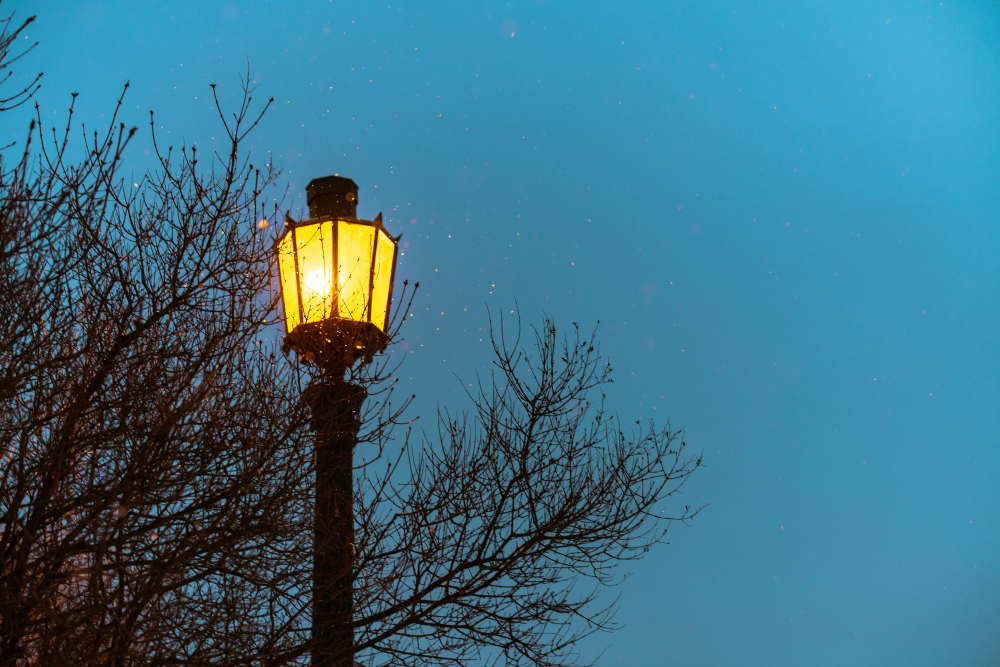
The physical object deserves a section, because its design was determined by requirements that no longer apply.
A lamp had to be reachable, which set its height — high enough to spread light and low enough for somebody with a ladder to service twice daily.
It had to shelter a flame from wind and rain while admitting air, which produced a glazed enclosure with a ventilated top, and the glazing had to be cleanable because soot accumulated rapidly.
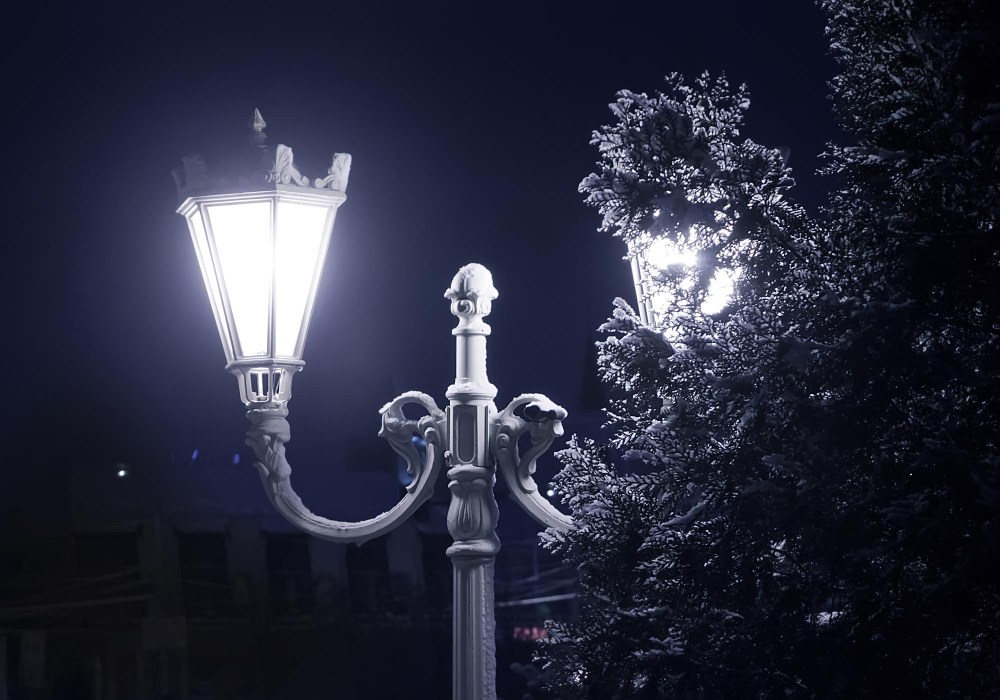
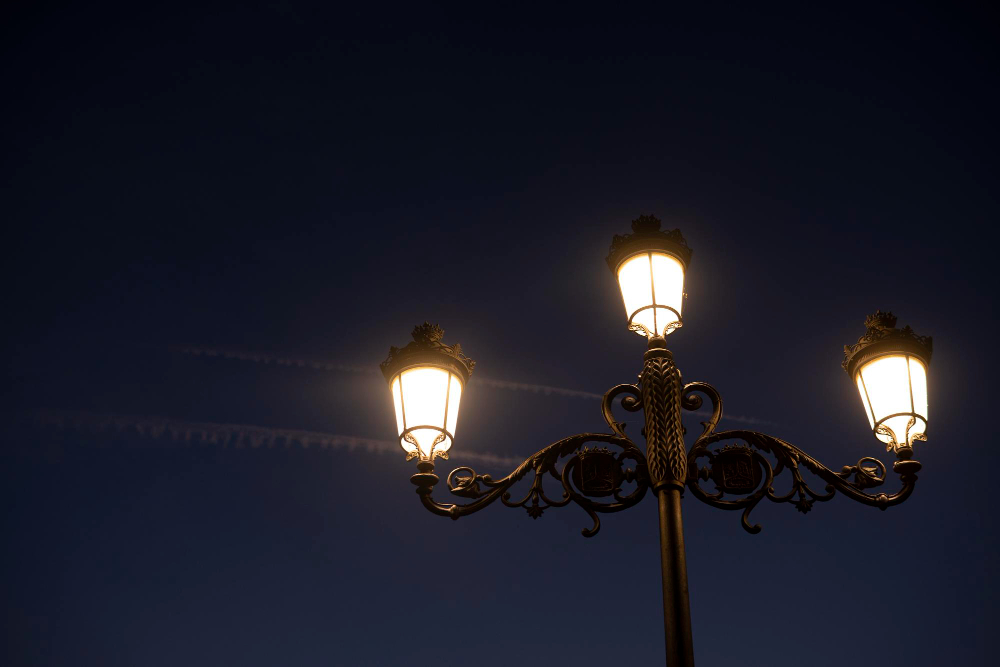
It had to be mounted on something that would not be knocked over, which produced substantial cast columns, and those were made ornamental because they were being installed in quantity in public places and somebody had to decide what they looked like.
The result is a category of street furniture that survives in enormous numbers, frequently converted to electricity, retaining a form determined entirely by the requirements of a flame that has not burned in it for a century.
The spacing survives too. Lamp positions were set by how far the light carried, and in many older streets the columns are still where they were placed for a far dimmer source — which is why lighting in historic areas is denser than the technology requires.
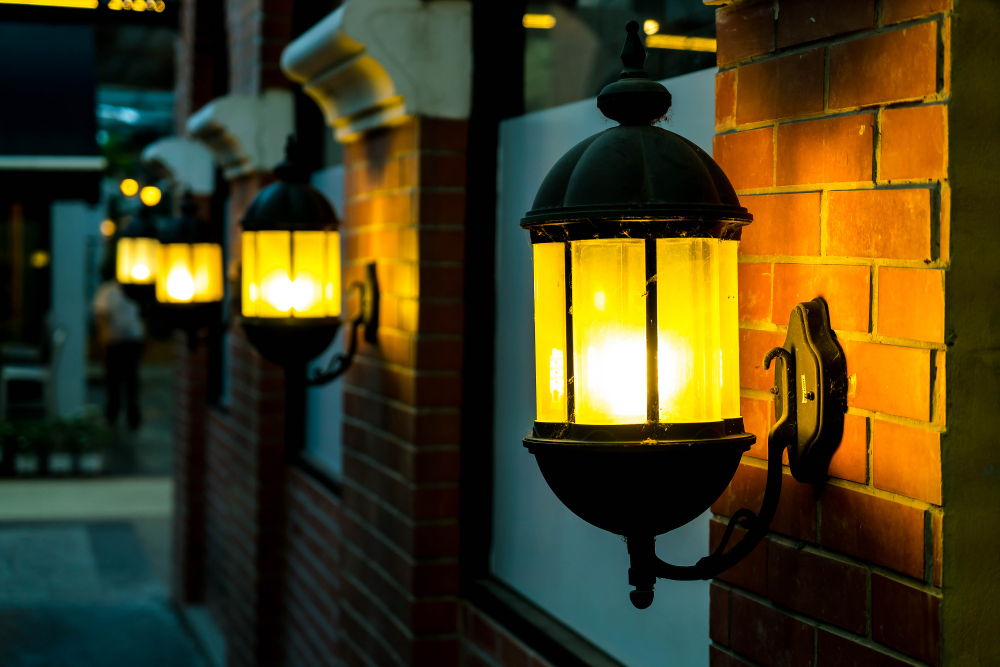
And the brackets survive on buildings, where lamps were mounted on walls rather than columns in narrow streets, frequently still in place with nothing attached to them.
Which makes street lighting one of the more legible vanished technologies. The infrastructure was too substantial to remove, so it was reused, and the shape of the thing still describes the problem it was built to solve.
The Thing That Was Lost
A closing observation is worth including because it is the one nobody anticipated.
The night sky was universally visible before public lighting, and it stopped being so in lit places, gradually, without anybody deciding.
That was noticed at the time in aesthetic terms and became a measurable phenomenon much later, and it is the one substantial cost of the change that was not part of the original argument.
It is also the only one that has been partially reversed in places, through lighting designed to direct light downward rather than outward — which is an engineering response to a consequence that took a century and a half to be treated as a problem.
That sequence is worth noting. A technology is adopted for its benefits, produces a side effect nobody weighed, and the side effect is addressed generations later by people solving a problem their predecessors did not know they were creating.
That sequence is worth carrying beyond street lighting. The costs that get weighed are the ones somebody has thought of, and the ones that matter most are frequently discovered by the generation that inherits them.
Like our content? Follow us for more.