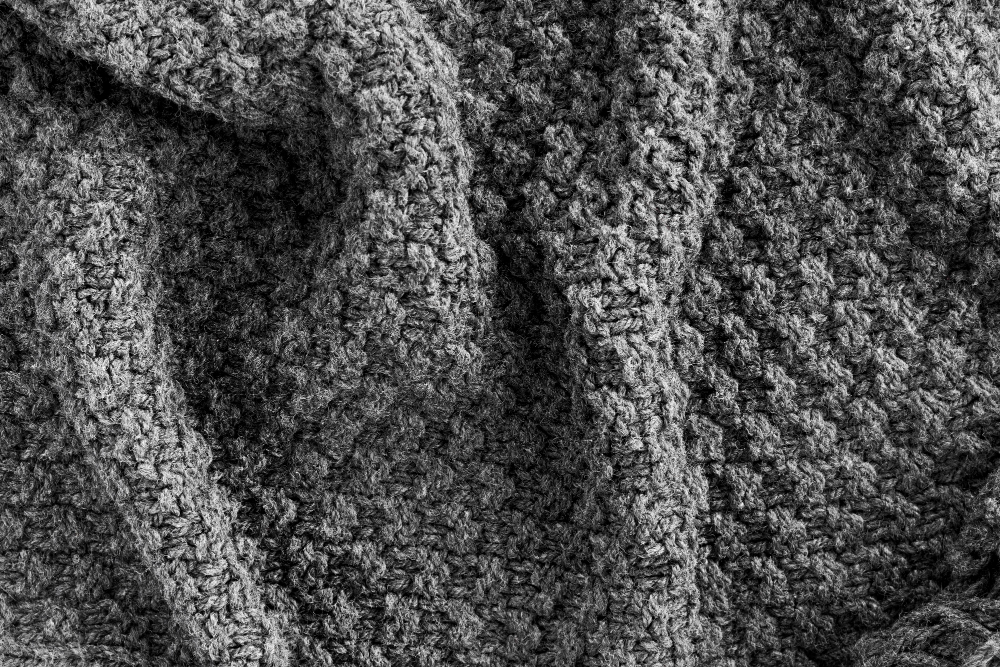
There is a useful principle in materials: if a substance behaves oddly in several unrelated ways, there is usually one structural feature responsible for all of them.
Wool behaves oddly in a number of ways. It can be twisted into a continuous thread that holds together with nothing binding it. It shrinks catastrophically under conditions that do not affect other fibres. It can be turned into a solid sheet without weaving. It stays warm when wet. It resists creasing.
Those look like unrelated properties and they are mostly consequences of two features — a scaled surface and a natural crimp — and understanding both explains the material and the industry that developed around it.
The Scales
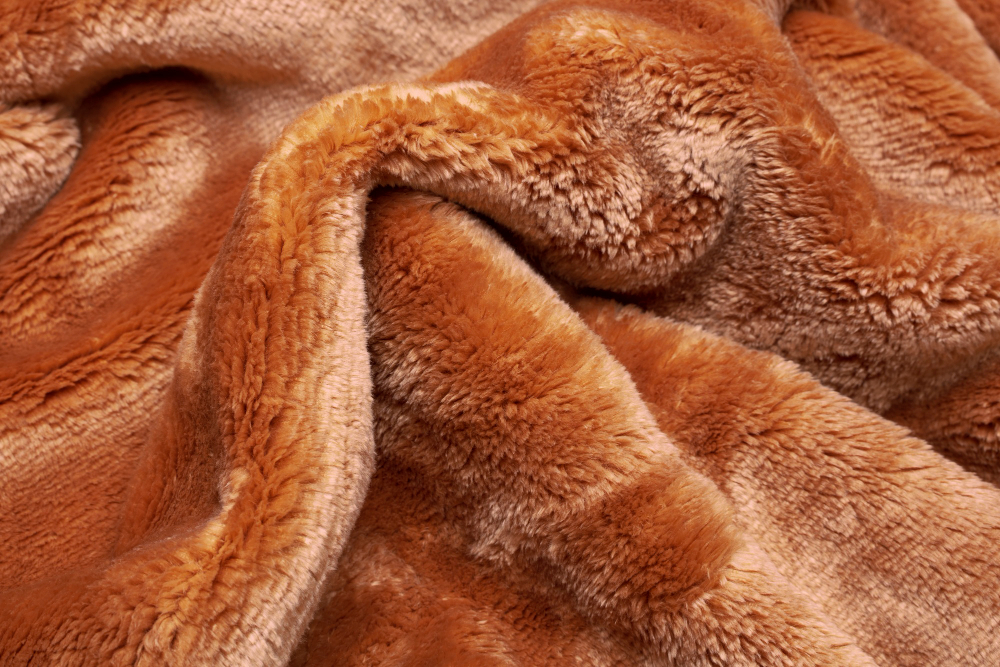
The surface structure is the dominant feature.
Each fibre is covered in overlapping plates arranged like the tiles on a roof, all oriented in the same direction along the fibre, with their free edges facing the tip.
That makes the surface directional. Rubbing a fibre one way slides smoothly over the scales; rubbing it the other catches on the edges.
When two fibres lie alongside each other and are agitated, each tends to move in the direction of least resistance — which is toward its own root — and because they cannot both travel the same way relative to each other, they ratchet progressively closer and tangle.
That process is irreversible. The scales prevent the fibres sliding back, so the tangling accumulates and the mass becomes denser and smaller.
Everything else follows from that one asymmetry.
Like our content? Follow us for more.
Why Yarn Holds Together

Spinning is the first consequence and is a truly surprising trick.
A length of yarn is made from short fibres, a few centimetres long, and it holds together under tension indefinitely with nothing binding them.
The mechanism is twist. Twisting a bundle of fibres forces them into a helix, which presses them against one another, and the friction between them resists being pulled apart.
The scales increase that friction enormously and make it directional, which is why wool spins readily and why a wool yarn is difficult to pull apart along its length.
The twist also produces a self-correcting effect. Tension on the yarn tightens the helix, which increases the pressure between fibres, which increases the friction — so pulling harder makes it grip harder up to the point of failure.
That is why a thread of short fibres can be stronger under load than seems reasonable, and it works for other fibres too, just less well.
There is an odd consequence worth noting. Because the process requires the scales to lift, felting works best in warm alkaline conditions – which is precisely what soap produces.
So the substance that removes dirt from wool is also the substance that makes it shrink, which is why washing it is a more delicate operation than washing anything else.
Felt and Shrinking Are the Same Thing
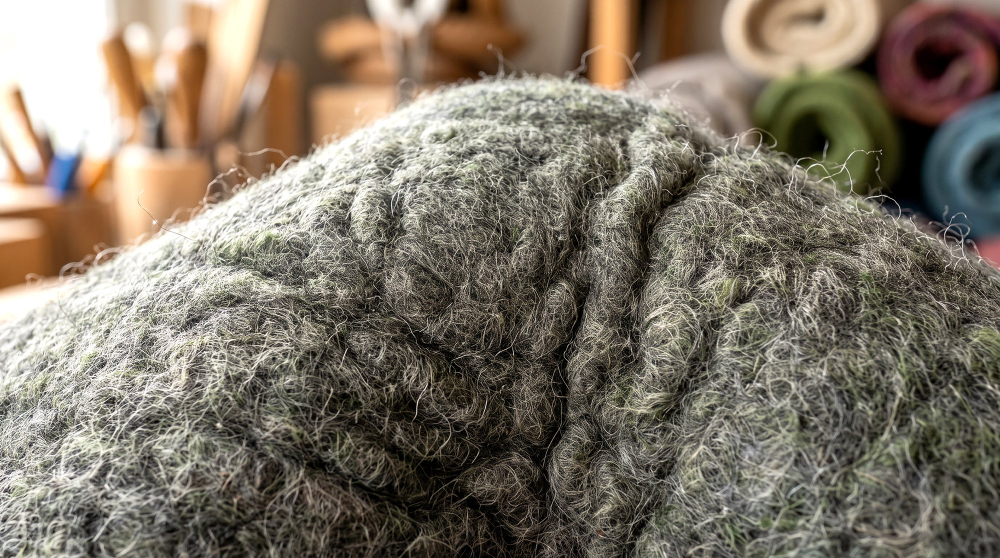
The second consequence is the one most people encounter as a laundry disaster.
Agitating wool in warm water with soap does three things: the warmth and moisture make the fibres swell and the scales lift, the soap reduces friction enough to allow movement, and the agitation supplies the energy.
Under those conditions the ratcheting proceeds rapidly, the fibres migrate and tangle, and the mass contracts.
In a garment, that means the fabric shrinks, thickens and hardens, and it cannot be recovered because the process is one-way.
Done deliberately to loose fibre rather than to fabric, the same process produces felt — a material made without spinning or weaving, in which the fibres are held together purely by tangling.
Felt is therefore probably the oldest fabric, since it requires no equipment at all beyond moisture, heat and agitation, which are available to anybody.
And the treatments that make wool machine-washable work by either removing the scales chemically or coating them with a polymer, which stops the ratcheting and eliminates both the shrinking and the ability to felt.
There is a related property worth mentioning. Because the fibre is a protein with a coiled molecular structure, it stretches under load and recovers when released – which adds resilience beyond what the crimp alone provides.
That is why wool fabric returns to shape rather than staying deformed, and why it tolerates being worn repeatedly without pressing.
The Crimp
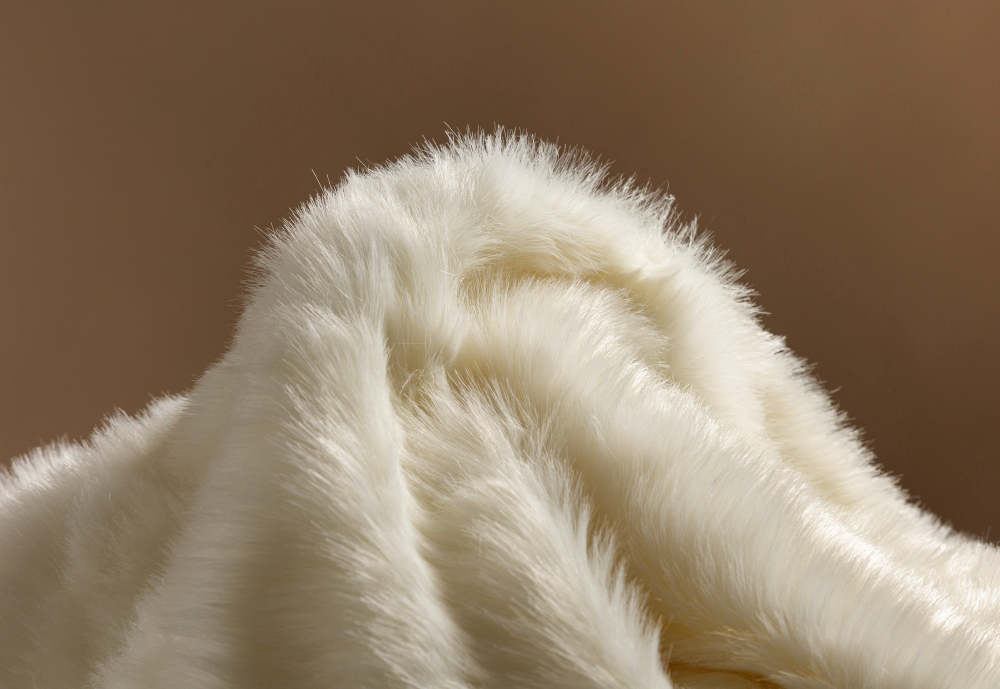
The second structural feature accounts for the rest of the properties.
Wool fibres are not straight. They have a natural wave along their length, produced by the fibre being structurally different on its two sides, which makes it curl.
That crimp keeps fibres apart from one another in a mass, which traps an enormous volume of air — and trapped still air is what insulation physically is.
It also makes the material springy. A crimped fibre compressed under load straightens slightly and then recovers, which is why wool fabric resists creasing and why wool carpet recovers from footprints.
And it makes yarn bulky for its weight, which is why a wool garment is warm without being heavy.
Fibres vary enormously in how much crimp they have, and that variation is one of the main things distinguishing wool suited to different uses.
Why It Works Wet
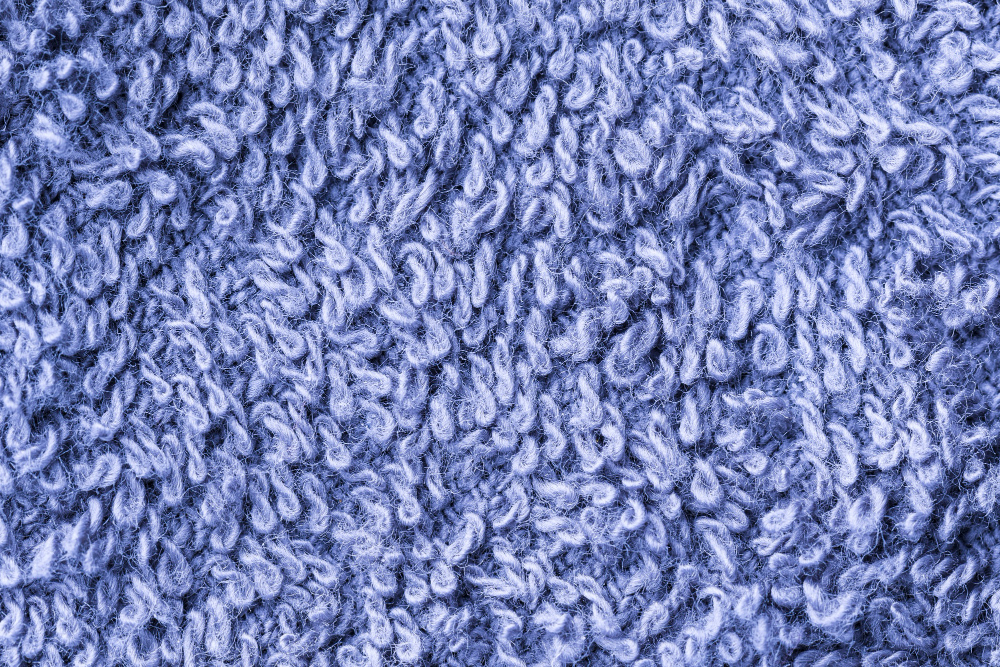
One further property has a separate explanation and is worth including.
Wool absorbs a substantial proportion of its weight in moisture into the fibre itself, without the surface feeling wet, because the water is held within the structure rather than sitting on it.
That means a wool garment can take up a good deal of water before it feels damp, and the trapped air that provides insulation is not immediately displaced.
There is also a chemical effect: water being absorbed into the fibre releases a small amount of heat, which is why wool can feel warm when first put on in damp conditions.
The combination is why wool retains insulating capacity when wet to a degree that most fibres do not, which is the property that made it the material for working outdoors before alternatives existed.
What Varies Between Fibres
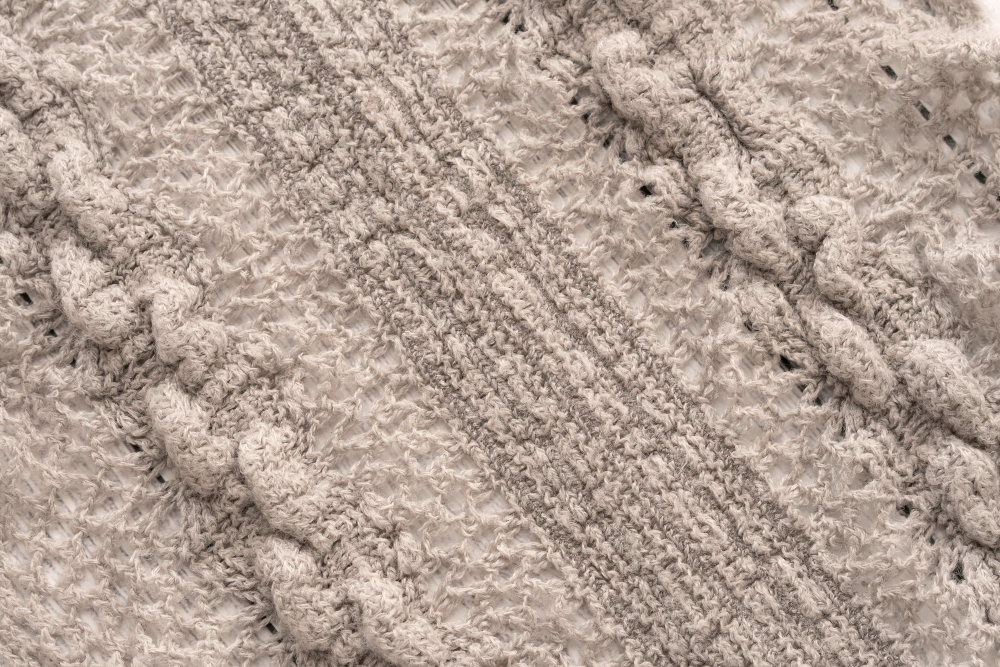
The variation within the material is substantial and is what determines what any given wool can be used for.
Diameter is the dominant variable. Finer fibres feel softer against skin because they bend more readily when pressed, and the sensation of coarseness is essentially a measurement of how much force a fibre exerts when it resists bending.
That is why fineness dominates pricing and why the same fleece is sorted into grades rather than being used uniformly.
Length matters for processing. Longer fibres can be combed and spun into smooth strong yarn; shorter ones are suited to a softer, loftier, less regular product.
Crimp frequency varies, and finer fibres generally carry more of it, which is why fine wool is both soft and bulky.
Scale height and spacing vary as well, which affects how readily a wool felts — some are difficult to felt and others do so almost unavoidably.
And colour varies, which matters enormously because undyed pigmented fibre cannot be dyed to pale shades, so white fleece has historically commanded a premium for reasons that have nothing to do with how it performs.
Those variables are partly heritable and partly environmental, and they differ along a single fleece — the fibre from different parts of the same animal is not the same material, which is why sorting was a skilled trade in its own right.
Why the Industry Was Shaped That Way
The processing sequence follows from the material and explains the trades that developed.
Fleece arrives contaminated with grease, dirt and vegetable matter, all of which must be removed before anything can be done — which is a wet, unpleasant and water-intensive operation that determined where it was carried out.
The cleaned fibres lie in every direction and must be disentangled and aligned, which is what carding does, producing a soft mass with fibres roughly parallel.
Combing goes further, aligning them fully and removing the shorter ones, which produces a smoother stronger yarn and wastes a proportion of the fibre — so two grades of product emerge from the same fleece.
Spinning converts the prepared fibre to yarn, and the amount of twist determines whether the result is soft and lofty or hard and smooth.
Each of those stages was a separate trade, in separate premises, frequently in separate towns — and the geography of textile regions is largely a map of where water, power and labour for each stage happened to be available.
Which is the usual pattern with materials. The properties of the fibre determined the sequence, the sequence determined the trades, and the trades determined where people lived — all of it traceable back to a surface covered in scales that point one way.
Which is a reasonable demonstration of how materials work. One structural feature, invisible without magnification, determines what can be made from a substance, how it must be handled, what ruins it and where the people who process it had to live.
Like our content? Follow us for more.